
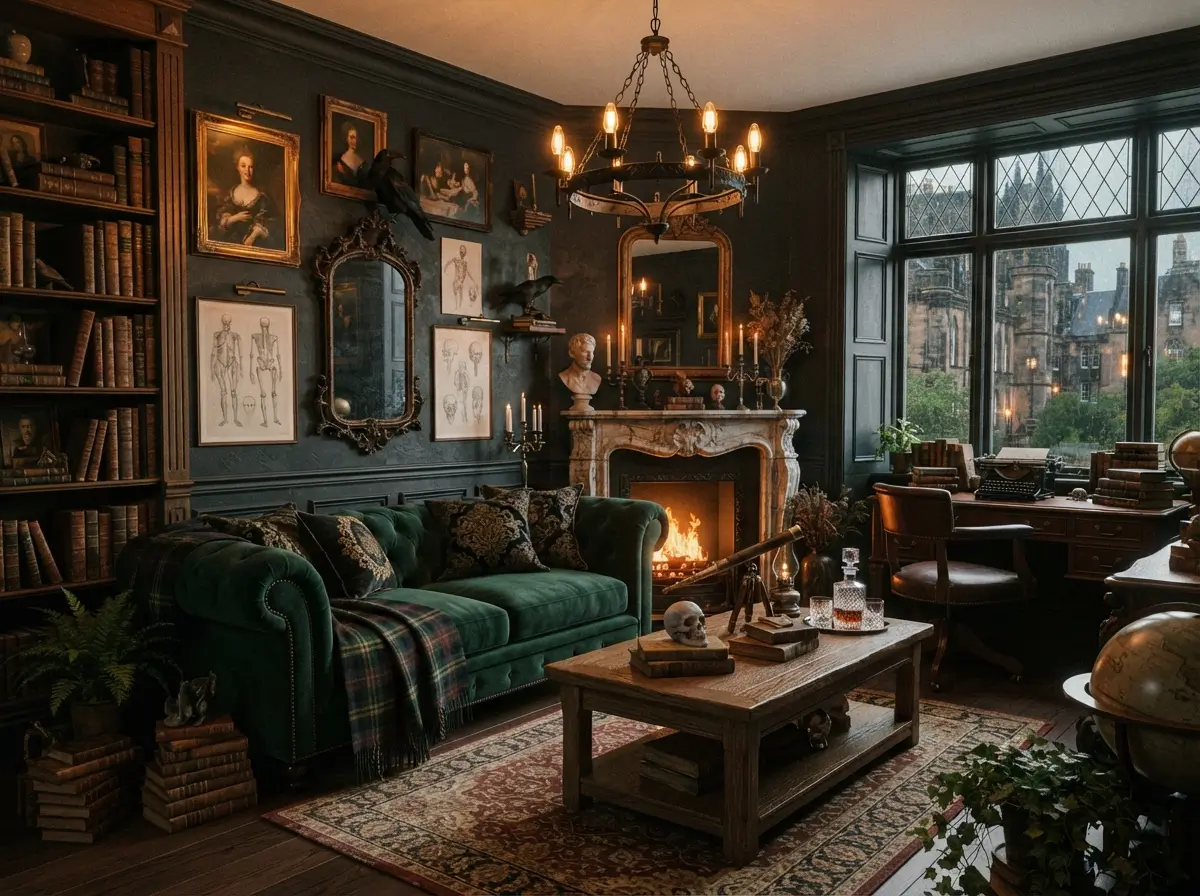

Dark Academia Apartment Decor combines scholarly details, old-world character, moody colors, and practical comfort. Picture well-used books, dark wood furniture, warm lamps, framed artwork, traditional patterns, and a few Gothic accents arranged in a home that still feels comfortable enough for everyday living. Small apartments can suit this decorating style especially well because the enclosed rooms, narrow corners, and limited natural light often support a quiet library-like atmosphere.
Creating the style successfully does not require filling every wall with antique objects or painting an entire rental black. Thoughtful choices usually produce a stronger result than excessive decoration. Deep colors can appear through curtains, bedding, rugs, cushions, and removable wallpaper, while warm lighting prevents the space from feeling cold. Furniture should provide storage as well as visual character, and decorative items should connect to reading, art, history, nature, or personal interests rather than acting as random props.
Beginners can start with one area, such as a reading corner, bedroom wall, entry console, or bookcase. Building the room slowly gives you time to compare colors, avoid unnecessary purchases, and find secondhand pieces with genuine character. The following ideas explain how to use Dark Academia Apartment Decor practically, including options for renters, small-space dwellers, and anyone working with a limited budget.
How can you create Dark Academia Apartment Decor without making an apartment feel cluttered or gloomy?
Begin with a warm neutral foundation, introduce two or three deep accent colors, use several small sources of warm light, and choose furniture with traditional shapes. Add books, framed art, aged-looking metals, dark textiles, and scholarly details in controlled layers. Leave enough open floor space and undecorated wall area to keep the apartment functional.
Dark academia interiors take inspiration from historic libraries, traditional universities, writers’ studies, museums, and European architecture. Common materials include wood, leather, velvet, linen, brass, iron, and aged paper. Gothic glamour adds slightly more drama through pointed shapes, dark florals, carved frames, candle-style lighting, stained-glass colors, and ornate accessories. Successful rooms balance those dramatic features with soft fabrics, practical storage, and comfortable seating.
Build a Rich but Controlled Color Palette
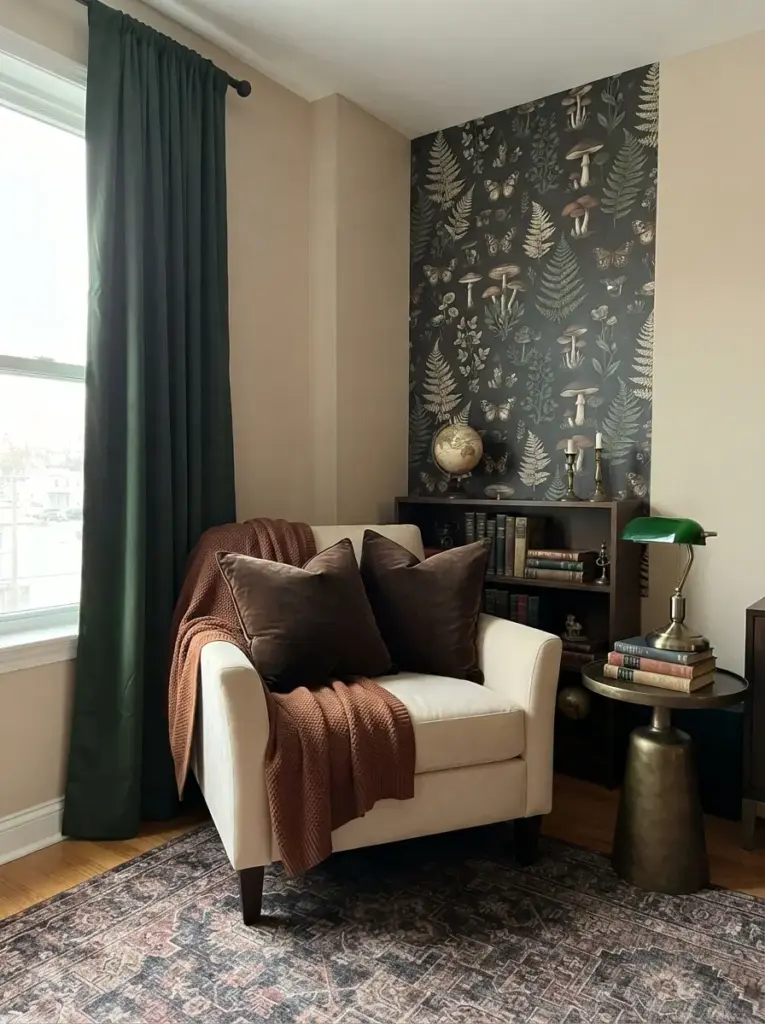
Deep color creates the foundation for Dark Academia Apartment Decor, but using every moody shade at once can make a small room look crowded. Choose one main neutral, one dominant dark color, and one supporting accent. Warm ivory, mushroom beige, taupe, camel, or soft greige work well as the main neutral. Forest green, oxblood, deep navy, charcoal, chocolate brown, and muted plum can provide the darker layer. Antique gold, rust, tobacco, or dusty olive can complete the combination.
Renters can introduce these colors without repainting walls. Forest green curtains, a burgundy throw, chocolate cushions, and a faded Persian-style rug can completely change a beige apartment. Removable wallpaper also works well behind a bed, desk, or bookcase, especially in patterns such as dark botanical prints, subtle stripes, or aged plaster effects. Test removable products in a hidden area first because adhesives react differently to paint finishes.
Color repetition makes the room feel deliberate. Carry the same burgundy tone from a rug into a cushion and a small piece of artwork, rather than adding unrelated shades everywhere. Beginners often find a 60-30-10 balance useful, with roughly 60 percent neutral tones, 30 percent dark colors, and 10 percent metallic or brighter accents. That proportion keeps the atmosphere dramatic without reducing visual breathing room.
Use Warm Layered Lighting Instead of One Ceiling Light
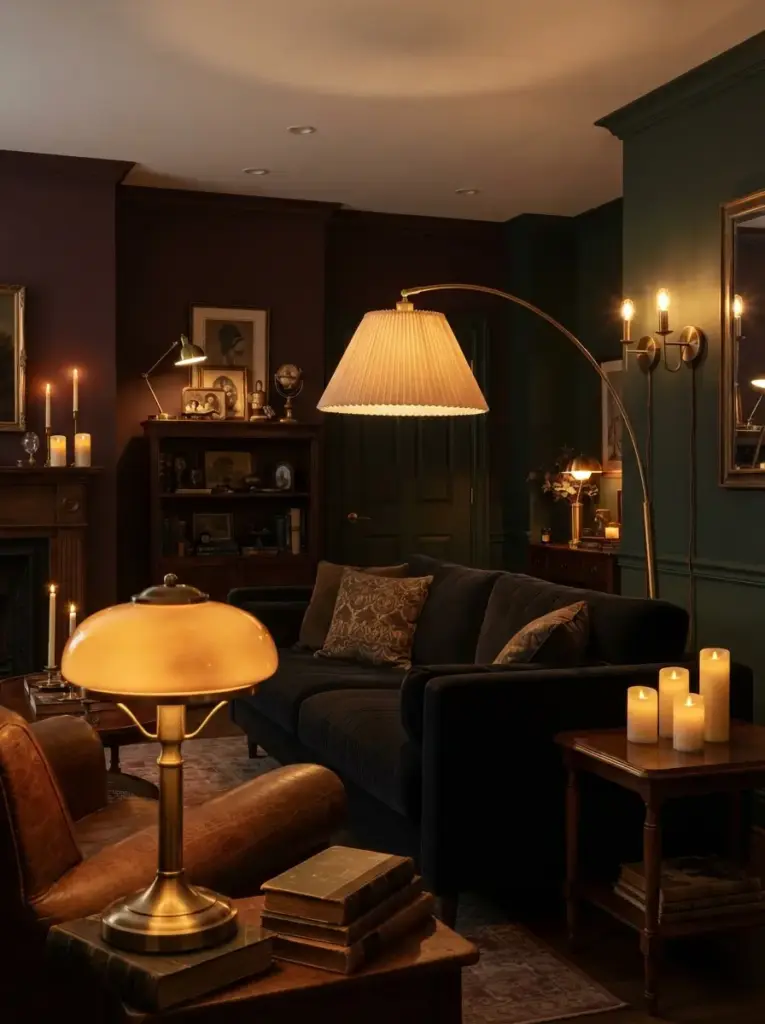
Lighting determines whether dark decor feels inviting or uncomfortable. Bright white ceiling lights can flatten rich colors and make vintage-inspired furniture look harsh. Choose bulbs between 2200K and 2700K for table lamps, wall lights, and floor lamps. Warm bulbs bring out brown wood, brass, burgundy, and olive tones while creating a calmer evening atmosphere.
Layer several light sources at different heights. Place a table lamp on a side table, a floor lamp near the sofa, and a small lamp on a desk or bookcase. Rooms with limited outlets can use rechargeable picture lights or battery-operated sconces attached with removable mounting strips. Cord covers painted to match the wall can keep rented spaces looking neat without permanent electrical work.
Shades also affect the result. Pleated fabric shades, amber glass, opal glass, and dark metal task lamps suit the style better than bare cool-toned bulbs. Reading areas need brighter, focused light, so choose an adjustable lamp that directs illumination toward the page. Decorative candleholders can add atmosphere, but flameless candles are safer around books, curtains, pets, and narrow shelves.
Layered lighting succeeds because it creates small pools of brightness instead of washing the entire apartment in uniform light. The method works especially well for studio apartments, where separate lamps can visually define sleeping, reading, working, and dining zones.
Choose Dark Wood Furniture with Useful Storage
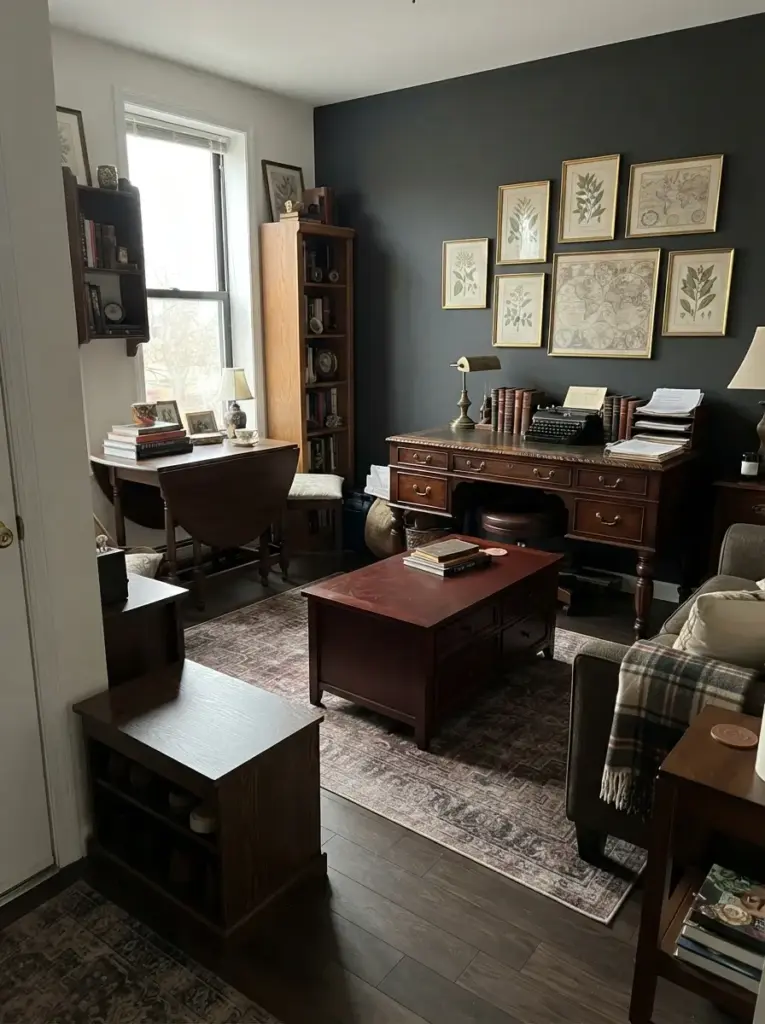
Dark wood gives Dark Academia Apartment Decor its strongest visual connection to traditional studies and libraries. Walnut, mahogany, espresso-stained oak, and dark cherry finishes all work, but matching every piece exactly is unnecessary. Slight differences in wood tone often make an apartment look collected over time rather than purchased as a complete set.
Small homes benefit most from furniture that performs more than one job. Consider a writing desk with drawers, a coffee table with hidden storage, a narrow bookcase, a storage bench, or a nightstand with shelves. Drop-leaf dining tables can function as desks during the day and dining surfaces in the evening. Tall bookcases use vertical space efficiently, while low cabinets provide storage without blocking windows.
Secondhand furniture often offers better shapes and sturdier construction than inexpensive decorative pieces. Look for turned legs, framed drawer fronts, carved edges, brass-colored hardware, and visible wood grain. Scratched surfaces can usually be improved with wood markers, wax, or a carefully chosen stain. Avoid bringing upholstered secondhand furniture indoors until it has been thoroughly inspected and cleaned.
Furniture placement matters as much as finish. Keep at least 30 inches of walking space along main routes whenever possible. Positioning the heaviest dark piece against the largest wall gives the room a visual anchor, while lighter furniture near windows prevents the layout from feeling blocked.
Create a Compact Library Wall
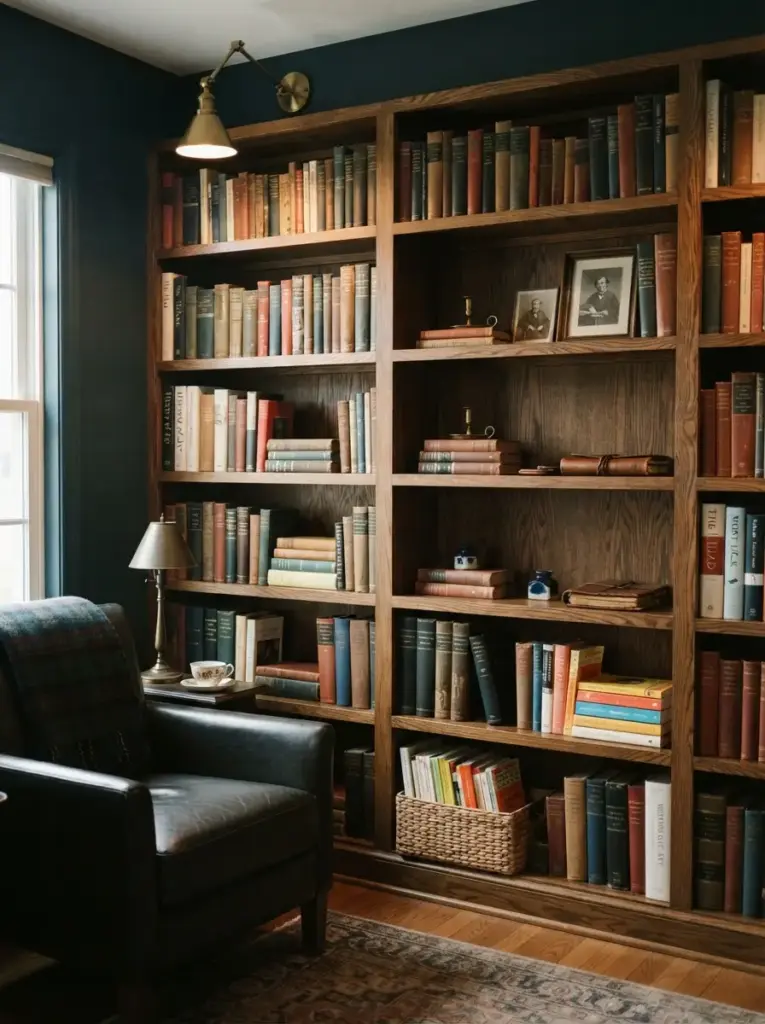
Books naturally support the scholarly side of dark academia, but piles placed throughout a room can quickly become clutter. Consolidating most books into one organized area creates a stronger focal point and makes cleaning easier. Floor-to-ceiling shelving delivers the most impact, although a combination of two narrow bookcases can work just as well in a rental.
Arrange books both vertically and horizontally, but keep most spines visible so titles remain easy to find. Small horizontal stacks can support framed photographs, a brass object, or a ceramic vase. Leave some empty shelf space instead of filling every inch. Open areas reduce visual noise and give meaningful objects more attention.
Shelf styling should reflect real interests. Literature, history, philosophy, art, architecture, poetry, nature, and classic mystery books fit naturally, but no subject is required. Personal reading habits make the display feel authentic. Paperback books with bright modern covers can be grouped by color, placed in baskets, or turned inward in small sections, although accessibility should remain more important than maintaining a strict palette.
Renters who cannot secure tall furniture to the wall should choose shorter, stable shelves or use landlord-approved anchoring methods. Heavy books belong on lower shelves to lower the center of gravity. Compact library walls work best for readers, students, remote workers, and anyone who wants one high-impact feature instead of many smaller decorations.
Style a Practical Reading Corner
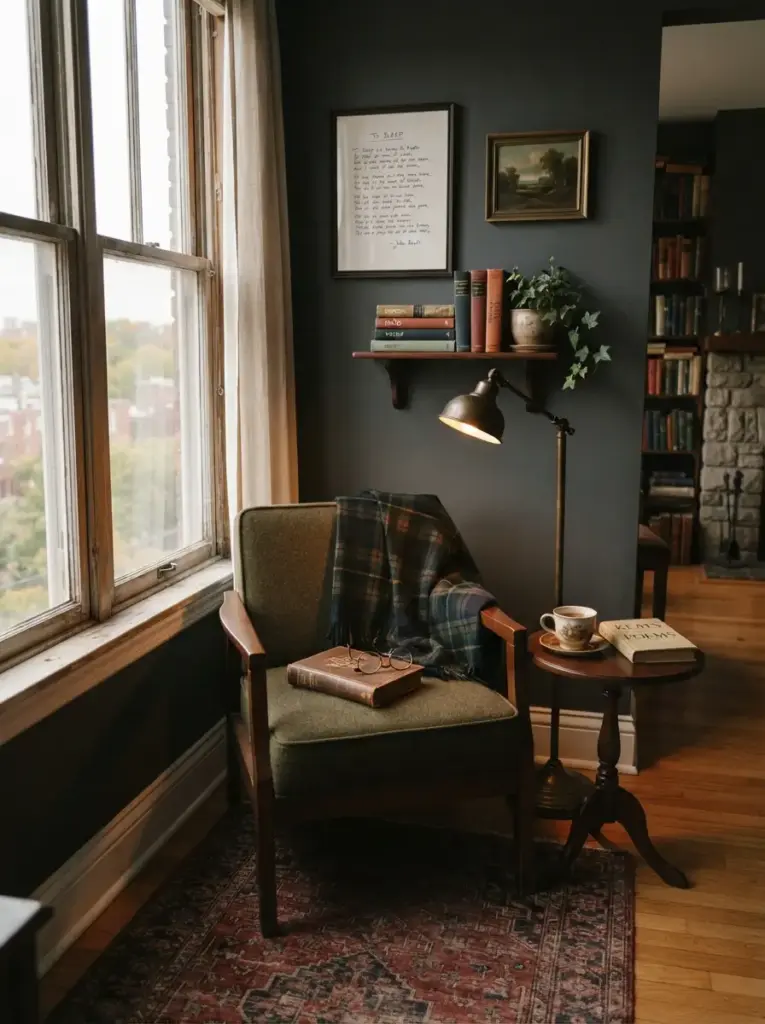
Reading corners give Dark Academia Apartment Decor a clear purpose. Even a two-foot-wide area near a window can become useful with the right chair, light, and surface. Choose a compact wingback chair, curved wooden chair, vintage-style armchair, or supportive slipper chair. Deep brown, olive, charcoal, tobacco, and muted burgundy upholstery suit the palette, while neutral fabric can be darkened visually with a plaid or velvet throw.
Comfort should guide the choice more than appearance. Seat depth, back support, and arm height matter if the chair will be used regularly. Place a small table within easy reach for tea, glasses, or a book. Round pedestal tables usually require less floor space than square tables with four legs. A narrow wall-mounted ledge can replace a table when the corner is extremely tight.
Lighting should fall over the reader’s shoulder without creating glare. Adjustable floor lamps, pharmacy lamps, and swing-arm sconces provide focused illumination. Add a small rug under the front legs of the chair to define the area, particularly in a studio or open-plan apartment. Low-pile rugs are easier to position near doors and less likely to interfere with chair movement.
Personal details can include a framed poem, a small landscape painting, or one shelf of favorite books. Limiting the corner to a few useful objects keeps it restful rather than theatrical.
Hang a Curated Gallery Wall
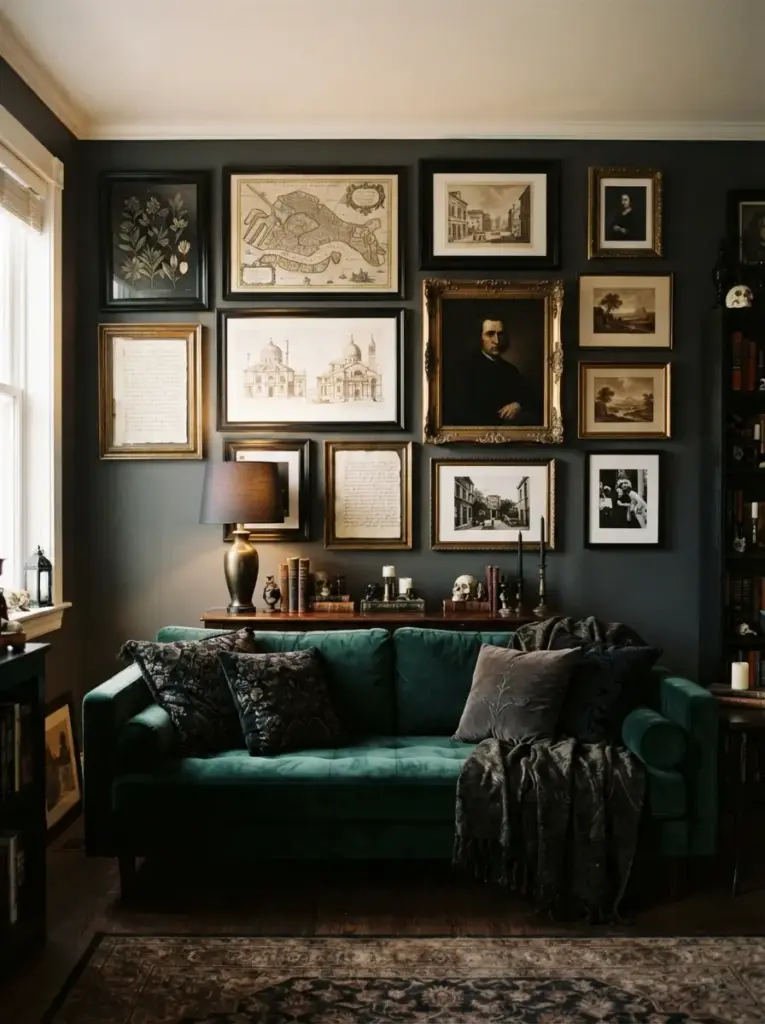
Gallery walls introduce art, history, and Gothic character without consuming floor space. Dark botanical illustrations, old maps, architectural drawings, classical portraits, landscapes, handwritten pages, and black-and-white photographs all suit the theme. Combining several subjects usually looks more natural than purchasing a matching set.
Frame selection creates cohesion. Black, dark brown, antique gold, and aged brass finishes can appear together when the shapes and proportions vary thoughtfully. Ornate frames bring Gothic glamour, while simple wooden frames prevent the arrangement from becoming overly formal. Thrift stores often sell inexpensive framed prints that can be replaced with personal artwork or public-domain images printed at home.
Planning on the floor first reduces unnecessary wall holes. Measure the available wall, arrange the frames on paper or cardboard, and mark their positions before hanging. Keep two to three inches between smaller frames and slightly more between large pieces. Center the complete arrangement at approximately eye level rather than placing every frame too high.
Removable picture-hanging strips may suit lightweight frames in rentals, but weight limits must be followed carefully. Heavy mirrors and carved frames need proper wall anchors or professional installation. Gallery walls work particularly well above a sofa, desk, console, or bed, where furniture provides a clear visual boundary underneath.
Introduce Gothic Shapes in Small Doses
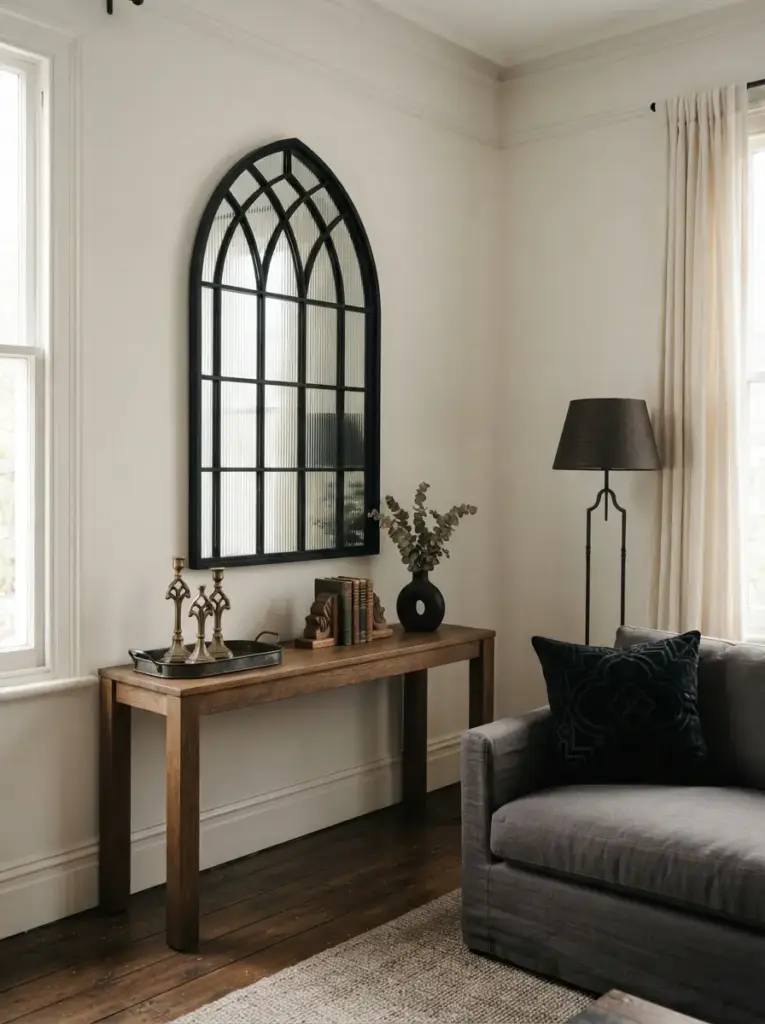
Gothic glamour comes from recognizable shapes and materials rather than from covering the apartment in novelty decorations. Pointed arches, quatrefoil patterns, tracery, carved wood, iron details, ribbed glass, and cathedral-inspired mirrors can bring architectural interest to plain rental walls. One or two noticeable pieces usually create more impact than many small themed objects.
Arched mirrors are especially useful because they reflect light and visually lengthen a room. Position one opposite or beside a window rather than directly facing clutter. A narrow black-framed mirror above an entry console can make a small hallway feel more finished. Gothic-inspired candleholders, carved bookends, and dark metal trays can add related shapes at a smaller scale.
Balance dramatic details with simpler furniture. An ornate mirror looks stronger over a plain wooden cabinet than above a heavily carved surface surrounded by several decorative objects. A similar contrast applies to textiles. A patterned Gothic cushion can sit on a solid sofa, while a detailed black metal lamp can stand beside uncomplicated curtains.
People who enjoy Gothic design but worry about making a rental look like a themed set should begin with shape rather than literal symbols. Architectural curves and pointed forms feel sophisticated, remain easy to combine with other styles, and can move into a future home without limiting decorating options.
Add Velvet, Linen, Leather, and Wool Textures
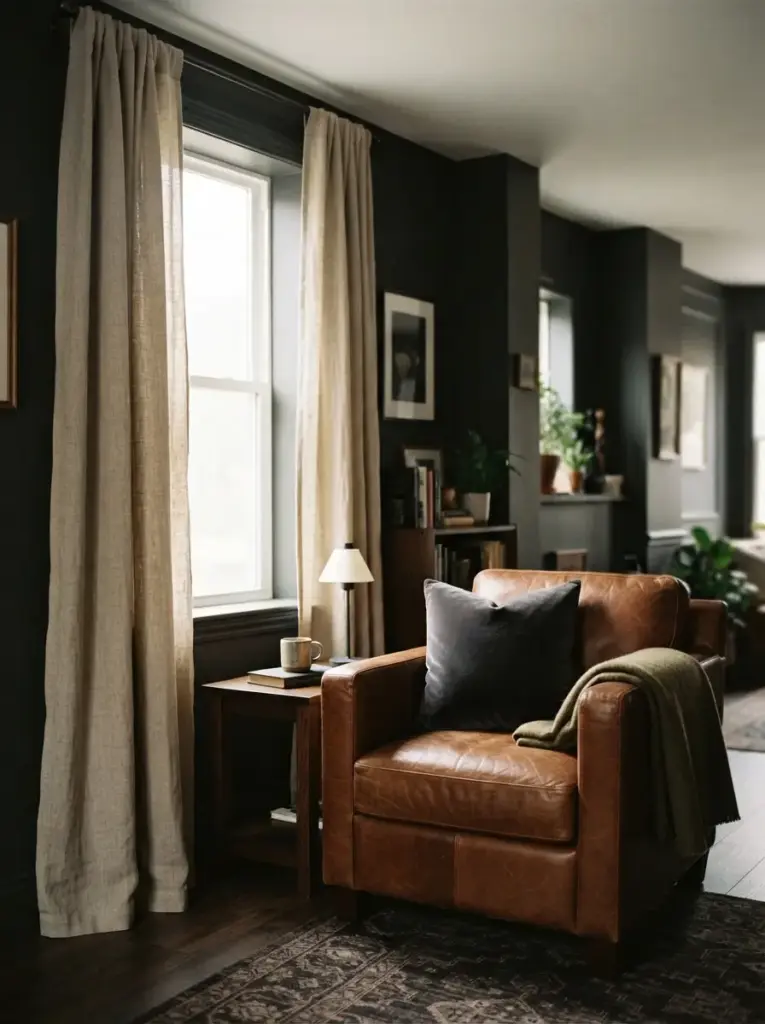
Texture prevents a dark color scheme from looking flat. Velvet reflects light softly, linen introduces a relaxed surface, leather adds structure, and wool provides warmth. Mixing those materials allows similar colors to remain visually distinct. A charcoal velvet cushion, brown leather chair, oatmeal linen curtain, and olive wool throw can all sit in one room without competing.
Fabric weight should match the apartment’s climate and light level. Heavy velvet curtains provide privacy and insulation, but they can overpower narrow windows or make a dim room feel smaller. Linen-look curtains in a dark neutral may offer a lighter alternative. Hanging curtains close to the ceiling and extending the rod beyond the window frame makes windows appear larger and allows more daylight when the panels remain open.
Bedding offers an easy way to build texture. Start with cotton or linen-look sheets, add a dark quilt or duvet, and finish with one folded throw. Too many decorative pillows consume storage space and create daily work, especially in a small bedroom. Two sleeping pillows, two larger back pillows, and one accent cushion usually provide enough layering.
Budget-conscious decorators can use washable velvet-look cushion covers, secondhand leather accessories, and wool-blend throws. Checking care labels matters because dark fabrics show lint, dust, and pet hair more clearly than mid-tone materials.
Ground the Room with a Traditional Rug
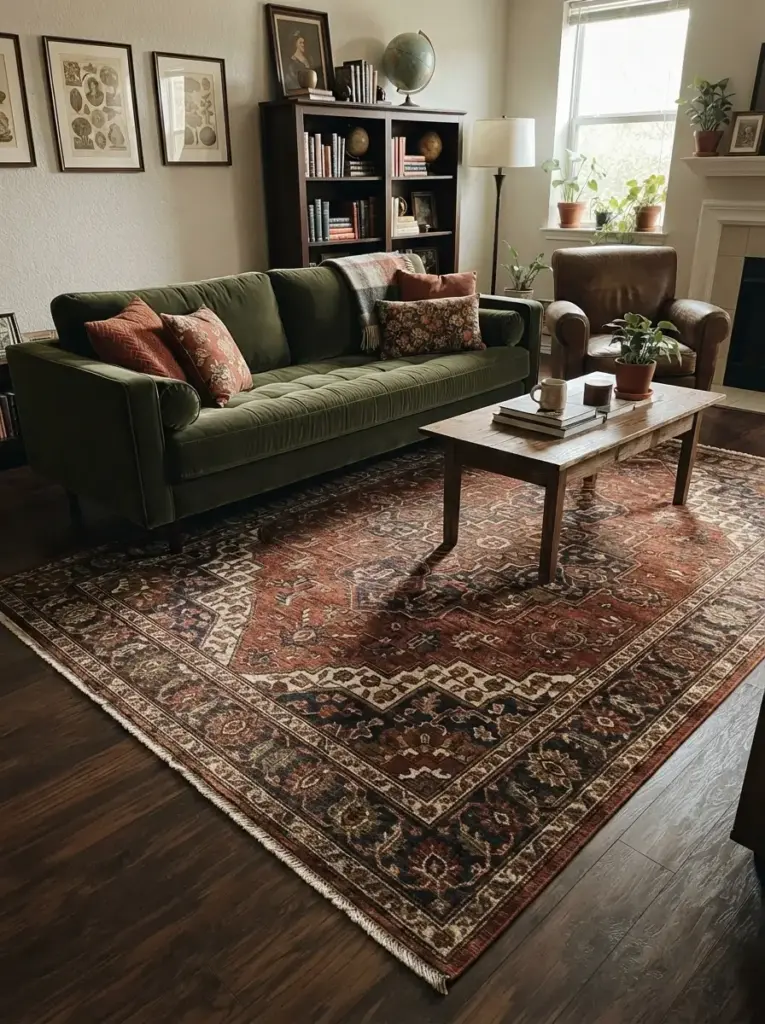
Traditional rugs connect furniture, introduce pattern, and soften the hard flooring common in apartments. Persian-inspired, Turkish-style, faded floral, medallion, and bordered rugs work particularly well. Look for combinations of rust, navy, burgundy, olive, cream, and brown rather than extremely bright primary colors.
Correct sizing has a greater effect than pattern. In a living room, the front legs of the sofa and chairs should usually sit on the rug. Tiny rugs floating in the middle of the floor make furniture look disconnected. Bedrooms often look more balanced when the rug extends at least 18 inches beyond the sides of the bed. Runners can add character to hallways, galley kitchens, and narrow entry spaces.
Low-pile rugs are easier to vacuum, fit under doors, and reduce tripping hazards. Washable options suit homes with pets, children, or frequent spills. A rug pad prevents movement, adds comfort, and protects rental flooring. Measure door clearance and furniture placement before ordering because returning a large rug can be inconvenient.
Traditional patterns support dark academia because they suggest age and craftsmanship while hiding small marks better than solid, pale rugs. Anyone nervous about committing to dark walls can gain much of the same depth through a richly patterned floor covering.
Turn the Desk into a Scholarly Focal Point
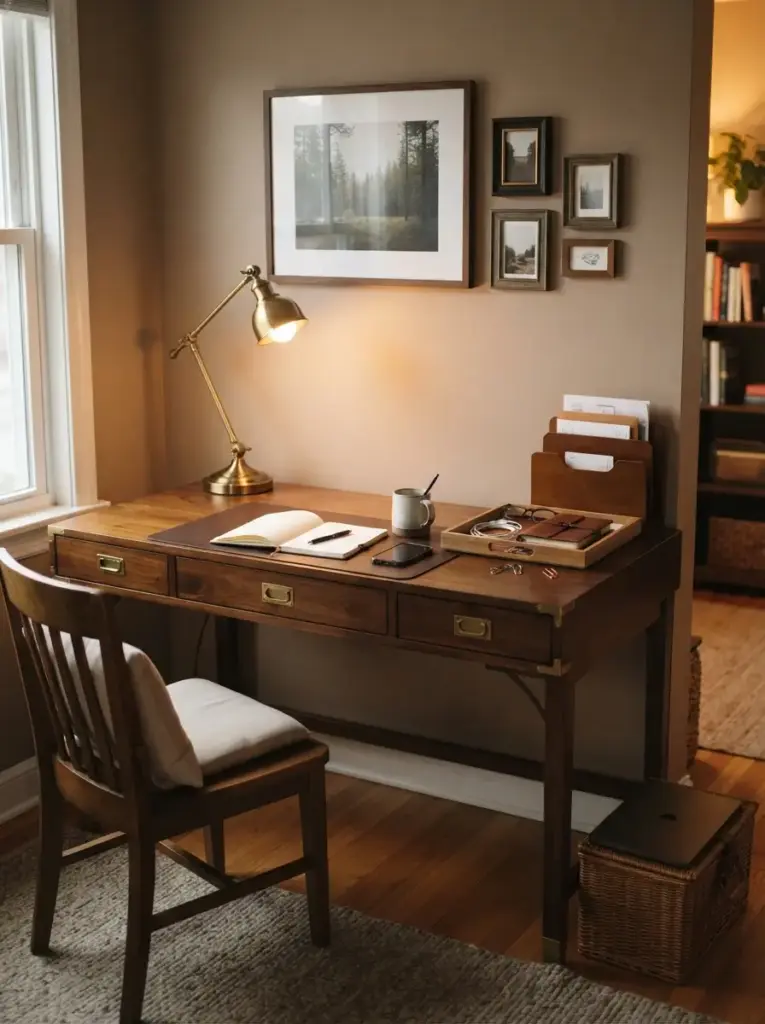
Writing desks provide both practical workspace and visual identity. Choose a compact secretary desk, campaign-style desk, pedestal desk, or simple wooden table with traditional details. Dark wood feels natural, although a black metal desk can work when paired with a leather desk mat, warm lamp, and wooden accessories.
Desktop styling should leave room for actual work. Keep the center clear and place frequently used items within one arm’s reach. A shallow tray can contain pens, notebooks, charging cables, and glasses. Vertical letter holders store papers without consuming much surface area. Laptop users can hide modern equipment inside a desk cabinet or closed basket after work, but daily convenience should remain the priority.
Warm task lighting reduces eye strain and reinforces the room’s atmosphere. Select an adjustable lamp with a focused beam, especially when the desk sits in a darker corner. A 2700K bulb offers warmth, while a high color-rendering rating helps printed text and artwork appear more accurate. People who perform detailed work may prefer a slightly brighter 3000K task bulb while keeping surrounding lamps warmer.
Hang one large artwork or a compact group of frames above the desk. Avoid narrow shelves directly over the chair unless they are securely installed. Students, writers, remote workers, and journal keepers gain the most from this idea because the decoration supports a real routine.
Use Mirrors to Spread Warm Light
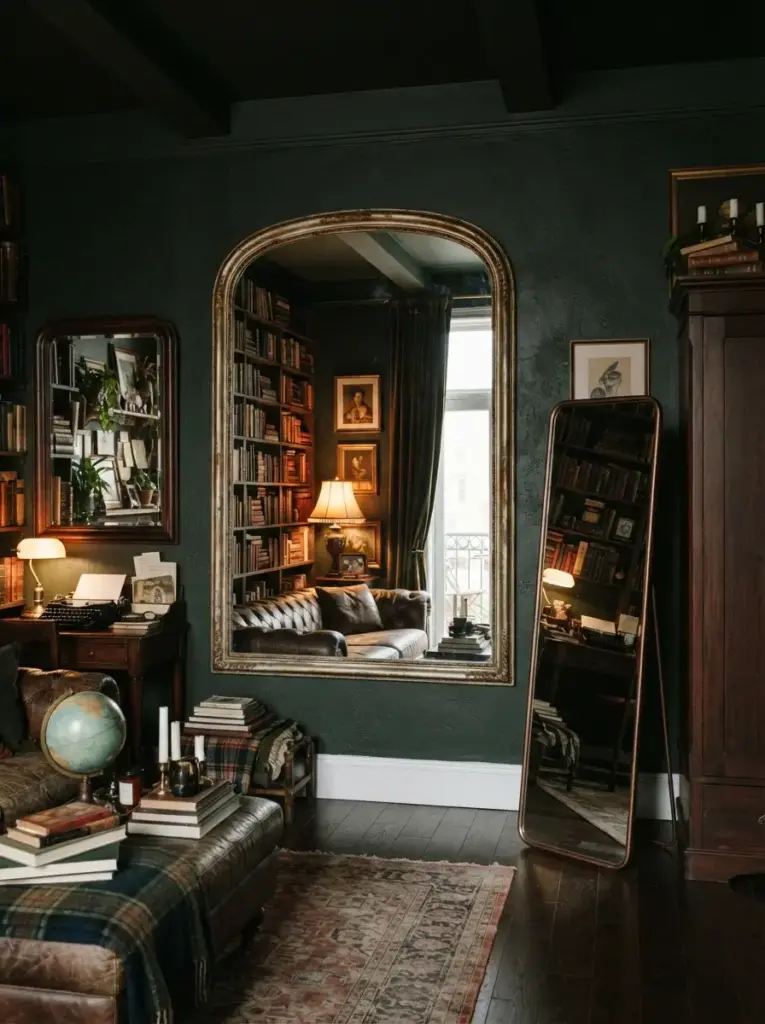
Mirrors can keep Dark Academia Apartment Decor from feeling closed in, particularly in studios and north-facing rooms. Arched, oval, rectangular, and shield-shaped mirrors all complement traditional interiors. Frames in black, dark wood, bronze, or antique gold add definition without requiring another color.
Placement should reflect something worth seeing. Position a mirror where it captures a window, lamp, artwork, bookcase, or attractive section of the room. Avoid reflecting an unmade bed, open storage, television cables, or a crowded kitchen counter. Leaning a large mirror may appear relaxed, but it should still be secured to prevent tipping.
Small apartments often benefit from a tall mirror near the entry or beside a wardrobe because it provides a full-length view while visually extending the wall. Mirrored trays can also reflect candlelight or lamp light on a dresser, although too many reflective accessories may conflict with the aged, matte character of the style.
Renters should check whether over-door mirrors, freestanding mirrors, or lightweight removable-mounted options fit their lease restrictions. Heavy antique mirrors require suitable anchors. Carefully used reflection adds depth and brightness, allowing darker walls, curtains, and furniture to feel intentional rather than oppressive.
Bring in Dark Florals and Botanical Details
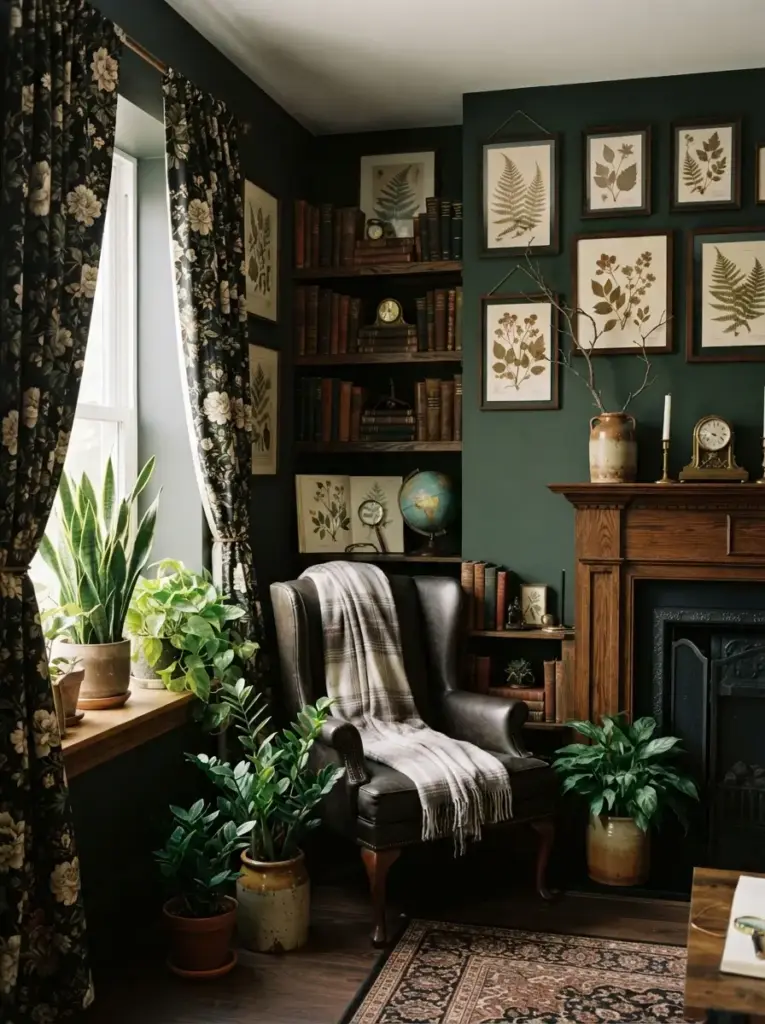
Botanical elements connect dark academia to natural history, old scientific illustrations, and traditional country interiors. Dark floral curtains, fern prints, pressed leaves, herbarium-style frames, and branches in ceramic vessels introduce organic shapes without relying on bright modern patterns. Muted backgrounds such as black, charcoal, brown, deep green, or cream keep the motif grounded.
Living plants can soften dark furniture, but choose varieties that suit the apartment’s actual light. Snake plants, pothos, cast-iron plants, and ZZ plants generally tolerate lower light better than many flowering species. Place plants near available daylight rather than treating them as shelf fillers. Artificial plants may work in windowless areas, but realistic branches or dried stems usually look more convincing than glossy plastic leaves.
Framed pressed botanicals offer an inexpensive project. Use leaves or flowers that have been dried completely, mount them on warm white paper, and place them in simple dark frames. Renters can display the frames on picture ledges, shelves, or removable hooks.
Dark florals work best for people who want more pattern and softness in a room dominated by wood and books. Keep other patterns restrained when using a large floral curtain or duvet, allowing the botanical feature to remain the primary decorative statement.
Display Antique-Looking Objects with Restraint
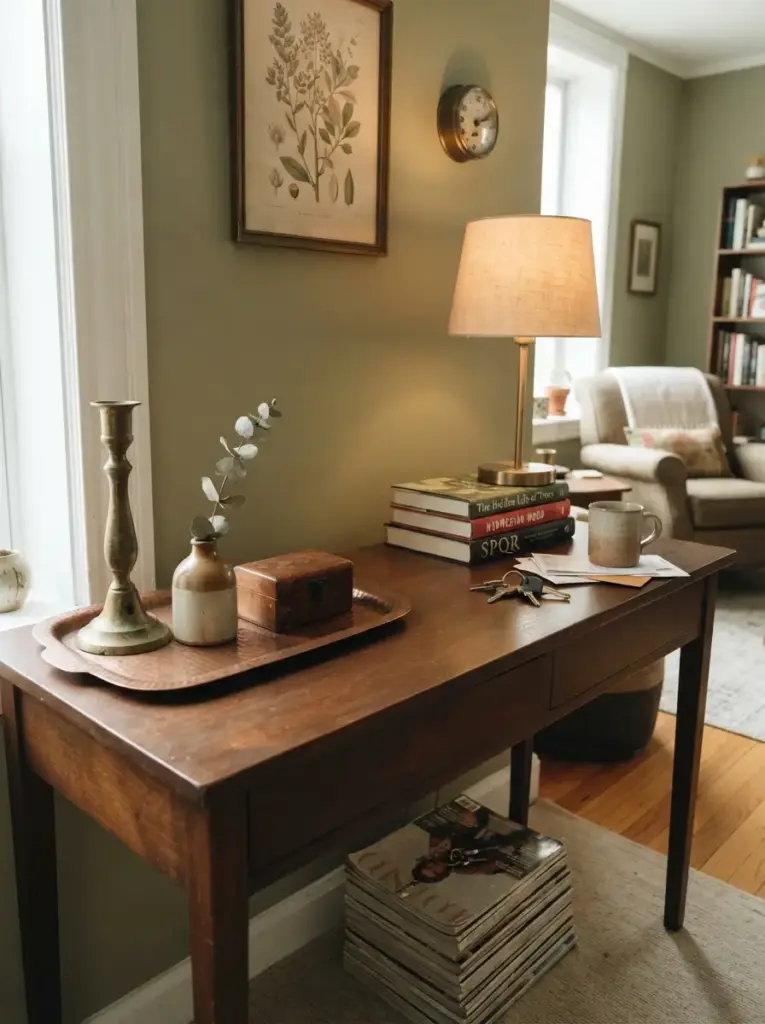
Decorative objects contribute to history and personality, but excessive accessories can make a small apartment difficult to clean. Choose pieces that relate to personal interests or daily habits. Brass candlesticks, stoneware vases, wooden boxes, magnifying glasses, old clocks, ceramic busts, ink bottles, and metal trays can all work when used selectively.
Grouping objects in odd numbers often creates a natural arrangement. Three items with different heights can fill one side of a console, while the other side holds a lamp or a stack of books. Trays help smaller pieces read as one collection and make surfaces easier to clear. Leave part of every tabletop empty so there is room to set down keys, cups, or mail.
Secondhand shops, flea markets, estate sales, and family storage boxes can provide meaningful items for less than newly manufactured themed decor. Check metal pieces for sharp edges, ceramics for cracks, and clocks or lamps for safe operation. Reproduction pieces are completely acceptable when they are functional and well-made.
Restraint makes the display believable. One solid brass candlestick usually contributes more visual weight than several lightweight plastic ornaments. Collectors and history lovers may rotate objects seasonally, keeping most items stored and preventing permanent overcrowding.
Frame Windows with Dramatic but Practical Curtains
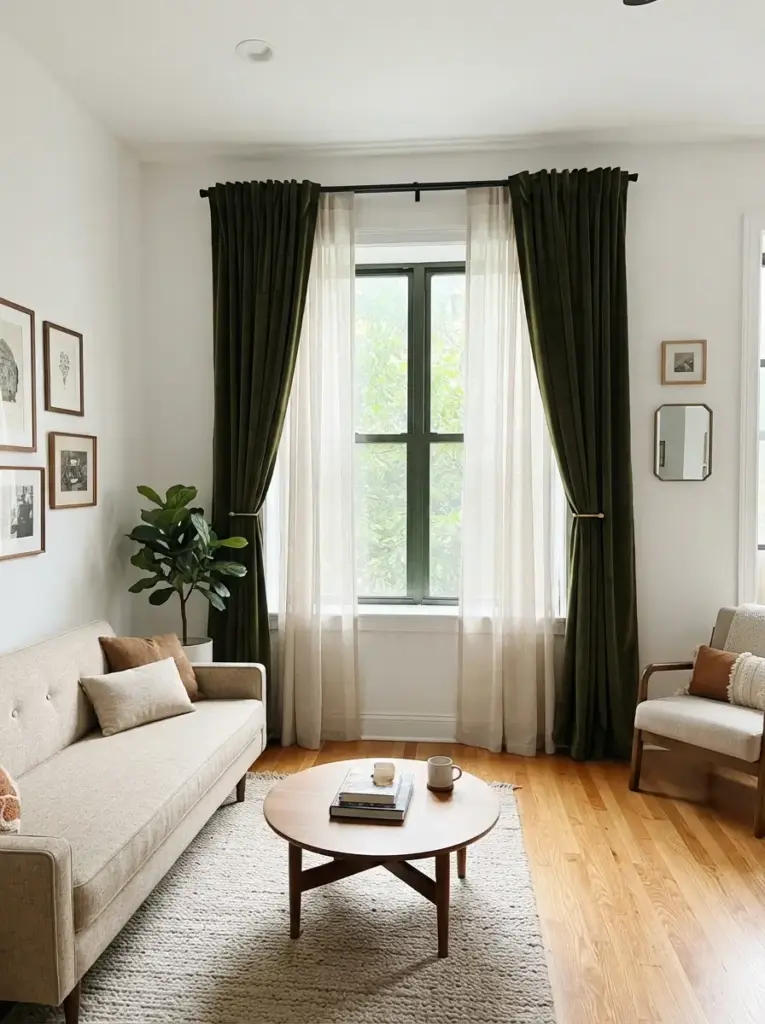
Windows occupy a large amount of visual space, so curtains can transform a rental quickly. Deep olive, brown, charcoal, wine, and navy panels create depth, while warm taupe or oatmeal panels suit apartments that already receive limited daylight. Velvet provides drama and insulation, whereas cotton, linen blends, and brushed fabrics offer a softer appearance.
Curtain placement can improve proportions. Mount the rod four to eight inches above the window frame when possible and extend it several inches beyond each side. Longer rods allow the panels to sit beside the glass when open, increasing daylight. Floor-length curtains make ceilings appear taller, but hems should barely touch the floor rather than gathering in dusty piles.
Tension rods work inside recessed frames, although they may not support heavy curtains. No-drill brackets, removable hooks rated for curtain rods, and freestanding room dividers can provide rental-friendly alternatives. Always follow weight limits and test adhesive systems carefully.
Layering sheer panels behind darker curtains offers daytime privacy without blocking all natural light. Blackout linings help bedrooms, but they should open fully during the day to prevent the room from remaining dim. Dramatic curtains suit bedrooms, living rooms, and reading areas, especially when the walls must stay white or beige.
Finish with Old-World Metals and Hardware
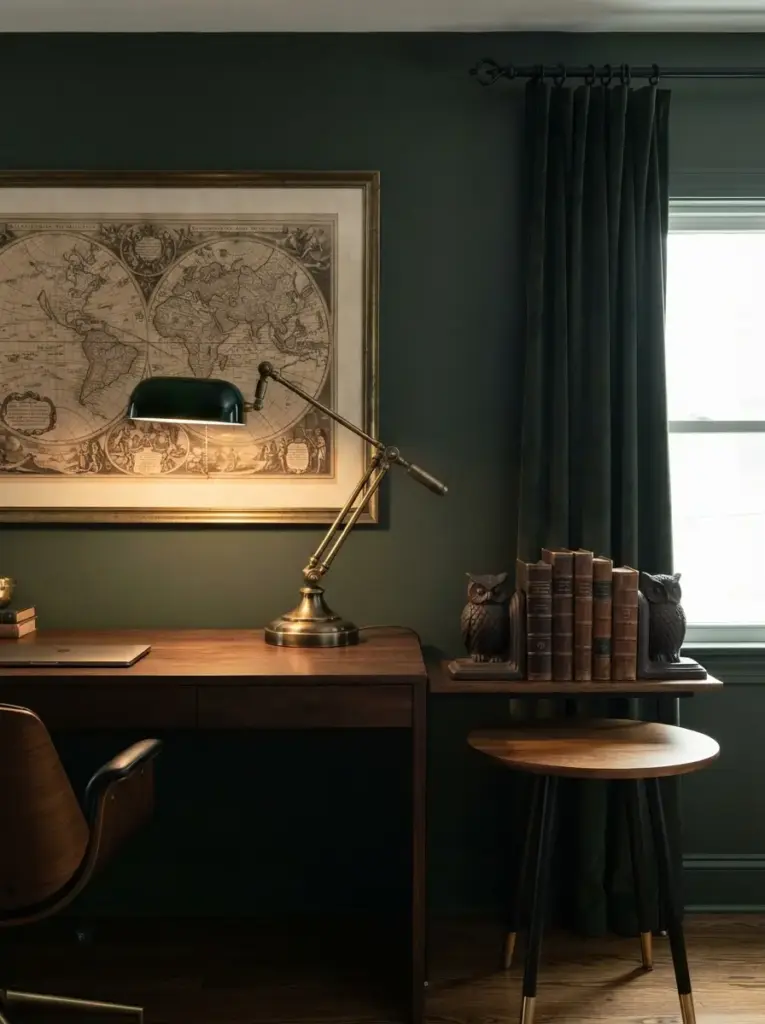
Metal details act like punctuation in Dark Academia Apartment Decor. Antique brass, aged bronze, blackened iron, and pewter provide contrast against wood, fabric, and painted surfaces. Choose one dominant metal and allow a second finish in smaller amounts. Brass lamps with black curtain rods, for example, can look balanced when both finishes repeat elsewhere.
Rental kitchens and bathrooms can gain character through reversible changes. Replace cabinet knobs with antique-style pulls, store the original hardware in a labeled bag, and reinstall it before moving out. Check the distance between existing screw holes before buying replacements. Soap dispensers, trays, towel hooks, and framed mirrors can repeat the chosen metal without altering permanent fixtures.
Living rooms benefit from metal lamp bases, picture frames, curtain rods, bookends, and side-table details. Bedrooms can use brass-colored sconces, drawer knobs, or a small jewelry box. Avoid shiny yellow-gold finishes when the rest of the room looks aged; brushed and antiqued surfaces usually integrate more naturally.
Metal mixing works when each finish appears intentionally. Repeating brass at least two or three times prevents one object from looking accidental. Beginners should avoid buying every accessory in matching antique gold because variation in wood, fabric, ceramic, and metal keeps the room layered and comfortable.
Common Dark Academia Decorating Mistakes to Avoid
Making Every Surface Dark
Completely dark walls, floors, furniture, curtains, and bedding can remove contrast and make a small apartment feel visually heavy. Deep colors need lighter areas to remain noticeable. Keep ceilings light, allow some warm neutral wall space, or introduce cream paper, oatmeal fabric, and medium-toned wood. Natural daylight should remain accessible during the day, even when blackout curtains are needed at night.
Relying on One Harsh Light
Single overhead lights create shadows, glare, and a flat appearance. Several lamps with warm bulbs provide more control and make dark colors easier to live with. Keep task lighting bright enough for reading, cooking, and working instead of sacrificing function for atmosphere. Dim rooms can cause eye strain and make cleaning more difficult because dust and clutter become harder to see.
Buying Too Many Themed Decorations
Novelty objects can turn a personal home into a staged display. Plastic ravens, fake scrolls, decorative keys, miniature statues, and synthetic books may overwhelm the room when used together. Choose useful pieces first, including lamps, storage boxes, mirrors, trays, and real books. Add a few symbolic items only when they connect to your interests.
Ignoring Furniture Scale
Large wingback chairs, oversized desks, and wide bookcases look appealing online but may block movement in a small apartment. Measure the room, doorway, lift, and stairwell before purchasing. Use painter’s tape to mark the furniture footprint on the floor. Narrow arms, raised legs, and shallow depths often make traditional-looking furniture easier to use in compact rooms.
Filling Every Shelf and Wall
Space gives the eye somewhere to rest. Crowded bookcases, gallery walls, tabletops, and floors can make even valuable collections feel disorganized. Leave gaps between decorative groups and keep pathways clear. Closed storage can hold practical items that do not support the room’s appearance, such as spare cables, cleaning products, paperwork, and packaging.
Forgetting Everyday Maintenance
Dark surfaces reveal dust, velvet attracts lint, and ornate objects require more cleaning. Choose washable covers, accessible shelves, and low-pile rugs when maintenance time is limited. Avoid placing delicate paper, books, or untreated wood near cooking steam, bathroom humidity, direct sun, or leaking windows. Practical care helps the decor age well rather than becoming a burden.
Budget-Friendly Dark Academia Apartment Decor Ideas
Budget decorating works best when purchases happen gradually. Begin with lighting and textiles because both categories can change the room without requiring major furniture. Warm LED bulbs, secondhand lamps, dark cushion covers, and one traditional rug usually produce more impact than a collection of small ornaments. Compare dimensions carefully before buying inexpensive items online, since poor scale can make even attractive products unusable.
Thrift stores offer frames, candlesticks, wooden boxes, trays, small tables, lamps, and hardback books at relatively low prices. Focus on shape and material rather than the current finish. Frames can be painted, wooden furniture can be polished, and lampshades can be replaced. Electrical items should have intact cords, stable plugs, and correctly sized bulbs. Rewiring an unsafe lamp may cost more than purchasing a newer one.
Printable artwork offers another affordable option. Botanical drawings, maps, architectural sketches, and classic paintings can be printed on matte paper and placed in secondhand frames. Vary the sizes instead of using identical prints. Tea or coffee staining is not recommended for valuable paper, but warm ivory paper can provide an aged appearance without mess or odor.
Existing belongings can also be restyled. Group books by size, move a mirror opposite a lamp, place a scarf over a plain side table, or use a lidded wooden box to hide remote controls. Glass jars can hold pens, dried branches can fill an empty corner, and old suitcases can provide storage under a console. Successful budget styling depends more on editing and placement than on constant shopping.
Dark Academia Apartment Decor Tips for Small Rentals
Rental-friendly Dark Academia Apartment Decor should remain easy to reverse. Build the palette through curtains, bedding, rugs, artwork, furniture, and removable wall treatments before considering paint. Keep receipts and packaging for temporary hardware, and photograph the apartment before making changes. Lease rules vary, so review restrictions concerning paint, drilling, shelves, and adhesive products.
Vertical space can provide storage without consuming valuable floor area. Tall narrow bookcases, over-door organizers hidden behind doors, wall-mounted ledges, and stacking storage boxes make use of overlooked areas. Heavy furniture should remain stable and anchored when permitted. Freestanding ladder shelves may seem rental-friendly, but they still need careful placement away from busy walkways.
Zoning helps studios feel organized. Use a rug to define the seating area, place a bookcase perpendicular to the wall as a partial divider, or position the desk behind the sofa. Maintain a clear path from the entry to the kitchen, bathroom, and bed. Furniture does not need to touch every wall; sometimes, floating a small sofa several inches forward creates space for a narrow console or lamp behind it.
Closed storage prevents practical items from weakening the visual theme. Baskets, trunks, cabinets, and under-bed containers can hold exercise equipment, electronics, documents, seasonal clothing, and cleaning supplies. Choose containers in dark fabric, woven materials, or wood tones, but label hidden storage so items remain easy to find.
Natural light should guide the darkest choices. South-facing rooms can usually handle deeper walls and heavier curtains, while north-facing or basement apartments may need lighter neutrals, mirrors, and thinner fabrics. Observe the room at morning, afternoon, and night before committing to a large dark purchase.
Frequently Asked Questions
Can Dark Academia Apartment Decor Work in a Small Studio?
Yes, the style can work well in a studio when the number of dark elements remains controlled. Choose one main focal area, such as a bookcase wall or reading corner, rather than decorating every zone heavily. Use a traditional rug to define the living space, a warm lamp beside the sofa, and a dark throw or cushion for color. Tall shelves and closed storage keep possessions organized, while mirrors and open curtains protect the available light. Furniture with raised legs can also make the floor appear less crowded.
Which Colors Are Best for Dark Academia Apartment Decor?
Forest green, oxblood, burgundy, charcoal, espresso brown, navy, muted plum, and black are common choices. Warm neutrals such as ivory, camel, mushroom, parchment, and taupe keep those darker colors balanced. Beginners should select two main dark shades instead of combining every option. Forest green with brown and brass feels traditional, while burgundy with charcoal and antique gold creates stronger Gothic glamour. Test fabric or paint samples in the room because natural and artificial lighting can change their appearance.
How Can Renters Create Dark Academia Walls?
Removable wallpaper, framed art, fabric panels, lightweight mirrors, tapestries, and peel-and-stick molding can add character without permanent construction. Adhesive products should always be tested in an inconspicuous area because some can damage weak or recently painted surfaces. Large artwork leaning on a console provides another no-drill solution. Gallery walls can use removable strips for lightweight frames, while heavy items require approved anchors. Keeping original hardware and photographing changes makes move-out restoration easier.
What Lighting Is Best for a Dark Academia Room?
Warm white lighting between 2200K and 2700K usually suits bedrooms and living spaces. Desk lamps may use bulbs closer to 3000K when brighter task lighting is needed. Combine a floor lamp, table lamp, and focused reading light rather than depending on one ceiling fixture. Pleated shades, amber glass, opal glass, brass bases, and black metal task lamps complement the style. Dimmers or smart bulbs provide useful flexibility, but bulbs should still be bright enough for safe movement and practical activities.
Does Dark Academia Decor Require Antique Furniture?
No, genuine antiques are optional. New furniture with dark wood finishes, traditional shapes, turned legs, framed doors, or brass-colored hardware can create a similar effect. Secondhand furniture often provides character at a lower price, but condition and dimensions matter more than age. Modern storage pieces can blend into the room when their lines remain simple and their finish coordinates with nearby furniture. Mixing one older statement piece with practical newer items often feels more natural than trying to make everything look antique.
How Do I Keep Dark Academia Decor from Looking Cluttered?
Limit each surface to a small group of objects and leave visible empty space. Store practical items inside drawers, baskets, cabinets, or boxes. Use one larger artwork instead of several tiny prints when the wall already contains shelves. Repeat colors and materials so the room feels connected, and remove objects that serve no purpose or personal meaning. Regular editing matters because books, papers, and decorative finds can accumulate quickly. Clear walkways and easy-to-clean surfaces should remain priorities.
Conclusion
Dark Academia Apartment Decor works best when scholarly character, Gothic glamour, and everyday function support one another. Deep colors, warm lighting, traditional rugs, useful wooden furniture, curated books, framed artwork, and aged metal details can give an apartment a strong identity without requiring structural changes.
Small-space success depends on restraint. Choose a limited palette, measure furniture carefully, preserve natural light, and leave some surfaces undecorated. Rental-friendly products and secondhand finds can provide depth without a large renovation budget. Start with one meaningful area, improve it gradually, and allow the apartment to reflect your real reading habits, interests, routines, and collections. Rooms built slowly usually feel more personal and remain easier to maintain.