
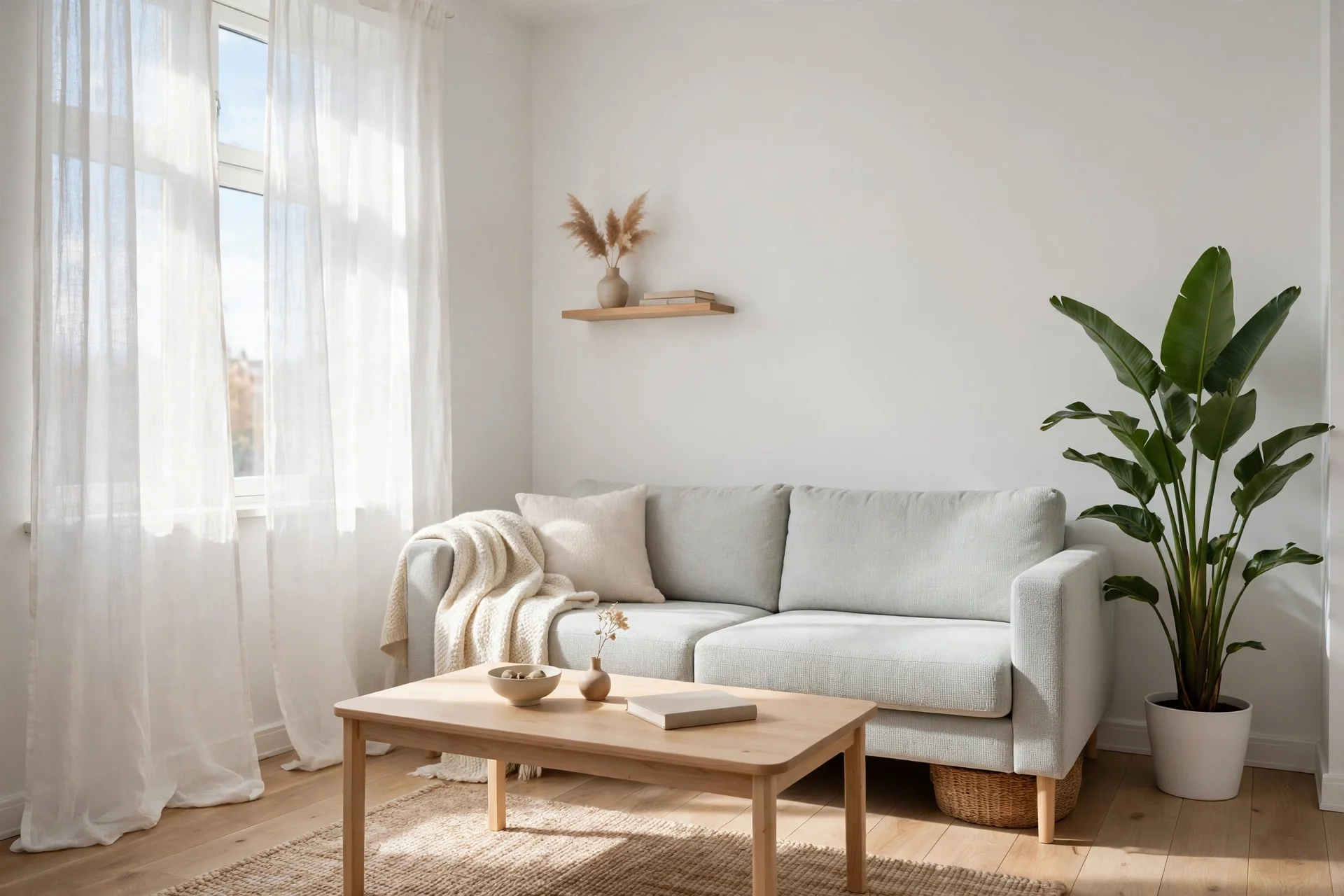

Scandinavian style was designed for small, dark homes, which makes it a natural fit for apartments. Long northern winters taught Scandinavian homes to keep every ray of light, use pale colors that bounce it around, and own only furniture that earns its place.
Good scandinavian apartment decor is not about buying a whole new room. It is about a light base, a few pieces of simple wooden furniture, soft textiles for warmth, and surfaces that stay mostly empty. Most apartments already own half of that list.
These 15 scandinavian apartment decor ideas are planned for small apartments and studios, with renter friendly changes first. Each idea explains what it does, how it works in a small room, and the mistake that most often spoils it, so your home ends up calm and bright rather than cold and bare.
What Makes an Apartment Look Scandinavian?
An apartment looks Scandinavian when it combines a white or pale base, light wood, simple furniture with clean lines, and a few soft textiles in wool, linen and cotton. Nothing is ornate, nothing is dark and heavy, and every object on display is also useful or genuinely loved.
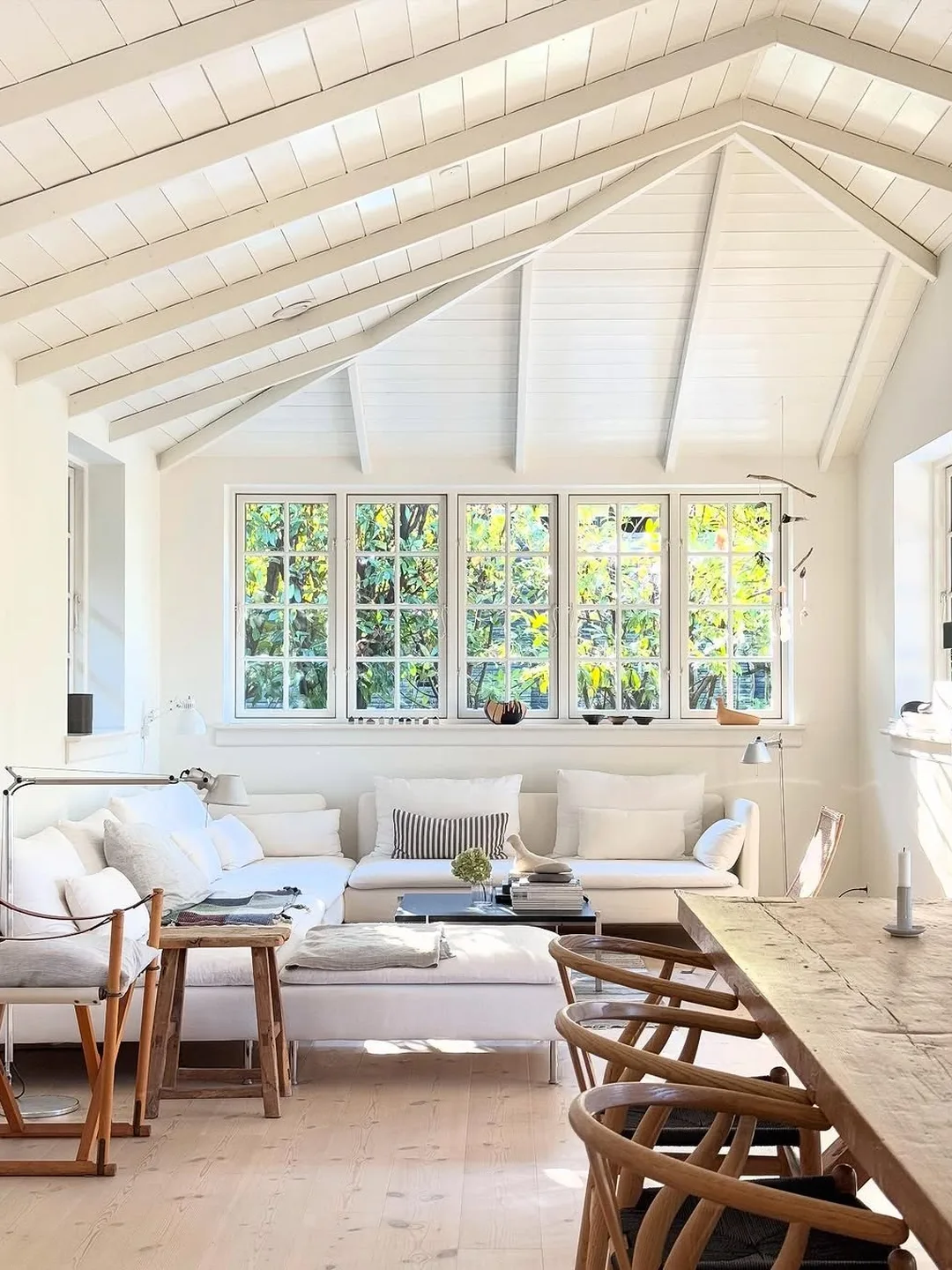
Light does most of the work. Sheer curtains instead of heavy drapes, a mirror where it catches the window light, and pale floors or a pale rug make a small room feel bigger before any furniture changes. Our minimalist apartment living room designs share the same calm base if you want to compare the two styles.
Warmth is the other half of the formula, the part called hygge. Candles, a wool throw, one comfortable chair and warm lamplight stop the pale rooms from feeling cold, and they cost far less than furniture.
Start With White Walls and Light Wood Tones
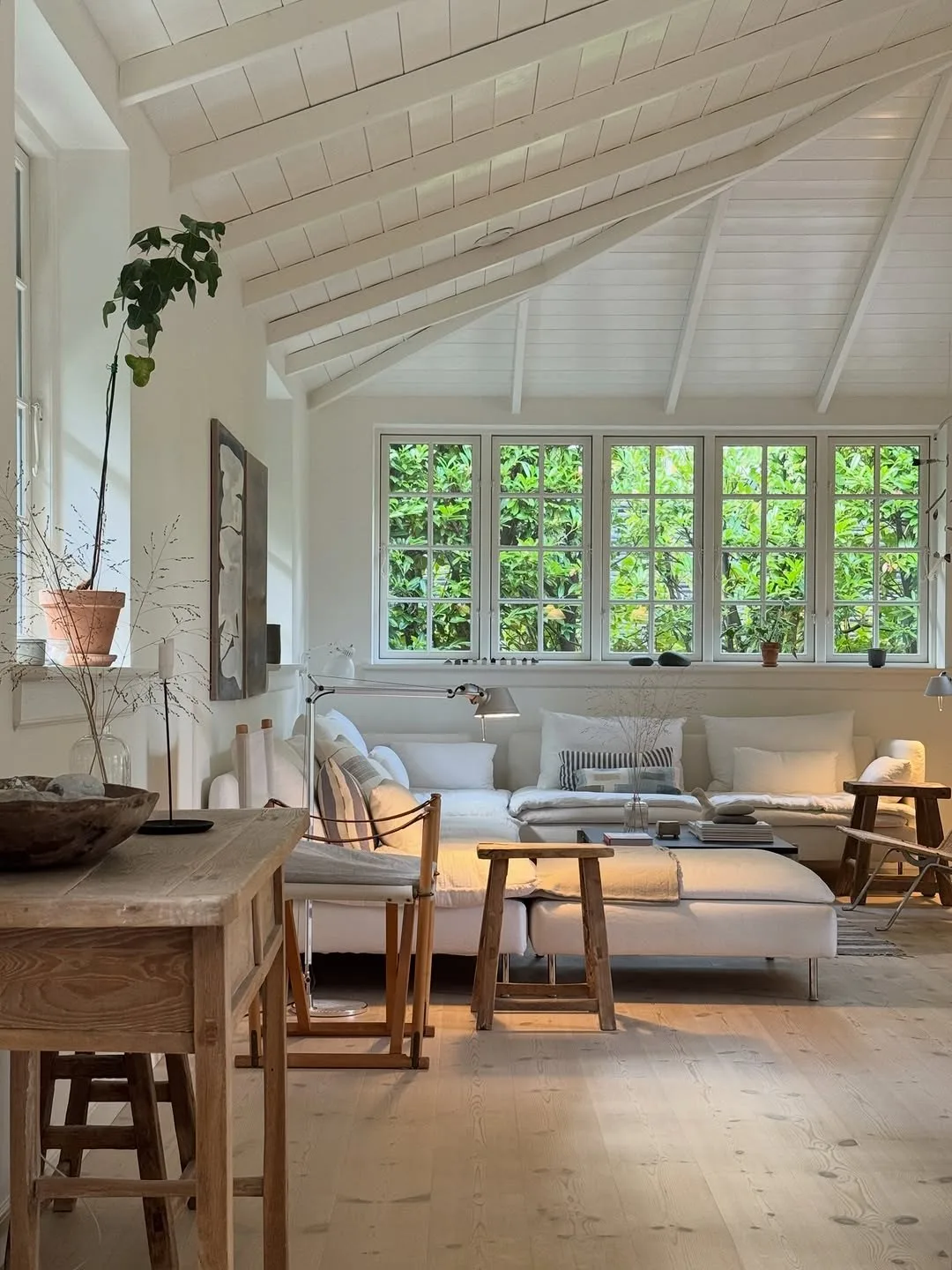
The Scandinavian base is a partnership: white or very pale walls, and wood in its lightest natural tones. The walls bounce light into every corner, and the pale wood stops the white from feeling like a hospital corridor.
Renters who cannot paint can still get the effect. A pale rug, white bedding, light curtains and one or two light wood pieces shift a room with beige walls most of the way there.
Keep the wood tones similar across the room. Mixing pale pine with dark walnut breaks the calm, so if your biggest piece is dark, balance it with pale textiles rather than more dark wood.
North facing and small windowed rooms gain the most. The common mistake is pure brilliant white everywhere, which glares under lamps. Choose warm whites with a hint of cream and the room softens.
Test whites before you commit, even when the purchase is only textiles. A warm white that glows beside one window can turn gray blue beside another, so hold the cushion cover or curtain fabric against the wall at midday and again under lamps before you buy the full set.
Zone a Small Studio Into Rooms Without Walls
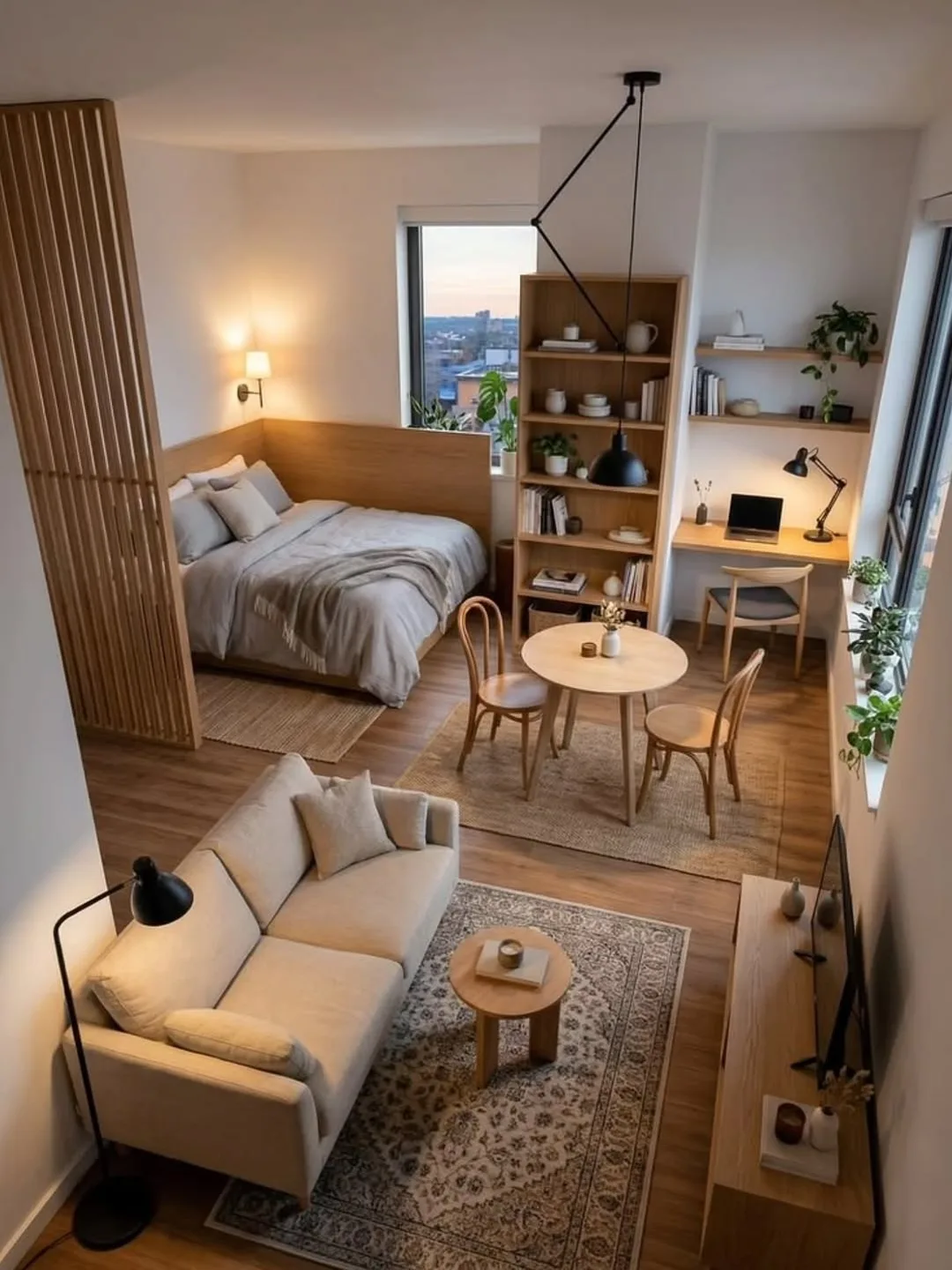
Scandinavian studios stay calm because each activity has a defined place, even in one open room. A rug marks the living zone, the bed sits in its own corner with its own small light, and a narrow desk or table claims the work zone by a window.
Use low furniture as the dividers. A low bookcase, the back of a sofa or a bench separates zones without blocking light or sight lines, which is the whole point in a small space. More zoning tricks live in our studio apartment decor guide.
Give each zone its own light source, even a small one. A lamp by the bed and a pendant over the table tell your brain which room you are in, and evenings feel settled instead of makeshift.
Studio dwellers gain the most. The common mistake is pushing every piece of furniture against the walls, which leaves a dance floor in the middle and no zones at all. Pull the sofa forward onto a rug and the living room appears.
Choose Light Wood Furniture With Clean Lines
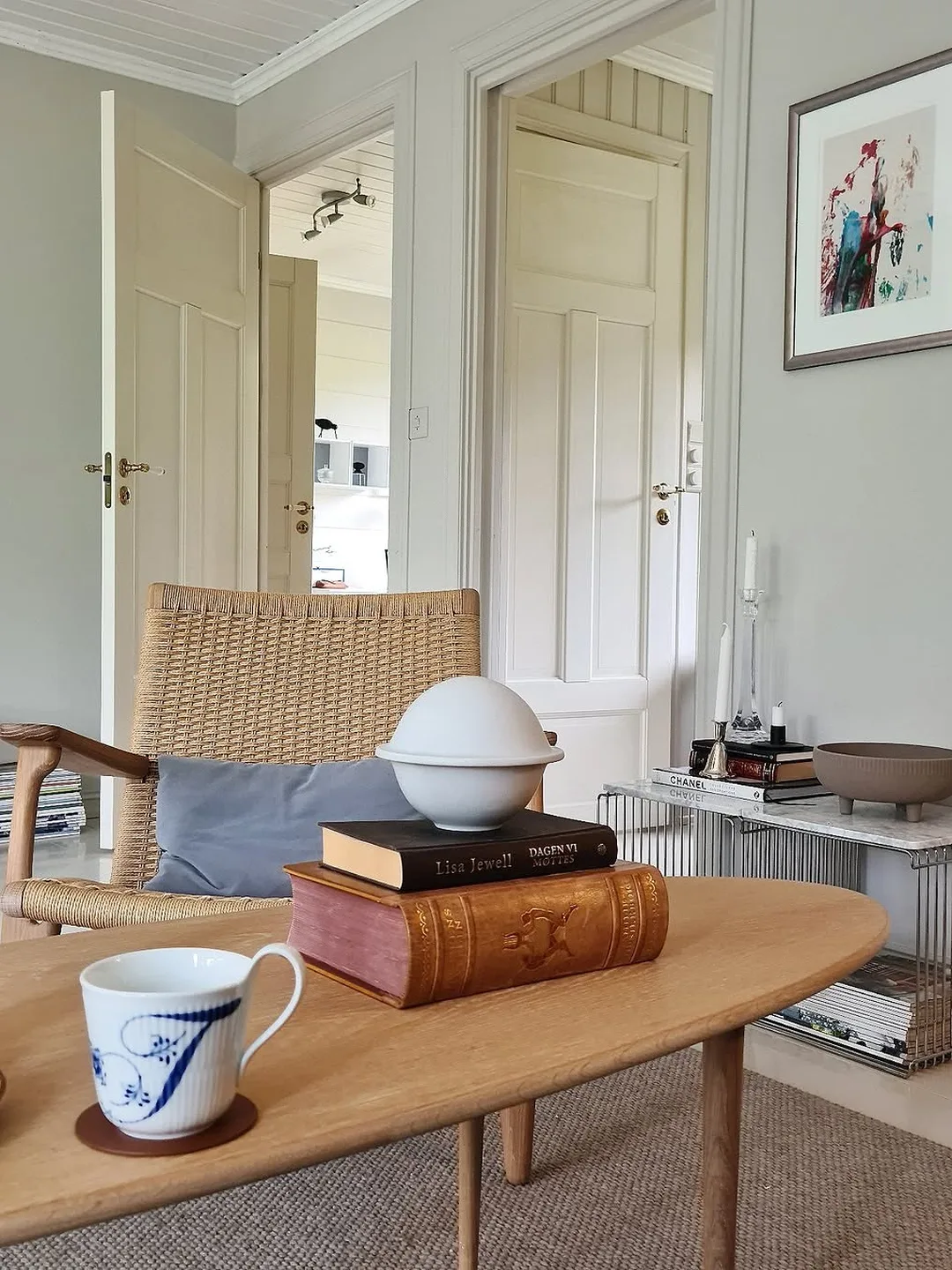
Scandinavian furniture is simple on purpose: straight or gently curved lines, light wood, and legs that lift the piece off the floor so you can see underneath. That visible floor is a large part of why the rooms feel bigger than they are.
Start with the biggest piece you plan to replace, usually the coffee table or the dining table, and let it set the wood tone for smaller pieces that follow.
Flat pack and secondhand markets are full of suitable pieces, because the shapes are simple and have been produced for decades. Avoid ornate carving, dark stains and chunky arms, which belong to other styles.
Anyone replacing furniture piece by piece gains the most. The common mistake is buying a full matching suite in one go. Scandinavian rooms mix two or three wood pieces of similar tone, not identical sets.
Layer Texture So White Rooms Stay Warm
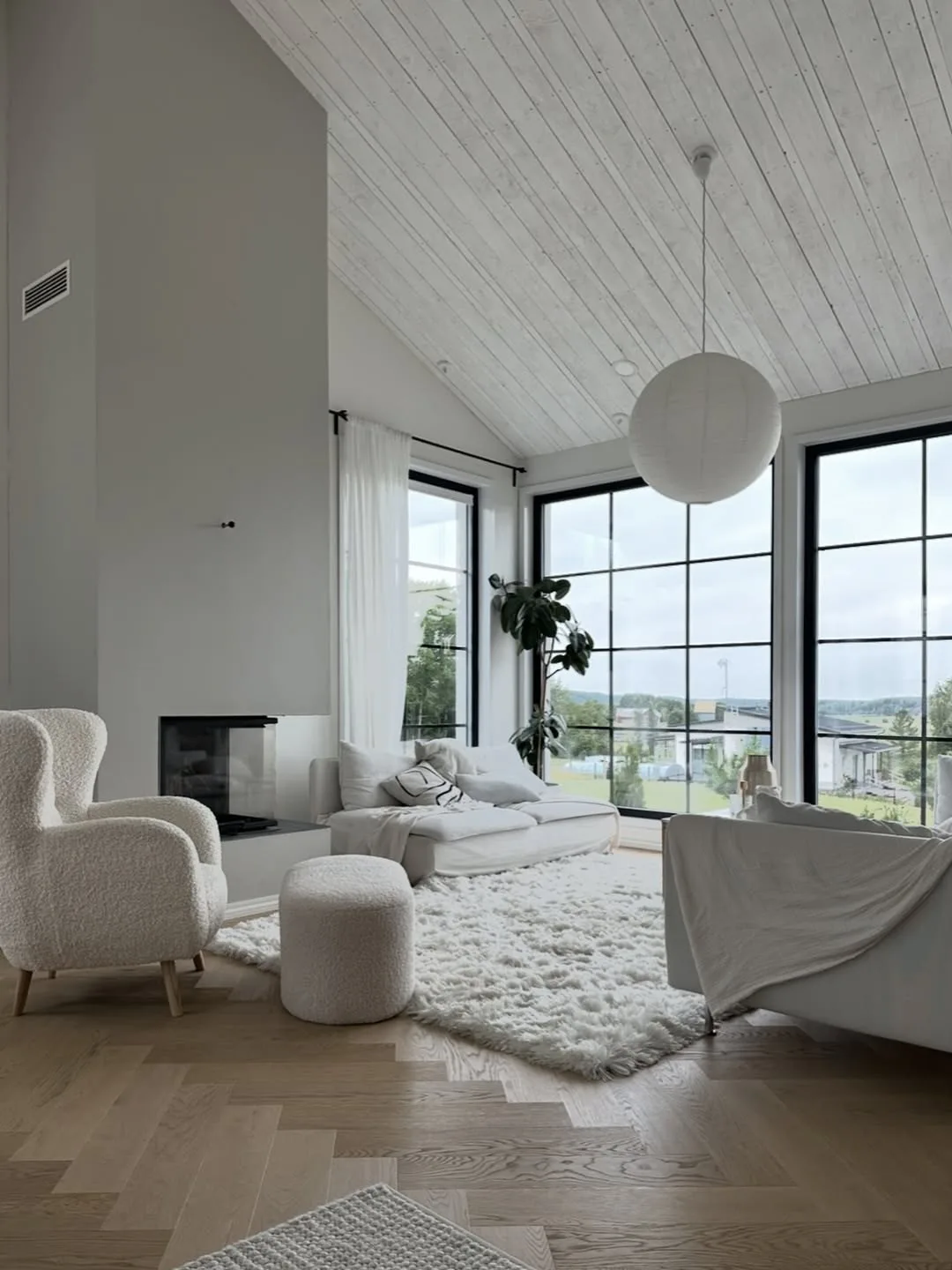
An all white room stays warm when the white arrives in different textures: a bouclé chair, a fluffy rug, a linen throw, a paper pendant lamp. The colors match almost exactly, and the surfaces do all the decorating.
This is the safest way to decorate a rental, because texture never clashes and never dates. Choose three textures per room and repeat them: wool and linen in the living room, cotton and wood in the bedroom.
Keep one texture soft underfoot. A deep pile rug or a sheepskin over a chair changes how the room feels the moment you walk in, which is the hygge half of the style doing its work.
Anyone who finds white rooms cold gains the most. The common mistake is smooth everything: flat sofa, flat rug, flat curtains. Without texture, white reads as empty; with it, white reads as calm.
Natural fibers matter here. Wool, linen, cotton and sheepskin have slightly uneven surfaces that catch light softly, while shiny synthetic fabrics flatten the effect and make the same white palette look cheaper than it is.
Keep the Bedroom to White, Gray and Wood
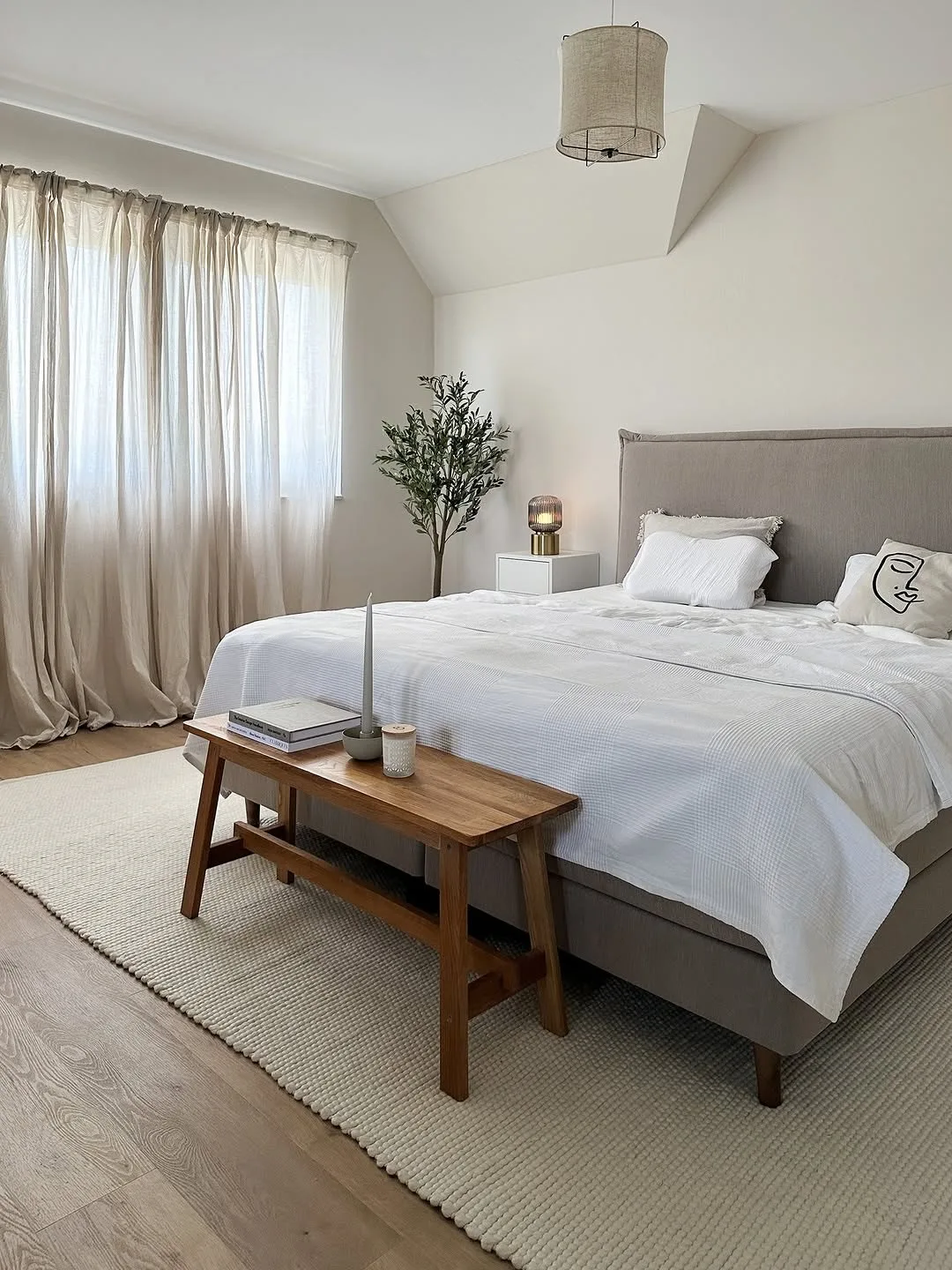
The Scandinavian bedroom runs on a three color rule: white bedding, pale gray in one or two pieces such as the headboard or a throw, and light wood beside the bed. Nothing else competes, and the room feels like a held breath.
White bedding is the engine of the look, and it is practical too, because every part of the set can be washed hot and bleached back to bright when city life dulls it.
Add softness through the throw and cushions, not through color. A gray knitted throw and one linen cushion give the bed its layers while the palette stays exactly where the rule put it.
Small bedrooms gain the most, because the tight palette makes the walls recede. The common mistake is one bright cushion or curtain creeping in. It becomes the only thing you see, so keep color for the living room.
Pick a Low Wooden Bed Frame
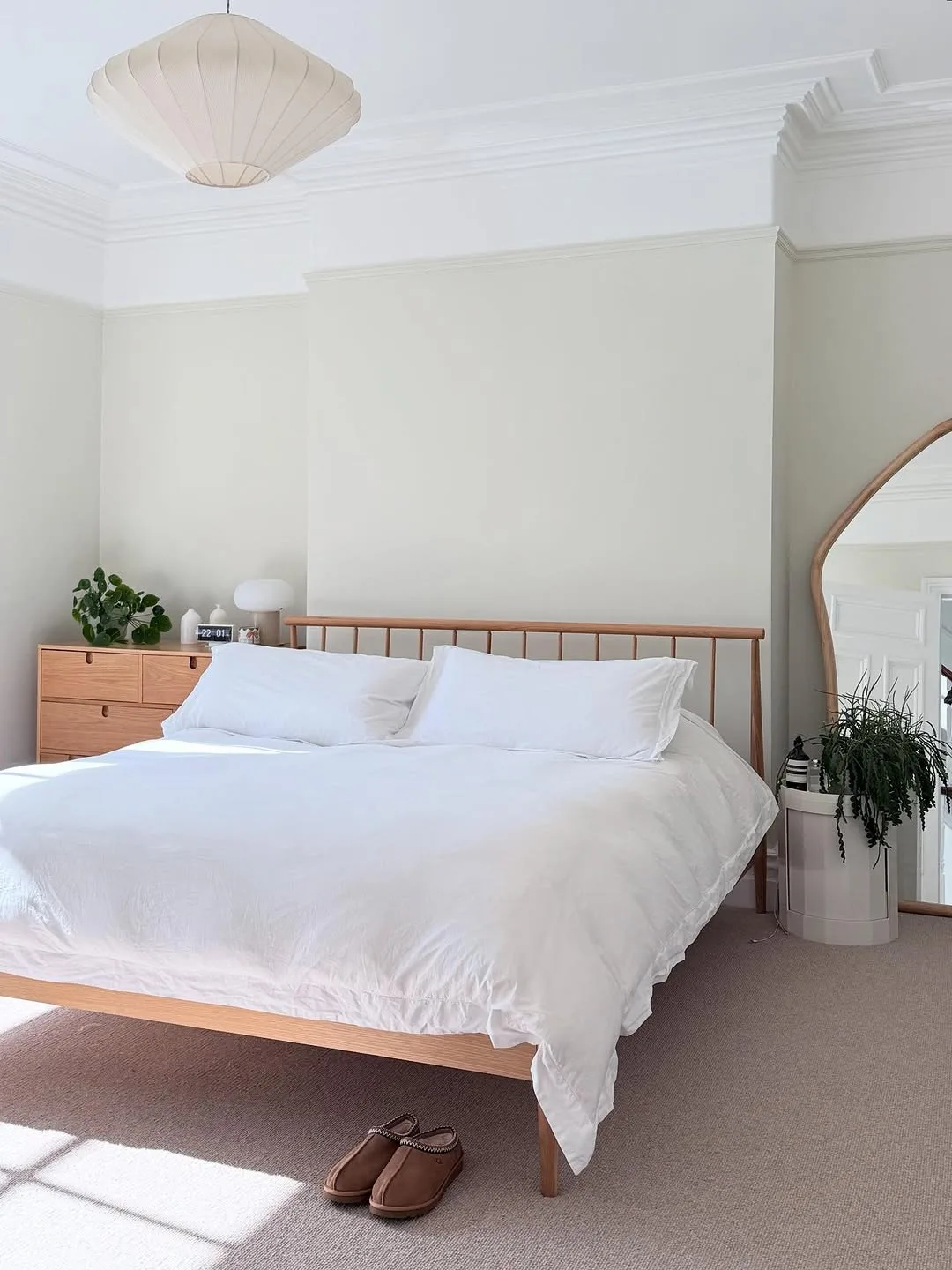
A low platform bed in light wood suits Scandinavian rooms and small ceilings at the same time. The frame sits close to the floor, the headboard stays simple or disappears, and the whole bed takes up less visual space than an upholstered frame.
Slatted bases in pine or beech are cheap, light to move and easy to find secondhand. Renters who move often gain twice, because the frames come apart with a handful of screws.
Dress the low bed with the bedding doing the work: white sheets, a folded gray or natural throw, and two pillows rather than a pile. The frame is plain, so the textiles carry the comfort.
Bedrooms with low ceilings gain the most. The common mistake is pairing a low frame with tall bedside furniture, which makes the bed look sunken. Keep nightstands at mattress height or lower.
Leave the space under a low frame empty, or use it only for flat storage boxes that slide out of sight. Visible clutter stored under the bed breaks the calm of a small bedroom faster than any other detail.
Dress Windows With Sheers That Keep the Light
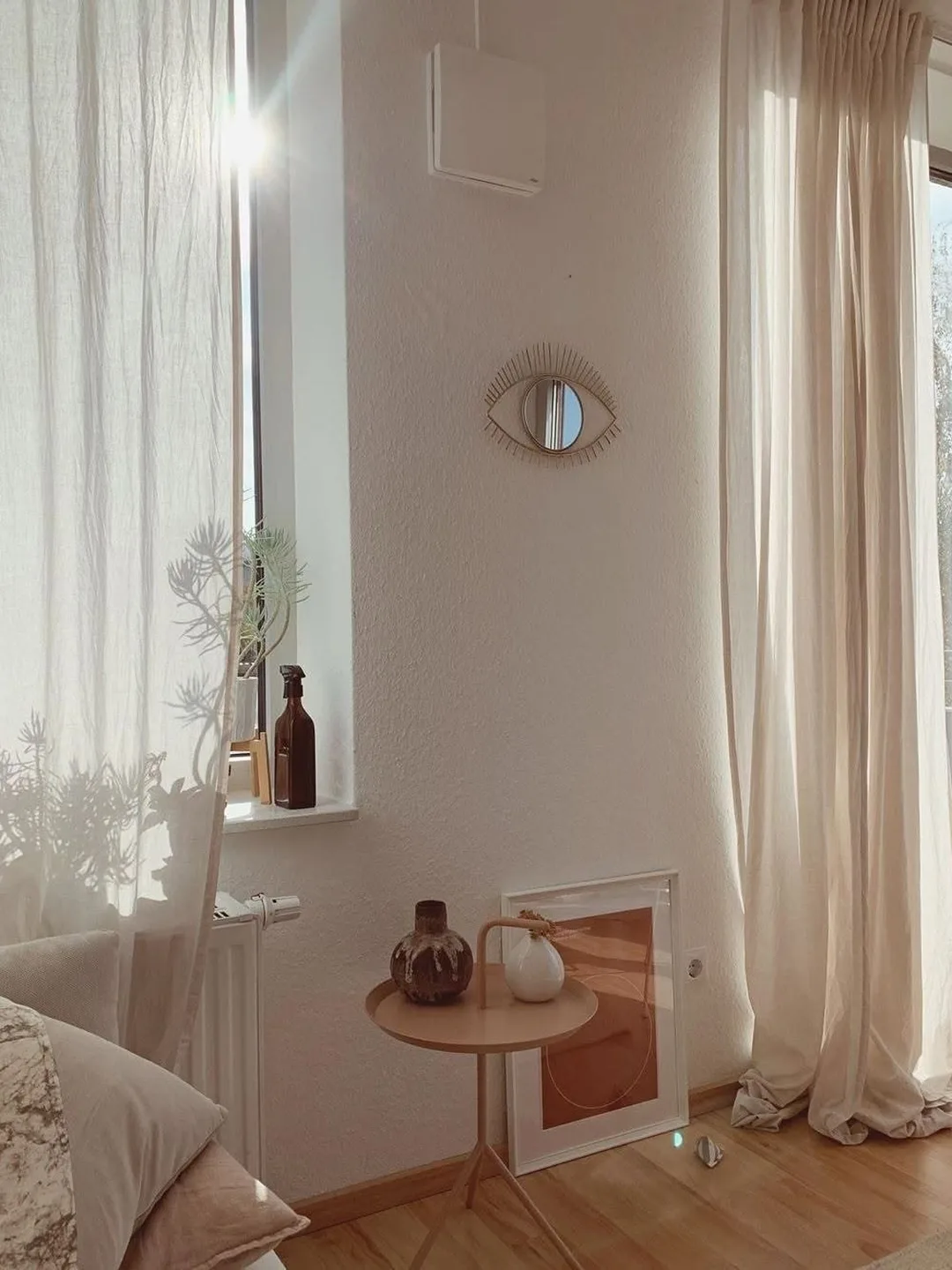
Scandinavian homes guard their daylight. Windows wear sheer white curtains that soften glare and give privacy without closing the room down, and in a small apartment that extra light is worth more than any lamp.
Hang sheers from ceiling height where you can, so the window looks taller, and let them fall straight without tiebacks. The plain drop of fabric is part of the style.
If your room needs darkness for sleep, pair sheers with a simple roller blind behind them rather than heavy curtains in front. The blind disappears by day and the sheers keep the look.
Dark apartments gain the most. The common mistake is thick lined curtains bought for a cold climate and kept shut against a small window. Sheers plus a blind solve warmth, privacy and light separately.
Define Living and Dining Zones in One Open Room
Open plan apartments need quiet borders. In Scandinavian rooms the borders are a rug under the sofa, a pendant lamp over the dining table, and a change of nothing else: same floor, same walls, same pale wood throughout.
The pendant matters more than any divider, because light pools define rooms in the evening. One pendant over the table and lamps at the sofa end give the open space two centers.
Keep the walkway between zones completely clear. Open plan feels spacious only while you can cross it without sidestepping furniture, so measure the gap and defend it.
Anyone in a combined living and dining room gains the most. The common mistake is a bookcase wall built across the middle, which steals the light the style depends on. Zone with light and rugs, not barriers.
Sound is part of zoning too. The rug, curtains and upholstered sofa absorb echo at the living end, while the dining end stays harder and brighter, and the two ends feel different even with your eyes closed.
Fit a Light Wood Dining Set Into a Small Corner
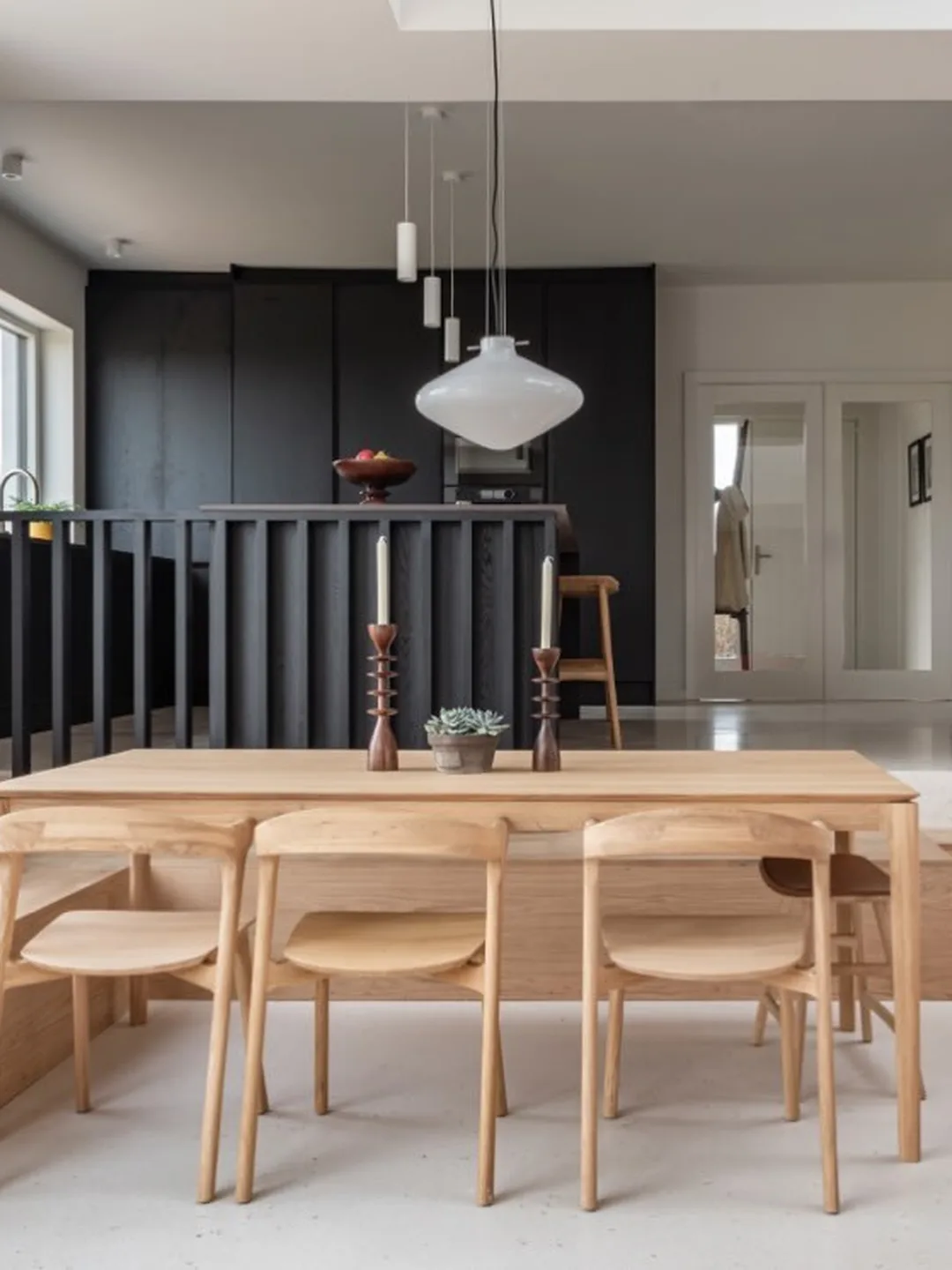
A small dining corner works in Scandinavian style because the furniture is light in every sense: a pale wood table, chairs with thin legs and open backs, and a simple pendant above. Four people can eat in a corner that a heavier set would crush.
Round tables suit corners best, because there are no sharp corners to catch hips in a tight space and everyone can squeeze in one more chair when guests come.
Keep the table surface almost empty: one bowl, one plant or a candle group. A dining table that doubles as a desk all week needs a tray that gathers work items and lifts away at dinner.
Small eat in kitchens and open plan corners gain the most. The common mistake is chairs that are too wide to tuck in. Measure the tucked width; the set should nearly disappear when nobody is eating.
Style Surfaces With Fewer, Better Objects
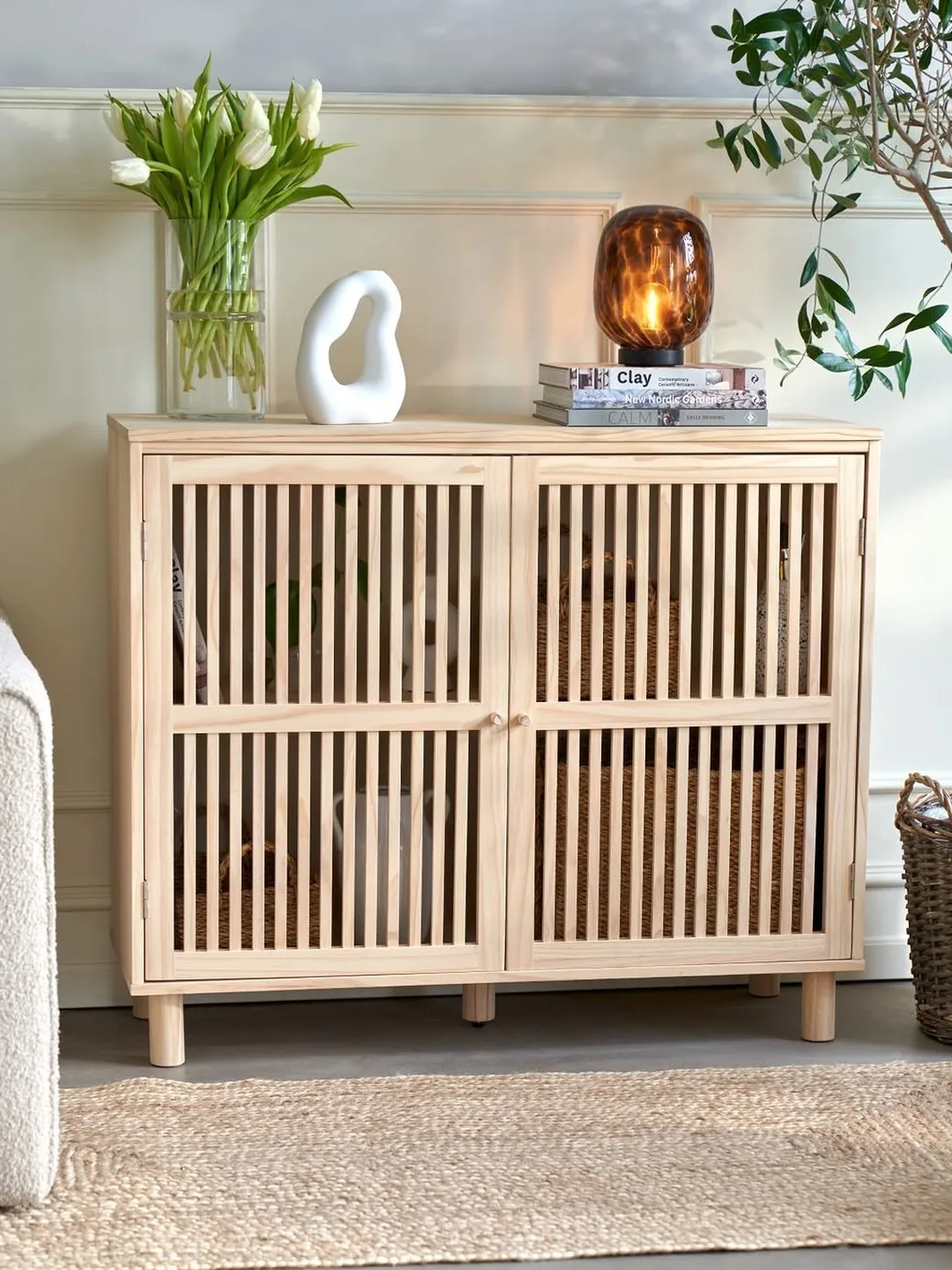
Scandinavian surfaces are edited hard. A cabinet top holds a vase with tulips or branches, one smooth bowl and perhaps a small stack of books, and the rest of the surface stays empty on purpose.
Choose objects with simple shapes and natural materials: glass, ceramic, pale wood, a single stem rather than a bouquet. Each piece should look good alone, because alone is how it will be seen.
Rotate objects instead of adding them. A shelf of five loved pieces, swapped with five stored pieces each season, feels fresh twice a year without buying anything.
Anyone whose shelves feel cluttered gains the most. The common mistake is styling every surface in the room. Leave at least one surface per room completely bare; the empty one makes the styled ones look intentional.
Photograph your styled surface before you live with it for a week. The camera shows clutter that your eye kindly edits out, and the one object you remove after seeing the photo is usually the one that was breaking the calm.
Add One Muted Color in a Small Dose
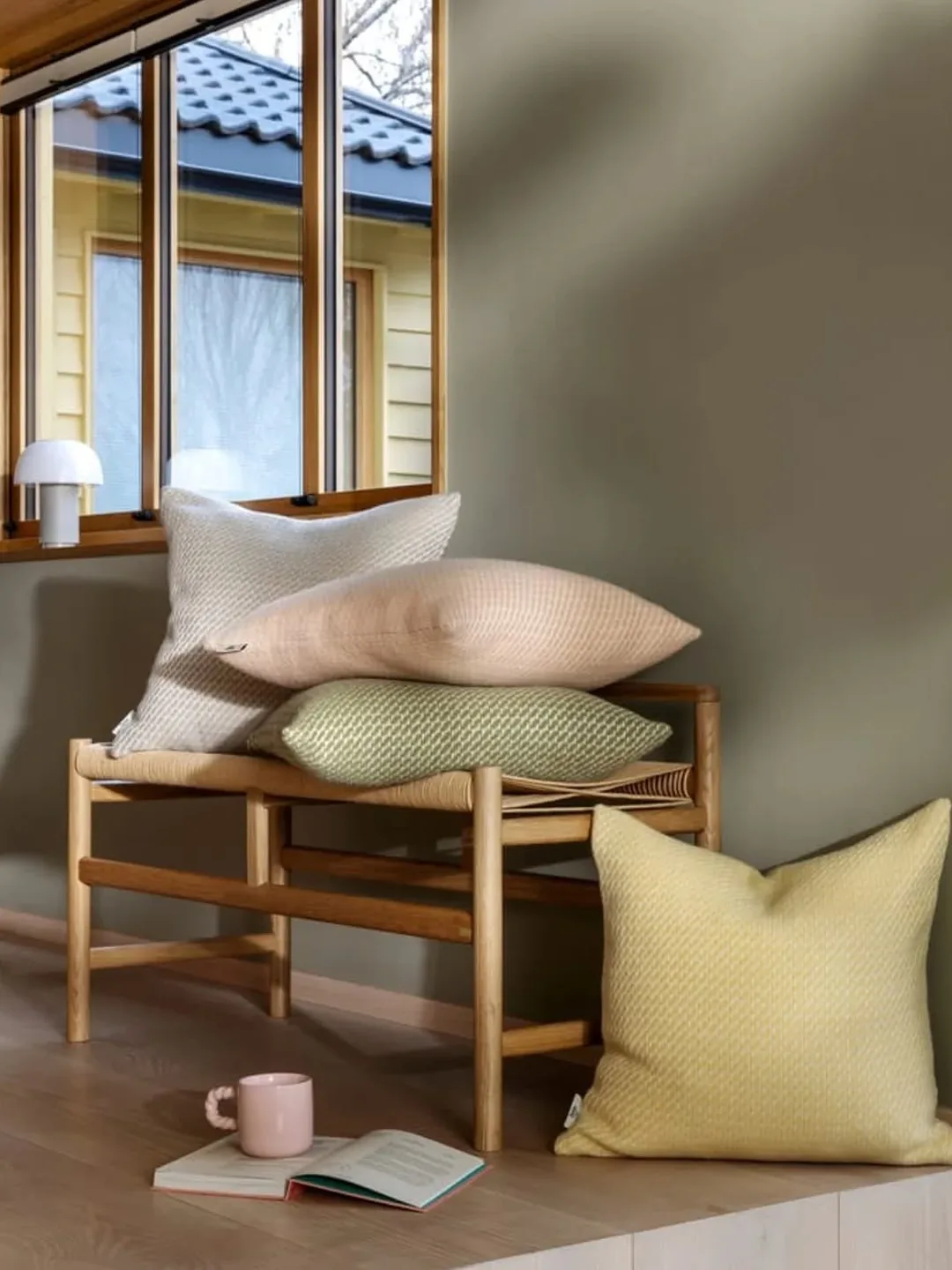
Scandinavian does not forbid color; it rations it. One muted color, sage green, dusty blue or clay, used on a single wall, a bench or a set of cushions, warms the pale base without breaking the calm.
Muted means gray has been added. Bright versions of the same colors shout in a pale room, while the dusty versions sit quietly beside white and light wood.
Renters can dose color through textiles and one painted piece of furniture instead of a wall. A sage bench or a set of dusty blue cushions can move house with you, which a painted wall cannot.
Anyone who finds all white rooms plain gains the most. The common mistake is dosing color in every room with a different shade. Repeat the same muted color through the apartment and it becomes the thread that ties the rooms together.
Lean a Mirror Where It Bounces the Light
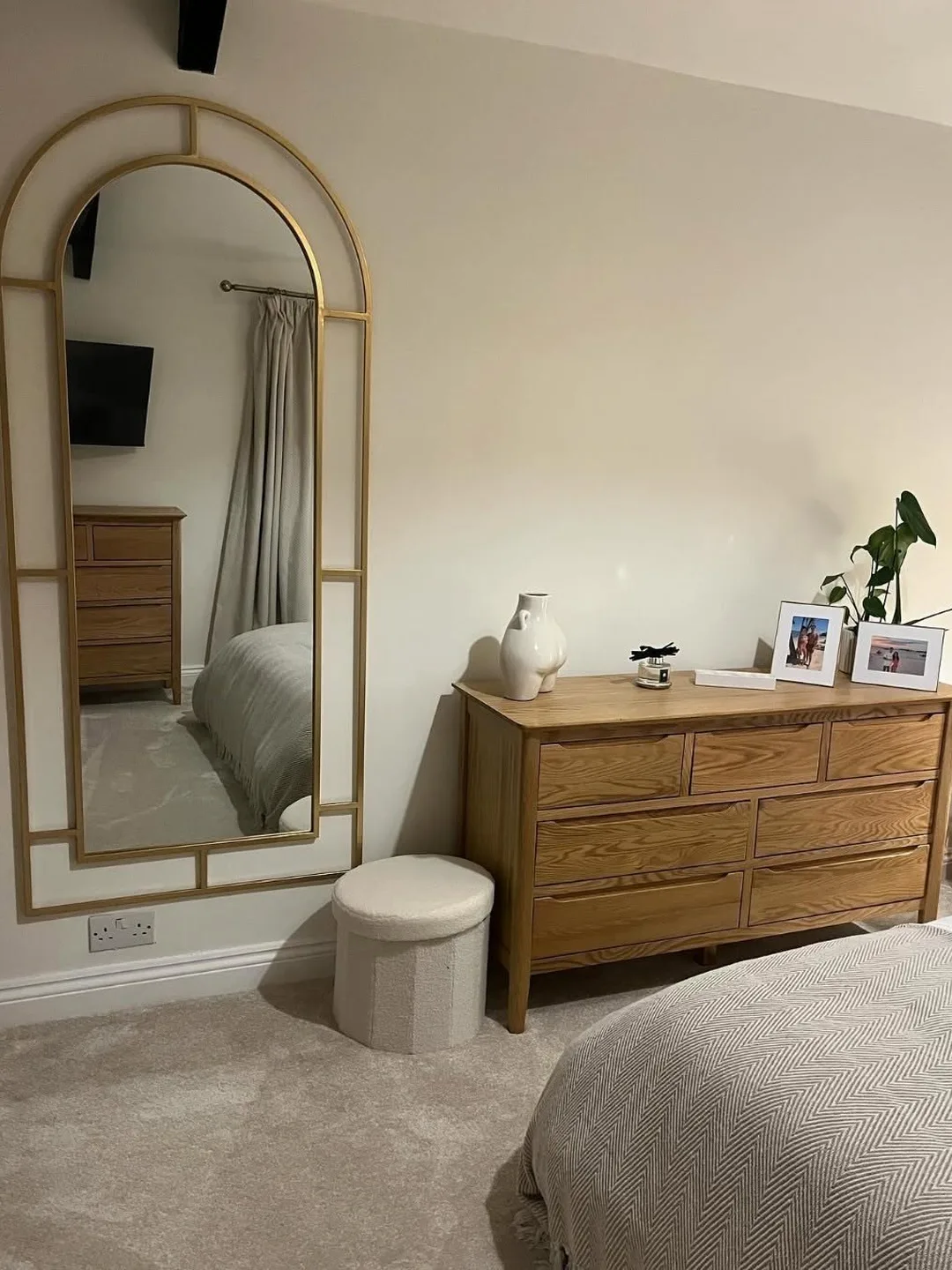
A large mirror is a window you can place. Leaned against the wall opposite or beside a real window, it throws daylight into the darker half of the room and doubles the view of anything green outside.
Leaning suits renters and suits the style: a simple wood or thin metal frame, rested on the floor at a slight angle, no fixings and no holes. Add adhesive pads at the top corners if the floor is slippery.
Bedrooms gain a dressing mirror at the same time, and living rooms gain light. Check what the mirror reflects before you settle it; it should show the window, a plant or a lamp, not the kitchen bins.
Dark corners gain the most. The common mistake is a small mirror hung high like a picture, which reflects the ceiling and helps nobody. Go large, go low, and aim it at the light.
Clean the mirror more often than the windows. A smeared mirror returns dull light and quietly undoes the whole trick, while a polished one can make a north facing room feel like it gained a second window.
Add Hygge With Candles, Throws and Warm Lamps
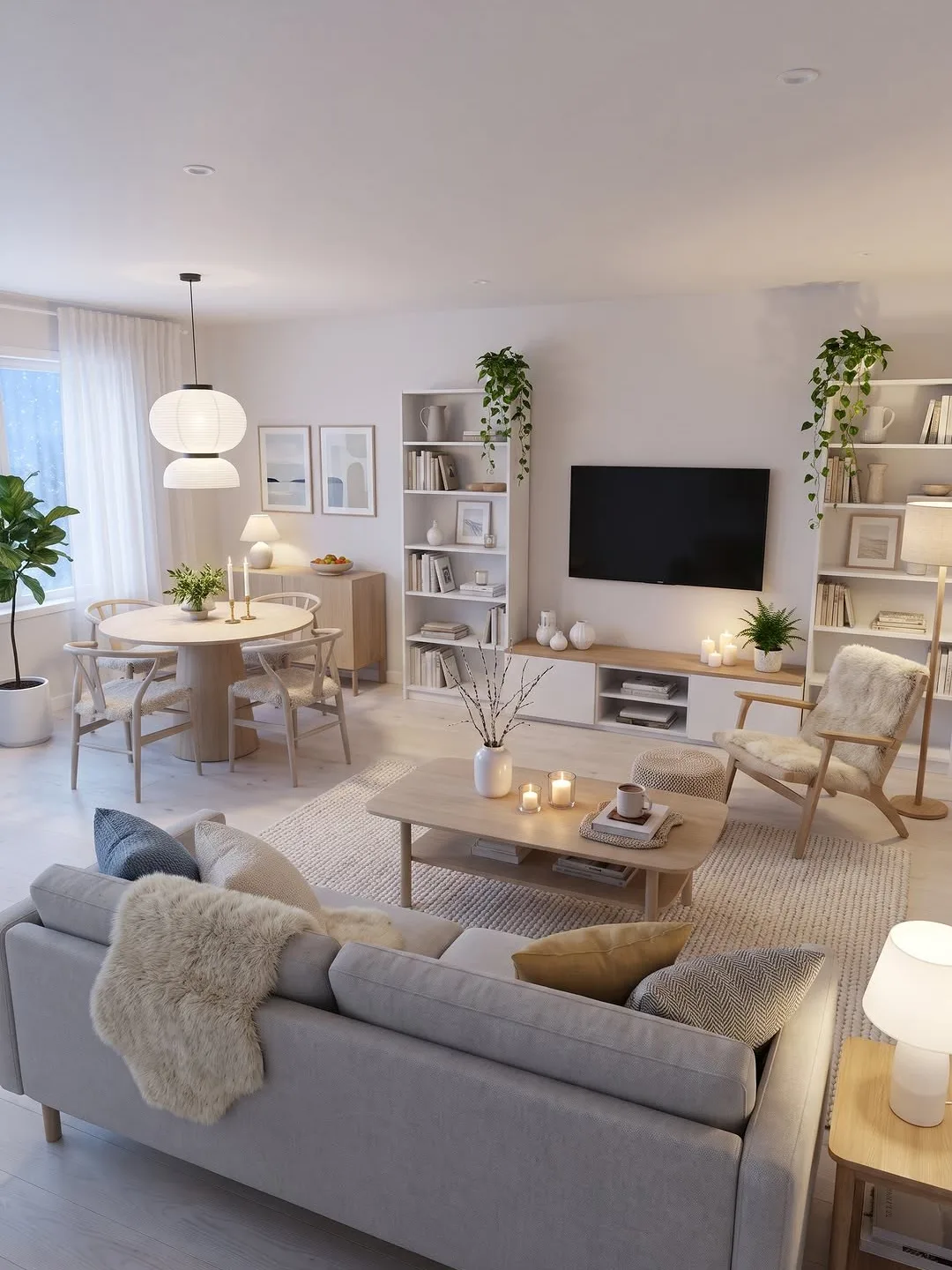
Hygge is the evening half of Scandinavian decor: the moment the pale room fills with candlelight, a throw over your legs and one warm lamp in the corner. In the photo the candles, sheepskin and low lamps do exactly that work.
Group candles in threes on the coffee table and the shelves where you spend the evening, and use battery candles on high shelves or near curtains where real flames should never go.
Keep one throw per seat, folded over the arm where a hand finds it without thinking. Wool and fleece throws in cream and gray keep the palette and earn their place every single evening.
Anyone whose apartment feels fine by day and flat by night gains the most. The common mistake is one bright ceiling light doing all the evening work. Switch it off, light the lamps and candles, and the same room turns into the reason Scandinavian style exists.
Keep the hygge kit in one basket: candles, matches, the spare throw and a paperback. When the basket comes out, the evening starts; when everything returns to it in the morning, the pale room resets itself.
Choose Light Wood Storage That Keeps Clutter Hidden
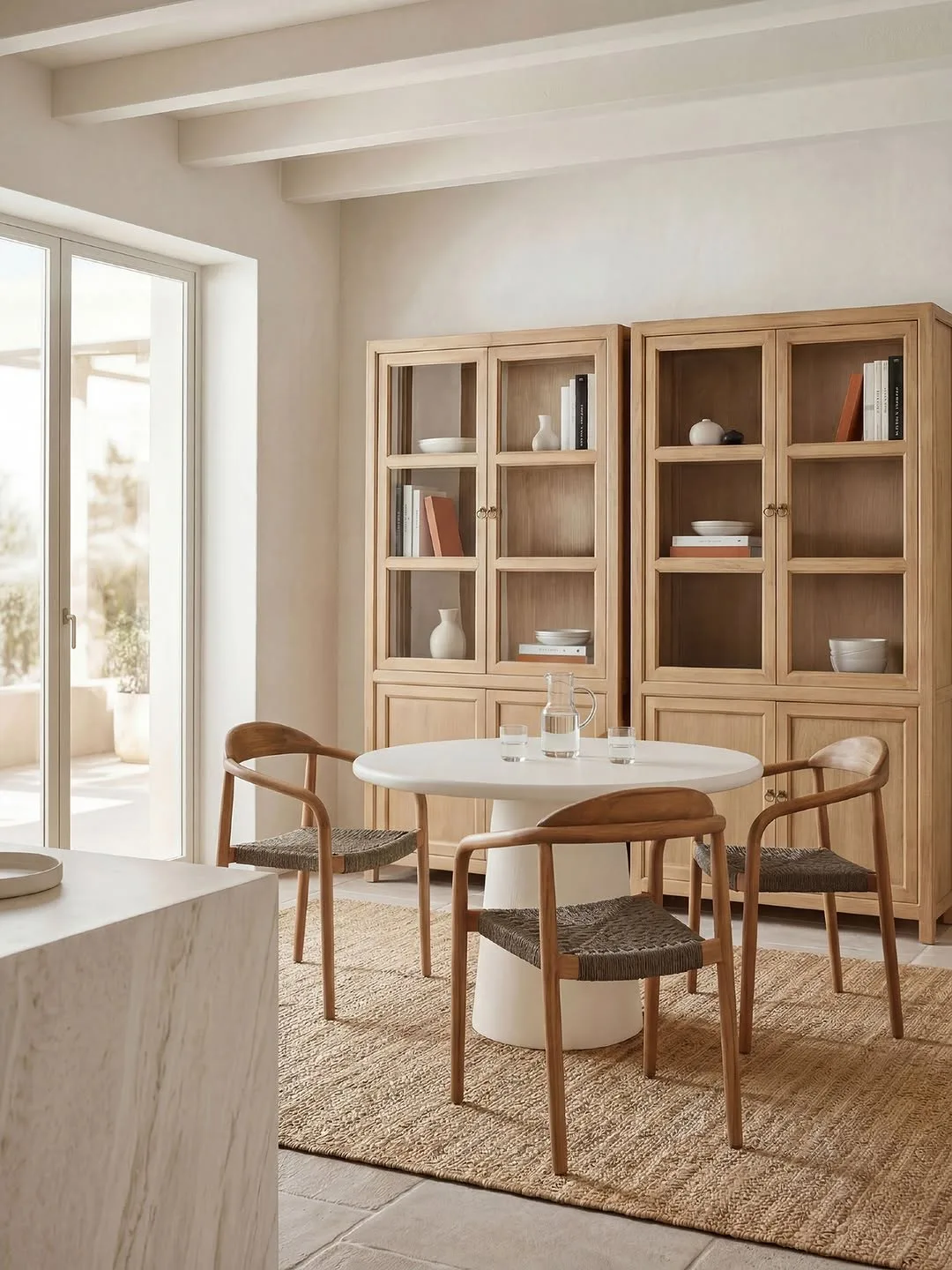
Calm rooms need somewhere for the mess to go. Light wood cabinets with glass or closed doors store the everyday clutter of a small apartment while keeping the visual weight low, because pale wood reads as part of the wall rather than as furniture.
Glass doors suit the things that look calm: dishes, glasses, books and folded linen. Solid doors take the rest. Most small homes need one of each, and the photo shows how quietly a pair of cabinets can hold a whole dining area’s worth of things.
In rentals, a freestanding cabinet beats built in storage because it leaves with you. Measure the wall, buy the tallest cabinet that fits through your door, and anchor it if children climb.
Small apartments without a pantry or hall cupboard gain the most. The common mistake is open shelving for everything, which demands constant tidiness. Doors forgive a busy week; open shelves never do.
Place One or Two Plants Where the Light Already Is
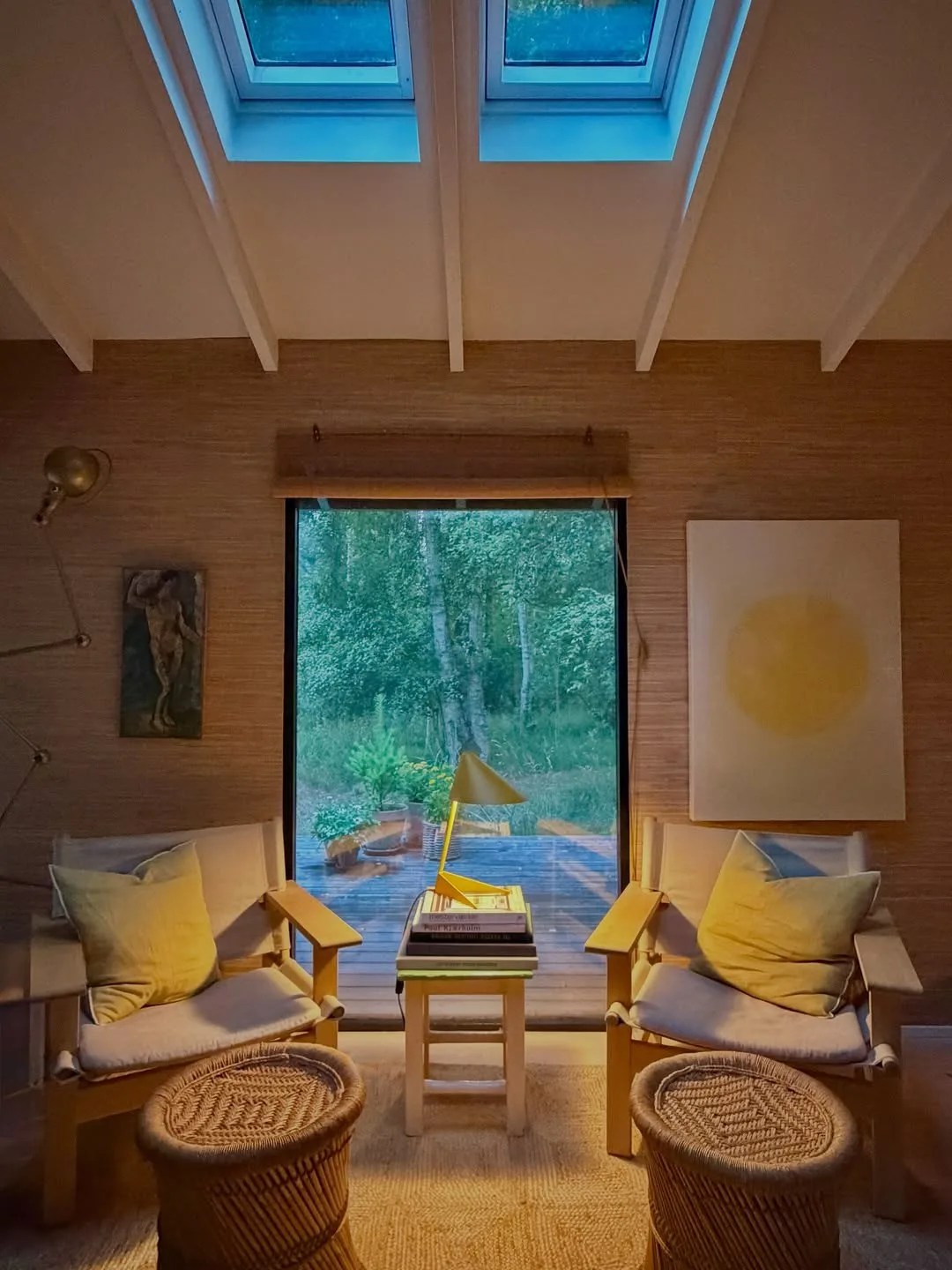
Scandinavian rooms use plants sparingly: one tall plant by the window, one small one on a table, and that is usually enough. The green reads as a color accent, and each plant gets the light it actually needs to stay alive.
Choose plants with simple shapes, a fiddle leaf fig, a snake plant or a plain monstera, in plain pots of white, clay or pale wood colored basket. The pot should disappear; the plant is the point.
Put the tall plant where it softens a corner or frames a window, as in the photo, never in the middle of a walkway. Plants in traffic get knocked, and knocked plants quietly die.
Anyone who has killed plants in dark corners gains the most. The common mistake is a collection of small struggling plants spread through the room. Two healthy plants in the light beat ten survivors in the shade. Our indoor plants for small apartments guide lists the hardiest choices.
Fold plant care into the room’s routine: water on the same morning each week, dust the leaves when you dust the shelves, and turn each pot a quarter turn every month so the plant grows evenly toward the light.
Common Scandinavian Apartment Mistakes to Avoid
Making the Room Cold Instead of Calm
White walls and pale wood feel cold when texture and warm light are missing. Add wool, linen, candles and warm bulbs before you conclude the style is not for you.
Buying Everything in Bright White
Pure white furniture under warm lamps turns yellowish and glaring. Mix warm whites, creams and natural wood so the room reads soft rather than sterile.
Leaving Every Surface Empty
Scandinavian rooms are edited, not bare. A room with nothing on display feels unfinished. Keep a few loved objects out and store the rest.
Choosing Furniture That Is Too Big
The style depends on seeing floor around furniture. Oversized sofas and deep armchairs eat the light and the space; choose slim pieces with legs.
Blocking the Windows
Heavy curtains, tall plants on the sill and furniture against the glass all steal daylight. Keep window areas clear and let the light reach the back of the room.
Mixing in Dark Heavy Pieces
One dark bookcase or black leather chair can swallow a pale room. If a dark piece must stay, soften it with pale textiles and keep it away from the window wall.
Budget-Friendly Scandinavian Apartment Tips
Paint is the cheapest transformation if your lease allows it: one warm white on the walls changes every piece of furniture you own. If painting is banned, white bedding, curtains and a pale rug deliver most of the effect.
Buy the simple shapes secondhand. Scandinavian style furniture has been made for decades, so pale wood tables, chairs and cabinets fill charity shops and listings at low prices, and the plain shapes hide wear well.
Spend on textiles before furniture. A wool throw, linen cushion covers and sheer curtains soften a room of basic flat pack furniture more than one designer chair would.
Use candles and lamps you already own, grouped with intention. Three plain candles on a tray look styled; the same candles scattered look forgotten. Grouping is free.
Sell what does not fit the palette. The dark bookcase and the patterned armchair fund the pale rug and the light wood table, and the apartment gets lighter in both senses.
Do the free version first and live with it for a week: edit the surfaces, move the mirror, and swap in the lightest curtains you own. The week tells you which single purchase will actually matter, and it is rarely the one you expected.
A One Day Plan for a Scandinavian Reset
Morning: edit. Carry everything that is not furniture out of the living room, then bring back only the pieces that fit the palette and earn their place. What stays out goes to a cupboard, a donation bag or another room.
Midday: fix the light. Wash the windows, swap heavy curtains for sheers if you have them, and place the mirror where it catches the window. These three jobs cost nothing and change the room more than shopping does.
Afternoon: arrange. Pull the sofa onto the rug, set the coffee table, style one surface with three objects, and place the tall plant by the window. Step back at the doorway after each change; Scandinavian rooms are judged from the door.
Evening: test the hygge. Light the lamps and candles, put a throw on each seat, and spend the evening in the room. Whatever still bothers you by lamplight is tomorrow’s short list, and it is usually two items, not twenty.
FAQ
Does Scandinavian decor work in a small apartment?
Yes, it was made for small northern homes. Pale colors, light wood, slim furniture and edited surfaces all make small rooms feel bigger and brighter, and most of the changes are textiles and arrangement rather than renovation.
Is Scandinavian apartment decor renter friendly?
Very. The biggest changes are paint free ones: pale rugs, sheer curtains, white bedding, freestanding light wood furniture and mirrors that lean instead of hang. If your lease allows one painted wall, warm white is the only color you need.
How do I stop a Scandinavian room feeling cold?
Add texture and warm light. Wool throws, a deep rug, linen cushions, candles and warm white bulbs in lamps instead of the ceiling light are the standard fix, and they cost less than any furniture change.
What wood tones are Scandinavian?
The lightest ones: pine, beech, ash and pale oak, usually matte and unstained or lightly oiled. Keep the tones close to each other across the room, and avoid dark walnut, mahogany and glossy orange varnishes.
Can I mix Scandinavian with furniture I already own?
Yes. Keep the pieces with simple shapes and light colors, soften dark pieces with pale throws and cushions, and replace one item at a time as budget allows. The style is a direction, not a test you pass in a weekend.
What is the difference between Scandinavian and minimalist?
Minimalism removes until only the essential remains, anywhere in the world. Scandinavian keeps the calm surfaces but adds warmth on purpose: wood, wool, candles and comfort, a quality called hygge. If a room feels calm but a little bare, it is minimalist; calm and cozy means Scandinavian.
Conclusion
Scandinavian apartment decor works in small spaces because it spends its effort on light, calm and comfort instead of objects. A pale base, light wood, a few simple pieces of furniture and warm textiles in the evening turn an ordinary rental into a room that feels twice its size.
Build it in order: edit first, fix the light second, and add pieces last. Most apartments need subtraction more than shopping, and the style rewards every item you remove with visible calm.
If you prefer warmer layers and pattern instead, our boho apartment decor ideas take the same small rooms in the opposite direction. Either way, start with one room this week and let the light tell you what to do next.