
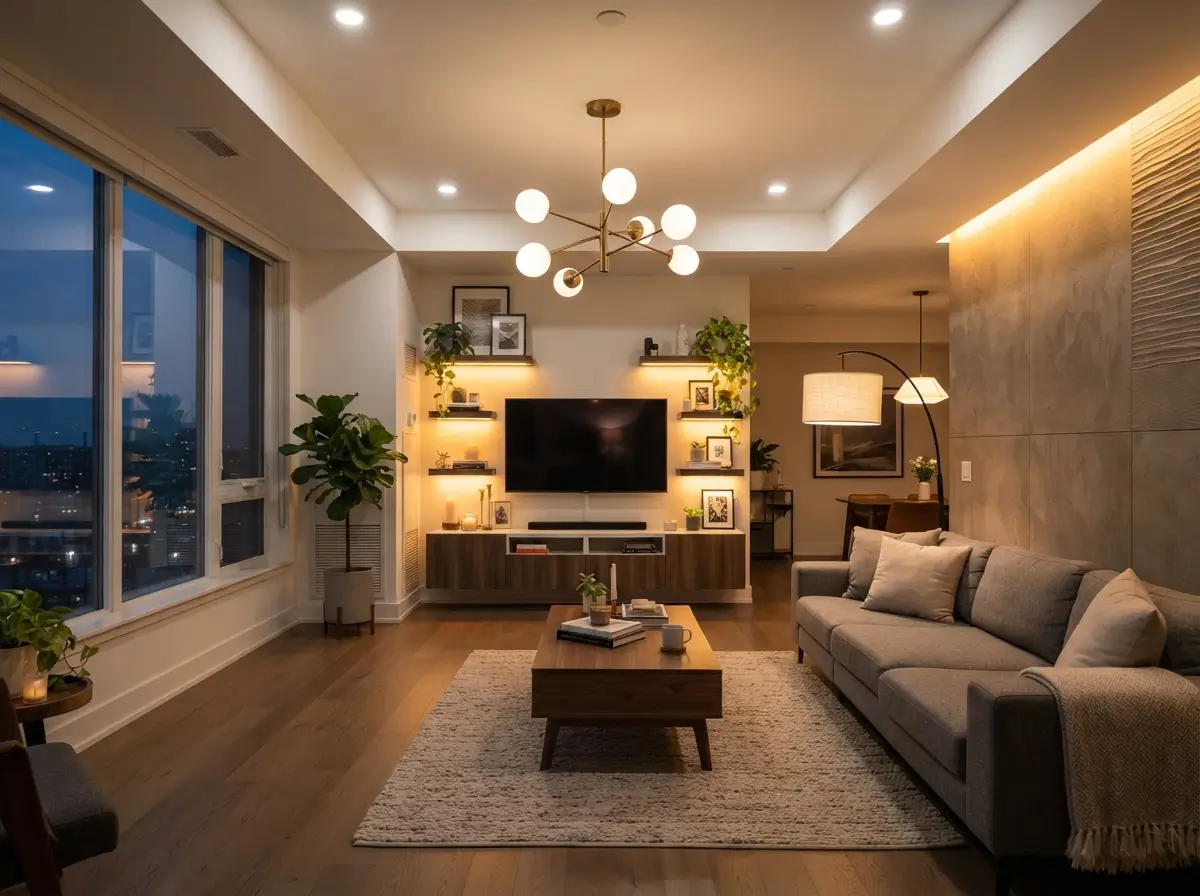

Good lighting can change how an apartment living room feels, functions, and even looks at different times of day. Limited floor space, low ceilings, awkward outlet positions, and rental rules often make lighting harder than choosing a sofa or rug. Still, thoughtful planning can solve most of those problems without expensive rewiring. The best results usually come from combining several modest light sources rather than relying on a single bright ceiling fixture. Warm bulbs, adjustable lamps, and careful placement can make a small room feel calmer, more balanced, and more useful for reading, relaxing, studying, or hosting friends. Apartment Living Room Lighting Ideas
Modern apartments serve several purposes. A sofa area may also work as a home office, dining space, media zone, or guest area. Lighting should support those jobs without filling the room with oversized fixtures or tangled cords. A slim floor lamp beside the sofa can help more than a decorative pendant that casts harsh shadows. A dimmer can make one fixture useful from morning to night.
What Is the Best Lighting Plan for an Apartment Living Room?
The best plan uses layers. Combine general lighting for overall visibility, task lighting for reading or work, and accent lighting for shelves, art, or dark corners. Most rooms need at least three light sources placed at different heights. One ceiling light, one floor or table lamp, and one smaller accent light usually create a stronger result than a single high-output bulb.
Ask one practical question before buying anything: What activities take place in the room after sunset? List reading, television, studying, entertaining, cleaning, and relaxing in order of importance. That list will guide fixture type, brightness, placement, and bulb temperature. Good Apartment Living Room Lighting Ideas always begin with function before style.
Build a Three-Layer Lighting Plan
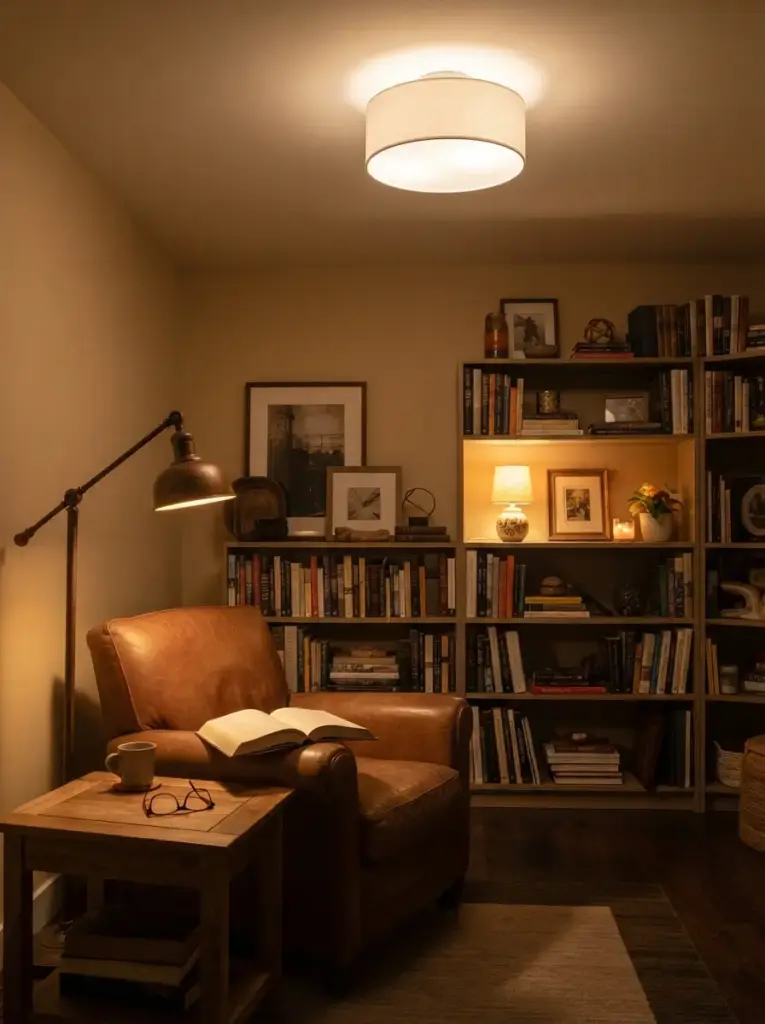
Start by dividing the room into ambient, task, and accent lighting. Ambient light fills the space and helps people move around safely. Task light focuses on reading, studying, puzzles, or laptop work. Accent light creates depth around shelves, artwork, plants, or architectural details. Use each layer for a different purpose instead of asking one fixture to do everything.
Layering succeeds because light comes from several directions and heights. Faces look softer, corners feel less gloomy, and the room remains useful during different activities. Beginners benefit most from this approach because it creates a clear shopping order. Buy one practical source for each layer before adding decorative extras.
Try a 3000K ceiling fixture, a 2700K reading lamp, and a small 2700K shelf lamp. Keep colour temperatures close enough to feel connected. Mixing warm and cool bulbs can work in separate zones, but avoid placing a blue-white bulb beside a warm lamp where both shine on the same wall.
Replace Harsh Bulbs Before Replacing Fixtures
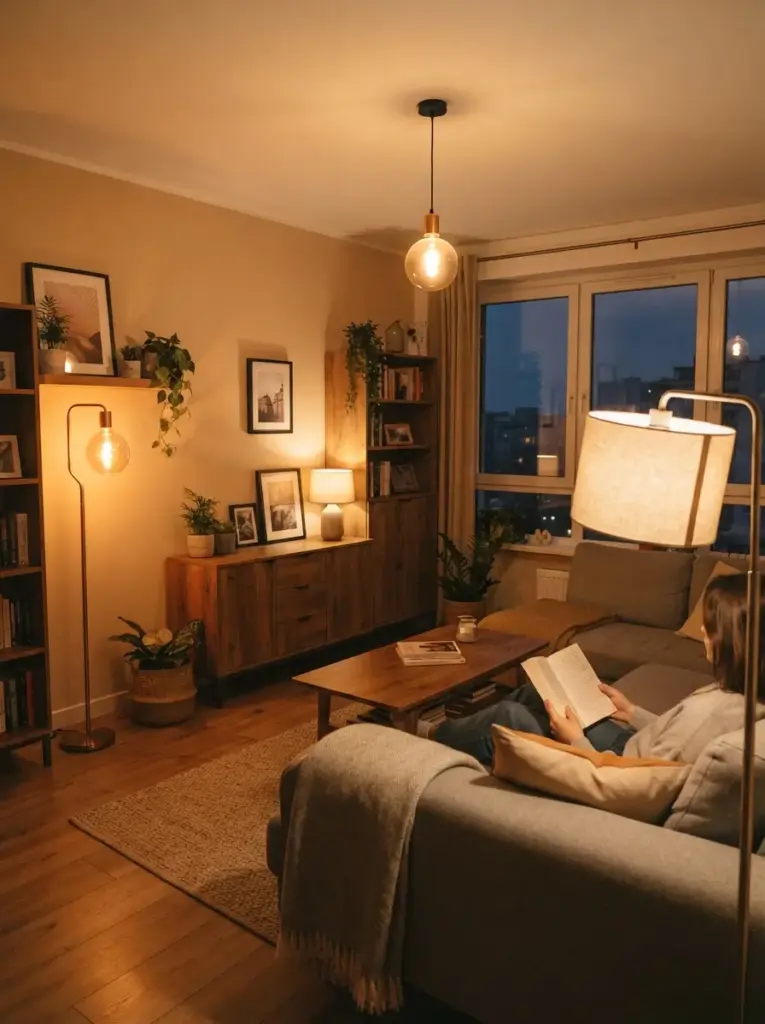
Check every bulb before assuming the fixture is the problem. Many apartments come with inexpensive cool-white bulbs that make beige walls look grey and wood furniture look flat. Switch to LED bulbs labelled warm white or soft white. A colour temperature around 2700K suits relaxed evening use, while 3000K works well in multipurpose rooms that also support studying.
Apartment Living Room Lighting Ideas often begin with bulb upgrades because they alter colour, comfort, and glare without changing the fitting. Renters, students, and first-home buyers can test one lamp before buying a full set. Matching bulbs across nearby fixtures also creates a more consistent room.
Choose brightness according to the job. A reading lamp may need around 800 lumens, while a small decorative lamp can use 300 to 500 lumens. Lamp shades reduce visible glare, so slightly brighter bulbs may work inside fabric shades. Exposed bulbs should usually be softer or dimmable.
Add a Slim Floor Lamp Beside the Sofa
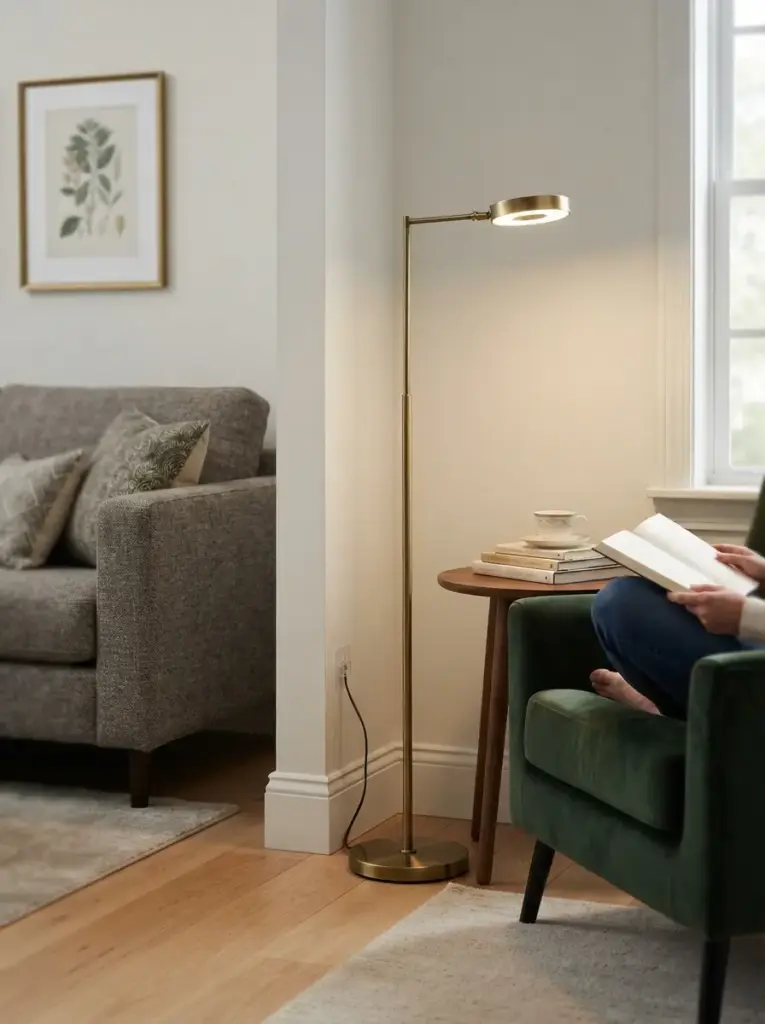
Place a narrow floor lamp beside the sofa, behind an accent chair, or near a reading corner. Arc lamps can extend light over a table, but they need enough clearance to avoid head bumps. Tripod lamps often take more floor space than expected. A straight stem, narrow base, or small pharmacy-style lamp works better in many apartments.
Slim floor lamps earn their place by adding useful light without needing a side table. They also bring illumination closer to eye level, which helps reduce the flat effect of ceiling-only lighting. People with narrow rooms or limited furniture benefit most.
Keep the base outside the main walking route and place the cord along the wall. Adhesive cable clips can prevent loose wires from crossing the floor. Choose black, brass, chrome, or warm white finishes that repeat another detail in the room, such as frame edges, cabinet handles, or table legs.
Use Table Lamps to Create Soft Pools of Light
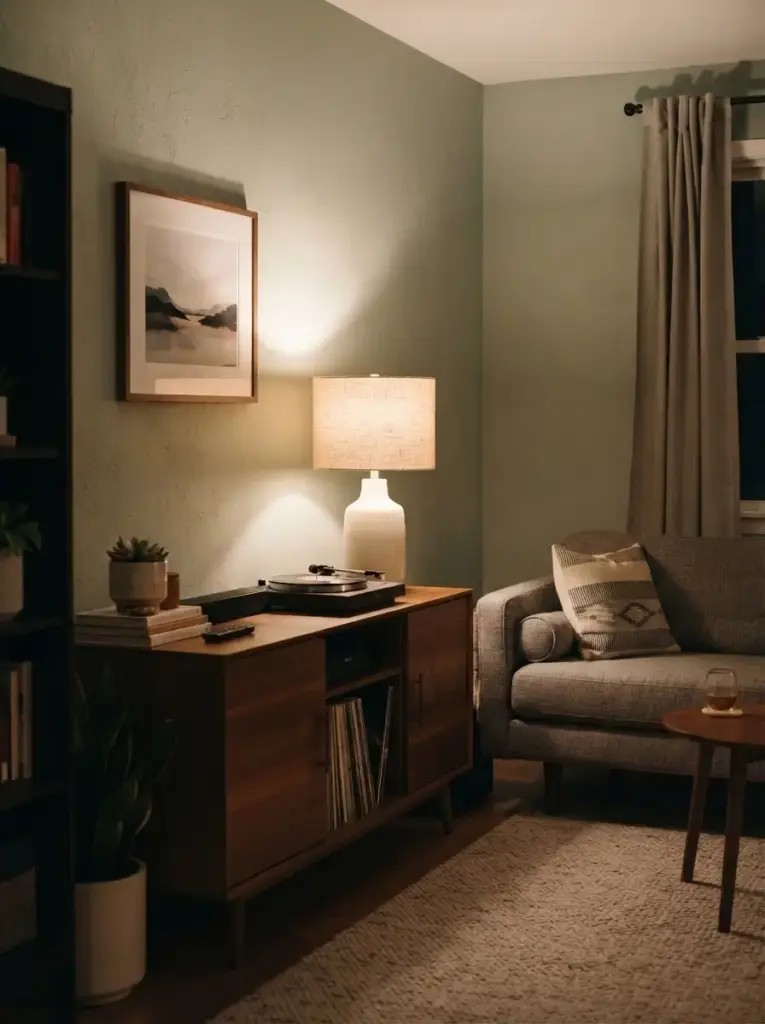
Set a table lamp on a side table, media cabinet, console, or sturdy shelf. Shades made from linen, cotton, paper, or frosted glass soften the bulb and spread light across nearby walls. Place the lamp where its bottom shade edge sits roughly around seated eye level. That position reduces direct glare while keeping the area bright enough for conversation.
Soft pools of light make a room feel more comfortable because the whole space does not need equal brightness. Darker edges can remain, while the seating area receives a gentle glow. People who enjoy calm evenings, television, or casual entertaining will notice the benefit most.
Your lamp does not need to match the furniture set. Try a ceramic base in cream, rust, sage, or charcoal. Glass bases feel lighter in small rooms, while wood adds warmth. Keep the shade proportionate so it does not crowd the tabletop or block sight lines.
Install Plug-In Wall Sconces
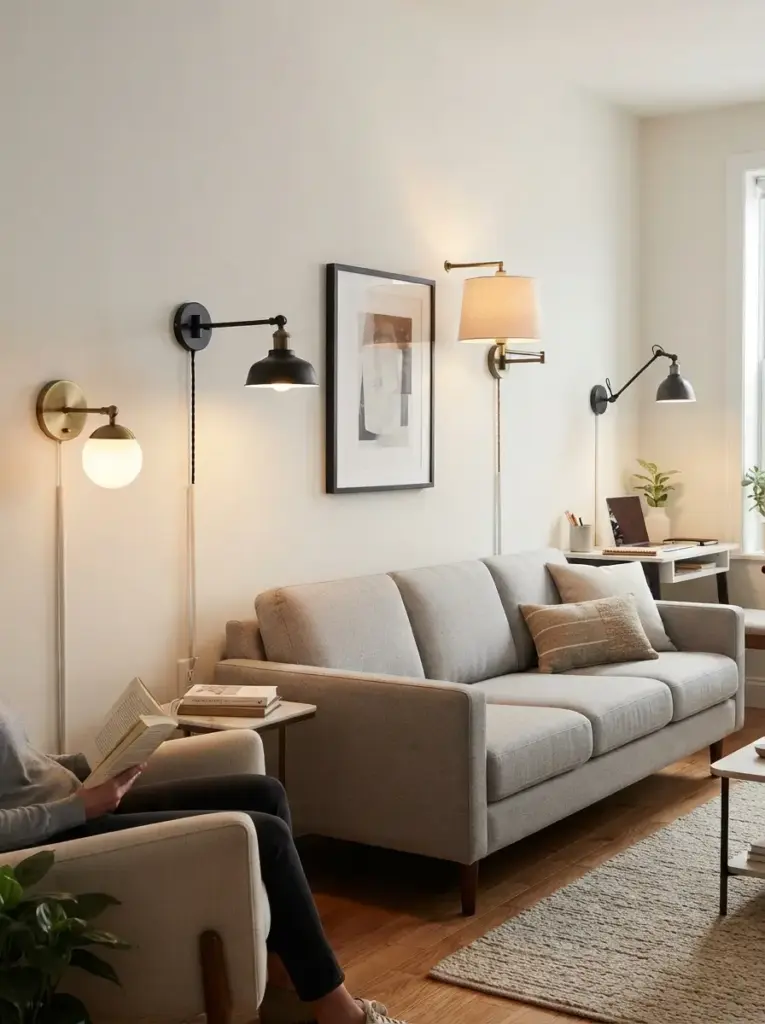
Plug-in sconces create the look of built-in lighting without hardwiring. Mount them beside the sofa, above a reading chair, on each side of artwork, or near a desk. Swing-arm designs are especially useful because the light can move toward a book or wall. Cord covers can make the installation look cleaner.
Wall sconces free tables and floor space, which makes them valuable in studios and compact rentals. They also add light at shoulder height, giving the room more depth than ceiling fixtures alone. Renters should check lease rules and use suitable anchors rather than relying on weak adhesive strips for heavy fittings.
Choose sconces with fabric shades for softness, metal shades for focused task light, or frosted globes for a modern look. Black works well in graphic interiors, while aged brass adds warmth. White sconces can blend into pale walls and keep the room visually quiet.
Try Rechargeable Lamps for Outlet-Free Corners
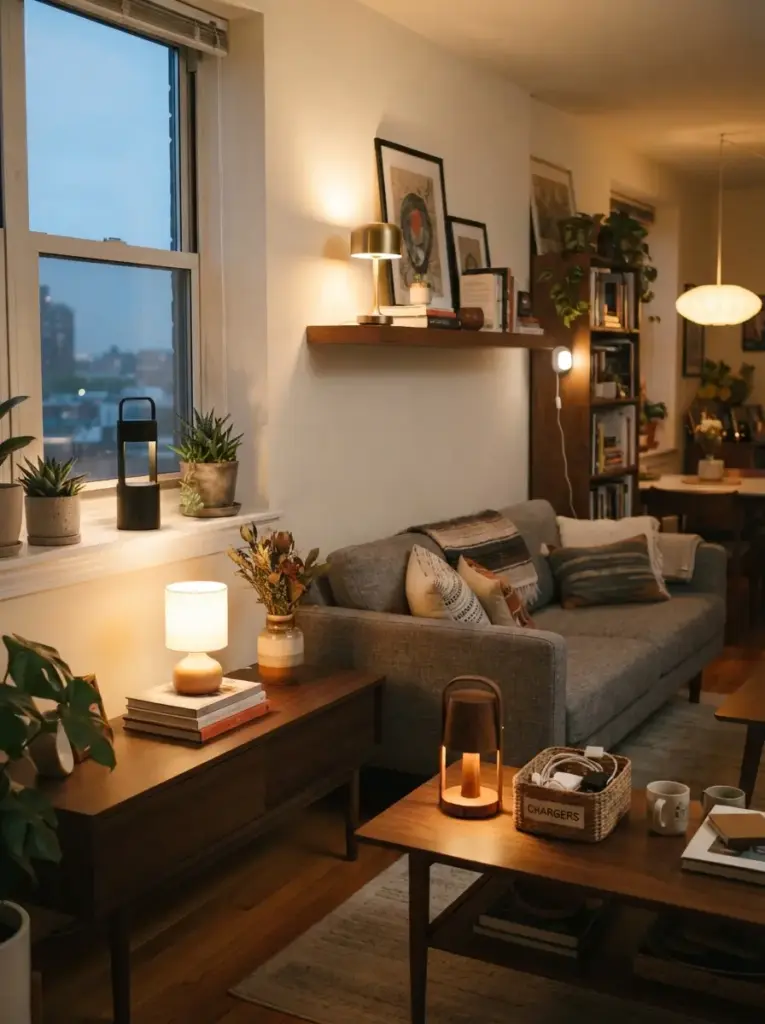
Rechargeable table lamps and cordless wall lights solve common apartment problems. Use them on a floating shelf, dining table, window ledge, bookcase, or console where no outlet sits nearby. Many models offer dimming and several colour temperatures. Recharge them during the day and move them where needed at night.
Cordless lighting supports flexible layouts because furniture no longer has to sit beside an outlet. It works well for renters who cannot add wiring and for students who regularly rearrange the room. Small portable lamps also help during power cuts or when guests need extra light.
Battery life varies, so choose models with clear runtime information and standard charging cables. Avoid using rechargeable lamps as the only source of light. They work best as accent or occasional task lights. Store the charger in a labelled basket so the lamp does not become unusable when the battery runs low. Apartment Living Room Lighting Ideas
Use a Dimmer for Better Control
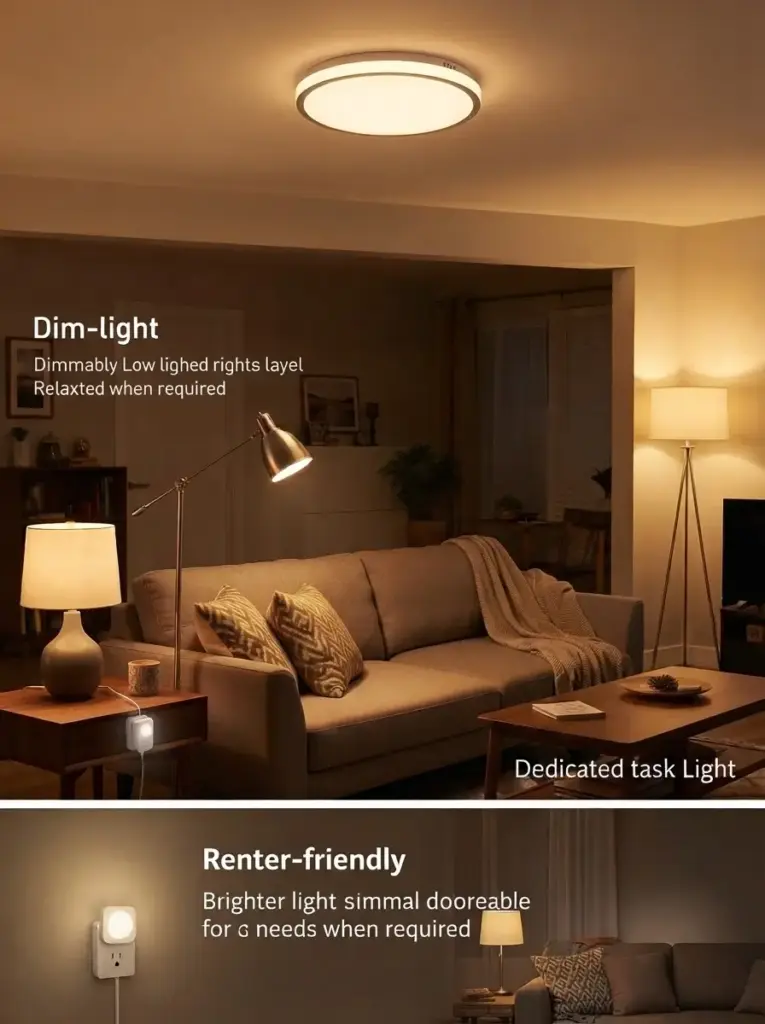
Dimmers allow one fixture to serve several needs. Bright light helps during cleaning, moving furniture, or group activities. Lower light suits television, conversation, and late-evening relaxation. Plug-in lamp dimmers are renter-friendly, while smart bulbs can offer app or voice control without changing wiring.
Apartment Living Room Lighting Ideas gain flexibility because brightness affects comfort as much as colour temperature. A room can use warm bulbs and still feel unpleasant when every fixture runs at full power. Busy households and multipurpose living rooms gain the most from adjustable levels.
Check compatibility before buying. Not every LED bulb works with every dimmer, and mismatched products may flicker or hum. Look for bulbs marked dimmable and use controls designed for LED lighting. Set a practical evening level, then keep one brighter task lamp available for reading or detailed work.
Add LED Strips Behind the Television
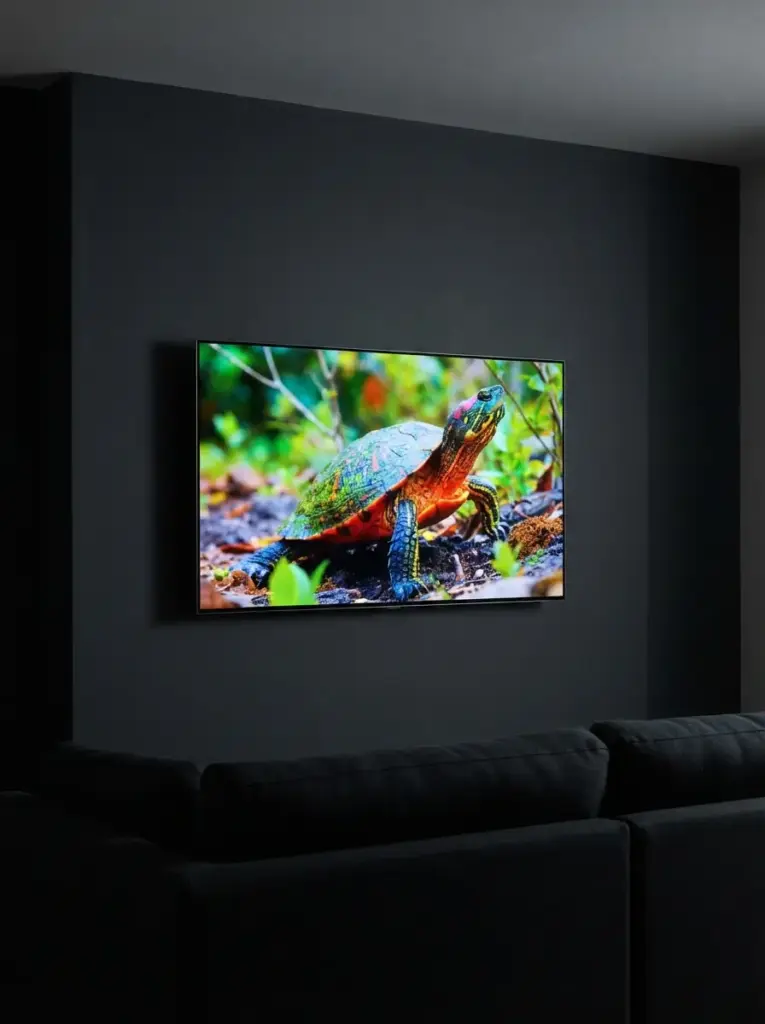
Install warm or adjustable LED strips behind the television, not around the visible front edge. Hidden backlighting reduces the contrast between a bright screen and a dark wall. It can also create a gentle outline that makes the media area feel more finished. Keep the light subtle rather than turning it into a bright colour display every night.
Backlighting helps eye comfort during evening viewing because the screen no longer appears as the only bright object in the room. Movie lovers, gamers, and people with dark media walls benefit most. A warm white setting around 2700K to 3000K usually blends better with living room lamps than saturated blue or purple.
Clean the television back before applying adhesive strips and leave space for ventilation. Route the cable with small clips and avoid covering ports. USB-powered strips may switch on with the television, while plug-in versions often provide stronger control.
Light Shelves From Above or Below
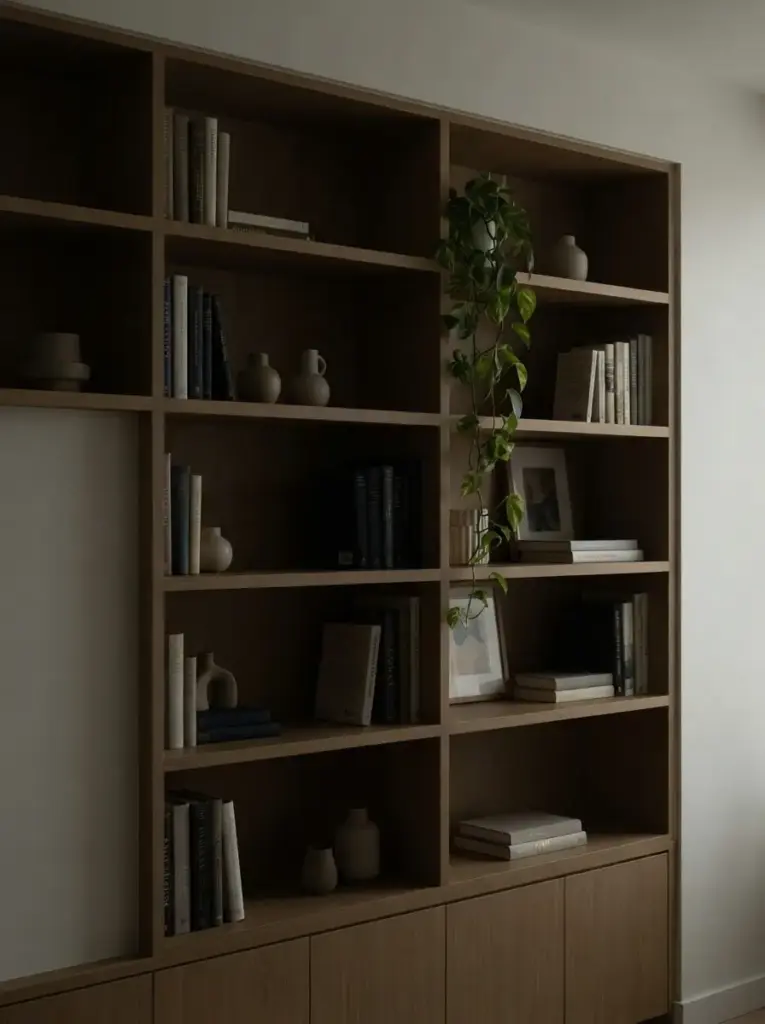
Use small puck lights, slim LED bars, or concealed strips to brighten bookshelves, display cabinets, and wall niches. Place the light toward the front of a shelf so it washes objects rather than creating harsh shadows behind them. Warm white works well with books, ceramics, plants, and wood.
Shelf lighting creates visual depth because the eye notices both the room and the objects within it. The effect is especially useful when the living room lacks architectural detail. Home decor lovers with collections or styled storage gain the most, but the display should remain edited.
Choose rechargeable puck lights for a simple rental solution. Magnetic models are easy to remove for charging. Keep brightness low enough that the shelf supports the room rather than becoming the brightest feature. Avoid placing hot bulbs close to paper, fabric, or delicate objects.
Highlight Artwork With Focused Light
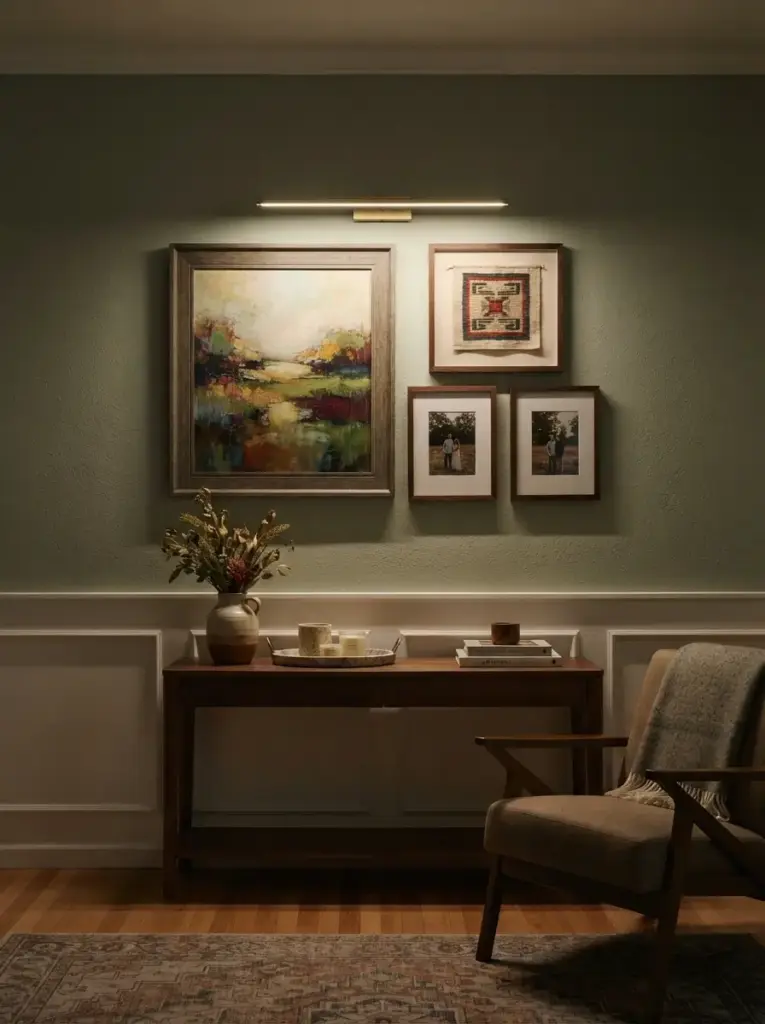
Use a picture light, adjustable wall lamp, or ceiling spotlight to draw attention to one large artwork or a small gallery grouping. Aim for even illumination across the surface. Keep the beam narrow enough to avoid washing the entire wall. Battery-operated picture lights can provide a no-wire option.
Focused art lighting gives the room a clear visual centre. One highlighted feature often looks calmer than several competing decorative lamps. Renters and first-home owners who have invested in a meaningful print, textile, or photograph can use light to make it feel intentional.
Check whether the artwork can handle direct light. Valuable photographs, watercolours, and textiles may fade under strong exposure, especially when sunlight also reaches them. Use LED sources because they produce less heat than older bulbs. Keep light levels moderate and turn the fixture off when the room is not in use.
Choose a Ceiling Fixture That Fits the Height
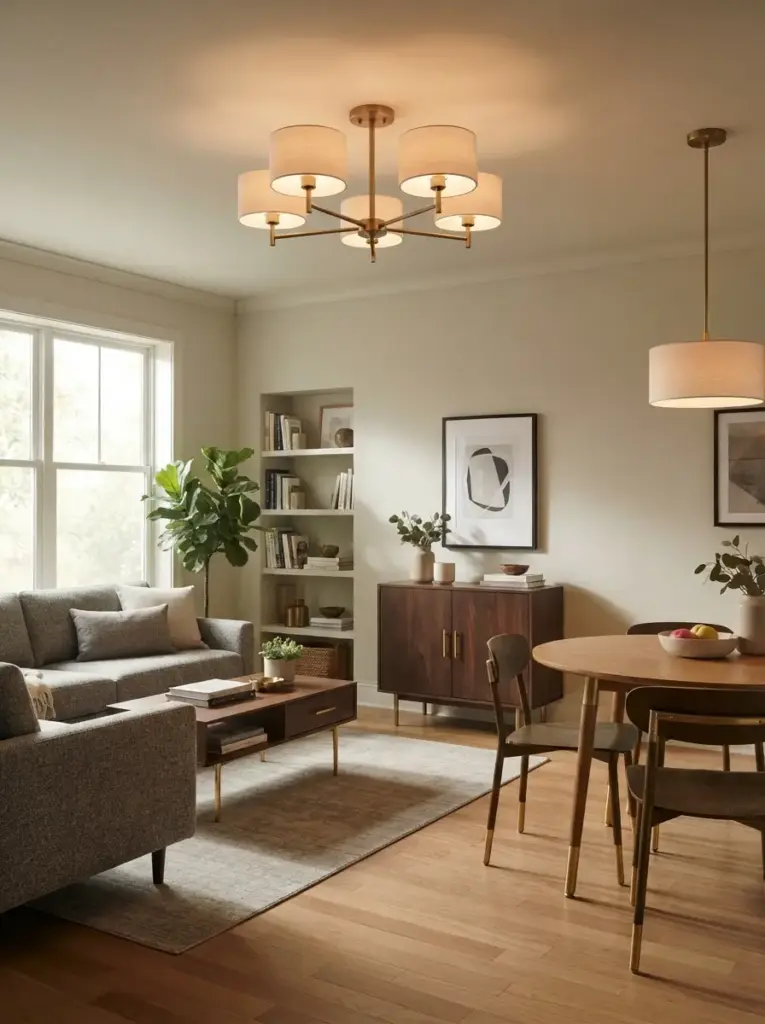
Low ceilings usually work best with flush or semi-flush fixtures. Pendants and chandeliers can still work over a dining table or in a loft with generous height, but they should not hang in the main walking path. Measure from the floor to the lowest point before ordering.
Correct scale prevents the fixture from making the room feel compressed. A wide, shallow fitting can provide presence without taking up headroom. People living in newer apartments with low plasterboard ceilings benefit most from simple flush designs that spread light across the room.
Opal glass, fabric drums, and diffused acrylic panels reduce glare. Exposed multi-bulb fixtures can feel too bright unless they use low-lumen bulbs or dimmers. Choose a finish that connects with furniture hardware, then let shape provide interest. Ceiling lights should support the whole plan, not dominate it.
Use a Pendant to Define a Zone
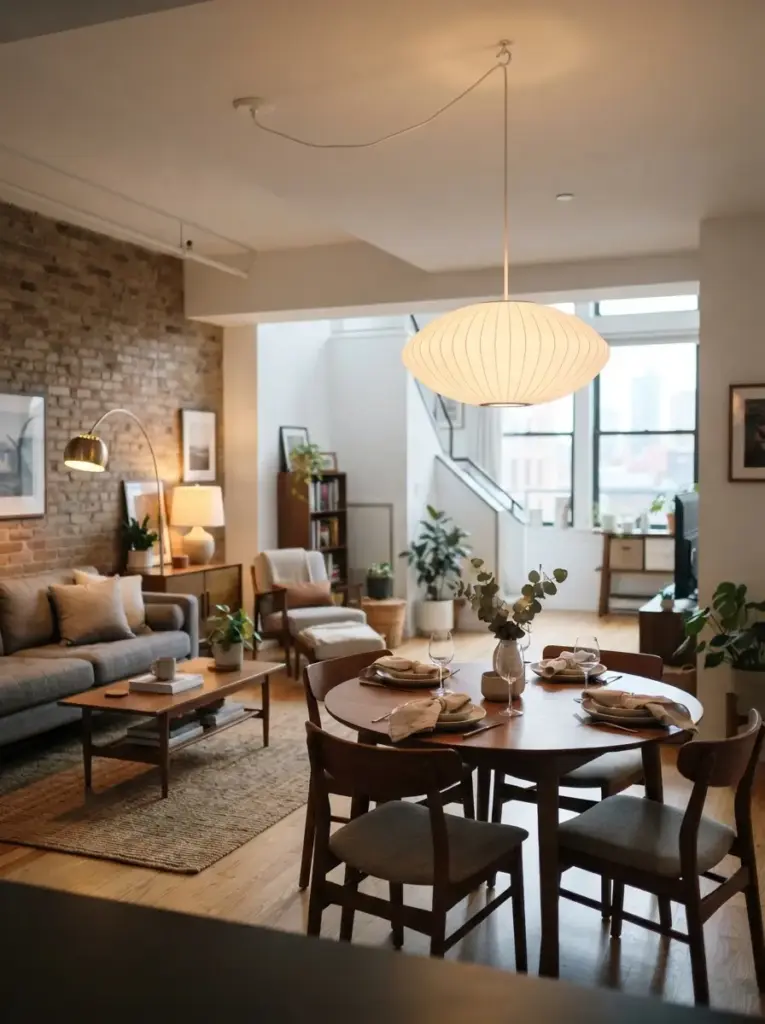
Hang a pendant over a dining table, coffee table, or reading nook when the ceiling height and rental rules allow. The fixture can visually separate one activity area from another in an open-plan apartment. Keep it centred over furniture rather than the whole room.
Zone lighting works because the eye reads the pool of light as a boundary. Open-plan renters can create a dining area without screens or bulky dividers. Loft apartments gain structure when the pendant sits above a table, while the sofa area uses lower lamps.
Choose a fabric, paper, glass, or metal shade according to the amount of light needed. Paper gives a soft, broad glow. Metal directs light downward. Clear glass looks light but can expose glare. Renters can use plug-in pendant kits with ceiling hooks only when the fitting, weight, and lease rules allow safe installation.
Brighten Dark Corners With Uplighting
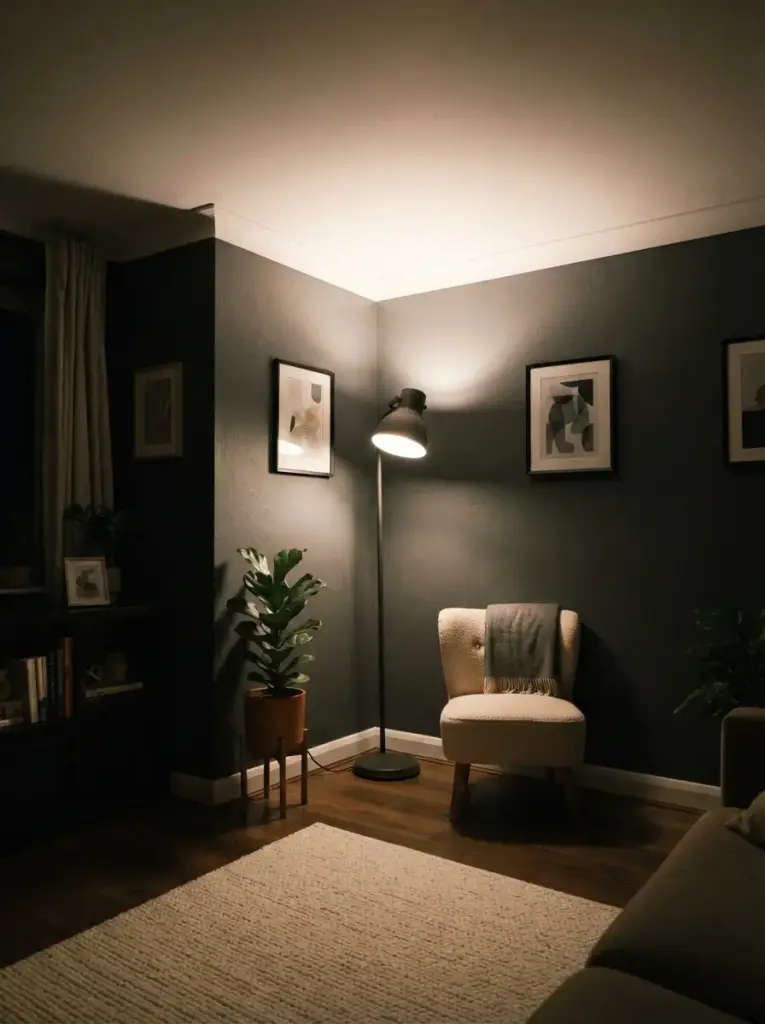
Place an uplighter or floor lamp facing the wall in a dark corner. Light bouncing from the wall and ceiling creates softer coverage than a bare bulb aimed into the room. Uplighting can also make low ceilings feel less heavy when the upper wall receives gentle brightness.
Reflected light expands the sense of depth because it reveals surfaces that would otherwise disappear at night. North-facing rooms, narrow layouts, and apartments with only one window benefit most. Keep the lamp away from curtains and choose a stable base.
Warm white bulbs suit cream, beige, terracotta, and wood. Slightly cleaner 3000K light can improve grey or white modern rooms. Avoid extremely bright uplighters that create a glowing patch on the ceiling. The goal is to lift the corner, not turn it into a spotlight.
Use Smart Bulbs for Flexible Routines
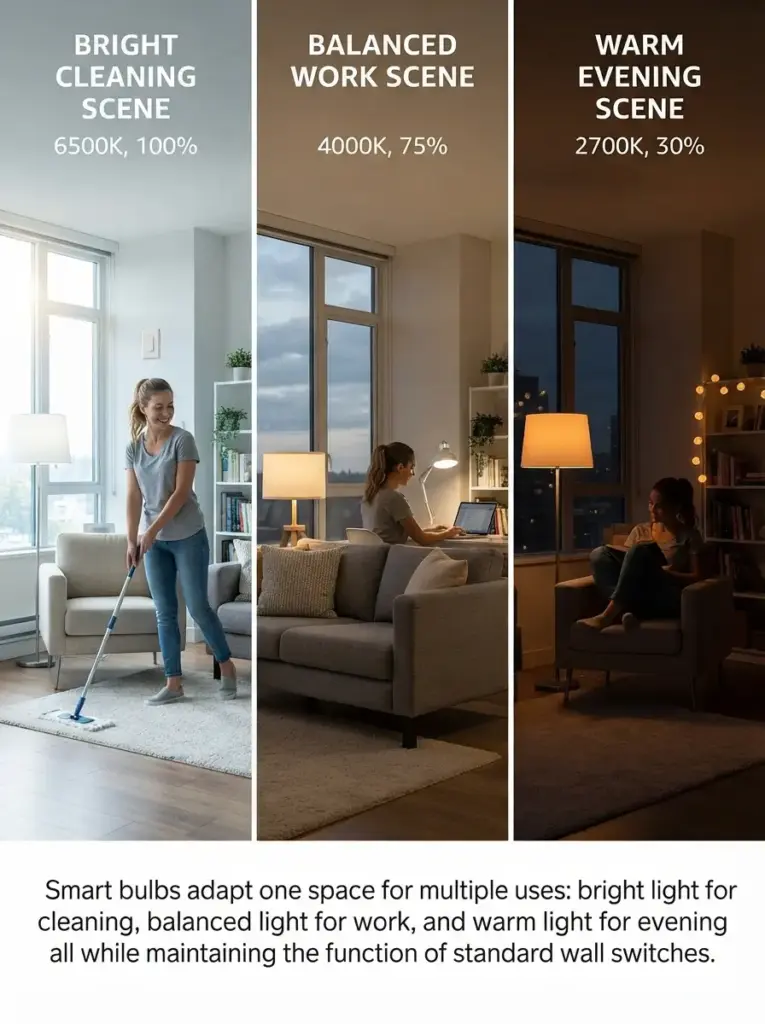
Smart bulbs can change brightness and colour temperature without replacing the fixture. Set a brighter scene for cleaning, a balanced scene for work, and a warmer dimmer scene for evening use. Timers can switch lamps on before sunset or turn them off after bedtime.
Flexible settings help one room support several functions. Students, remote workers, and people who live in studio apartments benefit most. Smart control also helps when lamp switches sit behind furniture or across the room.
Choose products that still work with a normal wall switch when possible. Complicated systems can become frustrating for guests or roommates. Use warm white and neutral white settings more often than saturated colours. Coloured light can be fun for parties, but it rarely provides comfortable everyday illumination or accurate colour rendering.
Balance Light Around the Entire Room
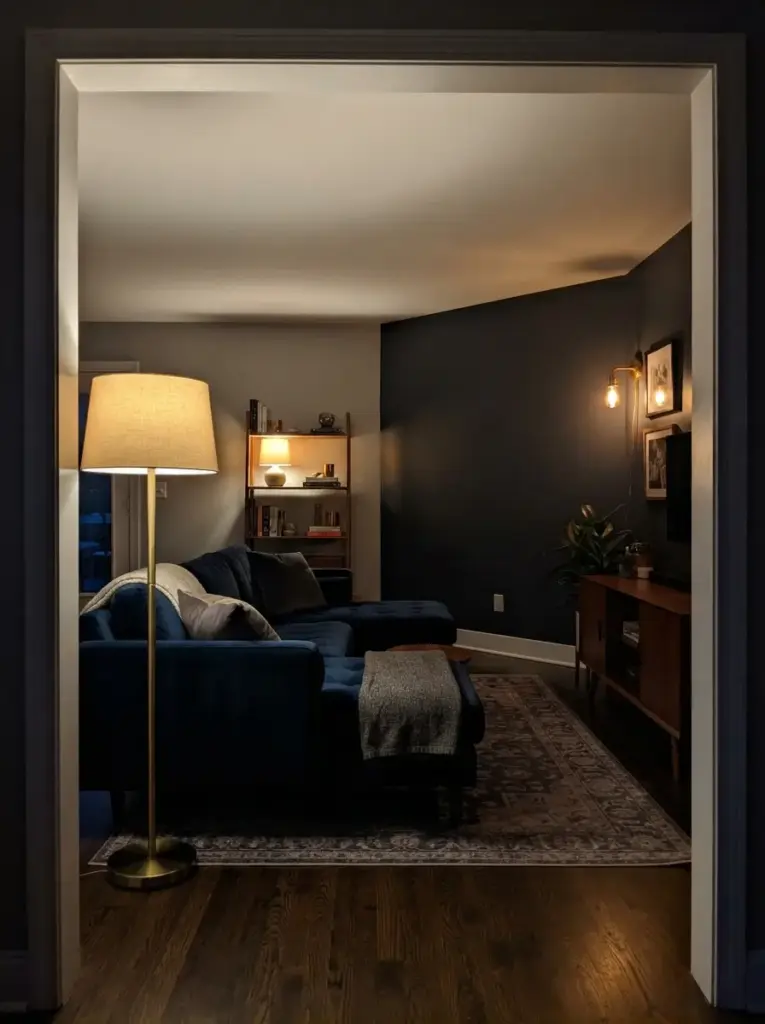
Stand at the entrance after sunset and look for dark gaps. One side may have a bright sofa lamp while the opposite corner disappears. Add a small source across the room, such as a shelf lamp, wall sconce, or low cabinet light. The goal is balance, not equal brightness everywhere.
Balanced placement keeps the room from feeling visually tilted. It also makes layouts with dark furniture or deep wall colours feel more controlled. People decorating long living rooms, open-plan spaces, or awkward L-shaped rooms gain the most.
Use a triangle as a simple guide. Place three light sources around the seating zone rather than lining them along one wall. Vary their heights, but keep bulb colour close. Several moderate lamps usually create a better evening atmosphere than one powerful fitting in the centre.
How Lighting Works With Different Interior Styles
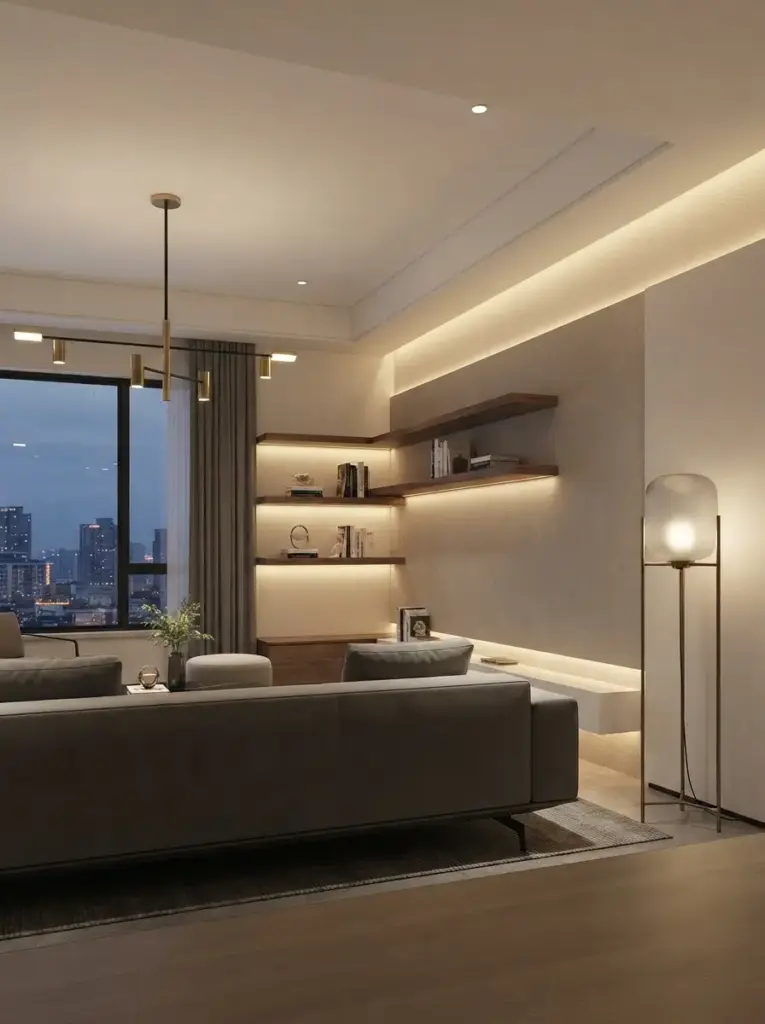
Modern rooms usually suit simple lines, frosted glass, black metal, warm brass, and hidden LED details. Pairing these fixtures with Modern Apartment Living Room Ideas helps the lighting feel integrated rather than added later. Clean forms work best when the bulb remains concealed or softened, especially in small rooms where glare is easy to notice.
Minimal spaces need fewer fixtures, but each source must do a clear job. A Minimalist Apartment Living Room may use one flush ceiling light, one adjustable floor lamp, and one quiet accent lamp. Choose matching colour temperatures and avoid adding decorative lights that do not improve visibility, comfort, or balance.
Cosier rooms benefit from linen shades, warm bulbs, low table lamps, and light reflected from walls. Those choices support Cozy Apartment Living Room Designs Ideas without relying on heavy furniture or too many accessories. Textiles, wood tones, and warm light can create comfort while preserving clear walking paths.
Small rooms need fixtures with narrow bases, compact shades, and flexible placement. Pair lighting with Small Apartment Living Room Ideas such as floating furniture, wall-mounted storage, and slim side tables. Good Small Apartment Living Room Decor should leave enough room for cords, switches, and safe movement around lamps.
Lofts can handle larger scale and stronger vertical gestures. Loft Apartment Living Room Makeover Ideas may include oversized pendants, track lights, tall floor lamps, and wall washing across brick or concrete. Keep the lower seating zone warm so the open volume does not feel cold after dark.
Common Lighting Mistakes to Avoid
Depending on One Ceiling Light
One overhead fixture creates flat illumination and deep shadows beneath shelves, tables, and faces. Add at least two lower sources to improve comfort. A ceiling light should support cleaning and general movement, while lamps handle evening use and focused tasks.
Choosing Bulbs That Are Too Cool
Bulbs above 4000K can feel clinical in a living room, especially beside beige walls, warm wood, or soft upholstery. Use 2700K for relaxation and 3000K for mixed work and leisure. Keep nearby lamps within the same general temperature range.
Ignoring Glare at Eye Level
Bare bulbs, clear glass, and poorly positioned shades can shine directly into seated eyes. Sit on every chair and check the view before finalising placement. Frosted bulbs, fabric shades, and adjustable angles can reduce discomfort without lowering useful light too much.
Using Lamps That Are Too Small
Tiny lamps may look lost on a wide console or large side table. They also place the bulb too low for comfortable reading. Choose a lamp with enough height and shade width to relate to the furniture. Measure the full lamp, not only the base.
Blocking Walkways With Bases and Cords
Floor lamps often create hazards when the base sits beside a narrow route. Keep bases under or behind furniture edges when possible. Secure cords along walls with removable clips and avoid running extension leads beneath rugs where heat and damage can go unnoticed.
Mixing Too Many Fixture Finishes
Black, chrome, brass, copper, white, and wood can coexist, but every finish should repeat somewhere. Limit the main lighting finishes to one or two in a small room. Repetition creates order and prevents the fixtures from looking like unrelated purchases.
Forgetting How the Room Looks in Daylight
Fixtures remain visible even when switched off. Large shades can block windows, and highly reflective metals can create glare in direct sun. Check size, colour, and placement during both day and night. Lighting should support the room around the clock.
Buying Decorative Lights Without a Job
Novelty lights can consume outlets and surface space without improving visibility. Before buying, decide whether the fixture provides ambient, task, or accent light. Decorative value matters, but useful placement should come first in a compact apartment.
Budget-Friendly Lighting Tips
Start with bulbs because they provide the cheapest noticeable change. Replace mismatched cool and warm bulbs with a consistent set, then test the room after sunset. Buying the right temperature often improves the space enough to delay more expensive fixture changes.
Second-hand lamps can offer strong value, especially ceramic bases, brass floor lamps, and simple table lamps. Check plugs, cords, switches, shade frames, and stability before purchase. Rewiring may cost more than the lamp, so avoid damaged electrical parts unless a qualified professional will repair them.
Use existing furniture as lamp support before buying new side tables. A sturdy bookcase, media cabinet, desk corner, or console can hold a light source. Keep enough clear surface around the lamp to prevent heat buildup and accidental knocks.
Rechargeable lights can solve difficult corners for less than permanent electrical work. Use one on a shelf, dining table, or narrow ledge. Compare charging time and runtime before buying. A cheap lamp that needs daily charging may become annoying, so balance price with convenience.
Simple lampshade changes can refresh a room without replacing the base. A cream linen shade softens light, while an opaque metal shade creates a focused beam. Check the fitting type, shade height, and width. The new shade should hide the bulb from normal seated eye level.
Plug-in timers provide an affordable routine for lamps without smart technology. Set one or two lamps to switch on before sunset, especially during winter. Timers also help when the room entrance is far from the lamp switches.
Useful Apartment Living Room Lighting Ideas work best when spending follows function. Buy a reliable reading lamp before decorative shelf lights. Replace unsafe or flickering fixtures before adding accent lighting. Practical improvements create more value than collecting several low-cost lamps that perform the same job.
Apartment Living Room Lighting Ideas for Renters and Beginners
Rental lighting should remain removable, safe, and easy to take to the next home. Plug-in sconces, cordless lamps, freestanding floor lamps, smart bulbs, and clip lights usually offer the most flexibility. Check the lease before drilling, swapping ceiling fixtures, or attaching heavy fittings.
Move-in day is the right time to test outlets and switches. Bring one known working lamp, identify which sockets connect to wall switches, and note where furniture might block access. Label unusual switches with removable tape until the layout becomes familiar.
Beginners should buy lighting slowly. Live in the room for several evenings and notice where shadows fall, where reading happens, and where people place drinks or laptops. Real habits reveal the most useful lamp positions. A staged floor plan cannot show every dark corner.
Keep a lighting map with fixture type, bulb base, wattage limit, colour temperature, and brightness. That information makes replacement shopping easier. Store spare bulbs together and avoid mixing old packaging, which can lead to inconsistent results.
Use Apartment Living Room Lighting Ideas that fit daily routines rather than copying a showroom. A household that reads needs focused task light. A household that hosts friends needs balanced ambient light. A television-focused room benefits from low-level lamps and subtle screen backlighting.
Small-space safety deserves special attention. Keep shades away from curtains, use LED bulbs that produce less heat, and never exceed the fixture’s stated wattage. Avoid overloaded extension leads. Secure tall floor lamps where children or pets may knock them over.
Practical Move-In Lighting Checklist
Check the ceiling fixture, wall switches, sockets, and dimmers before arranging furniture. Test every outlet with a lamp or charger. Photograph damaged plates, loose fittings, or exposed wiring and report them to the landlord rather than attempting unsafe repairs.
Record bulb sizes and fitting types. Common options include bayonet, Edison screw, small Edison screw, and integrated LED fittings. Matching the base matters as much as choosing colour temperature. Integrated fittings may require a full fixture replacement when the light fails.
Mark the main evening activities on a rough floor plan. Add one light source beside the sofa, one near the work or reading area, and one across the room for balance. Keep cords out of paths before placing rugs or heavy furniture.
Choose 2700K bulbs for a warm, relaxed living room. Select 3000K when the room also supports focused tasks. Reserve cooler light for utility areas unless personal preference strongly favours it. Consistency matters more than following one exact number.
Add dimming where possible. Smart bulbs, plug-in dimmers, and lamps with built-in controls can all help. Test settings at night because brightness that looks moderate during the day may feel strong after sunset.
Keep one portable rechargeable lamp for flexible use. It can support dining, reading, balcony seating, or temporary power loss. Store its charger in a fixed place and recharge it regularly.
Frequently Asked Questions
How Many Lamps Should an Apartment Living Room Have?
Most living rooms benefit from at least three sources of light, including the ceiling fixture. A practical setup may include one floor lamp, one table lamp, and one smaller accent source. Large or open-plan rooms may need more, while very small studios can use compact wall-mounted or rechargeable options.
What Colour Temperature Is Best for a Modern Living Room?
Warm white around 2700K suits relaxing and watching television. Neutral warm light around 3000K works well when the room also functions as a study or home office. Keep nearby fixtures similar so walls, furniture, and skin tones look consistent.
Can I Install Better Lighting in a Rental?
Yes. Use plug-in sconces, floor lamps, table lamps, rechargeable lights, smart bulbs, and removable cord covers. Check the lease before drilling or replacing hardwired fixtures. Heavy wall lights need proper anchors even when the installation is temporary.
Where Should a Floor Lamp Go?
Place it beside the sofa, behind a reading chair, near a dark corner, or next to a desk. Keep the base outside the main walkway and position the shade so the bulb does not shine directly into seated eyes. Use cable clips to manage the cord.
Are Smart Bulbs Worth Using in an Apartment?
Smart bulbs can be useful when one room supports several activities. Dimming, timers, and adjustable colour temperature add flexibility without changing wiring. Choose simple controls that roommates and guests can use, and keep normal switch operation whenever possible.
How Can I Light a Living Room Without a Ceiling Fixture?
Combine two floor lamps, one or two table lamps, plug-in sconces, and a small accent light. Place them around the room rather than along one wall. Use reflected light from pale walls and choose dimmable warm bulbs to avoid harsh contrast.
Conclusion
Successful living room lighting depends on layers, placement, and control rather than one expensive fixture. Warm bulbs, slim floor lamps, table lamps, sconces, dimmers, and subtle accent lights can solve most apartment problems without major electrical work. Each source should support a real activity, fit the available space, and remain safe around furniture, curtains, children, and pets.
Strong Apartment Living Room Lighting Ideas also respect the room’s style and daily routine. Modern homes may use clean glass globes, black metal, or hidden LEDs. Cosy rooms may rely on linen shades and warm low-level lamps. Minimal spaces need fewer but more useful sources. Loft rooms can handle larger fixtures, while compact rentals benefit from wall-mounted and rechargeable options.
Plan slowly, test the room after dark, and correct the most uncomfortable area first. Small changes in bulb temperature, lamp height, and placement can make the room easier to use every evening. Reliable lighting should feel natural, support real life, and help the apartment work better from move-in day onward.