
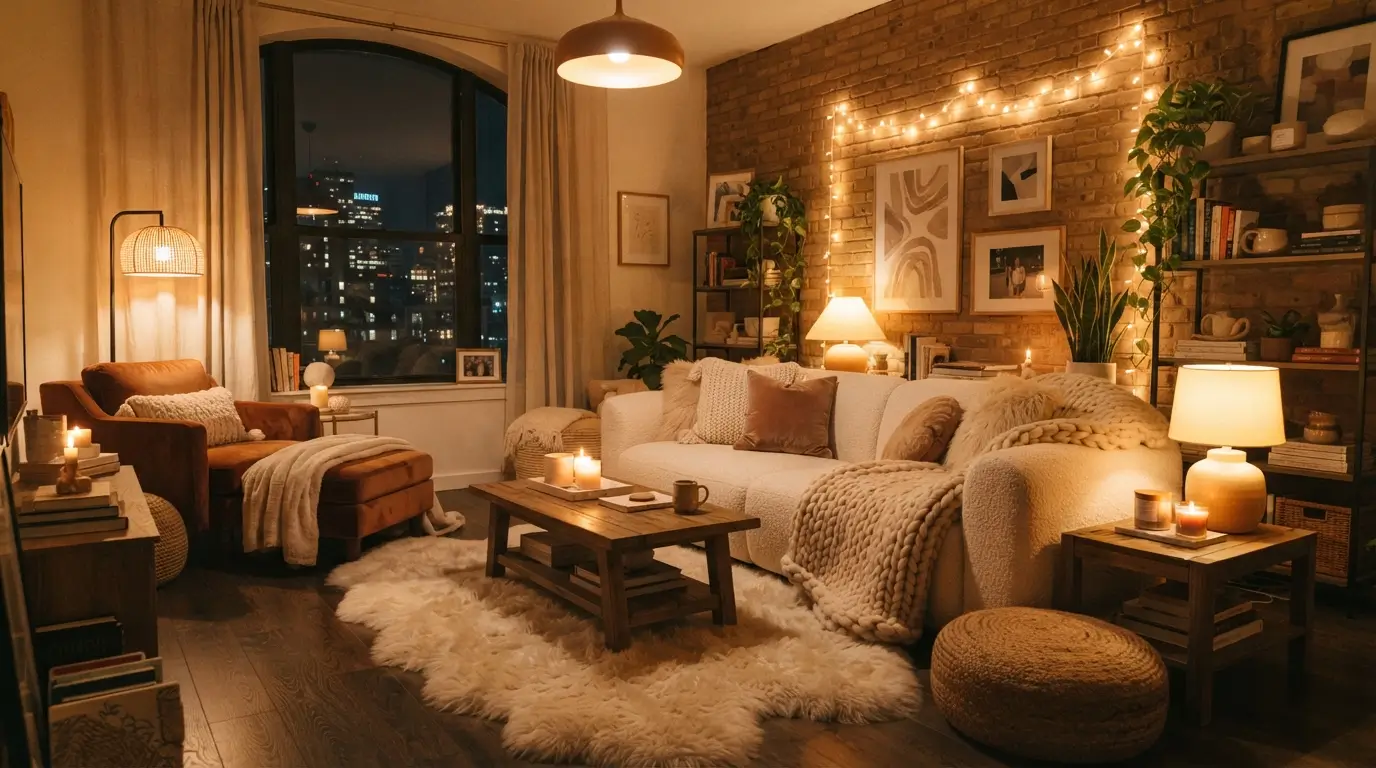

Small living rooms become comfortable when every choice supports daily life. Softness matters, but so do walking paths, storage, lighting, and furniture scale. Many renters buy attractive pieces one at a time, then discover that the room feels crowded or dim. Better results come from planning the whole space before shopping. Cozy Apartment Living Room Designs use texture, warm light, balanced colour, and practical furniture to create comfort without making the room feel heavy.
Beginners do not need expensive furniture or a large floor plan. Start with what you already own, measure the room, and identify the main activity. Some people need a television setup, while others want a reading corner, conversation space, or flexible area for guests. Clear priorities prevent wasted purchases. Rental-friendly choices such as plug-in sconces, washable covers, removable hooks, and freestanding storage also make the room easier to update later.
How Do You Make an Apartment Living Room Feel Cozy?
Cozy Apartment Living Room Designs feel inviting because they combine three things: comfortable texture, layered lighting, and a layout that supports easy movement. Use one main sofa, one or two compact side pieces, a rug large enough to connect the seating, and several light sources instead of one bright ceiling fixture. Add warmth through fabric, wood, woven details, and a controlled colour palette. Keep decorative objects limited so the room feels calm rather than cluttered.
Before You Choose a Style
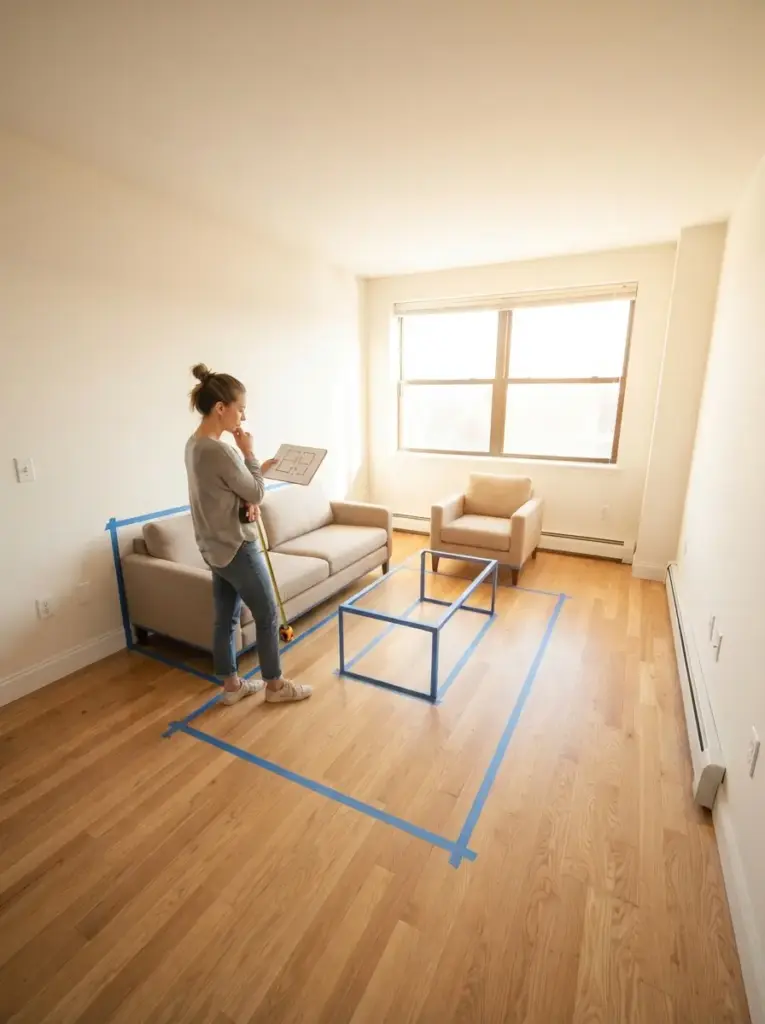
Planning should begin with a simple room audit. Note where daylight enters, which doors need clearance, where sockets sit, and which activities happen most often. Take photographs from each corner because pictures reveal crowded areas that feel normal in person. Mark furniture sizes on the floor with painter’s tape, then walk carefully through the space while carrying a laundry basket or shopping bags. Practical testing shows whether the route works during ordinary routines. Cozy Apartment Living Room Designs become easier to manage when measurements guide the first decisions instead of impulse purchases.
Comfort also depends on what you remove. Clear broken furniture, unused exercise equipment, duplicate side tables, and decorative items that no longer suit the room. Store sentimental pieces together, then return only those that support the chosen colours or tell a meaningful story. People moving into a first apartment should unpack gradually and live with the basic layout for several days. Daily use will show where a lamp, table, basket, or extra seat is genuinely needed. Delayed shopping protects the budget and prevents the room from filling before its priorities become clear.
Build the Room Around a Deep Comfortable Sofa
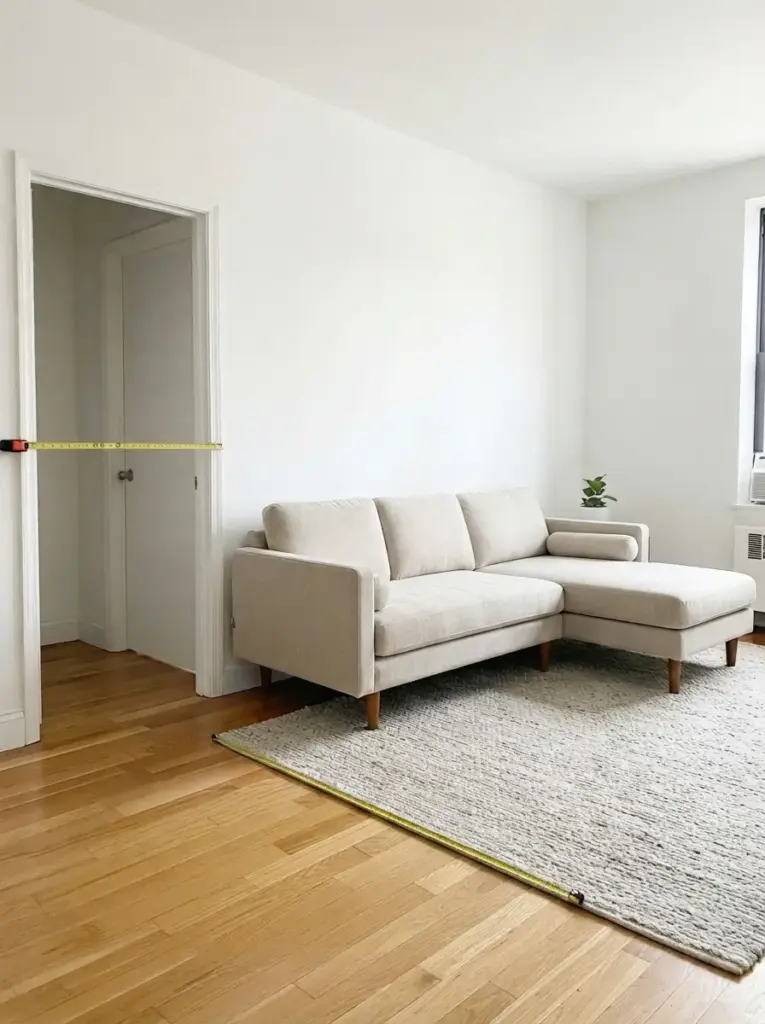
Choose the sofa before smaller decorative pieces because it controls both comfort and traffic flow. Apartment-friendly sofas usually work best with slim arms, raised legs, and a seat depth between roughly 50 and 60 centimetres. A low back can make the room feel more open, while a slightly deeper seat gives a relaxed feel. Measure the doorway, stairwell, and lift before ordering. Modular sofas help in awkward buildings because smaller sections are easier to carry and rearrange.
Performance velvet, brushed cotton, chenille, and textured microfibre all add softness without requiring delicate care. Warm neutral colours such as oatmeal, mushroom, camel, soft olive, and muted rust hide everyday wear better than pure white. People with pets or young children should look for removable cushion covers and tightly woven fabric. Avoid sofas that touch both side walls, since the room will feel boxed in and leave no place for a side table or floor lamp.
Strong seating works because comfort becomes the visual centre of the room. One substantial sofa often looks calmer than several small chairs competing for attention. Best results suit first-time renters, couples, and anyone who spends evenings reading or watching television. Budget shoppers can improve an existing sofa with a fitted slipcover, firmer cushion inserts, and two larger back cushions instead of replacing the whole piece.
Layer a Large Rug Under the Main Seating
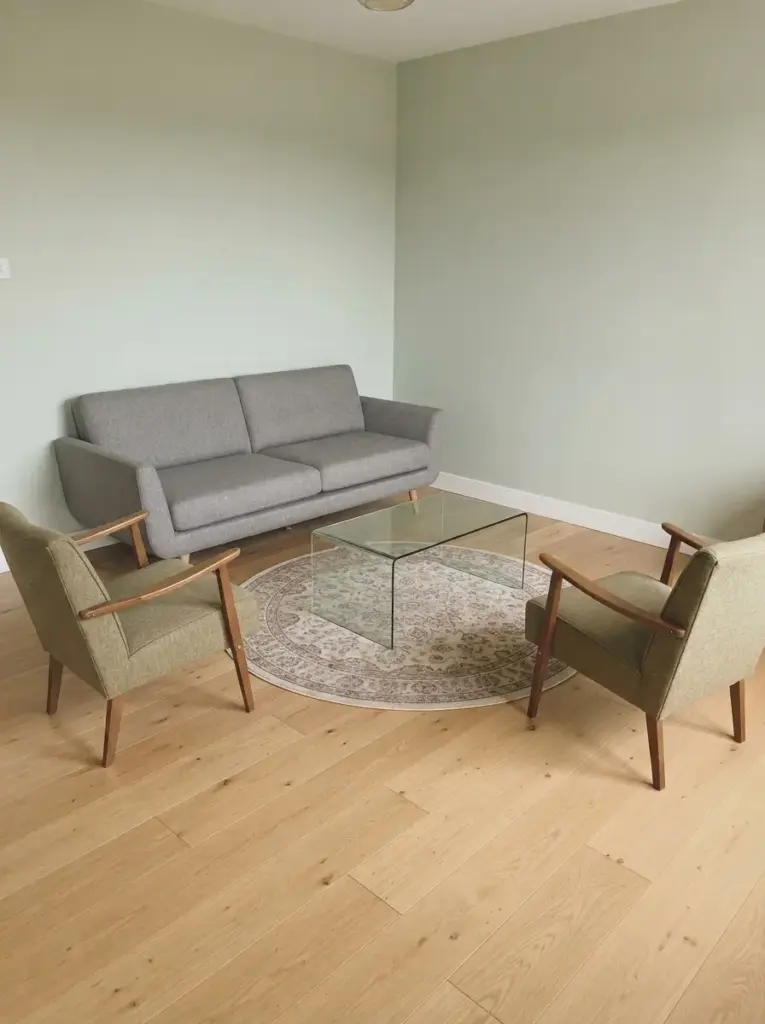
Rug size affects the room more than pattern. Choose a rug that reaches under at least the front legs of the sofa and nearby chairs. Floating a tiny rug in the centre makes the furniture feel disconnected and usually makes the floor area look smaller. In many apartments, a 160 by 230 centimetre rug works for compact seating, while a 200 by 300 centimetre rug suits a longer sofa and larger open-plan room.
Low-pile wool blends, washable flatweaves, and dense synthetic rugs handle regular use well. Cream, taupe, faded terracotta, tobacco, charcoal, and dusty blue can anchor the room without becoming visually loud. Renters with hard flooring can add a non-slip pad to protect the floor and reduce movement. Place the rug parallel to the longest wall unless the layout clearly requires another direction.
Grounding the seating with one generous textile creates unity and adds warmth underfoot. People living in echoing new-build apartments will notice that a rug also softens sound. Beginners should avoid very thick shag in dining-living combinations because crumbs and chair movement become difficult to manage. Small Apartment Living Room Decor feels more finished when the rug connects major furniture rather than acting as a small decorative island.
Use Warm White Lighting at Several Heights
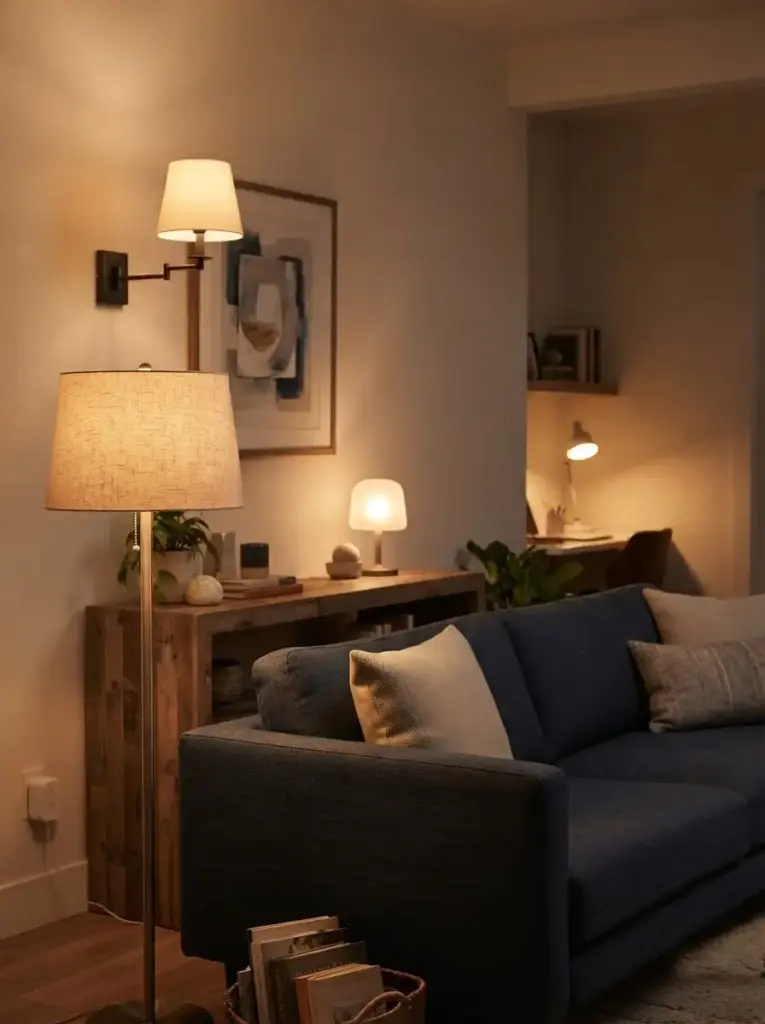
Ceiling lights alone often create flat, harsh illumination. Layer one floor lamp, one table lamp, and a soft ambient source such as a plug-in wall sconce or shelf light. Bulbs around 2700K produce a warm white glow that suits most living rooms. People who also work in the room can add a 3000K task lamp near a desk, then switch it off during the evening.
Lamp placement should follow activity. Position a floor lamp beside the sofa for reading, a small lamp on a console for background light, and a directional light near artwork or a plant. Keep lampshades in linen, parchment, frosted glass, or woven material to diffuse glare. Smart plugs or remote-control bulbs help renters operate several lamps without rewiring.
Layered light succeeds because it removes dark corners while keeping the room relaxed. Brightness should feel adjustable rather than fixed. Best use suits north-facing flats, basement units, and rooms with limited windows. Common errors include mixing blue daylight bulbs with warm lamps, using bare bulbs at eye level, and choosing lamps too small to spread useful light.
Add Plush Texture Through Washable Layers
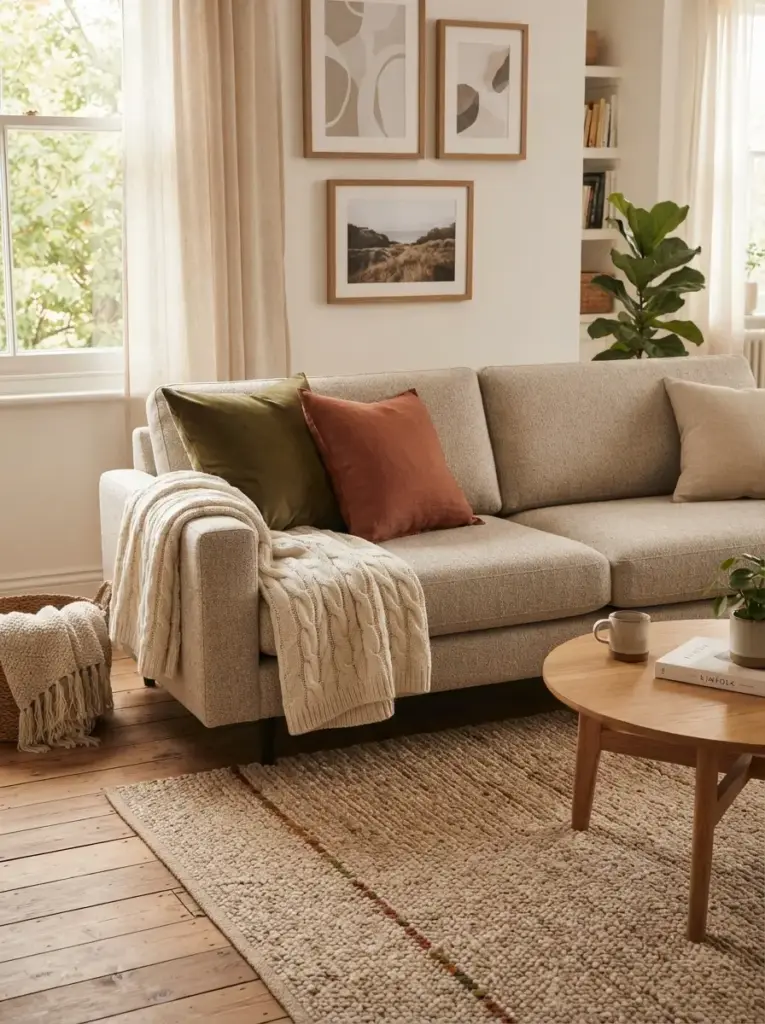
Soft texture does not require covering every surface with fabric. Use a controlled mix of two or three materials, such as boucle, washed linen, velvet, cable knit, or brushed cotton. Pair one chunky throw with smoother cushions so the arrangement feels varied but not busy. Cushions around 50 by 50 centimetres usually look more generous than many small cushions.
Choose removable covers and washable fabrics, especially for homes with pets, children, or frequent guests. Keep colours connected to the rug and sofa. For example, an oatmeal sofa can support olive velvet, rust linen, and a cream knit throw. Fold the throw over one sofa arm or store it in a basket instead of spreading it across the entire seat.
Texture creates comfort because the eye reads softness before anyone sits down. People furnishing a first home can start with three cushion covers and one throw, then change them seasonally. Overfilling the sofa reduces usable seating and makes tidying harder. Cozy Apartment Living Room Designs Ideas should always protect comfort and function before adding extra decorative layers.
Choose Curtains That Reach the Floor
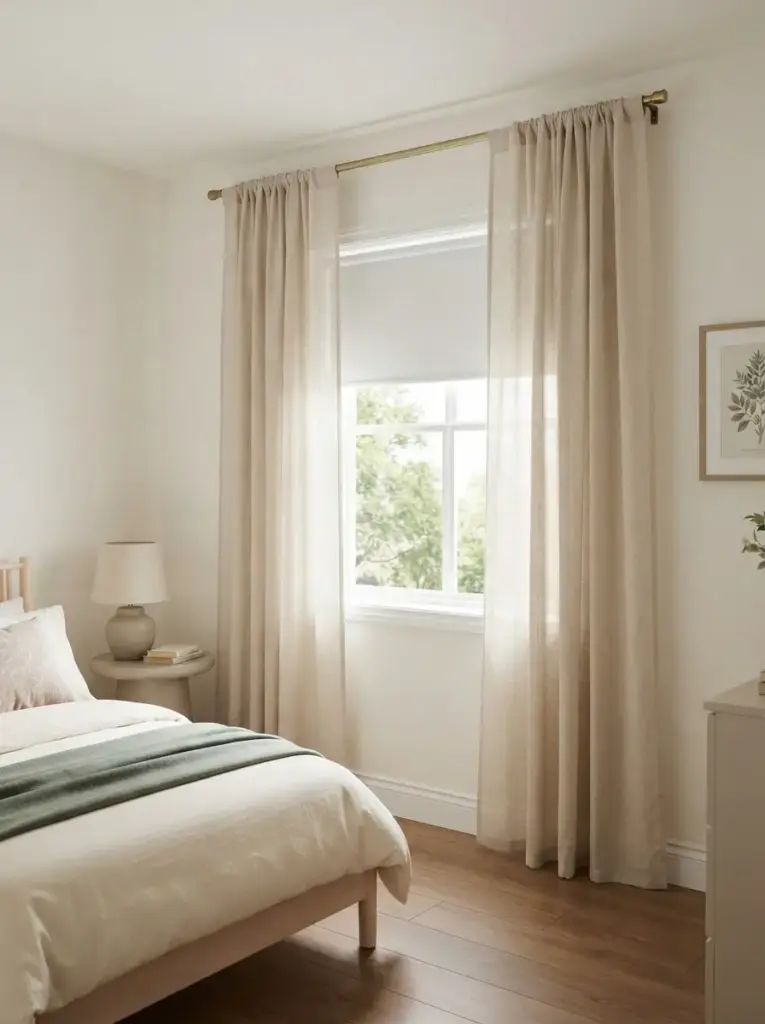
Curtains can make a small room feel taller when the rod sits close to the ceiling and extends beyond the window frame. Hang panels so they finish just above the floor or lightly touch it. Short curtains cut the wall visually and often make standard windows look smaller. Renters can use tension rods inside a recess, no-drill brackets, or removable curtain hardware when drilling is not allowed.
Linen-look polyester, cotton blends, and light-filtering woven fabrics provide softness without blocking all daylight. Use wider panels than the window so they still look full when closed. Warm white, flax, soft beige, pale taupe, and dusty green suit many colour schemes. Add a separate blackout roller blind only where privacy or sleep requires it.
Long curtains improve proportion, reduce echo, and soften hard architecture. East- or west-facing rooms benefit from light-filtering fabric that controls glare without making the room dark. Budget shoppers can buy standard-length panels and hem them with iron-on tape. Avoid heavy puddling in busy homes because fabric collects dust and can catch under furniture.
Create One Clear Conversation Zone
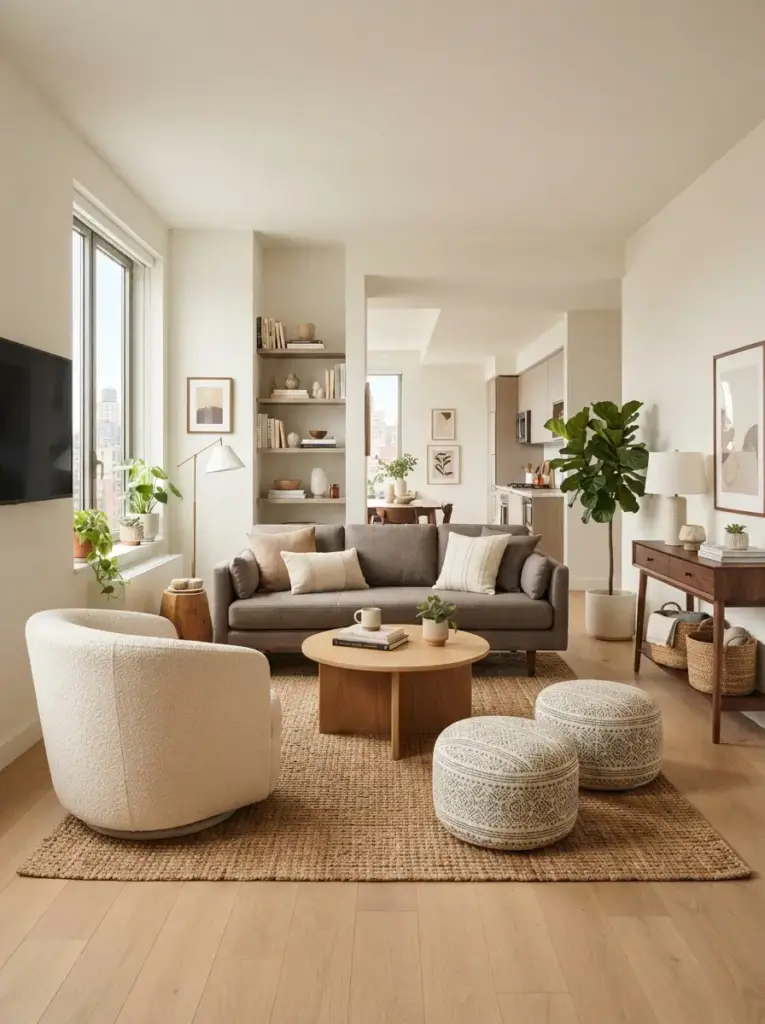
Furniture should support conversation without blocking movement. Place the sofa facing a compact chair, bench, or pair of pouffes rather than lining every piece against the walls. Keep roughly 40 to 50 centimetres between the sofa and coffee table, then preserve a wider route through the room. Angled chairs can soften a boxy layout, but extreme angles waste valuable floor space.
Small swivel chairs work well because they can turn towards guests, a window, or the television. Armless accent chairs also save width. In a studio, use the back of the sofa to define the living zone, then place a narrow console behind it. Open shelving can separate areas while still allowing light to pass.
Clear zoning helps because people immediately understand how to use the room. Hosts in compact flats gain extra flexibility from lightweight stools that move easily. Small Apartment Living Room Ideas work best when the main path stays open and every seat has a practical relationship to the centre. Avoid squeezing in a second full sofa unless the room can still support comfortable circulation.
Use a Rounded Coffee Table to Improve Flow
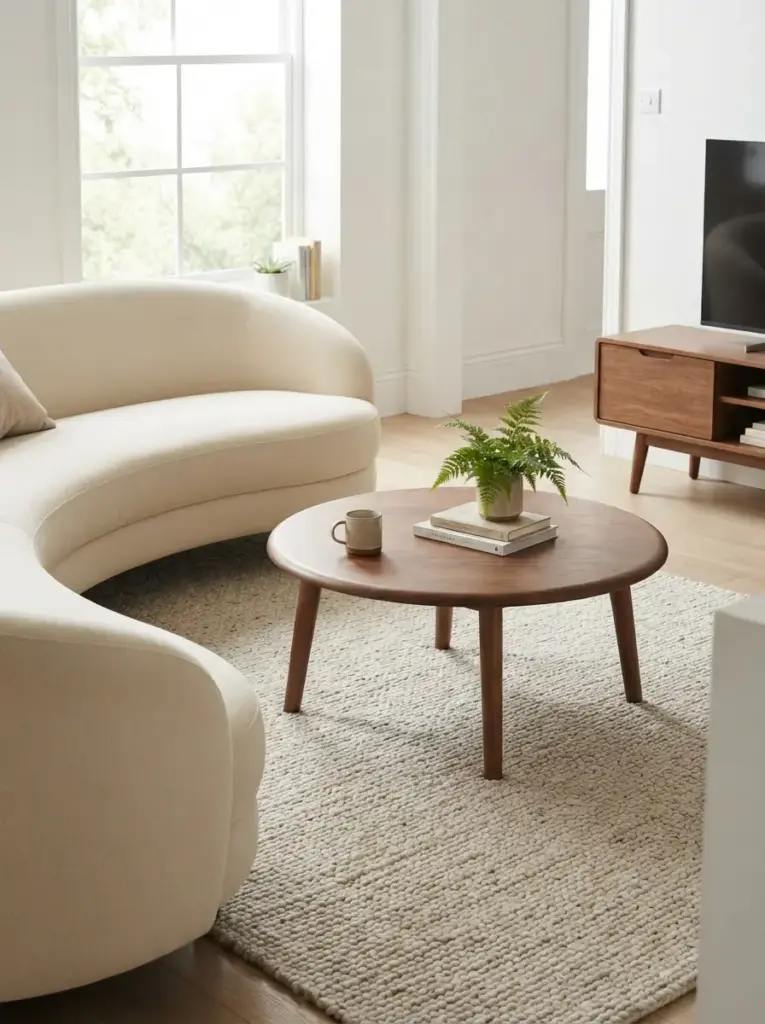
Round and oval coffee tables reduce sharp corners and create easier movement around tight seating. Look for a diameter between 70 and 90 centimetres for most compact rooms, then check that the table leaves enough space to walk around it. Nesting tables provide more surface during gatherings and tuck together when the room needs to feel open.
Wood, smoked glass, travertine-look laminate, and upholstered ottomans all work, depending on maintenance needs. Families may prefer a soft ottoman with a sturdy tray, while renters who eat in the living room may need a lift-top table. Choose one material that connects to another element, such as walnut legs that match a media unit.
Curved furniture works because it reduces visual rigidity and improves circulation. Best use suits narrow rooms, homes with children, and layouts where the sofa sits close to the entry. Avoid very small decorative tables that cannot hold a drink, book, and lamp remote. Function should decide the size before style decides the finish.
Bring in Wood Tones Without Making the Room Heavy
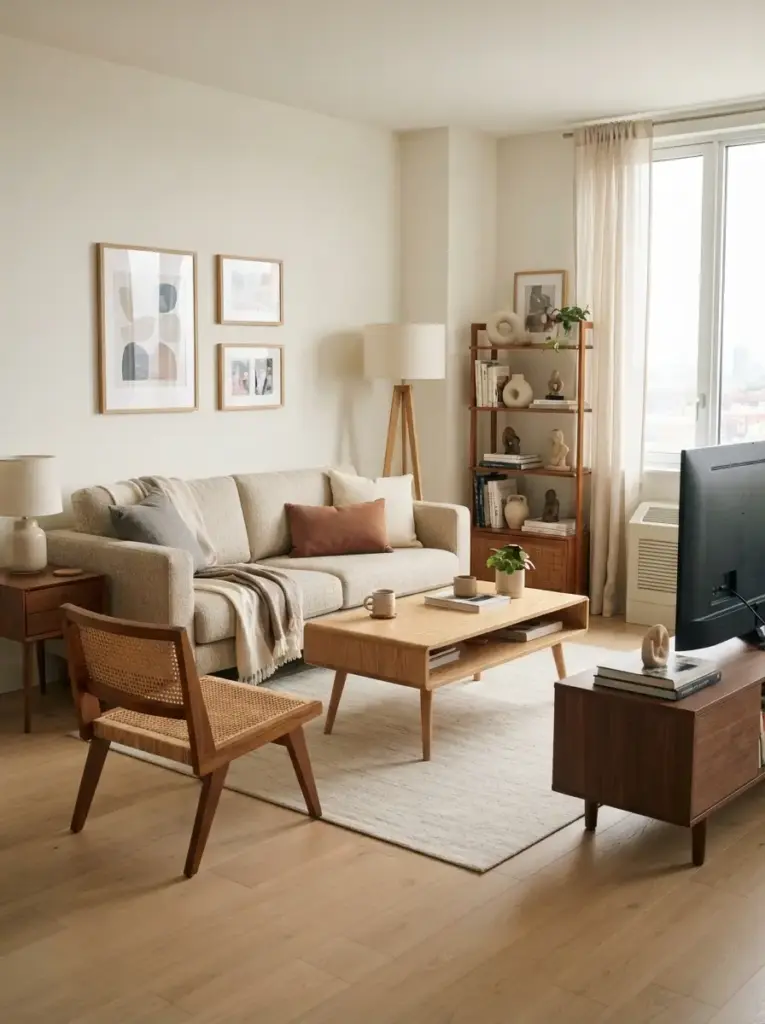
Wood introduces warmth, but too many dark pieces can crowd a small apartment. Use one main wood tone and one supporting tone. Light oak, ash, and beech create an airy base, while walnut or medium teak adds depth. Repeat the main tone in two or three places, such as a coffee table, picture frames, and lamp base.
Furniture with visible legs keeps more floor in view and makes the room feel lighter. Closed cabinets can hide electronics, games, and paperwork, while one open shelf displays a few personal objects. Renters can update glossy furniture with removable wood-effect vinyl on flat surfaces, provided the finish can be tested in a hidden spot first.
Natural grain works because it balances soft fabrics with structure. People who enjoy Modern Apartment Living Room Ideas can combine clean-lined wood furniture with warm upholstery and textured lighting. Avoid matching every item as a set, since identical finishes can make the room feel like a showroom. Slight variation creates depth without visual disorder.
Style Walls With Large Art Instead of Many Tiny Pieces
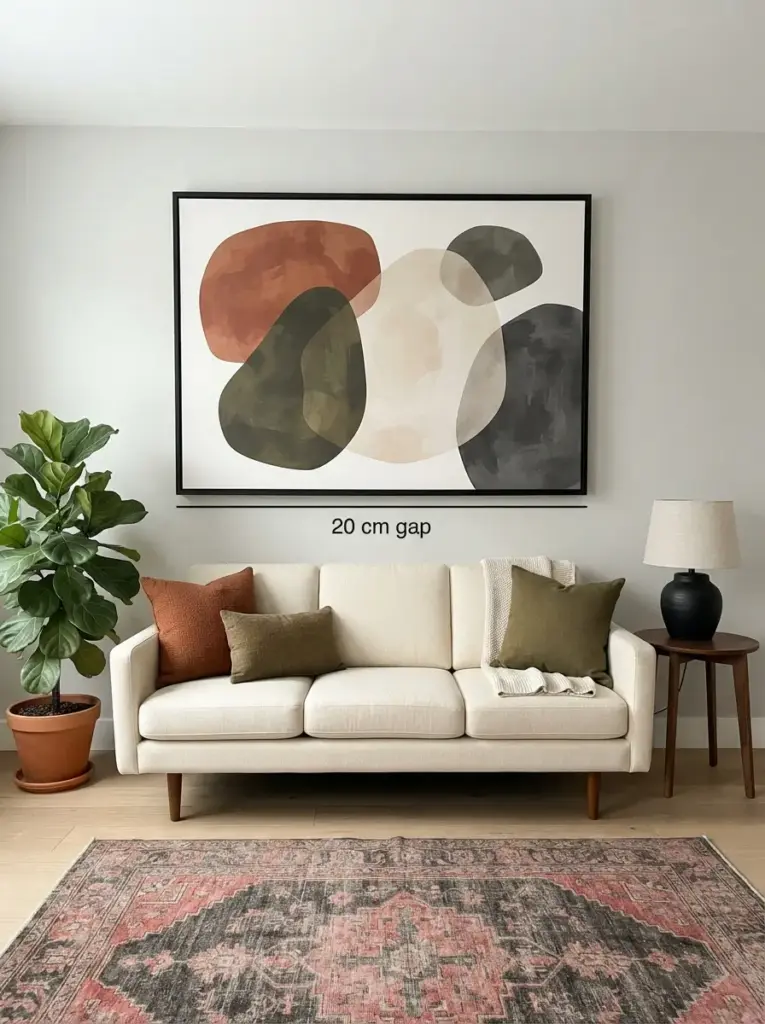
One large print or a balanced pair often suits a small room better than a crowded gallery wall. Choose artwork that fills roughly two-thirds of the sofa width, then hang it so the lower edge sits around 15 to 25 centimetres above the sofa. Removable picture strips support lighter frames, while leaning art on a console avoids wall damage entirely.
Colour should connect to the room rather than match it exactly. A print with rust, olive, cream, and charcoal can pull together cushions, plants, and a dark lamp. Black frames add definition, natural wood softens the effect, and frameless canvas keeps the look relaxed. Avoid placing tiny art high above eye level.
Large-scale artworks work because it creates one confident focal point and reduce visual noise. Beginners who feel unsure about styling can choose abstract landscapes, botanical studies, photography, or textile art with restrained colour. Budget options include printable art, second-hand frames, fabric panels, and framed wallpaper offcuts. Check proportions with painter’s tape before buying.
Use Plants Where They Improve Shape and Light
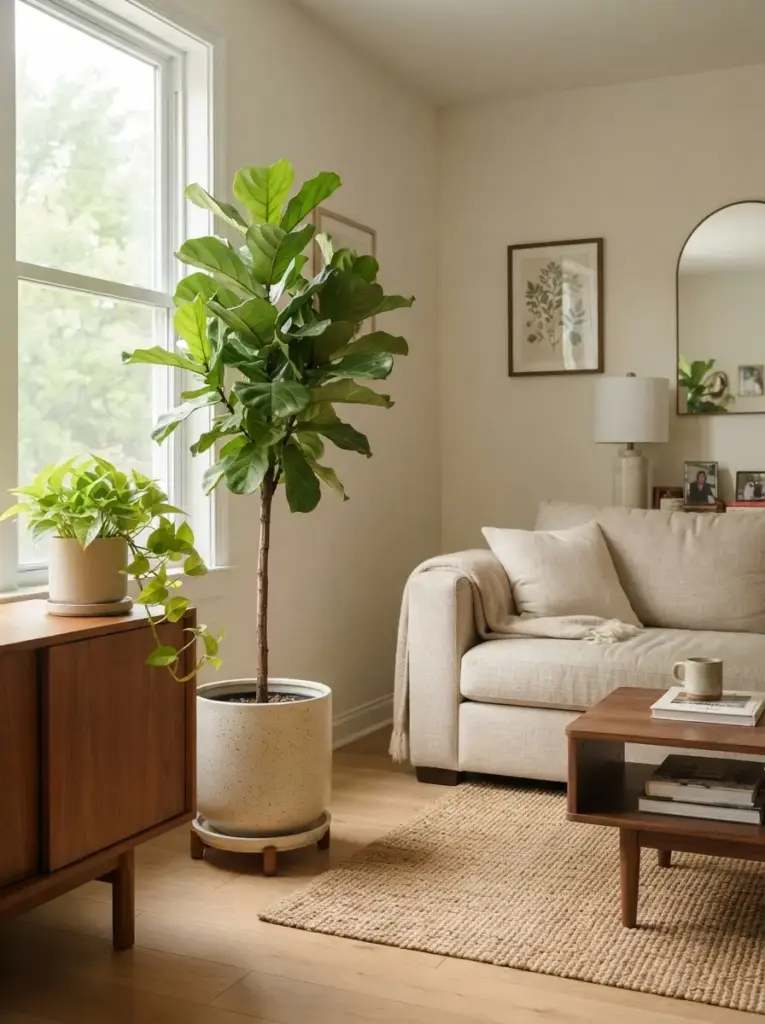
Plants add softness, but they need suitable light and enough room to grow. Place a taller plant near a bright corner, then use one smaller plant on a shelf or side table. Grouping every plant can make the room look like a shop display and may block the window. Choose pots in related tones to keep the arrangement calm.
Low-maintenance options include snake plants, ZZ plants, pothos, and certain philodendrons, but actual care depends on light, watering, and indoor conditions. Artificial plants can work in dark corners when the leaves look realistic, and the pot has enough visual weight. Dust both real and artificial leaves because dull foliage quickly loses its effect.
Greenery works because organic shapes break up straight furniture lines and soften hard rental finishes. Best use suits neutral rooms that need life without another strong colour. Avoid oversized plants beside narrow walkways and avoid placing moisture-sensitive pots directly on wood. Add a saucer or waterproof liner to protect rented floors and furniture.
Add Hidden Storage Through Multiuse Furniture
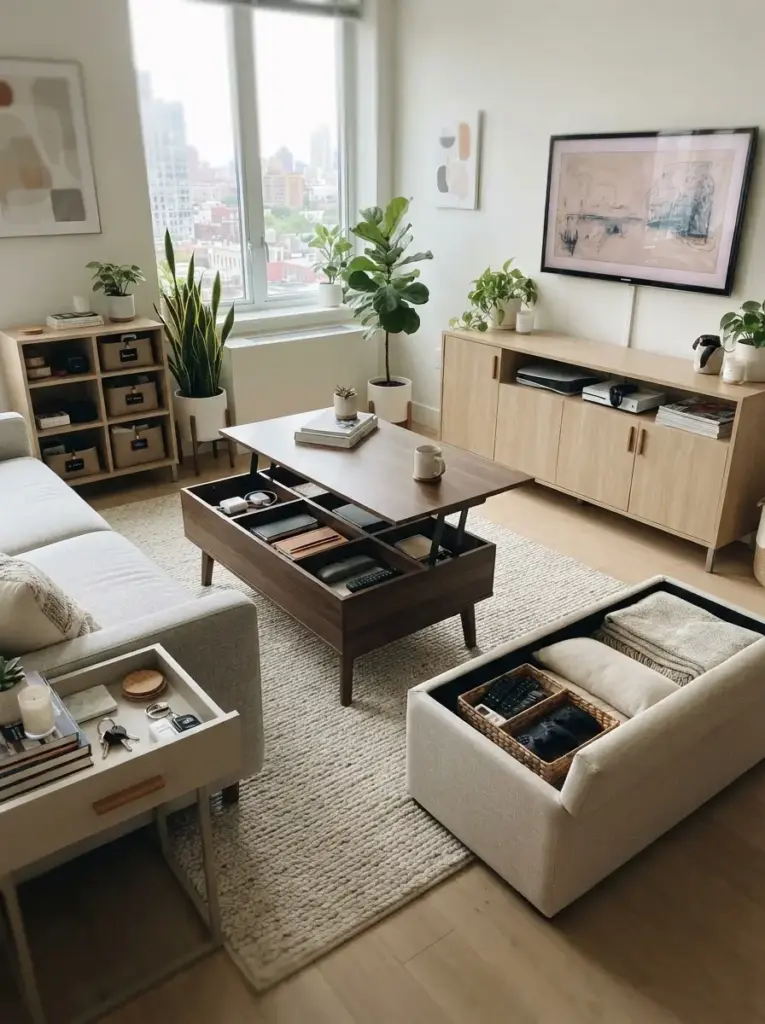
Storage should sit close to the activity it supports. Use a lift-top coffee table for chargers and notebooks, a storage ottoman for blankets, or a media unit with closed doors for cables and games. Side tables with drawers keep small objects from collecting on every surface. Furniture that performs two jobs reduces the need for extra cabinets.
Choose storage pieces with simple fronts and consistent handles so the room does not look visually busy. Baskets work for light items, but too many open baskets can still create clutter. Label interior boxes for remote controls, pet items, paperwork, and spare cables. Keep daily-use objects easiest to reach.
Hidden storage succeeds because it shortens cleanup time and protects the calm atmosphere. Studio residents, families, and people who work from home gain the most. Minimalist Apartment Living Room styling still needs practical storage; otherwise, minimal surfaces become dumping grounds. Avoid buying storage furniture before deciding exactly what it must hold.
Use a Soft Neutral Base With Two Accent Colours
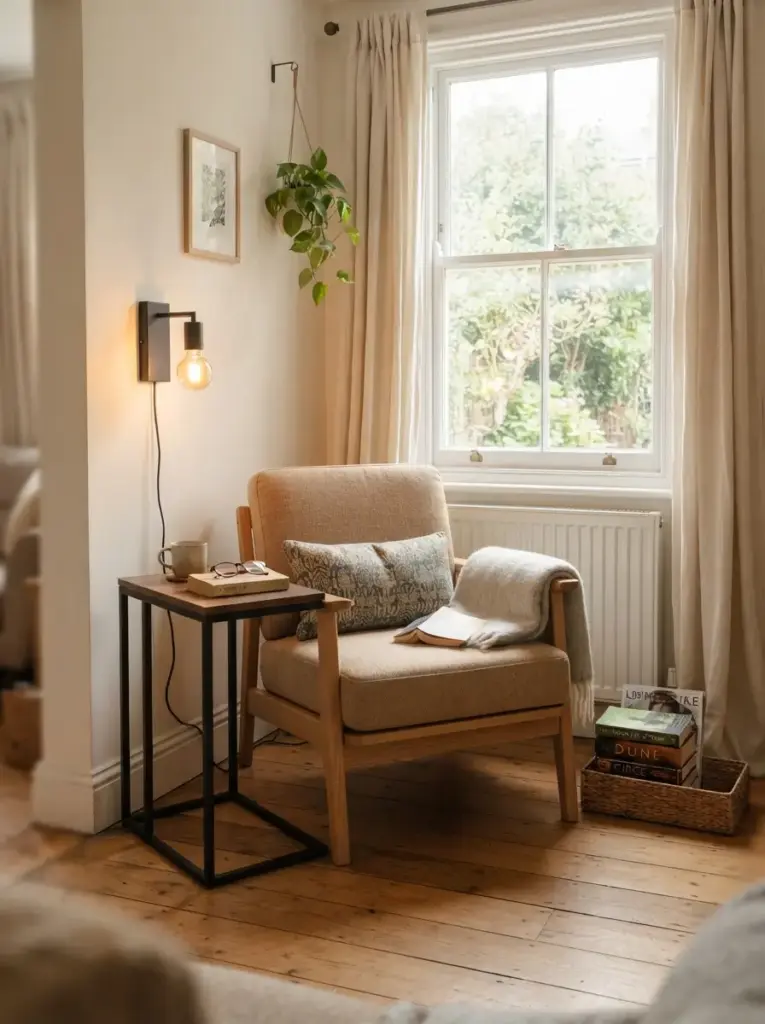
Colour feels more comfortable when the room follows a simple ratio. Let a neutral base cover most large surfaces, add one secondary colour through rugs or curtains, then use a smaller accent in cushions, art, and objects. Warm white, greige, sand, mushroom, and pale stone create flexible backgrounds for rented spaces.
Good combinations include cream with olive and rust, taupe with dusty blue and walnut, or soft grey with burgundy and warm brass. Test paint and textiles in morning and evening light because colours change under different bulbs. Renters who cannot paint can introduce colour through removable wallpaper, framed fabric, curtains, and large art.
Controlled colour works because repetition creates connection without making every item identical. Beginners often buy attractive pieces in unrelated shades, then wonder why the room feels unsettled. Limit strong accents to two families and repeat each at least twice. Avoid cold grey rooms with only cool white light, since the result can feel flat and unwelcoming.
Build a Compact Reading Corner
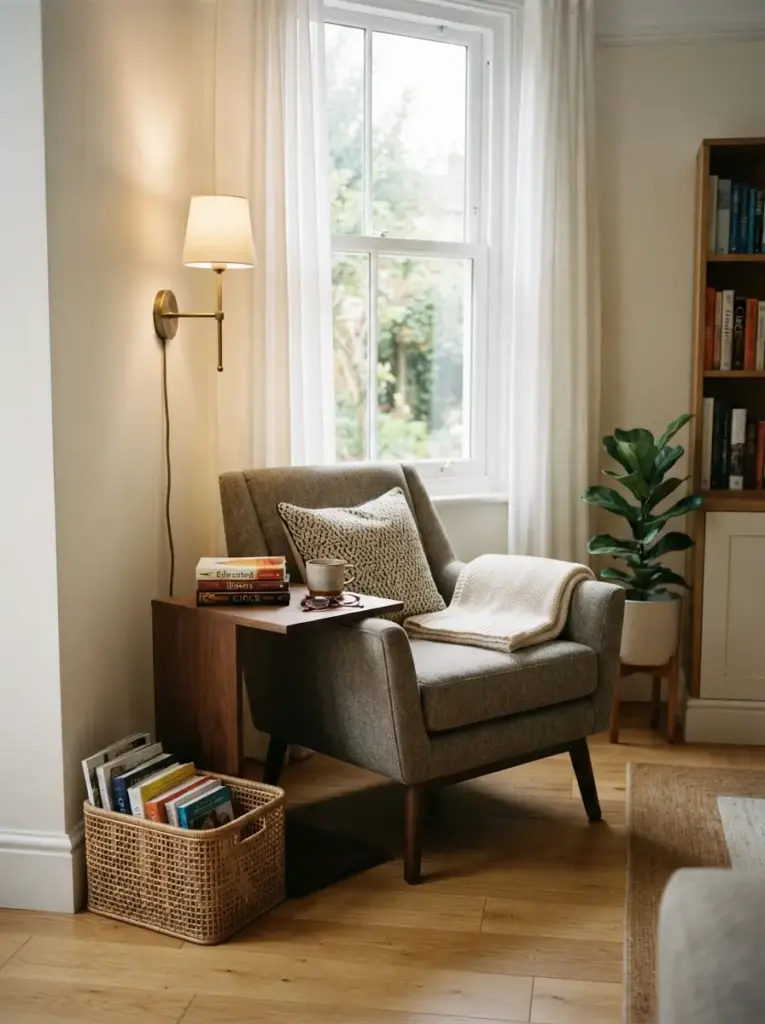
Reading corners need less space than many people expect. Place a comfortable chair near a window or in an unused corner, add a floor lamp, and include a small table within easy reach. A chair with a supportive back and medium seat depth works better than an oversized lounge chair in tight rooms.
Use one cushion, a light throw, and a narrow basket for current books. Wall-mounted or plug-in sconces save floor space, while C-shaped tables slide partly under the chair. Keep the corner visually linked to the rest of the room by repeating one colour or wood finish.
Focused corners work because they give space a clear purpose. Readers, students, and people who want a screen-free evening routine benefit most. Avoid adding a chair only because a corner looks bare. Every seat should be comfortable enough to use and should not block curtains, radiators, or access to storage.
Make the Media Wall Calm and Low-Contrast
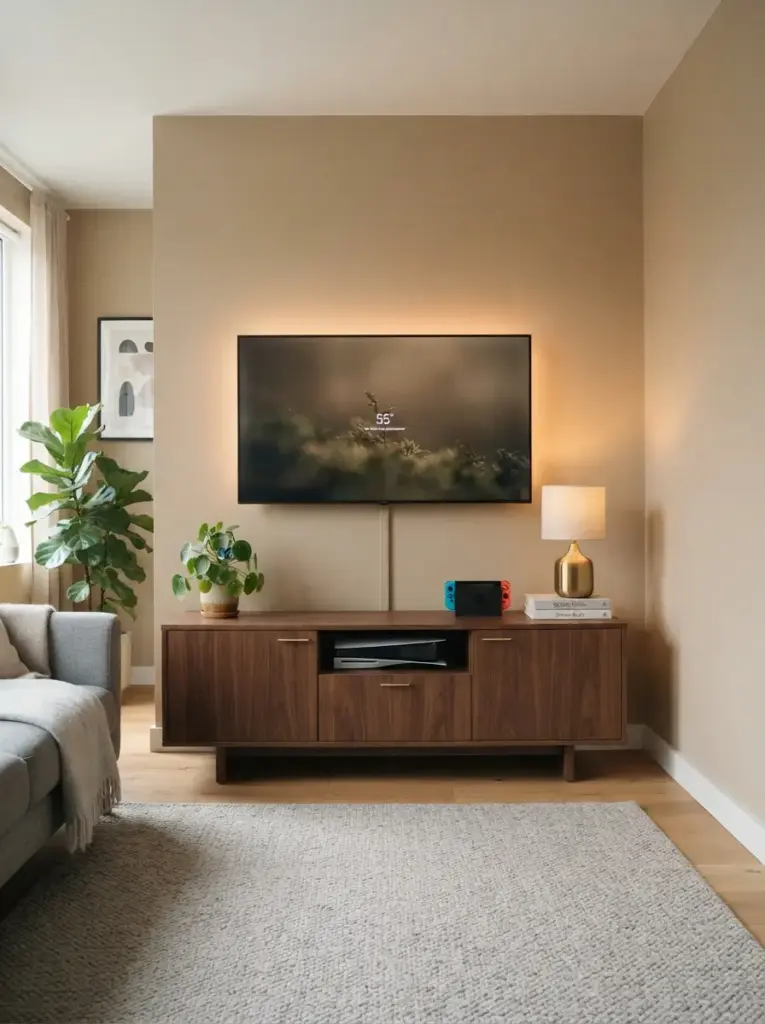
Television walls often dominate small rooms because of dark screens, visible cables, and oversized units. Choose a low media cabinet slightly wider than the television, then keep the surrounding wall simple. Cable covers painted to match the wall can reduce visual clutter without permanent electrical work. Renters should check mounting rules before drilling.
Use closed storage below and only a few objects around the screen. One plant, a small lamp, and two stacked books often feel more balanced than a row of ornaments. Dark wall paint can reduce contrast around the television, but warm mid-tones also work if the room needs brightness. Avoid placing the screen above a high fireplace-style console where viewing becomes uncomfortable.
Calm media styling succeeds because it lets the screen recede when not in use. Best use suits movie lovers, gamers, and families with several devices. Keep ventilation space around equipment and choose furniture deep enough for consoles. Remote-controlled backlighting can reduce eye strain, but use a soft warm setting rather than good colour-changing effects.
Finish With Personal Objects and Gentle Glow
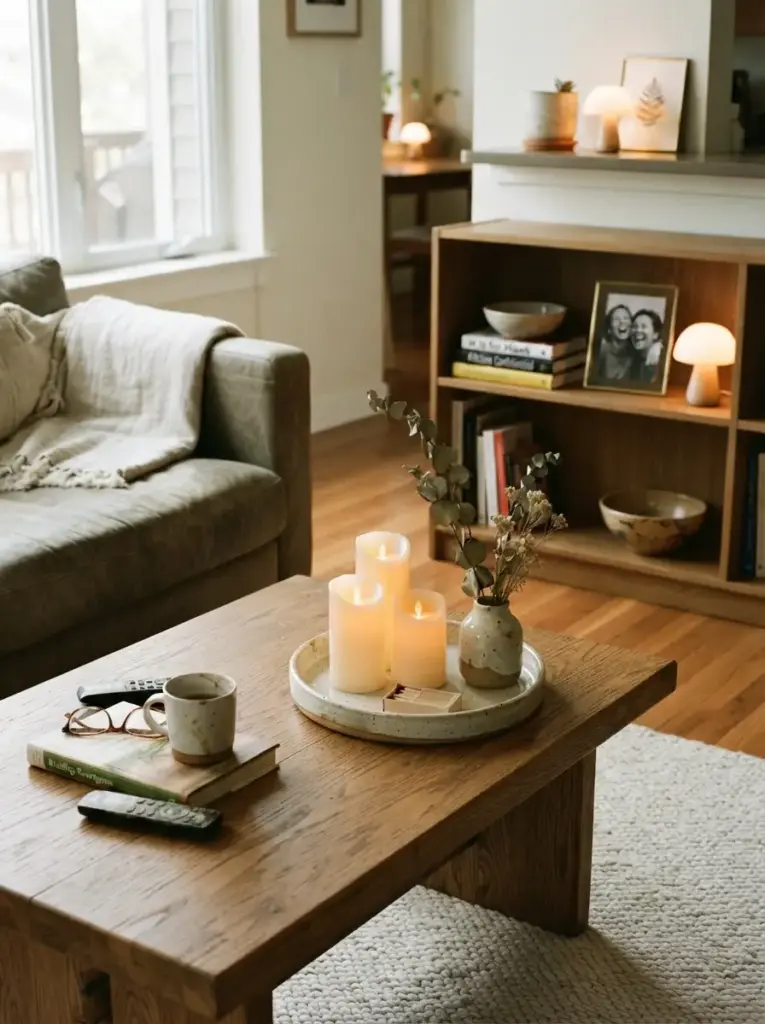
Final styling should reflect real habits rather than copy a staged room. Display a few meaningful books, ceramics, travel objects, photographs, or handmade pieces. Group items in odd numbers and vary height, but leave open surface around each group. One tray can organise candles, matches, and a small vase on the coffee table.
Candlelight adds warmth, yet flameless candles offer a safer choice for pets, children, and rental rules. Small rechargeable lamps also create a glow on shelves or dining ledges without visible cables. Choose warm light and simple shapes so the objects support the room instead of competing with it.
Personal details work because familiarity creates comfort that new furniture cannot replace. People moving into a first home should unpack meaningful items early instead of waiting until every purchase is complete. Avoid filling every shelf in the first week. Leave space for the room to develop as routines, needs, and collections change.
Common Mistakes to Avoid
Oversized furniture causes the most common layout problem. A large sectional may look comfortable online but can block windows, doors, and storage in a compact room. Measure the full footprint with painter’s tape before buying. Include the depth of recliners, open drawers, and walkways. Furniture should fit the room while still allowing people to move naturally.
Poor lighting creates another frequent issue. One bright ceiling fixture cannot support reading, relaxing, entertaining, and television viewing equally well. Add light at several heights and keep bulbs within a consistent warm range. Lamps should illuminate useful areas rather than only decorating empty corners. Check shade height so the bulb does not shine directly into seated eyes.
Tiny rugs make seating feel scattered. Place a larger rug under the front legs of major furniture, even if that means choosing a simpler design. Very thick rugs can also cause doors to catch or chairs to wobble. Always measure clearance near balconies, cupboards, and entry doors before ordering.
Too many small decorations create visual noise and more cleaning. Choose fewer objects with stronger scale, then store the rest and rotate them seasonally. Open shelving needs space to look intentional. Keep daily surfaces at least partly clear so cups, laptops, and meals have somewhere practical to go.
Matching every piece can make a room feel flat, while mixing too many styles can make it feel chaotic. Repeat colour, shape, or material across the room to create connection. For example, pair a curved lamp with a round table and an arched mirror, then balance those forms with a simple rectangular sofa.
Ignoring maintenance leads to frustration. Delicate cream boucle, long shag rugs, and glass tables may not suit pets, children, frequent entertaining, or limited cleaning time. Choose finishes that match real life. Comfort depends partly on how easy the room is to use, clean, and reset after a normal day.
Budget-Friendly Ways to Add Warmth
Start with lighting because it changes the room quickly and usually costs less than new furniture. Replace harsh bulbs with warm white versions, add one floor lamp, and use a smart plug to control several sources. Second-hand lamps can work well after checking the cable, plug, and shade condition. Keep bulb wattage within the manufacturer’s guidance.
Update textiles before replacing the sofa. New cushion covers, a washable throw, and a larger rug can shift colour and comfort for less money. Look for end-of-line fabric, outlet curtains, and removable covers that can move with you. Buying standard cushion inserts once allows you to change only the covers later.
Shop second-hand with measurements already written down. Solid wood side tables, mirrors, baskets, and media units often offer better value than low-cost new pieces. Check for smoke smells, water damage, unstable joints, and pests before bringing furniture home. Upholstered items require more caution because cleaning can be difficult and expensive.
Use paint carefully where the lease permits it. One warm neutral wall or a small painted bookcase can add depth without a full-room project. Removable wallpaper works best on smooth, clean walls, but test a small area first. Some adhesive products can pull weak paint from rental walls.
Repurpose items already in the home. A sturdy stool can become a side table, a dining bench can provide extra seating, and attractive boxes can organise cables. Move art, lamps, and rugs between rooms before buying anything. New placement often solves balance problems without spending money.
Budget decisions work best when purchases follow a priority order. Spend first on seating comfort, lighting, and a properly sized rug. Save on seasonal accessories, small tables, decorative objects, and trend-led colours. One useful, durable item usually adds more value than several cheap pieces that create clutter.
Quick Cozy Apartment Living Room Design Tips
Measure before shopping and keep the dimensions on your phone. Record wall lengths, door swings, window widths, radiator positions, and available socket locations. Furniture photographs can hide scale, so compare every product measurement with the taped footprint in the actual room. Include delivery access, especially in older apartment buildings with narrow stairs.
Choose one visual anchor. The anchor may be the sofa, rug, artwork, window, or media wall. Build supporting choices around it instead of making every object compete for attention. Strong hierarchy helps small rooms feel organised and gives beginners a clear decision process when shopping.
Protect flexibility. Lightweight chairs, nesting tables, pouffes, and movable lamps let the room change for guests, work, exercise, or meals. Heavy furniture should stay near walls, while smaller pieces can move. Flexible layouts suit renters because needs often change before the lease ends.
Keep warmth balanced with breathing room. Plush fabrics, layered curtains, and wood tones create comfort, but open floor, clear surfaces, and visible wall space stop the room from feeling crowded. Remove one item when every surface starts to look full. Editing is part of decorating, not a sign that the plan failed.
Frequently Asked Questions
Which Cozy Apartment Living Room Designs Work Best in Rentals?
Rental-friendly rooms rely on movable furniture, plug-in lighting, freestanding storage, large rugs, curtain solutions that avoid drilling, and removable wall products. Choose pieces that can adapt to a future home rather than items cut exactly for one wall. Keep original fixtures safe, test adhesives in hidden areas, and photograph the condition of the room before installation. Furniture with neutral upholstery and standard dimensions usually moves more easily between apartments.
How Can I Make a Small Living Room Cozy Without Clutter?
Limit the room to one main seating piece, one clear focal point, and only the storage needed for daily life. Use a large rug, soft curtains, warm bulbs, and a few generous cushions instead of many tiny accessories. Closed storage keeps practical items nearby without leaving them visible. Maintain open walking routes and leave part of each surface clear.
What Colours Make an Apartment Living Room Feel Warmer?
Warm neutrals such as cream, mushroom, sand, camel, and soft taupe create a comfortable base. Olive, rust, burgundy, dusty blue, and muted terracotta add depth without overwhelming a small space. Wood tones and warm metals can provide additional warmth. Always test colours under your actual daylight and evening bulbs before committing.
What Lighting Temperature Should I Use?
Most living rooms feel comfortable with bulbs around 2700K. Task areas can use 3000K when extra clarity helps, but mixing very cool daylight bulbs with warm lamps often looks inconsistent. Use dimmable bulbs where possible and distribute light across floor lamps, table lamps, and wall-level sources. Shade material also affects softness, so frosted glass and fabric usually reduce glare.
How Much Should I Spend First?
Prioritise a comfortable sofa or chair, useful lighting, and a rug that fits the seating zone. These pieces affect daily comfort and room proportion more than decorative accessories. Budget buyers can improve an existing sofa with inserts and covers, then add second-hand tables or storage. Delay trend-based purchases until the main layout works.
How Do I Keep the Room Cozy Through Different Seasons?
Use a stable base of neutral furniture and change smaller layers. Lighter cotton covers and fewer throws suit warmer months, while wool blends, velvet cushions, and deeper accent colours add winter warmth. Keep storage nearby so seasonal textiles can rotate without filling cupboards elsewhere. Lighting should remain layered throughout the year because evening comfort depends on it in every season.
Conclusion
Cozy Apartment Living Room Designs succeed when comfort, scale, and daily function support each other. Start with measurements, a clear seating plan, and warm layered lighting. Add a correctly sized rug, soft washable textiles, practical storage, and a controlled colour palette. Personal objects should finish the room rather than fill every surface.
Small-space decorating becomes easier when each purchase solves a real need. Choose furniture that leaves room to move, materials that match your lifestyle, and rental-friendly improvements that can travel to another home. Careful editing matters as much as adding new pieces. Comfortable rooms rarely come from buying more; they come from arranging the right things well.