
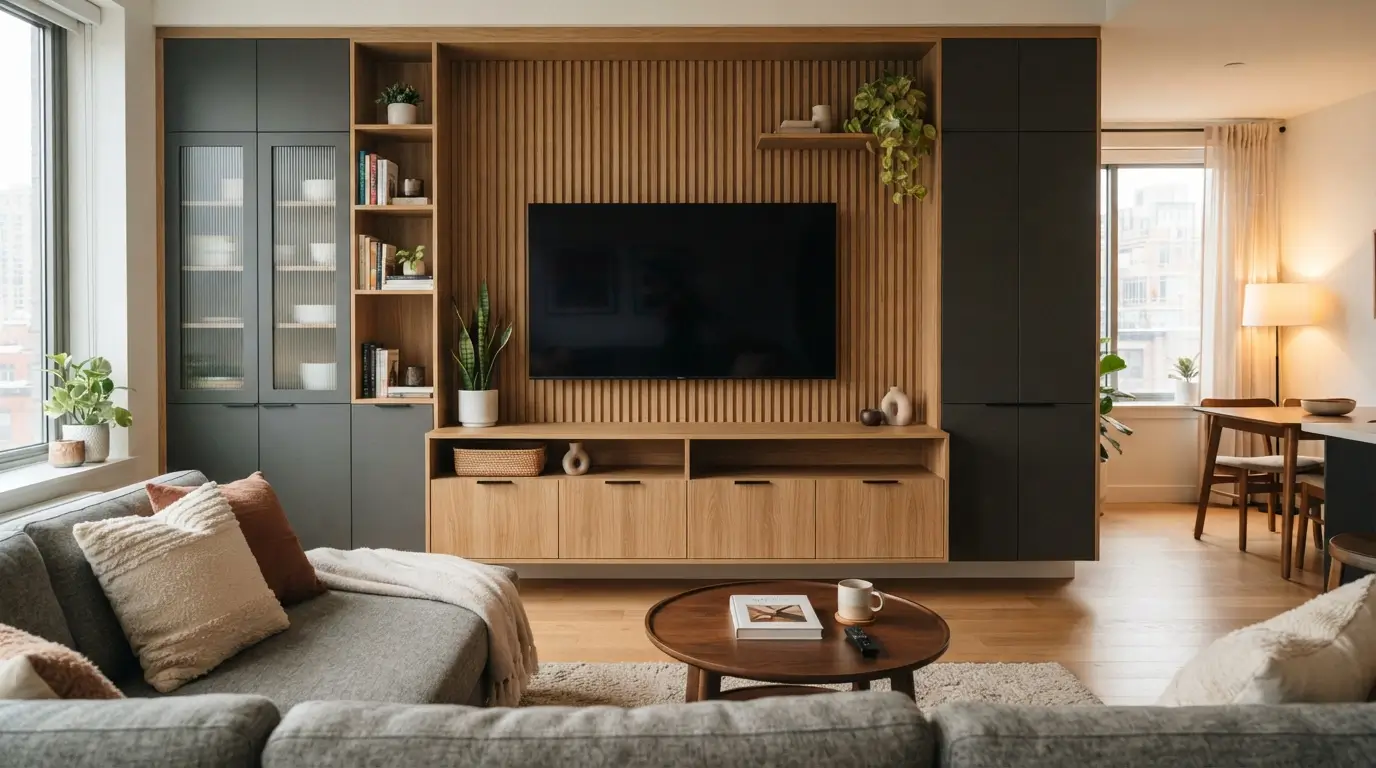

Compact living rooms often make the television wall carry more responsibility than it should. One surface may need to hold the screen, router, game console, books, speakers, charging cables, remotes, and decorative pieces without making the room feel crowded. Well-planned Apartment Living Room TV Wall Designs solve that problem by treating storage, wiring, scale, and visual balance as one project. Good results do not depend on expensive custom carpentry.
What Is the Best TV Wall Design for Hiding Clutter?
Best results usually come from a low media unit with closed doors, a correctly mounted television, hidden cable routes, and one or two open areas for display. Among the most practical Apartment Living Room TV Wall Designs, the strongest choice is the one that matches your storage habits rather than copying a showroom. Households with game systems need airflow and easy access, while readers may need book storage and renters may need removable solutions.
Choose a Low Media Console With Deep Drawers
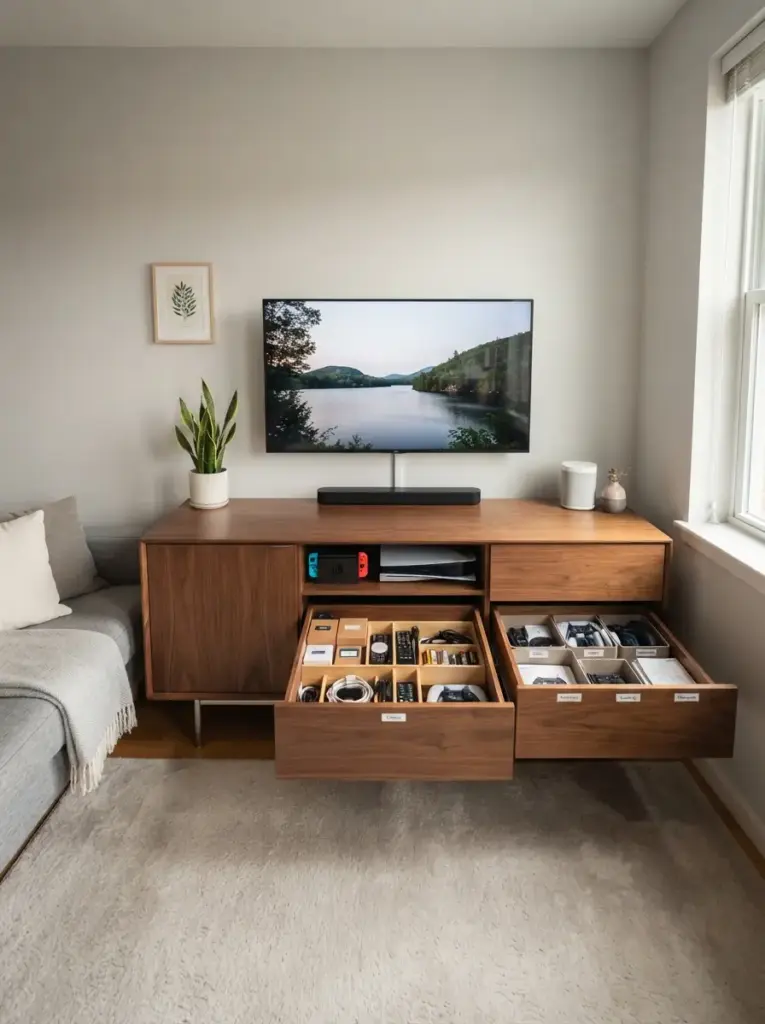
Low consoles work especially well in small apartments because they keep the centre of the wall open and make the ceiling feel higher. Choose a unit that is wider than the television, ideally extending at least 15 to 25 centimetres beyond each side of the screen. Deep drawers can hold remotes, batteries, game controllers, charging cords, instruction manuals, and small electronics. Flat-front doors look calmer than open cubbies when many items need hiding.
Practical strength comes from combining visual width with concealed volume. Drawers allow you to see everything from above, so small accessories do not disappear behind one another. Families, gamers, and anyone who dislikes dusting open shelves will benefit most from this setup. Before buying, measure the depth of your largest device and allow space behind it for plugs. Avoid consoles under 35 centimetres deep if you own a full-size game system. Add small labelled boxes inside the drawers so cables, adapters, and spare parts stay separated instead of becoming one tangled pile.
Float the Console to Clear the Floor
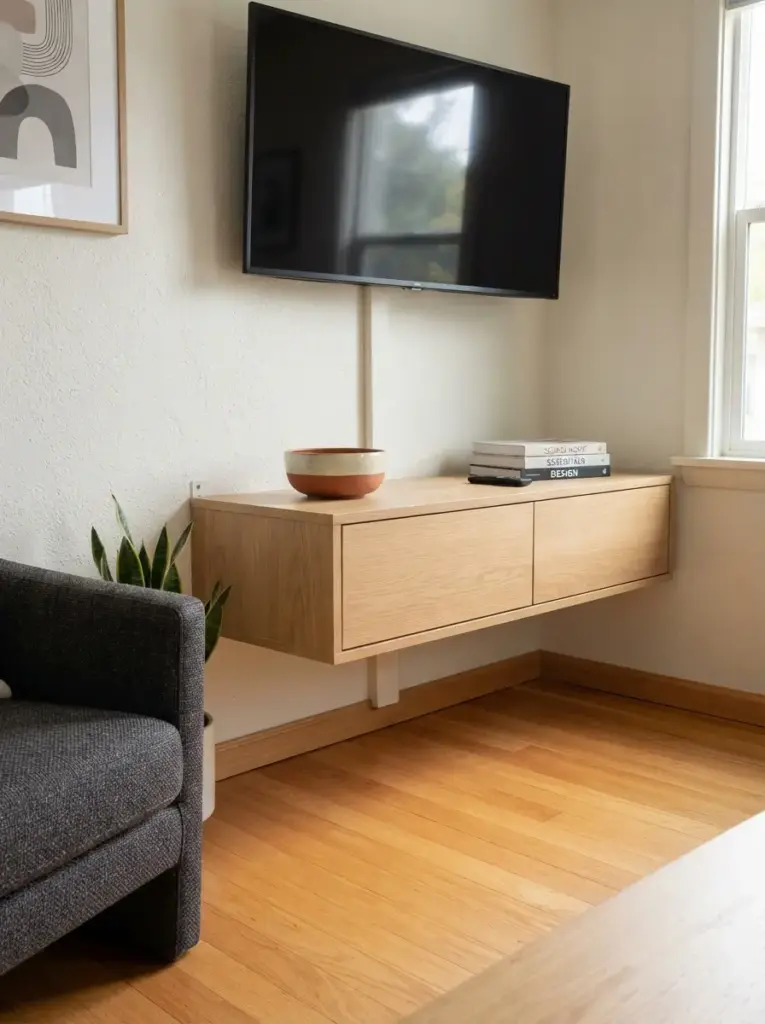
Wall-mounted media cabinets create a clean strip of visible flooring, which makes a compact room feel less packed. Position the cabinet about 15 to 25 centimetres above the floor, depending on the height of your seating and television. Keep the top mostly empty, using only one low object such as a ceramic bowl, slim lamp, or small stack of books.
Choose a console with recessed legs or a wall-hugging plinth, then paint the legs to match the wall or floor. Removable cable channels can run from the television to the unit and look neater when painted in the wall color. People with robot vacuums, narrow rooms, or visually heavy furniture gain the most from this idea. Check wall construction before mounting anything, and use hardware rated for both the cabinet and everything stored inside it.
Build a Shallow Frame Around the Television
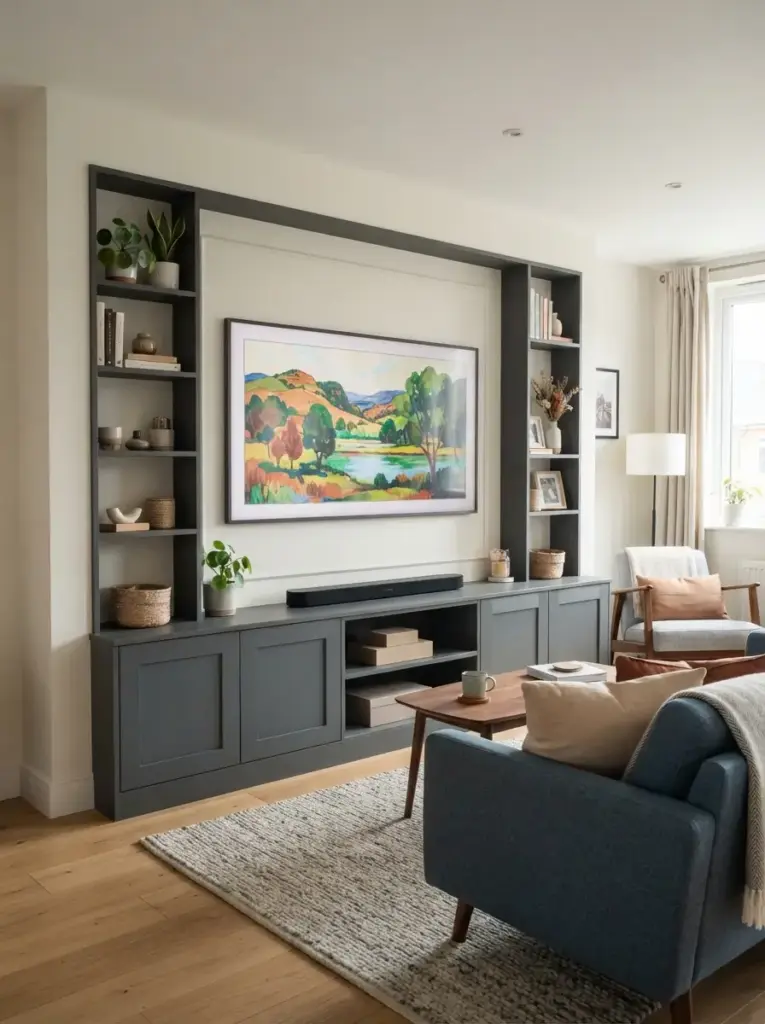
One shallow frame gives the television wall a built-in appearance without taking over the room. Use narrow vertical side panels and a slim top shelf or header to define the screen area. Depth matters more than decoration: 20 to 25 centimetres is often enough for small books, baskets, or display objects while preserving walking space.
Organisation improves because the frame creates clear storage zones instead of scattered shelves. Closed cabinets below can hide electronics, while the side sections hold only a few attractive items. Couples, design-conscious renters, and first-time homeowners who want a custom look without full cabinetry will find this approach useful. Modular bookcases can form the side towers, and a simple painted board can connect them visually. Leave at least 5 to 8 centimetres around the television for ventilation and access.
Use Tall Closed Cabinets on One Side
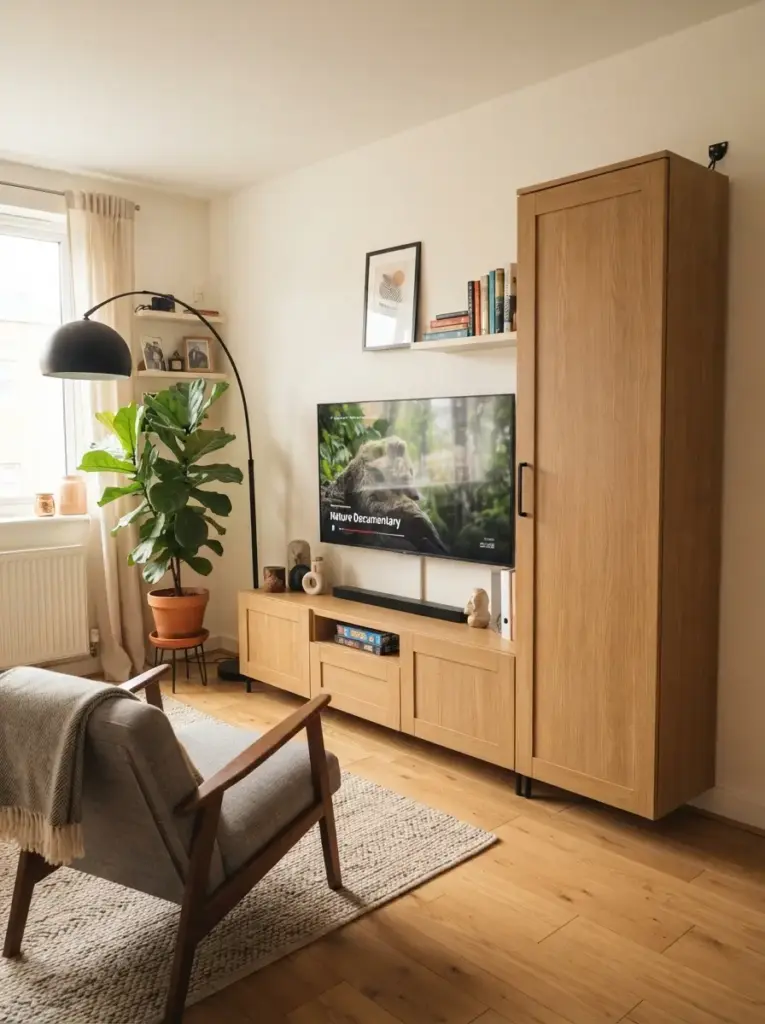
Symmetry can look formal, but small rooms often benefit from an off-centre layout. Place one tall closed cabinet beside the television and keep the opposite side visually open. The cabinet can store board games, paperwork, extra candles, seasonal decor, Wi-Fi equipment, cleaning supplies, or a foldable laptop stand. Choose a door style that matches the media console so both pieces read as one composition.
Off-centre storage works because it concentrates clutter instead of spreading it across the wall. The open side gives the eye a resting place and can hold a floor lamp or one medium plant. Studio residents, renters with limited closets, and anyone who needs mixed-purpose storage will appreciate the extra vertical capacity. Secure tall units to the wall with proper anti-tip hardware. Avoid glass doors unless the contents stay consistently tidy.
Hide Devices Behind Ventilated Doors
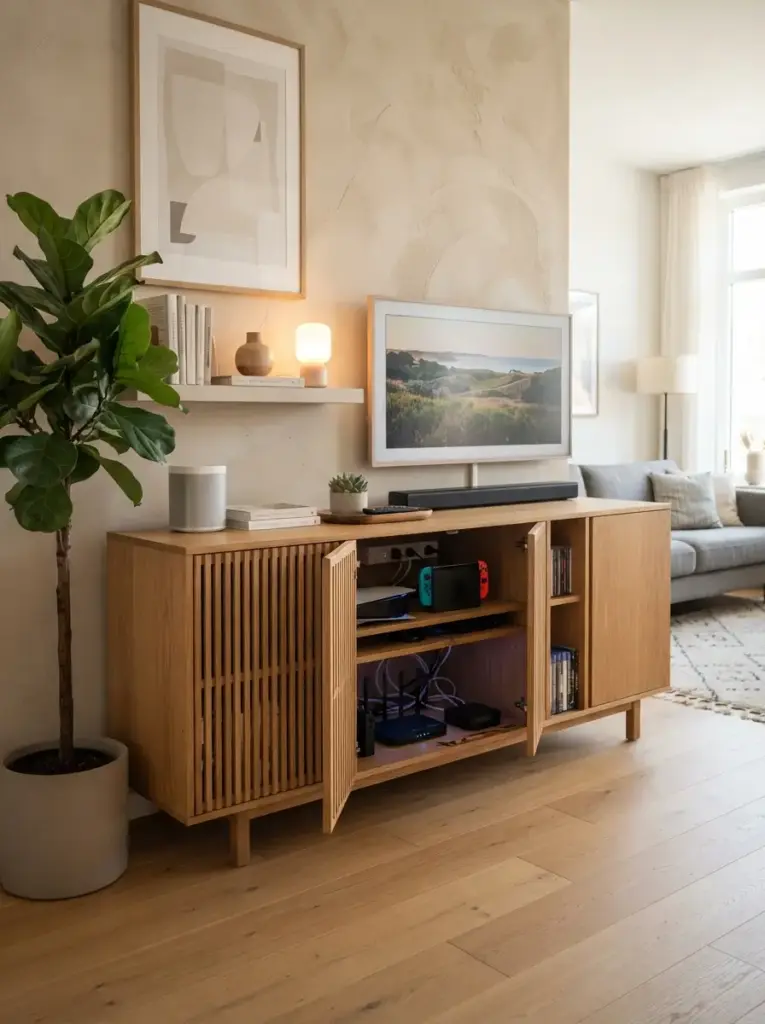
Electronics often create clutter even when cables are hidden. Routers, consoles, streaming boxes, and power strips can disappear behind cabinet doors, but they still need airflow and reliable signals. Look for slatted wood, cane webbing, perforated metal, or doors with discreet ventilation slots. Place heat-producing devices on separate shelves rather than stacking them. Leave space around the back and sides, and keep the cabinet away from radiators.
Functional success comes from hiding equipment without shortening its life or weakening performance. Cane and slatted fronts also add texture, which suits warm modern, Scandinavian, and relaxed apartment interiors. Gamers, remote workers, and households with several streaming devices will gain the most. Test remote controls and Wi-Fi strength before finalising the setup. Never pack power strips under paper, fabric, or loose cables.
Add a Full-Height Storage Wall With Closed Bases
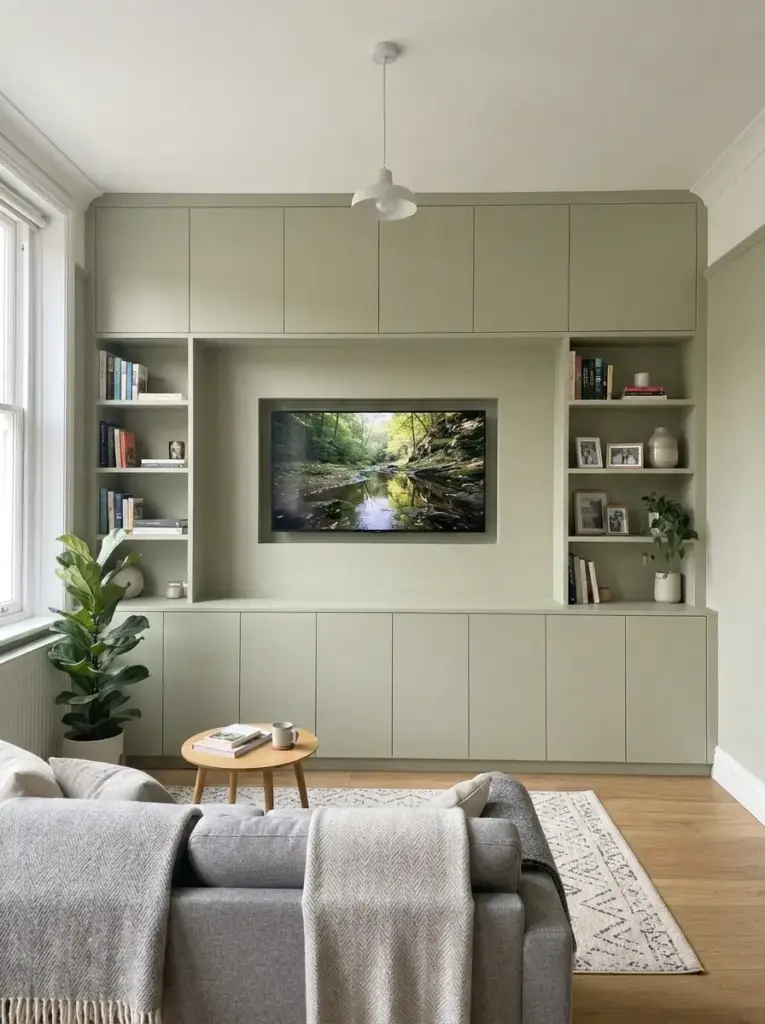
Floor-to-ceiling storage can make a small room feel more organised when the design stays shallow and consistent. Use closed cupboards along the lower section, a television opening in the middle, and selective shelves above or beside it. Keeping the doors flat and handle-free reduces visual breaks. Paint the entire installation in one soft shade, including the shelves and backing.
Many Apartment Living Room TV Wall Designs fail because they add storage in separate pieces that do not align. A full-height unit works by turning the whole wall into one calm surface. Book collectors, families, and residents without a separate home office benefit most. Reserve closed cupboards for unattractive items and limit open shelves to books, framed photos, and a few ceramics. Keep the television opening slightly larger than the current screen so replacements still fit.
Cover the Television With Sliding Panels
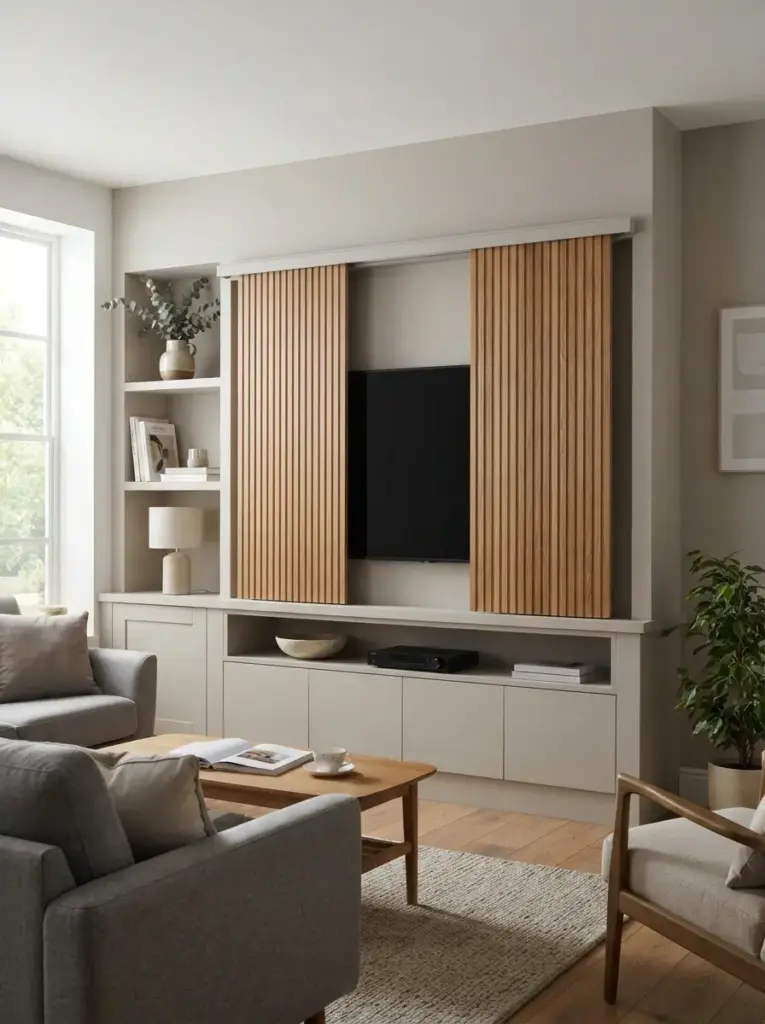
Sliding panels can conceal the screen completely when it is not in use. Two lightweight doors may slide sideways over the television, or one large panel can move along a top track. Flat wood panels create a quiet architectural feature, while fluted surfaces add texture. Painted panels blend into the wall and work well in minimalist homes.
Visual calm improves because the largest dark rectangle disappears during meals, reading, or entertaining. People who use the living room for several activities, including work or exercise, may value the flexibility. Renters can use a freestanding media system with its own track instead of fixing hardware across the wall. Make sure panels slide without hitting lamps, plants, or adjacent furniture.
Create a Curtain-Covered Media Nook
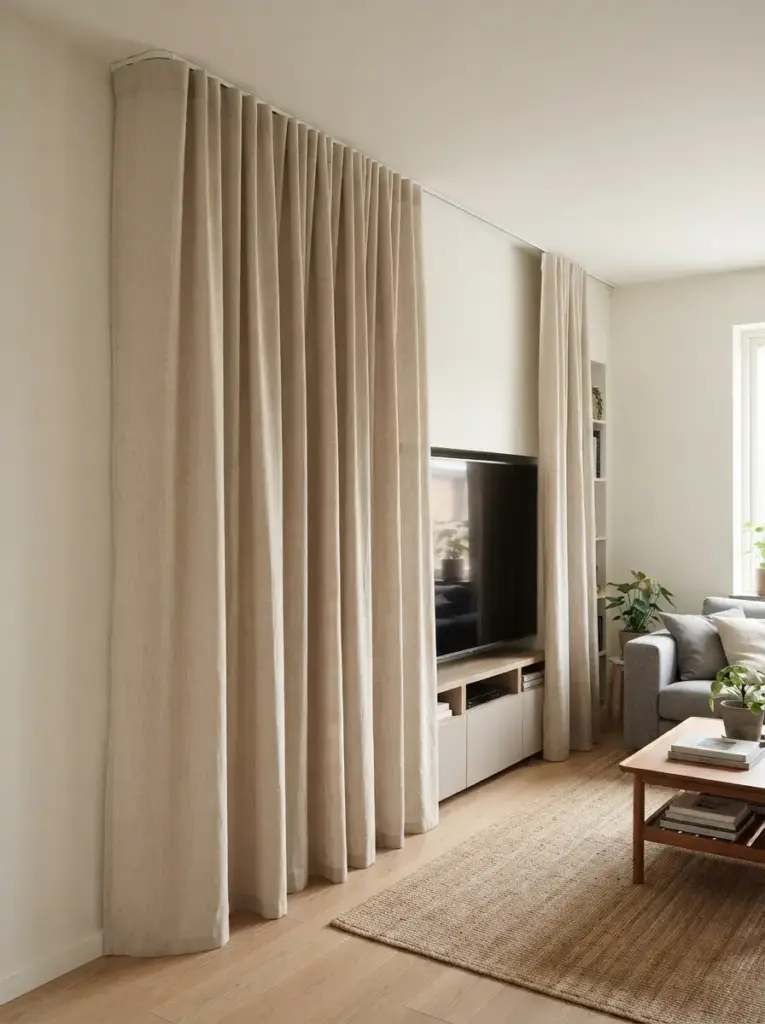
Fabric offers a softer and more affordable way to hide a television area. Install a ceiling-mounted or wall-mounted track, then hang curtains that close across the screen and storage shelves. Linen-look fabric, cotton canvas, or a lined neutral curtain can make the wall resemble a calm alcove. Choose a color close to the wall for a seamless effect, or repeat the curtain color from nearby windows. Keep the fabric several centimetres away from electronics and never block ventilation while devices are running.
Adaptability makes this idea useful for renters, bedrooms used as living rooms, and temporary apartments. Curtains can hide mismatched shelving, storage bins, printers, and cables in one move. A ceiling track usually looks cleaner than a standard rod and allows the fabric to stack neatly at the side. Washable material is practical in homes with children or pets. Choose enough fullness for the curtain to hang well, but avoid thick folds in a narrow walkway.
Use a Lift-Top Console for Everyday Items
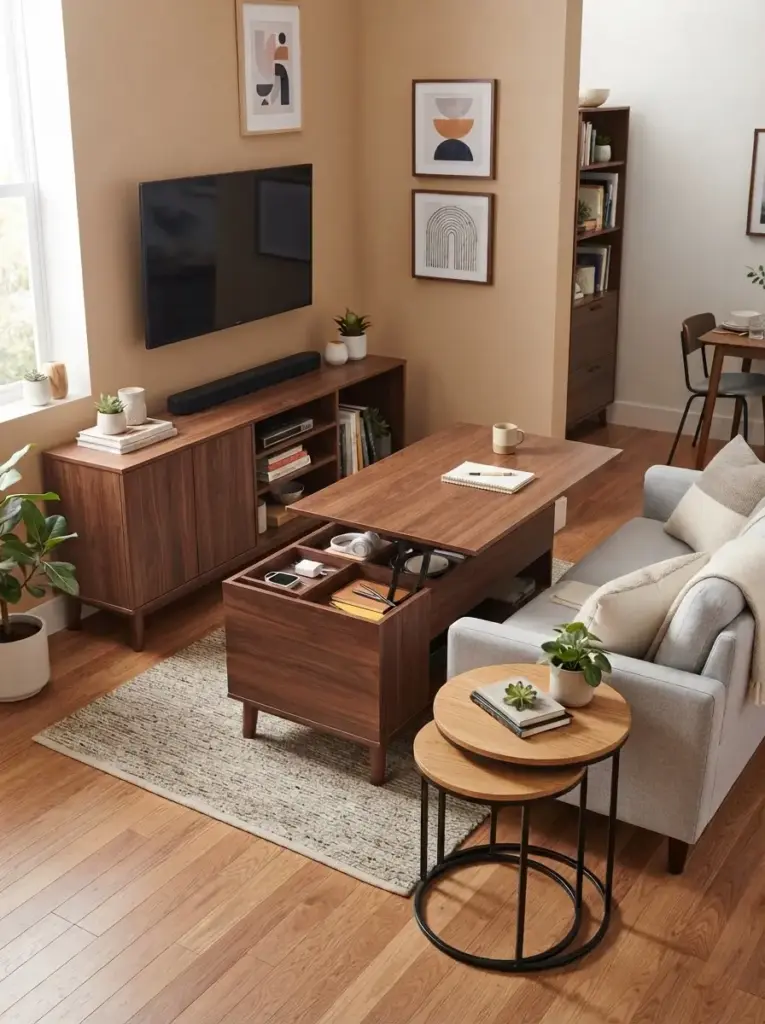
Lift-top media furniture hides clutter while adding a useful work or dining surface. One section of the console rises to a comfortable height for a laptop, snacks, or paperwork, then closes when the task ends. Interior compartments can store chargers, notebooks, pens, headphones, and mail. Pair the piece with a compact sofa and nesting tables so the room can change function without adding more furniture.
Multi-use furniture earns its space by replacing several smaller pieces. Remote workers, students, and residents who eat in the living room can keep daily tools nearby without leaving them visible. Check the lift mechanism before purchase and confirm that the top opens without blocking the screen. Organise the interior with shallow trays so small items remain accessible rather than falling into a deep compartment.
Install Picture Ledges Instead of Deep Shelves
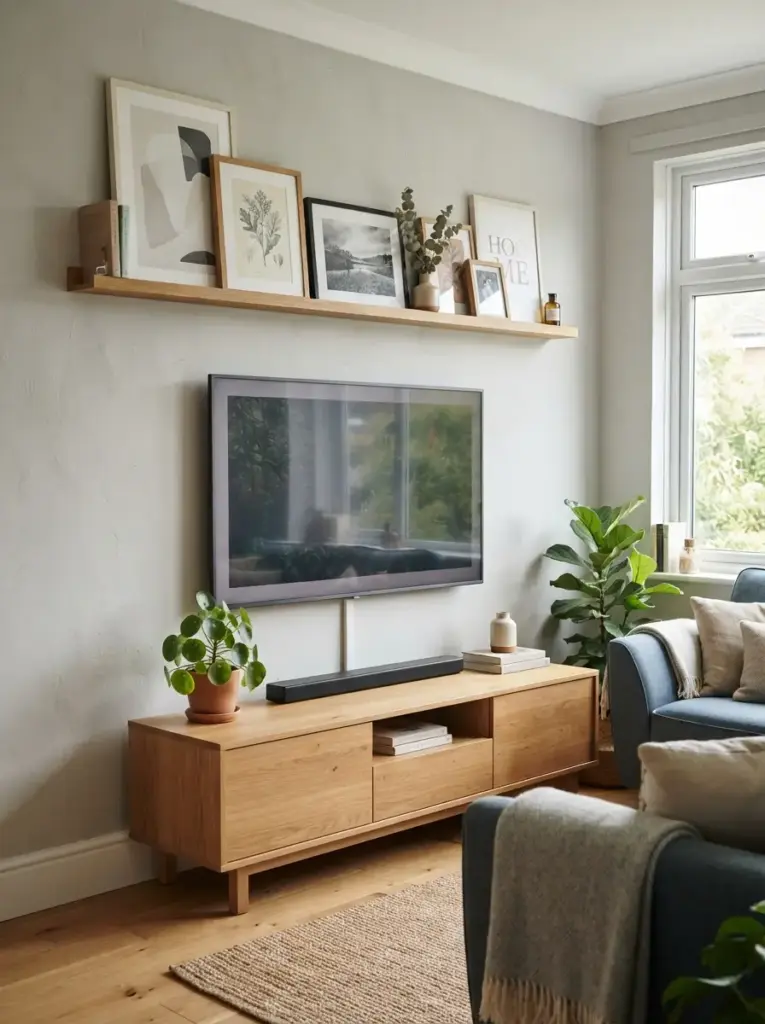
Picture ledges add personality without projecting far into the room. Their shallow depth holds framed art, small books, and lightweight objects while reducing the temptation to pile up clutter. Place one long ledge above the television or use two shorter ledges offset to one side. Keep frames in two or three coordinated finishes, such as oak, black, and cream.
Controlled display space works because a ledge gives decor a boundary. It is easier to edit ten centimetres of depth than a wide shelf that collects random objects. Renters, art lovers, and beginners who enjoy changing seasonal prints will find this solution manageable. Use removable ledge options only for very light items and follow weight limits carefully. Leave enough space above the television so frames do not feel crowded. Keep reflective glass angled away from windows to reduce glare during daytime viewing.
Paint the TV Wall in a Soft Mid-Tone
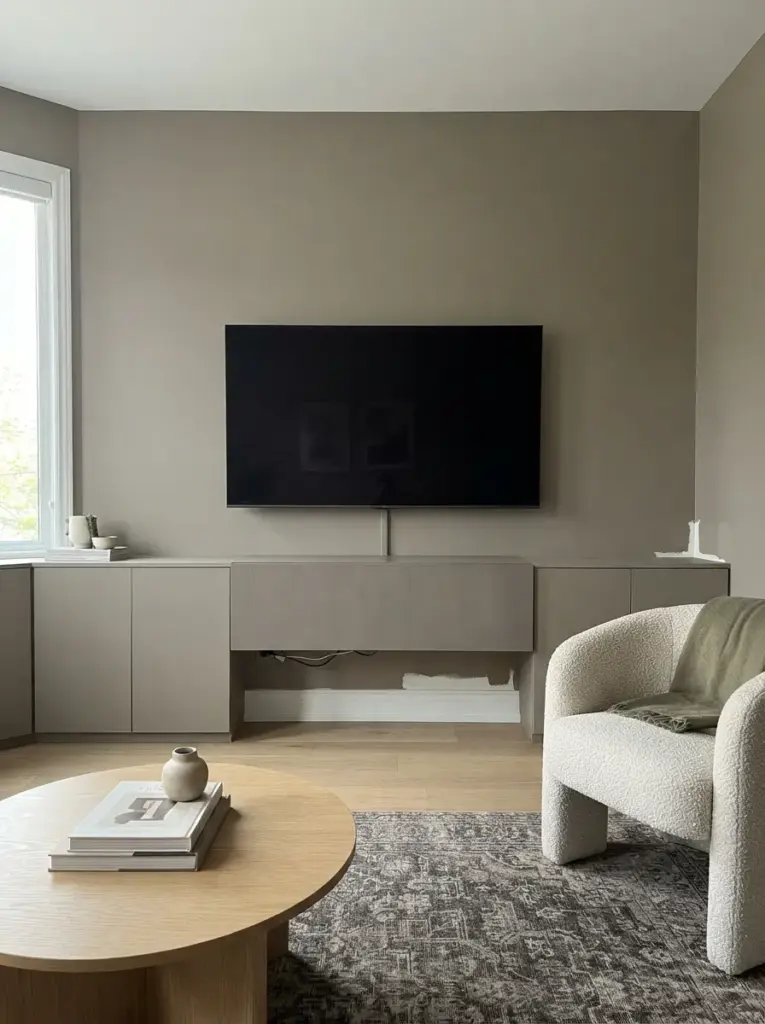
Dark screens often look harsh against bright white walls. A soft mid-tone reduces the contrast and helps the television recede when switched off. Useful choices include warm grey, olive, mushroom, deep beige, muted navy, or clay brown. Test samples at different times because daylight and lamps can change the undertone. Pair the paint with closed cabinetry in the same shade for a built-in effect, or use a slightly lighter console to prevent the wall from feeling heavy.
Colour works as visual storage because it reduces the number of competing edges. The screen, cables, and furniture appear more connected when their contrast is controlled. Minimalists, renters allowed to paint, and households with large televisions benefit most. Choose a low-sheen finish to limit glare. Avoid very glossy paint behind the television, especially opposite windows or bright floor lamps.
Add Vertical Slats With a Hidden Cable Zone
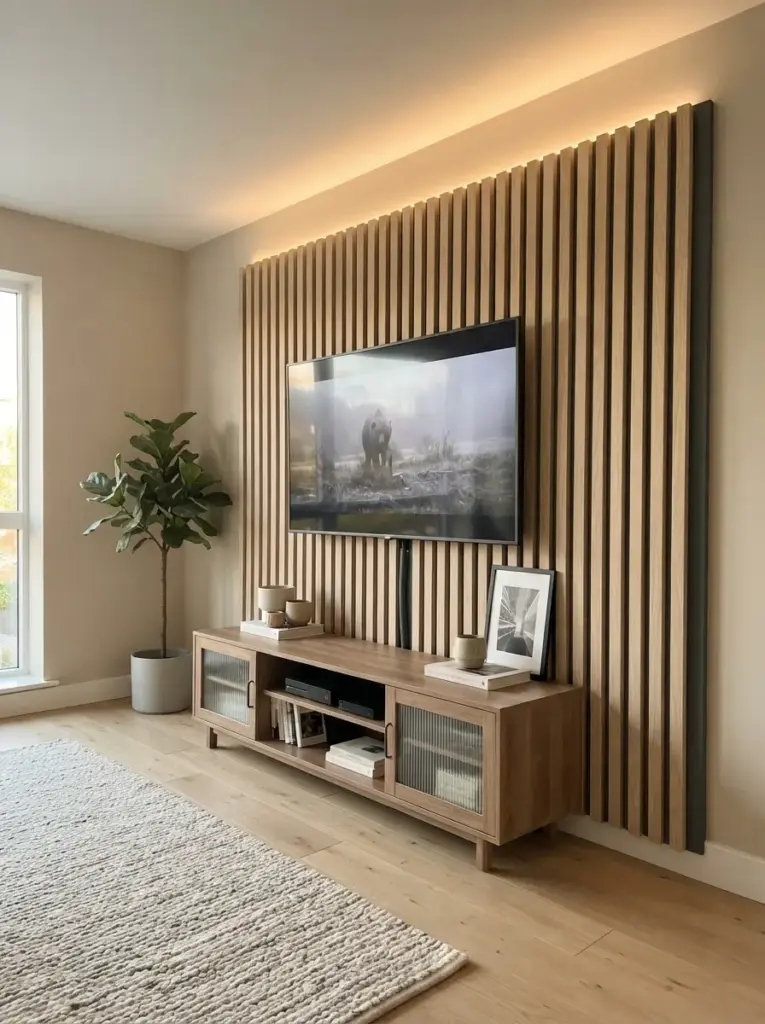
Wood slats bring warmth and can disguise a shallow cable channel behind the television. Install slats on a backing panel rather than directly over the whole wall, leaving a narrow cavity for wires. Spacing should remain consistent, and the panel should extend beyond the screen on both sides. Pale oak feels light and relaxed, while walnut adds depth. Pair slats with a simple low console rather than more heavily patterned furniture. Warm lighting around 2700K to 3000K highlights the texture without making the room feel orange.
Technical value comes from separating cables from the visible wall surface. Loft residents, modern design fans, and people with exposed wiring will appreciate the result. Freestanding slatted panels are available for renters who cannot drill extensively. Too many narrow slats can make a small wall visually busy, so use moderate spacing and limit decorative objects nearby.
Turn the Wall Into a Compact Library
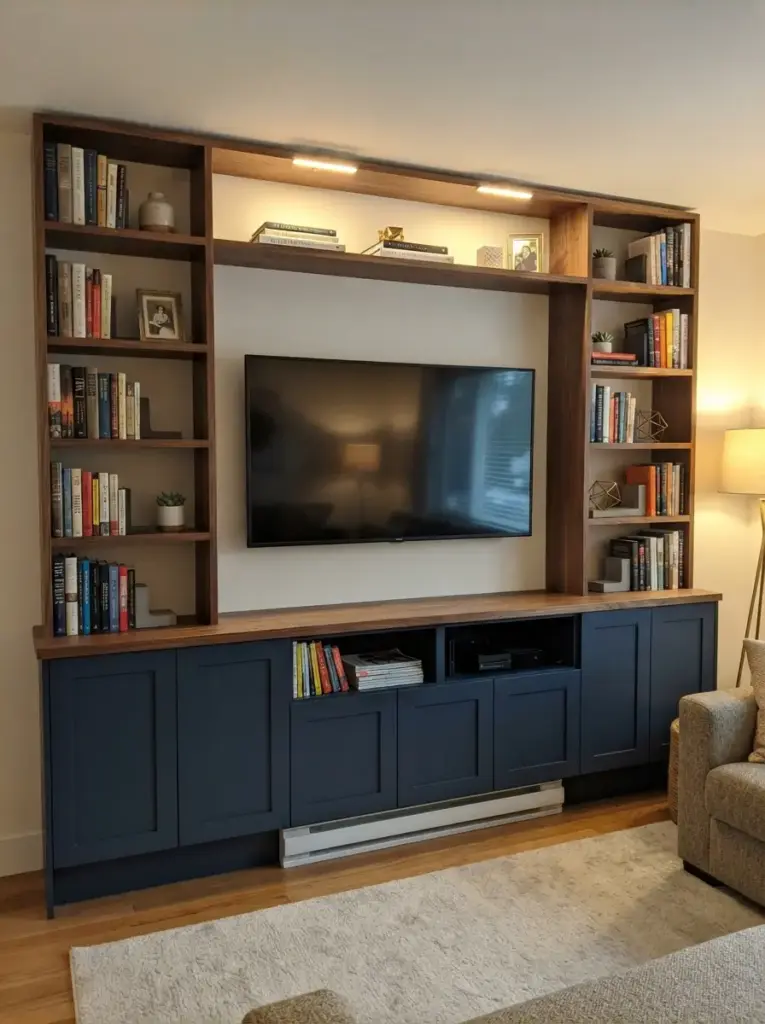
Books can frame a television attractively when open storage is balanced with closed cabinets. Place shelves above and beside the screen, then keep the lower third behind doors. Arrange books in mostly vertical groups, leaving occasional gaps for a small object or framed photo. Mixed book colors often look more natural than colour-coded spines, but repeating a few neutral bookends creates order. Use shelves no deeper than necessary, usually 20 to 28 centimetres for standard books.
Purposeful density makes the wall feel collected rather than cluttered. Readers, students, and households with limited book storage benefit most. Store paperbacks, magazines, and less attractive items behind doors or in matching boxes. Leave breathing room around the screen and avoid placing books directly above heat vents. Small rechargeable picture lights can illuminate upper shelves without visible wiring. Choose warm 2700K bulbs for evening comfort. Overfilling every shelf removes the visual pauses that keep a compact library from feeling oppressive.
Use Matching Storage Baskets Inside Open Cubes
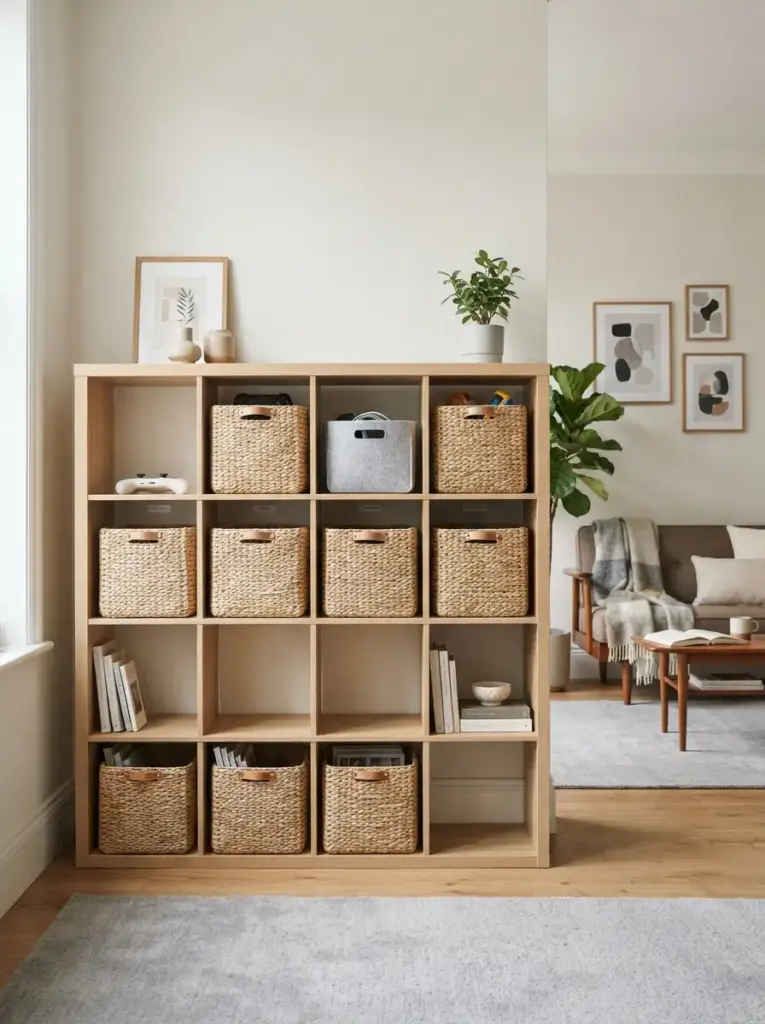
Open cube units become calmer when baskets hide small items. Choose containers that fit closely, leaving enough finger space to pull them out. Woven seagrass adds warmth, felt boxes soften a modern room, and solid fabric bins create the quietest appearance. Repeat one material across most cubes rather than mixing many basket styles. Label the inside edge or bottom so the front stays clean. Keep heavier items low and decorative pieces at eye level.
Consistency is the main reason this setup succeeds. Identical containers turn unrelated objects into a repeated visual rhythm. Parents, hobbyists, and renters using affordable modular furniture will find it practical. Measure internal cube dimensions before ordering baskets, since even a two-centimetre difference can prevent a proper fit. Avoid tiny bins that waste depth or require several steps to access everyday items. One basket for controllers, one for cables, and one for children’s toys often covers the most common living room clutter.
Design a Corner TV Wall With Angled Storage
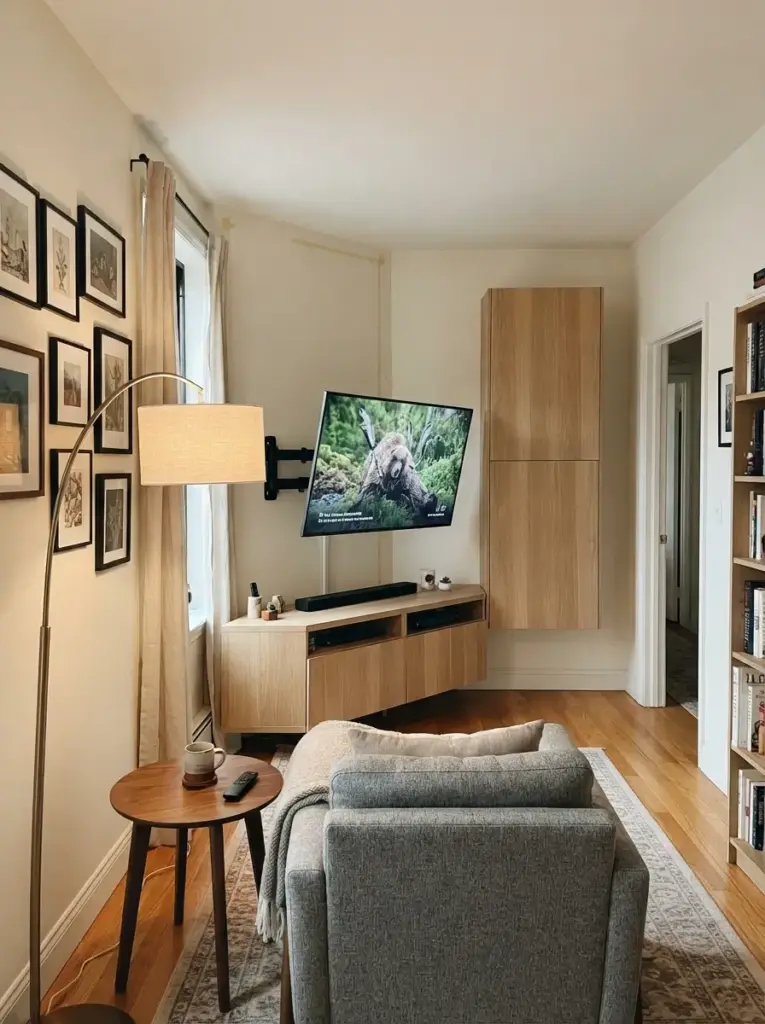
Corner placement can free a longer wall for seating, dining, or a desk. Use an angled console or a narrow unit positioned across the corner, then add closed storage on the adjacent wall. Keep the television mount adjustable so the screen can face the main seat. A round side table and curved floor lamp can soften the diagonal lines. Choose furniture with simple fronts because the corner already creates extra visual movement.
Space efficiency improves when underused corners take over the media function. Studio apartments, awkward rentals, and rooms with several doorways may gain the most. Check viewing angles before drilling by marking the screen size with painter’s tape and sitting in every usual seat. Leave room for curtains, radiators, and door swings. Avoid forcing an oversized console into the corner. Narrow custom-look storage can be created with two matching cabinets placed perpendicular to each other, provided their doors open freely.
Common Mistakes to Avoid
Oversized furniture creates the most frequent problem. A console that nearly fills the wall can make the room feel blocked, while a tiny unit under a large screen looks unstable and leaves cables exposed. Match the scale by choosing a console wider than the television but still leaving clear wall space at both ends. Measure doorways, skirting boards, outlets, and floor vents before buying. Painters’ tape can outline each piece on the wall and floor, making proportions easier to judge before money is spent.
Poor cable planning can ruin an otherwise polished design. Decide where every wire will enter, travel, and connect before mounting the screen. Group cords with reusable ties, label both ends, and avoid bending cables sharply. Paintable raceways work well for rentals, while in-wall wiring should be completed by a qualified professional where local rules require it. Keep power strips accessible instead of burying them behind heavy cabinets. Extra cable length can be coiled loosely inside a ventilated box.
Too much open shelving turns storage into display pressure. Every object remains visible, collects dust, and competes with the television. Use a rough balance of two-thirds closed storage and one-third open display for a calm apartment wall. Place practical items behind doors and reserve open areas for a limited number of meaningful pieces. Empty space is useful, not unfinished. Rotating decor seasonally costs nothing and prevents shelves from becoming permanent storage for unrelated items.
Incorrect screen height causes neck strain and makes the wall look top-heavy. Seated eye level should usually fall around the middle of the screen, though sofa height and viewing distance matter. Avoid mounting the television high simply to fill empty wall space or imitate a fireplace layout. Mark the full screen outline with tape, then sit down and test the position. Soundbars, consoles, and decor should fit below without forcing the screen upward. Comfortable viewing matters more than perfect symmetry.
Cold or bright lighting can create glare and flatten the room. Use warm bulbs between 2700K and 3000K for evening living spaces, and place lamps beside or behind seating rather than directly opposite the screen. Bias lighting behind the television can reduce the harsh contrast between a bright screen and dark wall, but keep it subtle. Avoid exposed LED dots and rapidly changing colors. A diffused strip in warm white looks cleaner and supports relaxed viewing.
Budget-Friendly Ways to Hide TV Wall Clutter
Start by improving what you already own. Remove half the visible objects, group small items in matching boxes, and route cables together with reusable ties. Paint an existing console and replace dated handles for a cleaner look. A sample pot may cover a narrow media cabinet, while leftover wall paint can make mismatched pieces feel connected. Budget work is most effective when visual noise is reduced before new storage is added. Fewer objects often create a larger change than another shelf.
Affordable modular furniture can imitate built-ins when several pieces share the same height, depth, and color. Place two narrow cabinets beside a low console, secure them safely, and paint the wall behind in a related shade. Fill small gaps with painted trim only when permitted. Renters can simply align the pieces tightly and use removable anti-tip solutions where appropriate. Uniform fronts matter more than expensive materials. Flat doors and repeated handles make separate units look intentional.
Second-hand furniture offers strong value, especially for solid wood consoles and cabinets. Check drawer runners, door hinges, odours, water damage, and the width of cable openings. A sturdy piece can be sanded lightly, cleaned, and updated with new hardware. Dark brown furniture may look modern with matte black handles and a warm grey wall. Pale wood can be refreshed with clear wax. Avoid pieces that are too deep for the room, even when the price seems attractive.
Simple fabric panels can hide open storage for very little money. Attach a small tension rod inside a console opening and hang a neatly hemmed curtain. Choose canvas, linen-look cotton, or a solid fabric that matches the wall. Velcro strips can work for lightweight panels, though they should remain hidden along the top edge. Washable fabric is best for homes with pets or children. Keep cloth away from hot devices and vents. The aim is a tailored front, not a loose gathered skirt.
Removable cable raceways, adhesive cord clips, and labelled pouches can create a professional result without construction. Buy only the sizes needed and plan the route first. Running every cord through one oversized channel often looks bulky. Two slim channels may blend more naturally, especially when one goes vertically and another runs along the skirting board. Paintable covers should match the wall exactly. Clean the surface before installation and follow removal instructions to protect rental paint.
Apartment Living Room TV Wall Designs Tips
Successful Apartment Living Room TV Wall Designs begin with a storage inventory. Write down every item that must live near the television, including devices, cables, games, paperwork, toys, books, and cleaning tools. Divide the list into daily, weekly, and occasional use. Daily items need easy drawers or baskets, while occasional items can sit higher or deeper. Planning from real possessions prevents buying beautiful furniture that does not solve the problem. Leave roughly 15 percent of storage empty so future purchases do not overflow immediately.
Viewing distance should guide screen size and furniture placement. Large screens can work in compact rooms, but they need enough distance to feel comfortable and balanced. Use painter’s tape to mark the proposed screen, console, cabinets, and shelves. Observe the outline during daylight and at night before committing. Check whether people can walk past without crossing directly in front of viewers. Rooms with a narrow central path often benefit from wall-mounted storage and rounded furniture edges.
Colour repetition helps separate pieces feel related. Repeat the console finish in a side table, picture frame, or lamp base, and carry the wall color into storage boxes or bookends. Limit the TV wall to two main finishes plus one accent. For example, pair warm white cabinetry with oak and small black details. Another reliable combination uses mushroom paint, walnut furniture, and cream textiles. Too many finishes make even tidy storage look busy.
Lighting should support both viewing and everyday living. Use a floor lamp near the sofa for reading, a table lamp for soft background light, and optional diffused lighting behind the screen. Choose the same bulb temperature across the room to avoid a patchy effect. Warm white around 2700K suits cosy interiors, while 3000K feels slightly clearer in modern spaces. Dimmable lamps give renters control without rewiring. Keep lamp reflections out of the screen by testing them after dark.
Furniture around the media wall should preserve movement. Leave a clear route from the entrance to seating, and avoid pushing a coffee table too close to the console. Compact rooms often work better with nesting tables, a storage ottoman, or one small round table. Sofas with raised legs reveal more floor and balance heavy cabinetry. People planning Small Apartment Living Room Decor should consider the whole room rather than treating the television wall as a separate feature.
Style links can help the room feel consistent. Clean-lined cabinets support Modern Apartment Living Room Ideas, while pale wood and limited decor suit a Minimalist Apartment Living Room. Soft rugs, warm lamps, and layered cushions connect the wall to Cozy Apartment Living Room Design Ideas. Open brick, tall ceilings, and darker wood may inspire Loft Apartment Living Room Makeover Ideas. Beginners collecting Small Apartment Living Room Ideas should choose one main direction and repeat it in materials, not buy every trend at once.
Move-in planning can save money and prevent wall damage. Photograph outlet locations before placing furniture, measure internet cables, and note where the router receives the strongest signal. Buy storage after living in the room for several days, if possible, because daily habits reveal what must stay nearby. Temporary boxes can test shelf capacity before permanent furniture arrives. Essentials lists for a first home should include cable ties, felt pads, a small measuring tape, removable hooks, and spare extension leads rated for the intended devices.
Maintenance matters as much as the initial layout. Set one drawer or basket for items that frequently wander, then empty it once a week. Dust vents monthly, check cables for heat or damage, and remove devices no longer used. Photograph the back of the setup before unplugging anything so reconnection is easier. Clean systems remain attractive because every object has a return point. Decorative styling alone cannot compensate for storage that is difficult to use.
Frequently Asked Questions
What TV wall design makes a small apartment look bigger?
One low, wide console with closed storage usually makes the room feel broader and calmer. Floating the cabinet or choosing recessed legs exposes more flooring, which adds visual space. Matching the cabinet to the wall reduces contrast, while one tall unit on only one side preserves an open area. Keep shelves shallow, limit visible decor, and choose a screen size that fits the viewing distance. Vertical slats can add height, but they should not cover every wall in a very small room.
How can renters hide TV cables without damaging walls?
Paintable adhesive raceways offer one of the neatest rental-friendly methods. Clean the wall first, plan the shortest practical route, and avoid placing the channel across textured surfaces. Adhesive cord clips can guide thin wires behind furniture, while a cable box hides the power strip. Removable wall panels or freestanding slatted screens can create a cable cavity without cutting into plaster. Always follow the product’s weight and removal guidance, since old or weak paint may still lift.
Should a TV console be wider than the television?
Yes, a console usually looks more balanced when it extends beyond both sides of the screen. An extra 15 to 25 centimetres on each side often works well, though room width and cabinet style also matter. Wider furniture gives the screen a stable visual base and provides more hidden storage. Very long consoles can overwhelm narrow rooms, so leave visible wall space near corners and door frames. Mark both pieces with tape before buying to compare the proportions.
Are open shelves a good choice around a television?
Open shelves work well in small amounts, especially for books, art, and a few personal objects. Problems begin when every shelf is full or used for unattractive daily items. Combine open areas with closed lower cabinets so clutter can disappear quickly. Keep decor in varied heights, repeat a few colors, and leave empty sections. Shelves directly above electronics should not block heat or make cable access difficult. People who dislike dusting may prefer picture ledges or glass-front storage instead.
Which colors work best behind a television?
Mid-tone colors reduce the sharp contrast between a black screen and a pale wall. Warm grey, olive, mushroom, muted navy, clay, and deep beige are reliable choices. Low-sheen paint limits reflections, while very dark colors can feel heavy if the room lacks daylight. Sample the paint beside the screen and view it under daytime and evening lighting. Matching cabinetry to the wall creates a built-in effect, while light wood adds enough warmth to keep the area from looking flat.
How do Apartment Living Room TV Wall Designs stay tidy long term?
Long-term order depends on easy storage, not strict daily styling. Give remotes, controllers, charging cords, and mail their own shallow drawers or labelled baskets. Keep frequently used items between knee and shoulder height, and store occasional pieces higher or deeper. Leave spare capacity inside cabinets, because full storage becomes messy quickly. Weekly resets should take only a few minutes. When a system feels difficult, change the storage location rather than expecting everyone to maintain an inconvenient routine.
Conclusion
Thoughtful Apartment Living Room TV Wall Designs hide clutter by combining correct scale, closed storage, safe cable routes, comfortable viewing height, and restrained display. Low consoles, floating cabinets, sliding panels, curtains, slatted backdrops, libraries, and corner layouts can all work when they match the room and the household. Start with an inventory, measure carefully, and improve the most visible problems first. Rental-friendly channels, modular cabinets, fabric panels, and second-hand furniture can deliver a polished result without major construction. A calm television wall should support daily life, not create another surface that constantly needs styling.