
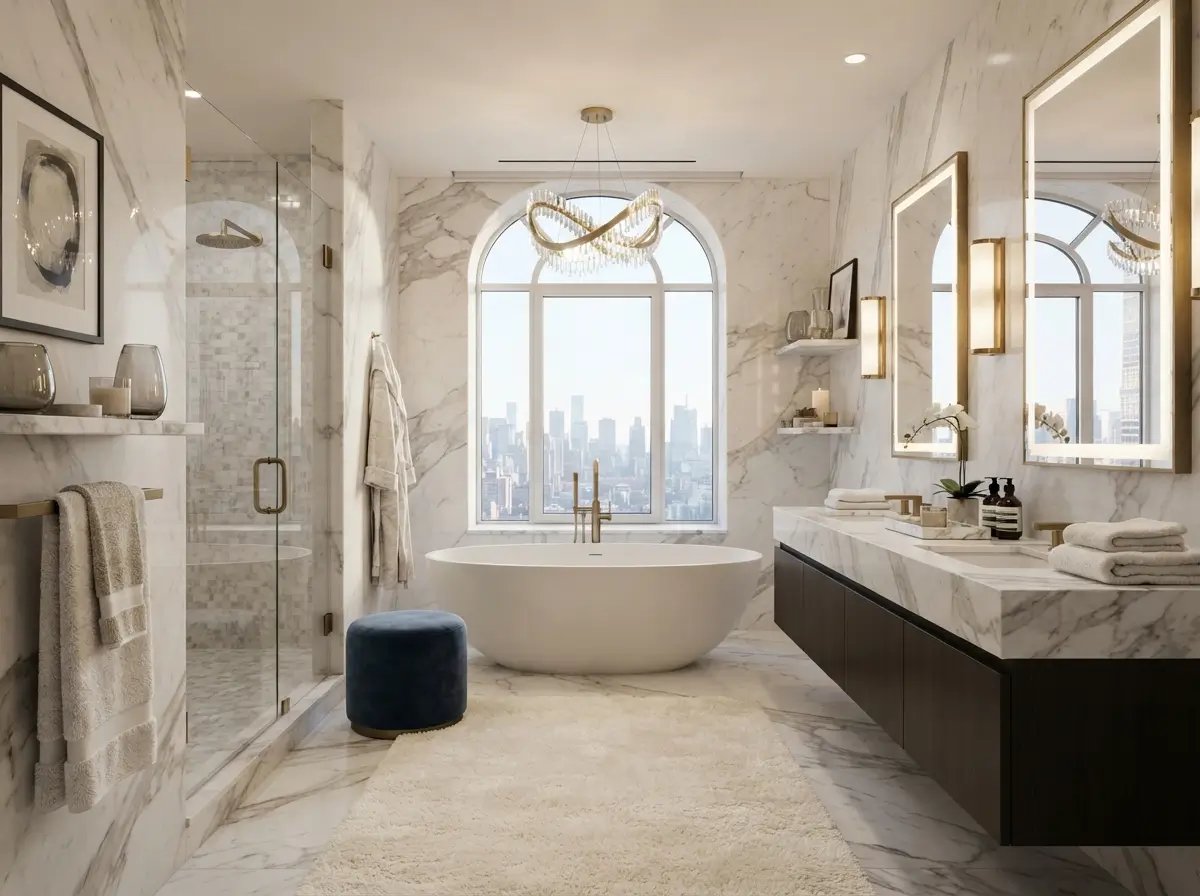

Rental bathrooms rarely begin with the finishes shown in designer homes. Basic mirrors, shiny chrome fittings, plain tiles, weak storage, and harsh ceiling lights can make the room feel unfinished. Luxury Apartment Bathroom Decor does not require marble walls or a full renovation. Careful colour choices, better lighting, tailored textiles, consistent finishes, and organised surfaces can create a more refined result while keeping the space practical.
Small bathrooms need restraint more than extra decoration. Every object remains visible, so mismatched bottles, poorly sized rugs, and crowded shelves quickly weaken the room. Begin with function, remove unnecessary clutter, and improve the largest visual areas before buying accessories. Renters can use removable products, freestanding furniture, washable fabrics, and reversible hardware changes, provided the lease and surface conditions allow them.
How Can You Make an Apartment Bathroom Look Expensive?
Question: Which changes create a luxury appearance without a major renovation?
Short answer: Improve the lighting, limit the colour palette, upgrade the shower curtain, organise visible products, repeat one metal finish, and choose correctly sized textiles. Luxury Apartment Bathroom Decor looks convincing when useful objects feel coordinated and empty space remains visible. Spend money on pieces that affect a large area or solve a daily problem, then use smaller decorative details sparingly.
Build a Restrained Colour Palette
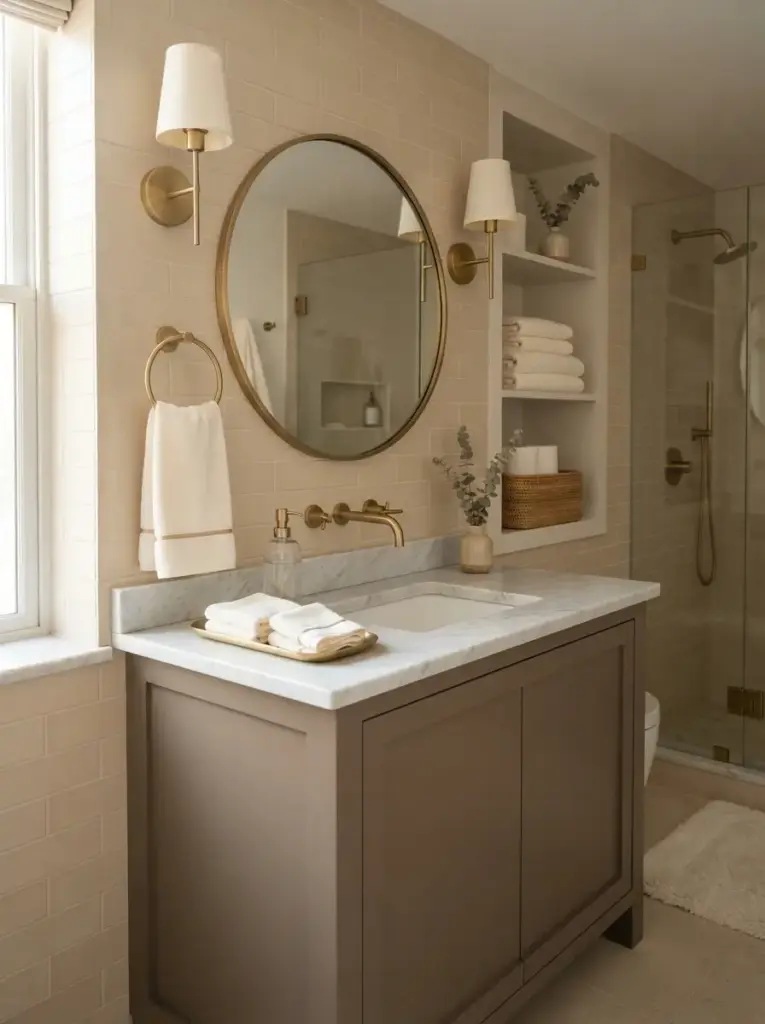
Elegant bathrooms usually rely on a small number of related colours. Choose one light base, one deeper supporting tone, and one controlled accent. Warm white, taupe, and brushed brass create a comfortable scheme for beige tile. Soft grey, charcoal, and chrome suit cooler rooms, while cream, muted olive, and dark bronze bring warmth to a plain white bathroom.
Fixed finishes should guide the palette rather than fight it. Photograph the tile, flooring, vanity, and countertop in daylight, then compare possible fabrics and accessories beside the image. Beige surfaces often look better with ivory than bright white. Blue-grey tile usually suits cool white, slate, or dusty blue. Accurate undertones make affordable purchases look deliberate.
People planning an Apartment Bathroom Makeover should avoid buying complete matching sets before testing the main colours. Repeat the accent in only three or four places, such as the towel border, tray, frame, and soap dispenser. Luxury Apartment Bathroom Decor feels calmer when the room uses texture and shape for variation instead of adding another colour to every surface.
Replace Harsh Bulbs With Flattering Light
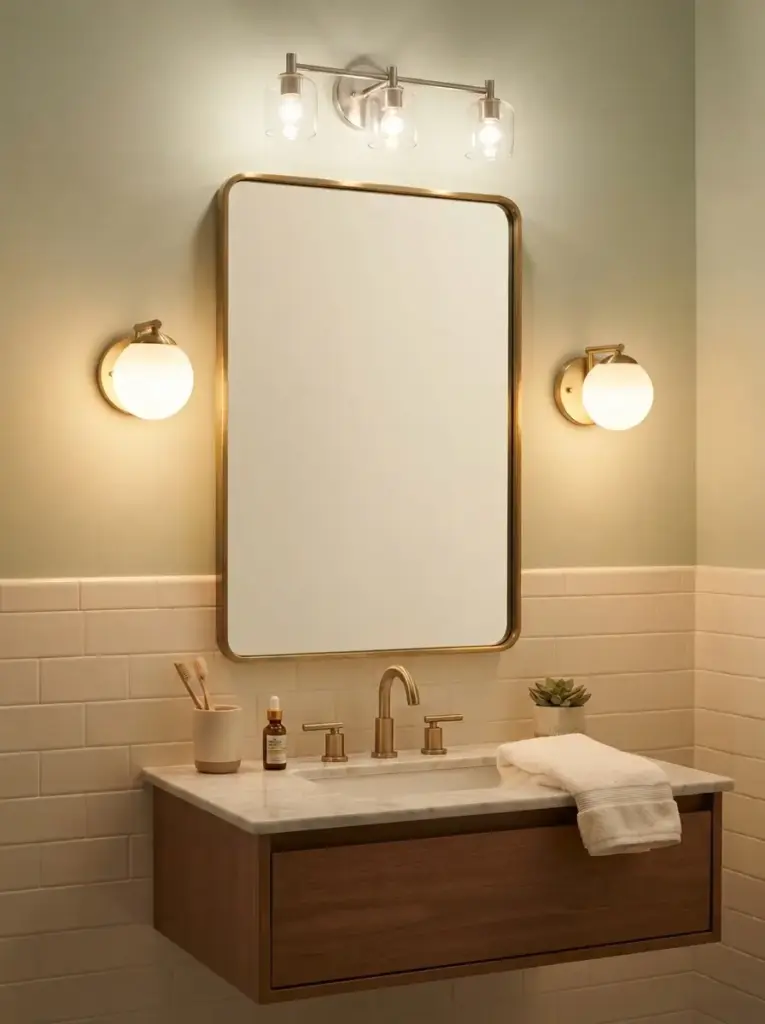
Lighting influences the appearance of tile, skin tones, metal finishes, and paint more than most accessories. Very cool bulbs can make cream look dirty and create sharp shadows around the mirror. Choose LEDs around 3000K with a colour rendering index of 90 or above for a warm, clear result that still supports shaving, makeup, and skincare.
Brightness matters as much as colour temperature. One dim bulb may feel relaxing but leaves the vanity impractical, while an overly bright ceiling fitting can flatten the room. Layer the light where possible with a main fixture and a rechargeable wall sconce rated for suitable bathroom use. Position extra light beside or above the mirror, away from direct spray.
Renters should check whether bulbs are replaceable before buying decorative fixtures. Rechargeable sconces, motion-activated cabinet lights, and plug-in lights for dry areas can improve the room without electrical work. Better light is best for bathrooms with acceptable finishes that still feel cold, because clearer illumination can reveal texture and make simple materials appear richer.
Hang a Hotel-Style Shower Curtain
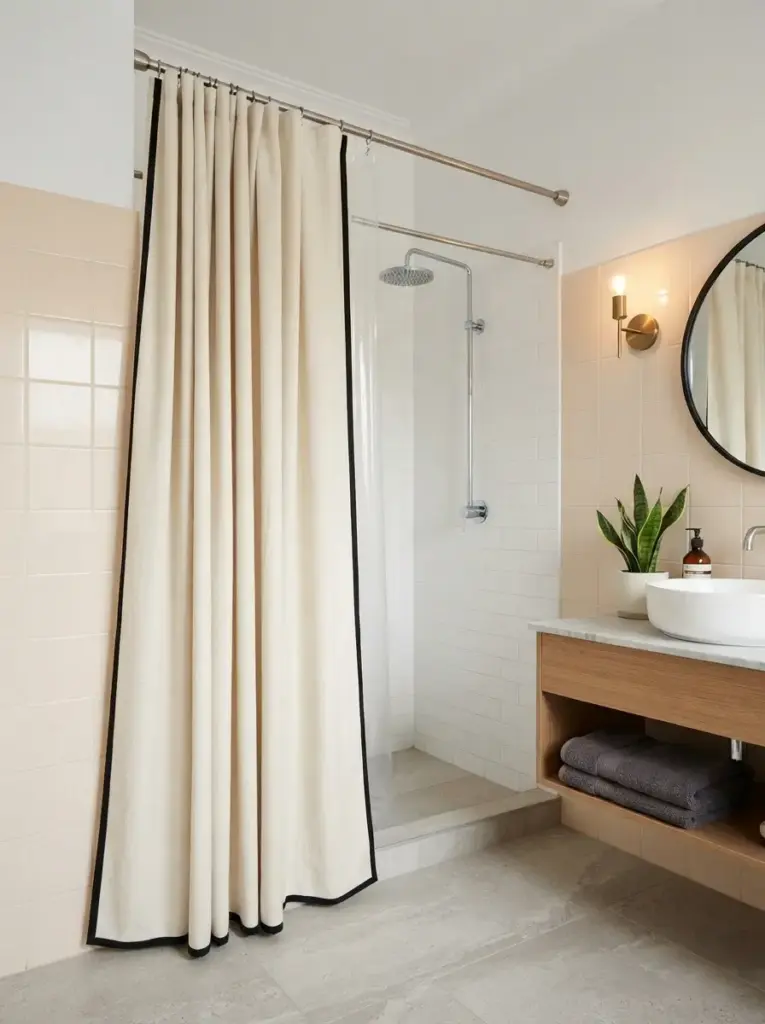
Shower curtains cover one of the largest surfaces in many apartment bathrooms. Thin plastic with bold graphics often looks temporary, while a washable fabric curtain adds weight and softness. Choose ivory, warm white, stone, muted green, or a subtle stripe. Textured cotton blends, waffle weaves, and narrow borders can feel tailored without becoming difficult to wash.
Rod height changes proportion. Raise the curtain closer to the ceiling when the layout allows, then choose an extra-long length that finishes just above the floor. The higher line makes the ceiling appear taller and reduces the chopped appearance created by a low standard rod. Keep a waterproof liner behind the fabric and wash both pieces regularly.
People drawn to Luxury Bathroom Decor should focus on fabric quality, clean hems, and correct length rather than logos or ornate prints. A plain cream curtain with a black border can look more expensive than a heavily patterned option. This upgrade is especially useful for renters who cannot change dated wall tile because the curtain redirects attention.
Frame the Builder-Grade Mirror
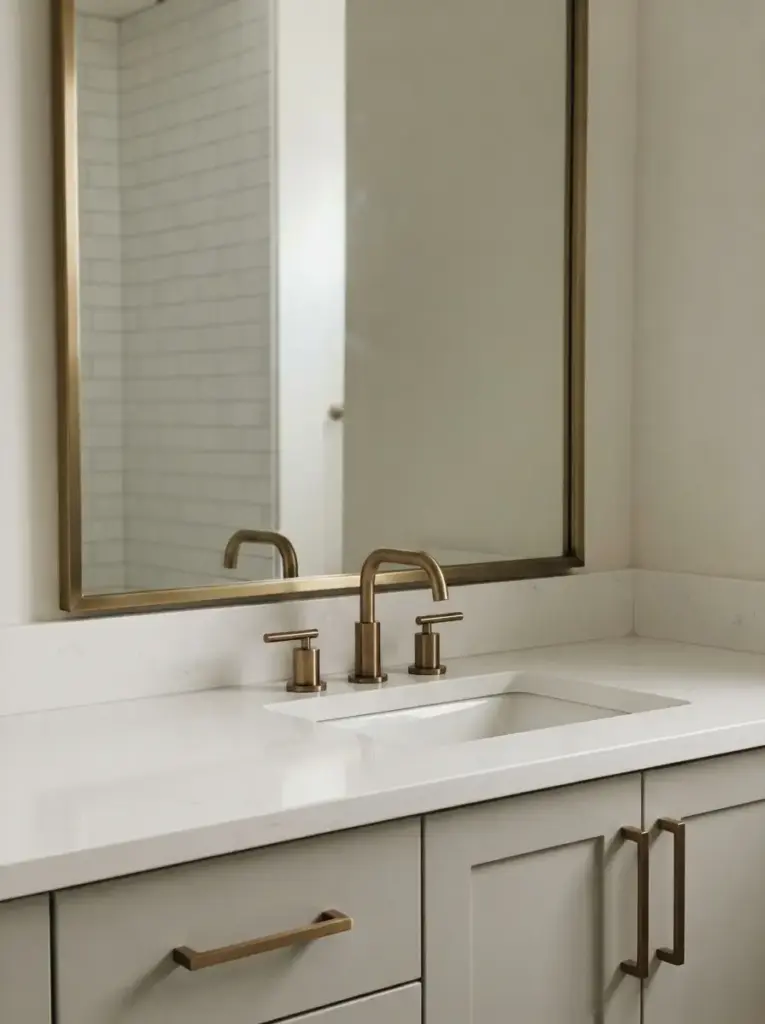
Large frameless mirrors provide useful reflection but often make a vanity look unfinished. A slim border introduces definition and connects the mirror to the rest of the scheme. Removable mirror-framing kits, lightweight moulding, or peel-and-stick strips may work when the surface is smooth, and the lease allows temporary changes. Test all adhesives in a hidden area first.
Frame width should match the room. Narrow black, brushed brass, pale oak, or warm white borders suit compact spaces, while thick decorative moulding may crowd the glass. Measure the distance around lights, taps, sockets, and medicine cabinets before ordering. Rounded corners can soften square tiles, while straight edges support a more architectural appearance.
Beginners should choose a finish already present elsewhere. A chrome tap can connect with a slim chrome border, while a brass tray and hooks can support a warm metal frame. Repetition makes the mirror look original to the room rather than added later. Mirror framing works best when the existing glass is large, secure, and in good condition.
Keep the Vanity Almost Clear
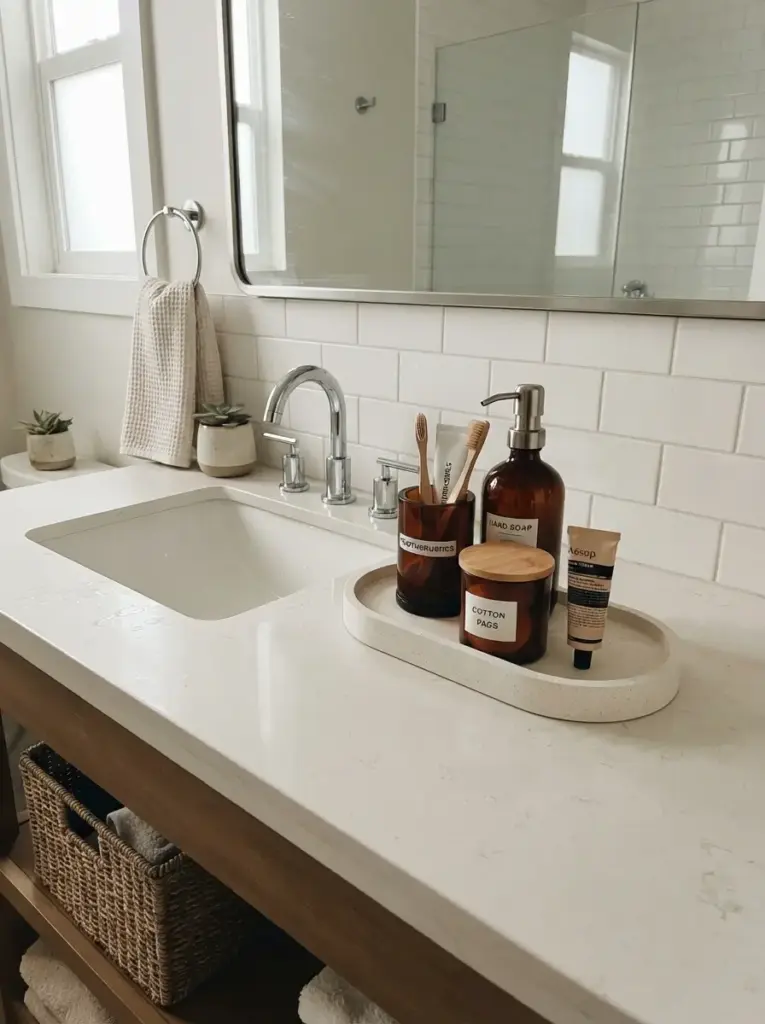
Clear counters create a sense of space and make cleaning easier. Keep only the products used every day, then group them on one compact tray. A soap dispenser, toothbrush cup, hand cream, and small container for cotton pads may be enough. Backup toiletries, medicine, styling tools, and extra bottles should stay inside drawers or baskets.
Tray size matters. Leave enough space around the tap, sink edge, and wall so water does not collect underneath. Stone-look resin, ceramic, coated metal, and acrylic are easy to wipe. Sealed wood can add warmth, but it should not sit in standing water. A shallow oval tray softens a square vanity, while a slim rectangle fits narrow counters.
Shared bathrooms can use divided containers instead of several separate holders. Keep labels visible on products with safety instructions and expiry dates. Decant only items that remain safe and easy to identify. This approach is ideal for beginners because it improves appearance without changing fixtures and supports the organised look found in strong Small Bathroom Decor Ideas.
Upgrade Towels Through Weight and Colour
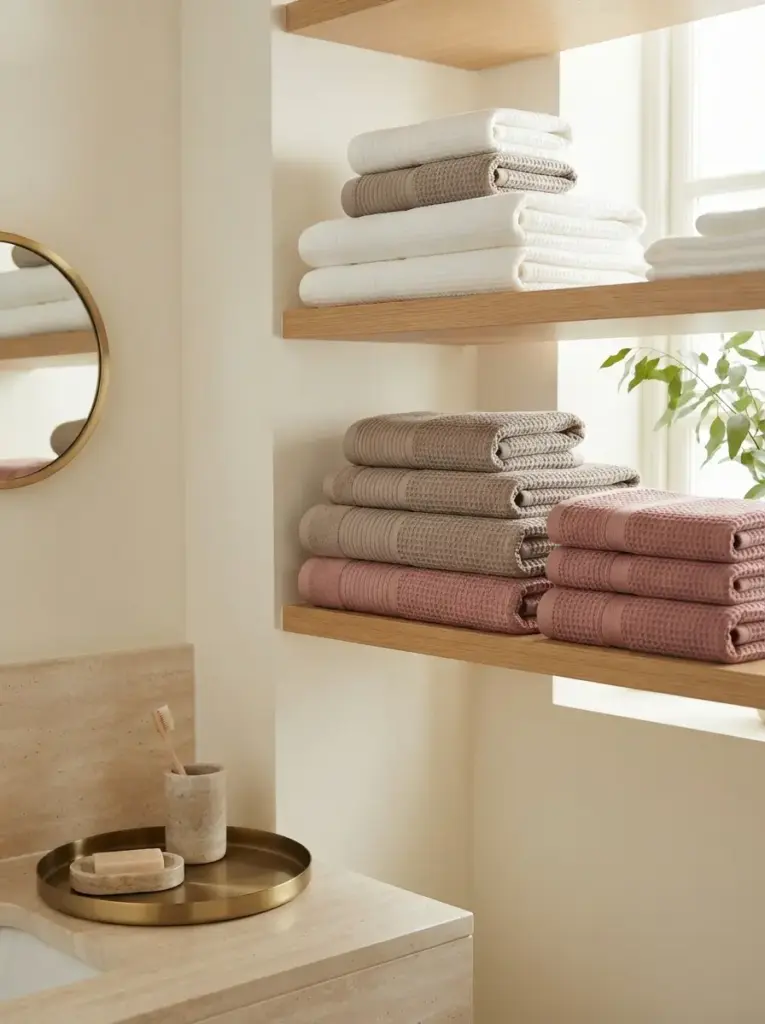
Towels occupy visible space, so their texture and condition influence the room. Choose two coordinated sets with clean edges, even colour, and enough absorbency for daily use. Waffle weave, ribbed cotton, narrow borders, or subtle monograms add detail without introducing a busy pattern. Fold every towel to the same width when displaying them on open shelves.
Very thick hotel towels are not always practical in small apartments. They take longer to dry, occupy more storage, and may develop odour in poorly ventilated rooms. Medium-weight cotton or quick-drying blends often perform better. Warm white, taupe, charcoal, olive, navy, and muted rose offer depth while remaining easy to coordinate.
Anyone interested in Pink Bathroom Decor Ideas can choose dusty rose or muted blush rather than using bright pink across every textile. Pair one pink towel set with cream walls, stone accessories, and brushed brass. Controlled colour looks more refined than an all-pink scheme and allows the towels to become an accent rather than the entire theme.
Install No-Drill Vertical Storage
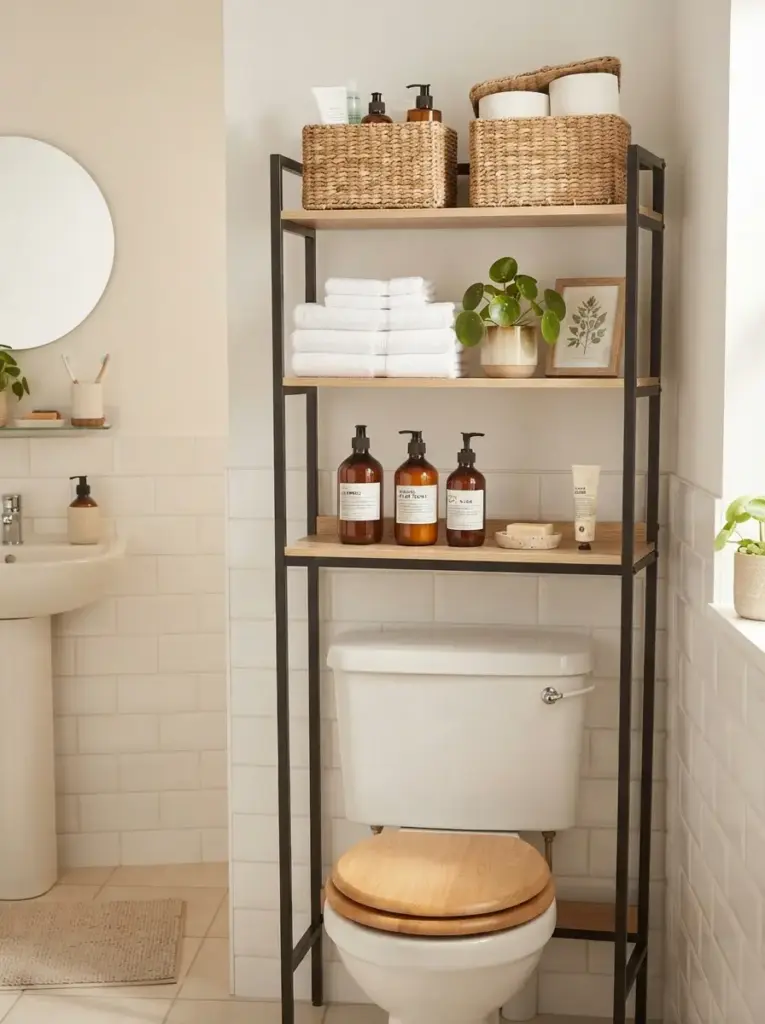
Unused wall height above the toilet or beside the mirror can provide valuable storage. Tension-pole units, freestanding over-toilet frames, and removable shelves help renters use vertical space without permanent carpentry. Store daily items at hand level, refills higher or lower, and heavier products on the most stable shelf.
Open shelving needs careful editing. Place folded towels, one lidded basket, a small plant, and a framed print rather than filling every inch. Matching baskets hide mixed packaging, while open space prevents the unit from feeling bulky. Avoid heavy glass jars, unstable candles, or anything that could fall near a person.
Safety matters more than appearance. Follow weight limits, keep access to the cistern and water controls clear, and check adhesive bonds after hot showers. Vertical storage works best for bathrooms with pedestal sinks or shallow vanities. It also supports practical Apartment Bathroom Decor Ideas because it adds function without narrowing the walking path.
Repeat One Main Metal Finish
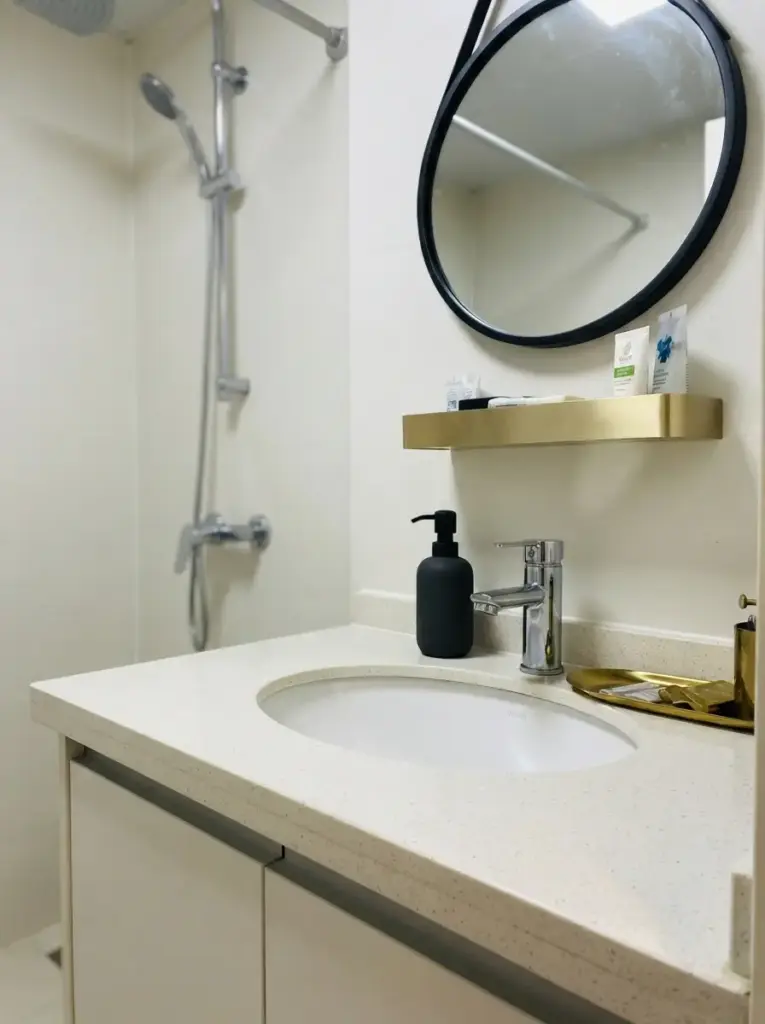
Small bathrooms often contain chrome taps, a silver shower rail, black cabinet handles, and gold accessories added later. Too many unrelated finishes create visual noise. Select one main metal for removable items such as the bin, hooks, tray, mirror border, shelf brackets, and soap pump. Existing plumbing fixtures can remain as they are.
Brushed nickel and chrome work easily with cool palettes. Brushed brass suits cream, taupe, muted green, and dusty pink. Matte black adds contrast to pale tile but can dominate if repeated too heavily. Dark bronze works well with warm wood and stone colours. Use the main finish in three or four places, then allow a second metal only when it already exists permanently.
Luxury Apartment Bathroom Decor depends more on consistent finishes than on expensive brands. A £15 soap pump that repeats the mirror frame can contribute more than a costly accessory in the wrong metal. This method suits renters who already own practical storage but need the room to feel visually connected.
Add Removable Wall Moulding or Panels
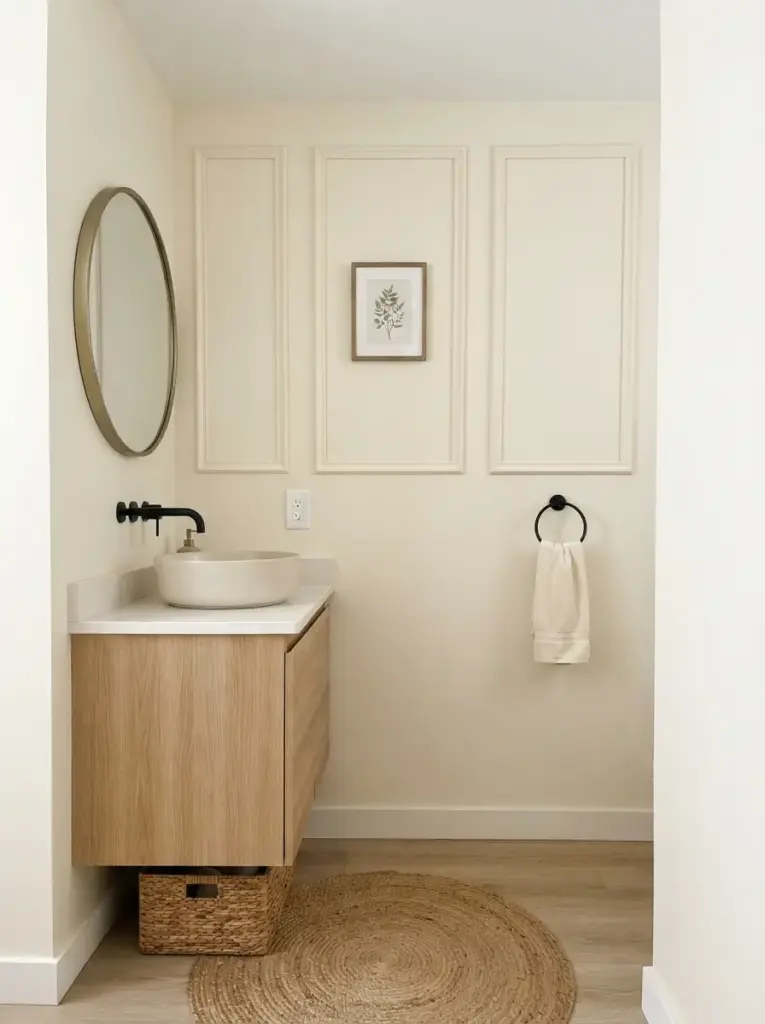
Plain painted walls can gain depth through lightweight removable moulding, peel-and-stick panel strips, or temporary wall frames. Simple rectangles behind the vanity or toilet create architectural structure without relying on busy artwork. Warm white moulding on a warm white wall feels subtle, while taupe panels against cream add gentle contrast.
Moisture and removal should be considered before installation. Use the treatment only on dry walls away from direct spray, test adhesive performance, and avoid damaged or textured paint. Keep panel lines clear of sockets, towel rails, and cabinet doors. Precise measuring matters because uneven spacing becomes obvious in a small room.
Renters who prefer a quiet, tailored style benefit most from this option. One panelled wall can replace several decorative objects and still leave the room easy to clean. People who enjoy Apartment Bathroom Wall Decor Ideas can place one framed print inside a moulded rectangle rather than building a full gallery wall.
Choose Art With Simple Frames
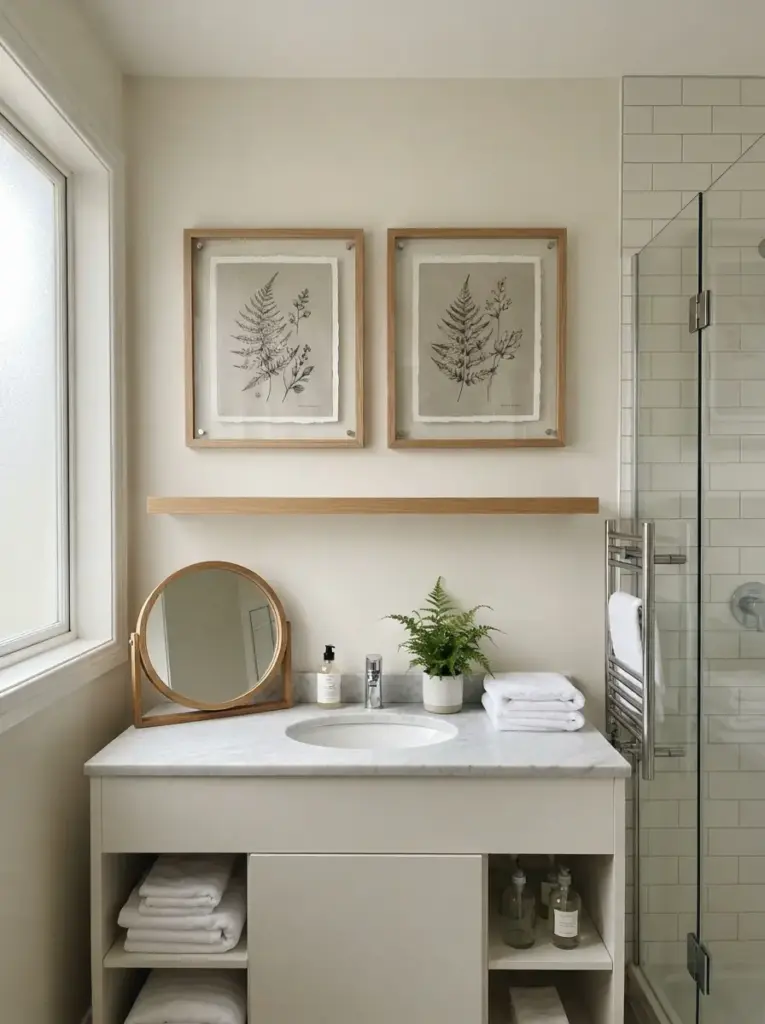
Bathroom art should support the room rather than introduce a separate theme. Abstract lines, botanical studies, monochrome photography, architectural sketches, and muted landscapes can feel refined. Select two coordinated pieces or one larger print rather than several unrelated signs. Frames should repeat the dominant metal, wood tone, or wall colour.
Moisture-resistant presentation is essential. Use acrylic or glass protection, sealed frames, or lightweight canvas, and keep paper away from direct water. Removable picture strips need a clean surface and enough curing time before weight is added. Heavy frames should not rely on weak adhesive in humid conditions.
Standard print sizes reduce cost and make replacements easier. Second-hand frames can be cleaned and updated with removable inserts. Art works best in bathrooms where storage is already controlled, since decorative walls cannot compensate for a crowded vanity. One well-positioned piece often looks more intentional than a large collection.
Use a Washable Rug With a Tailored Pattern
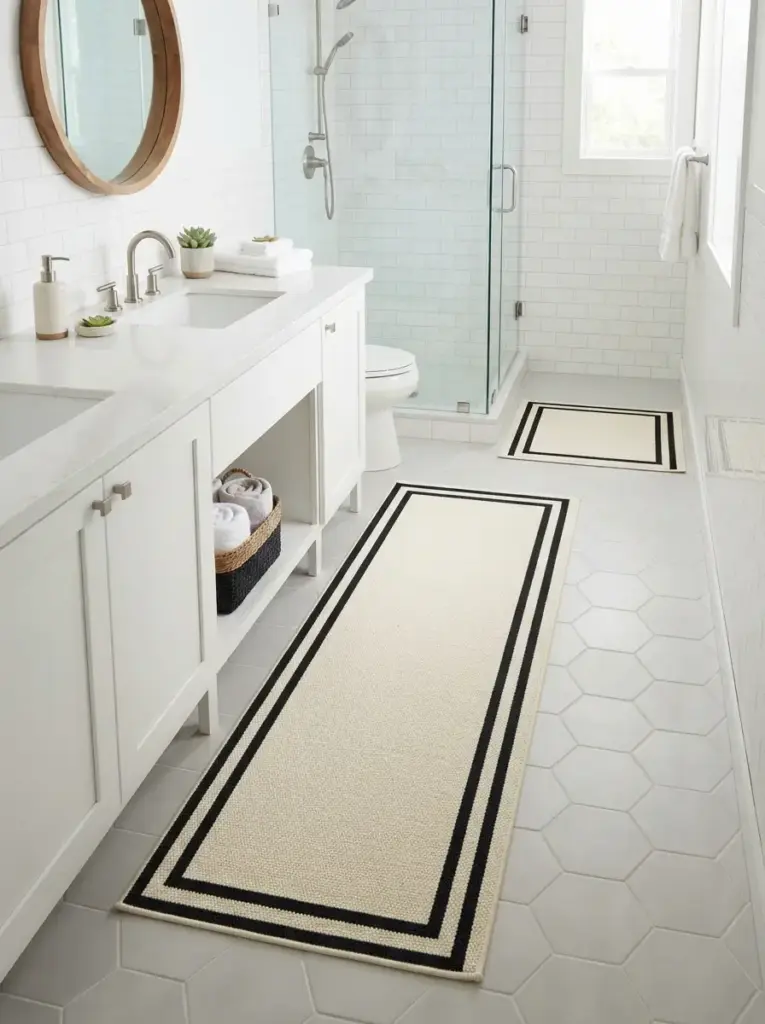
Correct rug sizing can make the floor feel finished and add warmth underfoot. Long bathrooms often need a narrow runner, while compact square layouts may suit one rectangular mat. Measure door clearance, toilet distance, and the space in front of the vanity before buying. Rugs should lie flat and should not interfere with movement.
Low-pile washable styles are easier to maintain than thick shag. Cotton offers softness, while synthetic blends often dry faster and resist staining. Look for non-slip backing or add a bathroom-safe underlay. Borders, subtle stripes, small checks, and quiet geometric patterns feel more tailored than novelty slogans.
People considering Cute Bathroom Decor Ideas can still use playful details, but limiting them to one controlled pattern keeps the room polished. A cream rug with a black edge or a taupe runner with a narrow stripe can look expensive when the size fits precisely. Correct proportion often matters more than price.
Introduce Stone and Glass in Small Amounts
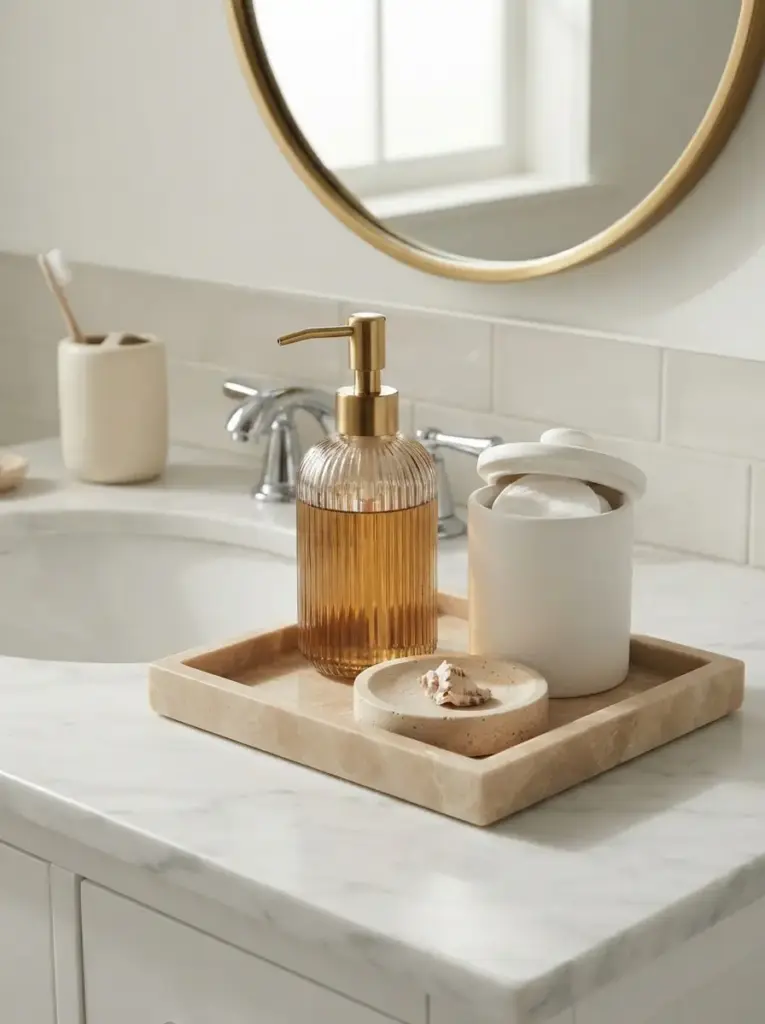
Stone, glass, and ceramic bring weight and surface variation to a bathroom. A marble-look tray, ribbed glass soap dispenser, ceramic jar, or small stone dish can create a richer material mix. Use only a few pieces, because several competing stone patterns may make a compact room feel busy.
Real marble needs care because acids and some cleaners can stain or etch it. Resin and porcelain alternatives may be more practical in a rental while still giving a similar appearance. Ribbed glass hides fingerprints better than smooth clear glass, but it still requires regular cleaning. Choose stable shapes that will not tip near the sink.
Beginners should repeat one stone colour across two items at most. Warm beige stone suits brass and cream, while white marble-look pieces work with chrome or black. Small material upgrades are best for renters who want a refined finish but do not need new storage furniture.
Add a Slim Freestanding Cabinet
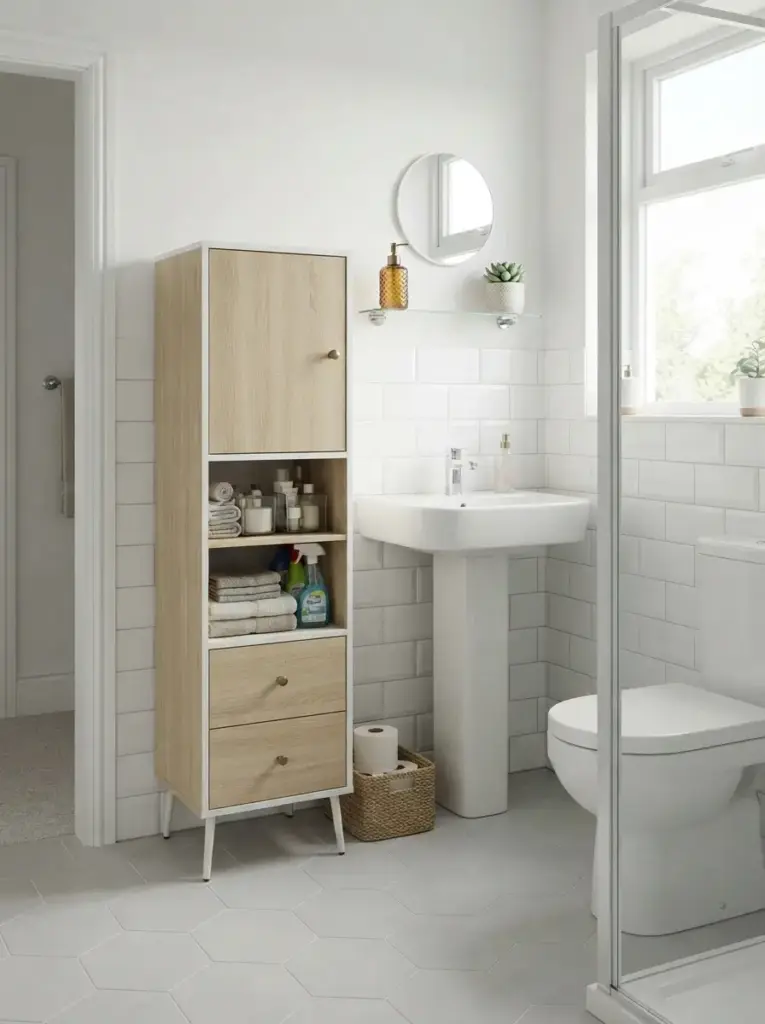
Bathrooms with limited vanity storage may need one narrow cabinet rather than several baskets. Look for a tall, shallow unit with doors or drawers, adjustable shelves, and a moisture-resistant finish. White, pale oak, walnut, black, or taupe can suit different palettes. Legs help the cabinet feel lighter and make floor cleaning easier.
Measure carefully around doors, radiators, toilets, and shower screens. The cabinet should not narrow the main path or block access to plumbing. Wall anchoring may be required for tall units, so check the lease and product safety instructions. A shorter stable cabinet may be safer when drilling is not permitted.
Closed storage creates a cleaner sightline than open shelving. Use it for spare products, cleaning supplies, toilet rolls, and hair tools, then keep only attractive daily items visible. This choice suits first homes where storage furniture can later move into a hallway, bedroom, or laundry area.
Bring in One Sculptural Plant
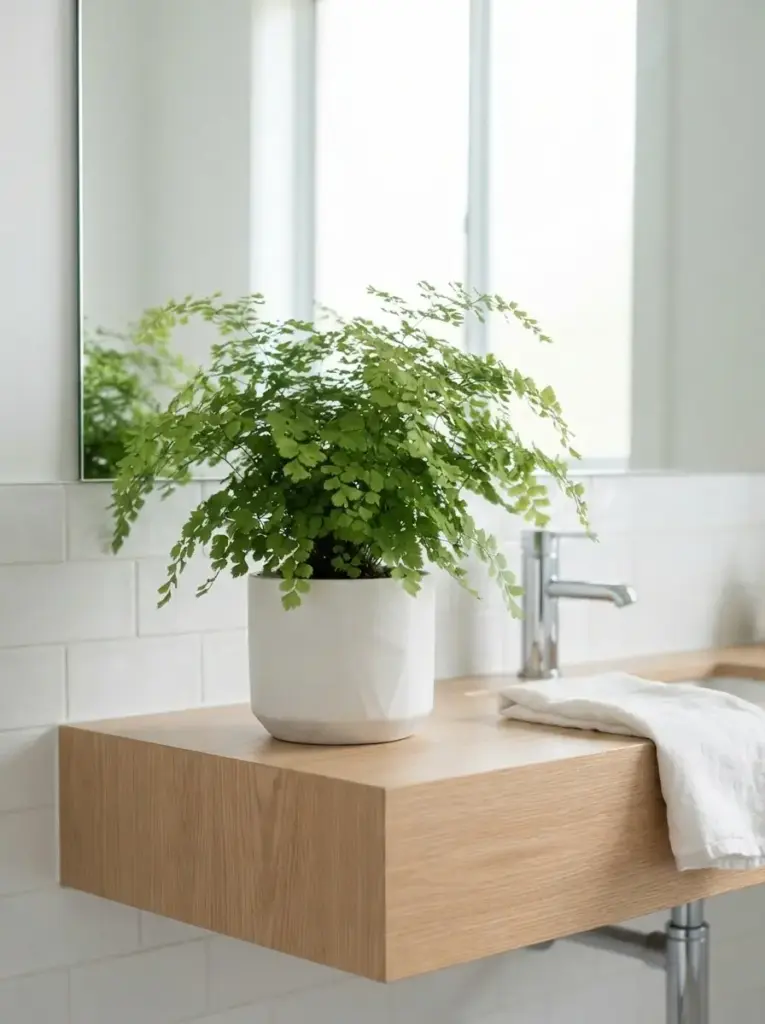
Greenery adds a living shape that balances tile, metal, and glass. Choose one plant with a clear form rather than several small pots. Pothos, heartleaf philodendron, ferns, and peace lilies may suit bathrooms with enough indirect light, but each still needs suitable care, drainage, and airflow.
Windowless rooms need realistic artificial greenery because humidity does not replace light. A tall faux stem in a ceramic vase can soften an empty corner, while a trailing artificial plant may sit on a high shelf. Clean artificial leaves regularly because dust and product residue can collect on them.
Scale should match the room. Oversized foliage may block cabinets or brush against wet surfaces. One healthy plant or convincing faux arrangement usually looks more refined than several struggling plants. This detail works best after storage and lighting are addressed, since greenery should finish the room rather than hide clutter.
Create a Feminine Luxury Look With Restraint
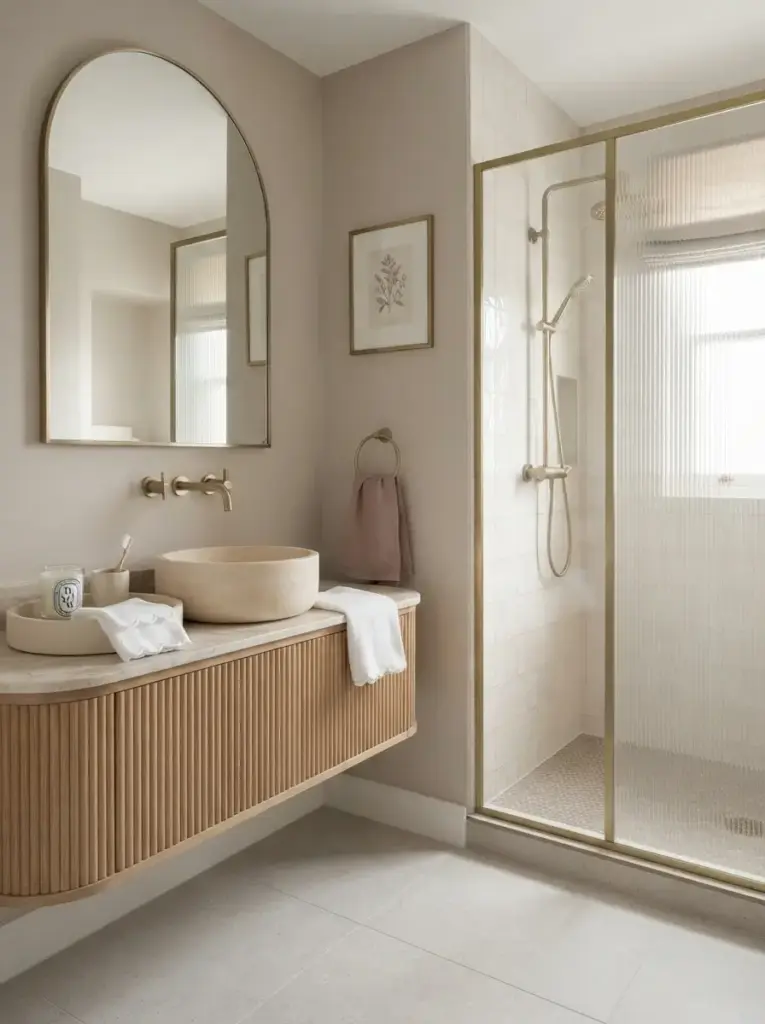
Feminine style can feel sophisticated when it relies on soft shape, quality texture, and controlled colour. Curved mirrors, fluted glass, rounded trays, scalloped towel edges, and muted rose accents add softness without covering every surface in decoration. Pair those elements with cream, taupe, warm white, olive, or charcoal for balance.
People drawn to Girly Apartment Bathroom Decor Ideas should choose one floral element, one curved form, and one warm metal. A small botanical print, an arched mirror, and brushed brass hooks may be enough. Extra bows, signs, candles, and patterned containers can make the room feel themed rather than refined.
Luxury Feminine Bathroom Decor Ideas often succeed because the layout remains organised and the details repeat. Softness comes from proportion, material, and shape, not only from pink. This approach is best for renters who want personality while keeping the room easy to clean and suitable for everyday use.
Common Mistakes That Make a Bathroom Look Cheaper
Buying accessories before measuring causes immediate layout problems. Rolling carts may block doors, rugs may catch beneath cabinets, and shelves may interfere with the toilet lid. Record usable wall widths, floor gaps, vanity depth, socket positions, and door swings. Keep the measurements on your phone and check every product before payment.
Using too many finishes weakens visual order. Chrome, brass, black, rose gold, and mirrored silver may each look attractive alone, but together they compete. Choose one dominant finish and allow permanent fixtures to act as the secondary metal. Repetition creates more impact than adding another decorative surface.
Crowded counters make even expensive products look untidy. Remove backups, medicine, styling tools, and rarely used bottles from view. Keep daily items grouped on one tray and leave part of the counter empty. Open space is not wasted; it allows the sink, mirror, and selected accessories to appear larger and cleaner.
Incorrect rug sizing can make the whole room feel awkward. Mats that float in the middle of the floor, block doors, or leave narrow gaps around fixtures disrupt movement. Measure the walking path and choose one shape that fits it. Avoid layering several rugs in a small bathroom because extra edges collect moisture and create trip risks.
Poor lighting can flatten every improvement. Very cool bulbs make warm materials look grey, while very yellow bulbs distort colours and reduce clarity. Around 3000K works well for many residential bathrooms, but brightness and CRI also matter. Decorative lights should support the main source, not replace useful task lighting.
Ignoring humidity leads to curling prints, warped wood, rusted metal, and loose adhesive. Choose materials intended for damp rooms, use the extractor fan, and keep the door open after showers. Moisture marks should be repaired rather than hidden behind wallpaper or panels. Decoration cannot solve an underlying ventilation or leak problem.
Overusing marble patterns can make a room look artificial. Marble-look floor tiles, trays, dispensers, wallpaper, and storage boxes used together compete because each has different veining. Select one stone pattern, then support it with plain ceramic, glass, wood, or metal. Controlled material repetition creates a more believable result.
Buying complete matching sets can remove character. Identical bins, dispensers, cups, jars, and trays may appear convenient but can feel generic. Coordinate through colour and finish instead. A brass pump, stone tray, and ribbed glass cup can relate without looking copied from one shelf display.
Decorating before fixing storage creates short-lived results. Beautiful towels and art cannot compensate for products stacked around the sink. Decide where daily items, refills, cleaning supplies, laundry, and spare paper will live first. Once every category has a location, decorative choices become easier and the room remains presentable.
Following trends without considering fixed finishes causes clashes. Bright white accessories may emphasise an old cream vanity, while cold grey textiles may fight warm beige tile. Work with the undertone of what cannot change. A connected palette always looks more considered than a fashionable colour placed in the wrong room.
Budget-Friendly Ways to Get an Expensive Look
Start with cleaning and editing because both cost very little. Remove empty bottles, expired products, worn mats, stained towels, and decorations that do not support the plan. Clean grout, polish mirrors, wipe fittings, and wash the shower curtain. A well-maintained basic bathroom often looks better than a newly decorated room filled with clutter.
Set a practical budget and divide it by visual impact. Around £80 to £150 can cover better bulbs, a fabric curtain, coordinated towels, a rug, and one storage solution when purchases are planned carefully. Spend more on washable items and furniture that can move to another home. Save on art, trays, and small accessories.
Shop second-hand for mirrors, frames, slim cabinets, stools, trays, and storage carts. Check each item for moisture damage, rust, unstable joints, and surfaces that cannot be cleaned easily. Solid furniture may need only new knobs or a removable liner. Avoid heavily damaged wood because bathroom humidity can worsen existing problems.
Reuse suitable objects from other rooms. A desk organiser can hold skincare, a kitchen trolley may store towels, and a small side table can fit beside a pedestal sink. Test the dimensions and moisture resistance before moving anything permanently. Repurposing works best when the object solves a real storage problem.
Replace small removable hardware rather than major fixtures. New cabinet knobs, hooks, a soap pump, and a toilet-roll holder can repeat the chosen metal. Keep original pieces in a labelled bag for move-out. Written permission may still be required, so check the lease before removing anything attached to the property.
Printable art offers a low-cost way to introduce colour and structure. Choose standard sizes, reuse existing frames, and protect paper from moisture. One architectural sketch and one abstract line print can create a coordinated pair. Avoid filling every wall because empty space helps the room feel larger.
Use peel-and-stick products selectively. A narrow wallpaper panel, drawer liner, or small dry-wall treatment may create enough impact without covering the entire room. Test removal first and buy only the amount needed. Large temporary installations can become expensive and difficult to undo, reducing their value for renters.
Buy textiles in neutral colours that can move between homes. Cream, taupe, charcoal, muted olive, and warm white towels can adapt to different tile and paint. Trend colours can appear through one hand towel or print. Flexible basics reduce the need to replace everything after moving.
Luxury Apartment Bathroom Decor can develop gradually. Start with lighting and clutter control, then add the curtain, towels, and storage. Wait before buying decorative objects so you can see what the room still needs. Spacing purchases over several weeks reduces impulse spending and creates a more edited result.
Luxury Apartment Bathroom Decor Tips
Measure before styling. Record the width of the vanity, height above the toilet, door clearance, and depth of narrow gaps. Correct sizing makes affordable furniture look built for the room, while oversized pieces immediately reveal that the layout was not planned.
Repeat shapes as well as finishes. A round mirror can connect with an oval tray and curved hooks. Straight shelves and rectangular baskets can balance those softer lines. Shape repetition creates unity even when items come from different retailers and price ranges.
Choose one focal point. A framed mirror, tailored curtain, moulded wall, or striking rug can lead the room. Keep nearby surfaces simpler so the feature remains visible. Multiple focal points compete in compact spaces and make the room harder to understand.
Protect the rental from damage. Test adhesives, save original hardware, photograph surfaces, and follow removal instructions. Avoid drilling into tile, moving plumbing, or covering damp walls without written approval. Reversible decorating should remain genuinely reversible at the end of the tenancy.
Plan around cleaning. Leave space behind trays, choose washable rugs, use lidded storage, and avoid decorations in areas that are hard to reach. A bathroom looks refined because it stays clean, not because maintenance tools and practical needs have been ignored.
Review the room after one week of use. Move any basket that blocks a cabinet, replace a rug that stays damp, and remove objects that collect water. Daily routines reveal whether the arrangement truly works. Editing after use helps the final design feel comfortable rather than staged.
Store measurements and room photographs in one note on your phone. Include rug width, shelf depth, available wall height, bulb type, and existing metal finishes. Retail displays can distort scale, so checking the note prevents attractive but unsuitable purchases. Small planning habits protect the budget and reduce unnecessary returns over time.
Compare each new item against the whole room rather than judging it alone. A beautiful brass dispenser may look wrong beside several chrome fixtures, while a patterned rug may compete with strong tile. Take purchases home only when they support the palette, solve a problem, and fit the measured space.
Maintain a small move-out box for original knobs, hooks, curtain rings, and instruction sheets. Label each part with its location and store adhesive removal guidance beside it. Organised records make restoration easier and prevent lost hardware. Renters who move regularly will also save time when setting up the next bathroom safely.
Frequently Asked Questions
How do I make a basic apartment bathroom look luxurious?
Begin with warm, accurate lighting, a restrained palette, coordinated towels, and a fabric shower curtain. Clear the vanity, repeat one metal finish, and add one useful storage piece. Clean surfaces and correct proportions usually create more impact than expensive ornaments.
Which colours make a bathroom look more expensive?
Warm white, cream, taupe, soft grey, charcoal, muted green, navy, and dusty rose can all look refined. The best option depends on the undertone of existing tile and fixtures. Use one light base, one deeper tone, and one accent rather than combining many fashionable colours.
Can renters replace bathroom accessories safely?
Removable hooks, soap dispensers, bins, towels, rugs, and freestanding storage are usually easy to change. Attached hardware, mirrors, shelves, and floor coverings may require permission. Save original pieces, test adhesives, and check the tenancy agreement before altering fixed items.
What should I buy first for a luxury bathroom update?
Start with bulbs, a shower curtain, towels, a rug, and a storage solution. Those items influence large visual areas and daily comfort. Art, trays, plants, and decorative containers should come later, once the room is organised and the main palette is established.
How can I make a tiny bathroom feel less crowded?
Use vertical storage, closed containers, one rug, and a mostly clear vanity. Keep patterns small or controlled, repeat a limited colour palette, and avoid placing furniture in the walking path. Empty wall and counter space helps the room feel wider.
Does everything in a luxury bathroom need to match?
No. Pieces should coordinate through colour, material, shape, or finish rather than appear identical. A stone tray, ribbed glass dispenser, and brass frame can work together without coming from one set. Controlled variation makes the room feel collected and personal.
Conclusion
Luxury in a small apartment bathroom comes from order, proportion, light, and consistency. Better bulbs, a tailored shower curtain, coordinated textiles, clear counters, and one repeated metal finish can change the room without permanent renovation. Luxury Apartment Bathroom Decor succeeds when practical objects look intentional, and every visible item earns its place.
Begin with the problem that affects daily life most, whether it is harsh lighting, exposed clutter, weak storage, or dated surfaces. Solve that issue before adding decoration. Careful measuring, moisture-resistant materials, and reversible choices will help the bathroom feel refined, function smoothly, and remain easy to restore when it is time to move.