
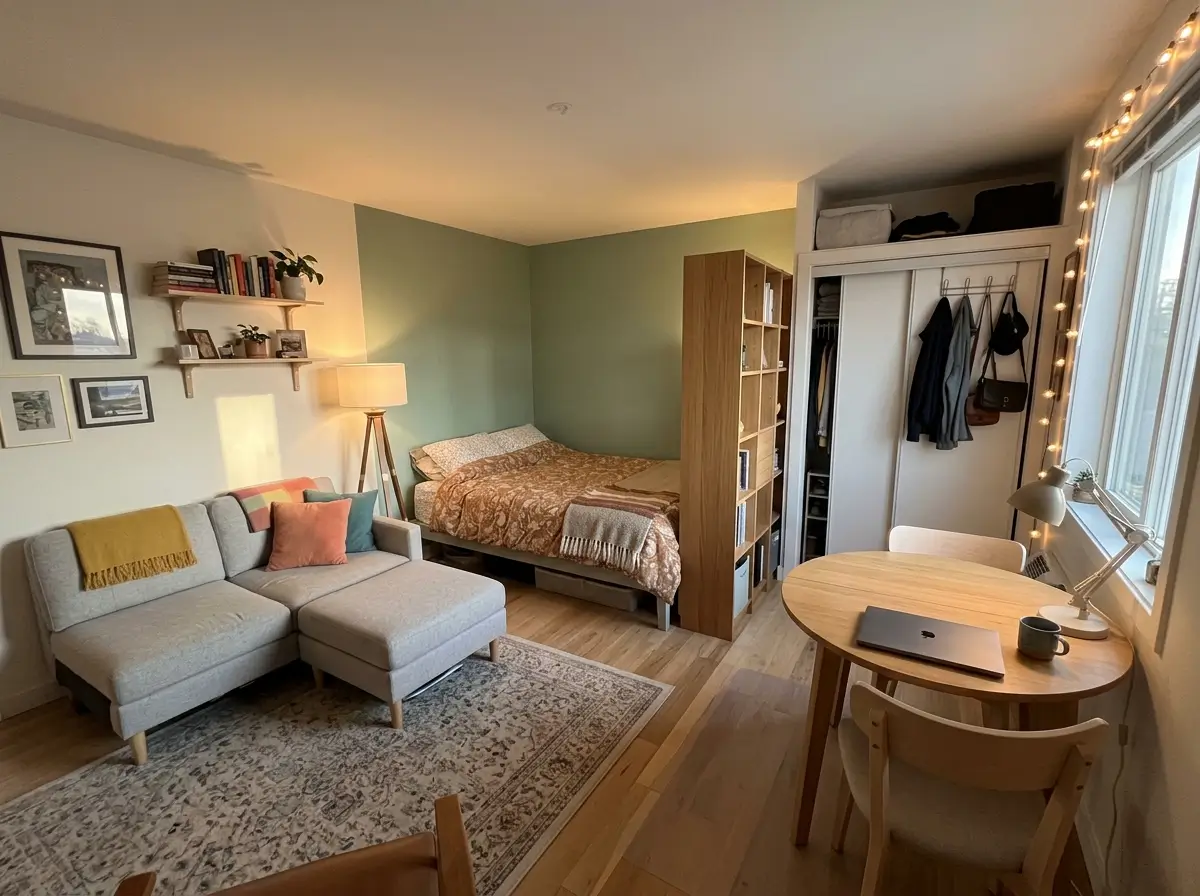

A Tiny Studio Apartment can be charming, affordable, and easy to maintain, but it can also become frustrating when one room has to act as a bedroom, living room, office, dining area, closet, and storage zone. The good news is that a small home does not need more square footage to work better. It needs clearer zones, smarter furniture, better lighting, and fewer items fighting for attention. When every piece has a job, your studio starts to feel less like one cramped room and more like a complete home.
This guide is written for beginners, renters, home decor lovers, and anyone trying to make a Tiny Studio Apartment feel practical without losing personality. The ideas below focus on real decorating choices you can use in everyday life, such as where to place a bed, what sofa shape works best, which colors help a room feel calmer, how warm your bulbs should be, and what mistakes make a small space feel even smaller. You do not need expensive custom furniture or a full renovation. You need a clear plan and a few changes that make your room work harder.
Can a Tiny Studio Apartment Feel Comfortable and Organized?
Yes, a Tiny Studio Apartment can feel comfortable and organized when you treat it like a set of mini rooms instead of one open box. The key is to give each area a clear purpose, choose furniture with storage or flexibility, and use color, rugs, lighting, and placement to separate zones without building walls. A studio works best when the layout supports your daily routine. That means your bed should not block your walkway, your desk should not become a dumping spot, and your storage should be easy enough to use every day.
Create Clear Zones Without Adding Walls
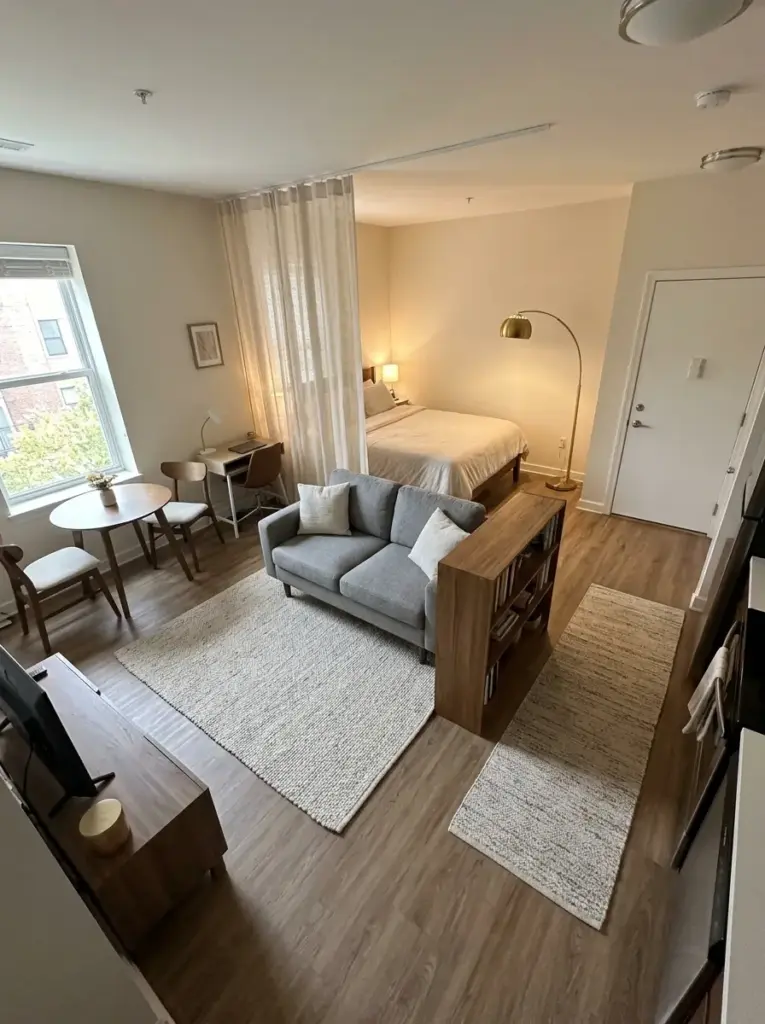
The first step in making a Tiny Studio Apartment work hard is to divide the space into zones. You do not need permanent walls, heavy partitions, or a complicated floor plan. You only need visual signals that tell your brain where sleeping ends and living begins. A small rug under the sofa, a different lamp near the bed, a narrow bookcase beside a desk, or a curtain panel behind the sleeping area can all create separation without stealing too much room. This works especially well in rental apartments because you can use removable tension rods, lightweight shelves, folding screens, and furniture placement instead of drilling into walls.
This approach helps because open studios can feel messy when every function blends. If your bed, sofa, dining table, and desk all sit in one visual pile, the room feels unfinished even when it is clean. Try placing your bed in the quietest corner, your sofa facing away from it, and your table near natural light if possible. A 5-by-7 rug can mark a living zone, while a slim runner can lead from the entry to the kitchen area. Beginners often push every item against the wall, but that can make the room feel like a storage unit around an empty middle. Pulling a small sofa or chair a few inches inward can create a softer, more intentional layout.
This idea is best for anyone whose studio feels like a bedroom with a kitchen attached. It is also useful for renters who cannot install built-ins. Start with one zone at a time. Decide where you sleep, where you relax, where you eat, and where you work. Then add one visual anchor to each area, such as a lamp, rug, art piece, or storage piece. The goal is not to divide the apartment into tiny boxes. The goal is to help each activity feel like it has a place.
Choose a Bed That Does More Than Sleep
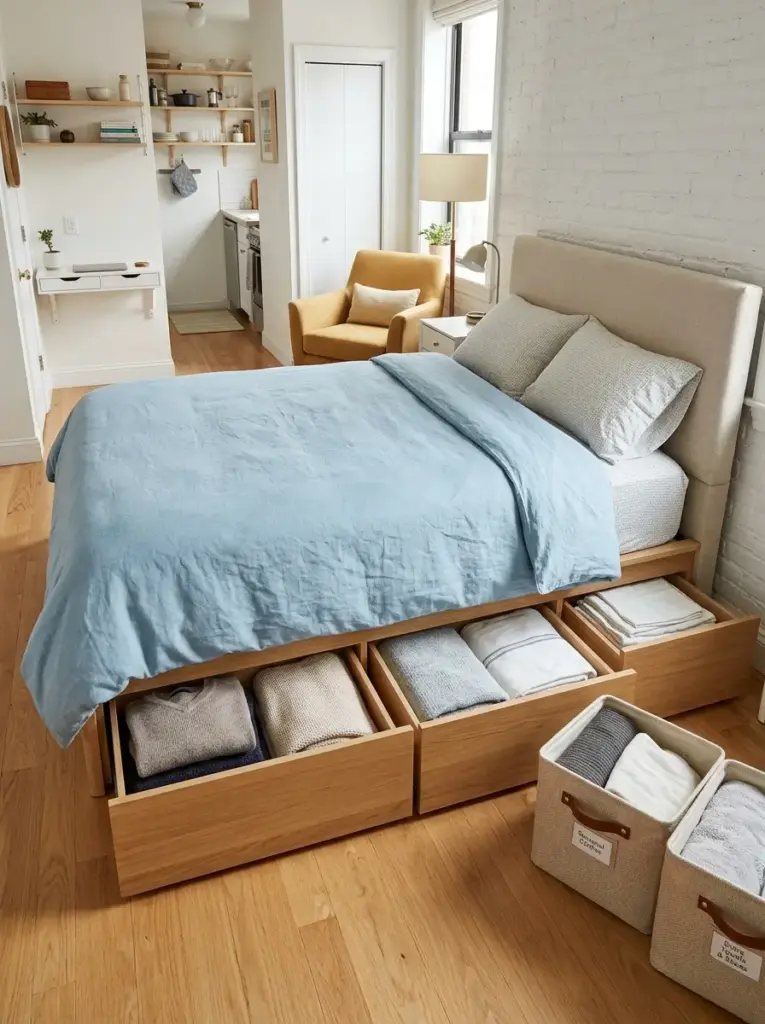
In a Tiny Studio Apartment, the bed is usually the largest piece of furniture, so it needs to earn its space. A standard bed with space underneath can waste valuable storage, especially if your closet is small. A platform bed with drawers, a bed frame with enough clearance for storage bins, or a lift-up storage bed can hold bedding, seasonal clothes, shoes, towels, and extra household items. If you prefer a softer look, use a bed skirt or matching storage boxes so the under-bed area feels neat instead of cluttered.
The reason this works is simple. You use the bed every day, and the footprint is already taken. Adding storage below it gives that same area a second job without making the room more crowded. For example, a full-size storage bed can replace a bulky dresser in some apartments. If you live alone and do not need a queen bed, consider a full bed instead. Those few saved inches can make room for a narrow nightstand, a reading chair, or a cleaner walkway. A daybed can also work well if you like the idea of a sofa-style sleeping area, but choose one with a comfortable mattress and enough back pillows so it does not feel like a compromise.
This tip is best for renters, students, and anyone with limited closet space. Look for storage bins with handles so you can pull them out easily, and label anything you will not use often. Avoid storing daily items under a bed if the bins are hard to reach. Small-space storage only works when you can actually use it without frustration. Keep everyday clothes in a more accessible drawer or closet, and reserve under-bed storage for bulkier pieces that do not need constant access.
Use a Sofa With Legs and a Compact Shape
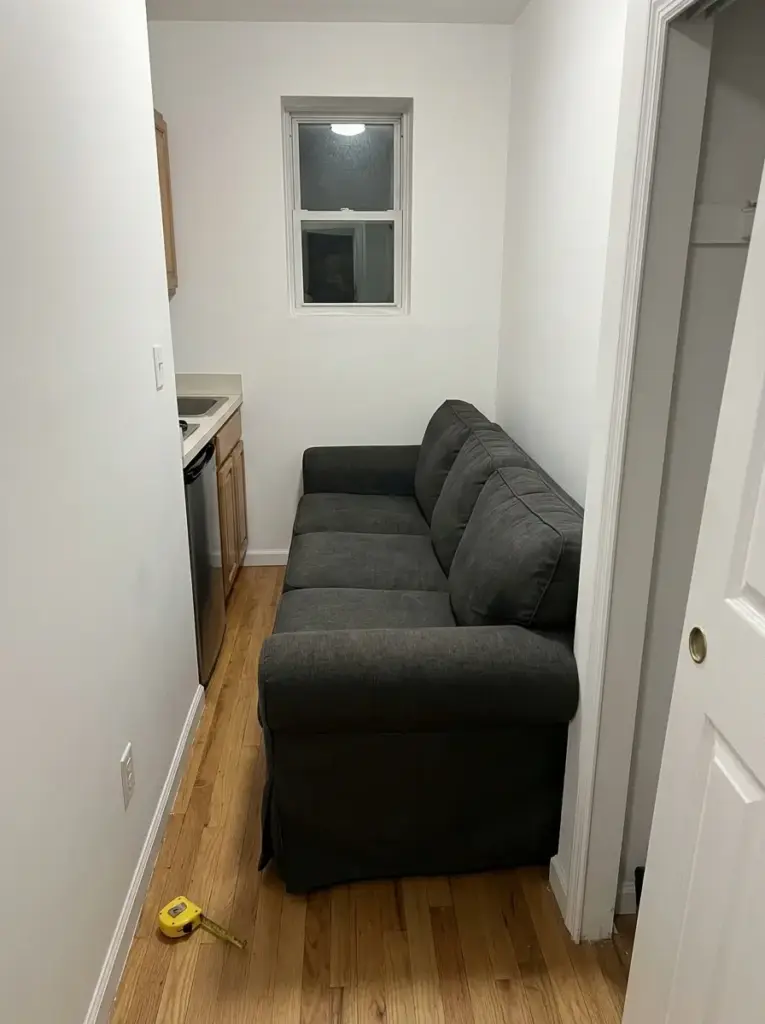
A sofa can make a studio feel like a real living space, but the wrong sofa can swallow the room. In a Tiny Studio Apartment, choose a compact sofa, loveseat, apartment-size sectional, or armless settee with raised legs. Furniture that sits on legs lets you see more floor, which makes the room feel lighter. A sofa that goes all the way to the floor can still work if it has hidden storage, but visually it may feel heavier. Measure your wall carefully before buying, and leave enough space for side movement. A sofa that technically fits but blocks a cabinet, door, or walkway will become annoying very quickly.
This choice pays off because small rooms need breathing room around furniture. A 68-inch loveseat can often feel better than an 84-inch sofa because it gives you space for a side table, lamp, or plant. If you want lounging comfort, try a small chaise that can sit on either side, or add an ottoman that slides under a table when not in use. For colors, oatmeal, warm gray, olive, camel, and soft navy work well because they hide normal wear better than bright white while still looking calm. If your walls are white or cream, a medium-tone sofa can ground the space without making it dark.
This idea is best for people who entertain occasionally but mostly live alone or with one partner. A common mistake is buying a sofa based on what looks good in a showroom. Showrooms are large, bright, and open, so furniture feels smaller there. In a Tiny Studio Apartment, tape the sofa size on the floor before ordering. Walk around it for a day or two. If the taped shape feels too big, the real sofa will feel even bigger.
Pick a Dining Setup That Can Change Jobs
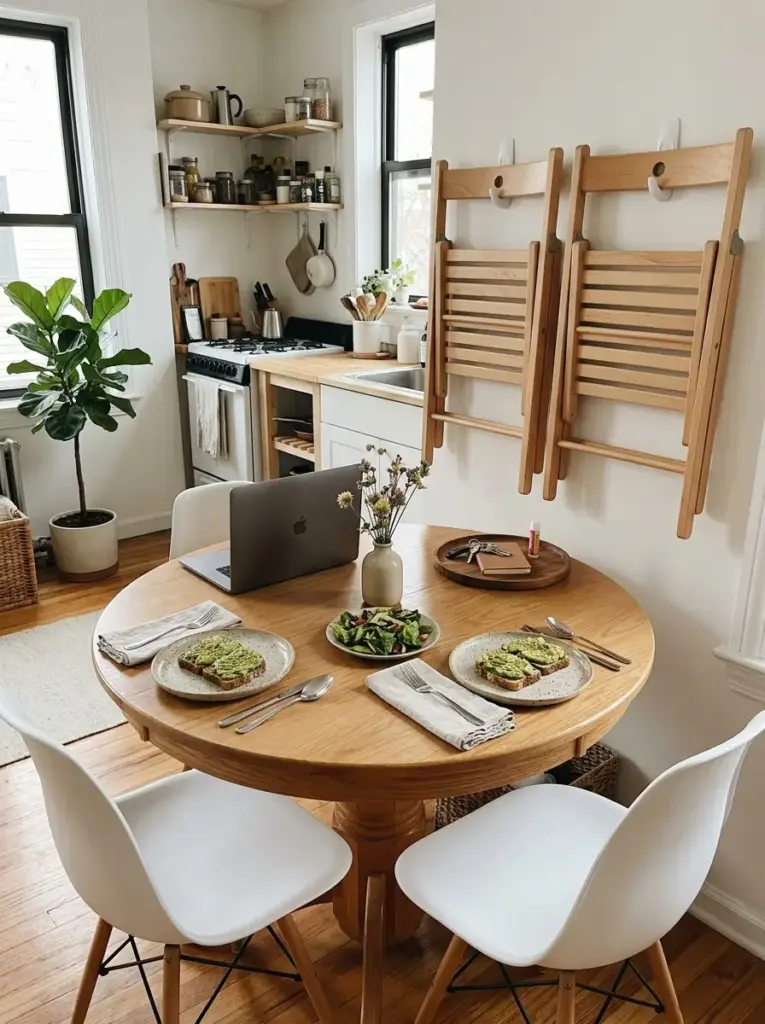
A full dining table rarely makes sense in a Tiny Studio Apartment unless you use it every day and have a layout that supports it. Instead, choose a dining setup that can work as a desk, prep surface, and gathering spot. A drop-leaf table, wall-mounted folding table, small round pedestal table, or narrow bar-height counter can give you a place to eat without taking over the room. Round tables are especially helpful in tight spaces because there are no sharp corners to bump into, and pedestal bases allow chairs to tuck in more easily.
This approach works because small homes need flexible surfaces. A 30-inch round table can hold dinner for two, a laptop, a vase, or a weekend project. A drop-leaf table can sit against a wall most days and open when you need more space. If you have a kitchen wall with no counter space, a narrow table can act as extra prep space. Pair it with lightweight chairs or stools that stack, fold, or slide underneath. For renters, removable wall hooks beside the table can hold a foldable chair, apron, or tote bag without permanent changes.
This tip is best for people who work from home, cook often, or dislike eating on the sofa. To keep the area from becoming a clutter magnet, place one small tray on the table for daily items like keys, lip balm, and a notebook. Do not let the table become a mail pile. A flexible table only helps if it stays clear enough to change jobs quickly.
Go Vertical With Storage Before Going Wider
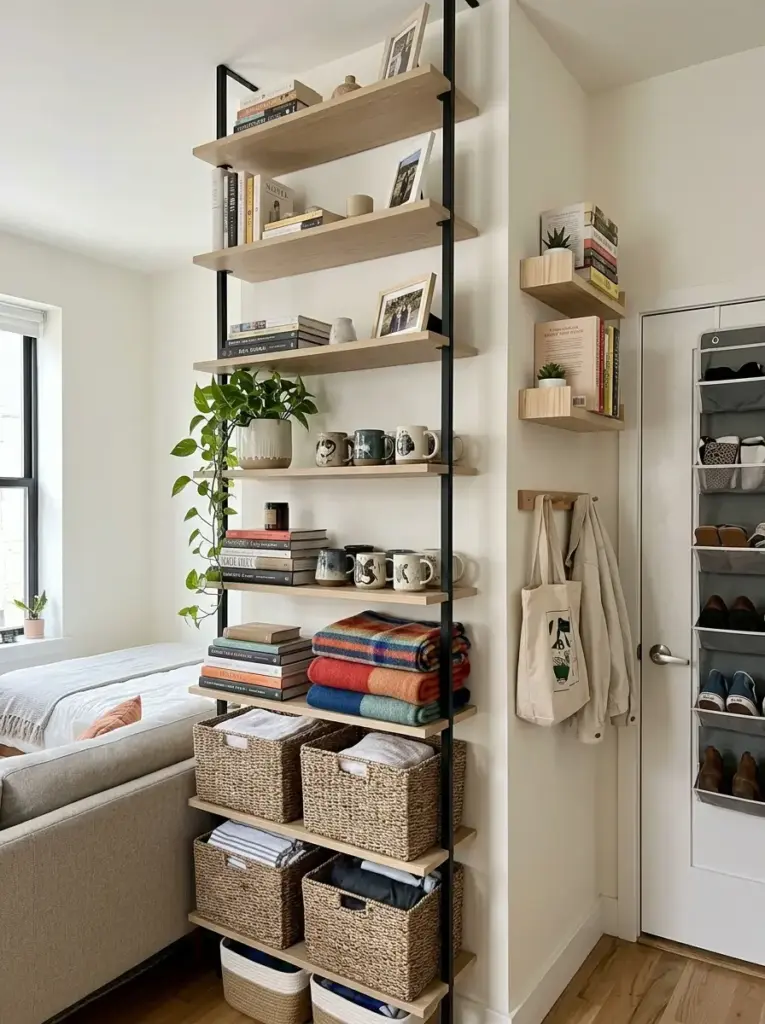
When floor space is limited, walls become some of the most useful square footage in the apartment. Tall bookcases, vertical shelving units, over-door racks, wall hooks, peg rails, and floating shelves can store items without spreading across the room. In a Tiny Studio Apartment, a tall and narrow piece often works better than a short and wide one. A bookcase that reaches close to the ceiling can hold books, baskets, decor, office supplies, and folded linens in one footprint. Keep heavier items lower and lighter items higher so the piece feels stable and balanced.
This strategy succeeds because it uses the empty wall height that many people ignore. It also draws the eye upward, which can make the ceiling feel taller. For a clean look, use matching baskets on a few shelves and leave some open space for visual relief. Not every shelf needs to be packed full. A good rule is to mix closed storage with open display. Put unattractive items like cords, cleaning products, and paperwork in bins. Leave pretty or frequently used items, such as cookbooks, ceramics, plants, or folded throws, visible.
This idea is best for beginners who feel they have “no storage” but still have blank wall space. Renters can use freestanding shelves instead of mounted ones, or choose adhesive hooks for lightweight items. Be careful with heavy wall-mounted shelves in rentals, especially on weak drywall. If you cannot anchor something safely, do not risk it. A slim ladder shelf or tall cabinet can offer a similar effect without permanent installation.
Choose One Calm Color Palette and Repeat It
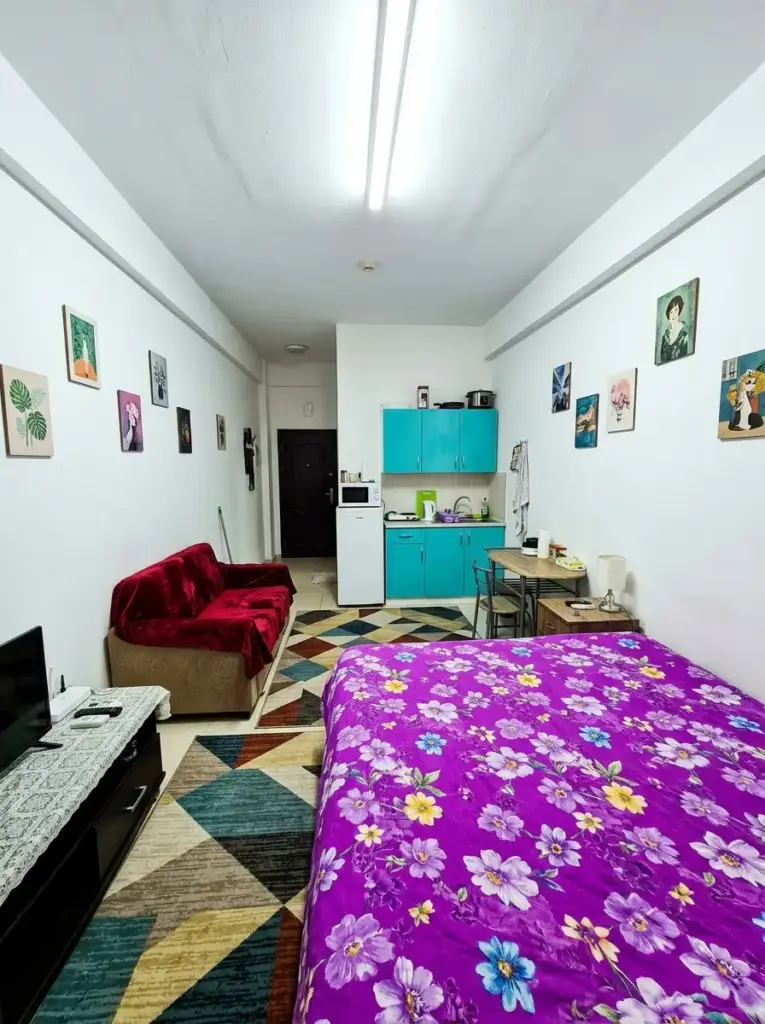
A Tiny Studio Apartment can feel busy when every area uses different colors, patterns, and finishes. A calm color palette helps the whole room feel connected. This does not mean everything has to be beige. It means choosing a small group of colors and repeating them across the room. For example, you might use warm white walls, a light oak table, a soft gray sofa, black metal accents, and olive green textiles. Another renter-friendly option is cream, tan, rust, walnut, and matte black. If you like color, try one main accent such as deep blue, sage green, terracotta, or mustard instead of several competing shades.
This works because the eye moves smoothly around the room when colors repeat. In a studio, your bedspread, sofa pillows, curtains, rug, and kitchen items may all be visible at once. If those pieces clash, the apartment feels crowded even if you do not own much. Use larger items in quieter colors and save stronger shades for smaller pieces. A sage pillow, striped tea towel, and framed print with a bit of green can make the space feel coordinated without matching too much.
This tip is best for anyone who loves decor but keeps buying random pieces. Before you shop, choose three base colors and one accent color. Take photos of your room in daylight and at night. If one item feels loud in both photos, move it or replace it with something calmer. Avoid the common mistake of using pure white for everything because you think it will make the apartment look bigger. White can help, but too much stark white may feel cold, especially under cool lighting. Warm whites, soft creams, pale greige, and light taupe often feel more livable.
Layer Lighting Instead of Relying on One Ceiling Light
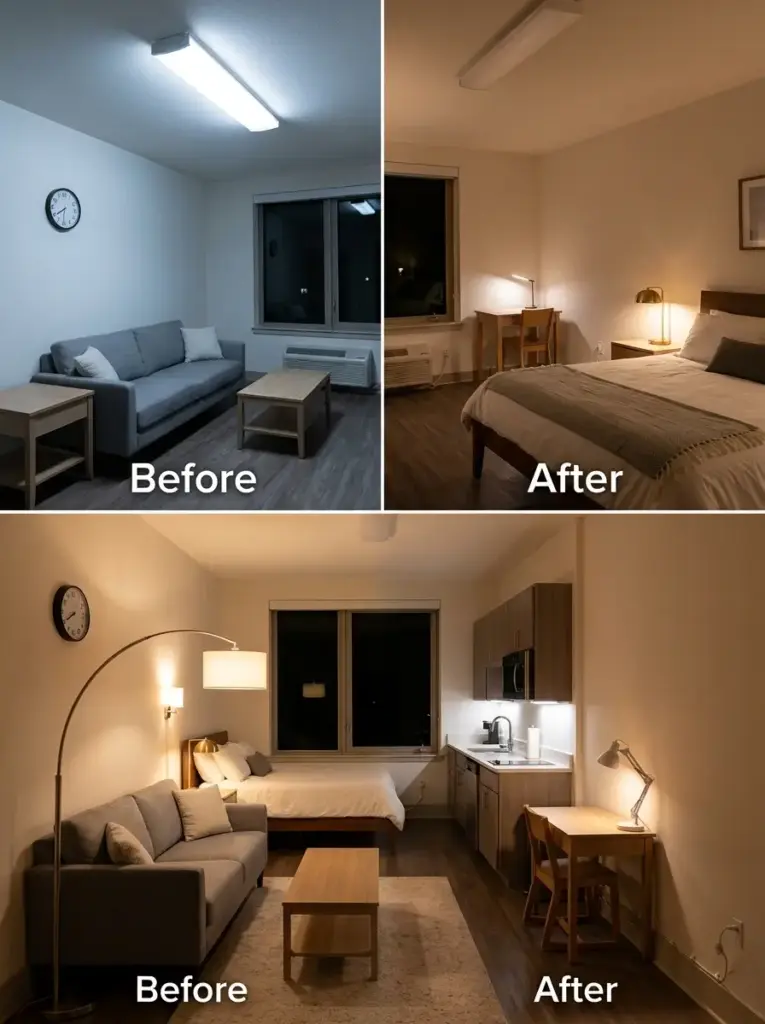
Lighting can completely change how a Tiny Studio Apartment feels. Many rentals come with one harsh ceiling fixture that makes every corner look flat. Instead of relying on that single light, build layers. Use a floor lamp near the sofa, a table lamp by the bed, under-cabinet lights in the kitchen, and a small desk lamp for work. Choose bulbs around 2700K to 3000K for living and sleeping areas because they feel warm and comfortable. For a desk or kitchen prep area, 3000K to 3500K can feel clearer without becoming too cold.
This helps because separate light sources create zones and give you control. You can use bright task lighting while cooking, softer light while relaxing, and a focused lamp while reading. In a studio, lighting is one of the easiest ways to make one room serve different moods. A plug-in wall sconce beside the bed can replace a nightstand lamp if surface space is limited. Battery-powered puck lights can brighten a dark closet or cabinet. LED strip lights under open kitchen shelves can make a small cooking area more useful.
This idea is best for renters because many lighting upgrades do not require electrical work. Use plug-in lamps, cord covers, smart bulbs, and adhesive cable clips to keep everything tidy. Avoid cool blue bulbs in the main room unless you need them for a specific task. They can make the apartment feel less relaxing at night. Also, avoid placing every lamp at the same height. A mix of low, middle, and tall lighting makes the room feel more layered and less like a dorm.
Use Curtains to Soften and Stretch the Room
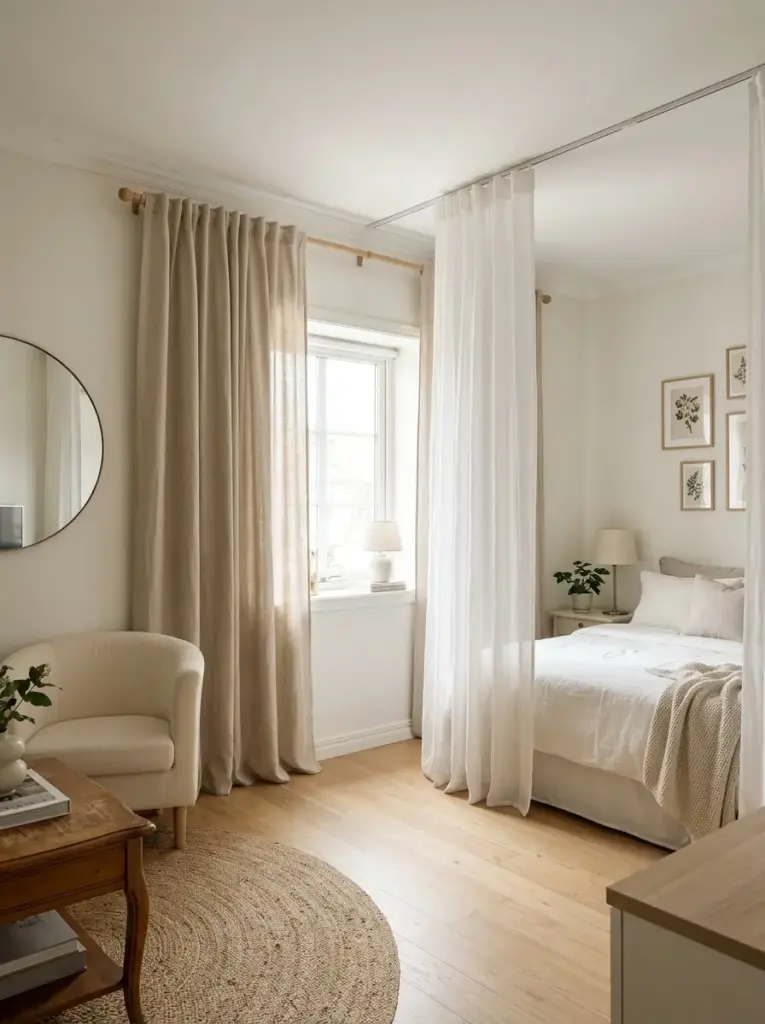
Curtains are one of the most effective decorating tools in a Tiny Studio Apartment. Hang them high and wide when possible, even if the window itself is small. Placing the rod closer to the ceiling and extending it beyond the window frame makes the wall look taller, and the window feel larger. Choose lightweight fabrics like linen blends, cotton, or sheer panels if you want daylight. Use blackout curtain liners if streetlights or early sun disturb your sleep.
This technique works because curtains add softness without taking up much floor space. They also reduce the hard edges that can make a small rental feel plain. If your studio has a bed near the living area, ceiling-mounted or tension-rod curtains can create a flexible sleeping nook. You can close them when guests visit or leave them open during the day. For renters, tension rods, no-drill brackets, or command-style hooks may work depending on the window and wall surface. Always check weight limits before hanging heavy panels.
This tip is best for people who want privacy, better sleep, or a more finished room without painting. Choose curtain colors that blend with your wall if you want the space to feel larger. Warm white, oatmeal, light gray, and soft beige are safe choices. Avoid short curtains that stop awkwardly above the floor because they can make the wall look chopped up. Curtains should either kiss the floor or hover just slightly above it so they look intentional.
Make the Entry Area Work Like a Landing Zone
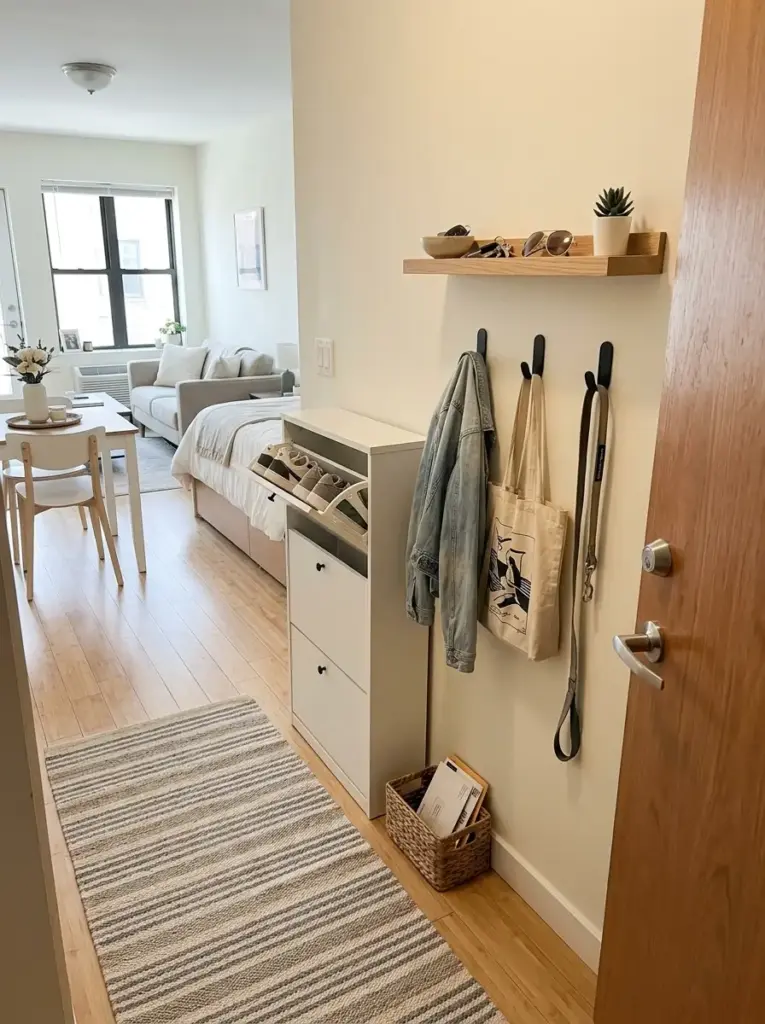
Even the smallest studio needs an entry zone. Without one, shoes, bags, keys, mail, and jackets travel into the main living area and create clutter. A Tiny Studio Apartment often has little or no foyer, so create one with a narrow console, wall hooks, a shoe rack, a small bench, or a floating shelf. A simple 24-inch shelf near the door can hold keys and sunglasses. A slim shoe cabinet can hide several pairs without making the room look messy. A washable runner can mark the entrance and catch dirt before it spreads.
This matters because clutter usually starts at the door. If you do not give daily items a home, they land on the bed, dining table, sofa, or floor. A good entry setup saves cleaning time and protects the rest of the room. If you rent, use adhesive hooks for lightweight jackets and a freestanding coat rack if your walls cannot handle hooks. Place a small basket near the door for mail, but empty it once a week so it does not become a paper archive.
This idea is best for busy people, pet owners, students, and anyone who comes home with bags or work items. Keep the entry zone simple. One hook per regular jacket, one basket for small items, and one shoe solution is enough. A common mistake is adding too many cute organizers. If the entry area has five baskets, a tray, a rack, a bowl, and a bench, it may look crowded before you even use it.
Choose Mirrors for Function, Not Just Decoration
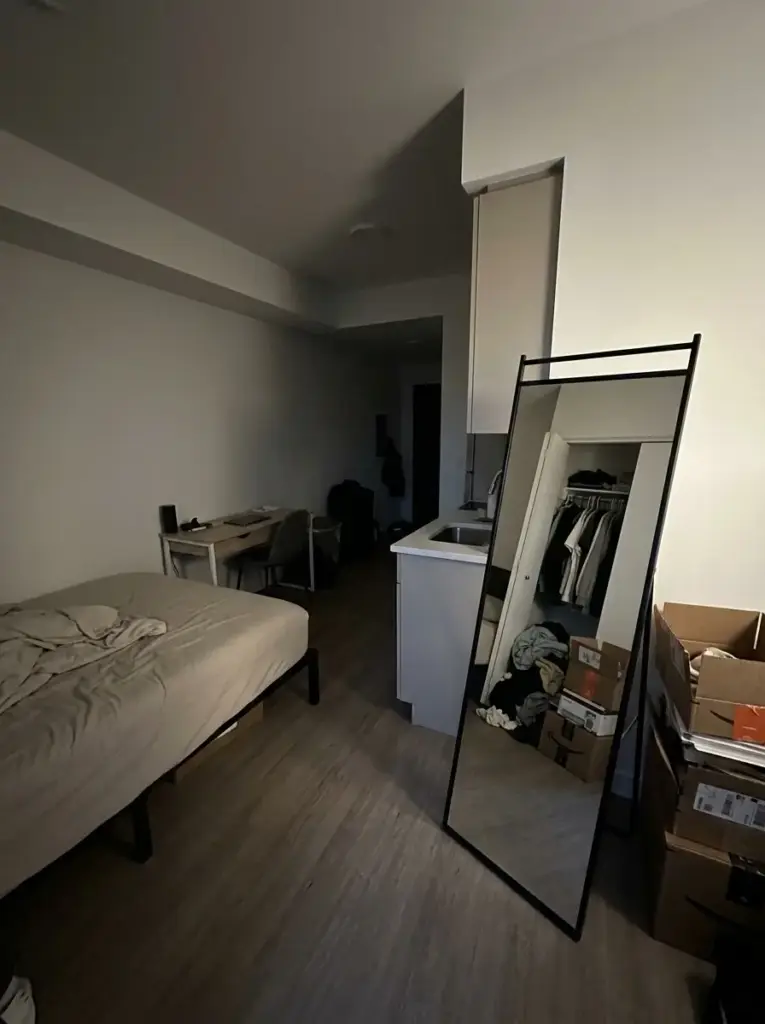
Mirrors can help a Tiny Studio Apartment feel brighter, but placement matters. A mirror works best when it reflects something useful, such as a window, a lamp, a calm wall, or a nice piece of art. It works poorly when it reflects clutter, the kitchen trash can, an open closet, or a messy bed. A tall floor mirror near a window can bounce daylight deeper into the room and also help with getting dressed. A round mirror over a small dining table can create a simple focal point without adding bulky decor.
This idea is effective because mirrors increase light and visual depth. They do not magically double the room, but they can reduce the boxed-in feeling that small apartments sometimes have. If you have a dark corner, place a mirror near a lamp rather than opposite a blank wall. If you have a narrow studio, avoid placing mirrors where they create confusing reflections from every angle. One or two well-placed mirrors are usually better than several small ones scattered around the room.
This tip is best for apartments with limited natural light or awkward wall space. Renters can use leaning mirrors with anti-tip hardware where allowed, or lighter acrylic mirrors with removable strips for safer hanging. Keep frames simple if the room already has many finishes. Black, brass, wood, or frameless mirrors can all work, but choose one that connects to your existing hardware or furniture.
Pick Storage Furniture That Hides Visual Clutter
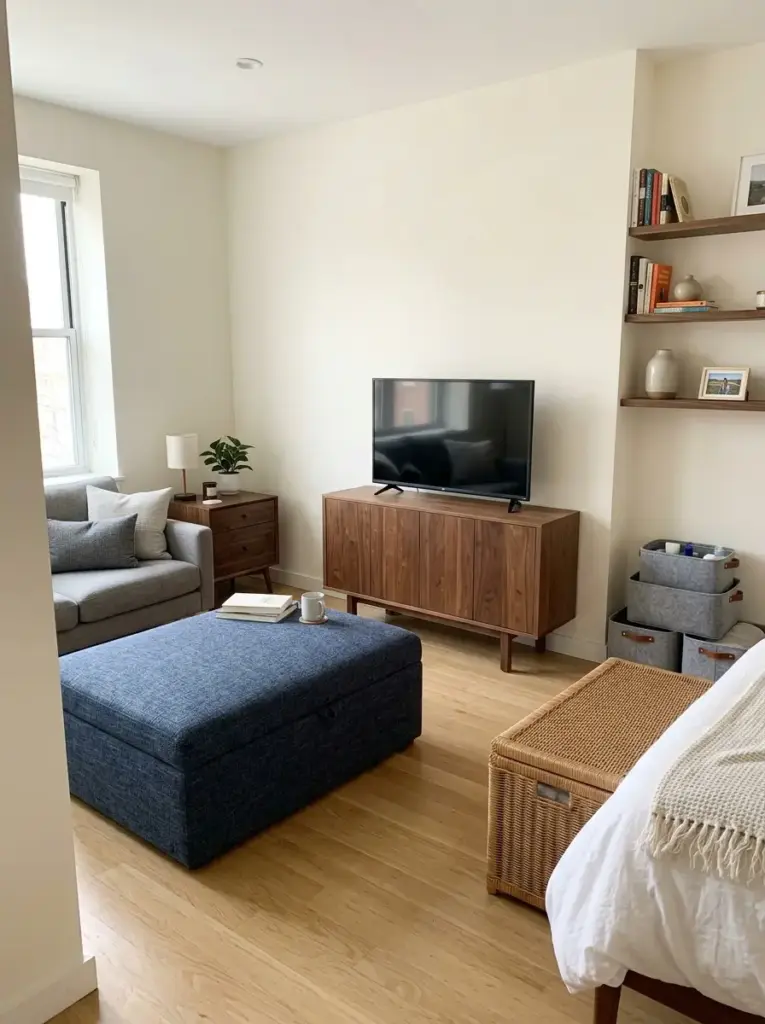
Open shelves can look beautiful, but they can also make a studio feel busy if they hold too many small items. In a Tiny Studio Apartment, closed storage is often your best friend. Look for TV stands with doors, storage ottomans, cabinets with drawers, lidded baskets, and nightstands with hidden compartments. Use open storage for attractive items and closed storage for everything else. This includes cords, chargers, paperwork, cleaning supplies, extra toiletries, craft materials, and random household tools.
This works because visual clutter takes energy. In a small space, you see almost everything from almost every angle. Even useful items can make the room feel chaotic when they are always visible. A storage ottoman can hold blankets and also serve as a footrest or extra seating. A cabinet beside the sofa can act as a side table while hiding office supplies. A bench with storage near the bed can hold extra sheets and give you a place to sit while putting on shoes.
This idea is best for people who own many small items but want a calmer room. Choose storage pieces before buying extra decor. A pretty vase will not solve clutter, but a cabinet might. Avoid buying too many clear bins for visible areas. Clear bins work well inside closets because you can see what you have, but in the main room, they may add visual noise. Use woven, fabric, wood, or solid-color bins where storage will be seen.
Keep the Bed Area Calm and Easy to Maintain
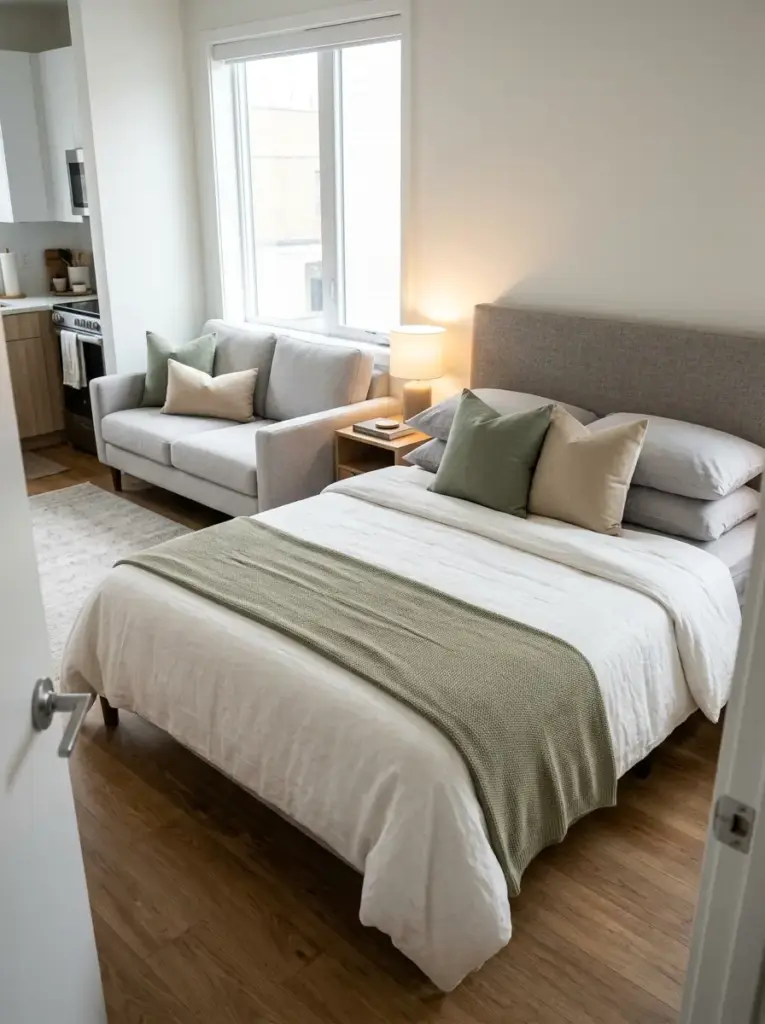
Since the bed is usually visible in a Tiny Studio Apartment, it affects the whole room. A messy bed can make the entire apartment look messy, even if the rest is clean. Choose bedding that is easy to make every morning. A simple duvet, two sleeping pillows, two decorative pillows, and one throw are usually enough. If you dislike making the bed, skip complicated layers. Choose washable fabrics and colors that work with the rest of the room, such as warm white, sand, soft gray, muted blue, or sage.
This helps because the bed becomes part of the living room view. When the bedding looks calm, the whole apartment feels more pulled together. If your bed sits near the sofa, try to repeat one color between both areas. For example, use olive pillows on the sofa and an olive throw at the end of the bed. If the bed is directly visible from the door, consider a simple upholstered headboard, a wall-mounted fabric panel, or a neat row of pillows to make it look intentional.
This tip is best for renters who cannot hide the bed in a separate room. It is also helpful for beginners because bedding is easier to change than furniture. Avoid too many tiny pillows, shiny fabrics, or high-maintenance white bedding if you have pets, children, or little laundry access. The best bedding for a small studio is bedding you can keep clean and tidy without effort.
Use Multi-Purpose Pieces Instead of More Pieces
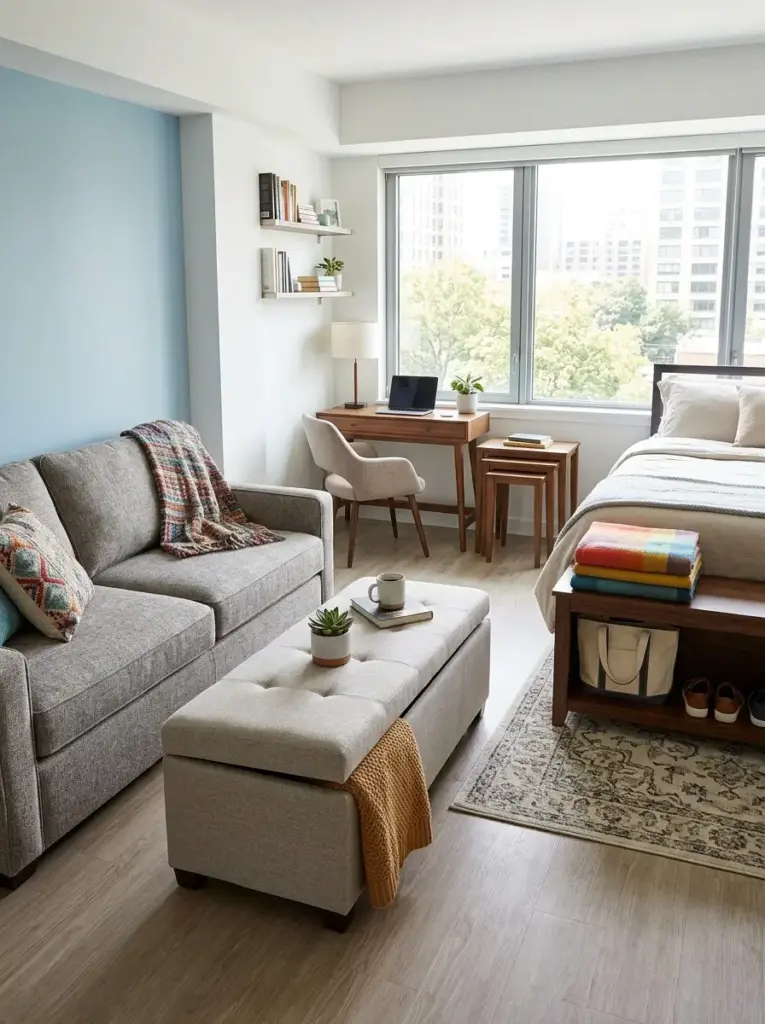
Every item in a Tiny Studio Apartment should justify the space it takes. Multi-purpose furniture helps you reduce the total number of pieces while still meeting your needs. A storage ottoman can act as a coffee table, footrest, seat, and blanket storage. A console table can work as a desk. A sleeper sofa can host guests. A nesting table can expand when you need more surface space and tuck away later. A bench at the end of the bed can provide seating, storage, and a place for bags.
This makes sense because small apartments become crowded when each need gets its own separate item. Instead of buying a desk, dining table, coffee table, and vanity, you might choose one sturdy table and style it for different uses. The key is to be honest about your habits. If you work from home eight hours a day, you may need a real desk chair and a proper work surface. If you only check emails for twenty minutes, a compact table and a comfortable dining chair may be enough.
This idea is best for people starting from scratch or replacing mismatched furniture. Budget shoppers can find secondhand pieces that do double duty, such as trunks, benches, small cabinets, and drop-leaf tables. Avoid pieces that claim to do everything but do none of it comfortably. A cheap futon that hurts your back is not a smart purchase just because it folds. Test comfort and stability whenever possible.
Leave Negative Space So the Room Can Breathe
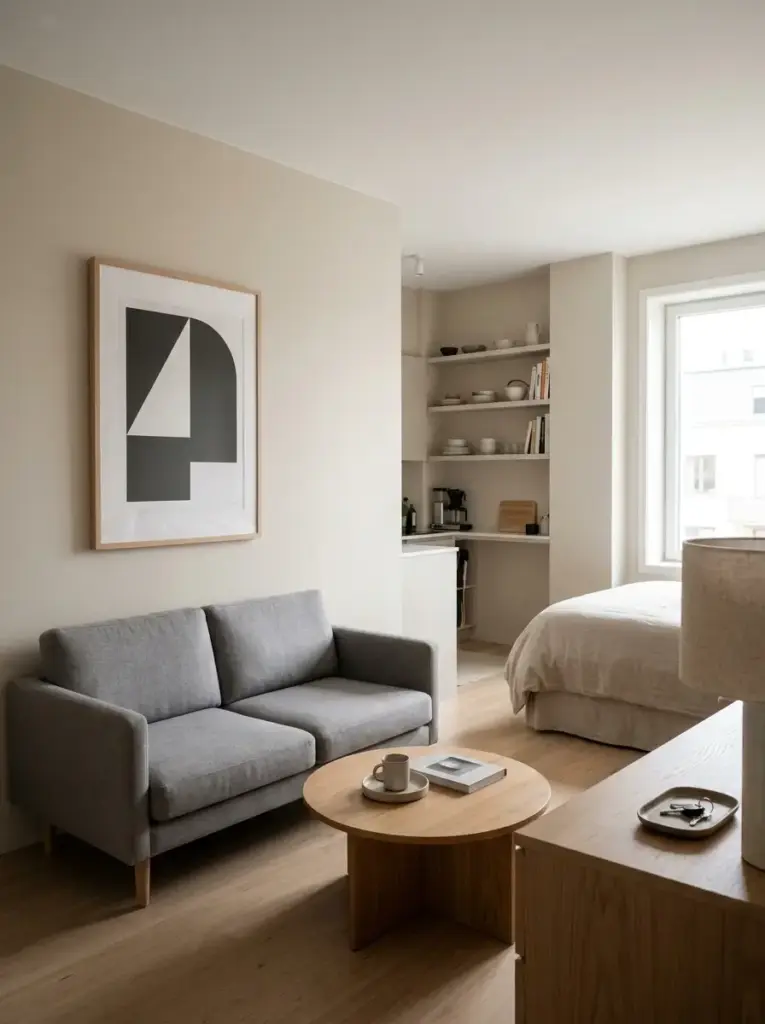
Decor lovers often want to fill every corner, but a Tiny Studio Apartment needs some space. Negative space is the blank area around furniture, art, shelves, and decor. It gives the eye a place to rest and makes the items you love stand out more. This might mean leaving one wall mostly empty, choosing one large art piece instead of ten small ones, or keeping the top of a dresser clear except for a lamp and a tray.
This principle works because small rooms can quickly feel overstimulating. When every surface has decor, every wall has art, and every shelf is full, the apartment feels smaller than it is. Negative space does not mean boring. It means edited. For example, a simple wall above a sofa with one large framed print can feel more grown-up than a crowded gallery wall in a room that already has open shelving, a kitchen, and a bed in view. A clear coffee table can make the room feel cleaner than one covered with candles, books, trays, remotes, and coasters.
This tip is best for home decor lovers who keep adding pieces but still feel unsatisfied. Before buying anything new, remove three items and live with the room for a few days. You may find that the apartment needs less decor, not more. A common mistake is using small decor to solve a layout problem. If the room feels off, check furniture placement, lighting, and storage first.
Build a Simple Cleaning and Reset Routine Into the Design
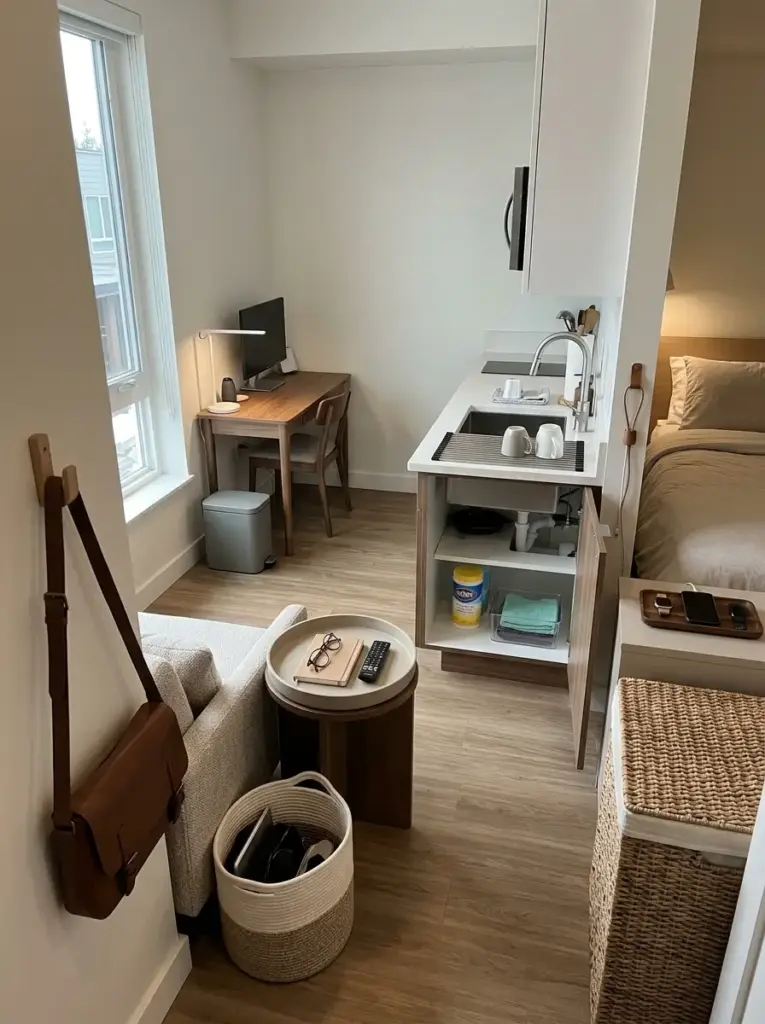
A Tiny Studio Apartment works hard only when it is easy to reset. Since every area is visible, small messes show quickly. Design your space so daily cleanup takes minutes, not hours. Keep a laundry basket where clothes naturally land. Put a small trash bin near the desk or vanity. Store cleaning wipes or a cloth under the kitchen sink. Use trays to gather small items on tables. Give every item a realistic home near where you use it.
This works because organization is not about being naturally tidy. It is about making tidiness easy. Design your home around the habits you actually have, not the ones you keep promising to build. If your bag always lands beside the sofa, turn that spot into its proper home with a stylish hook or woven basket. If your phone lives on the bedside table at night, create a neat charging station with a cord clip and a small tray to keep everything tucked away. And if dishes keep piling up because the drying rack dominates the counter, swap it for a roll-up rack that rests over the sink and disappears when the job is done. Good design follows your habits and gently improves them.
This idea is best for beginners, busy renters, and anyone who feels their studio becomes messy again right after cleaning. Avoid storage systems that require too many steps. If you need to open a closet, pull out a bin, remove a lid, and rearrange items just to put something away, you probably will not keep doing it. Simple systems last longer.
Common Mistakes to Avoid in a Tiny Studio Apartment
One of the biggest mistakes in a Tiny Studio Apartment is buying furniture before measuring the room carefully. Small spaces leave little room for error, so always measure the wall, walkway, door swing, window height, and elevator or stair access before you buy. A sofa that blocks a closet or a bed that leaves only a narrow path will make daily life harder. Use painter’s tape on the floor to mark furniture sizes and test how the room feels before committing.
Another common mistake is using too many small storage pieces instead of one or two strong ones. Many tiny carts, bins, baskets, and shelves can create more clutter than they solve. A tall cabinet with doors may do more for your apartment than five separate organizers. Also, avoid filling every wall with decor. In a studio, you see the kitchen, bed, sofa, and entry at the same time, so too much wall decor can feel noisy. Choose fewer pieces with more purpose.
Poor lighting is another issue. One ceiling light can make the room feel harsh, while dark corners make it feel smaller. Add lamps at different heights and use warm bulbs in the living and sleeping areas. Avoid cool, bluish bulbs near the bed because they can make the space feel less restful. A final mistake is copying large home decor ideas without adjusting them. Oversized sectionals, giant coffee tables, deep armchairs, and heavy curtains may look beautiful online, but they can overwhelm a studio. Choose the version that fits your actual room, not the version that fits a photo.
Budget-Friendly Tips
You do not need a large budget to improve a Tiny Studio Apartment. Start with layout changes because they cost nothing. Move the bed to the quietest corner, turn the sofa so it creates a living zone, place the dining table near the kitchen, and clear blocked pathways. Sometimes a room feels small because the furniture sits in the wrong place, not because the furniture is bad. Take photos from each corner after rearranging. Photos help you see clutter and awkward gaps more clearly.
Secondhand furniture can be very useful in a studio, especially solid wood tables, small dressers, benches, and bookcases. Look for pieces with simple shapes that you can clean, paint, or update with new hardware. A used dresser can become a TV stand with hidden storage. A small cabinet can become a coffee station, entry console, or linen cabinet. If you rent, removable wallpaper inside open shelves, peel-and-stick floor tiles in a small entry, and plug-in sconces can add style without permanent changes. Always test removable products in a hidden spot first because paint quality varies from rental to rental.
Soft goods also make a big difference for less money. Curtains, pillow covers, washable rugs, bedding, and lampshades can change the mood of the room without replacing major furniture. Choose pillow covers instead of full pillows so you can store them easily. Use one larger rug rather than several tiny rugs if you want the room to feel calmer. For lighting, replace cool bulbs with warm 2700K or 3000K bulbs before buying new lamps. That small change can make your furniture and colors look better.
Be careful with cheap items that create more clutter. A low price is not helpful if the item breaks, looks messy, or does not solve a real problem. Spend where comfort matters, such as a mattress, desk chair, or sofa, and save on accessories, baskets, side tables, and secondhand storage. A practical studio budget should focus on pieces you touch every day.
Tiny Studio Apartment Tips for Beginners
When decorating a Tiny Studio Apartment, begin with your routine instead of your wish list. Write down what you do at home every day. You may sleep, cook, work, exercise, read, watch TV, get ready, and store hobby supplies in one room. Then decide which activities need the most space. Someone who works from home needs a better desk setup than someone who only uses a laptop on weekends. Someone who cooks often needs kitchen storage more than a large media area. Your studio should support your life, not someone else’s online tour.
Keep your main walkway clear. A small apartment feels much better when you can move through it without turning sideways or stepping around furniture. Try to leave at least 24 to 30 inches for main paths where possible. If that is not possible everywhere, keep the most-used route clear, such as the path from the door to the bed, kitchen, and bathroom. Choose furniture with rounded corners for tight walkways because it feels softer and is easier to move around.
Use storage where you naturally need it. Store shoes by the door, not under the bed if you wear them every day. Keep work supplies near the desk, not in a kitchen drawer. Put extra bedding near the bed, not across the room. This sounds simple, but it is one of the main reasons small-space organization succeeds or fails. Storage that matches your habits will stay organized longer.
Finally, edit often. A Tiny Studio Apartment does not allow unlimited collecting, but that can be a good thing. Every few months, check your clothes, kitchen items, papers, decor, and hobby supplies. If something is broken, unused, uncomfortable, or hard to store, let it go. A smaller home feels more peaceful when it holds useful things and a few items you truly enjoy.
FAQ
What furniture is best for a Tiny Studio Apartment?
The best furniture for a Tiny Studio Apartment is compact, comfortable, and useful in more than one way. Storage beds, apartment-size sofas, drop-leaf tables, nesting tables, slim cabinets, and storage ottomans usually work well. Choose pieces with raised legs if you want a lighter look, and choose closed storage if you own many small items. Always measure before buying because even a beautiful piece becomes a problem if it blocks a walkway or door.
How do I make a Tiny Studio Apartment look bigger?
Use a calm color palette, keep pathways clear, hang curtains high, add mirrors carefully, and choose furniture that shows some floor underneath. Good lighting also helps. A room with dark corners feels smaller, so add lamps near the sofa, bed, and work area. Avoid filling every wall and surface. Space can make a studio feel more open.
How can I separate my bed in a studio without building a wall?
You can separate the bed with a curtain, a folding screen, an open bookcase, rug placement, or the back of a sofa. A ceiling-mounted curtain or tension rod can work well for renters. An open bookcase gives separation and storage, but keep it tidy because both sides may be visible. You can also place the bed in a corner and use bedding that blends with the room so it feels less exposed.
What colors work best in a Tiny Studio Apartment?
Warm whites, soft creams, light greige, pale taupe, muted greens, soft blues, warm gray, and natural wood tones often work well. Dark colors can also work when used carefully, especially on one accent piece or in textiles. The most important thing is to repeat colors so the room feels connected. Too many unrelated colors can make a small space feel busy.
How do I decorate a studio apartment on a small budget?
Start by rearranging furniture, decluttering, and improving lighting. These changes cost little or nothing. Then add affordable updates like curtains, pillow covers, secondhand storage, warm bulbs, peel-and-stick upgrades, and washable rugs. Spend more on items that affect comfort, such as your mattress or desk chair, and save on decor that is easy to change later.
How much decor should I use in a Tiny Studio Apartment?
Use enough decor to make the space feel personal, but not so much that every surface is full. Choose fewer pieces with more impact, such as one large print, a good lamp, a textured rug, or a few plants. Keep some surfaces clear. In a studio, useful space matters as much as style, so decor should support the room instead of crowding it.
Conclusion
A Tiny Studio Apartment works best when every choice has a purpose. You do not need a large room, expensive furniture, or permanent renovations to make your home feel comfortable. You need clear zones, flexible furniture, useful storage, warm lighting, and a layout that fits your daily routine. When the bed stores extra linens, the table works for meals and emails, the entry catches clutter, and the lighting changes with your needs, one small room can do a lot.
Start with the changes that solve your biggest frustration. When clutter starts taking over, give it a place to disappear with smart closed storage and a more welcoming entryway. If the room feels dull or lifeless, let better lighting and flowing curtains bring in warmth and character. And when the layout simply feels off, try rearranging the furniture first—you may discover the room already has everything it needs. A studio becomes easier to live in when it supports real habits, not just pretty photos. With thoughtful choices, your Tiny Studio Apartment can feel organized, welcoming, and practical every day.