
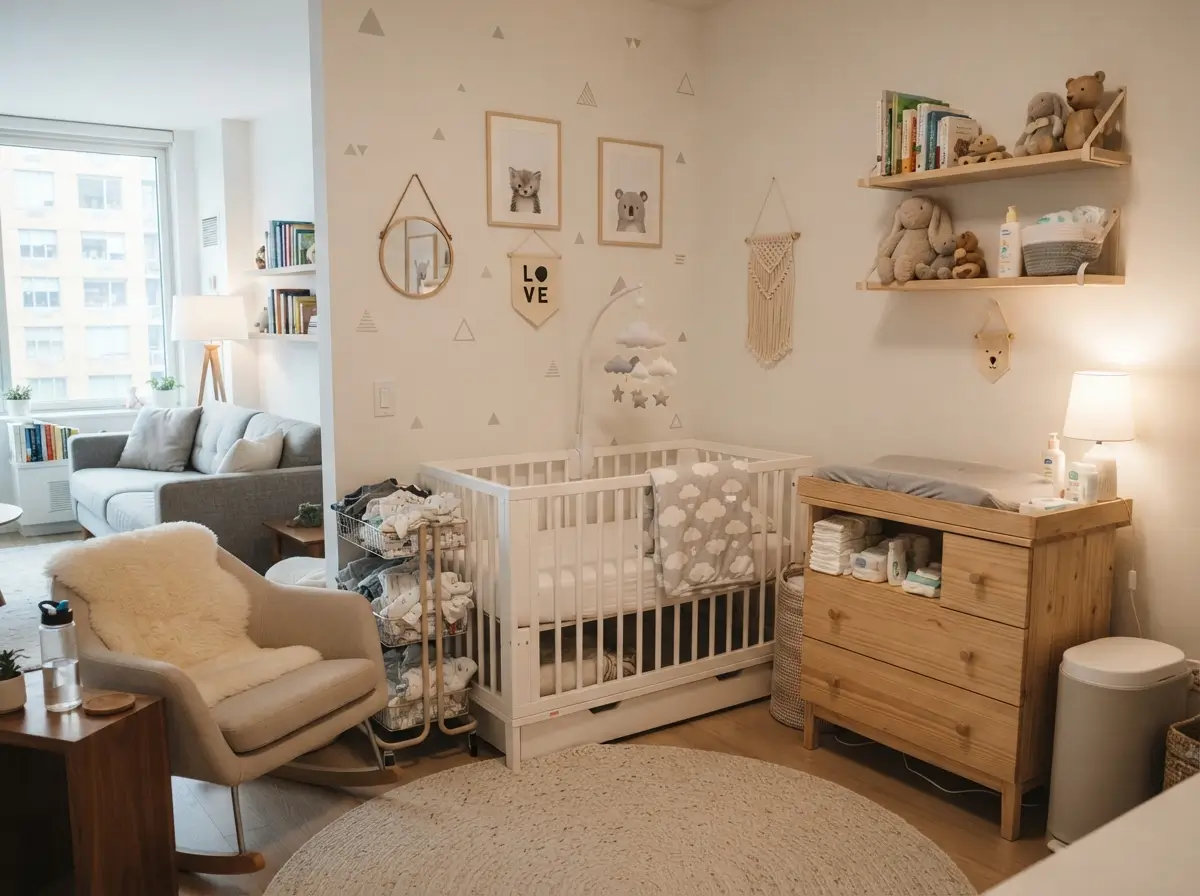

Preparing a nursery in a compact apartment can feel challenging when every corner already has a purpose. Parents often worry about fitting a crib, storage, changing area, and relaxing space without making the home feel crowded. The good news is that thoughtful planning can transform even the smallest room or corner into a comfortable place for both baby and parents.
Tiny Apartment Baby Nurseries Decor focuses on using space carefully rather than adding more furniture. The goal is to create a safe, functional, and welcoming nursery by choosing flexible pieces, smart layouts, and simple decorating techniques. A small apartment can still have a beautiful baby area when every item serves a practical purpose.
Many first-time parents living in apartments need solutions that work with limited square footage. Whether you have a studio, one-bedroom apartment, or a small spare room, the right choices can help you create a nursery that feels organized and peaceful.
What Is the Best Way to Create a Baby Nursery in a Small Apartment?
The best way to create a baby nursery in a small apartment is to focus on multifunctional furniture, vertical storage, and flexible layouts. Instead of filling the space with decorative items, choose pieces that support daily routines like feeding, changing, and organizing baby essentials.
A compact nursery does not need a separate room to feel complete. A corner of the bedroom, living area or unused wall space can become a practical baby zone with the right arrangement. Prioritize safety, easy access, and storage before adding decorative details.
Create a Dedicated Nursery Corner With Clear Zones
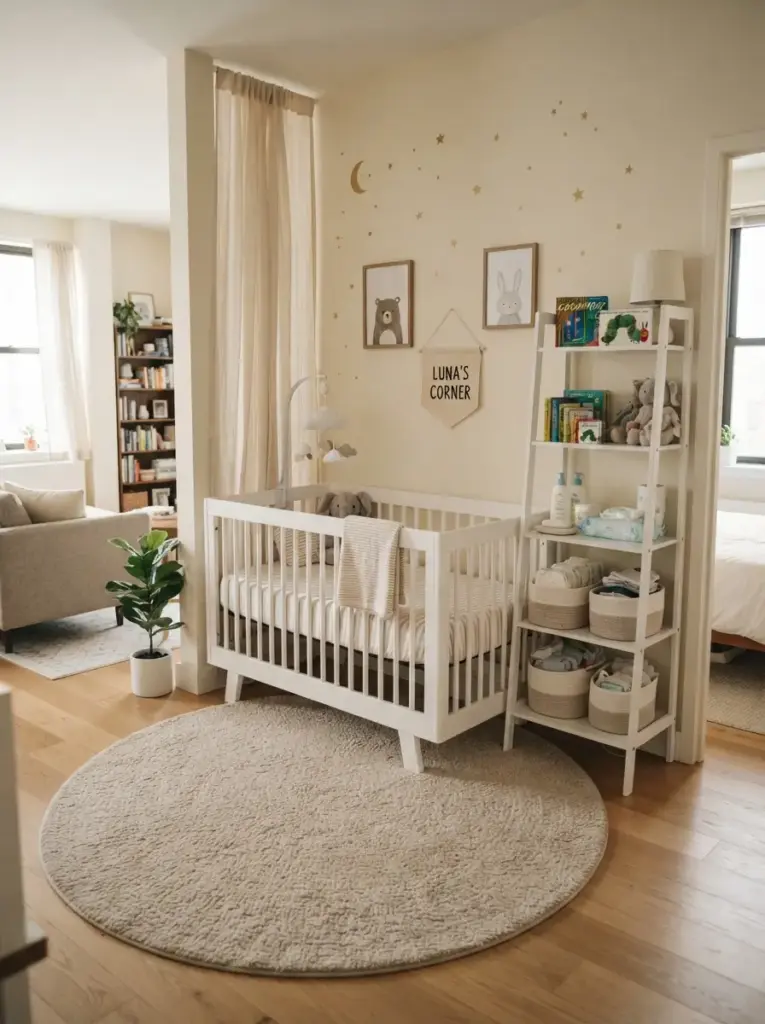
Creating a nursery corner is one of the easiest ways to introduce Tiny Apartment Baby Nurseries Decor into a small home without needing an entire room. A defined area helps separate baby activities from general household functions while keeping the apartment open.
Use a small rug, wall decals, or a different paint shade to visually mark the nursery space. For example, a soft beige rug under the crib can create a clear boundary in a shared bedroom. Open shelving beside the crib can hold books, blankets, and baby products while maintaining an airy appearance.
This approach works especially well for parents living in studio apartments or one-bedroom homes. Instead of trying to create walls where they do not exist, use visual separation techniques that keep the space flexible.
Parents should avoid placing the crib directly beside busy walkways. Leave enough room for nighttime movement, diaper changes, and comfortable access. A simple layout can make a small nursery corner feel intentional rather than temporary.
Choose a Mini Crib or Convertible Crib
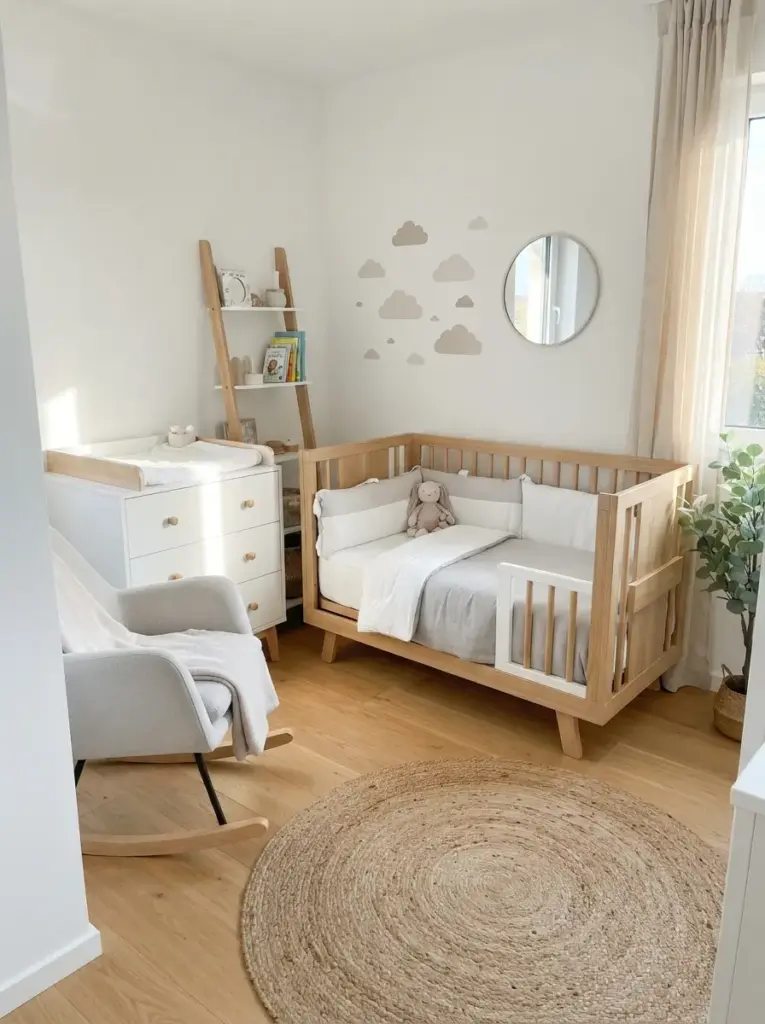
Large traditional cribs can quickly dominate a compact apartment. Choosing a mini crib or convertible crib allows parents to save valuable floor space while still creating a safe sleeping area.
Mini cribs usually provide enough room for infants while taking up less space than standard models. Convertible designs can also grow with your child by changing into toddler beds later. This reduces the need to purchase multiple furniture pieces.
Neutral colors such as white, natural wood, or soft grey help the crib blend into smaller rooms. These shades reflect light and make the area feel more open. Pairing the crib with lightweight furniture prevents the nursery from feeling visually heavy.
This option is best for families who want practical furniture that lasts longer. Before purchasing, measure doorways, corners, and available floor space carefully because compact homes often have tighter layouts.
Use Vertical Storage Instead of Floor Cabinets
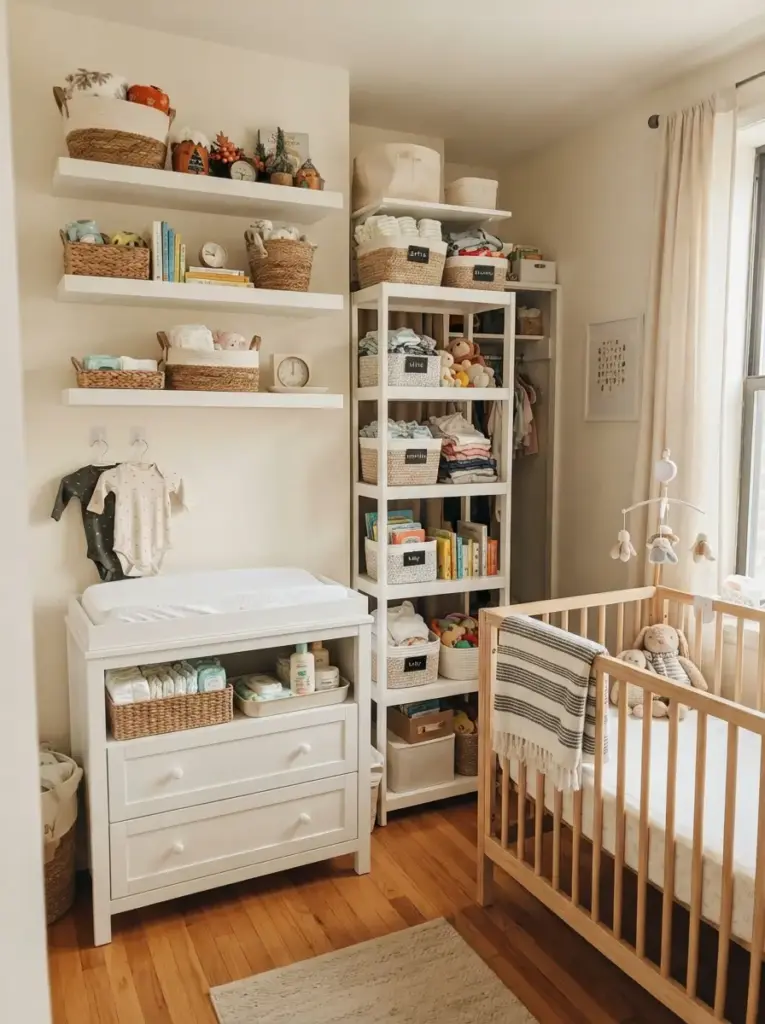
Small apartments benefit from using wall height instead of spreading storage across the floor. Vertical storage keeps baby essentials organized while protecting valuable walking space.
Install floating shelves above a changing table or use tall narrow storage units beside the crib. Baskets placed on higher shelves can store extra diapers, blankets, and seasonal clothing. Keep daily-use items within easy reach and less-used items higher up.
For renters, removable wall shelves and adhesive hooks can provide storage without permanent changes. These solutions work well in homes where drilling large holes is not allowed.
This idea suits parents who need maximum organization in limited areas. A small room often feels larger when the floor remains open and clutter stays contained.
Add a Foldable Changing Station
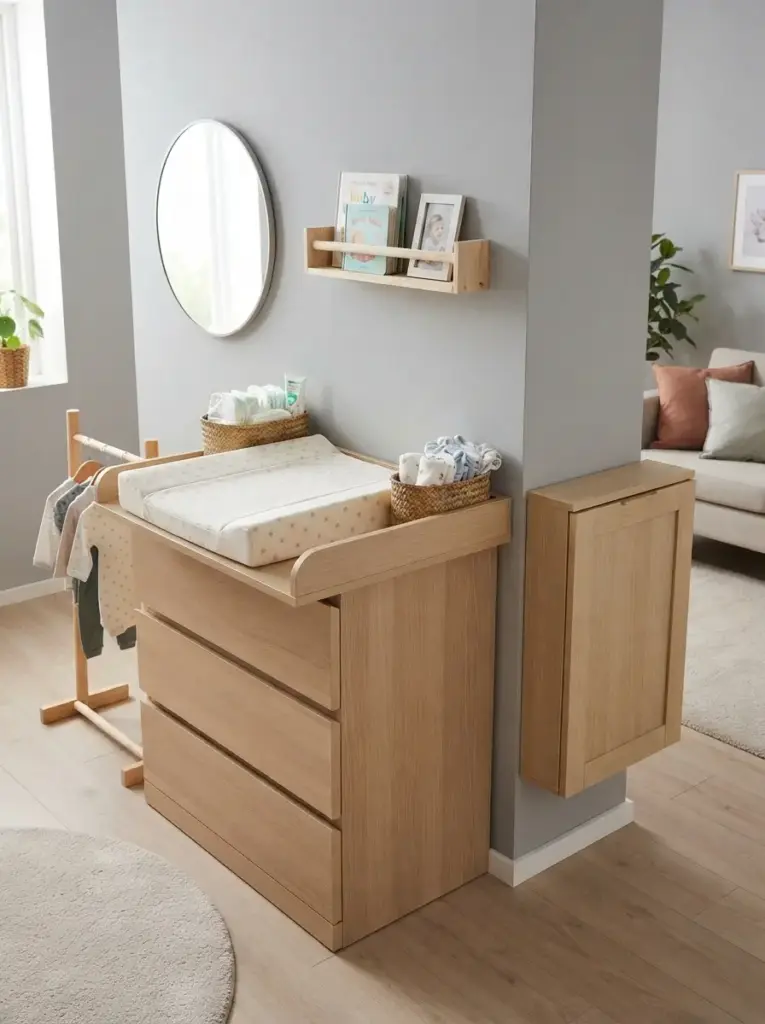
A dedicated changing table may not fit in every apartment. A foldable changing station offers a practical alternative for parents who need flexibility.
A changing pad placed on top of a dresser can create a dual-purpose station. The drawers below can store diapers, clothes, and baby care products. Another option is a wall-mounted changing table that folds away after use.
Choose materials that are easy to clean because baby routines often involve spills and quick changes. Waterproof covers and washable storage baskets make daily maintenance easier.
This setup works particularly well for One Room Apartment Decor because each furniture piece needs to perform multiple functions. A changing station that disappears when not needed keeps the home adaptable.
Select Soft Colors to Make the Space Feel Larger
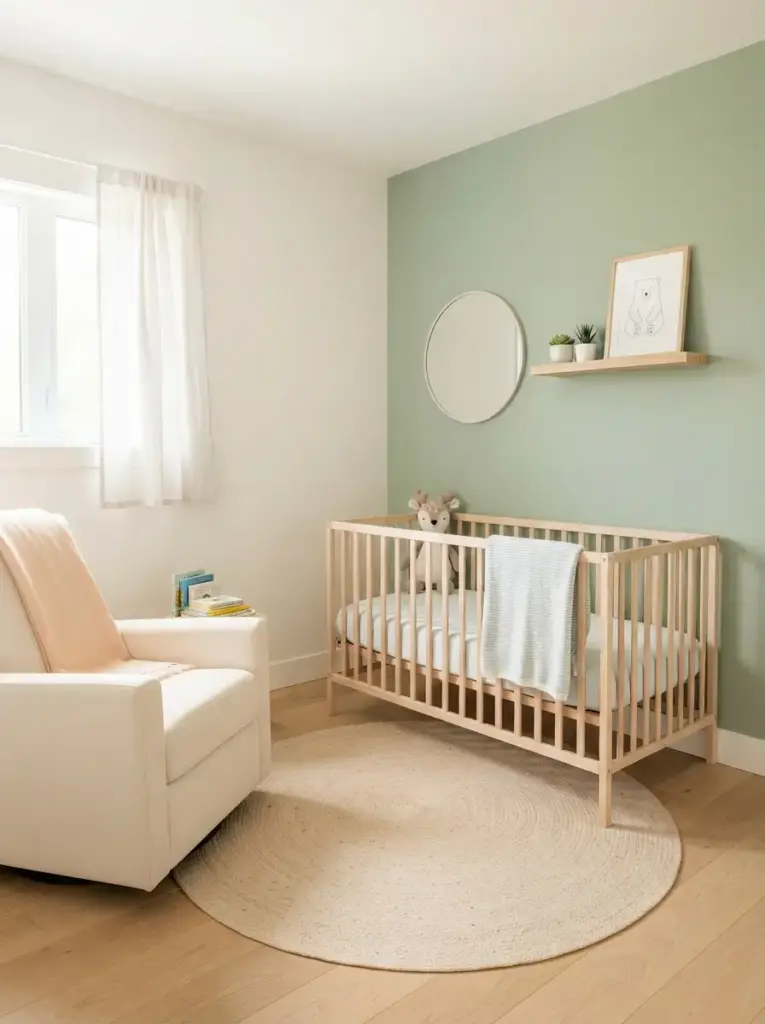
Color choices can strongly influence how a small nursery feels. Light shades reflect natural and artificial light, making compact areas appear more open.
Soft tones like warm white, sage green, pale blue, muted peach, and light beige create a calm environment without overwhelming the room. Instead of painting every wall with bold colors, consider an accent wall or removable wallpaper.
Parents renting apartments can use temporary wallpaper or fabric wall hangings to add personality without permanent changes. These options allow easy updates as the child grows.
This decorating approach works best for beginners because color is one of the simplest ways to transform a space. A carefully selected palette can connect furniture, textiles, and decorations without adding unnecessary items.
Add Multi-Purpose Furniture Pieces
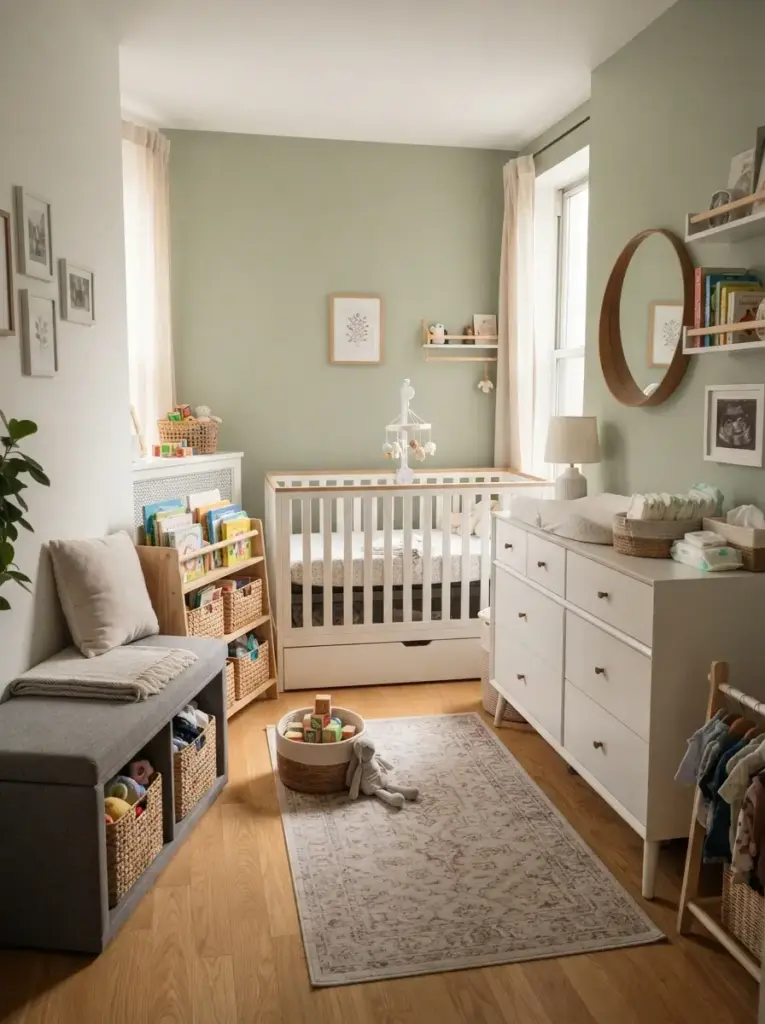
Furniture that serves multiple purposes is essential for compact nurseries. Every item should contribute to comfort, storage, or organization.
A dresser can become a changing station. A storage bench can provide seating and hold blankets. A small bookshelf can display books while storing baskets underneath.
These choices are especially helpful for parents following Tiny Apartment Ideas because limited space requires creative thinking. Instead of buying separate furniture for every activity, select pieces that adapt as your family’s needs change.
Look for furniture with clean designs and hidden storage. Avoid oversized pieces with decorative details that take up extra visual space.
Use Under-Crib Storage for Baby Essentials
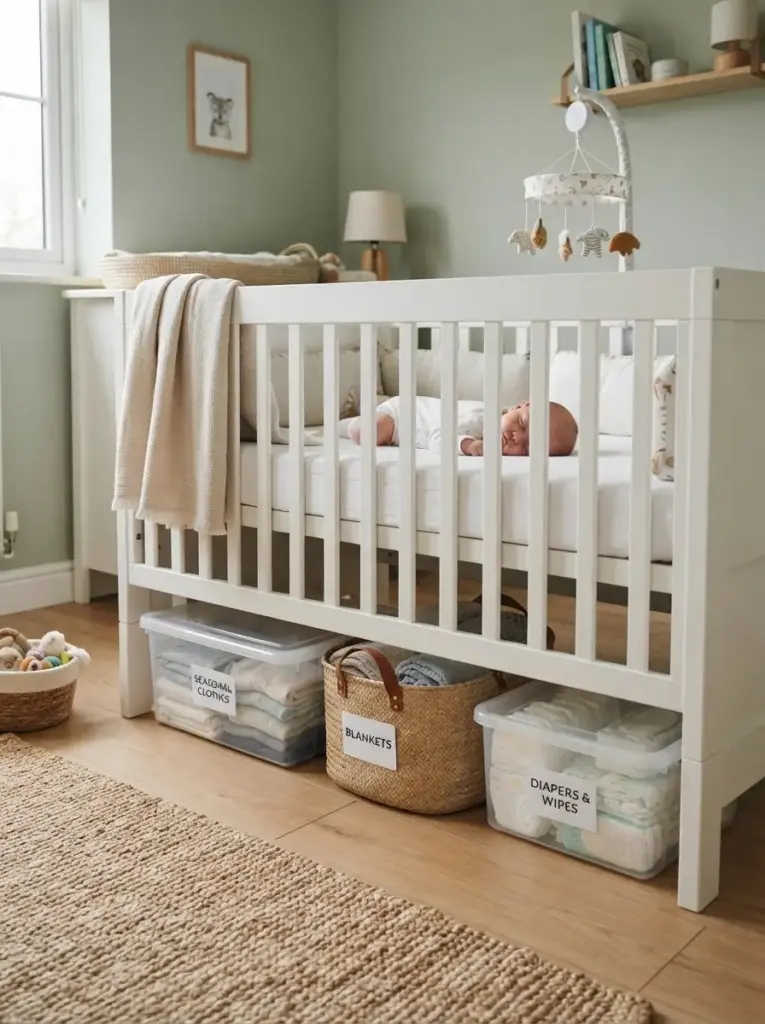
The area beneath the crib is often unused in small homes. Adding storage bins underneath can create valuable hidden organization.
Store extra diapers, blankets, seasonal clothes, and baby toys inside labeled containers. Choose boxes with lids to reduce dust buildup and maintain a cleaner nursery area.
Clear containers make it easier to find items quickly during busy moments. Fabric baskets can also work well because they add softness while keeping supplies organized.
This idea is ideal for parents who want a tidy nursery without adding additional furniture. Hidden storage helps maintain an uncluttered environment while keeping important items nearby.
Create a Reading and Bonding Corner With Minimal Furniture
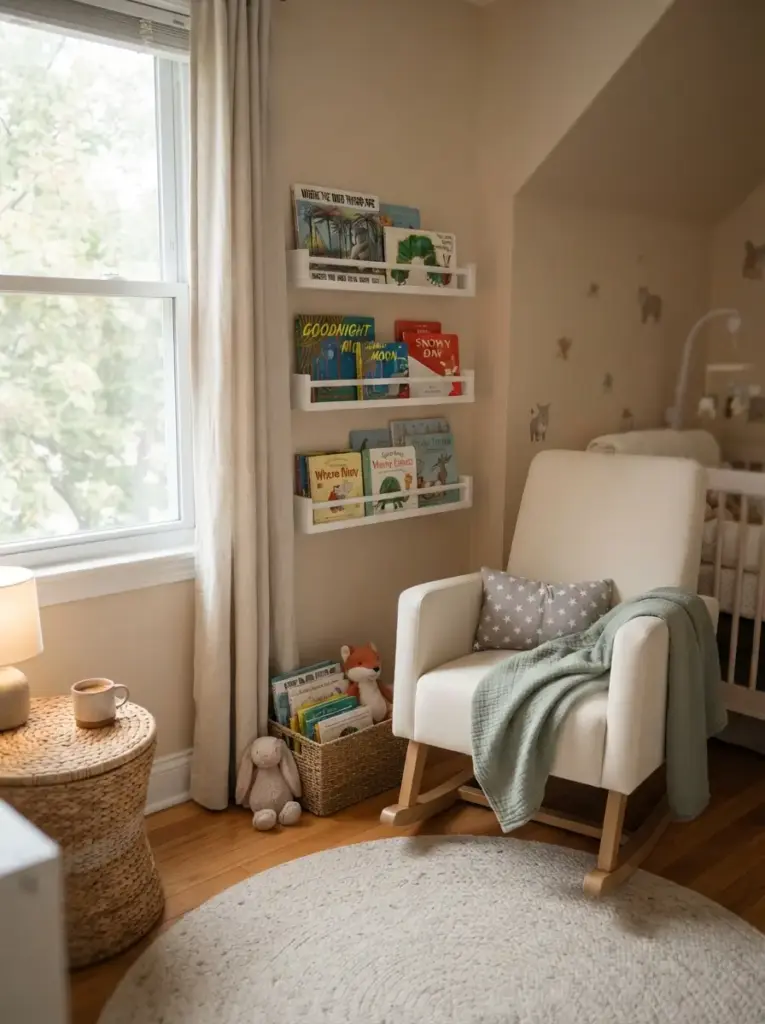
A small reading corner can add warmth and function to a nursery without taking up much room. Parents do not need a large armchair or separate play area to create a comfortable bonding space.
Choose a compact chair, floor cushion, or small rocking chair that fits the available area. Add a slim bookshelf or wall-mounted book ledges to keep baby books organized. Keeping books visible encourages regular reading habits and makes the nursery feel more personal.
This idea works well for parents who want a calm area for bedtime stories and feeding sessions. A corner near natural light is helpful during daytime because it reduces the need for additional lighting.
For extra flexibility, choose furniture that can move easily. Lightweight pieces allow the area to change as the child grows and prevent the nursery layout from becoming fixed.
Parents looking for more creative ways to maximize limited homes can also explore Small Apartment Ideas that focus on practical furniture placement and smart organization.
Install Wall-Mounted Baby Storage
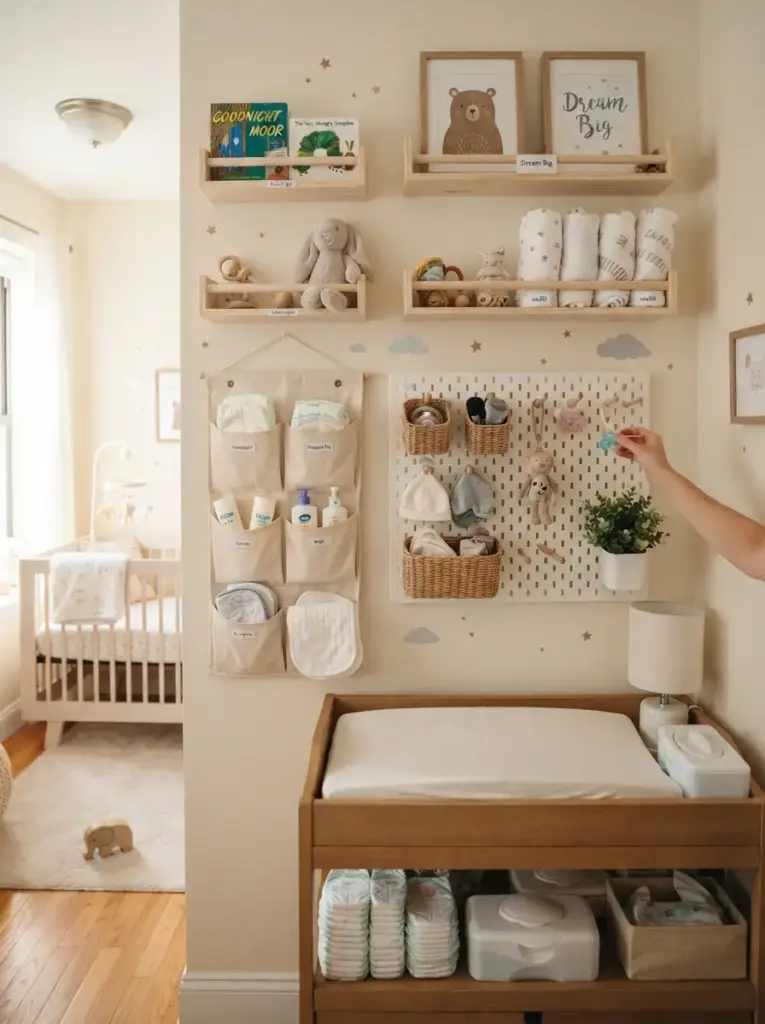
Wall-mounted storage is one of the most effective solutions for small nursery spaces. It keeps essential items accessible while leaving the floor open for movement.
Use floating shelves, hanging organizers and pegboards to store lightweight baby items. Small baskets attached to wall systems can hold toys, pacifiers, books and changing supplies.
Parents should place frequently used items at comfortable heights. Diapers, wipes and daily clothing should remain easy to reach while decorative pieces can sit higher.
This approach is especially useful in apartments where every square foot matters. It allows parents to organize vertically instead of filling the room with large cabinets.
Renters can choose removable hooks, tension shelves, and adhesive storage options. These alternatives create organization without making permanent changes to walls.
Add a Compact Wardrobe Organization System
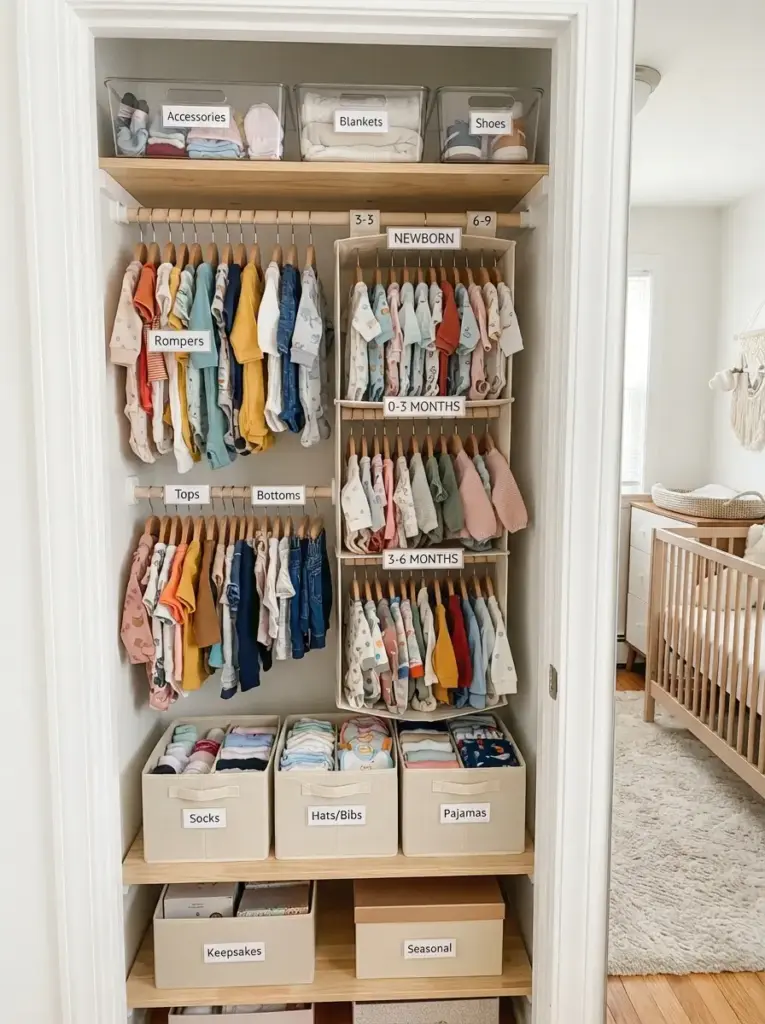
Baby clothes are small, but they can quickly create clutter. A simple wardrobe system helps parents manage clothing while keeping the nursery neat.
Instead of filling the closet with random storage boxes, divide sections by clothing size and daily use. Use small baskets for socks, hats, and accessories. Hanging organizers can separate newborn outfits, seasonal clothes, and special items.
Parents living in compact apartments should avoid buying too many clothes before the baby arrives. Babies grow quickly, so storing excessive clothing can waste valuable space.
This method suits families who want an organized nursery without adding extra furniture. A well-planned closet can often replace the need for additional storage units.
Those working with limited layouts can combine these ideas with Micro Apartment Ideas to create a more efficient home environment where every storage choice has a purpose.
Use Mirrors to Make the Nursery Feel More Spacious
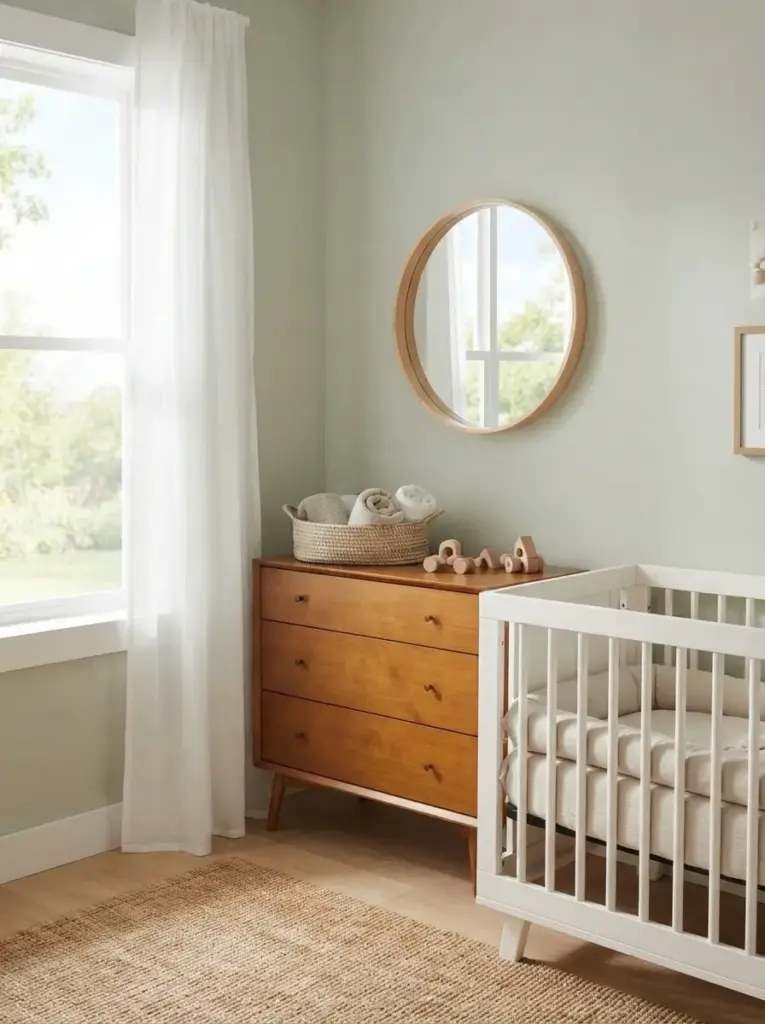
Mirrors can help reflect light and create the impression of a larger room. They are useful decorating tools when a nursery feels narrow or lacks natural brightness.
Place a small framed mirror opposite a window to bounce daylight around the room. Rounded mirrors with simple frames can soften the appearance of compact spaces.
Safety should always come first. Secure mirrors firmly to walls and avoid placing fragile items within reach of children. Acrylic mirrors can also be considered as a lightweight alternative.
This idea works best for parents who want to improve the feeling of space without changing the layout. A carefully positioned mirror can make a small nursery corner appear brighter and more open.
Create a Flexible Nursery With Foldable Items
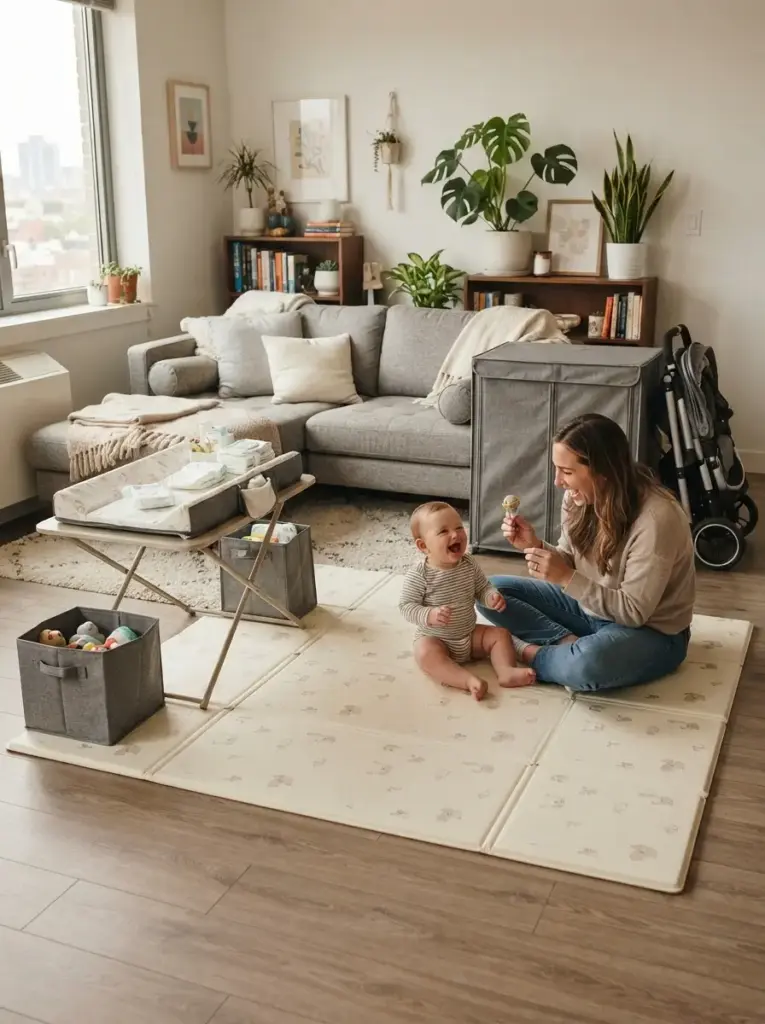
Compact homes often require rooms to serve multiple purposes. Foldable nursery items allow parents to adjust the space whenever needed.
Foldable play mats, portable changing stations, and collapsible storage boxes are useful choices for apartments. These items can be stored away when guests visit or when another activity requires space.
Parents living in shared bedrooms can benefit greatly from flexible furniture. Instead of dedicating the entire room permanently to baby items, they can create a nursery setup that changes throughout the day.
This strategy also supports families following Small Apartment Inspo because flexible layouts are often the key to making limited spaces comfortable.
Avoid buying large furniture pieces that only serve one purpose. Adaptable items usually provide better long-term value for apartment living.
Add Warm and Practical Nursery Lighting
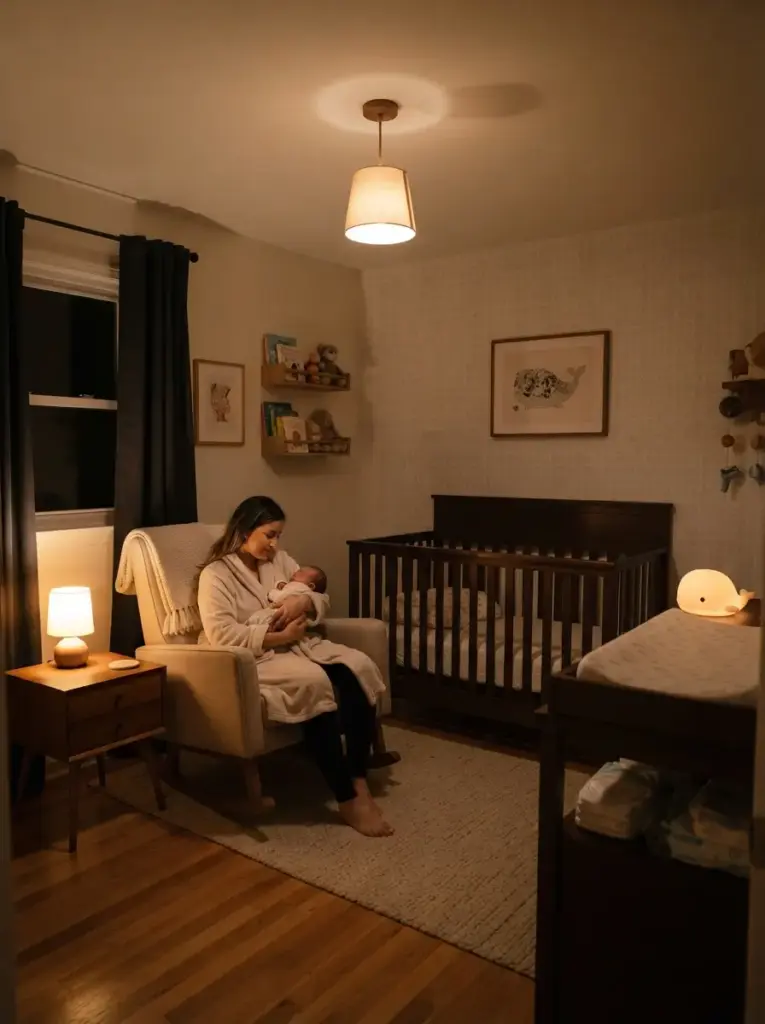
Lighting plays an important role in creating a comfortable nursery environment. Bright overhead lights can feel harsh during nighttime feeding or diaper changes.
Use layered lighting with different purposes. A ceiling light can provide general brightness while a small lamp creates softer illumination during evening routines.
Warm white bulbs between 2700K and 3000K are usually comfortable for relaxing spaces. Avoid placing bright lights directly above the crib because they can create unnecessary glare.
A small nightlight near the changing area helps parents move safely without fully waking the baby. Battery-operated options work well for renters because they do not require electrical changes.
This lighting approach works for both large and small homes because it improves daily routines rather than only adding decoration.
Decorate With Removable Wall Features
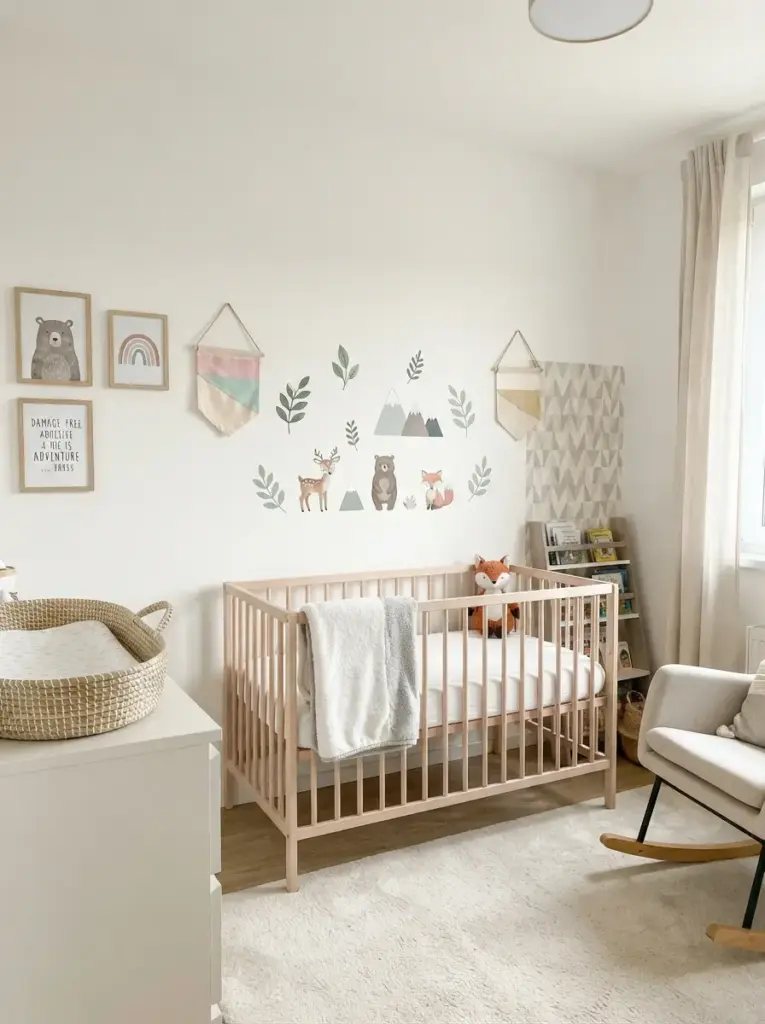
Renters often hesitate to decorate because they worry about losing their deposit. Removable wall features provide a simple way to personalize a nursery without permanent changes.
Temporary wallpaper, fabric banners, framed prints, and removable stickers can introduce colors and patterns. Nature themes, simple shapes, and animal illustrations are popular choices because they can grow with the child.
Keep decorations balanced. Too many wall items can make a small nursery feel crowded. Choose a few meaningful pieces instead of covering every available surface.
This idea is suitable for parents who want a customized nursery while keeping future flexibility. When moving apartments, these decorations can usually be removed easily.
Design a Nursery That Grows With Your Child
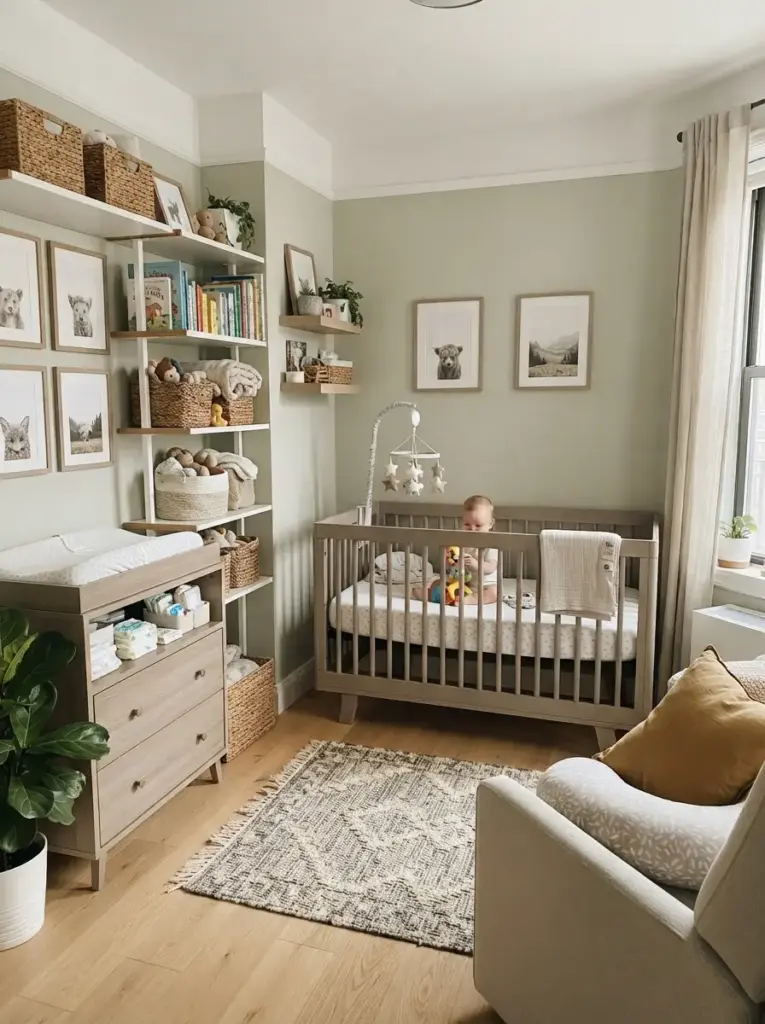
The best compact nursery designs consider future needs. Babies quickly move through different stages, so flexible planning saves money and effort.
Choose neutral furniture that can adapt over time. A convertible crib, adjustable shelves, and timeless storage pieces can continue working as the child grows.
Avoid designing the entire room around one short-term theme. Instead, use replaceable accessories such as cushions, artwork and rugs to update the style later.
This approach is valuable for parents who want long-lasting Tiny Apartment Baby Nursery Decor solutions. A practical nursery should support newborn care today and childhood activities later.
Families living in smaller homes can also combine this approach with Tiny Apartment Ideas to create spaces that remain functional through different life stages. Tiny Apartment Baby Nursery
Common Mistakes to Avoid
Choosing Furniture That Is Too Large
One of the most common mistakes is buying nursery furniture based on appearance rather than available space. Large cribs, oversized chairs, and wide cabinets can make movement difficult.
Before purchasing anything, measure the room carefully. Consider walking paths, door openings, and storage access. Furniture should support daily routines instead of creating obstacles.
Compact apartments require thoughtful choices. A smaller dresser with efficient storage may work better than a large wardrobe that dominates the room.
Adding Too Many Decorative Items
Decorations can make a nursery feel personal, but excessive items create visual clutter. Small rooms need balance because every object affects how spacious the area feels.
Choose decorations that provide meaning or function. A few framed prints, a soft rug, and organized shelves can create character without overwhelming the space.
Parents should avoid copying large nursery designs that do not match apartment layouts. Beautiful spaces are not always the ones with the most items. Tiny Apartment Baby Nursery
Ignoring Storage Planning
Many parents focus on colors and furniture but forget about everyday storage needs. Baby products quickly multiply, including clothes, diapers, toys, and feeding supplies.
Plan storage before decorating. Think about where items will go during nighttime routines and daily activities.
A nursery should make life easier. If parents constantly move items around because there is no storage system, the layout needs adjustment. Tiny Apartment Baby Nursery
Creating an Unsafe Layout
Safety should guide every nursery decision. Avoid placing the crib near windows, heaters, cords or unstable furniture.
Secure shelves, anchor heavy furniture, and keep small objects away from sleeping areas. A beautiful nursery must also support a safe environment.
Small apartments require extra attention because furniture is often placed closer together. Maintaining clear spaces around essential areas helps create a safer setup. Tiny Apartment Baby Nursery
Budget-Friendly Tips
Creating a nursery does not require expensive furniture or a large budget. Smart purchases and creative reuse can produce a practical space without unnecessary spending.
Start by buying essential items first. A safe sleeping area, storage solutions, and comfortable lighting are more important than decorative accessories.
Second-hand furniture can be a useful option when inspected carefully. Many parents sell gently used dressers, shelves, and nursery items that still have plenty of life.
Use affordable updates like new drawer handles, washable covers and removable wallpaper to refresh existing furniture. Small changes can create a different feeling without replacing everything.
DIY storage solutions can also help. Simple baskets, labeled containers, and wall hooks often solve organization problems without major expenses.
Parents searching for more affordable home setups can combine nursery planning with Tiny Apartment Dining Nook Ideas, Small Apartment Desk Setup Ideas, and Small Apartment Laundry Corner Ideas to create a complete compact home strategy. Tiny Apartment Baby Nursery
Tiny Apartment Baby Nurseries Decor Tips
Tiny Apartment Baby Nurseries Decor works best when parents focus on function before decoration. Small homes require every corner to support daily routines while maintaining comfort.
Choose furniture that performs multiple jobs. A dresser with changing space, a crib with storage underneath, and foldable accessories can reduce the amount of furniture needed.
Use vertical areas wisely because walls provide valuable storage opportunities. Shelves, hooks, and hanging organizers keep essentials accessible without reducing floor space.
Keep the color palette simple. Light neutral shades combined with natural textures can make compact areas feel calmer and easier to organize.
Parents should also consider future changes. A nursery that adapts as the baby grows provides better value and reduces unnecessary spending. Tiny Apartment Baby Nursery
Frequently Asked Questions
How Can I Make a Nursery in a Small Apartment?
A small apartment nursery can be created by using multifunctional furniture, vertical storage and a clear layout. A dedicated corner, shared bedroom section or flexible space can work well.
What Furniture Is Essential for a Tiny Baby Nursery?
Essential furniture usually includes a safe crib, storage solution, changing area and comfortable lighting. Additional pieces should only be added if space allows.
How Do I Decorate a Nursery in a Rental Apartment?
Rental-friendly nursery decorating includes removable wallpaper, adhesive hooks, temporary artwork and flexible furniture. These options personalize the space without permanent changes.
What Colors Make a Small Nursery Look Bigger?
Light colors such as warm white, soft beige, pale green and muted blue can help reflect light and create an open feeling. Combining these shades with simple furniture improves the overall balance.
How Can I Add Storage Without Taking Floor Space?
Use wall shelves, hanging organizers, under-crib storage, and tall narrow cabinets. Vertical solutions help maximize storage while keeping the floor clear.
Conclusion
Creating a nursery in a compact apartment is about making thoughtful choices rather than having unlimited space. With smart furniture, organized storage, and flexible decorating ideas, even the smallest home can support a comfortable baby area. Tiny Apartment Baby Nursery
Tiny Apartment Baby Nursery Decor focuses on practical solutions that improve everyday life for parents and children. A well-designed nursery does not need expensive furniture or a separate room. It needs careful planning, safe layouts, and items that serve real purposes.
Small spaces can become beautiful, functional homes when every decision supports comfort and organization. By using these ideas, parents can create a nursery that feels welcoming today and continues working as their family grows.