
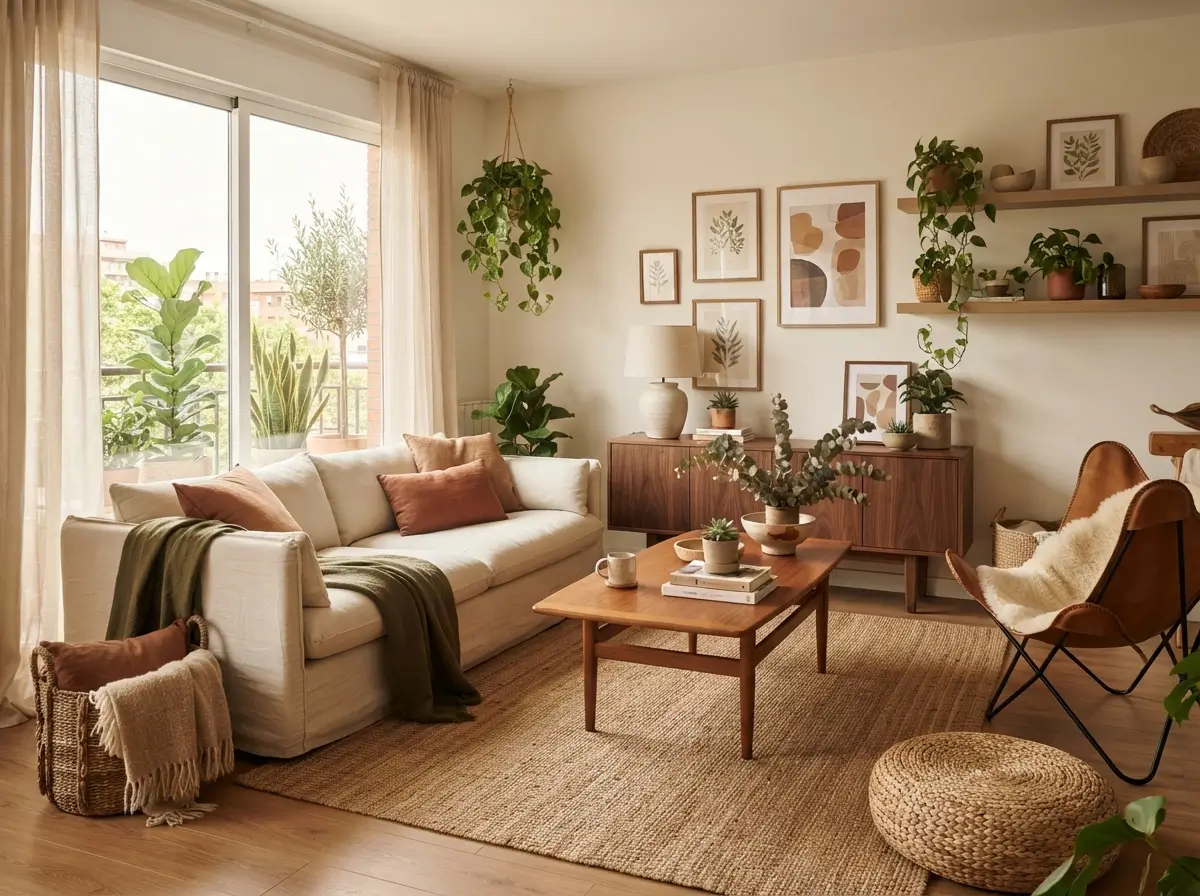

Warm modern interiors feel calm because they balance clean lines with materials that look natural, soft, and lived in. Earthy Apartment Decor brings that balance into apartments through clay colors, wood tones, woven texture, gentle lighting, and practical furniture. Small homes benefit from this approach because the palette stays connected from room to room, which reduces visual clutter. Natural colors also work well with common rental finishes, including white walls, beige carpet, gray flooring, and basic cabinets. Thoughtful choices matter more than filling every corner with rustic accessories.
Renters often assume earthy rooms require permanent wall colors, expensive solid wood furniture, or a large collection of handmade objects. Better results usually come from a few controlled changes. Removable textiles, peel-and-stick materials, secondhand furniture, warmer bulbs, and carefully placed greenery can shift the mood without damaging walls or stretching the budget. Modern styling keeps the room from becoming too heavy, while natural texture prevents minimal spaces from feeling cold.
Beginners should focus on one main color family, two supporting neutrals, and three or four repeated materials. Terracotta, muted olive, warm cream, walnut, linen, and aged brass form one useful combination. Sand, mushroom, charcoal, oak, wool, and matte black create another. Repetition makes separate purchases feel intentional, even when items come from discount stores, thrift shops, or different collections.
Small-space decorating works best when every item supports comfort, storage, movement, or visual balance. Oversized furniture, too many tiny accents, and random brown tones can make an apartment feel crowded rather than grounded. Clear walking paths, low-contrast colors, and furniture with visible legs help maintain an open feeling. Each idea below explains how to apply natural style without losing the clean structure that modern apartments need.
What Makes Earthy Apartment Decor Feel Modern?
Modern earthy style feels current when natural colors and tactile materials sit inside a simple, edited layout. Straight-edged furniture, uncluttered surfaces, hidden storage, and consistent finishes provide structure. Curved lamps, woven baskets, handmade ceramics, and soft fabrics add warmth. Contrast should stay controlled rather than dramatic. For example, pair a mushroom sofa with a walnut coffee table and a black metal lamp instead of combining many rustic woods, bright patterns, and decorative signs.
Successful earthy style uses warm neutrals, grounded accent colors, natural texture, and practical furniture without making the room look overly rustic. Choose one wood tone as the main finish, repeat it in two or three areas, add soft lighting between 2700K and 3000K, and bring in texture through curtains, rugs, pillows, baskets, and ceramics. Keep decorative objects limited so each item has space to be noticed.
Plan the Room Before Buying Anything
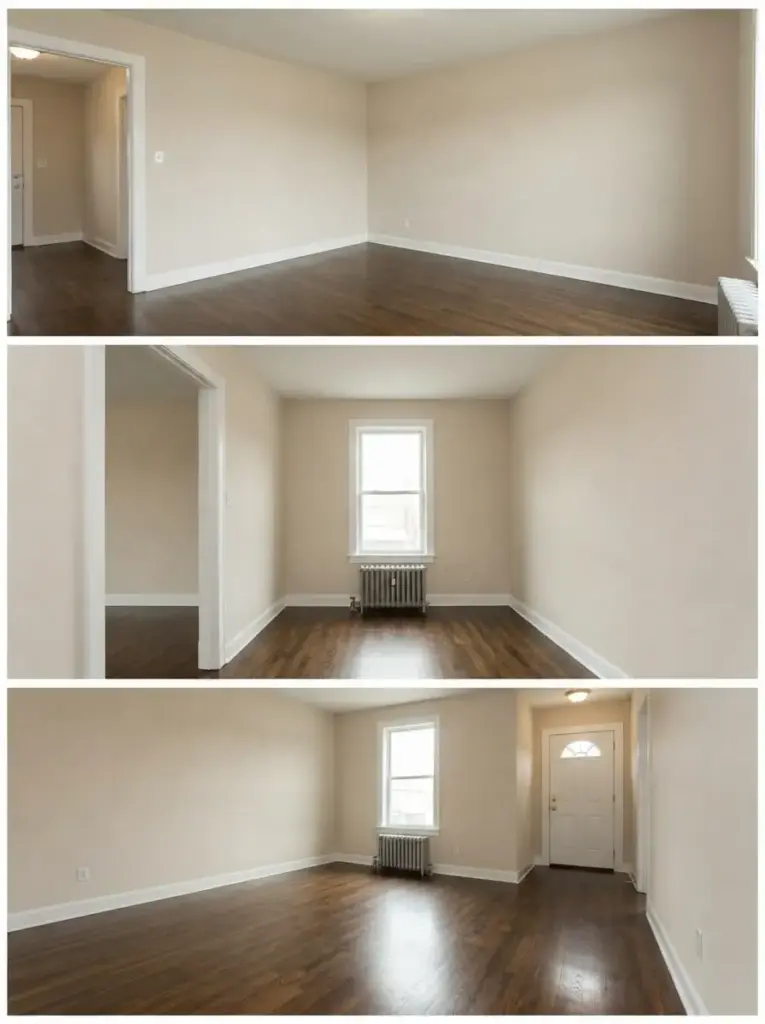
Before shopping, photograph the room from each doorway and note which surfaces dominate the view. Record the wall width, ceiling height, window position, outlet locations, and clear walking routes. Existing items should be listed by color, finish, and size, including pieces you intend to keep only temporarily. Planning from the real room prevents attractive products from creating an unrelated collection. Beginners often buy several small accessories first, then discover that the rug, curtains, or sofa requires a different palette. Starting with the largest visual elements reduces expensive corrections later.
Next, make a simple sample board using screenshots, fabric swatches, paint chips, and photos of existing flooring or cabinets. Limit the board to one warm neutral, one wood family, one grounded accent, one metal finish, and a few textures. Compare every possible purchase with that board rather than judging it alone. Consistent undertones matter more than matching brand collections. Mushroom beige, warm walnut, muted olive, aged brass, and off-white linen can cooperate even when every item comes from a different source.
Afterward, divide the budget according to visual impact. Rugs, curtains, lighting, and one main furniture piece deserve more attention because they cover large areas or influence the whole room. Smaller accessories should receive a limited amount until the foundation is settled. Setting a maximum cost for each category also helps renters avoid spending heavily on pieces that may not suit a future home. Leave part of the budget unassigned for practical needs discovered after living with the new layout.
Finally, test placement before ordering. Use painter’s tape to mark rugs, tables, cabinets, and seating on the floor. Cardboard boxes can represent side tables or storage units, while paper templates can test artwork sizes on walls. Walk through the marked layout while carrying laundry, groceries, or a vacuum to reveal tight corners. Practical testing matters because product dimensions rarely communicate how furniture affects movement. Small apartments need comfortable circulation just as much as attractive materials, and a clear route often makes the space feel more generous.
Meanwhile, save measurements and palette notes on your phone. Carrying that reference while shopping prevents guesswork, helps compare secondhand finds quickly, and keeps spontaneous purchases aligned with the room’s practical limits and established colors.
Build the Room Around Warm Neutral Walls
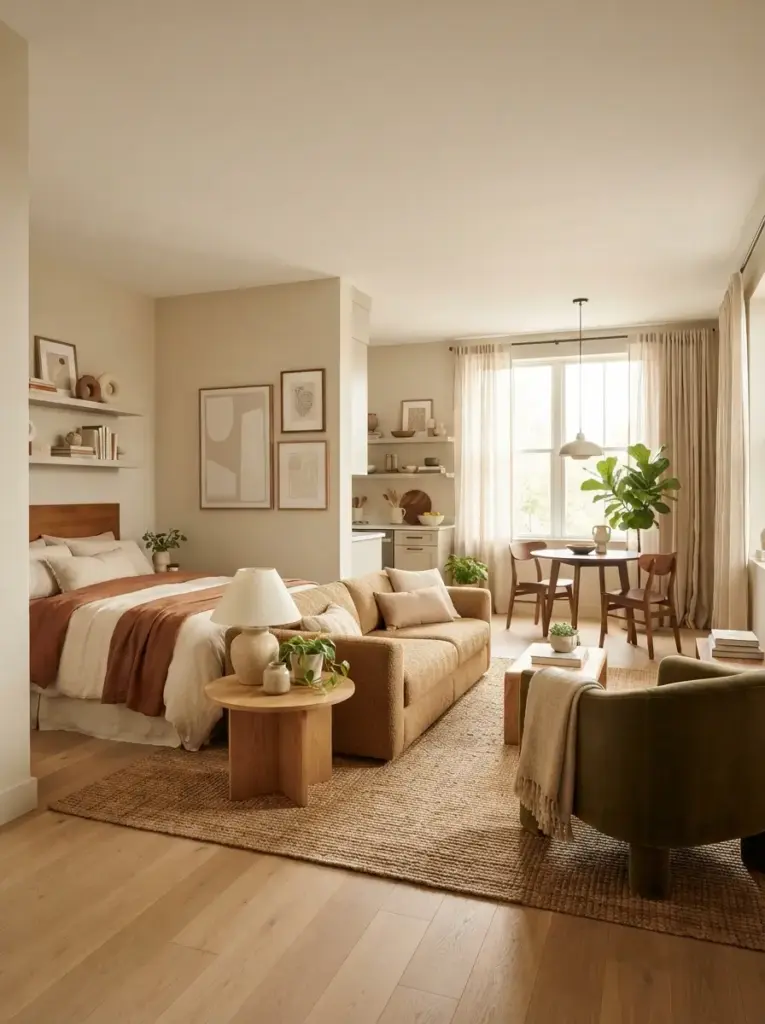
Warm white, cream, putty, and pale mushroom walls create a flexible background for natural materials. Cool white can make tan fabrics and reddish wood look disconnected, while a warmer undertone blends those elements more smoothly. Renters who cannot paint can still soften bright walls with large curtains, neutral fabric panels, oversized art, or removable wallpaper on one controlled section. Paintable renters should test samples near windows because a beige that looks calm in daylight may turn yellow under warm evening bulbs.
Balanced walls work because they lower the contrast between large surfaces and furniture. Lower contrast allows a small room to feel wider and less divided. Warm neutrals also reflect enough light for apartments with limited windows, unlike deep brown or heavy olive used across every wall. People with open-plan studios benefit most because one background color can connect the sleeping, dining, and living zones without making each section compete for attention.
Choose One Dominant Wood Tone
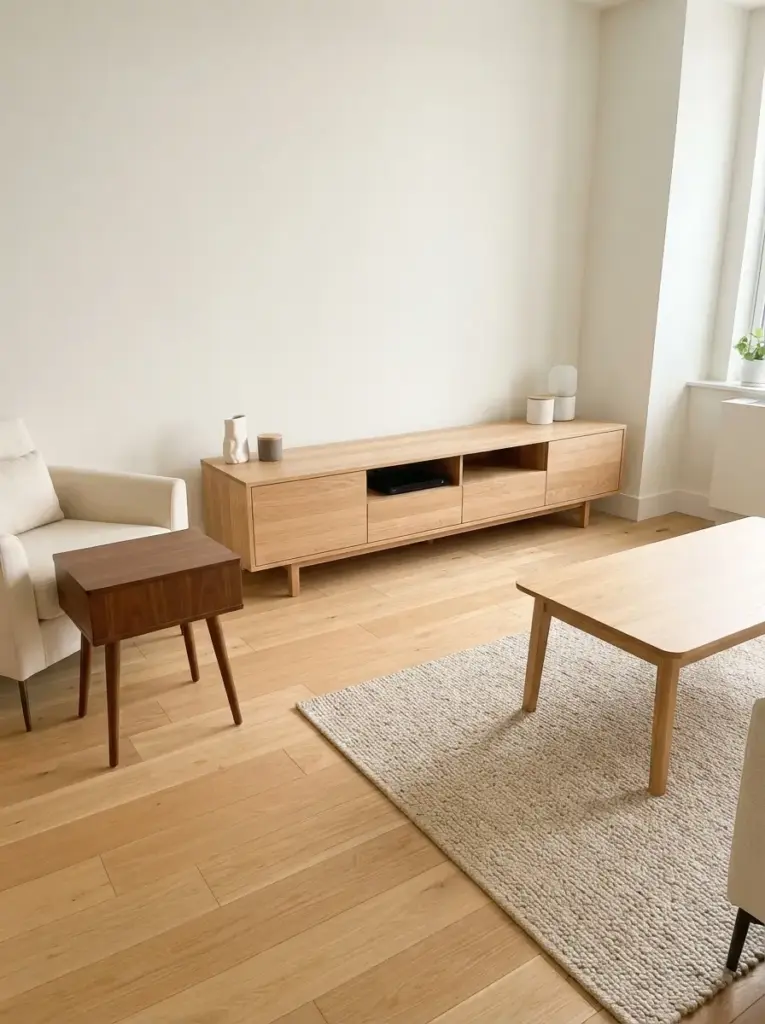
Wood brings instant warmth, but mixing too many unrelated finishes can make an apartment look pieced together. Select one dominant tone, such as light oak, medium walnut, or dark espresso, then allow one secondary wood for contrast. Light oak works well in compact rooms because it reflects more light. Walnut adds depth without feeling formal. Dark espresso can suit larger or brighter apartments when paired with cream upholstery and pale rugs.
Consistency creates visual rhythm. Matching every item exactly is unnecessary, but undertones should cooperate. Orange-toned pine beside gray-washed oak often feels accidental, while honey oak beside warm walnut looks more connected. Secondhand shoppers can use furniture oil, stain, or removable wood-look vinyl to bring mismatched pieces closer together. Households with existing rental cabinets should treat that cabinet finish as part of the palette rather than ignoring it.
Layer Linen and Cotton Instead of Heavy Fabric
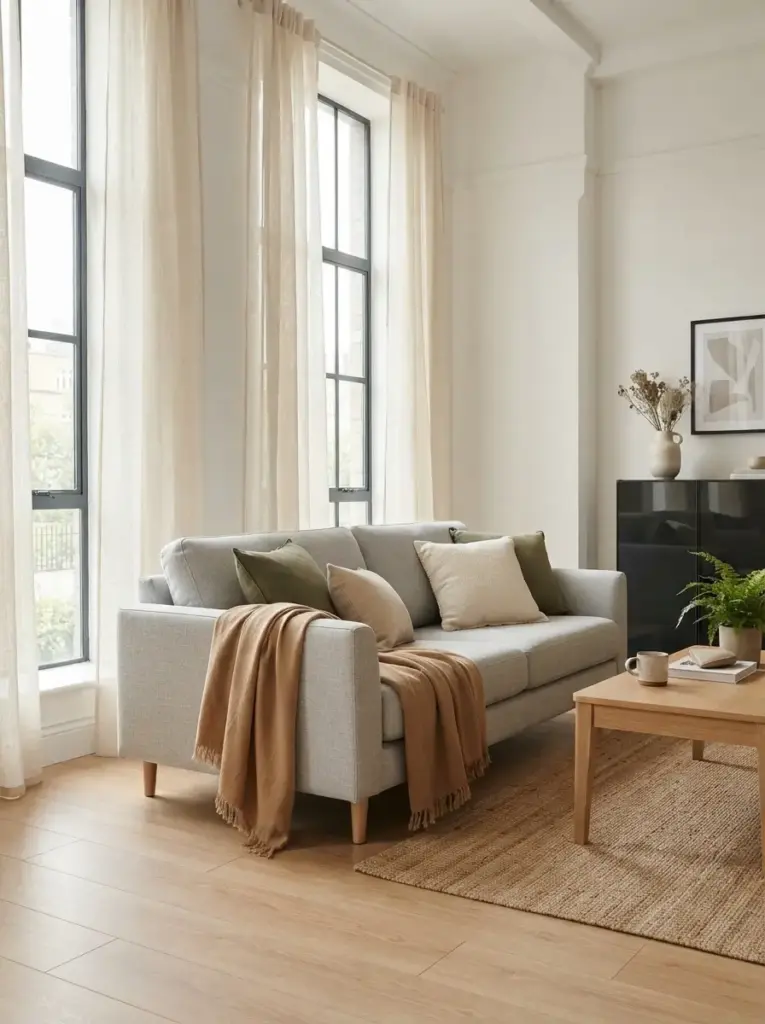
Linen-look curtains, cotton throws, canvas cushions, and slub-weave upholstery introduce movement without adding visual weight. Thick velvet and dark chenille can be beautiful, yet several heavy fabrics may make a small apartment feel closed in. Lightweight natural-looking textiles allow light to pass through and soften hard surfaces such as laminate floors, metal window frames, and glossy cabinets. Curtains hung close to the ceiling also make low rooms appear taller.
Breathable layers succeed because texture becomes the decoration. Cream linen curtains, a caramel cotton throw, and two olive pillow covers can create more depth than a collection of themed ornaments. Budget-conscious decorators can buy plain covers and change only the inserts that are visible. Allergy-sensitive residents may prefer washable cotton over high-pile fabric. Homes with pets should choose tighter weaves because loose bouclé and open linen blends can snag easily.
Ground the Living Area With a Large Rug
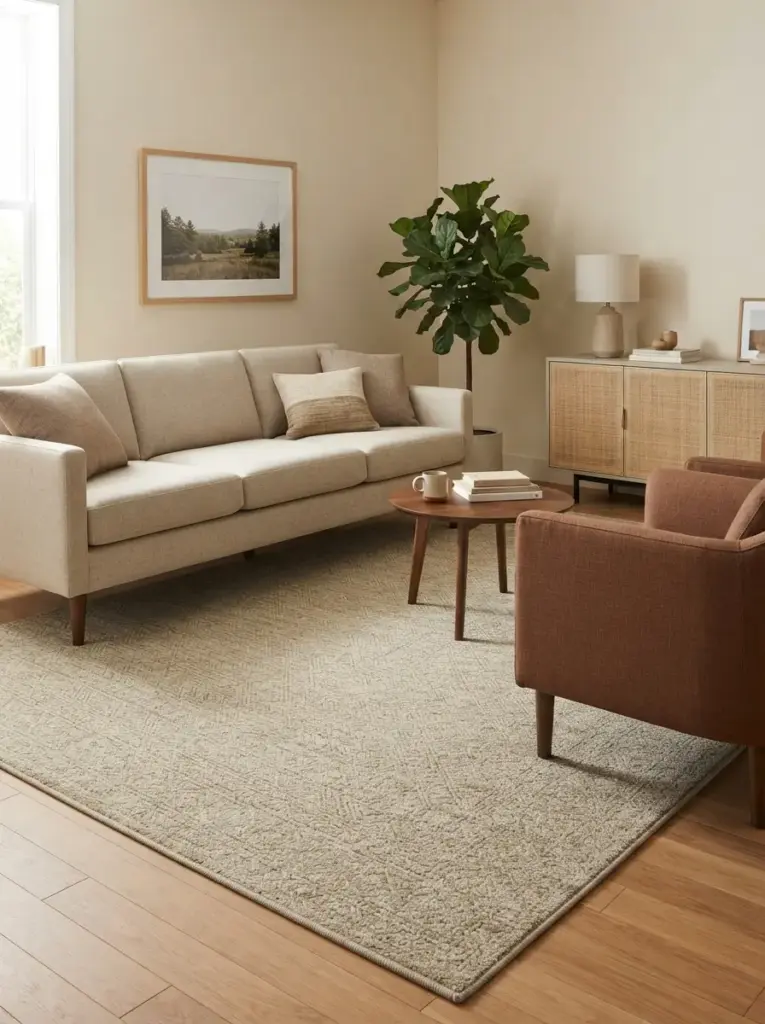
Rug size affects the room more than rug pattern. Small rugs floating in front of a sofa visually shrink the seating area and make furniture look disconnected. Choose a rug large enough for at least the front legs of the sofa and chairs to rest on it. In many apartments, an 8-by-10-foot rug works better than a 5-by-7-foot option, even when the larger size feels surprising in the store.
Grounded layouts feel calmer because the rug defines one complete zone. Low-contrast patterns in sand, rust, oatmeal, faded olive, or brown hide everyday marks while supporting the natural palette. Flatweave rugs suit dining spaces and homes with rolling furniture. Low-pile wool blends add softness without trapping as much dust as shag. Renters can place a thin non-slip pad beneath the rug to protect the flooring and keep the corners from curling.
Use Terracotta in Small Controlled Amounts
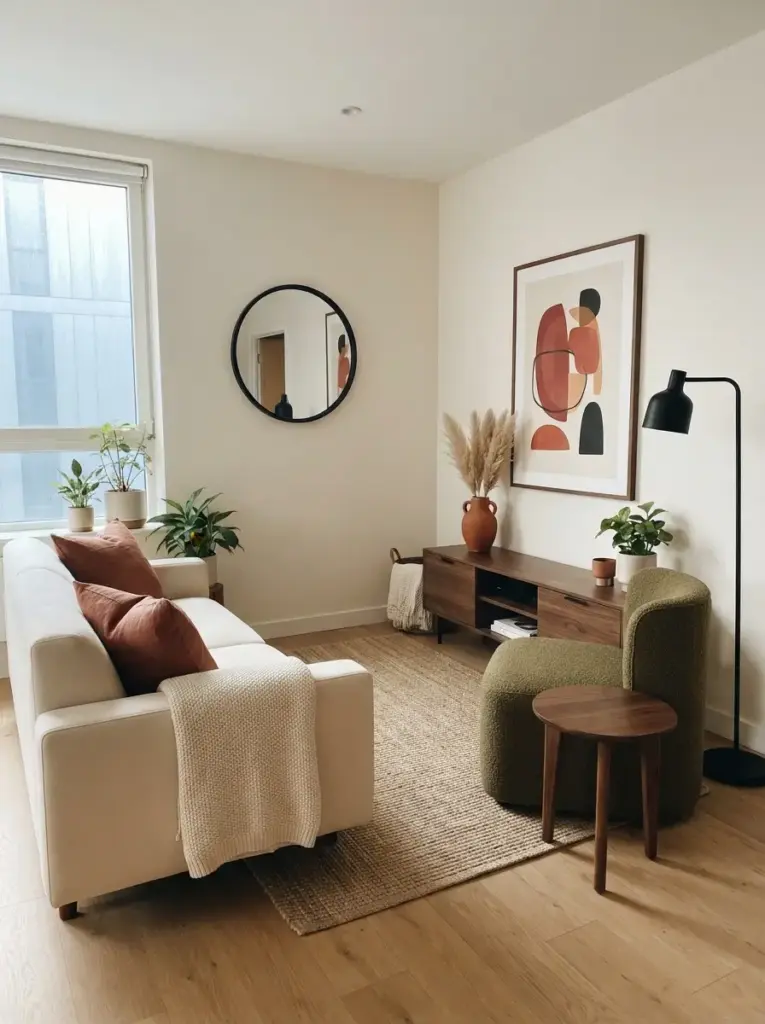
Terracotta adds warmth through its mix of orange, brown, and muted red. Large doses can overpower a small room, so introduce it through pillow covers, pottery, a bedside lamp, or one compact accent chair. Pairing terracotta with cream and walnut creates a cozy result, while combining it with olive and black gives the space a sharper modern edge. Dusty terracotta usually feels easier to live with than bright burnt orange.
Controlled accent color works because the eye notices repetition without feeling surrounded by one strong shade. Place terracotta in three separate points, such as a cushion, a vase, and an artwork, rather than clustering every item on one shelf. People who change decor seasonally can use removable covers and inexpensive ceramics instead of committing to a sofa or painted wall. North-facing apartments may benefit most because the color adds visual warmth when natural light appears cool.
Add Olive, Sage, or Moss Green
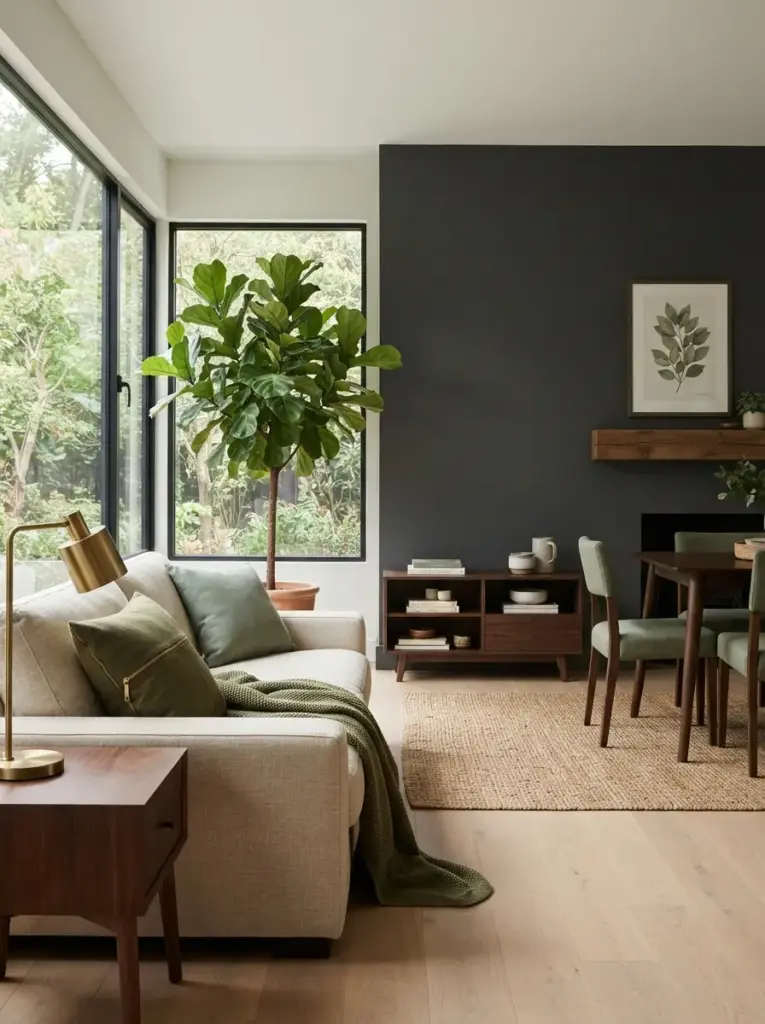
Muted green connects indoor rooms with outdoor color while staying more versatile than bright emerald. Olive works well with dark wood and brass, sage suits pale oak and cream, and moss adds richness beside charcoal or chocolate brown. Use green on a throw, dining chair, cabinet wrap, or framed print. Large leafy plants can provide the same effect when enough daylight is available.
Green feels restful because it sits naturally beside brown, tan, clay, and stone colors. The key is matching the undertone. Yellow-green olive supports warm palettes, while blue-green eucalyptus may look better with gray stone and cooler walnut. Beginners should hold fabric samples beside existing flooring before buying. Apartment dwellers with low light can use realistic artificial stems or preserved foliage rather than placing live plants where they will struggle.
Replace Cool Bulbs With Warm Layered Lighting
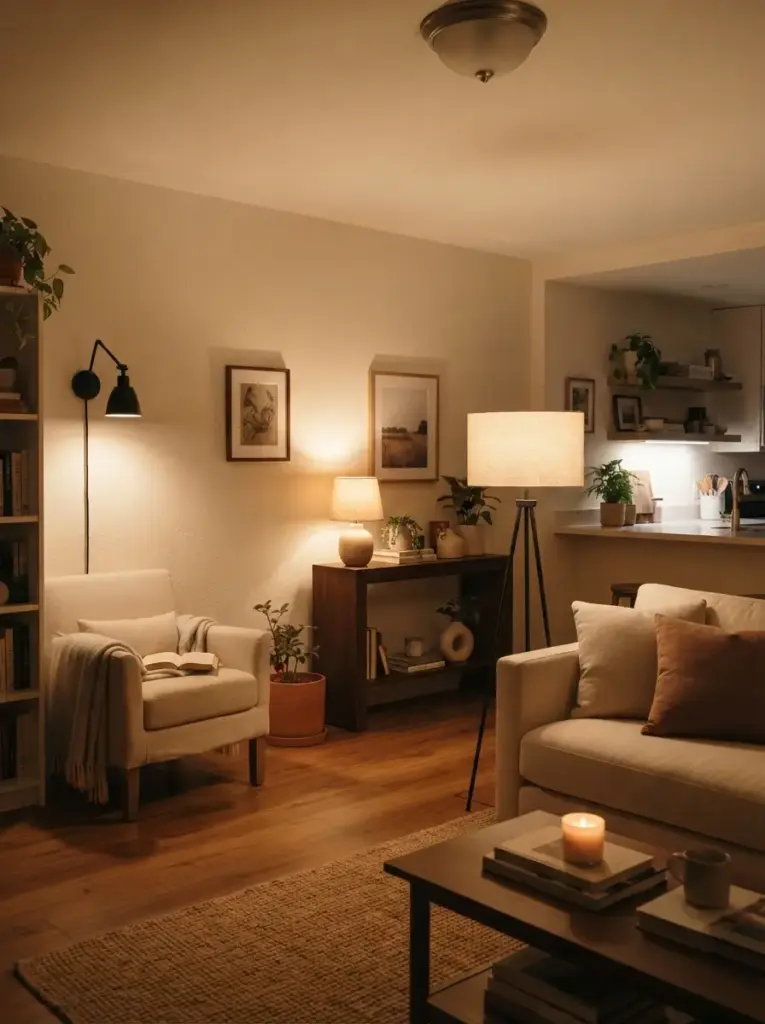
Lighting can change the appearance of every color in the room. Bulbs between 2700K and 3000K usually flatter wood, linen, terracotta, and cream. Cooler 4000K bulbs can make warm beige look dull and may create a harsh office feeling in living spaces. Keep brighter task lighting at desks or kitchen counters, but use warm table lamps, floor lamps, and plug-in sconces for evening comfort.
Layering works because one ceiling fixture creates flat light and hard shadows. Place a floor lamp near the sofa, a small lamp on a console, and a focused light near a reading chair. Renters can install plug-in wall sconces with cord covers instead of hardwiring. Small apartments gain extra depth when light appears at different heights. Smart bulbs help residents adjust brightness, but the default evening setting should remain soft rather than highly saturated or colorful.
Bring in Stone Through Practical Surfaces
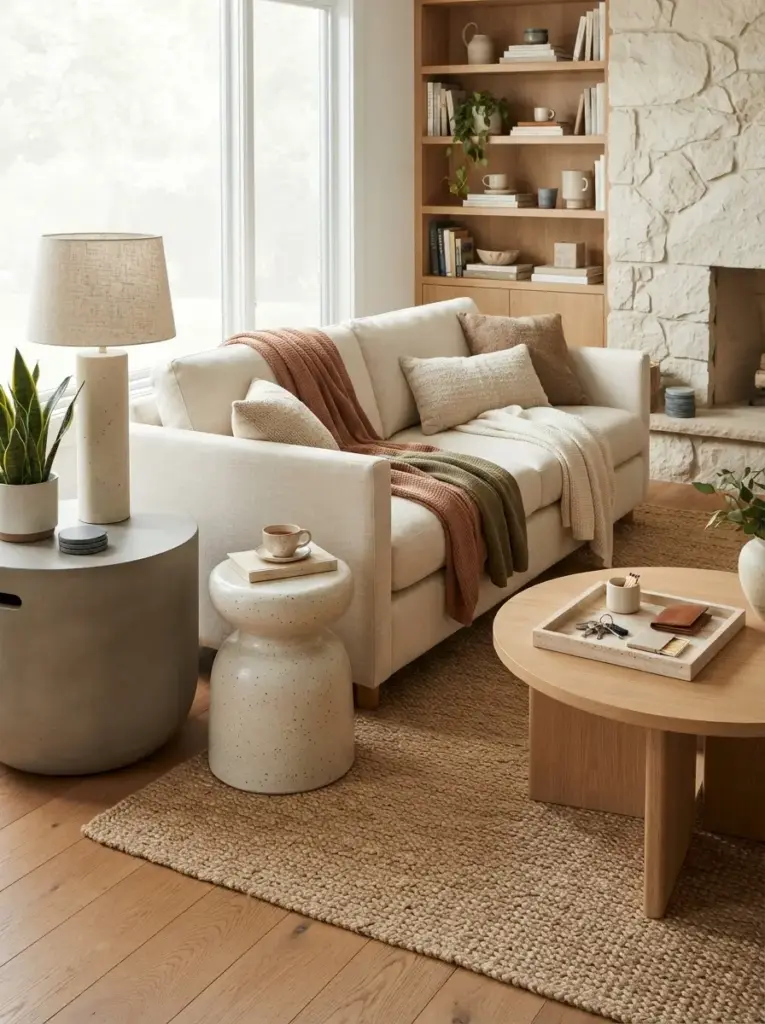
Travertine, limestone, marble, slate, and concrete introduce mineral texture that balances warm fabric and wood. Real stone tables may be expensive and heavy, so use smaller pieces such as a tray, lamp base, coaster set, or side table. Good stone-look laminate and ceramic can provide a similar visual effect with less maintenance. Honed or matte finishes usually suit an earthy room better than highly polished surfaces.
Mineral materials strengthen the design because they add a cooler, solid element beside soft textiles. Balance prevents the room from becoming overly beige or overly rustic. Small-home residents should choose pieces that serve a purpose, such as a stone tray that organizes keys or a ceramic stool that works as both seating and a side table. Households with children may prefer rounded edges and lighter composite materials for safety.
Style Open Shelves With Breathing Room
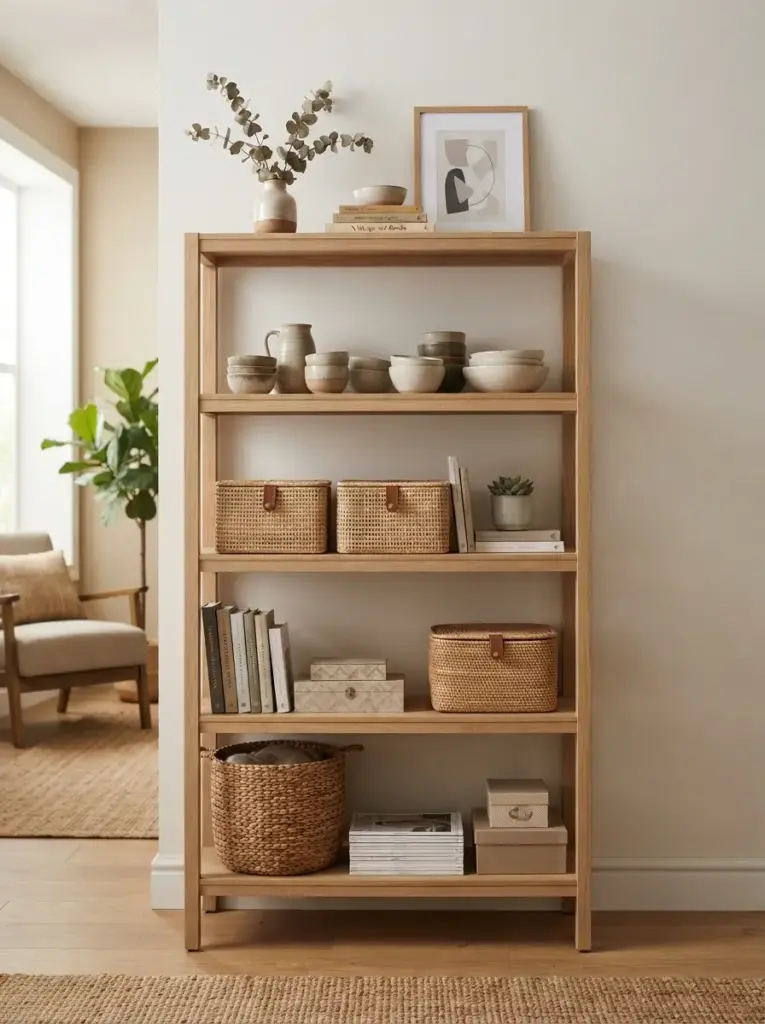
Open shelves can support a natural style, but crowded shelves quickly create visual noise. Group objects in small arrangements using varied heights and leave some open space between them. Combine one ceramic vessel, a short stack of books, and a wooden box rather than lining up many unrelated accessories. Repeating two or three materials across the shelves creates unity.
Negative space improves the result because each object becomes easier to see. Closed baskets can hide cables, spare chargers, or small household items, while attractive pieces remain visible. Renters with limited storage should avoid treating shelves as purely decorative. Use lower levels for practical containers and upper levels for lighter objects. People who collect pottery or books can rotate items every few months instead of displaying everything at once.
Choose Furniture With Soft Modern Shapes
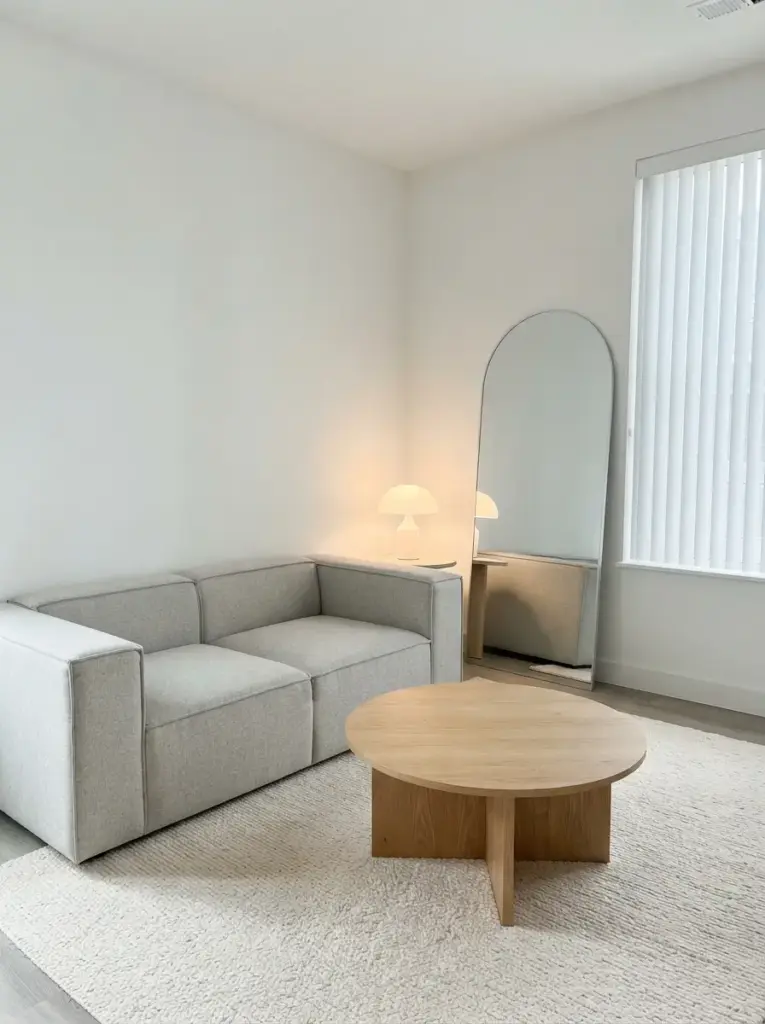
Rounded coffee tables, curved chair backs, oval mirrors, and softly shaped lamps reduce the hard angles found in many apartments. Curves work especially well beside boxy sofas, rectangular kitchens, and straight rental blinds. Keep the shapes simple rather than ornate. One rounded table and one arched mirror usually create enough contrast without turning the room into a collection of trends.
Gentle forms make narrow layouts easier to move through because corners do not project into walkways. Families, pet owners, and residents in studio apartments often benefit from round tables for the same reason. Budget shoppers can look for drum stools, bentwood chairs, and secondhand pedestal tables. Before purchasing, mark the furniture footprint on the floor with painter’s tape to check whether doors, drawers, and walking paths remain clear.
Use Woven Storage Instead of Decorative Clutter
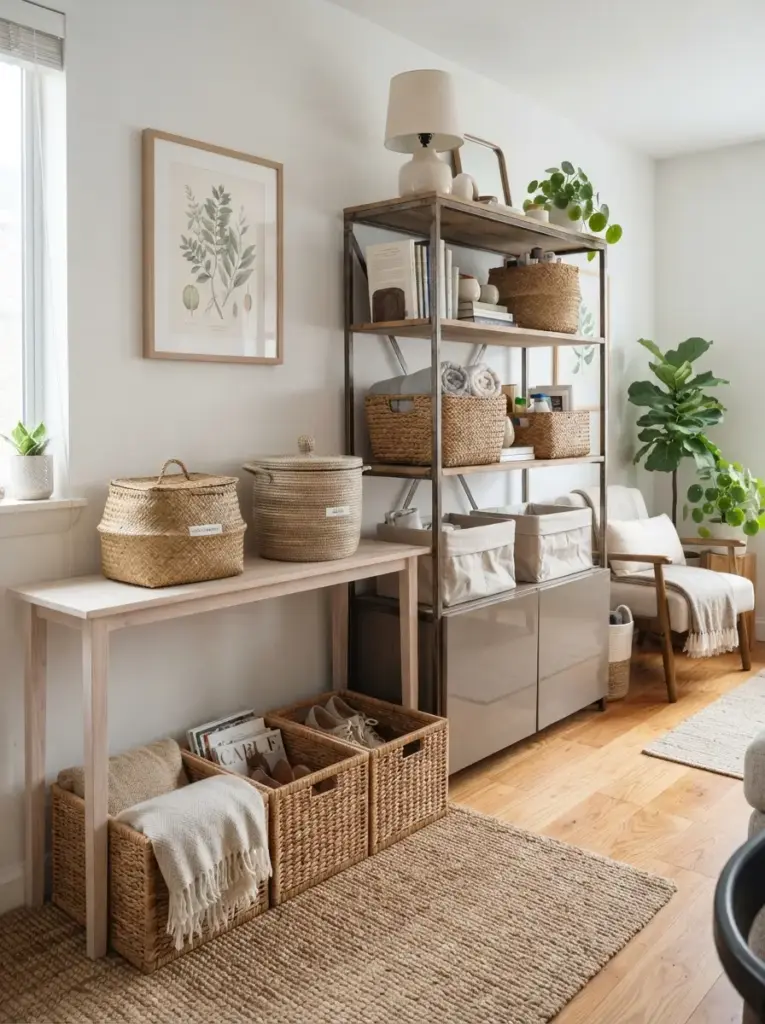
Seagrass, rattan, jute, cane, and paper-rope baskets provide texture while controlling everyday mess. Choose baskets with similar tones and shapes so storage looks planned. Lidded designs work for cables, documents, or cleaning supplies, while open baskets suit blankets and magazines. Avoid filling every shelf with woven containers because too much repeated texture can look busy.
Useful texture earns its place in a small apartment. Baskets soften glossy cabinets, metal shelving, and plain white walls while keeping items easy to reach. Renters can slide low baskets under consoles or beds without installing cabinetry. People with open shelving should measure height and depth before buying, since oversized handles and tapered sides can waste space. Fabric-lined baskets help protect delicate items and prevent small objects from falling through gaps.
Add Oversized Nature-Inspired Art
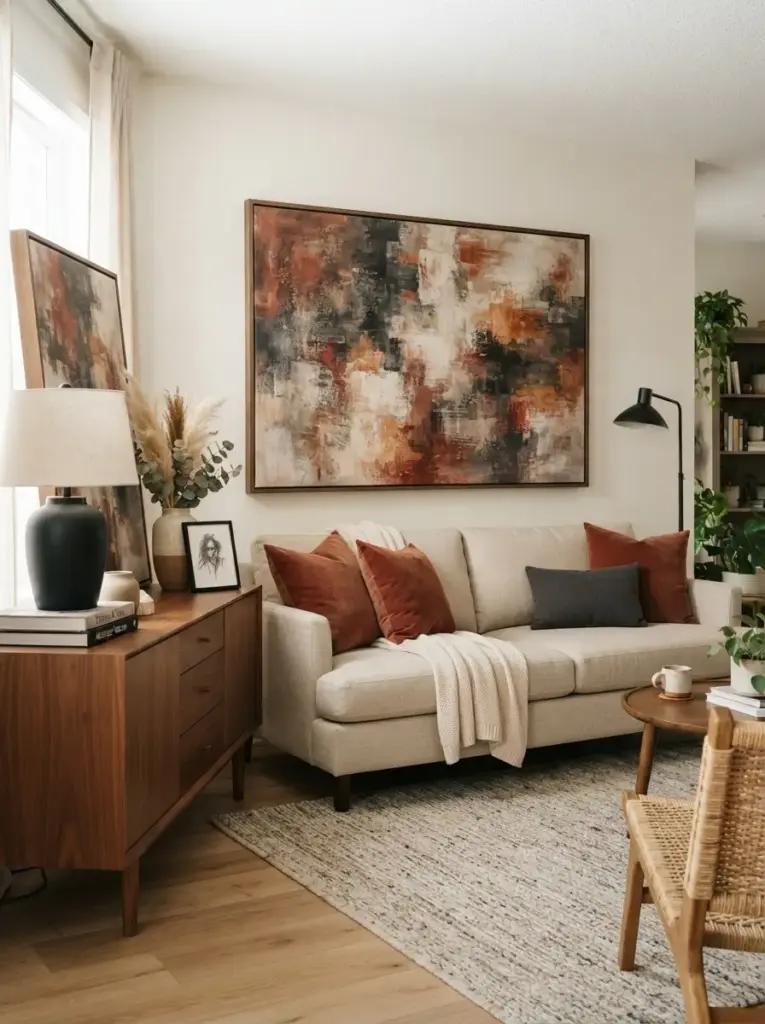
One large artwork often looks more polished than several small prints scattered across a wall. Landscapes, abstract earth-tone shapes, botanical sketches, and textured neutral canvases all fit the style. Choose artwork that repeats colors already present in the room. For example, a piece containing rust, charcoal, and cream can connect a terracotta pillow, black lamp, and oatmeal sofa.
Large-scale art works because it creates a clear focal point without adding floor clutter. Renters can use removable picture strips when the frame weight allows, or lean a framed canvas on a console. Budget options include public-domain prints, fabric panels, handmade painted canvases, and enlarged personal landscape photography. Narrow rooms benefit from horizontal art above a sofa, while tall vertical pieces can draw attention upward in apartments with low ceilings.
Introduce Black or Dark Bronze for Definition
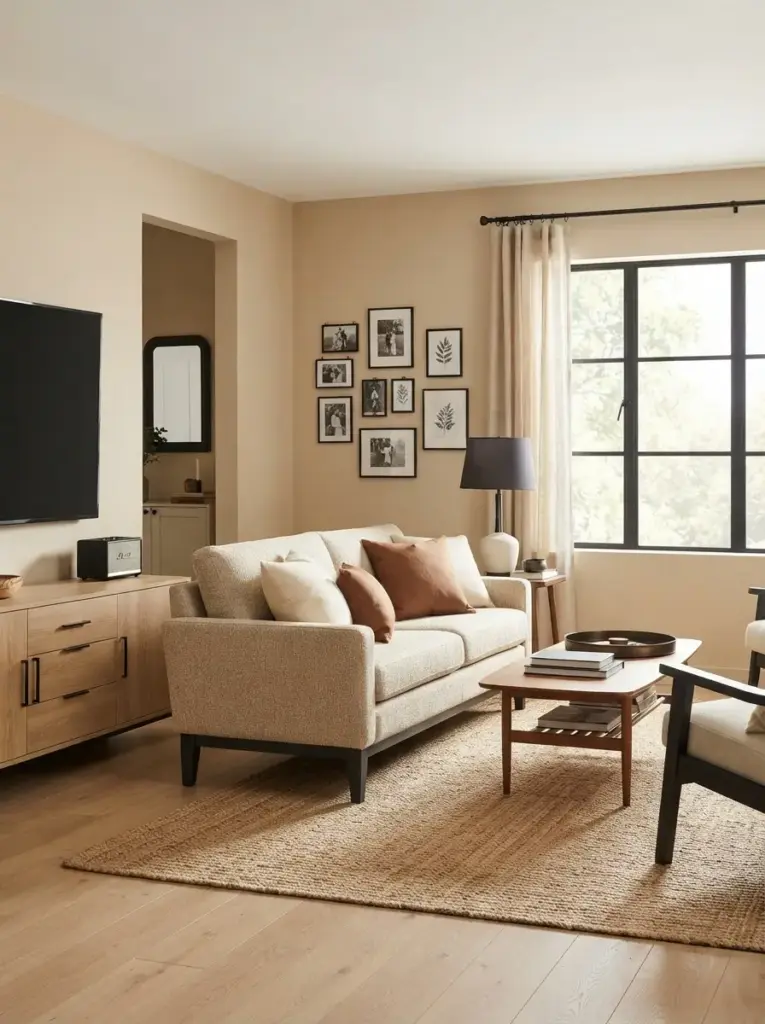
Earth tones can blur together when every object sits in the same medium beige range. Black, charcoal, or dark bronze adds a thin visual outline that makes softer colors look intentional. Use the dark finish on lamp bases, picture frames, curtain rods, chair legs, or cabinet handles. Small repeated details usually work better than one heavy black wall in a compact home.
Definition matters because contrast guides the eye around the room. Dark accents also connect common apartment features such as black appliances, television screens, and window frames with the rest of the design. People who prefer a lighter look can choose aged bronze instead of solid black. Renters may use removable handle covers, temporary hardware where allowed, or black adhesive trim on inexpensive frames to create consistency without major changes.
Create a Calm Entry Zone
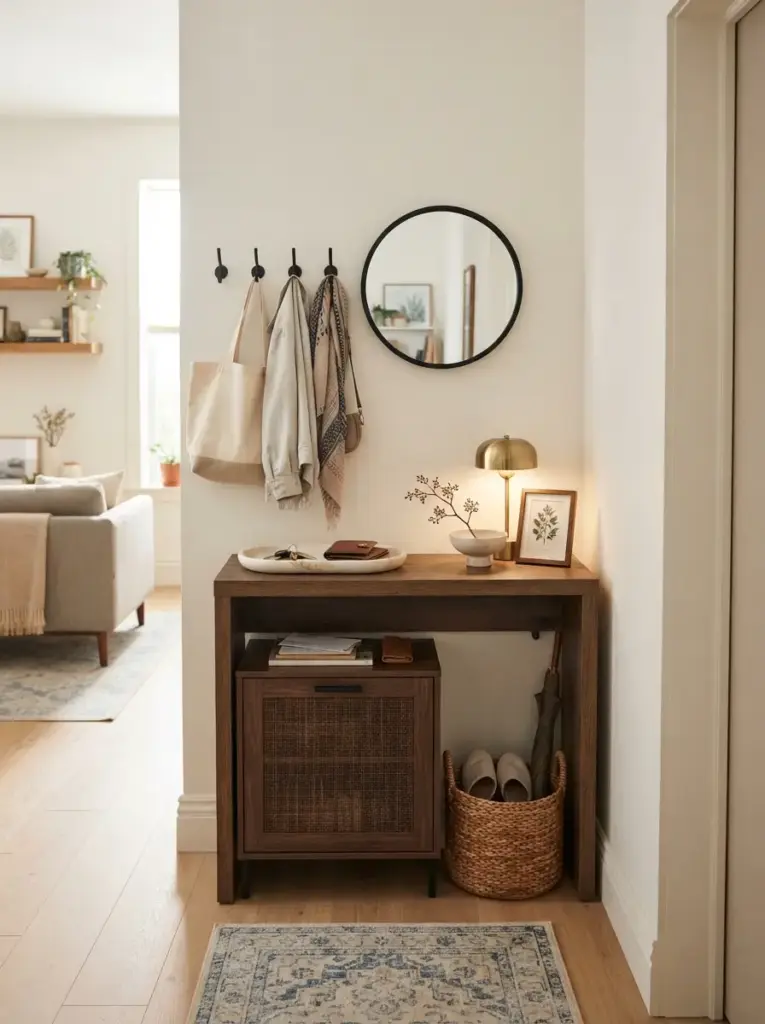
Entryways often become drop zones for shoes, bags, mail, and keys. Even a narrow wall can support a slim console, wall hooks, a small mirror, and one basket. Choose a console around 10 to 14 inches deep when space is tight. Repeating the living room’s wood or metal finish helps the entrance feel connected rather than separate.
Order at the doorway influences how the entire apartment feels. Closed shoe storage reduces clutter, while a tray prevents keys and receipts from spreading across the surface. Renters can use over-the-door hooks, tension-mounted systems, or removable wall rails when drilling is not allowed. Busy households benefit most from assigning one clear place to each daily item. Decorative additions should remain limited to a lamp, bowl, branch, or small framed print.
Finish With Handmade and Imperfect Details
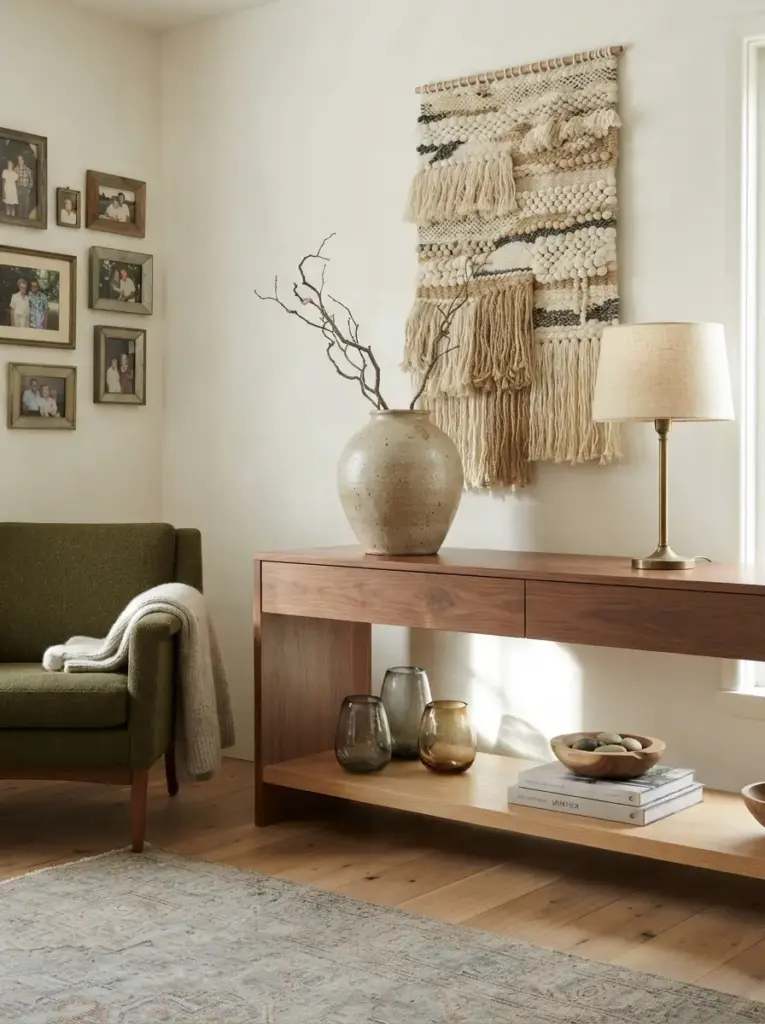
Hand-thrown pottery, carved wood, irregular glass, woven wall pieces, and vintage objects prevent modern rooms from feeling too showroom-like. Select items with visible texture, subtle variation, or a personal story. Natural styling feels strongest when subtle imperfections appear beside clean furniture rather than covering every surface. One rough ceramic vase on a smooth console can create more interest than several matching accessories.
Character develops through contrast between refined and handmade elements. Thrift stores, craft markets, and family collections often provide better pieces than buying a complete decorative set. Beginners should choose objects in colors already used elsewhere, which keeps unusual shapes from feeling random. Minimalists can use one statement vessel or bowl per surface. Collectors can group similar items and leave the surrounding areas quieter.
Common Mistakes to Avoid
Using Too Many Brown Tones Without Contrast
Brown is useful, but a room filled with similar medium-brown furniture, rugs, and accessories can appear flat. Add cream, black, olive, rust, or muted stone to create separation. Vary surface texture as well. Smooth walnut, nubby wool, matte ceramic, and woven jute can share a palette without blending into one block. Residents should compare items in the room’s actual light because online product photos often shift warm and cool undertones.
Choosing Tiny Furniture for Every Corner
Compact furniture does not always make a compact apartment feel larger. Several undersized pieces create more edges, gaps, and visual clutter than one appropriately scaled sofa or storage cabinet. Prioritize fewer pieces with clear functions. One 72-inch sofa may serve the room better than a loveseat plus two small chairs. Measure wall lengths, traffic paths, and door swings before buying rather than relying only on product width.
Overloading the Space With Rustic Accessories
Rustic signs, distressed finishes, faux branches, baskets, and pottery can overwhelm a modern apartment when used together. Keep the architecture of the room clean and allow natural materials to provide warmth. Select one or two handmade accents for each visible area. People who love collected decor can rotate objects or create a dedicated display cabinet, leaving coffee tables and kitchen counters more open.
Ignoring Existing Flooring and Cabinets
Rental flooring and cabinets occupy large visual areas, so the palette must work with them. Gray flooring may need warmer textiles and mixed gray-brown stone. Orange oak cabinets can look better with cream, olive, and matte black than with cool white and icy blue. Bring fabric and paint samples into the room before purchasing. Fighting the permanent finishes usually costs more and produces a less connected result.
Relying Only on Ceiling Lighting
Overhead lighting often creates glare and leaves corners dark. Lamps at different heights make the room feel more comfortable and allow materials to show their texture. Use task lighting near work surfaces and softer ambient lighting near seating. Avoid buying bulbs solely by wattage; check color temperature and lumen output. Dimmers or smart plugs can make inexpensive fixtures more flexible for daytime work and evening relaxation.
Budget-Friendly Ways to Build the Look
Start With Textiles Before Furniture
Textiles change color and texture quickly without requiring major spending. Curtain panels, pillow covers, throws, table runners, and rugs can shift a cold room toward warmer, natural tones. Replace only the most visible pieces first. Keeping existing pillow inserts and buying new covers reduces cost and storage needs. Washable options also make more sense for renters, families, and pet owners.
Shop Secondhand for Solid Materials
Thrift stores and online resale listings often contain wood side tables, ceramic lamps, baskets, and framed art at lower prices than new versions. Focus on shape, scale, and material rather than the current finish. Light sanding, furniture oil, or new hardware can improve many pieces. Upholstered furniture requires more caution, so inspect seams, odors, and structure before bringing it home.
Use Removable Finishes Strategically
Peel-and-stick wallpaper, temporary backsplash panels, removable hooks, and adhesive window film can add warmth without permanent renovation. Apply them to smaller controlled surfaces, such as the back of a bookcase, one kitchen section, or a bathroom cabinet front. Large full-room applications take more time and may reveal wall damage when removed. Always test a hidden patch and follow the manufacturer’s removal instructions.
Repeat Low-Cost Materials
Inexpensive items look more intentional when repeated. Matching terracotta pots, simple black frames, cotton cushion covers, or identical wooden knobs can create consistency across separate rooms. Repetition reduces the need for expensive statement pieces because the visual connection becomes the design. Keep the number of finishes limited, especially in studios where several functional areas are visible at once.
Upgrade Lighting in Stages
New lighting does not require replacing every fixture. Begin with warm bulbs, then add one floor lamp near the main seating area and one small lamp near the entry or bed. Plug-in sconces can free table space, while rechargeable lamps work on shelves without nearby outlets. Search secondhand shops for ceramic or wood lamp bases and replace dated shades with simple linen-look versions.
Earthy Apartment Decor Tips for Small Homes
Keep the Main Palette Visible From Every Zone
Open layouts feel larger when the same colors continue through the living, dining, and sleeping areas. Repeat one wood tone, one warm neutral, and one accent color across the apartment. Slight variation is useful, but dramatic changes can divide a studio into smaller visual sections. Curtains, rugs, and bedding provide the easiest way to carry color from one zone to another.
Let Storage Blend With the Walls
Tall cabinets and shelving appear less bulky when their color sits close to the wall tone. Cream storage against warm white walls recedes more than dark brown storage against white. Built-in-looking arrangements can be created with affordable modular units, matching baskets, and simple top trim. Renters should avoid overfilling the highest shelves because crowded vertical storage makes ceilings feel lower.
Protect Clear Walking Paths
Movement matters more than adding one extra chair or table. Keep major paths at least 30 inches wide where possible, especially between the sofa, kitchen, bathroom, and entry. Rounded tables, nesting furniture, and wall-mounted lighting can free valuable floor space. Painter’s tape helps test layouts before heavy furniture arrives. Rooms feel calmer when residents can move without turning sideways around objects.
Use Vertical Space Without Covering Every Wall
High curtains, tall mirrors, narrow bookcases, and vertical artwork draw the eye upward. Balance is still necessary. Filling every wall from floor to ceiling can make an apartment feel boxed in. Choose one or two vertical features per room and leave nearby wall areas quiet. People with low ceilings should use slim profiles and light finishes rather than heavy, dark cabinets.
Edit Decor After Living With It
Initial styling often includes too many objects because empty surfaces feel unfinished. Live with the room for several days, then remove anything that blocks movement, collects clutter, or repeats another object without adding function. Store extra pieces and rotate them later. Editing is especially important in Earthy Apartment Decor because texture and warm color already create visual richness without many accessories.
Frequently Asked Questions
What Colors Work Best for Warm Earthy Interiors?
Warm white, cream, sand, mushroom, camel, terracotta, olive, moss, walnut, and muted charcoal create a flexible base. Choose two or three main neutrals and one or two accents. Homes with cool daylight may need more clay and caramel, while bright sunny apartments can handle deeper olive or chocolate tones without feeling dark.
Can Renters Create This Style Without Painting?
Renters can rely on curtains, rugs, removable wallpaper, furniture, lighting, baskets, art, and bedding. Large textile surfaces influence the room almost as much as paint. Temporary changes should remain easy to remove, and every adhesive product should be tested on a hidden area before full installation.
How Can a Small Apartment Avoid Looking Too Beige?
Contrast keeps neutral rooms lively. Mix light cream with walnut, black, olive, rust, or charcoal. Vary texture through linen, wood, stone, metal, wool, and ceramic. One darker frame, lamp, or table can give the eye a clear resting point without requiring bright color.
Which Plants Suit an Earthy Apartment With Low Light?
Snake plants, ZZ plants, pothos, and some philodendrons tolerate lower indoor light better than many sun-loving plants, although every plant still needs suitable conditions. Rooms with very limited daylight may be better served by preserved branches or high-quality artificial greenery. Plant health matters more than forcing greenery into a dark corner.
How Many Wood Tones Can One Room Handle?
Most small rooms look cohesive with one dominant wood tone and one secondary tone. Additional pieces can work when they share similar undertones. Repeating the main finish in at least two places, such as a coffee table and picture frames, helps the room feel connected.
Is Earthy Apartment Decor Suitable for Modern Furniture?
Modern furniture pairs well with earthy styling because straight lines and simple shapes provide structure. Natural fabrics, warm wood, stone, woven storage, and handmade objects soften the cleaner forms. Keep decorative details limited so the room stays current rather than heavily rustic.
Conclusion
Warm modern apartments do not need expensive renovation or a large collection of natural objects. Strong results come from a connected palette, useful texture, thoughtful lighting, and furniture scaled to the room. Begin with walls, rugs, curtains, and wood tones because those large surfaces shape the atmosphere. Add clay, green, stone, and dark metal in smaller amounts, then edit anything that makes the room feel crowded.
Practical choices keep Earthy Apartment Decor comfortable over time. Washable fabrics, flexible storage, removable finishes, and layered lighting support real daily life while preserving the calm visual direction. Beginners should work slowly, repeat materials, and test each change in the apartment’s actual light. Warmth comes from balance, not from filling every corner.