
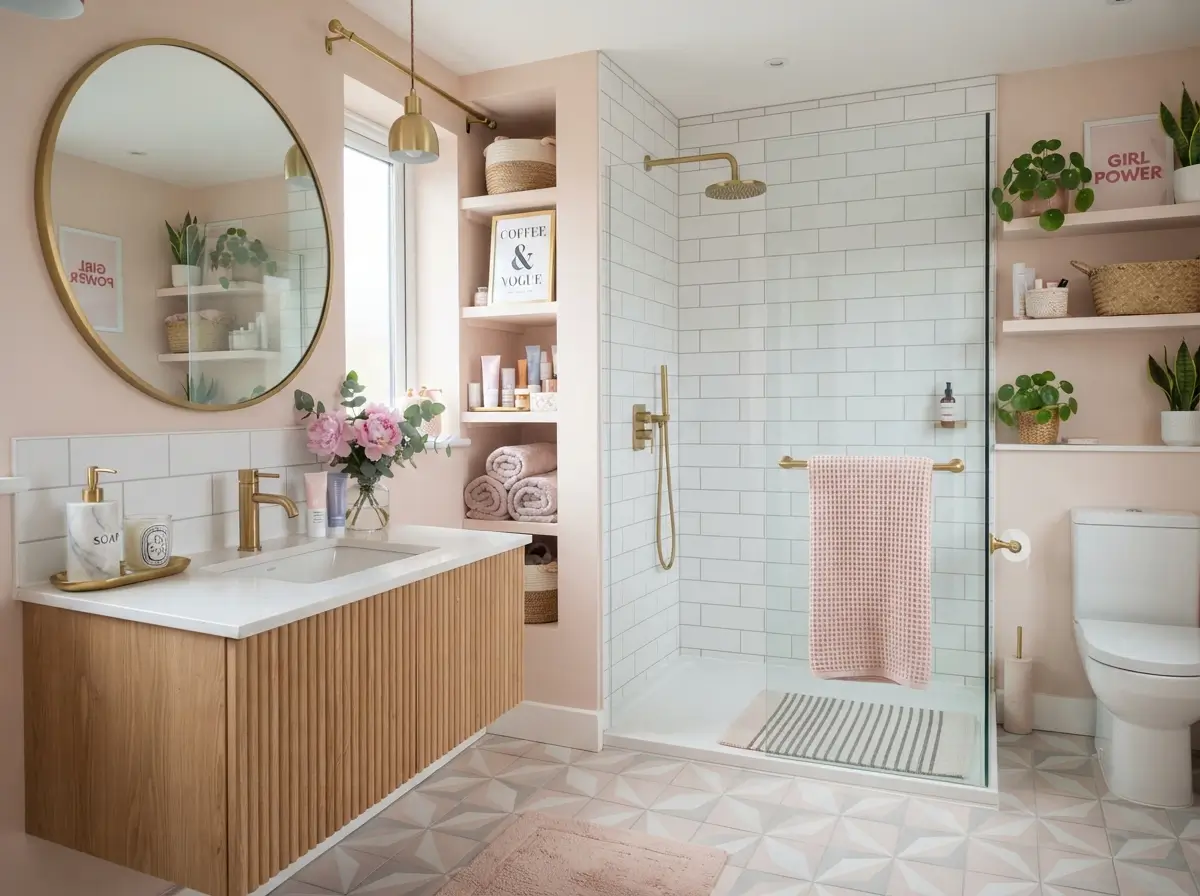

Small apartment bathrooms often feel difficult to decorate because every item has to earn its place. Limited storage, plain rental finishes, weak lighting, and awkward layouts can make the room feel more practical than personal. Girly apartment bathroom decor solves that problem by combining soft color, polished details, useful storage, and renter-safe updates in a way that still feels modern. Instead of filling the room with fragile accessories or overly themed pieces, the strongest approach focuses on clean shapes, controlled color, flattering light, and everyday function.
Good bathroom styling should make mornings easier, not create more clutter to clean. Modern feminine decor can include blush pink, warm white, soft lavender, muted peach, champagne gold, chrome, glass, pale wood, and small floral or scalloped details. Balance matters more than the number of decorative items. Beginners will get better results by choosing one clear palette, improving lighting, adding concealed storage, and repeating a few finishes across the room. Renters can achieve the same polished effect with removable hooks, peel-and-stick materials, freestanding shelves, tension rods, and textiles that leave the original bathroom untouched.
How Do You Create Girly Apartment Bathroom Decor Without Making It Feel Cluttered?
Girly apartment bathroom decor looks modern when soft elements are paired with simple lines and practical storage. Choose two main colors, one metal finish, and one accent pattern, then repeat them in towels, containers, lighting, and small accessories. Keep counters mostly open, hide backup products, and use vertical space instead of crowding the floor. Warm white bulbs around 2700K to 3000K make skin tones look pleasant, while brighter 3500K light can work near a mirror when makeup application matters. Every decorative choice should either improve function, add color, or support the room’s overall finish.
Build the Room Around a Soft Two-Color Palette
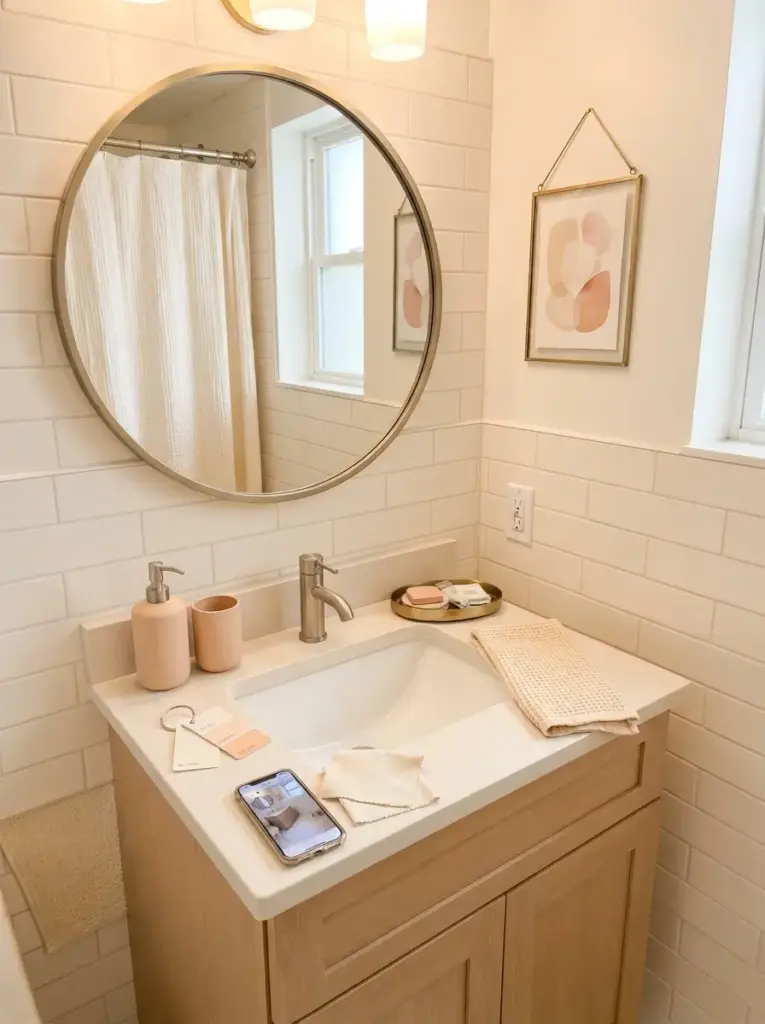
Color planning gives a small bathroom structure before any shopping begins. Pair warm white with blush pink, pale gray with dusty rose, cream with muted peach, or soft taupe with lavender. Limiting the palette prevents a tiny room from feeling busy and makes inexpensive items look more coordinated. Use the lighter color across the largest surfaces, such as the shower curtain, bath mat, and towels, then bring the secondary shade into soap dispensers, art, storage labels, or a small stool.
Chrome suits cool pink and gray schemes, while brushed brass or champagne gold works well with cream, peach, and warm blush. Renters should test removable wallpaper or vinyl samples near the vanity before covering a large area because bathroom humidity and artificial light can change how a color appears. Color-led decorating is best for beginners who feel overwhelmed by too many choices because it creates a clear filter for every purchase. Carry a paint chip or fabric swatch while shopping, and photograph permanent tile in daylight and at night. Small checks like these prevent a pale blush accessory from turning orange or purple once it enters the room.
Replace Harsh Lighting With Warm Layered Light
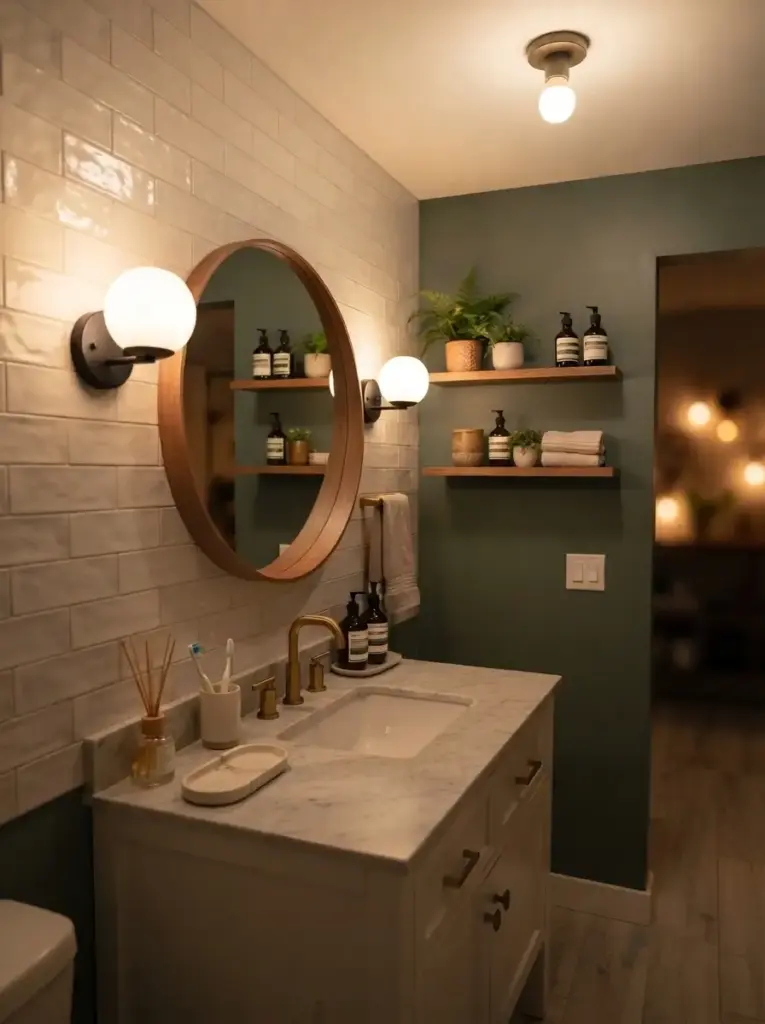
Lighting changes the room more quickly than many decorative upgrades. Overhead bulbs that look blue or extremely bright can make pink tones appear dull and can emphasize shadows around the mirror. Choose warm white bulbs between 2700K and 3000K for general comfort, then add a brighter mirror light around 3000K to 3500K if you apply makeup or skincare at the sink. Battery-operated wall lights, rechargeable picture lights, and plug-in sconces can help renters create layers without rewiring. Place light on both sides of the mirror when possible because side lighting reduces facial shadows better than a single fixture above the head. Frosted shades soften glare, while clear glass provides more sparkle but shows dust and water spots easily.
Layered lighting works especially well for windowless bathrooms, dark vanity corners, and anyone who wants the room to feel calmer at night without sacrificing useful task light. Check bulb brightness as well as color temperature; roughly 800 lumens can suit a modest ceiling fixture, while dimmable or lower-output accent lights keep late-night visits comfortable.
Choose a Statement Shower Curtain With Controlled Detail
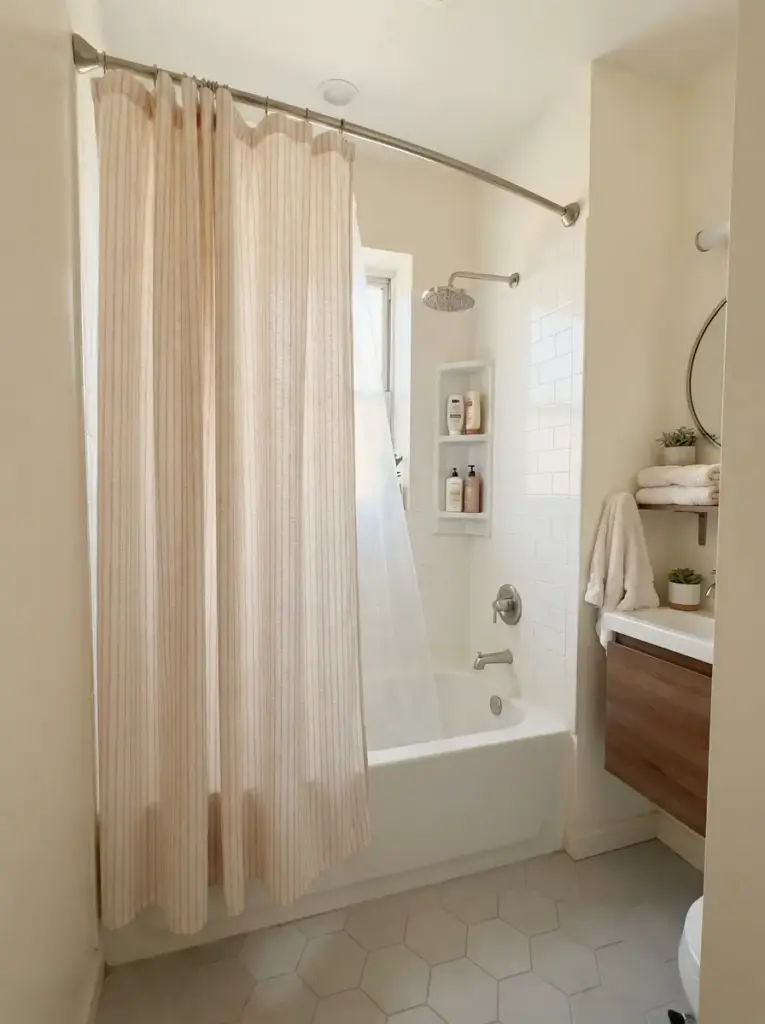
Shower curtains cover a large visual area, so they can establish the room’s style without permanent changes. Look for modern patterns such as thin pink stripes, small-scale florals, scalloped borders, abstract line art, or a solid textured fabric in rose, cream, or mauve. Avoid oversized prints in a very narrow bathroom because large motifs can dominate the room and make the walls feel closer. Hanging the curtain higher and wider than the tub opening can make the ceiling look taller and the shower area feel broader. Use an extra-long curtain if the rod can be raised safely, and keep the hem about one inch above the floor to prevent damp fabric.
Machine-washable polyester or a cotton blend is more practical than delicate fabric in a busy home. Statement curtains are ideal for renters because they add color, pattern, and softness while remaining easy to remove, wash, and replace when tastes change. Pair the decorative curtain with a separate washable liner, and open both after bathing so moisture can escape. Weighted hems also reduce billowing in narrow tub surrounds.
Upgrade the Mirror Without Replacing the Vanity
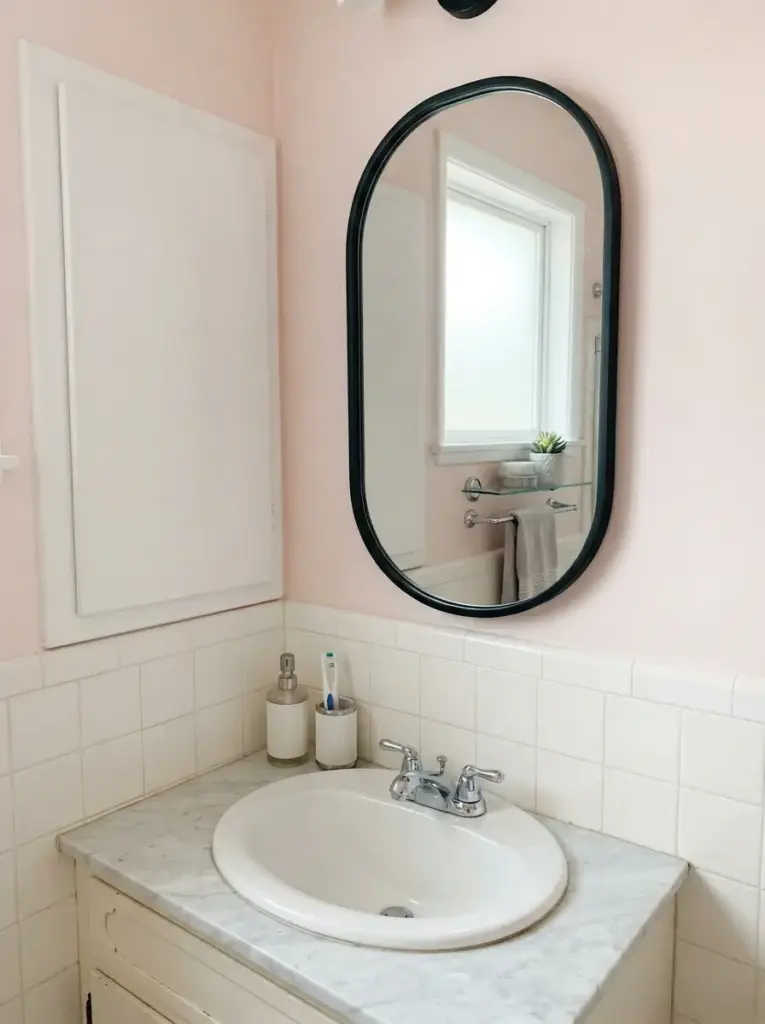
Mirror shape has a strong effect on a small bathroom because it sits near eye level and reflects both light and clutter. Rounded rectangles, pill-shaped mirrors, arches, and thin circular frames create a softer appearance than heavy square frames. Renters who cannot remove the existing mirror can add a removable frame kit, apply slim decorative trim around the edge, or mount a lightweight mirror over a plain medicine cabinet, only when the hardware and wall can safely support it.
Black frames create contrast in pale pink rooms, brushed brass adds warmth, and chrome keeps the scheme crisp. Leave enough open wall around the mirror so the shape remains visible rather than squeezed between shelves and decor. Mirror upgrades suit bathrooms with dated builder finishes because one clean outline can make the whole vanity zone appear more intentional without changing plumbing, tile, or cabinetry. Before adding trim, confirm that cabinet doors, outlets, and light fixtures still have clearance. Even half an inch of extra framing can interfere with nearby hardware.
Use Matching Counter Top Containers to Reduce Visual Noise
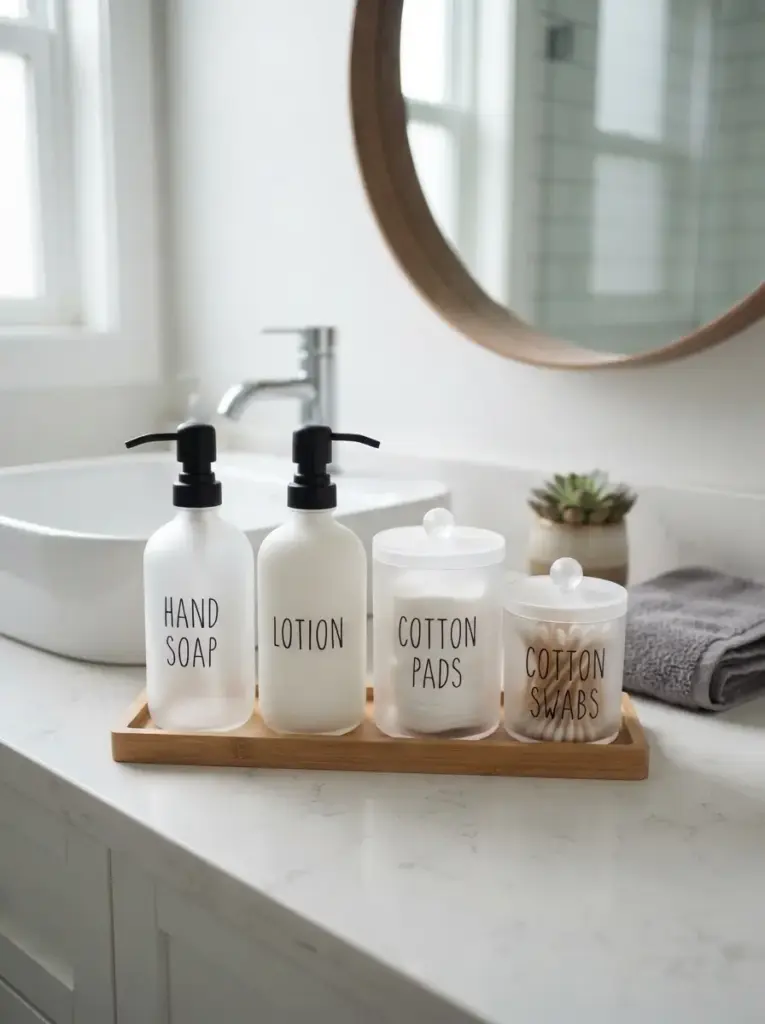
Product packaging introduces many colors, fonts, and shapes into a small room, which can make even a clean vanity look disorganized. Transfer daily-use items into a coordinated set of refillable containers for hand soap, lotion, cotton pads, and cotton swabs. Choose only the pieces you truly use because a complete matching set can become clutter when half the containers stay empty. Frosted glass, ribbed acrylic, ceramic, and opaque plastic all work, but lightweight acrylic is safer in tight bathrooms where items may be knocked into the sink.
Place the set on a small washable tray so water does not spread across the counter. Labels should be simple and water-resistant rather than decorative paper that curls in humidity. Coordinated containers are most useful for open vanities and shared bathrooms because they make mixed products look calmer while keeping essentials visible and easy to reach. Refill only products that remain stable outside their original packaging, and never decant medication or formulas that need instructions, expiration dates, or child-resistant closures.
Add Vertical Storage With a Slim Freestanding Shelf
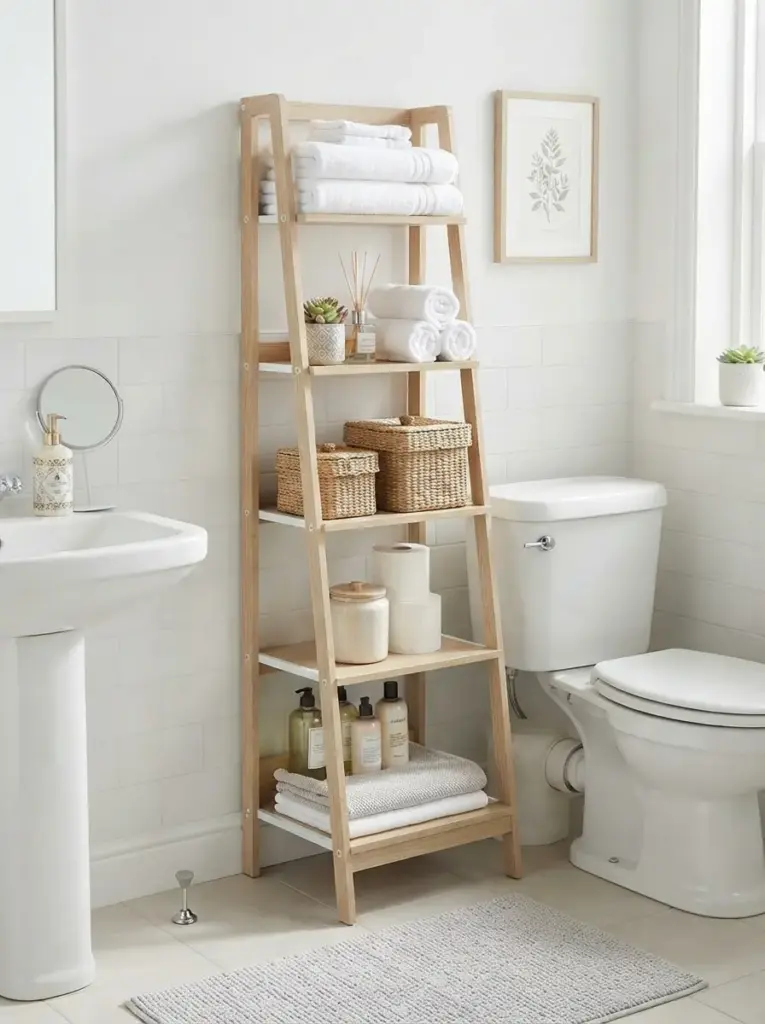
Floor space may be limited, but the wall area above the toilet, beside the vanity, or near the door often remains unused. A slim freestanding shelf or ladder unit can hold folded towels, toilet paper, baskets, and a small decorative object without drilling into tile. Measure the baseboards, toilet tank height, door swing, and clearance around plumbing before ordering furniture. Models between seven and ten inches deep usually fit narrow rooms better than standard bookcases.
Open shelves look lighter, but baskets or lidded boxes should hide backup products to prevent the display from becoming messy. Pale wood, white metal, or champagne-colored frames support a feminine palette without feeling overly ornate. Vertical shelving helps renters, roommates, and anyone with a pedestal sink because it creates storage without relying on a built-in vanity or permanent wall anchors. Keep heavy bottles on lower shelves, leave the top level for light towels, and use wall restraints where the lease and surface allow. Stable placement matters more than decorative height.
Bring in Curved Shapes Through Small Functional Pieces
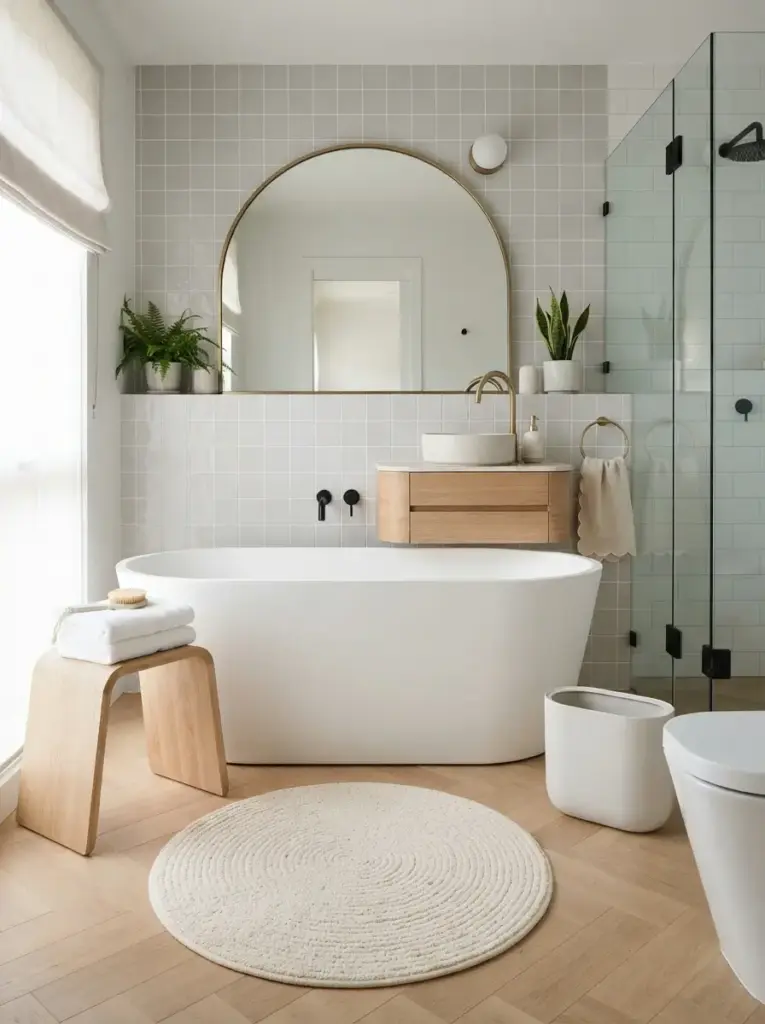
Curves soften the hard lines created by tile, cabinets, mirrors, and plumbing fixtures. Introduce rounded forms through a circular bath mat, an arched tray, a scalloped hand towel, an oval waste bin, or a stool with curved legs. Repeating two or three curved shapes creates rhythm, while filling the room with scallops and bows can make the decor feel themed. Keep the materials modern by choosing matte ceramic, smooth acrylic, pale wood, or brushed metal. A rounded stool can hold folded towels beside the tub, but it should have a moisture-resistant finish and enough clearance for safe movement.
Curved accents work best for bathrooms that already contain many square surfaces because the contrast creates softness without relying only on pink. Beginners can use the approach to add a feminine character while maintaining a clean, grown-up appearance. One rounded mirror paired with an oval mat may be enough in a compact room. When every item has a wavy edge, the shapes stop feeling intentional and become harder to coordinate.
Style Towels as Part of the Color Scheme
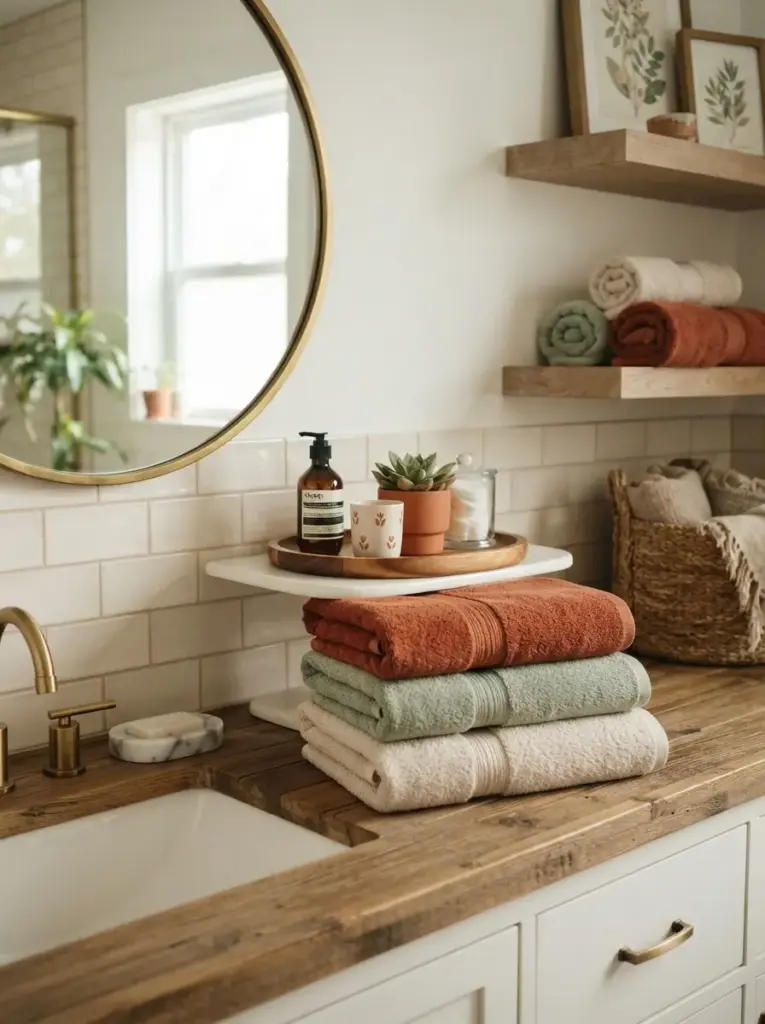
Towels occupy more visual space than most people realize, especially in small bathrooms where hooks and rails sit in clear view. Choose one everyday color and one accent color instead of buying many unrelated sets. Warm white bath towels with blush hand towels create contrast, while dusty rose bath towels paired with cream washcloths make the room feel warmer. Turkish towels dry quickly and take up less cabinet space, making them useful in compact apartments, while thick cotton towels feel more luxurious but require better ventilation. Fold spare towels with the clean edge facing outward and keep only two or three visible at a time. Removable adhesive hooks can create a neat row for roommates, but check the weight rating and clean the wall before installation.
Thoughtful towel styling suits anyone who wants a fast update because textiles add color, texture, and comfort without changing permanent finishes. Buy hand towels and bath towels separately when a bundled set includes sizes you will not use. Keeping one spare per person usually serves an apartment better than stacking a large decorative collection.
Use Peel-and-Stick Materials in Small, Low-Risk Areas
Removable wallpaper and vinyl can update plain surfaces, but bathrooms require careful placement. Use peel-and-stick material on a dry vanity wall, the front of removable storage boxes, a framed backing panel, or the outer face of a cabinet rather than directly inside a wet shower. Small applications are easier to install and less likely to peel in humidity. Choose subtle marble, tiny floral, pale terrazzo, thin stripe, or soft geometric designs that support the existing color palette.
Clean the surface thoroughly, let it dry, and test one piece for several days before completing the project. Seams should face away from direct splashes, and ventilation should remain strong. Renters benefit most from this idea when the bathroom has plain white walls or dated cabinet fronts, but anyone dealing with textured paint should skip adhesive coverings because they may not bond evenly or remove cleanly. Save a small offcut and the product instructions for move-out day. Slow removal with gentle heat often works better than pulling quickly.
Add One Polished Metal Finish and Repeat It
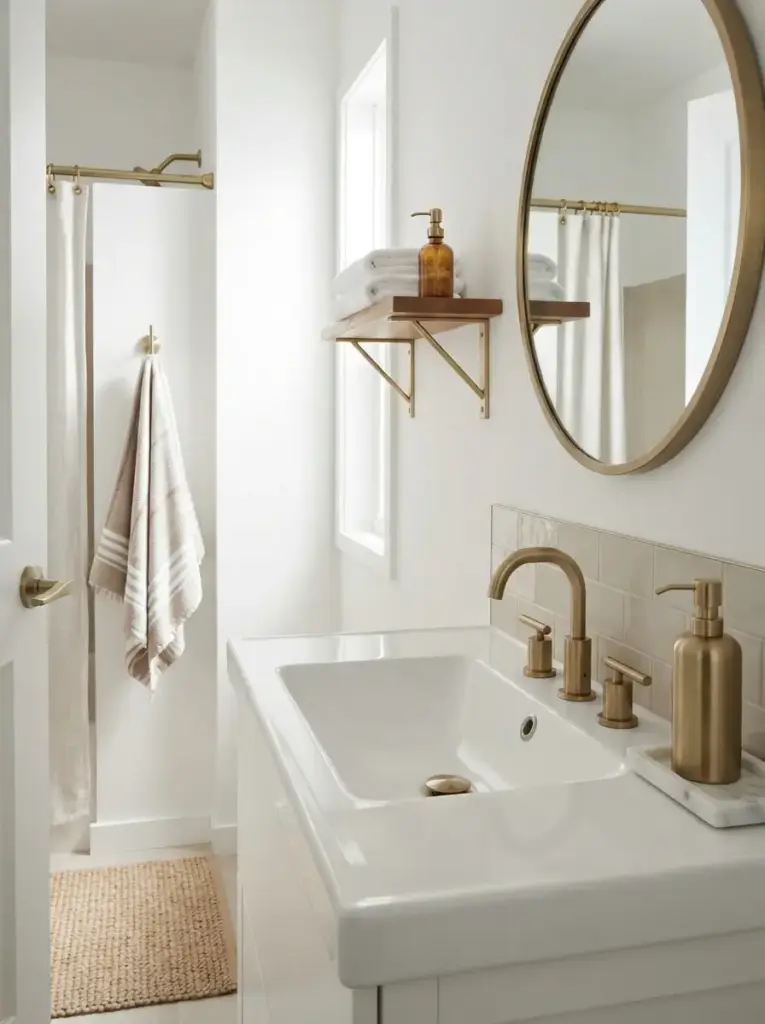
Metal finishes act like punctuation in a decorated room. Choose one main finish, such as polished chrome, brushed nickel, champagne gold, or brushed brass, then repeat it in three to five small places. Soap pumps, mirror frames, shelf brackets, hooks, tissue box covers, and shower curtain rings offer easy ways to create consistency. Mixing every available finish can make a tiny bathroom look accidental, although one secondary finish is acceptable when the permanent faucet cannot be changed.
For example, keep the existing chrome faucet and add pale gold accessories only in a separate zone, such as the shelf above the toilet. Avoid very yellow gold if the room uses cool gray or blue-based pink because the tones may clash. Repeated metal details are best for bathrooms with basic white fixtures because they introduce polish without requiring expensive renovations or difficult installation. Match sheen as closely as color; polished brass and brushed brass read differently beside each other. Hardware with simple profiles also collects less dust than highly carved or faceted pieces.
Create a Practical Vanity Tray Instead of a Decorative Display
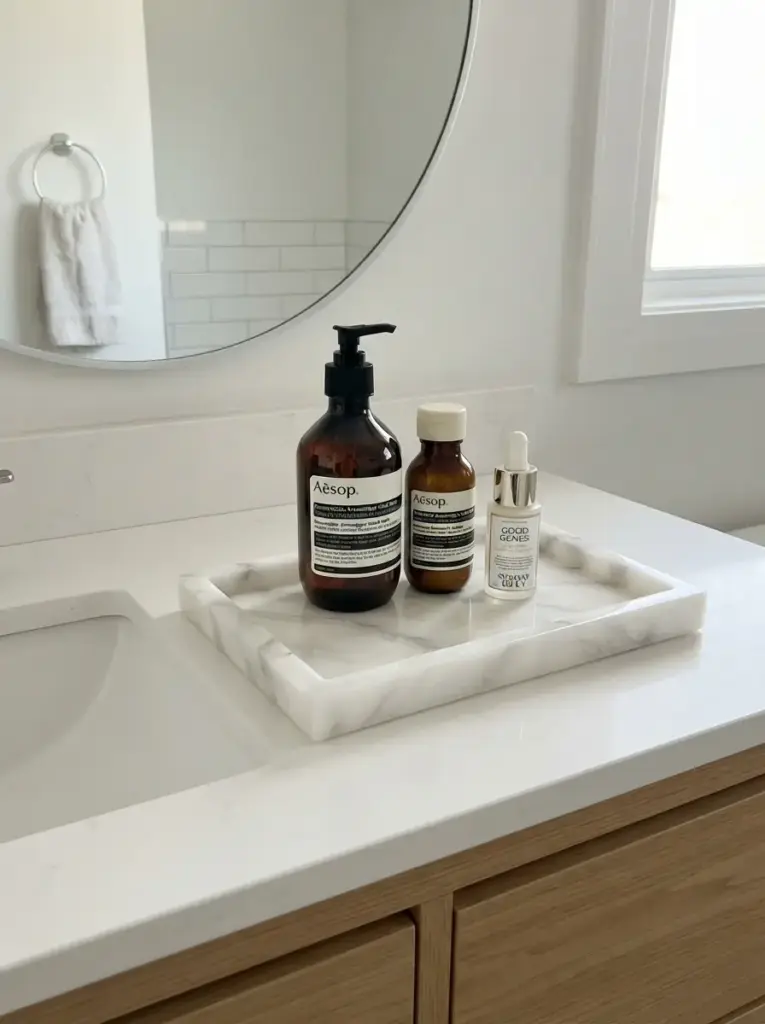
Vanity trays work when they control the items used every day rather than serving as a stage for random ornaments. Select a narrow tray that leaves enough counter space for washing hands, setting down a hair tool, or cleaning the sink. Place hand soap, a small lotion bottle, and one frequently used skincare product on the tray, then store everything else in a drawer or basket. Raised edges contain drips, while a washable surface makes maintenance easier. Marble-look resin, clear acrylic, cream ceramic, or pale pink metal can match different budgets and styles. Keep candles away from towels, sprays, and plastic containers, and do not use open flames in a cramped room without safe clearance.
Practical trays are especially useful for beginners because they create a clear boundary for countertop items and reveal when the collection has grown too large. Choose a tray no wider than about one-third of the available counter whenever possible. Lift and wipe beneath it weekly, since trapped moisture can stain grout or vanity surfaces.
Add Art That Can Handle Bathroom Conditions
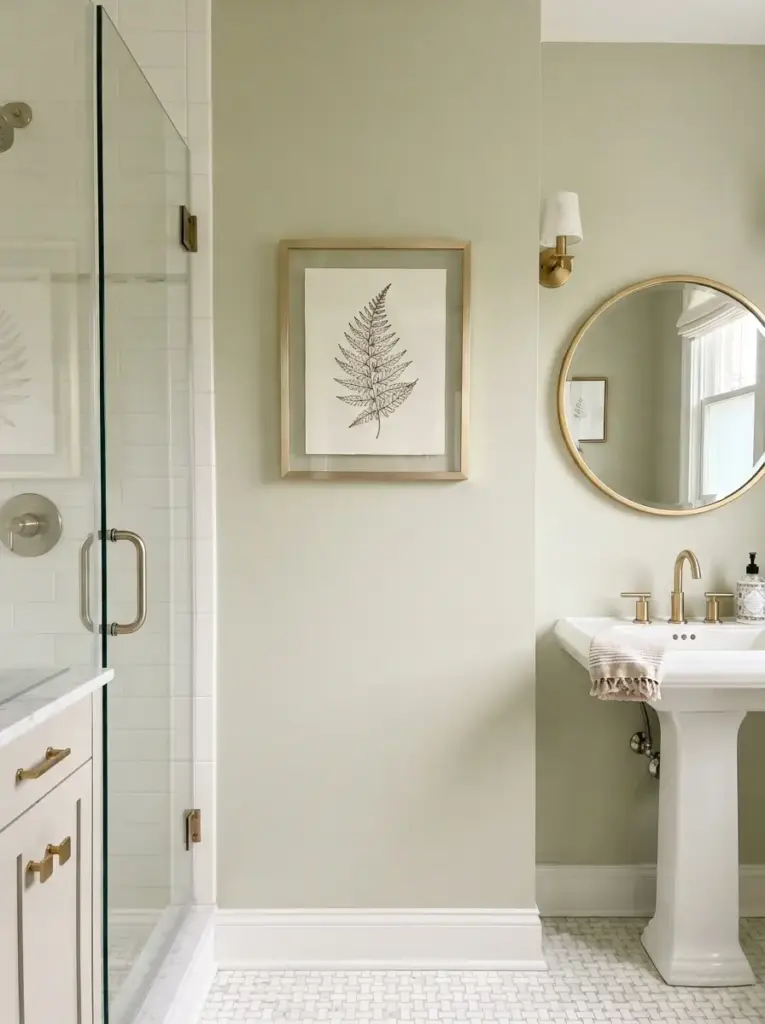
Wall art brings personality into a bathroom, but paper prints can wrinkle when exposed to moisture. Use framed art behind acrylic or glass, moisture-resistant canvas, small metal prints, or inexpensive artwork that can be replaced if humidity causes damage. Botanical sketches, abstract pink shapes, fashion illustrations, simple typography, and vintage perfume labels can all support a feminine theme without making the room feel childish. Place art on a wall away from direct shower spray and avoid hanging it above a tub where steam collects heavily. Removable picture-hanging strips work for light frames when the paint and weight limits are suitable.
One medium piece often looks stronger than several tiny frames on a narrow wall. Bathroom art suits renters who want personal character without changing fixtures, and it works particularly well in powder rooms where humidity levels remain lower. Coordinate frames with existing hardware rather than introducing another finish. For a narrow wall, a vertical print around 8 by 10 inches often fits more naturally than a wide landscape piece.
Use Clear and Opaque Storage Together
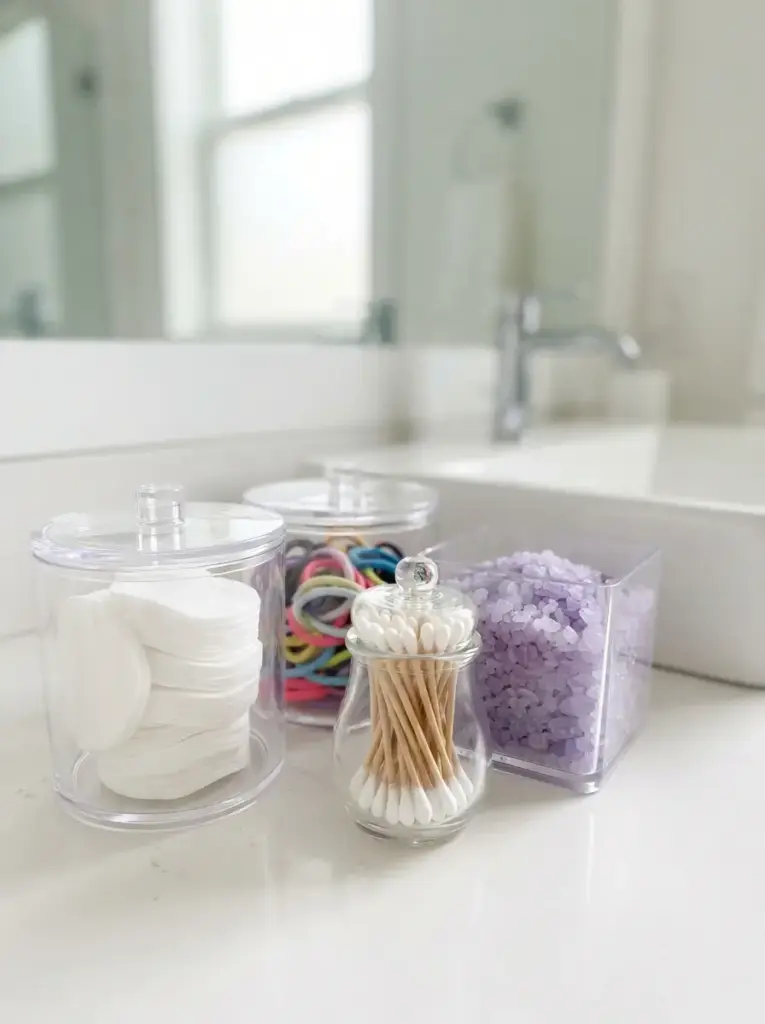
Storage becomes more efficient when visibility matches the frequency of use. Keep daily cotton pads, hair ties, or bath salts in clear containers so you can see when supplies run low. Store backup toothpaste, cleaning products, medication, and less attractive packaging in opaque bins or closed cabinets. Matching every container is not necessary, but keeping shapes and colors related will reduce visual clutter. Stackable drawers work under a sink, while turntables help in deep cabinets where items disappear at the back. Measure around pipes before buying organizers because standard bins often waste space in apartment vanities. Transparent and concealed storage is best for people who own many small products because it balances easy access with a tidy appearance.
The system also prevents overbuying, since visible categories make duplicates easier to spot. Label bins by category rather than by individual product so the arrangement can adapt over time. Leave a little space in each drawer; completely packed organizers become frustrating to use and difficult to clean.
Introduce Natural Texture With Moisture-Smart Materials
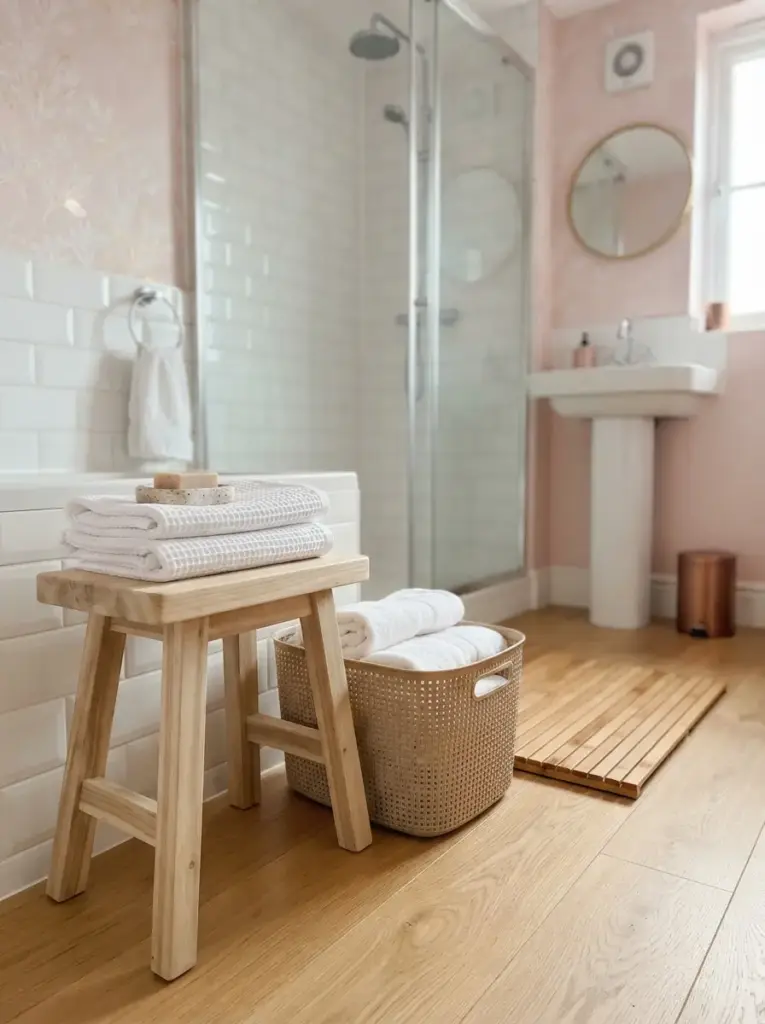
Natural texture keeps pink, white, and metallic rooms from feeling flat. Use a pale wood stool with a sealed finish, woven-look plastic baskets, cotton waffle towels, a bamboo bath mat in a well-ventilated area, or a small stone soap dish. Real rattan can absorb moisture and develop mildew in poorly ventilated bathrooms, so synthetic woven materials may be a better choice near the shower. Wood pieces should never sit in standing water, and fabric baskets should hold dry items only.
One or two natural textures are enough to warm the room without competing with patterned textiles. Moisture-smart texture works well for renters who want the bathroom to feel less builder-basic but cannot change tile or cabinetry. Practical material choices preserve the look while making cleaning and maintenance manageable. Check the underside of mats and stools every week in a humid bathroom, and let them dry fully after cleaning. Mold often begins in hidden contact points rather than on the decorative surface people see.
Finish With One Personal Detail That Has a Job
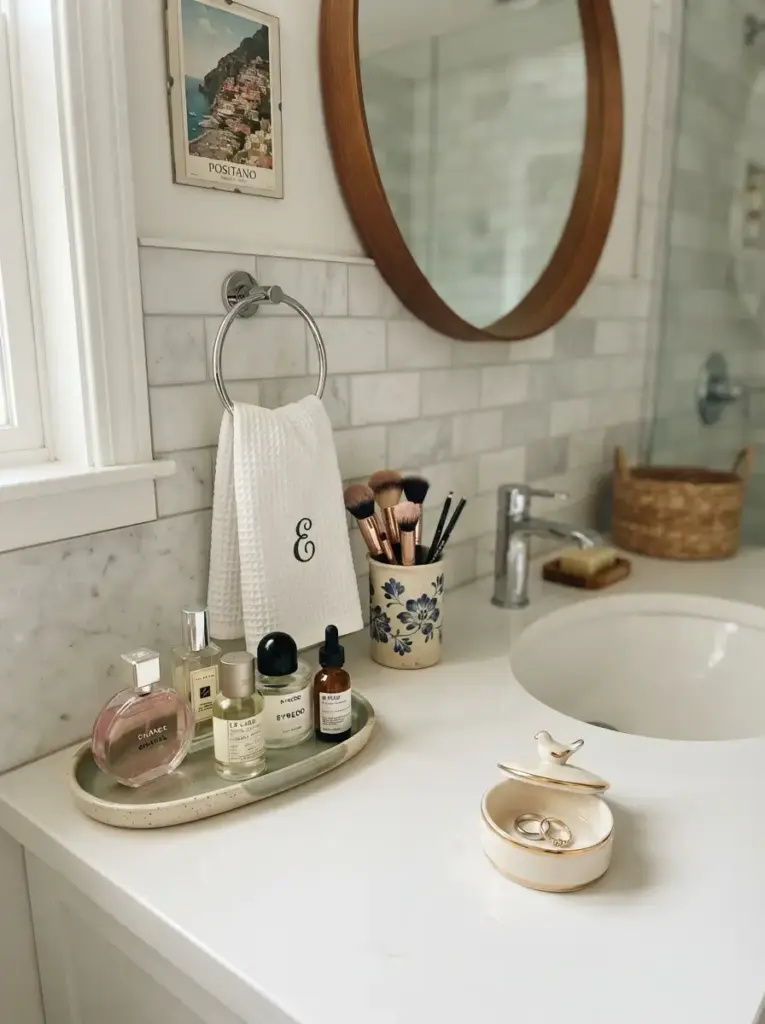
Personal decor feels more convincing when it serves a purpose. Choose a small perfume tray for bottles you use, a monogrammed hand towel, a favorite ceramic cup for makeup brushes, a framed postcard from a meaningful place, or a lidded jewelry dish for rings removed before showering. Keep the object proportionate to the space and avoid placing valuable or moisture-sensitive items near the sink. Personal details should not block outlets, crowd the faucet, or interfere with cleaning. Rotating one item seasonally can refresh the room without creating storage problems.
This final layer is best for anyone whose bathroom looks coordinated but still feels impersonal because it connects the design to daily habits rather than adding decoration for decoration’s sake. Give the detail a defined home so it never drifts across the counter. Meaningful objects look stronger when surrounded by practical space.
Measure the Bathroom Before Buying Decor
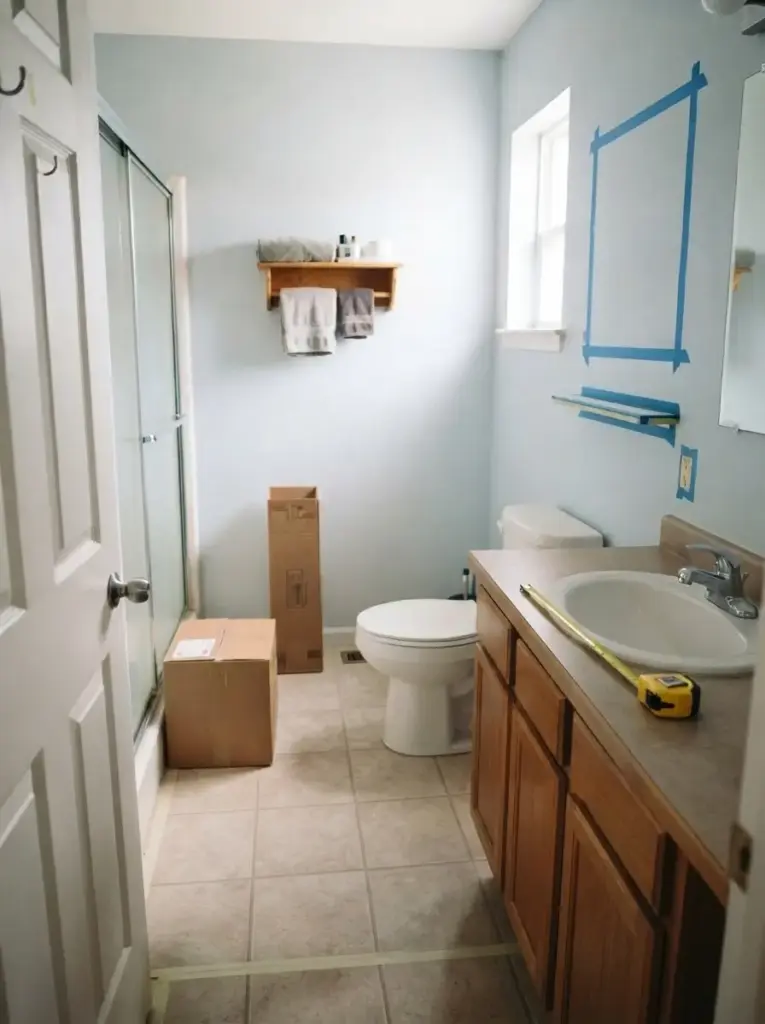
Measurements protect the budget and layout. Record the vanity width, counter area, distance between the toilet and wall, shower curtain length, shelf depth, door swing, and space behind the door. Note outlet positions and towel bars before choosing mirrors, cabinets, or hanging storage. Use painter’s tape to mark a proposed shelf or artwork on the wall, then live with the outline for a day. Cardboard boxes can represent stools, bins, or narrow carts before ordering. Leave enough room to clean around every item and move safely when the floor is wet. Small furniture often appears slimmer in product photos than it feels in person, so compare dimensions with the bathroom rather than relying on appearance. Careful measuring is valuable for beginners, online shoppers, and renters who cannot move fixed fixtures to correct a poor purchase.
Common Girly Bathroom Decorating Mistakes to Avoid
Overdecorating remains the most common problem in small bathrooms. Too many signs, jars, candles, plants, trays, and framed prints leave little space for real routines and create more surfaces that collect dust. Keep at least half of the countertop visually open and remove one item whenever a new piece is added. Another frequent mistake involves using many shades of pink without checking their undertones. Blue-based blush, coral, mauve, and peach can clash when placed together, so compare samples under the actual bathroom light before buying textiles or accessories. Poor scale also causes trouble. Oversized shelving can block the toilet area, deep cabinets can narrow the walkway, and tiny art can look lost on a wide wall.
Ignoring moisture can quickly damage an otherwise attractive room. Paper labels, untreated wood, real wicker, delicate prints, and non-bathroom adhesive may curl, swell, or grow mildew. Choose washable, wipeable materials and keep airflow moving after showers. Safety should guide placement as well. Rugs need non-slip backing, cords should stay away from water, shelves must not interfere with headroom, and heavy objects should never sit unsecured above the toilet. Matching every single accessory creates another common issue because the bathroom can feel like a showroom set rather than a lived-in space. Coordinating color and finish is enough; variation in texture and shape gives the room more depth.
Budget-Friendly Ways to Decorate a Girly Apartment Bathroom
Budget decorating works best when money goes toward the items with the largest visual impact. Start with a shower curtain, bath mat, towels, and better bulbs because those changes affect color, comfort, and light across the whole room. Discount stores, home sections in supermarkets, resale shops, and online marketplaces often have useful trays, mirrors, stools, and storage bins, but measurements should come before bargain hunting. A low price does not help if the shelf blocks the door, or the basket will not fit under the sink. Reusing containers can also save money. Clean glass jars, matching pump bottles, and small ceramic dishes can be used to organize daily products when they are safe for bathroom use.
Paint is inexpensive for owners, but renters should focus on removable methods. Adhesive hooks, tension shelves, peel-and-stick accents, freestanding furniture, and framed removable panels can create a finished result without risking the deposit. Replace decorative items gradually instead of buying a complete set in one trip. One coordinated upgrade each week makes it easier to compare colors and prevents impulse purchases. Spend slightly more on washable towels, safe lighting, and sturdy storage because these pieces handle daily use. Save on trend-driven details such as prints, trays, and seasonal accessories that may change later. Careful spending creates a room that functions well rather than a collection of cheap items that need quick replacement.
Girly Apartment Bathroom Decor Tips for Small Rentals
Rental bathrooms respond well to changes that sit on top of the existing room rather than trying to hide every original finish. Work with permanent tile, countertops, and faucets by choosing colors that relate to them. Cool gray tile pairs well with dusty rose, white, silver, and lavender, while beige tile looks more balanced with cream, muted peach, warm pink, and brushed brass. Keep a small sample board on your phone or in a folder with photos of the bathroom, paint undertones, measurements, and product screenshots. That simple reference reduces mismatched purchases and helps beginners make decisions with more confidence.
Layout planning matters just as much as style. Leave a clear route from the door to the sink and shower, keep floor storage narrow, and place everyday items between waist and eye level. Use the area above the toilet for light storage, the back of the door for towels or robes, and the under-sink space for backup supplies. Decorative objects should stay away from the faucet splash zone and toilet lid. Ventilation also protects the investment. Run the fan during showers and for at least fifteen to twenty minutes afterward when possible, spread towels so they can dry, and wash the shower curtain liner regularly. Good habits keep soft colors, fabrics, and storage pieces looking fresh longer.
Frequently Asked Questions
What Colors Work Best for Girly Apartment Bathroom Decor?
Soft pink, warm white, cream, pale lavender, muted peach, taupe, and light gray provide flexible starting points. Choose shades based on the permanent surfaces already in the bathroom. Cool white tile usually works with dusty rose, lavender, and chrome, while beige or cream tile pairs better with peach, warm blush, champagne gold, and pale wood. Use one light base color, one softer accent, and a small amount of contrast. Testing fabric and finish samples under the bathroom light prevents expensive mismatches.
How Can Renters Decorate Without Damaging Walls?
Removable hooks, picture-hanging strips, tension rods, freestanding shelves, over-the-door storage, and peel-and-stick products designed for clean removal provide useful options. Surface preparation matters because adhesive products can fail on dusty, damp, or heavily textured walls. Test every removable product in a hidden spot and follow the listed weight limit. Keep receipts and packaging in case the material behaves differently than expected. Freestanding furniture remains the lowest-risk option when the wall paint feels fragile or when the lease has strict rules.
How Do I Make a Small Bathroom Look More Spacious?
Light colors, clear floor space, vertical storage, and a well-positioned mirror help a small bathroom feel more open. Hang the shower curtain near the ceiling when the rod setup allows it, choose furniture with slim legs, and avoid deep shelving in walkways. Keep countertops mostly clear and use matching containers to reduce visual noise. Brighter task lighting around the mirror also improves the sense of openness. Large decorative collections, dark heavy curtains, and crowded floor baskets usually make the room feel smaller.
Can Girly Bathroom Decor Still Look Modern?
Modern feminine bathrooms rely on simple shapes, restrained color, and useful details rather than excessive ornament. Pair blush or lavender with warm white, clean-lined storage, rounded mirrors, and one repeated metal finish. Keep patterns small and use them in one main place, such as the shower curtain or wallpaper panel. Curved forms, soft textiles, and polished hardware provide femininity without requiring bows, slogans, or novelty accessories. Function should remain visible in every choice.
What Should I Decorate First on a Limited Budget?
Begin with lighting, shower curtains, towels, and storage because these elements influence the whole room. Better bulbs improve every color, while a coordinated curtain and towel set creates an immediate visual plan. Storage should come next if products cover the counter or floor. Add trays, art, and smaller decorative pieces only after the room works well. Shopping in that order prevents money from being spent on accessories that later compete with necessary organizers or practical upgrades.
How Many Decorative Items Should Be Visible?
Visible decor depends on the size of the room, but most small apartment bathrooms need fewer pieces than expected. One tray on the vanity, one artwork area, one small shelf arrangement, and coordinated textiles often provide enough character. Group items in odd numbers when arranging a shelf, and vary height without crowding the space. Leave empty areas around each group so the eye can rest. Daily products should count as part of the display when their containers remain visible.
Conclusion
Girly apartment bathroom decor works best when color, storage, lighting, and layout support one another. Soft pinks, warm whites, muted accents, curved shapes, and polished metals can create a feminine room without sacrificing practicality. Small bathrooms benefit from restraint, so choose a limited palette, keep counters open, use vertical storage, and repeat finishes rather than adding more objects. Rental-friendly updates such as tension rods, removable hooks, freestanding shelves, washable textiles, and peel-and-stick accents can make a noticeable difference without permanent construction.
Thoughtful decorating also respects daily routines. Good light improves grooming, concealed storage reduces clutter, safe materials handle humidity, and properly sized furniture protects the walkway. Start with one high-impact change, measure carefully, and build the room gradually. A modern girly bathroom does not need expensive fixtures or a complete renovation. Clear decisions, practical materials, and a few personal details can turn a plain apartment bathroom into a comfortable, organized space that feels genuinely yours.