
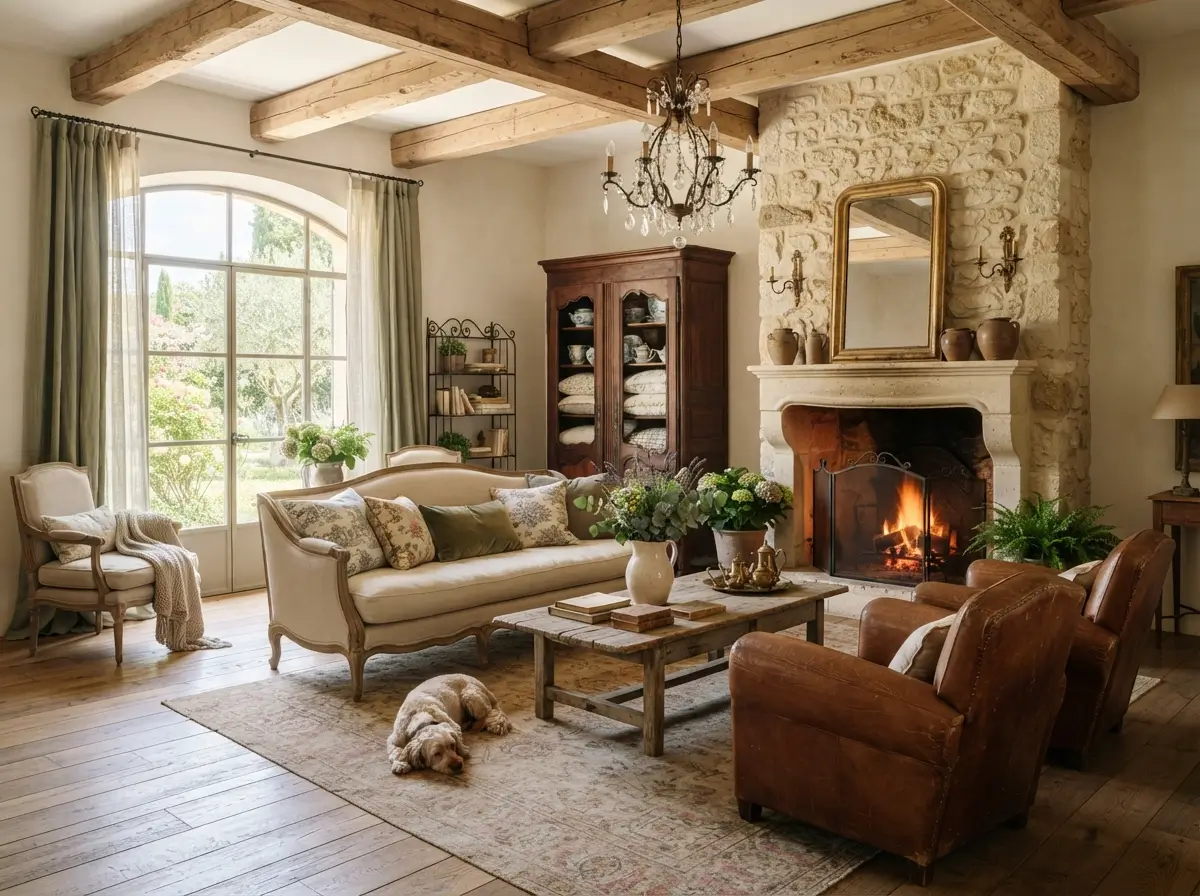

French country style blends comfort, age, softness, and practical elegance. Unlike formal European interiors that can feel untouchable, a French Country Living Room should feel welcoming enough for daily life. Linen upholstery, warm wood, faded color, gentle curves, and collected accessories create the character, but thoughtful choices keep the room from looking themed or cluttered. Beginners often assume they need expensive antiques or a large farmhouse to use the style. In reality, a small apartment, rental, or modest family room can carry the same feeling through proportion, texture, lighting, and a restrained color palette.
Good French country decorating starts with function. Seating should support conversation, tables should sit within easy reach, lamps should provide comfortable light, and storage should prevent decorative objects from taking over. Rustic beauty comes from materials that improve with age rather than from forcing every surface to look distressed. When you combine useful furniture with soft color and a few old-fashioned details, the room feels relaxed instead of staged.
How do you create a French Country Living Room without making it look old-fashioned?
Use warm neutrals, natural materials, softly curved furniture, layered lighting, and a limited number of vintage-inspired pieces. Keep the layout practical, choose comfortable upholstery, and mix old-looking finishes with clean, uncluttered surfaces. Authenticity comes from balance. One carved cabinet can add history, while ten ornate pieces can make the room feel crowded.
Build the Room Around Warm Neutral Walls
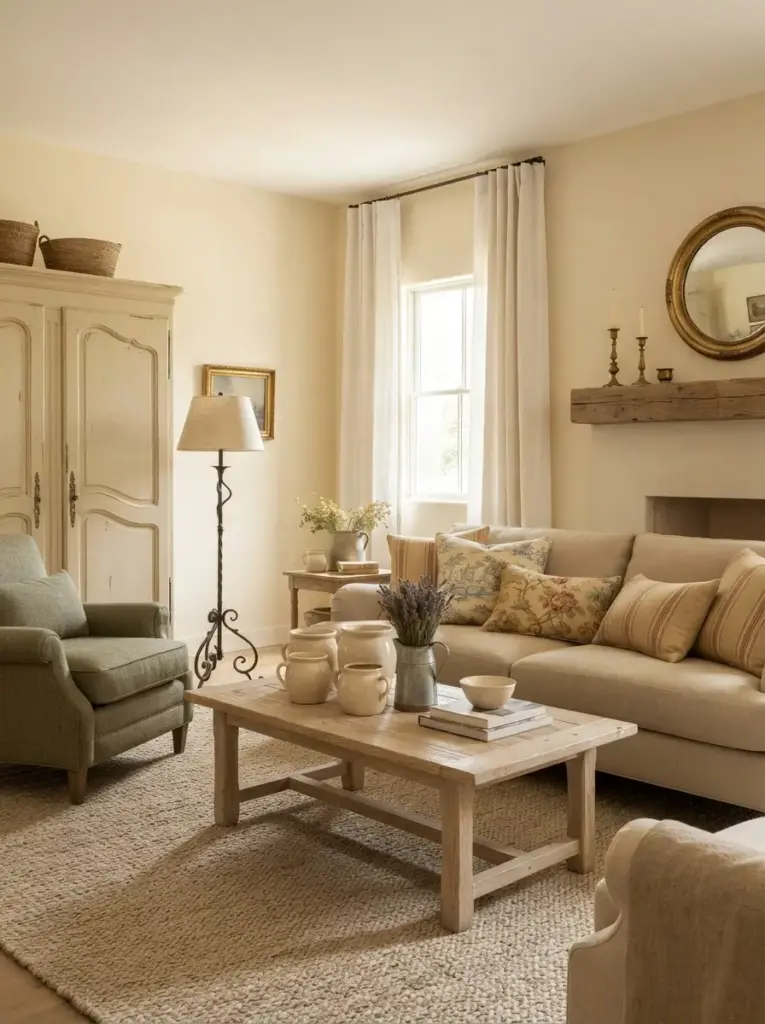
Warm neutral walls give French country furniture and textiles a calm background. Instead of bright white, choose soft ivory, oatmeal, light mushroom, pale putty, or a creamy beige with a gentle yellow or red undertone. Shades such as warm greige and muted limestone also work well because they resemble plaster, chalk, and natural stone. North-facing rooms usually need warmer paint to prevent a gray cast, while sunny south-facing rooms can handle slightly cooler beige or pale taupe. Test samples on several walls and look at them in the morning, afternoon, and lamp light before deciding.
Soft wall color works because French country rooms usually contain several textures and finishes. Wood grain, linen weave, pottery, metal, and patterned fabric need visual breathing room. Warm neutrals connect those materials without flattening them. People decorating small living rooms benefit most from this approach because pale walls reflect light and make bulky seating feel less heavy. Renters can get a similar result with removable wallpaper in a subtle plaster pattern or by using large cream curtains to cover a strong wall color. Avoid stark blue-white paint beside honey-toned wood, since the contrast often feels cold and disconnected.
Choose a Comfortable Sofa With Simple Curves
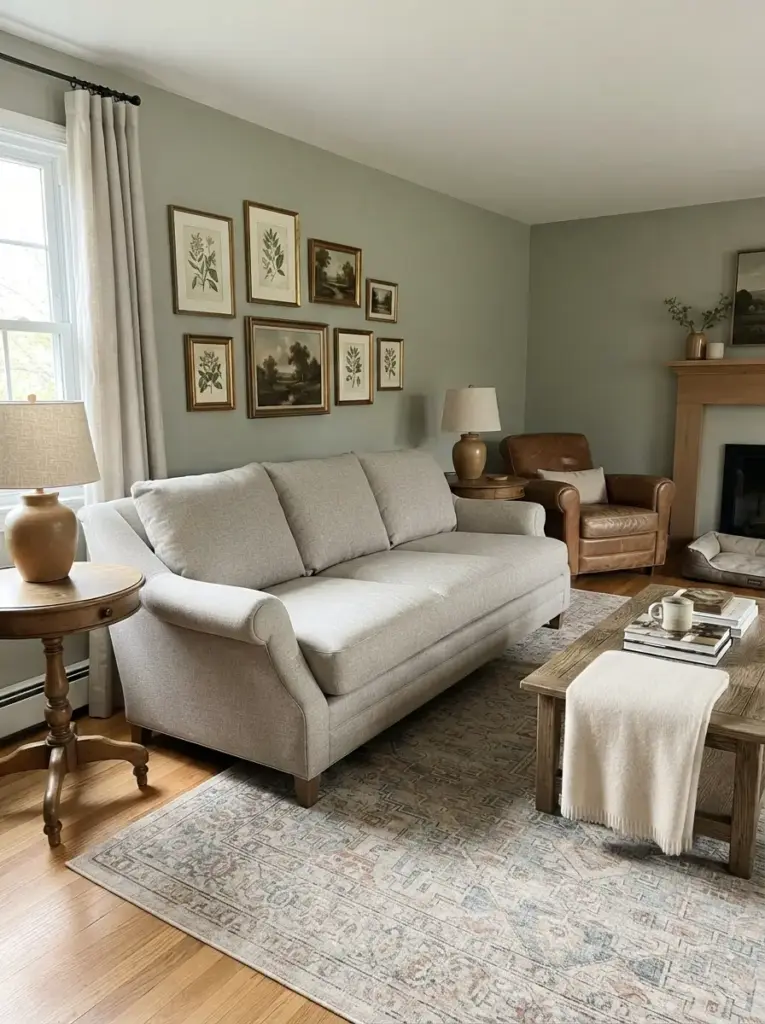
Comfort should lead the sofa choice. Look for a rolled arm, gently sloped arm, camelback shape, or relaxed English arm rather than an oversized modern sectional with sharp corners. Linen, cotton-linen blends, brushed cotton, and performance fabric in flax, cream, warm gray, or faded beige suit the style. Families with children or pets should consider a washable slipcover or a tightly woven performance fabric that mimics linen. Seat depth matters too. A depth of about 21 to 24 inches suits most people, while deeper sofas can overwhelm compact rooms and encourage a slouched layout.
Curved arms and soft upholstery bring traditional character without requiring ornate carving. Apartment dwellers should measure the doorway, stairwell, and wall length before ordering, then leave at least 30 inches for main walkways. A loveseat between 60 and 72 inches wide often fits better than a full sofa in a narrow room. Common mistakes include choosing beige upholstery that exactly matches the walls, which can make the room look flat, or selecting a sofa with too many decorative nailheads, tufts, and carved details at once.
Mix One Weathered Wood Piece With Cleaner Furniture
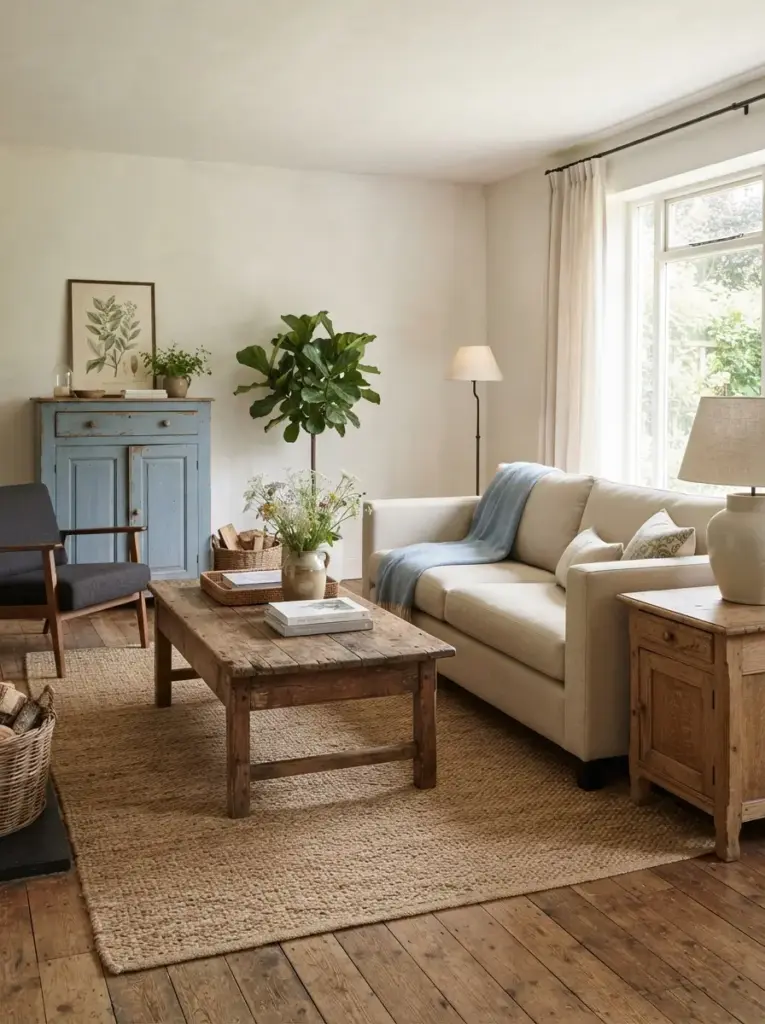
One reclaimed coffee table, scrubbed pine console, oak side table, or painted cabinet with worn edges can serve as the main rustic feature. For example, pair a weathered rectangular coffee table with a simple upholstered sofa and two painted end tables, or place a faded blue cabinet beside a clean-lined reading chair. Real wear looks better than random sanding, so choose pieces with believable marks near handles, corners, and feet.
Contrast explains the success of this mix. French country style needs age, but too many distressed surfaces can make a living room resemble a furniture showroom built around one theme. Clean upholstery, plain walls, and simple lamps balance the rough grain. Beginners and budget decorators can find solid wood pieces at thrift stores, estate sales, or local resale listings, then clean and wax them instead of repainting everything. Renters can use a smaller vintage stool as a side table if a large reclaimed piece feels difficult to move. Check for wobbling joints, strong odors, or flaking paint before bringing used furniture indoors, especially when the original finish may be very old.
Add Faded Blue, Sage, or Muted Yellow Accents
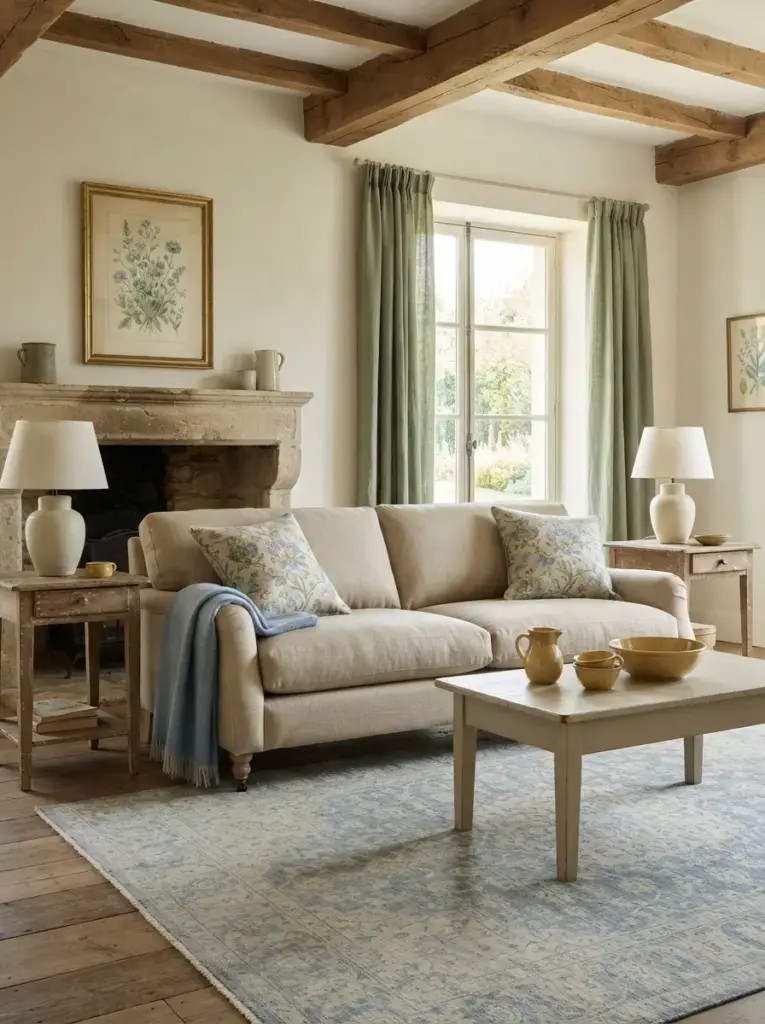
French country color works best when it appears softened by time. Faded cornflower blue, dusty sage, muted mustard, clay pink, and lavender-gray all feel natural beside cream and warm wood. Choose one main accent color and one quieter supporting shade. A practical scheme might use cream walls, a flax sofa, sage curtains, and two blue floral cushions. Another could combine mushroom walls, an oatmeal sofa, muted yellow pottery, and a faded blue throw. Keep a stronger color on items that are easy to change, especially when you are learning what feels comfortable.
Muted accents feel convincing because they reflect colors found in fields, herbs, stone, old textiles, and painted shutters. Small-space decorators should repeat the main accent three times at different heights, such as blue in a rug, a cushion, and artwork. Repetition helps the room feel intentional without requiring many objects. People who prefer neutral rooms can introduce color through book spines, a ceramic lamp, or a botanical print. Avoid using equal amounts of several pastel shades, which can make the room feel sugary. Dark navy can work, but use it sparingly so the overall palette remains soft and sun-washed.
Layer Linen Curtains for Softness and Height
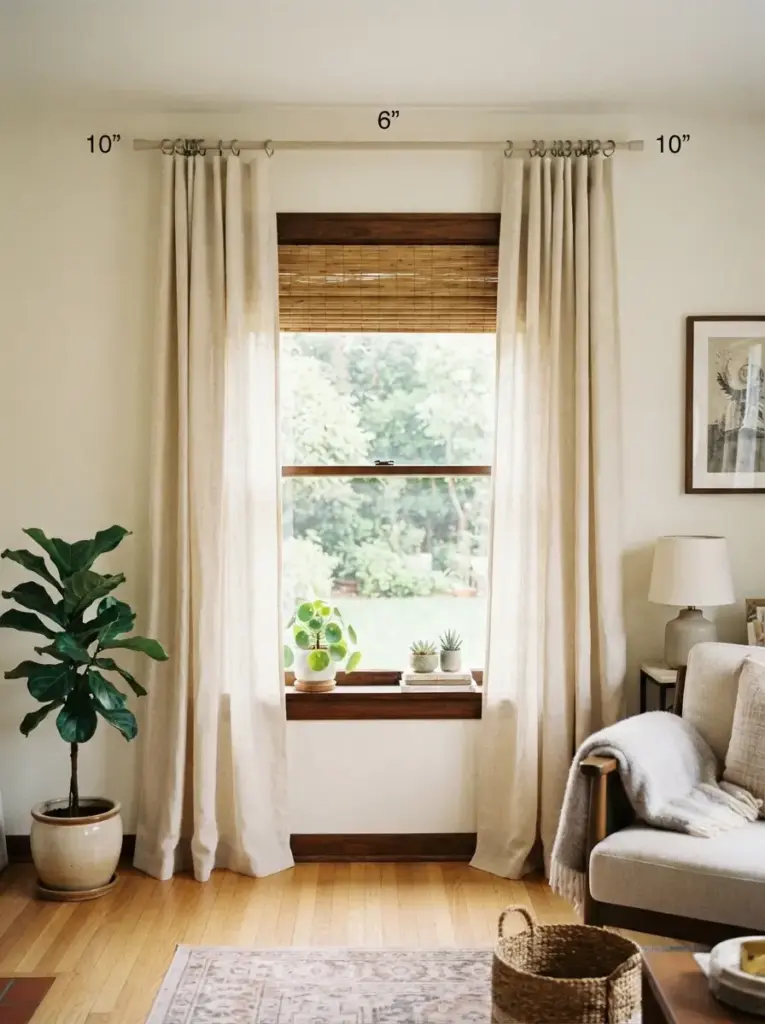
Linen or linen-look curtains make hard windows feel relaxed and add vertical movement. Hang the rod four to eight inches above the frame and extend it beyond each side so the panels rest mostly outside the glass when open. Curtains should lightly touch the floor or break by no more than an inch for a casual finish. Cream, natural flax, pale gray-beige, and faded stripe patterns are versatile choices. Rooms that need privacy can combine unlined curtains with a woven shade, light-filtering roller blind, or simple white sheers.
Height makes this treatment especially effective. Raising the rod draws the eye upward and helps a low-ceiling room feel more balanced. Linen also filters daylight in a way that softens wood and painted finishes. Renters should use no-drill brackets, tension rods inside deep window frames, or removable curtain hooks designed for the wall type. Budget shoppers can buy standard panels and add iron-on hem tape rather than ordering custom lengths. Avoid very shiny polyester, heavy puddling, or tiny curtains mounted directly on the frame, since those choices can make the room feel smaller and less natural.
Ground the Seating Area With a Traditional Rug
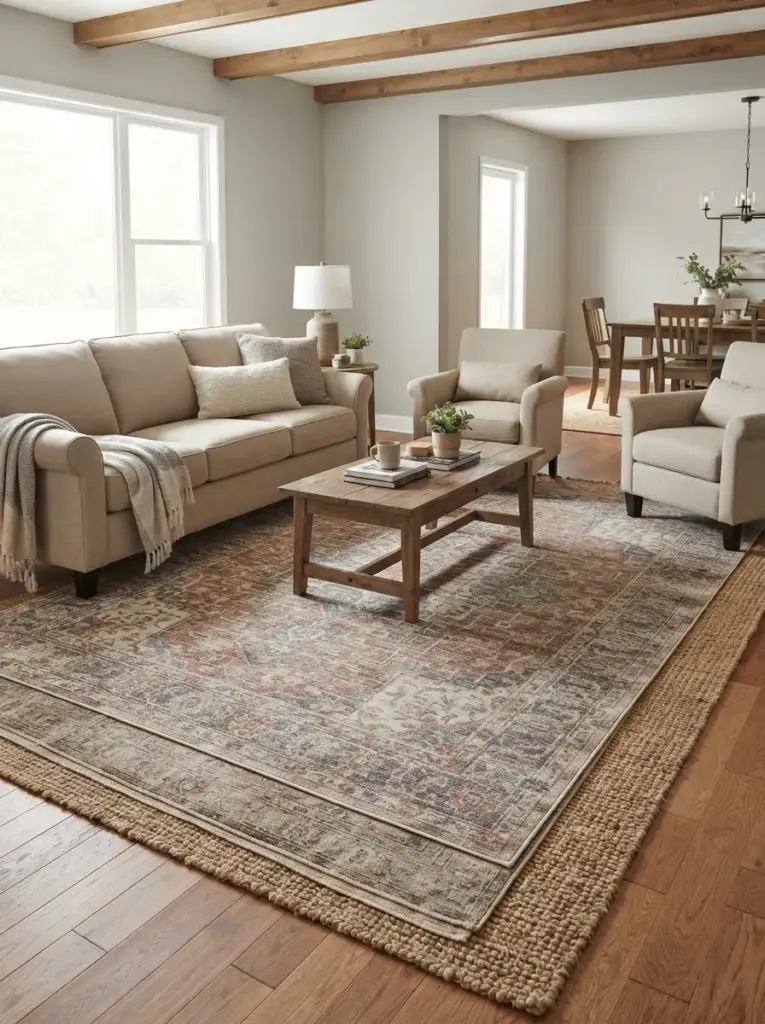
Your rug should define the conversation area, not float like a small island beneath the coffee table. In most living rooms, the front legs of the sofa and chairs should rest on the rug. An 8-by-10-foot rug often suits a standard seating group, while a 5-by-8 can work in a compact apartment if the furniture arrangement is narrow. Look for low-contrast floral, medallion, stripe, or small-scale pattern in faded blue, rust, taupe, olive, cream, or charcoal. Flatweave wool blends and low-pile washable rugs are practical for busy households.
Patterned rugs support the style because they connect upholstery, wood, and accent colors near the floor. Slight variation also hides everyday dust and small marks better than solid ivory. People furnishing open-plan spaces gain an additional benefit because the rug visually separates the living area from dining or kitchen zones. Budget decorators can layer a smaller vintage-style rug over a larger natural jute or sisal-look base, although real jute may feel rough under bare feet and can shed. Avoid a rug that ends several inches before every seat, since the exposed gap makes the arrangement feel disconnected.
Use a Stone, Brick, or Plaster-Inspired Focal Point
Natural-looking masonry gives a French Country Living Room architectural depth. Existing fireplaces can be refreshed with limewash, warm white paint suitable for masonry, or a simple wood mantel if local safety rules allow. Rooms without a fireplace can create a focal wall through removable limewash-effect wallpaper, a plaster-look paint treatment, or a large pale stone-colored artwork above a low console. Brick should appear soft and chalky rather than glossy red, while stone tones should lean toward limestone, sand, or warm gray.
Architectural texture works because French country interiors often rely on humble building materials instead of highly polished surfaces. One strong focal point gives the room identity and reduces the need for excess decoration. Renters should avoid permanent fireplace changes and use a freestanding electric unit only when the lease and electrical setup allow it. Another rental-friendly option involves placing a large arched mirror above a shallow console to suggest the scale of a mantel. Do not mount heavy stone panels without confirming the wall structure, and never place fabric, baskets, or dried branches too close to a working fire.
Select Tables With Useful Storage and Rounded Details
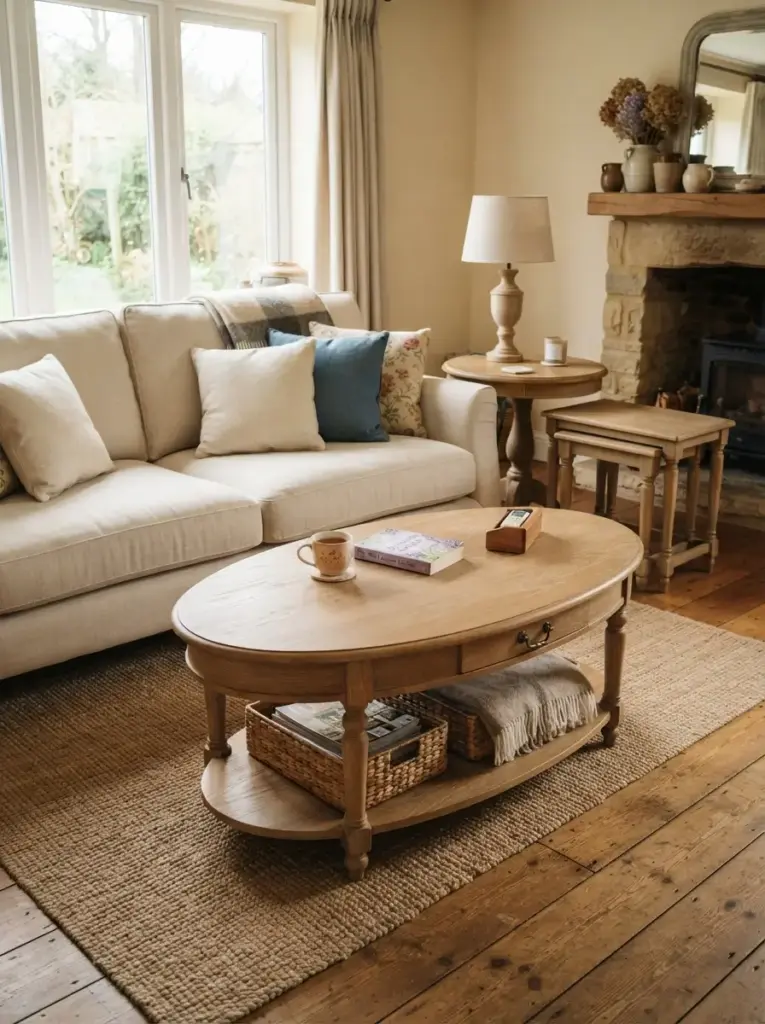
Coffee and side tables should support daily habits. A coffee table with a lower shelf holds baskets, books, or folded throws, while a small drawer can hide remotes and chargers. Turned legs, scalloped aprons, rounded corners, and simple pedestal bases suit French country rooms without feeling overly formal. Oval or round tables improve movement in tight layouts because they remove sharp corners. Leave roughly 14 to 18 inches between the sofa and coffee table so people can reach a drink and still walk through comfortably.
Practical storage keeps the decorative style from becoming cluttered. Rustic rooms contain visual texture, so concealed or organized storage prevents that texture from turning into mess. Small families, renters, and anyone working with one shared living space benefit from nesting tables that separate when guests arrive. A storage ottoman in linen-look fabric can replace a hard coffee table where children play. Skip tables that are too high for the sofa seat or too delicate for daily use. French country decorating should feel graceful, but furniture still needs to handle mugs, laptops, games, and ordinary wear.
Create Layered Lighting With Warm Bulbs
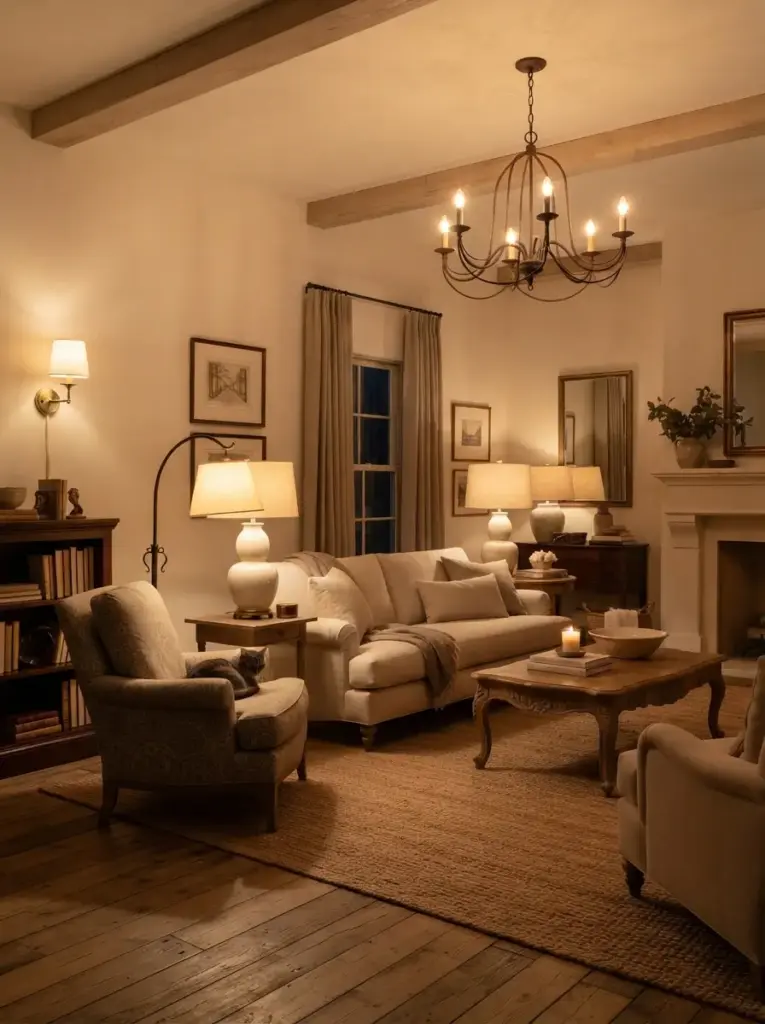
Layered lighting makes the room comfortable after sunset. Combine overhead light, table lamps, floor lamps, and one focused reading light rather than relying on a bright ceiling fixture. Bulbs around 2700K create a warm glow that flatters cream walls and wood. A slightly clearer 3000K bulb can work in a task lamp, but mixing very warm and cool bulbs within the same sightline often looks uneven. Choose lampshades in linen, pleated fabric, parchment, or soft off-white, and place the bottom of the shade near seated eye level to reduce glare.
Multiple light sources succeed because they create gentle pools of light across the room. French country style depends on texture, and side lighting reveals linen, carved wood, and plaster more effectively than one harsh fixture. Plug-in wall sconces also work beside a bookcase or sofa, especially when cord covers match the wall. Budget shoppers should prioritize two matching-height table lamps before buying a decorative chandelier. Avoid bulbs above 4000K in the main seating area, exposed glare at eye level, and tiny lamps that look out of scale beside a large sofa.
Bring in Floral, Ticking, and Toile Patterns Carefully
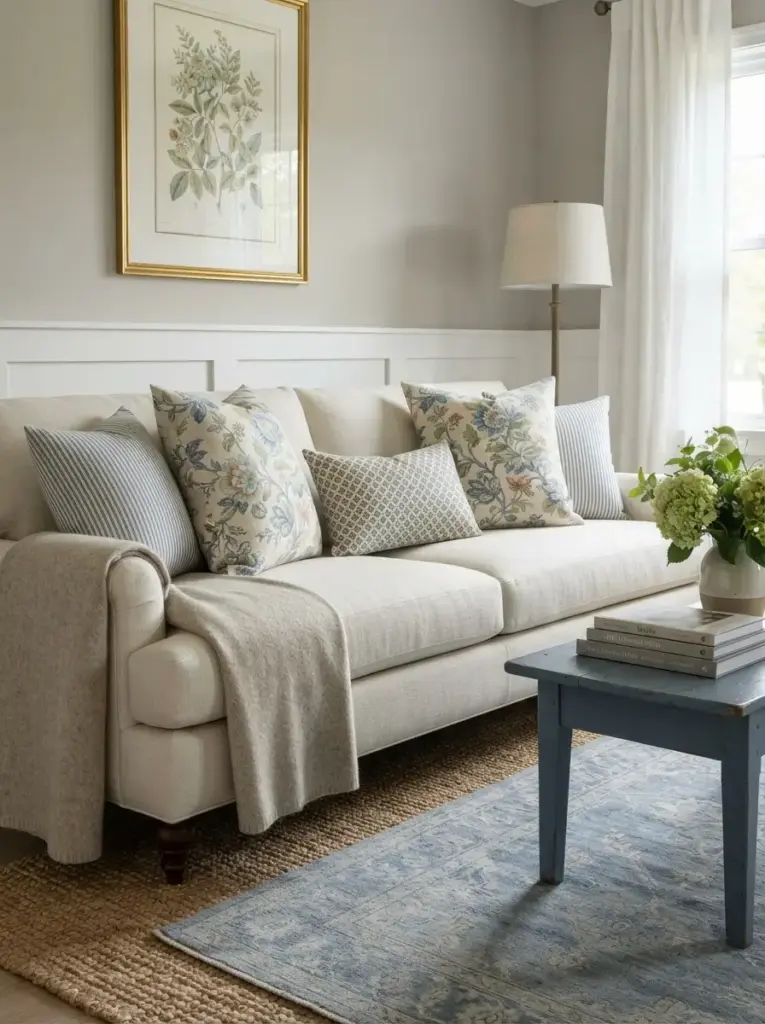
Select one medium-scale floral or toile as the leading pattern, then support it with a stripe, check, or small geometric. For example, use two floral cushions, one blue ticking pillow, and a plain oatmeal throw on a neutral sofa. Keep at least one common color across the patterns so the room feels connected.
Scale determines whether the combination looks calm or busy. A large floral beside a narrow stripe creates a clearer contrast than several small prints fighting for attention. Pattern mixing suits homeowners who already have plain furniture and want more character without replacing major pieces. Beginners should start with removable covers and a throw, then live with the combination before committing to upholstered chairs. Avoid covering the sofa, curtains, rug, and every pillow in different motifs. French country rooms may be layered, but the eye still needs solid fabric and empty wall space for rest.
Include One Painted Cabinet or Armoire
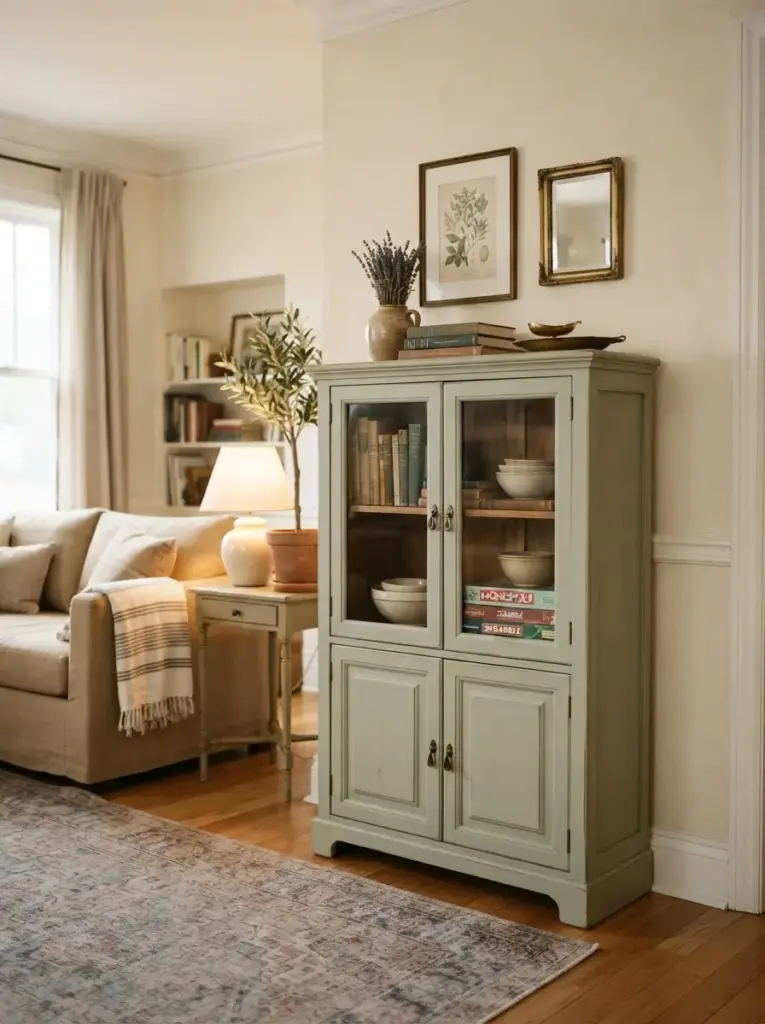
One shallow cabinet in faded blue, soft sage, warm white, or putty can hold books, electronics, board games, or serving pieces. Large armoires suit rooms with enough wall depth, but smaller homes should consider a low cabinet or narrow bookcase no deeper than 12 to 16 inches. Replace modern shiny handles with aged brass, iron, or ceramic knobs for a more fitting finish.
Storage furniture earns its place because French country style values useful household pieces. A cabinet also introduces vertical shape, which balances a room filled with low sofas and tables. People living in older homes can use it to compensate for limited built-in storage, while renters can move it later. Budget decorators may update an existing laminate cabinet with bonding primer and durable furniture paint, though testing adhesion first saves frustration. Skip heavy distressing on every edge. Gentle wear around knobs and corners looks plausible, while random dark streaks can feel artificial.
Arrange Seating for Conversation Instead of the Television
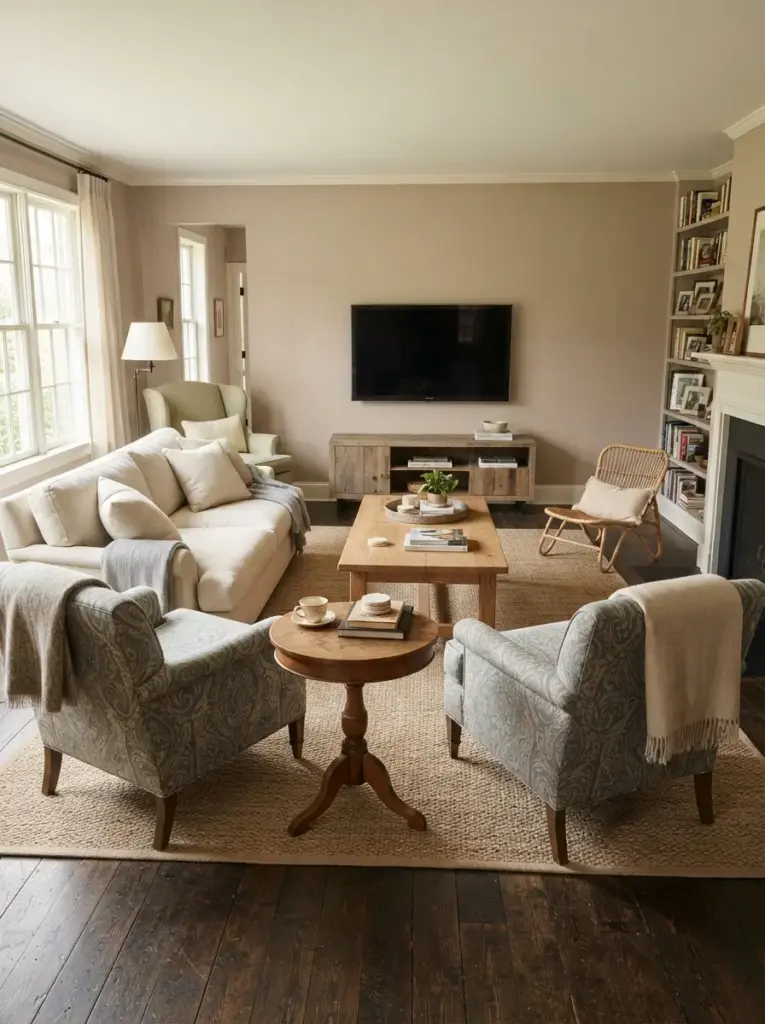
Conversation-friendly layouts feel warmer and usually make better use of the room. Angle two chairs toward the sofa, place a small table between them, and keep the main seats within about eight feet of one another when space allows. A television can remain in the room, but avoid making every chair face it in a rigid line. Mounting the screen at seated eye level or placing it on a low cabinet reduces its visual dominance. In narrow rooms, try a sofa on the long wall with one chair near the window and another lightweight chair that can move when guests arrive.
French country interiors feel informal because furniture appears gathered for living, reading, and talking rather than arranged only for display. Small-space residents benefit from swivel chairs, stools, and compact slipper chairs that can serve more than one purpose. Leave 30 to 36 inches for main circulation paths and at least 18 inches for tighter secondary routes. Pulling chairs forward by even six inches can create a clearer group and a more comfortable distance from the coffee table.
Decorate With Pottery, Baskets, and Useful Objects
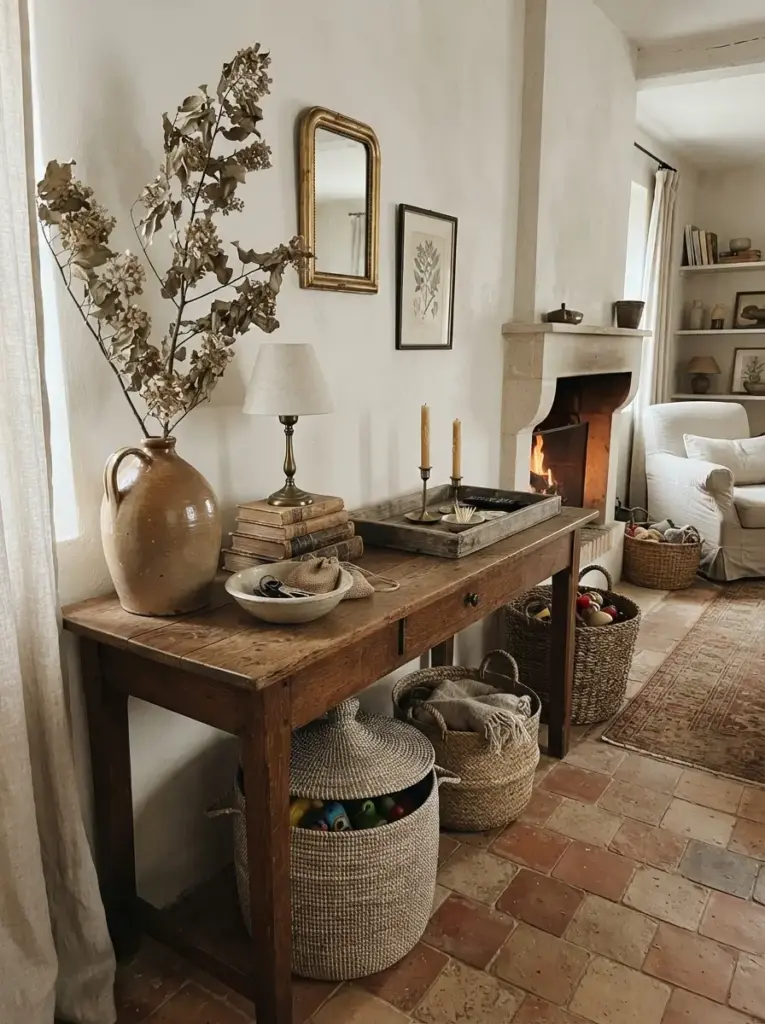
Accessories should look collected, but each item needs a reason to stay. Earthenware jugs can hold branches, shallow bowls can collect keys, lidded baskets can store toys, and wooden trays can organize candles and remotes. Woven baskets add warmth beneath a console or beside the fireplace, while a stack of well-used books can raise a lamp or small object to the correct height. Group objects in uneven numbers and vary height, but leave open space around each arrangement.
French country rooms were not built around shelves full of identical ornaments, so practical pieces often look more convincing than themed signs or novelty décor. Families and beginners gain the most from this approach because storage becomes part of the design. Thrift stores and kitchen cupboards can supply bowls, pitchers, baskets, and candlesticks at low cost. Avoid filling every surface, using many tiny items, or buying matching sets. Larger objects in smaller quantities are easier to dust and create a calmer room.
Add Botanical Art and an Aged Mirror
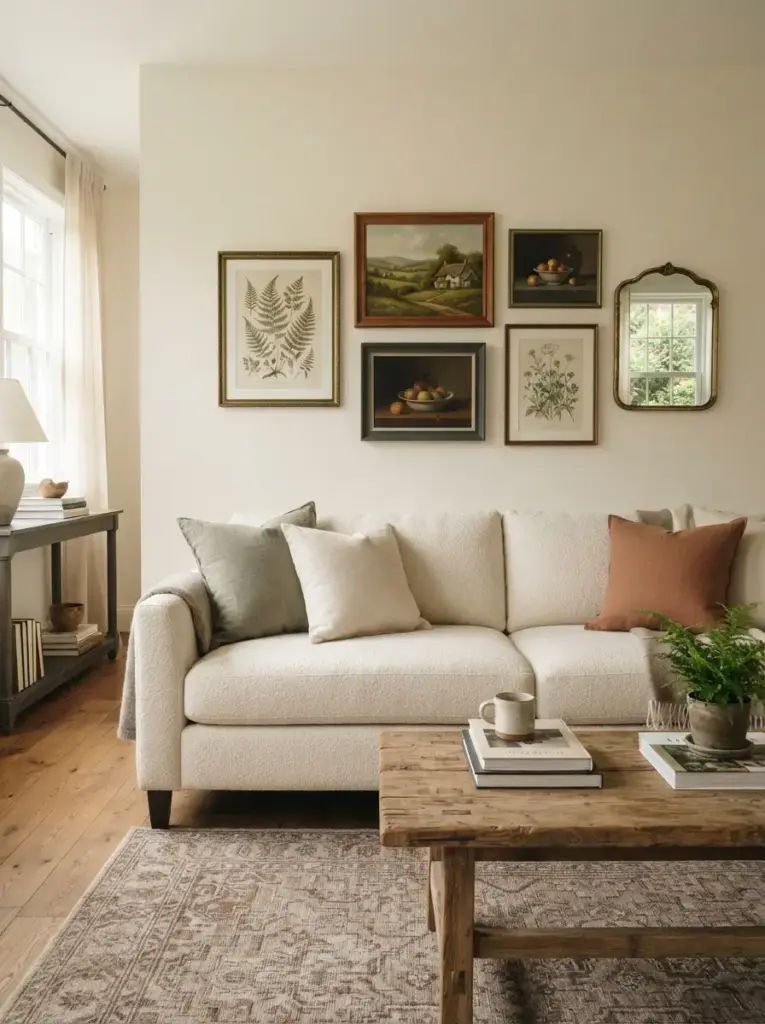
Botanical prints, rural landscapes, simple still lifes, and aged mirrors bring quiet detail to the walls. Hang one larger piece above the sofa or create a small grouping with consistent frames and generous spacing. Art should generally span about two-thirds of the furniture width below it. Warm wood, antique brass, blackened metal, and painted frames all suit the style. An arched or gently ornate mirror can reflect window light, but place it where the reflection shows something pleasant rather than a blank wall or cluttered shelf.
Botanical subjects repeat the connection to gardens and countryside without requiring floral fabric everywhere. Small-room decorators benefit from mirrors because reflected light can brighten a dim corner, though a mirror cannot compensate for poor lighting on its own. Renters can use removable picture-hanging strips within weight limits or lean a medium mirror securely on a deep console. The center should usually sit around 57 to 60 inches from the floor, adjusted for furniture and ceiling height.
Finish With Natural Greenery and Seasonal Branches
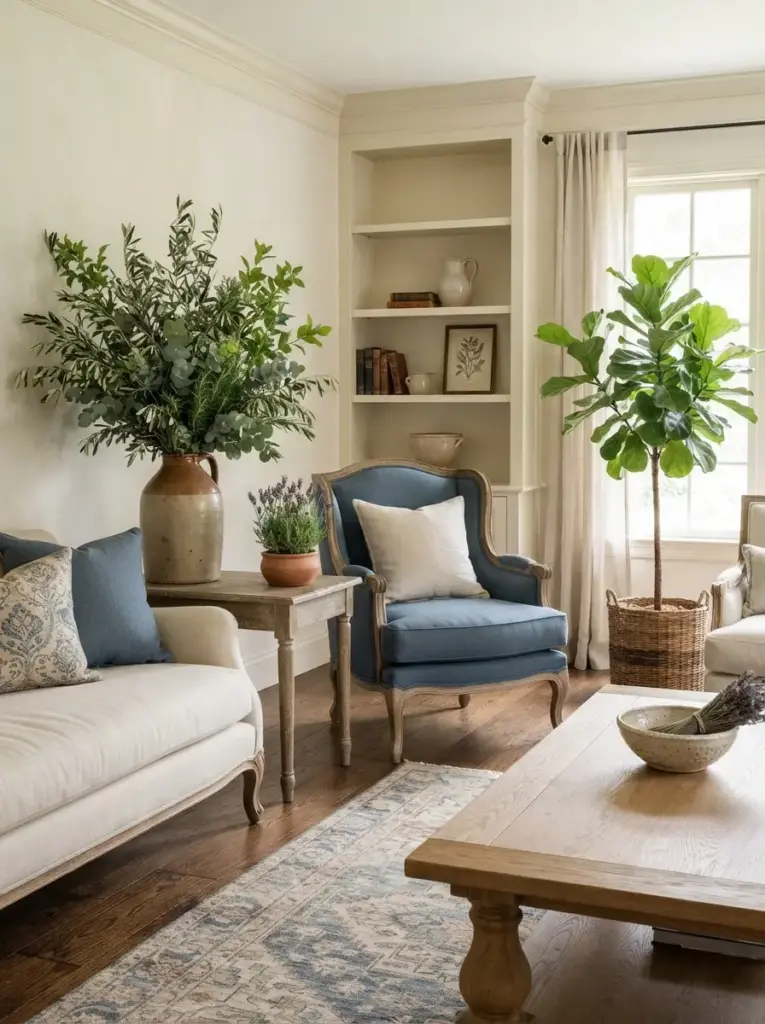
Greenery keeps a neutral room from feeling static. Olive branches, rosemary, lavender, eucalyptus, bay, and simple leafy stems suit French country color palettes. Fresh branches in a stoneware jug can create a generous arrangement for little money, while a healthy potted plant adds long-term texture. A tall corner needs a floor plant or large branch arrangement, while a side table needs a low pot that does not block conversation. Artificial stems can work when they have varied leaf shapes, matte surfaces, and believable color.
Leaves soften straight furniture lines and connect blue, green, cream, and wood tones already present in the room. Busy homeowners and low-light apartments may prefer dried lavender, preserved greenery, or a high-quality faux olive branch. People with pets should check plant safety before bringing any species home. Avoid scattering many small plastic plants across shelves.
Common French Country Living Room Mistakes to Avoid
Overdecorating causes the most common problem. French country style includes pattern, age, curves, and rustic materials, but it still needs blank wall space and clear tabletops. Remove one or two accessories from each surface, then look at the room from the doorway. Large furniture should lead the view, while smaller objects should support it. Theme-heavy items such as rooster signs, artificial grape clusters, and matching “Paris” accessories can make the room feel staged rather than personal.
Rooms feel more natural when wood tones and painted finishes vary within a controlled range. Medium oak can sit beside painted cream furniture and a darker walnut frame, provided the undertones relate. Repeating each finish at least twice helps the mix feel deliberate. Avoid combining orange pine, icy gray laminate, glossy black, and red mahogany without a bridge, such as a rug or fabric that contains several of those tones.
Ignoring scale often hurts small living rooms. Oversized rolled-arm sofas, deep coffee tables, and tall armoires can consume floor space even when each item looks attractive alone. Measure the room, mark furniture footprints with painter’s tape, and check doors, radiators, windows, and walkways before buying. Narrow English-arm sofas, small bergère-style chairs, and oval pedestal tables provide traditional shape in reduced dimensions.
Using only beige can make the design dull. Neutral rooms need contrast through dark metal, medium wood, muted color, and varied texture. Add one dark note, such as an iron lamp, charcoal picture frame, or aged bronze hardware, to sharpen the softer palette. Texture should also vary between linen, wool, smooth pottery, wood, and woven fiber. Several cream fabrics with the same weight and weave will merge into one flat surface.
Choosing cold lighting can undo careful color choices. Cool white bulbs often make cream walls look green or gray and can emphasize imperfections in distressed finishes. Standardize the main lamps around 2700K, then assess the room at night before changing paint or fabric. Dimmers give more control, especially in rooms used for reading, entertaining, and watching television. Check that lamps provide enough brightness rather than relying on warmth alone.
Budget-Friendly Ways to Get the Look
Secondhand shopping offers the best value when you focus on shape and construction rather than finish. Search for solid wood side tables, framed art, ceramic lamps, baskets, and small cabinets. Scratches can often be cleaned, waxed, or painted, while loose joints and water damage require more work. Set a list before visiting resale shops so low prices do not lead to clutter. A single sturdy table is more useful than five small decorative objects.
Textiles can change the room without replacing furniture. Washable pillow covers, a faded throw, affordable curtain panels, and a vintage-style rug create the palette at a lower cost than a new sofa. Choose standard cushion inserts and covers with zippers so patterns can change seasonally. Curtain panels can appear fuller when two panels are used on each side of a wide window, but make sure the fabric still stacks neatly beyond the glass.
Refinish one cabinet, mirror frame, or side table rather than distressing an entire set. Clean the surface, sand only when needed, use the correct primer, and protect high-touch areas with a durable topcoat. Hardware changes can also shift the style quickly, especially aged brass or dark iron knobs on a plain cabinet.
Move seating closer, improve the walkway, shift a lamp to the darker side of the room, and remove furniture that blocks windows. Shop other rooms for pottery, books, trays, and framed art before buying new décor. A kitchen pitcher may become a vase, while a bedroom stool may work beside an armchair.
Practical French Country Living Room Tips
Start with the room’s fixed features. Flooring, window direction, ceiling height, fireplace placement, and existing trim should guide the palette and layout. Honey-colored floors usually pair well with cream, sage, muted blue, and warm gray. Cool gray flooring needs warmer textiles and wood to prevent the room from feeling sterile. Low ceilings benefit from tall curtains, lower furniture backs, and vertical art, while high ceilings can handle a taller armoire or larger chandelier.
Write down one wall color, one main upholstery neutral, one dominant accent, one supporting accent, and two material finishes. A sample plan might include warm ivory walls, flax upholstery, faded blue accents, muted olive details, medium oak, and aged brass. Carry paint chips and fabric samples when shopping so attractive pieces do not pull the room in unrelated directions.
Linen curtains, cushions, and upholstered seating need contrast from wood, metal, stone, or pottery. Rooms filled only with soft beige fabric can look shapeless, while rooms filled with hard rustic furniture can feel uncomfortable. A useful ratio is to let upholstered pieces dominate the seating zone, then add firm structure through tables, lamps, frames, and storage.
Matching lamps on a console or two chairs facing a sofa can create calm, but exact symmetry everywhere may feel formal. Break the arrangement with a basket, plant, or different side tables. Small rooms often need flexibility more than perfect balance, so one chair and one stool may serve better than a bulky matching pair.
Keep a landing spot for drinks, provide enough charging access, choose washable textiles, and store frequently used items nearby. Attractive rooms become frustrating when every table is covered or every cushion must be moved before sitting down. French country style should support real routines, including reading, entertaining, watching television, and children playing.
Frequently Asked Questions
What colors are best for a French Country Living Room?
Warm ivory, cream, oatmeal, mushroom, pale taupe, faded blue, muted sage, soft mustard, and dusty lavender work well. Begin with a warm neutral background, then add one main accent and one supporting color. Darker notes such as charcoal, iron, or aged bronze help define the softer palette. Test every paint color beside the room’s flooring and in evening light before committing.
Can French country style work in a small living room?
Small rooms can carry the style very well when the furniture scale is controlled. Choose a compact sofa with narrow arms, one small accent chair, an oval coffee table, and shallow storage. Use tall curtains, a properly sized rug, and only a few larger accessories. Avoid deep sectionals, oversized armoires, and many tiny decorative pieces that consume visual space.
How can renters create a French Country Living Room?
Renters can rely on removable layers. Linen-look curtains, vintage-style rugs, slipcovers, plug-in sconces, framed botanical prints, baskets, and painted freestanding furniture all create the look without permanent construction. Removable wallpaper can mimic plaster or a soft floral pattern on one wall. Check lease rules and weight limits before mounting large mirrors or shelves.
Does all the furniture need to be antique?
No. Combining one or two vintage or aged pieces with comfortable modern upholstery usually looks more natural and functions better. A reclaimed coffee table, old mirror, or painted cabinet can provide history, while a newer sofa offers dependable support and stain-resistant fabric. Matching antique sets often feel heavier and less personal than a thoughtful mix.
What lighting is best for French country decor?
Use warm bulbs around 2700K in table lamps, floor lamps, and most ceiling fixtures. Add several light sources at different heights so the room does not depend on one bright overhead fixture. Linen shades, aged brass bases, dark iron floor lamps, and simple chandeliers fit the style. Reading areas may use a 3000K task light when extra clarity is needed.
How do you keep French country decor from looking cluttered?
Limit the color palette, choose fewer larger accessories, and keep useful storage close to the seating area. Leave part of each tabletop empty and remove duplicate decorative items. One large jug, a stack of books, and a tray usually look calmer than many small ornaments. Regular editing helps the room stay comfortable as new pieces arrive.
Conclusion
French country style succeeds when comfort, age, and practical living share equal importance. Warm neutral walls, gently curved seating, weathered wood, faded color, linen curtains, traditional rugs, and layered lighting create the foundation. Pottery, botanical art, baskets, and greenery add personality, but restraint keeps those details from overwhelming the room. Every choice should support how the space is used, not simply copy a decorative theme.
Beginners can start with one manageable change, such as replacing cool bulbs, moving the furniture into a conversation group, or adding faded blue cushions to a neutral sofa. Budget decorators can shop secondhand, repaint one storage piece, and reuse household objects as functional décor. Renters can build the same character through textiles, lamps, art, and movable furniture. A thoughtful French Country Living Room does not depend on a grand house or expensive antiques. Good proportions, useful pieces, soft color, and honest materials create rustic beauty that feels comfortable every day.