
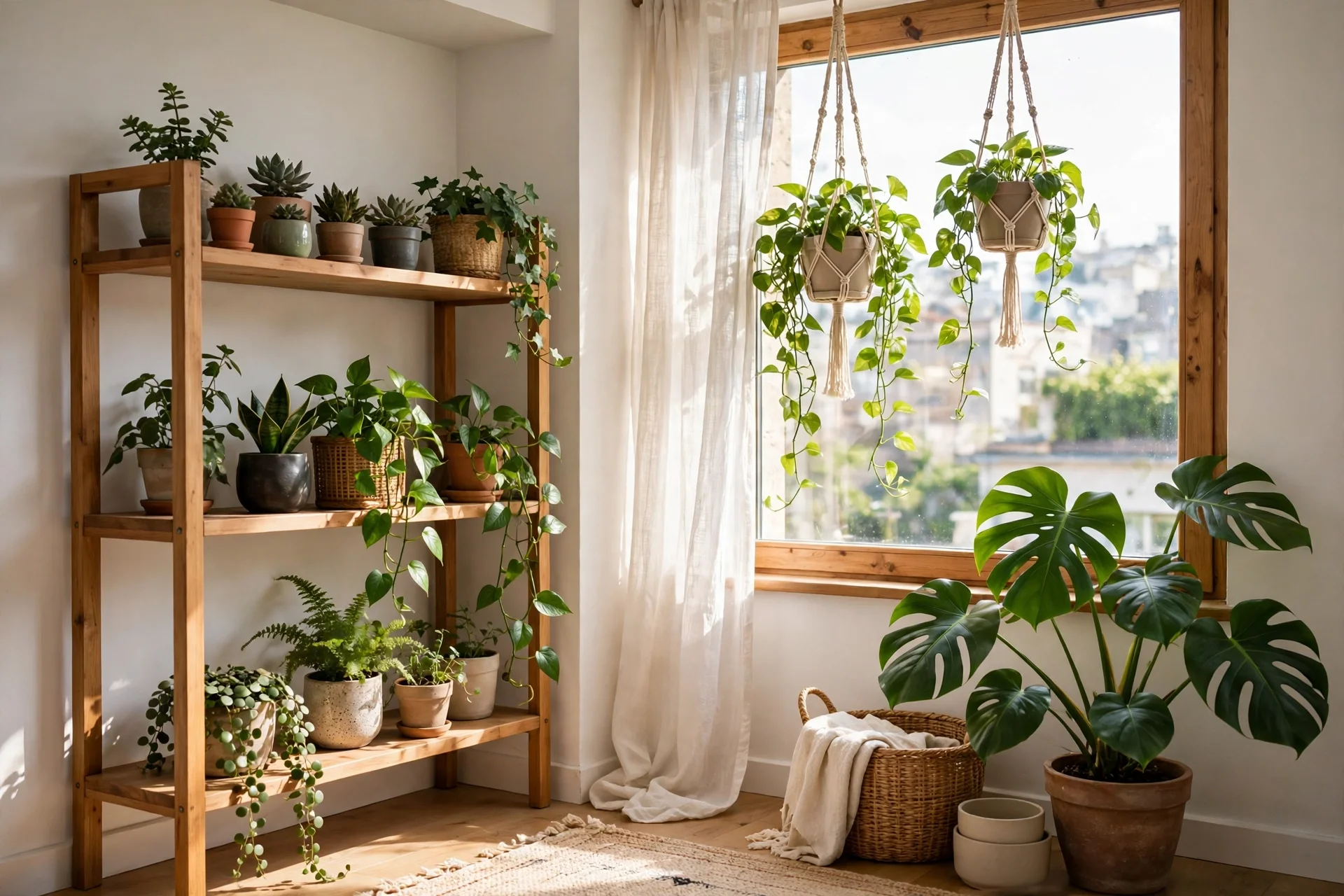

Plants are the cheapest way to make a small apartment feel finished. One healthy plant softens a bare corner, a trailing vine fills an empty wall, and green against white walls makes even a basic rental look cared for. The problem is never the plants; it is where to put them when every surface already has a job.
Good displays of indoor plants for small apartments use height instead of floor space: shelves, stands, curtain rods, the tops of cabinets and the one bright corner every home has, even if it is small. The plants share light, share watering day and stay off the surfaces you need for living.
These 15 ideas for indoor plants for small apartments start with placement, then move to the plants themselves. Each idea explains what it does, how to fit it into a small room, and the mistake that most often spoils it, so your plants stay alive and your apartment stays usable.
What Are the Best Indoor Plants for a Small Apartment?
The best indoor plants for small apartments are the forgiving ones: pothos, snake plants, spider plants, philodendrons and peace lilies. They tolerate irregular watering, grow in average apartment light, and stay a sensible size or trail politely instead of taking over the room.
Match the plant to the light before you fall for the leaves. Bright corners take almost anything, while a north facing room or a spot three meters from the window suits only the shade tolerant list. A plant in the right light needs almost no care; a plant in the wrong light needs constant rescue.
Start with three plants, not thirteen. Learn your light and your watering rhythm on a small collection, then grow it the way the shelf in our boho apartment decor ideas does, one happy plant at a time.
Give the Brightest Corner to Your Plants
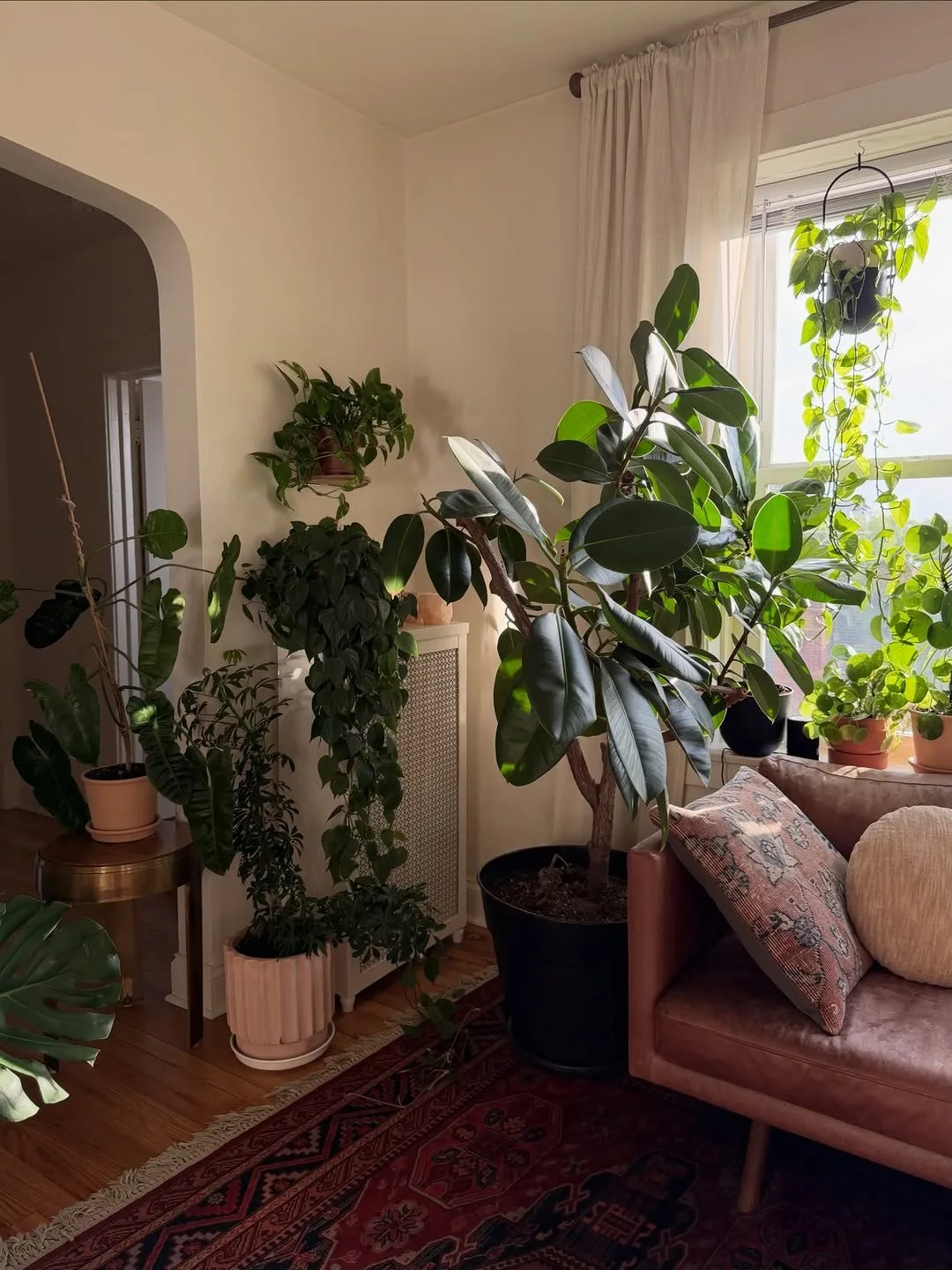
Every apartment has one corner where the light lands, usually beside the largest window. Give that corner to the plants as a group instead of spreading them through darker rooms where each one slowly declines.
A grouped corner also looks better than scattered pots. One tall plant, two medium ones and a trailing plant on a stool read as a small indoor garden, and the eye treats the whole group as one piece of furniture.
Keep the group a step away from the glass itself. Leaves that touch cold winter glass or hot summer glass get damaged, and a small gap also lets you open the window and clean behind the pots.
Apartments with one good window gain the most. The common mistake is fairness: one plant for every room, so each room gets a struggling plant. Plants do not care about your floor plan; give the light to the group and carry the green effect into other rooms with cuttings.
Start With Forgiving Plants You Cannot Easily Kill
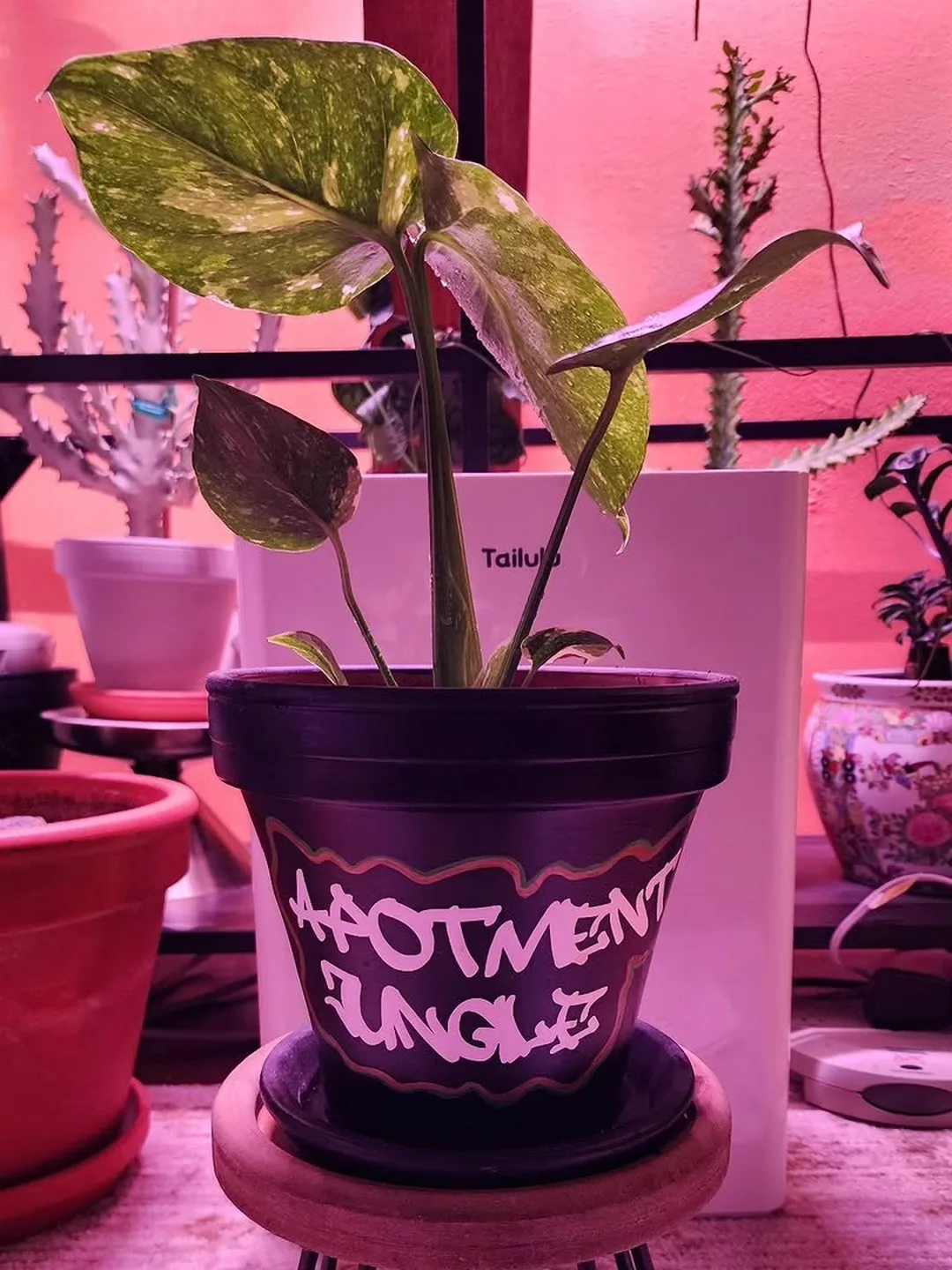
Beginners in small apartments should start with the plants that forgive: pothos, snake plant, spider plant, heartleaf philodendron and ZZ plant. They survive a forgotten watering, a busy month and average light, which is exactly the life most renters actually live.
Buy small and healthy rather than large and dramatic. A small plant in a 10 cm pot costs little, adapts to your light while it grows, and teaches you its habits before it is big enough to matter.
Check three things before you pay: leaves with no spots or webbing, firm stems, and roots that are not circling out of the drainage holes. A healthy small plant beats a discounted sick one every time.
Anyone who has killed a plant before gains the most. The common mistake is starting with the divas: ferns that want daily misting, calatheas that want perfect water, and herbs that want a greenhouse. Forgiving plants first; divas when you are bored.
Turn One Tall Shelf Into a Plant Wall
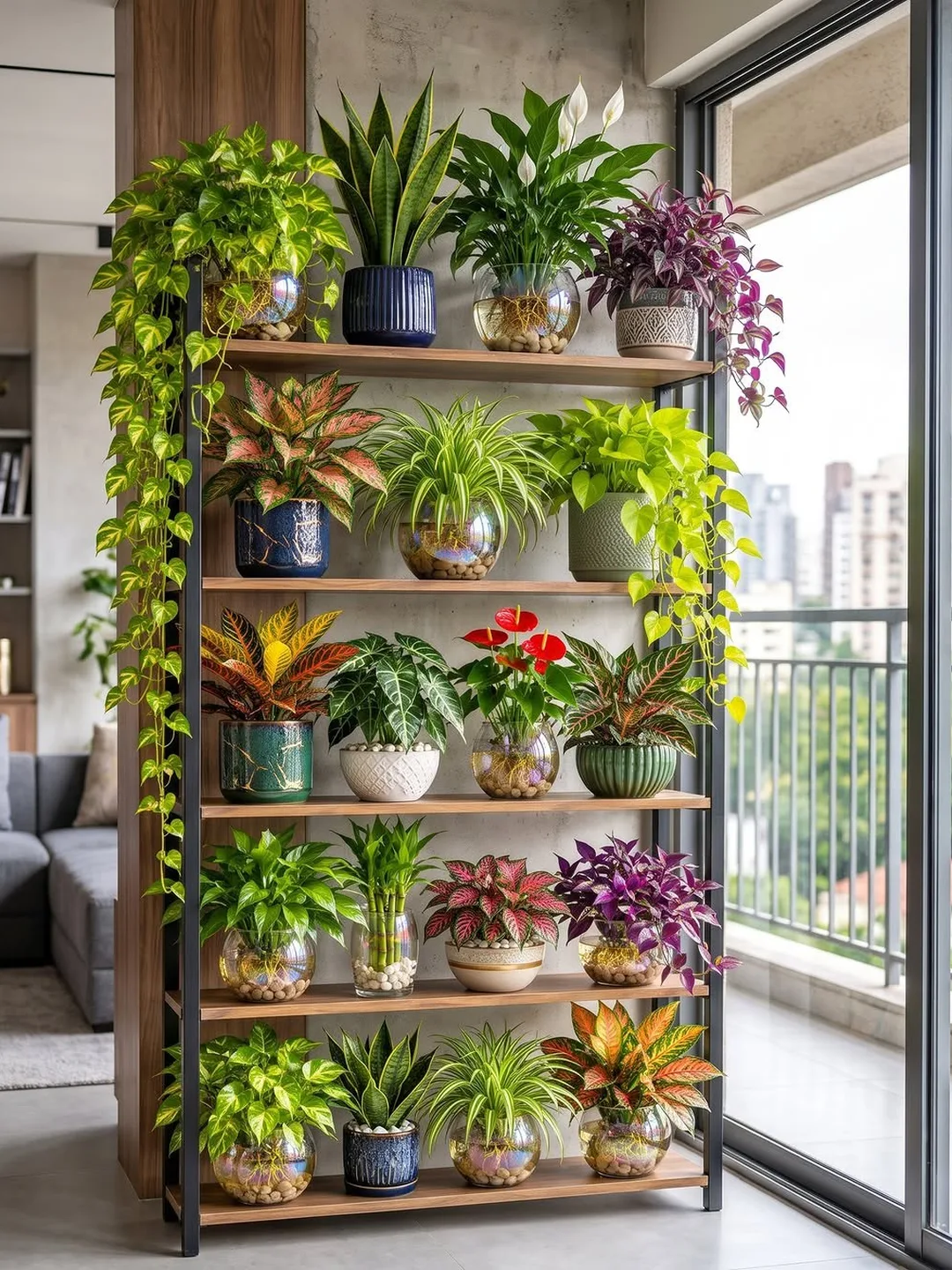
A tall, narrow shelving unit against the brightest wall holds twenty plants in the footprint of one chair. The shelf in the photo stands beside a glass door, and every level gets enough light for the plants arranged across it.
Put the tallest and thirstiest plants where you can reach them without a stool, and let one trailing plant per shelf spill over the front edge so the unit reads as green rather than as storage.
Mix pot colors within one family: all ceramic, all clay or all white and blue, as in the photo. Matching pots are what separate a plant wall from a plant pile, and they make mixed plants look like a collection.
Small living rooms gain the most, because the wall does the work of a whole garden. The common mistake is placing the unit on the darkest wall because it fits there. Shelves belong where the light is, even if the furniture shuffle takes an hour.
Cover a Wall With Trailing Pothos Instead of Art
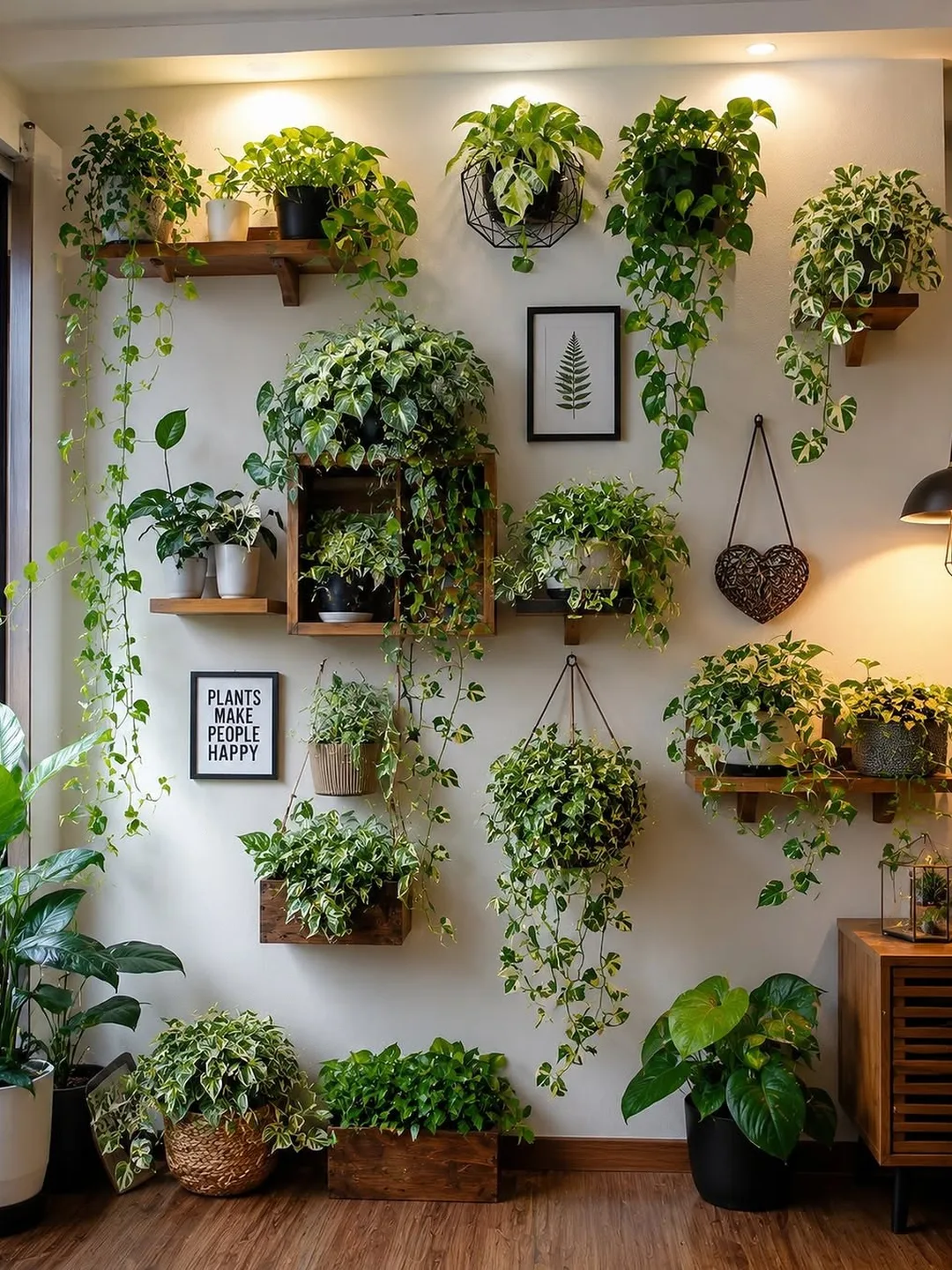
One wall of trailing pothos does what a gallery wall does, for the price of a few plants and shelves. The vines soften the wall, the leaves give the room its color, and the whole display keeps growing after you hang it.
Start pothos on small shelves and in wall planters at different heights, then guide the longest stems along the shelves with small clips. The plant decides the pattern; your job is only to keep stems out of walkways and away from radiators.
Pothos is the right plant for this because it roots easily, grows fast in average light and forgives pruning. Take cuttings from the longest stems, root them in water, and the wall fills itself for free.
Renters should use removable hooks and shelf brackets that fit existing holes where possible. The common mistake is letting vines grip painted walls directly; tiny rootlets can mark paint, so keep stems on clips and shelves, not on the wall itself.
Hang Pots From the Curtain Rod
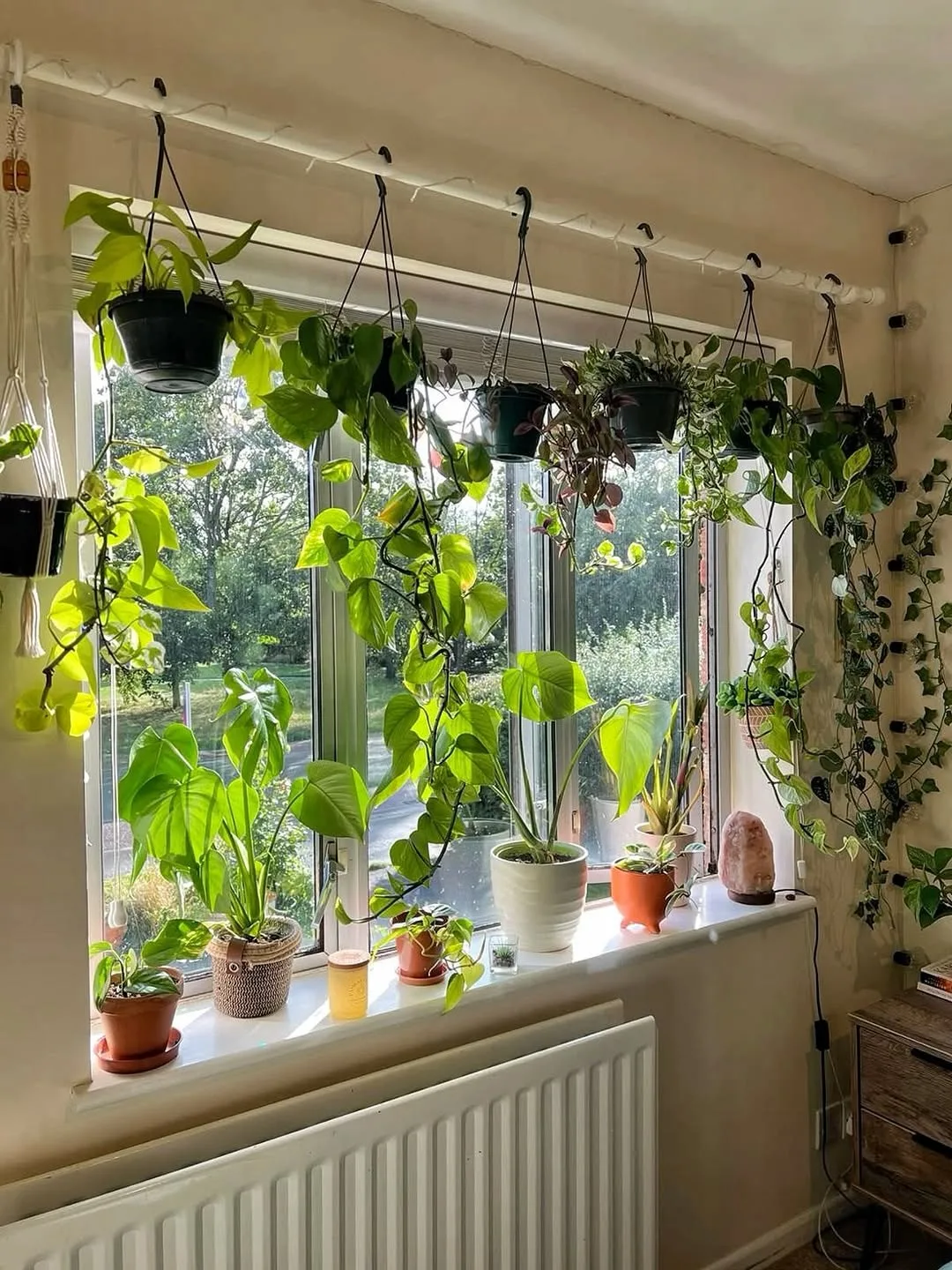
The curtain rod is the strongest free rail in most apartments, and it hangs plants exactly where they want to be: in the window light. Six small pots on hooks along the rod turn a plain window into the green frame of the room.
Use lightweight pots and trailing or compact plants, and check the rod’s brackets before you load it. A rod fixed into studs or solid plugs carries small pots easily; a loose rod on weak plugs does not, so test with one pot first.
Alternate a trailing plant with an upright one so the row has rhythm, and keep the middle of the window clearer than the edges so the room keeps most of its light and view.
Studios gain the most, because the window becomes decoration and garden at once. The common mistake is heavy ceramic pots that bend the rod over a season. Plastic nursery pots inside light woven or metal hangers give the look at half the weight.
Mount Floating Shelves for Small Pots
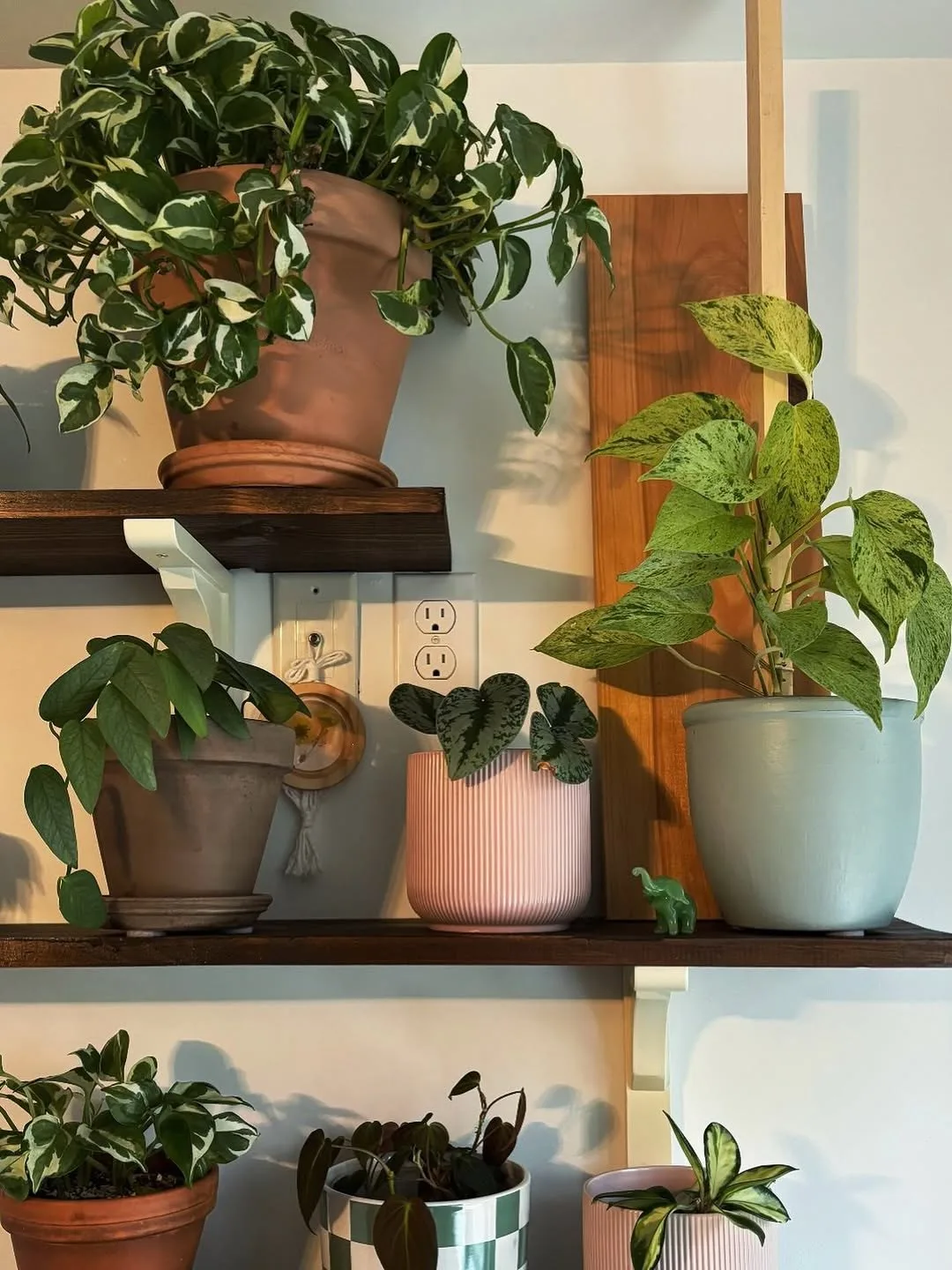
Floating shelves lift small plants off crowded surfaces and onto the wall at the height where light from the window still reaches them. Three dark wood shelves, like the ones in the photo, hold a dozen small pots without touching the floor plan.
Stagger the shelves rather than stacking them in a straight column, so each plant gets light and the trailing ones have room to fall. Leave one shelf partly empty; a plant shelf needs air around it to look calm.
Small pots dry out faster than big ones, so group the shelf plants on the same watering day and keep a small watering can nearby. A shelf of thirsty plants beside the sink or the bright corner gets watered; a shelf in a dark hallway gets forgotten.
Renters with strong walls gain the most; if drilling is banned, a tall bookcase gives the same effect. The common mistake is shelves above a sofa or bed, where one falling pot ruins more than the plant. Put shelves over desks, sideboards and floor space instead.
Use a Tiered Stand to Fit More Plants on Less Floor
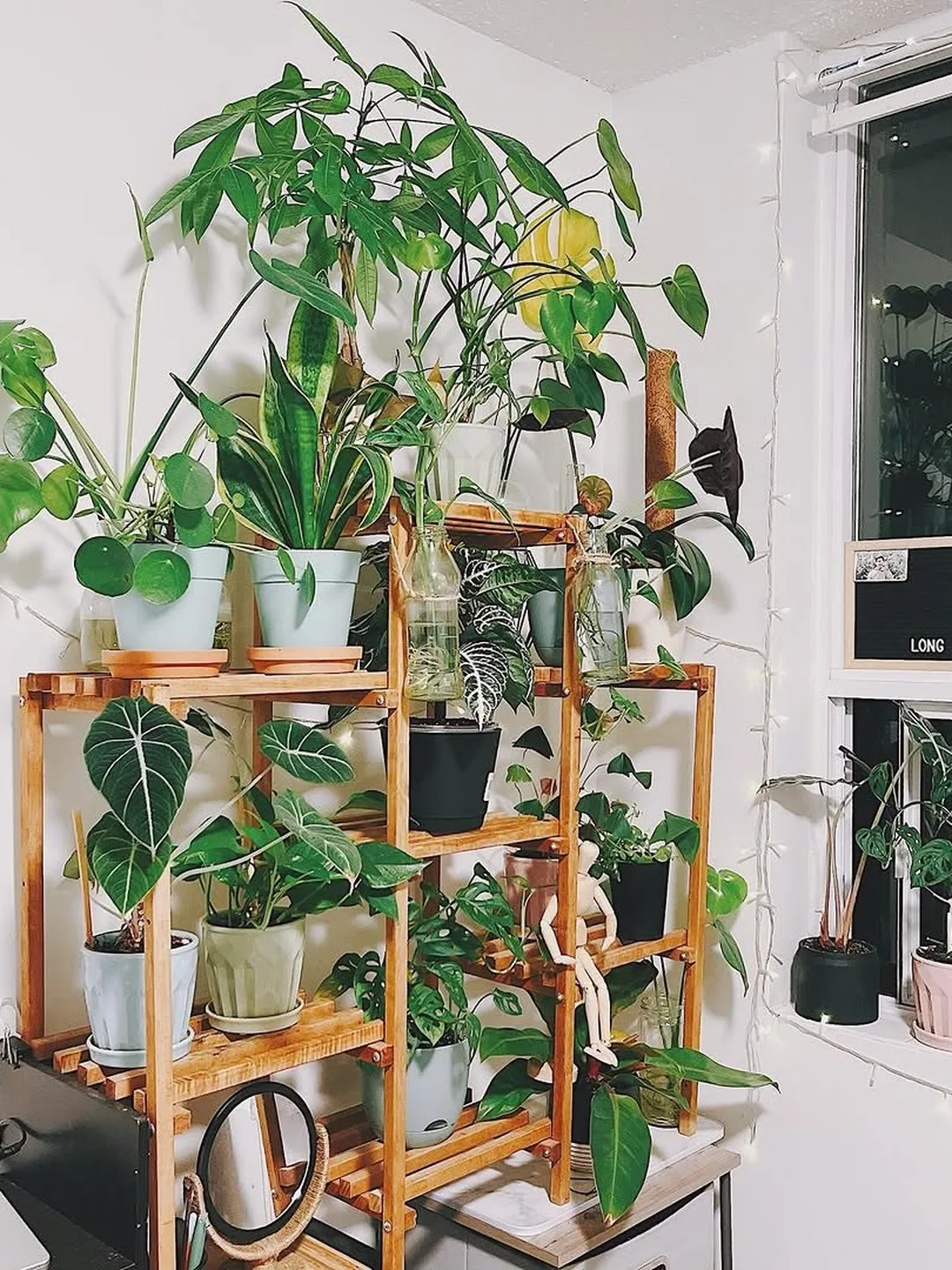
A tiered plant stand stacks plants in a staircase, so the tall ones stand at the back, the small ones at the front, and every leaf gets light. One stand in a corner holds what would otherwise take four separate spots around the room.
Wooden and bamboo stands suit most rooms and cost little. Choose one with slatted shelves so spilled water drains instead of pooling, and stand it on a tray or mat if your floor is wood.
Arrange by need, not just by height: the light lovers on the top tier nearest the window, the shade tolerant ones below. Then rotate the whole stand a quarter turn each month so growth stays even.
Corners beside sofas and beds gain the most. The common mistake is a stand so full that watering the back row means moving the front row. Leave handling room; a stand you can water in two minutes stays healthy.
Let One Large Plant Anchor the Whole Room
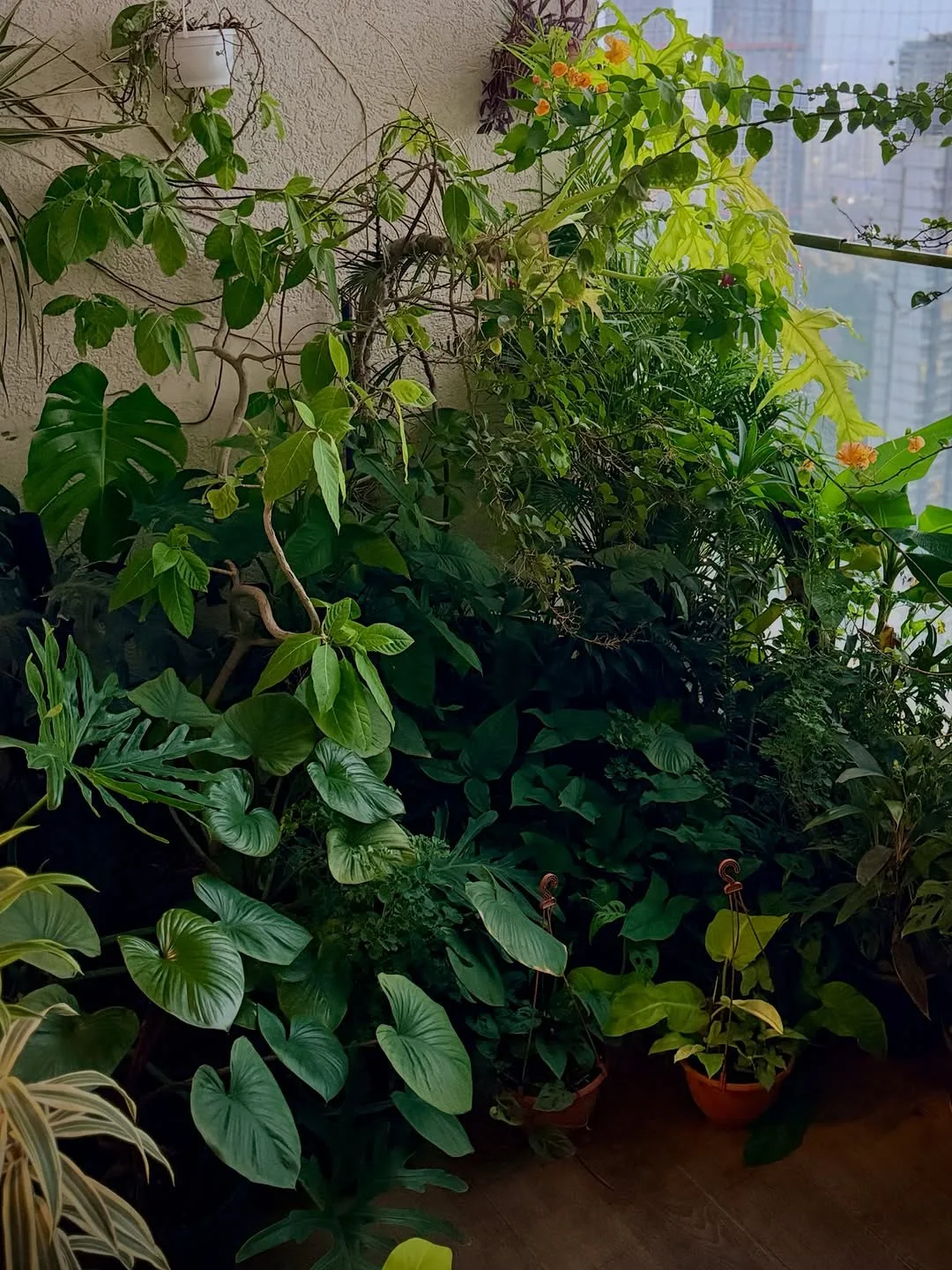
One large plant does what a piece of statement furniture does: it gives the room a center. A mature monstera, a fiddle leaf fig or a tall bird of paradise in the best corner lets every other plant in the room stay small.
Large plants cost more but work less. One big pot needs water once a week or less, holds its look for years, and fills vertical space that small pots on surfaces never reach.
Give the anchor plant the best light you have and a pot with room to grow for two years. Repotting a large plant in a small apartment is a two person job, so buy the bigger pot once and let the plant grow into it.
Living rooms that feel unfinished gain the most. The common mistake is buying the large plant for a dark corner because the corner is empty. The corner is dark, which is why it is empty; the anchor goes in the light, and the dark corner gets a lamp or a shelf instead.
Give a Monstera the Window and a Moss Pole
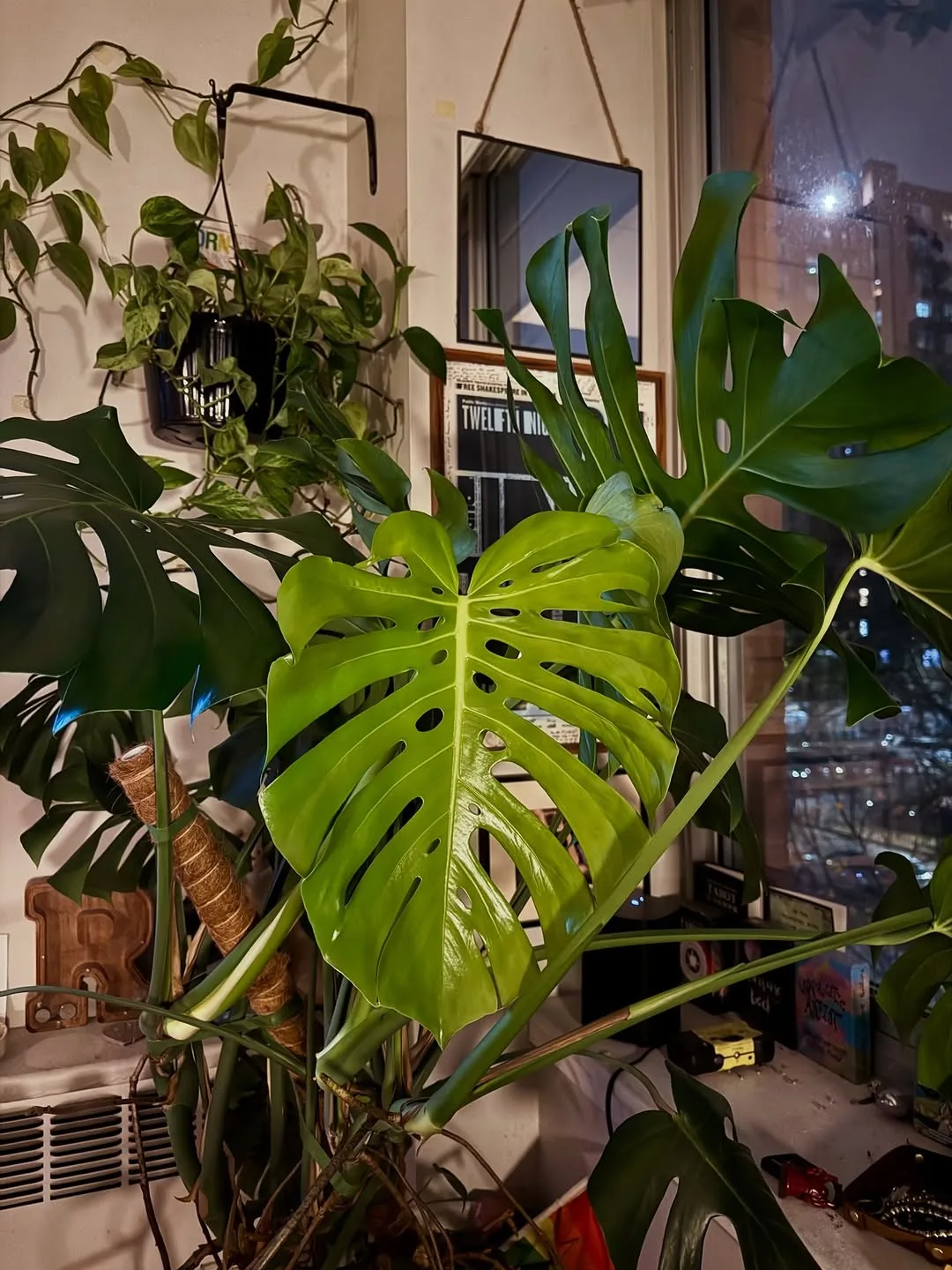
Monsteras are the large plant most small apartments can actually handle, because they grow up instead of out when you give them support. A moss pole or a sturdy stake lets the plant climb, and the leaves get bigger with every level, as the plant in the photo shows.
Tie the main stems loosely to the pole as they grow, and mist or wet the pole when you water so the aerial roots grip it. A climbing monstera takes half the floor space of a sprawling one.
Bright indirect light is the whole secret: beside the window, not on the sill, where direct midday sun scorches the leaves. Turn the pot monthly so the plant does not lean its whole weight toward the glass.
Anyone whose monstera has become a wide, floppy obstacle gains the most. The common mistake is a pot that is too small, which makes the plant top heavy and thirsty. One size up, a pole, and the window turn it into the room’s best feature.
Line the Windowsill Without Blocking the Light
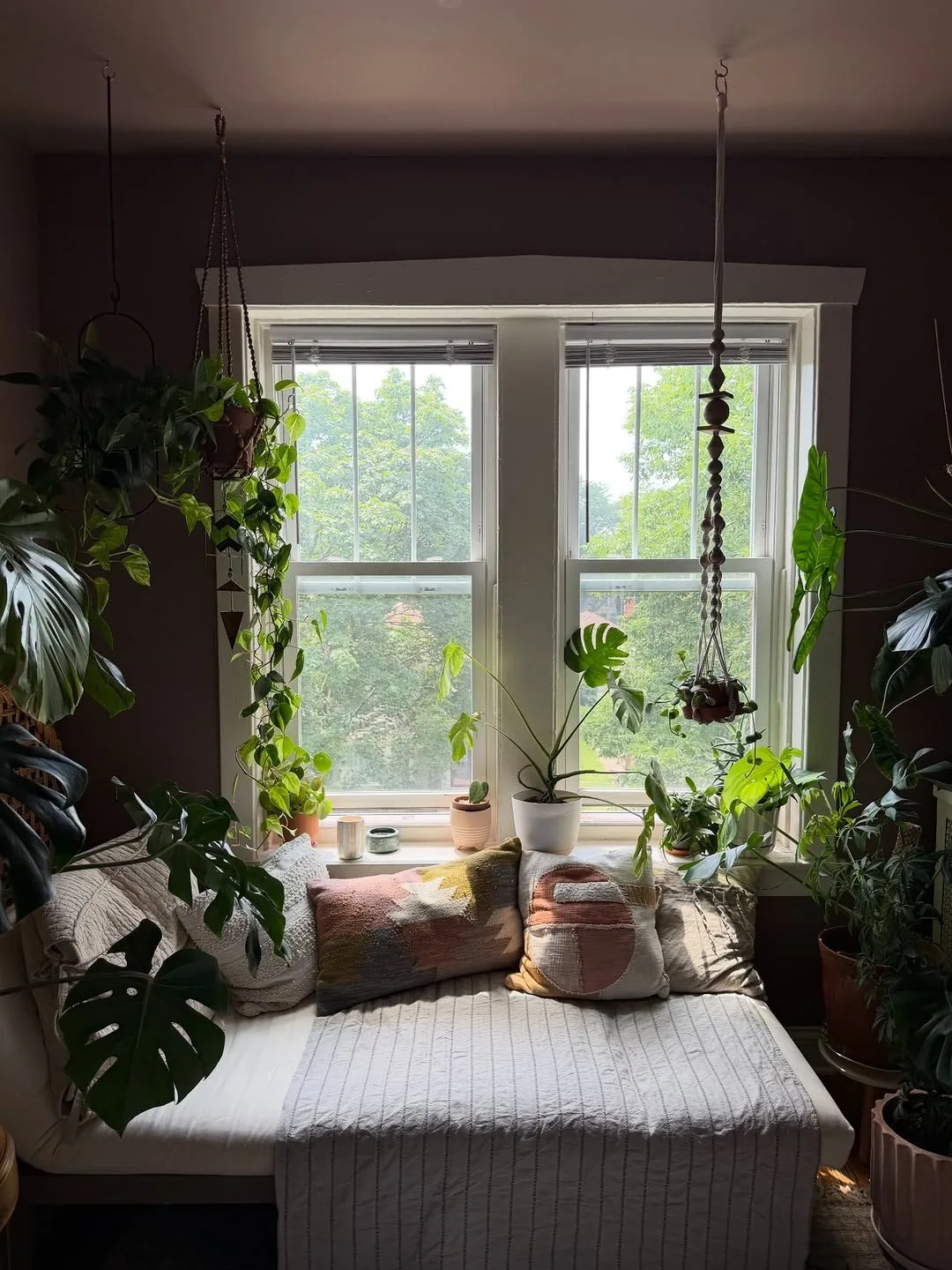
A windowsill is prime plant real estate, and it is also the room’s light source, so the arrangement has to share. Small pots along the edges and one medium plant at the side keep the middle of the glass clear, as in the window nook in the photo.
Herbs, small succulents and young cuttings suit sills best, because they stay low and use the strong light without shading the room. Keep a small tray under each pot; sill watering without trays stains paint and swells wood.
South facing sills in summer can scorch leaves through glass. Move tender plants back 30 cm in the hottest months, or hang a sheer curtain to filter the midday sun.
Kitchen and bedroom sills gain the most. The common mistake is a sill so crowded that the window no longer opens. Ventilation matters more than two extra pots, so keep the opening section of the window reachable and clear.
Use the Space Above Doors and Cabinets
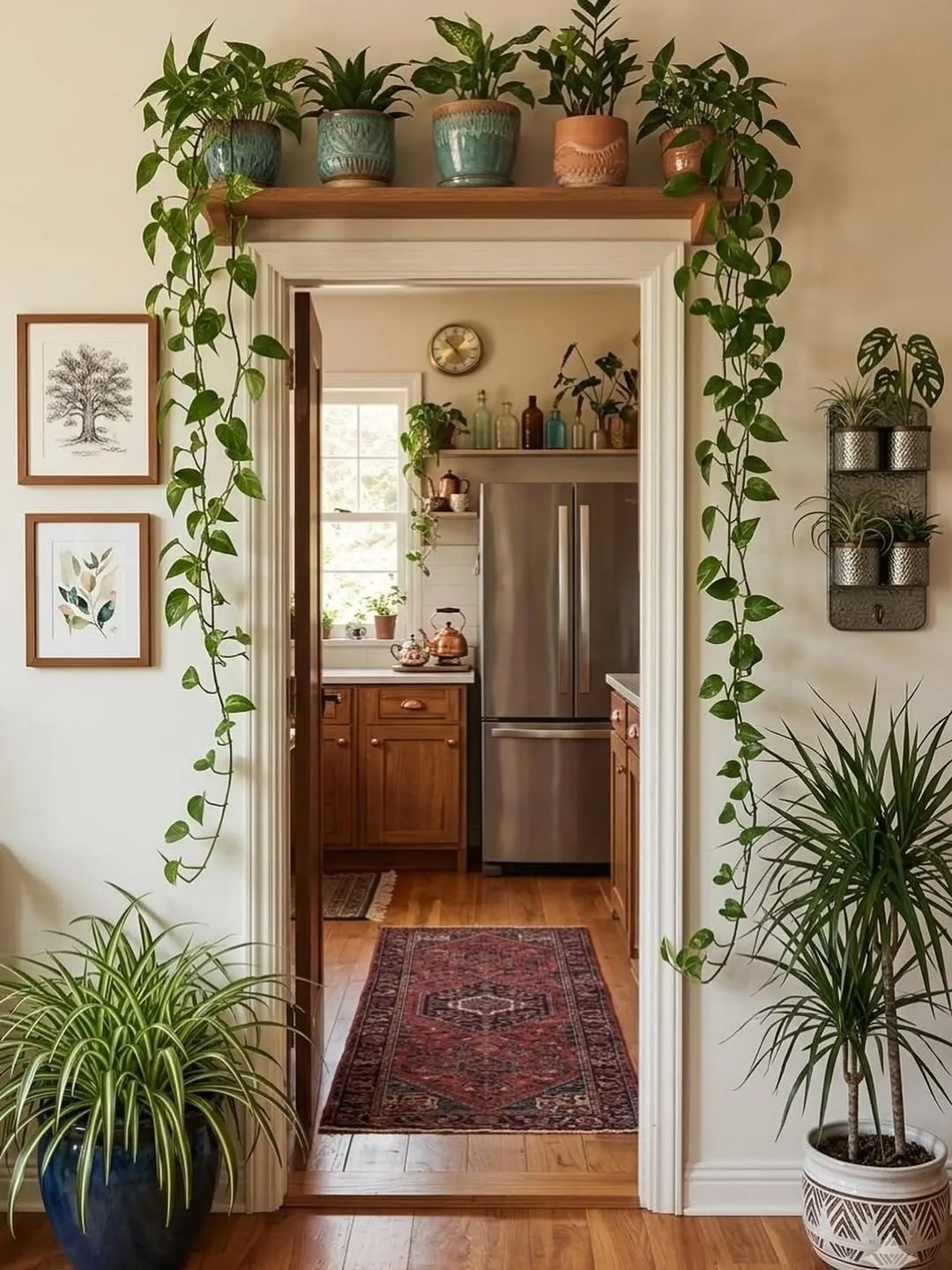
The strip of wall above door frames and the tops of kitchen cabinets are dead space with decent light in many apartments. A simple shelf above a doorway, like the one in the photo, holds a row of small pots that trail down and soften the whole passage between rooms.
Only plant forgiving trailers up high: pothos, philodendron and spider plants tolerate the warmer, drier air near the ceiling and do not mind being watered a little less often.
Watering high plants is the catch, so make it easy: light pots you can lift down, or a stool kept nearby and a long spout can. If watering a shelf feels like an expedition, the plants on it will quietly die, so be honest about the routine before you drill.
Hallways and open doorways between rooms gain the most. The common mistake is heavy pots above head height. Keep high pots small and plastic, with the decorative weight at floor level where gravity is your friend.
Group Plants Together So Care Takes Minutes
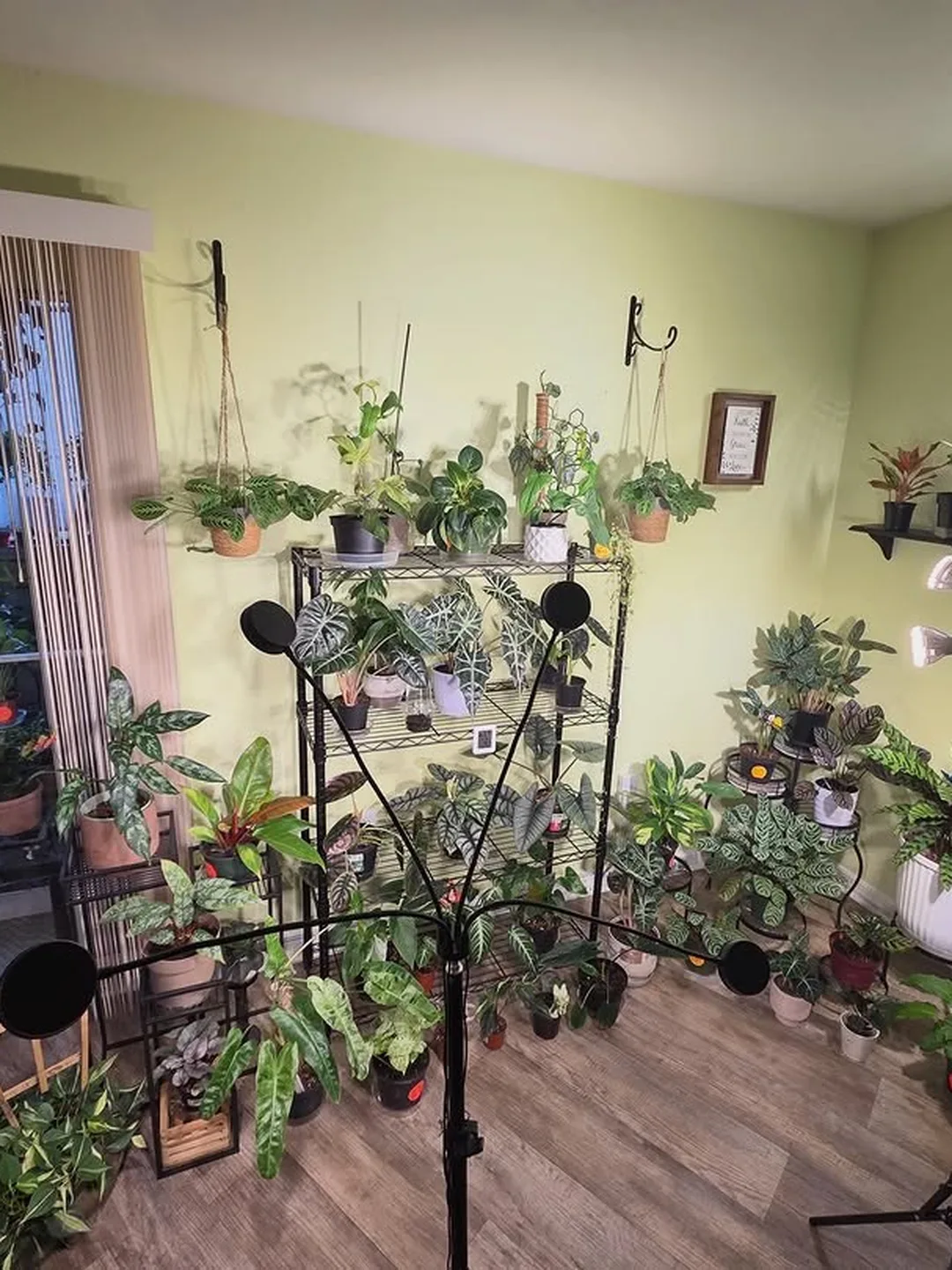
Plants grouped in one or two zones are easier to keep alive than plants scattered through every room. One watering can round covers the collection, the light is shared, and the plants even help each other by keeping the air around them slightly more humid.
Grouping also makes pests manageable. Check leaves while you water the group, and any problem shows up while it is still one plant’s problem instead of the whole apartment’s.
Keep one outpost plant in the bedroom or bathroom if you like, but let the main collection live together. The photo shows how a single plant room corner can hold dozens of plants and still leave the rest of the home clear.
Busy people gain the most. The common mistake is buying a plant for every room in the first month, then losing half of them to forgotten watering. A collection you can see is a collection you remember.
Keep the group’s tools together as well: the watering can, a spray bottle, spare ties and a cloth for leaves, all in one basket beside the zone. Care that starts without a search through three cupboards happens far more often.
Soften Strong Sun With Sheers So Leaves Do Not Scorch
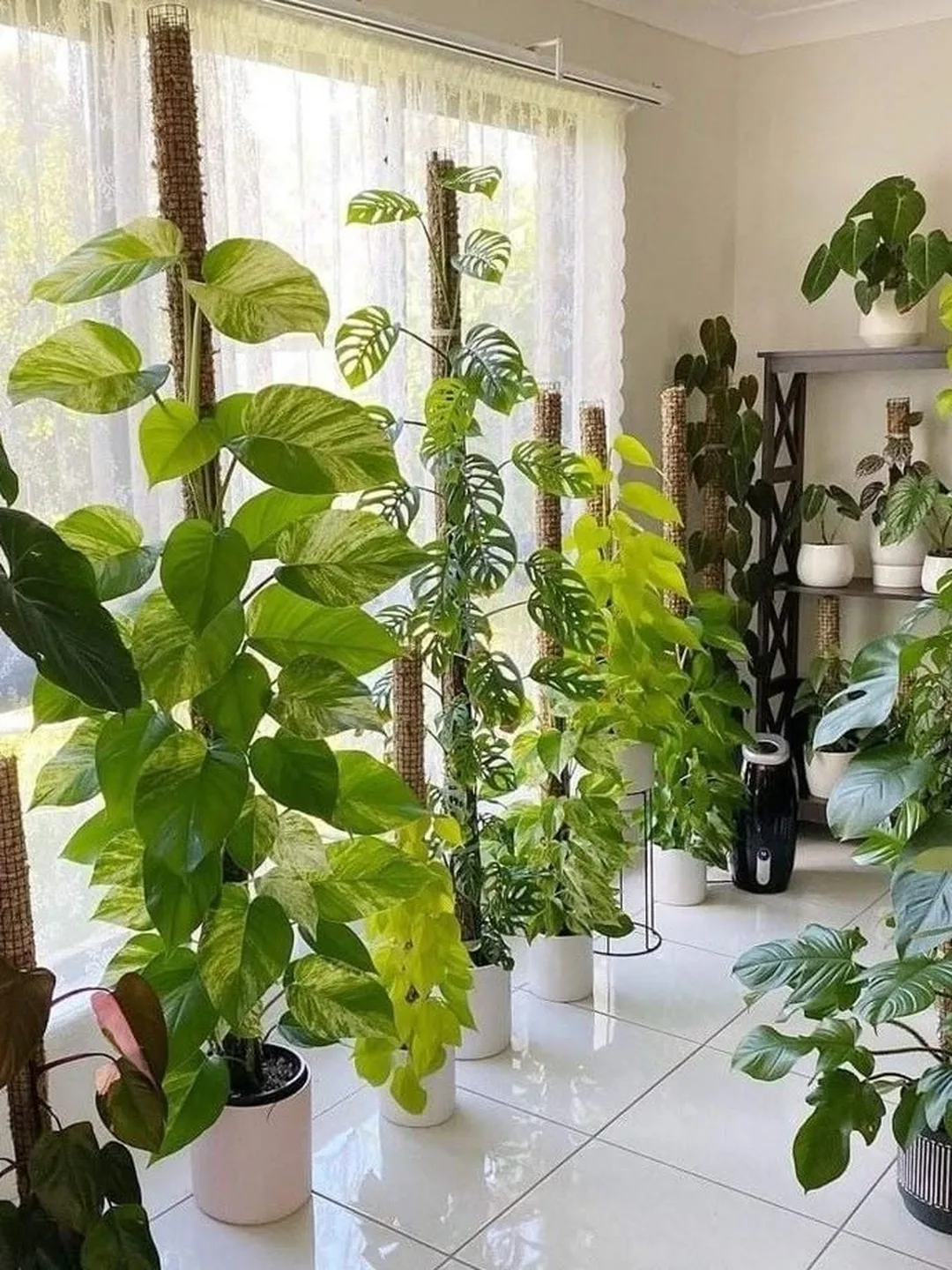
Many apartment plants suffer from too much sun, not too little. Direct midday sun through glass burns leaves, dries pots in a day and fades the green that made you buy the plant. A sheer curtain filters that blast into the bright, soft light most houseplants actually want.
The room in the photo keeps a whole collection thriving behind sheer curtains. The plants get hours of bright light with no direct rays, which is the exact recipe on most plant labels: bright, indirect light.
Watch for the signs of scorch: pale or crispy patches on the leaves facing the glass. Move the plant back or close the sheer at midday for a week and new growth will tell you if you fixed it.
South and west facing rooms gain the most. The common mistake is treating all light as good light and pushing every plant against the glass. A meter back from a sunny window is often brighter than a plant ever needs.
Build Your Reading Chair Into the Green Corner
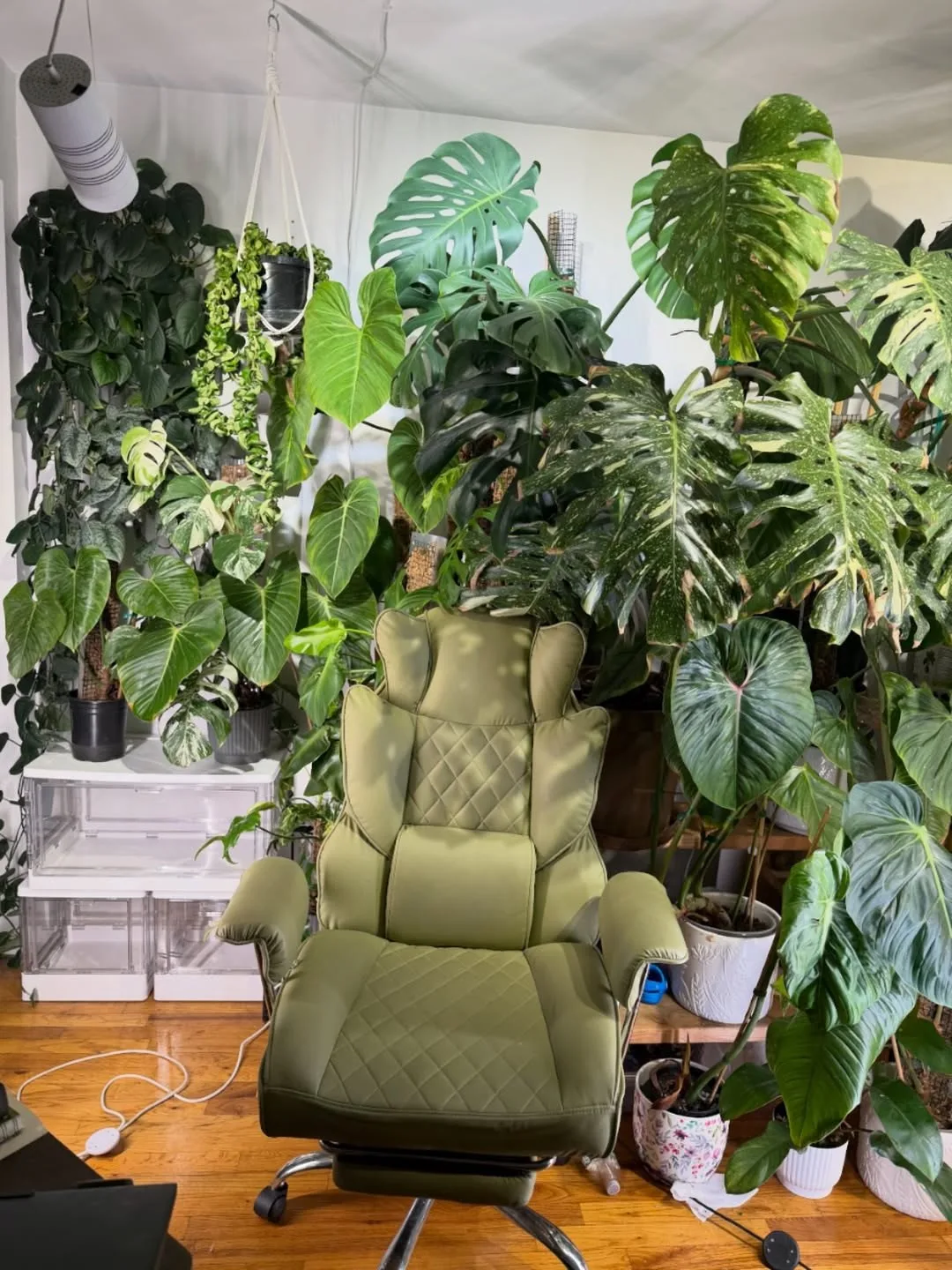
The best seat in a plant filled apartment is inside the collection. A comfortable chair among the plants, like the recliner in the photo, turns watering and leaf checking into things you notice while relaxing, and the corner becomes the room everyone wants.
Leave breathing room around the chair: plants close enough to feel surrounded, far enough that leaves do not brush your head or block the lamp. A small side table for a drink and a book completes the setup.
Choose the chair corner by light for both readers: the plants need the window side, and you need light over your shoulder. A corner where the window sits to the side of the chair serves you both.
Anyone who reads or works from one favorite chair gains the most. The common mistake is a chair that slowly becomes a plant stand as the collection grows. Defend the seat; a green corner with nobody in it is just storage with leaves.
Move Plants to the Balcony for a Summer Boost
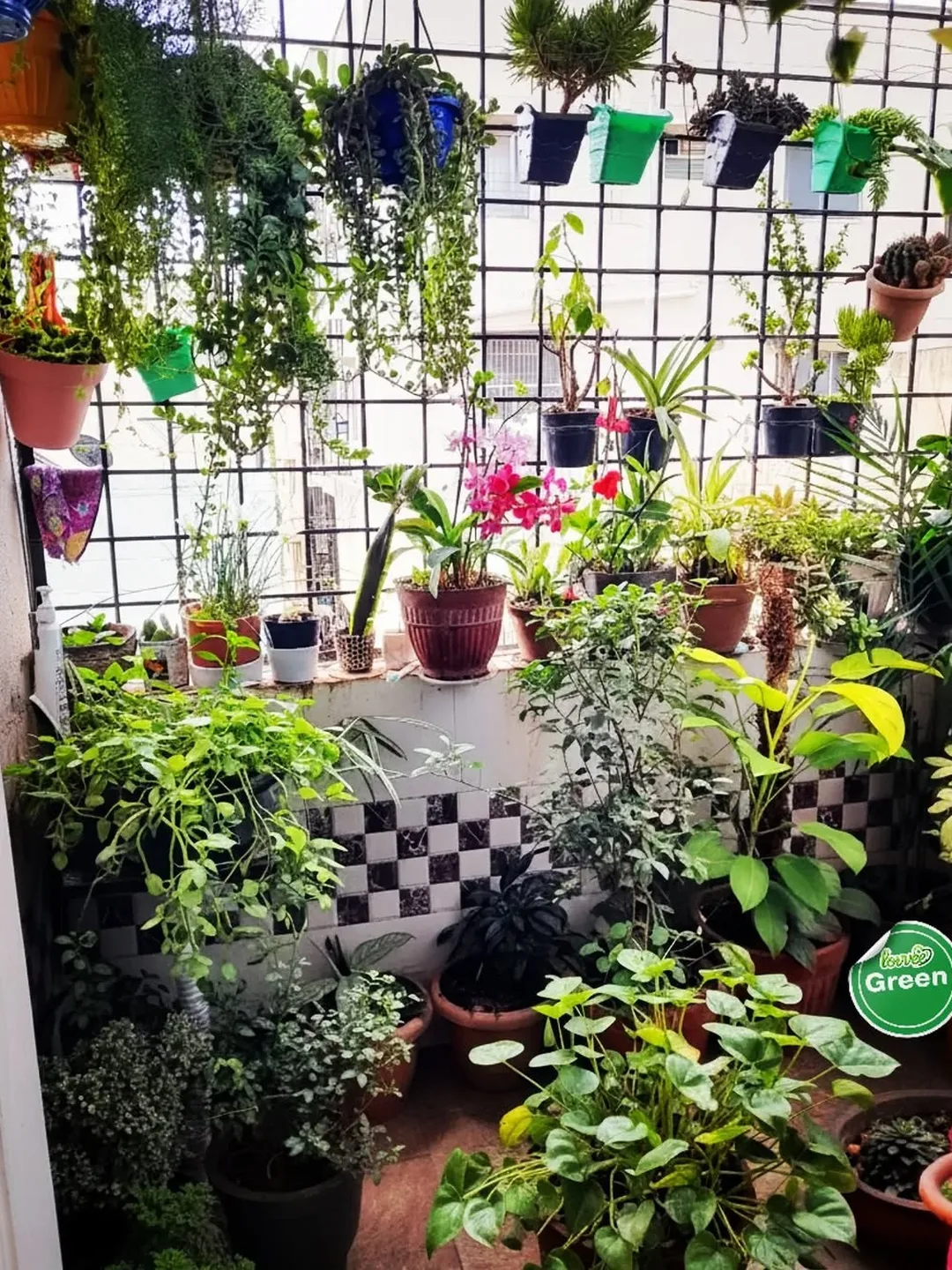
Most indoor plants grow faster outside in summer: more light, moving air and warm rain do in eight weeks what a windowsill does in a year. A balcony, even a small one like the garden in the photo, becomes the collection’s summer ward.
Move plants out gradually. A week in full shade outside, then a move into morning sun, stops the leaf scorch that hits plants carried straight from a dim room into July weather.
Not everything goes out: keep delicate ferns and anything you cannot replace indoors if storms worry you, and bring everything back before the first cold nights. Check pots for insects before they rejoin the indoor group. Our apartment balcony garden guide covers the outdoor side in detail.
Plants that stalled indoors gain the most. The common mistake is forgetting that outdoor pots dry far faster than indoor ones. Summer watering is a daily glance, not a weekly round, and a missed week in a heatwave ends plants that survived all winter.
Common Indoor Plant Mistakes to Avoid
Watering on a Schedule Instead of by Feel
Plants drink at different speeds in different weeks. Push a finger 3 cm into the soil; water only when it feels dry at that depth, and empty the saucer afterwards so roots never sit in water.
Buying Plants for Dark Corners
No houseplant thrives in a truly dark corner. Low light plants tolerate shade; they do not enjoy it. Move the plant to the light or move a lamp and a mirror to the plant.
Pots Without Drainage Holes
Decorative pots without holes drown roots quietly. Keep plants in nursery pots with drainage, set inside the pretty pot, and pour away what collects after watering.
Too Many Plants Too Soon
Twenty plants bought in a month means twenty learning curves at once. Grow the collection a few plants at a time and each new arrival gets the care routine you already know.
Ignoring the Leaves
Dust blocks light, and pests start small. Wipe leaves with a damp cloth monthly and look at the undersides while you water; two minutes of looking saves whole plants.
Repotting Everything Immediately
A new plant needs a month to settle before a new pot. Repot only when roots crowd the drainage holes or the plant dries out within a day of watering.
Budget-Friendly Indoor Plant Tips
Propagate before you purchase. Pothos, spider plants and philodendrons root in a jar of water on the sill, and one mother plant produces a shelf of free plants a year. Swapping cuttings with friends widens the collection at zero cost.
Buy small. A plant in a 9 cm pot costs a fraction of the same plant in a 19 cm pot, and in good light it catches up within a year. Your money buys more kinds, and small plants adapt to your rooms as they grow.
Spend on pots secondhand and soil fresh. Charity shops and listings overflow with good ceramic pots; wash them with soapy water and they are ready. Soil is the one thing to buy new and decent, because roots live in it.
Use what the kitchen throws away: glass jars root cuttings, and a wide bowl becomes a tray for humidity loving plants on a bed of pebbles. The plants cannot tell the difference, and neither can your guests.
Let one plant be the splurge. A single large, healthy anchor plant from a good grower lifts the whole collection, and the propagated babies around it look more expensive by association.
A Weekend Plan to Set Up Your Plant Corners
Saturday morning, map the light. Note which corner gets the strongest light, which rooms stay dim, and where the sills and shelves are. Move the plants you already own into their right zones before buying anything new.
Saturday afternoon, build one zone completely: the shelf, the stand or the bright corner, with pots, trays and a watering can that lives there. One finished zone teaches you your real space and light better than a month of guessing.
Sunday, buy or propagate only what the finished zone still needs, usually three to five plants. Pot them, water them in, and write the watering day on your calendar as a weekly repeat.
Then stop adding for a month. The collection that survives its first month with you is the foundation; everything after that is growth you understand, in light you have measured, with a routine that already exists.
FAQ
How many plants can a small apartment hold?
As many as your light and your routine can support, which for most small apartments is 10 to 25 in one or two bright zones. The limit is rarely space; shelves and stands multiply space. The real limit is watering time, so grow the collection at the speed of your habits.
Which indoor plants are safe for small apartments with pets?
Spider plants, parlor palms, Boston ferns and peperomias are widely listed as non toxic to cats and dogs, while pothos, philodendron and snake plants are not safe if chewed. Check any plant against a veterinary list before buying, and hang or shelve the risky ones out of reach.
How often should I water indoor plants in an apartment?
Most need water every one to two weeks, but the soil decides, not the calendar. Check with a finger 3 cm deep; water when dry, skip when damp. Small pots and sunny spots dry faster, big pots and winter months slower.
Can indoor plants survive in a room with no windows?
Not for long without help. A bright LED or grow bulb on a timer gives plants the light a windowless room lacks, and shade tolerant plants such as snake plants and ZZ plants cope best. Rotate a plant between a bright room and the dark one every few weeks if you have no lamp.
Why do my plants keep dying in winter?
Winter combines low light, dry heated air and cold windowsills. Move plants closer to the light but off cold glass, group them for humidity, and water less, because growth slows and wet soil rots roots in the cold season.
Do indoor plants really clean the air in a small apartment?
In normal homes the effect is tiny; you would need a jungle far beyond these ideas to match opening a window. Grow plants because they look good, soften rooms and make people feel calmer, and open the window for the air.
Conclusion
Indoor plants for small apartments succeed when placement comes first: the bright corner for the group, shelves and rods for height, one anchor plant for presence, and forgiving species while you learn. The plants then decorate every room they can see from their zones, without taking a single surface you needed.
Grow the collection at the speed of your routine. A dozen thriving plants in the light will always beat thirty survivors spread through dark rooms, and propagation makes the thriving kind multiply for free.
Start this week with the light map and one finished corner. The same thinking runs through our scandinavian apartment decor ideas, where one plant by the window is a feature, not a compromise.