
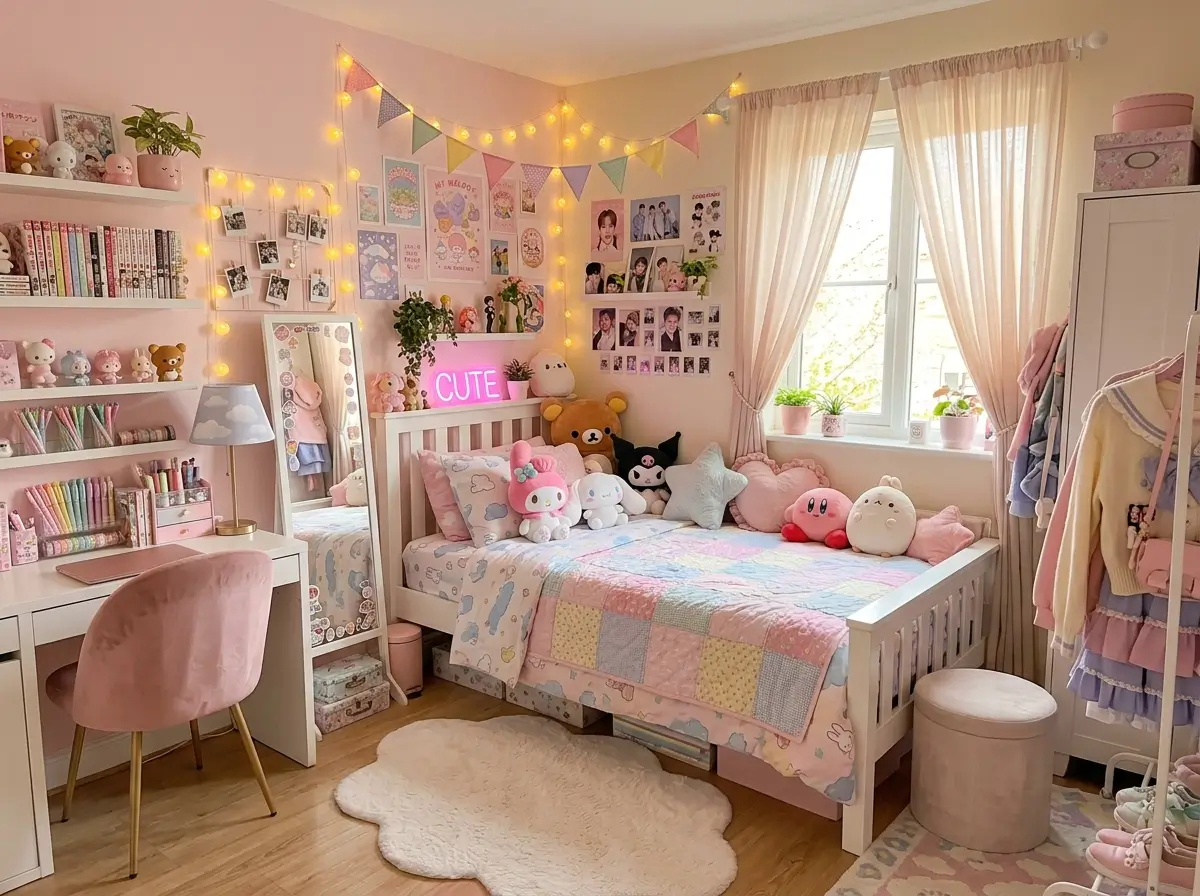

Cutecore Room Ideas are becoming popular among home decor lovers who want bedrooms that feel playful, comfortable, and full of personality without looking cluttered. This style combines cute details, soft colors, charming accessories, and practical organization to create a room that feels personal and welcoming. Unlike decorating styles that focus only on appearance, cutecore bedroom design works best when every item has a purpose. A cute room can still have smart storage, comfortable furniture, useful lighting, and a layout that supports daily routines.
Creating a cutecore bedroom does not require expensive furniture or a large space. Beginners can start with small updates such as changing bedding colors, adding warm lighting, arranging wall decor, or introducing a few themed accessories. The key is balance. Too many decorations can make a room feel crowded, while too few details can make it lose the playful character that makes cutecore style special.
This guide shares practical Cutecore Room Ideas that work for bedrooms of different sizes, including rental rooms, small apartments, and budget-friendly makeovers. Each idea explains why it works, who it suits best, and how to apply it without making common decorating mistakes.
What Are Cutecore Room Ideas?
Cutecore Room Ideas focuses on creating a bedroom that feels cheerful, soft, creative, and organized. The style often uses gentle colors, cute patterns, cozy fabrics, decorative objects, and personal collections. Common color choices include pastel pink, cream, lavender, baby blue, mint green, soft yellow, and warm beige.
The difference between a simple, cute bedroom and a well-designed, cute room is planning. A successful room uses a consistent color palette, balanced furniture placement, and decorations that match the owner’s lifestyle. For example, a student may need a comfortable desk area with cute storage containers, while someone who loves relaxing may focus more on reading corners, soft bedding, and calming lighting.
You can create a cutecore bedroom by improving a few important areas first: bedding, lighting, wall decoration, storage, and small accessories. Choose two or three main colors, add comfortable textures, and use decorative pieces that reflect your personality instead of filling every space.
Use a Soft Pastel Color Palette
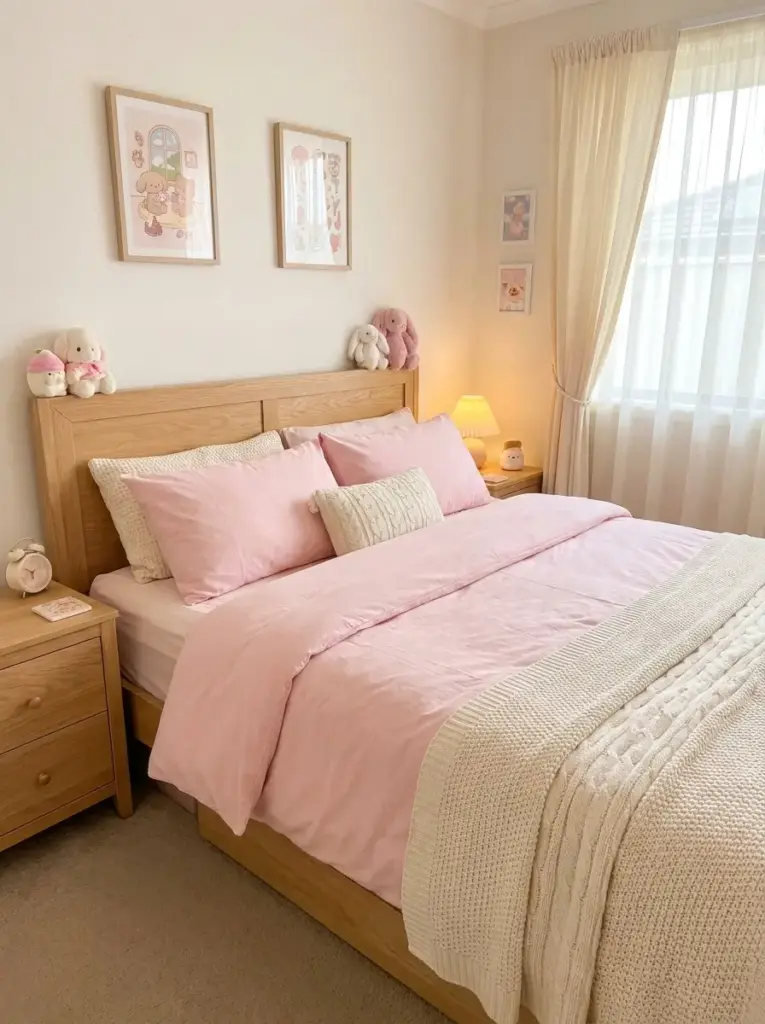
One of the easiest Cutecore Room Ideas is creating a gentle color scheme. Colors strongly affect how a bedroom feels, and soft shades help create a relaxed and cheerful atmosphere. Instead of mixing many bright colors, choose a small palette that works together.
A beginner-friendly combination is pastel pink with cream and light wood tones. Another option is lavender with white furniture and silver accents. For a calmer room, use sage green with beige and natural textures.
The best way to apply color is through layers. You do not need to repaint every wall. Add color through pillow covers, curtains, rugs, blankets, artwork, or storage boxes. This approach is especially useful for renters because these items can move with you.
This tip works best for people who want a noticeable bedroom change without replacing furniture. A neutral bed frame can quickly feel more cute when paired with pastel bedding and matching accessories.
A common mistake is using too many unrelated colors. A room with pink walls, blue furniture, yellow decorations, and multiple patterns may feel confusing instead of charming. Keep the main palette limited and repeat colors throughout the room.
Create a Cozy Bed Focal Point
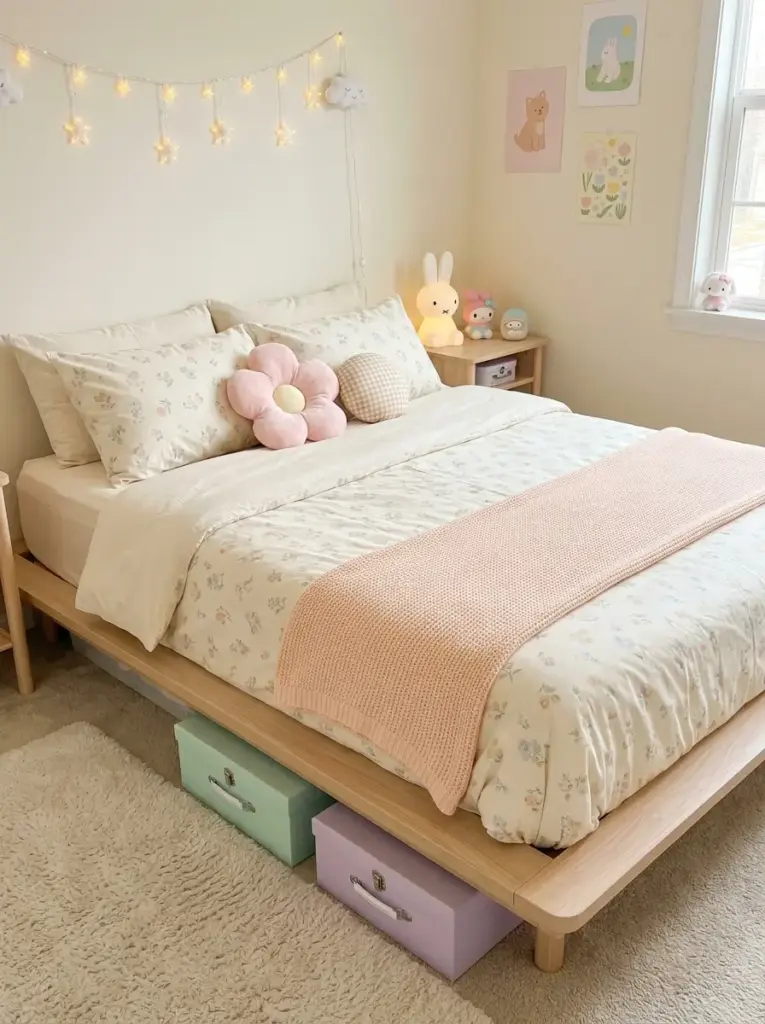
The bed usually takes up the largest visual space in a bedroom, making it the best place to start a makeover. A cutecore bedroom does not need a luxury bed frame. It needs thoughtful styling.
Start with comfortable bedding in soft materials such as cotton, linen blends, or brushed fabrics. Layer a plain fitted sheet with a patterned duvet cover, decorative pillows, and a small throw blanket. For example, a cream duvet with pastel flower pillows can add character without overwhelming the room.
The height of your bed also matters. Low beds create a relaxed feeling and work well in small bedrooms because they make the ceiling appear higher. If you need storage, choose a bed with drawers underneath or use attractive storage boxes that match your color theme.
This idea is ideal for beginners because bedding creates a major visual change at a lower cost than replacing furniture.
Avoid covering your entire bed with decorative pillows that you remove every night. A stylish bedroom should still be practical. Keep enough space for comfortable sleeping and easy cleaning.
Add Warm Decorative Lighting
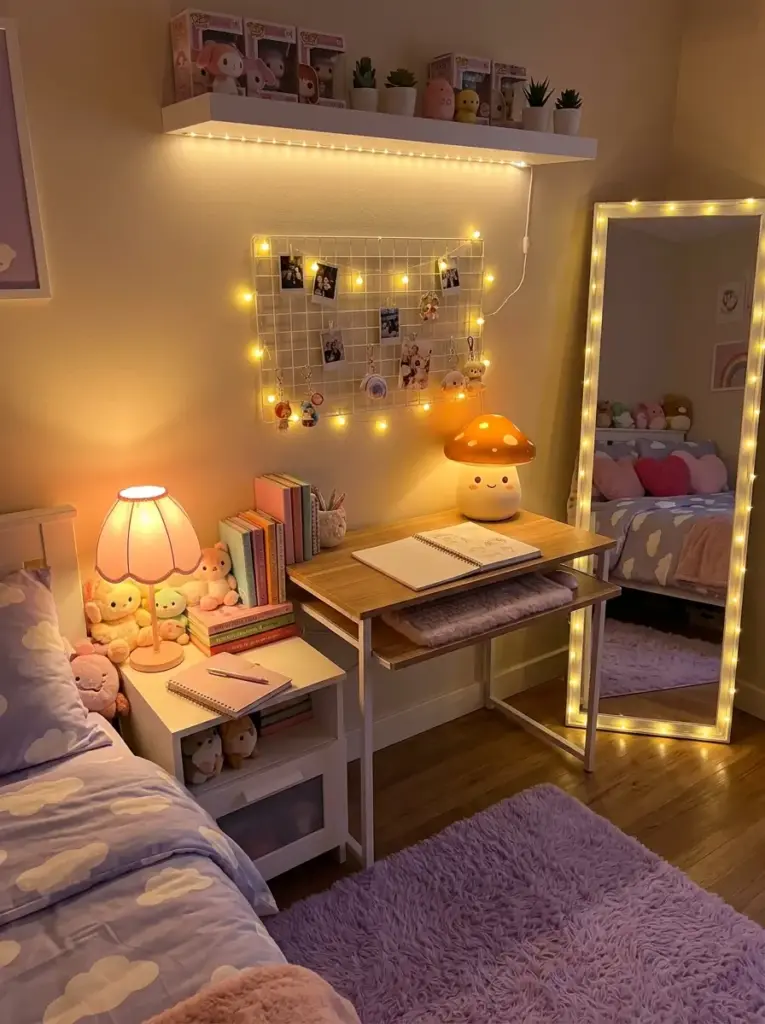
Lighting plays an important role in cutecore bedroom design because it changes how colors and textures appear. Harsh white lighting can make a cozy room feel cold, while warm lighting creates a more comfortable environment.
For bedrooms, bulbs around 2700K to 3000K are usually suitable because they produce a warm glow similar to traditional indoor lighting. Use a combination of lighting sources rather than relying on a single ceiling light.
A small bedside lamp, warm fairy lights, or a decorative table lamp can add softness. Place lights near reading areas, shelves, mirrors, or desks where extra visibility is needed.
For renters, removable LED strips or plug-in lamps are useful options because they do not require permanent electrical changes. Avoid attaching heavy lighting fixtures that may damage walls.
This idea works especially well for people who spend evenings reading, studying, journaling, or relaxing in their bedroom.
A common mistake is using colorful lighting everywhere. While colored lights can be fun, too much blue or bright RGB lighting may make the room feel less comfortable for daily use.
Design a Cute Storage System
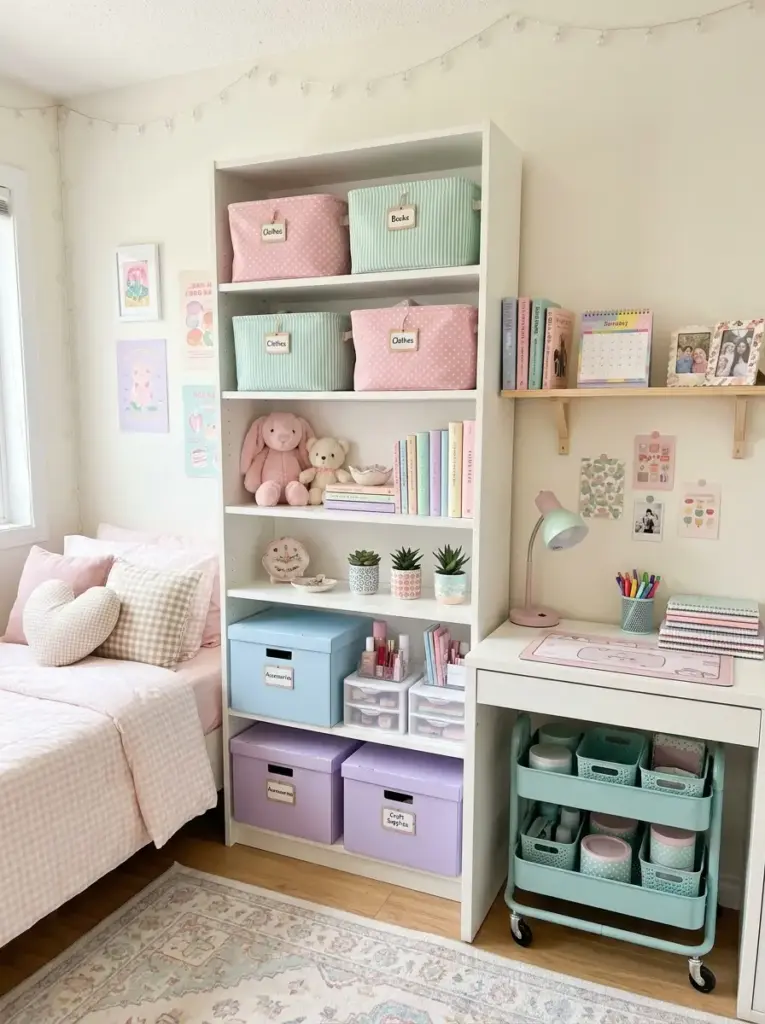
Good storage is one of the most important parts of practical Cutecore Room Ideas. A cute room can quickly become messy if there is no place for everyday items.
Choose storage that matches your style. Fabric baskets, pastel boxes, small drawers, and decorative containers can organize clothes, books, accessories, and beauty products. Open shelves are useful for displaying favorite items, but closed storage helps keep visual clutter under control.
For small bedrooms, use vertical space. Tall shelves, wall-mounted organizers, and over-door storage can provide extra room without taking up floor space.
A simple example is placing a small shelf above a desk for books and decorative items while keeping daily supplies in matching containers below. This keeps the workspace attractive and functional.
This tip is best for people living in small rooms or shared spaces because organization creates more usable space.
Avoid buying storage containers before deciding what you need to store. Many people collect pretty boxes that do not fit their belongings. Measure your items first and choose storage based on function.
Add Personalized Wall Decor
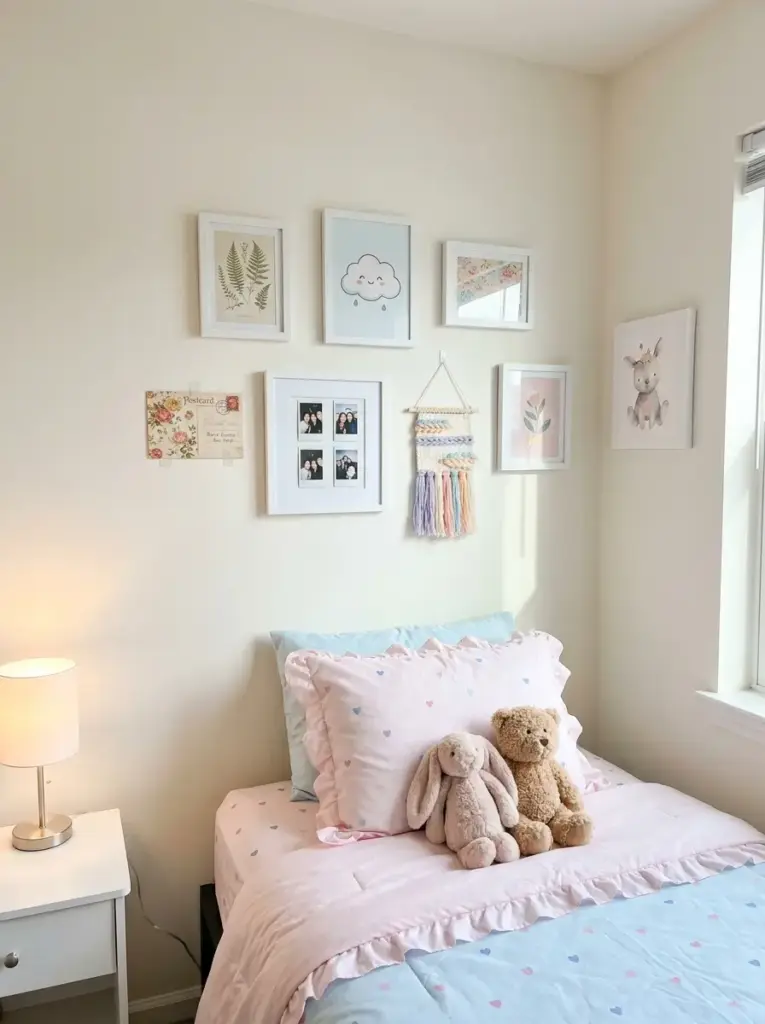
Walls offer a great opportunity to show personality without taking up valuable floor space. Cutecore rooms often include artwork, photos, posters, prints, and handmade decorations.
Create a balanced wall arrangement instead of covering every empty area. A small gallery wall above the bed or desk can become a visual feature. Mix different sizes of frames while keeping similar colors to maintain a coordinated appearance.
For rental bedrooms, use removable hooks, poster strips, or lightweight frames. These options allow decoration without permanent changes.
Examples of wall decor include:
- Small botanical prints
- Cute character artwork
- Personal photographs
- Decorative postcards
- Handmade crafts
- Fabric wall hangings
This idea works well for creative people who want their bedroom to reflect their interests.
Avoid placing too many small decorations randomly. A planned arrangement looks more intentional and is easier to maintain.
Choose Furniture With Soft Shapes
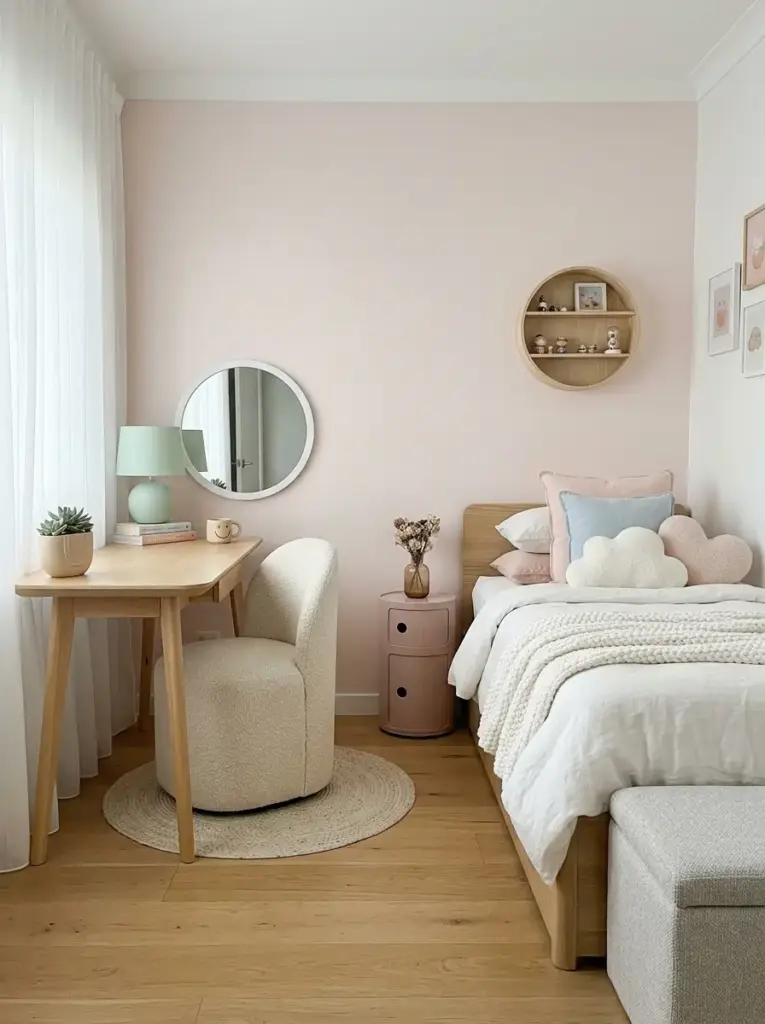
Furniture shapes influence the overall feeling of a room. Cutecore style often works well with rounded edges and simple designs because they create a softer appearance.
Look for furniture such as curved bedside tables, rounded mirrors, small accent chairs, or desks with smooth edges. If replacing furniture is not possible, add softness with accessories such as rounded cushions, fabric covers, and textured blankets.
For small bedrooms, choose furniture that serves multiple purposes. A desk with drawers, an ottoman with hidden storage, or a compact nightstand can save space.
This approach is best for people who want a long-lasting makeover because good furniture choices improve both appearance and daily comfort.
A common mistake is choosing furniture only because it looks cute online. Always consider size, comfort, durability, and how it fits your room layout.
Add Cute Textures With Fabrics and Soft Materials
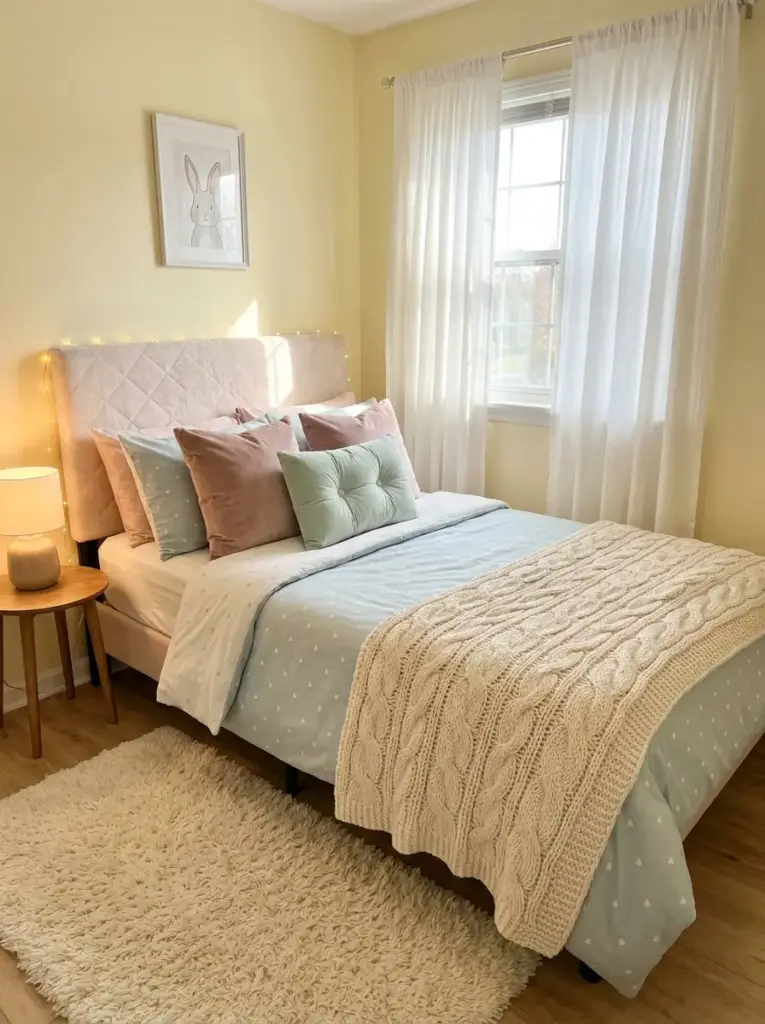
Textures help a bedroom feel comfortable and visually interesting. One of the most practical Cutecore Room Ideas is using different fabrics to create depth without adding unnecessary objects. A room can look flat when everything has the same material, but a mix of soft fabrics creates a more inviting environment.
Start with simple additions such as a fluffy rug beside the bed, a knitted blanket, cotton curtains, velvet cushions, or a fabric headboard cover. These items add comfort while keeping the room style consistent. For example, a cream-colored rug combined with pastel bedding and wooden furniture creates a balanced look that feels warm without becoming too decorative.
Texture is especially useful in small bedrooms because it changes the feeling of the space without taking up much room. A soft rug can make a small floor area feel more comfortable, while layered blankets can make a simple bed look more stylish.
This idea works best for people who want a cozy bedroom but cannot make major structural changes. Renters can easily use removable fabrics because they do not require wall changes or permanent installations.
A common mistake is choosing too many different patterns at once. Floral prints, animal patterns, stripes, and cartoon designs can compete with each other. Choose one main pattern and support it with simple textures.
Create a Functional Cute Study or Work Corner
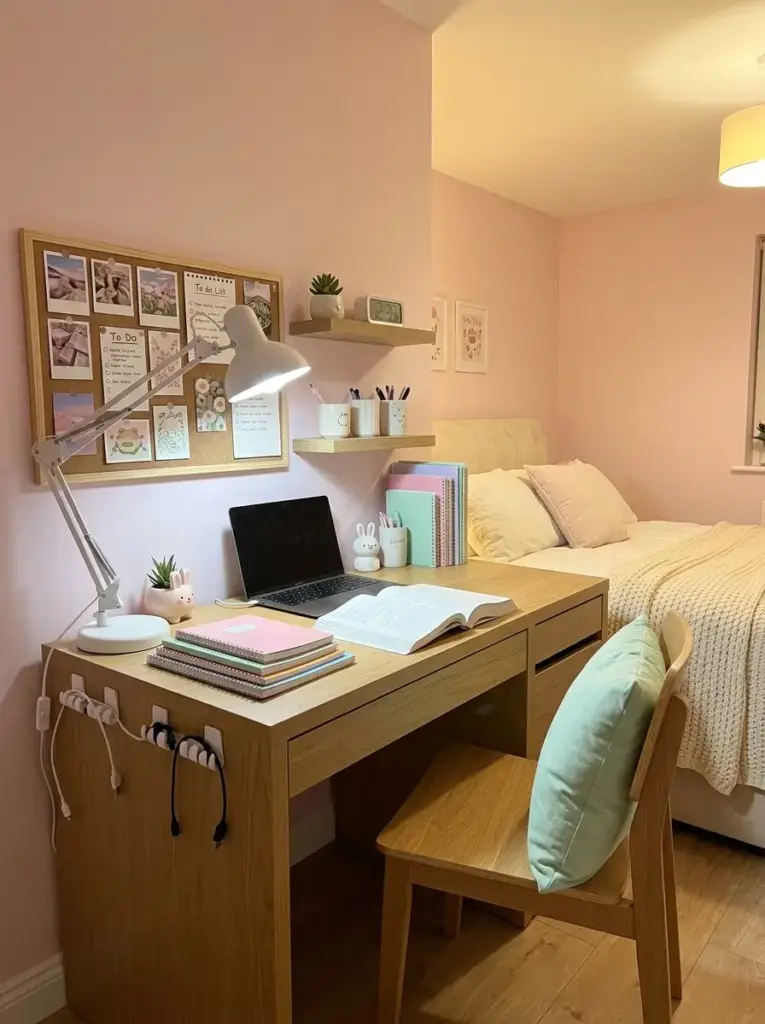
Many bedrooms need to support more than sleeping. A well-planned study corner can fit naturally into a cute room without losing its charm. The goal is to create a workspace that feels organized, comfortable, and connected to the rest of the bedroom.
Choose a desk size based on your actual needs. A compact writing desk works well for small rooms, while a wider desk is better for people who use computers, books, or creative supplies. Light-colored desks, wooden surfaces, and small decorative organizers often match cutecore styling.
Lighting is important in a study area. Use a desk lamp with a neutral white temperature around 3500K to 4000K if you need clear visibility for reading or working. Warm bedroom lighting can remain around the bed area, while the workspace receives brighter task lighting.
Add practical details such as a pinboard, small shelves, cable organizers, and storage cups for pens. These items keep the area useful while adding personality.
This tip is best for students, remote workers, and anyone who spends time creating or studying in their bedroom.
Avoid turning the desk into another decoration shelf. A workspace filled with too many accessories can reduce productivity. Keep useful items within reach and limit decorative pieces to a few favorites.
Use Plants and Nature-Inspired Details
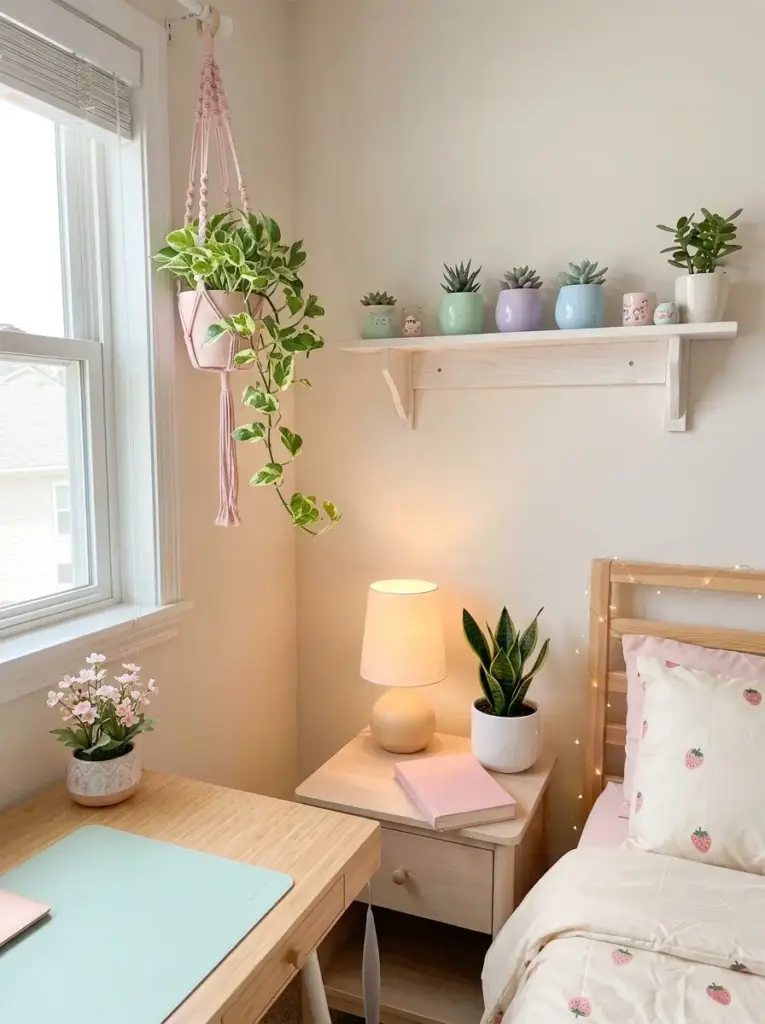
Plants can bring freshness into a bedroom and work well with cutecore styling. You do not need a large collection of plants to create this effect. A few carefully placed plants can add natural color and balance.
Small plants such as pothos, snake plants, succulents, or artificial greenery can work well depending on your lifestyle. If your room has limited sunlight, choose low-maintenance options or realistic artificial plants.
Place plants near windows, shelves, desks, or empty corners. Hanging plants can save floor space, while small pots can decorate bedside tables.
Use planters that match your room palette. White ceramic pots, pastel containers, or simple wooden stands can connect the plant area with the rest of the design.
This idea works well for people who want a calmer bedroom atmosphere and enjoy natural elements.
A common mistake is buying plants without considering care requirements. A neglected plant can create extra stress instead of improving the room. Choose plants that match your available time and lighting conditions.
Add a Cute Reading or Relaxation Corner
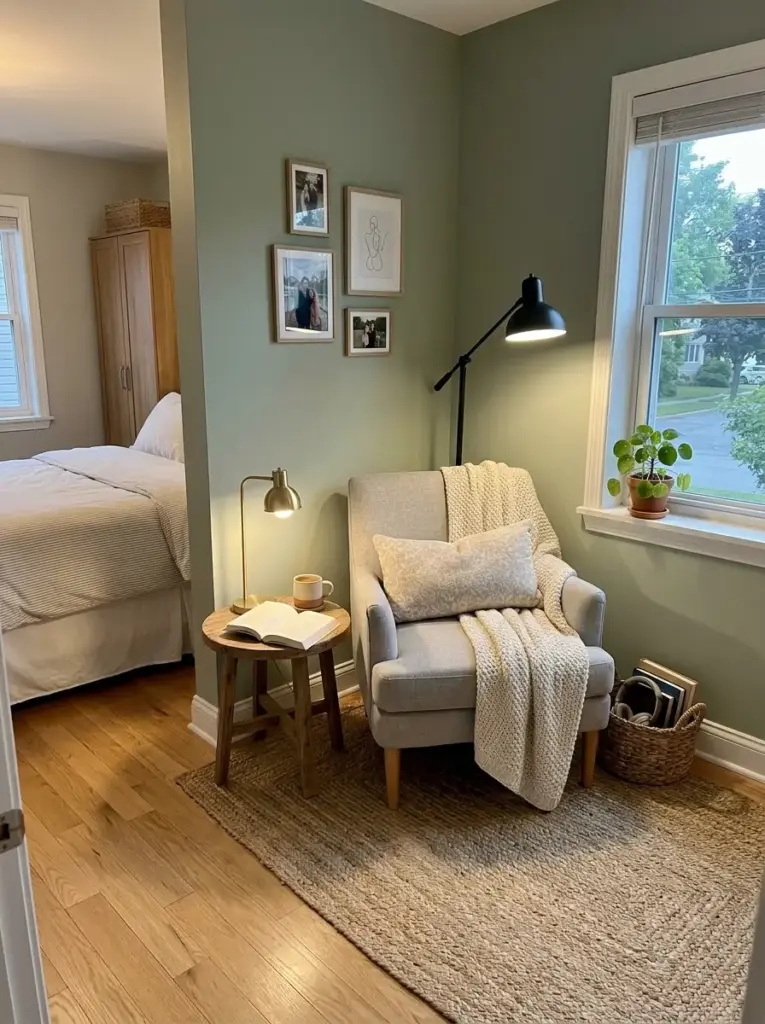
A small relaxation corner can make a bedroom feel more personal. You do not need a large space. Even a small chair, floor cushion, or window-side area can become a comfortable spot.
Choose furniture based on your room size. A compact armchair works well in medium bedrooms, while floor cushions or a soft pouf are better for small spaces. Add a small side table for books, drinks, or decorative items.
Lighting improves this area. A warm floor lamp or adjustable reading lamp makes the corner useful in the evening. Position the chair near natural light during the day if possible.
This idea works best for people who enjoy reading, drawing, listening to music, or relaxing away from their bed.
Avoid creating a corner that only looks good but is uncomfortable. Test seating before buying and choose items that support your daily habits.
Mix Cute Accessories With Practical Items
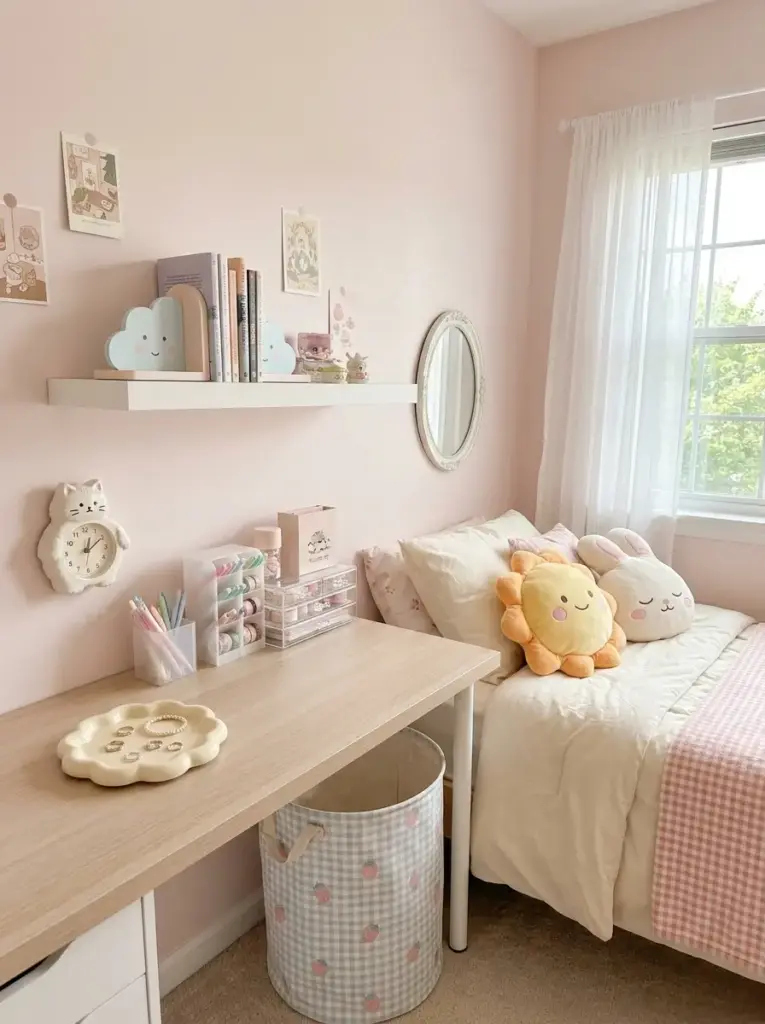
Accessories are an important part of Cutecore Room Ideas, but they should support the room rather than create clutter. The best decorations often combine beauty and function.
Examples include:
- Decorative storage trays for jewelry
- Cute clocks
- Patterned laundry baskets
- Matching organizers
- Character-themed cushions
- Small mirrors
- Decorative bookends
The purpose of accessories is to add personality while keeping the room organized. A small collection displayed on a shelf can have more impact than many random objects across the room.
Choose accessories that connect with your interests. Someone who loves books may display favorite novels with cute bookmarks, while an artist may organize supplies in attractive containers.
This approach works best for beginners because accessories are easy to change as your taste develops.
Avoid buying every cute item you see. A room needs space to feel comfortable. Select pieces that have meaning or a clear purpose.
Use Mirrors to Make Small Rooms Feel Larger
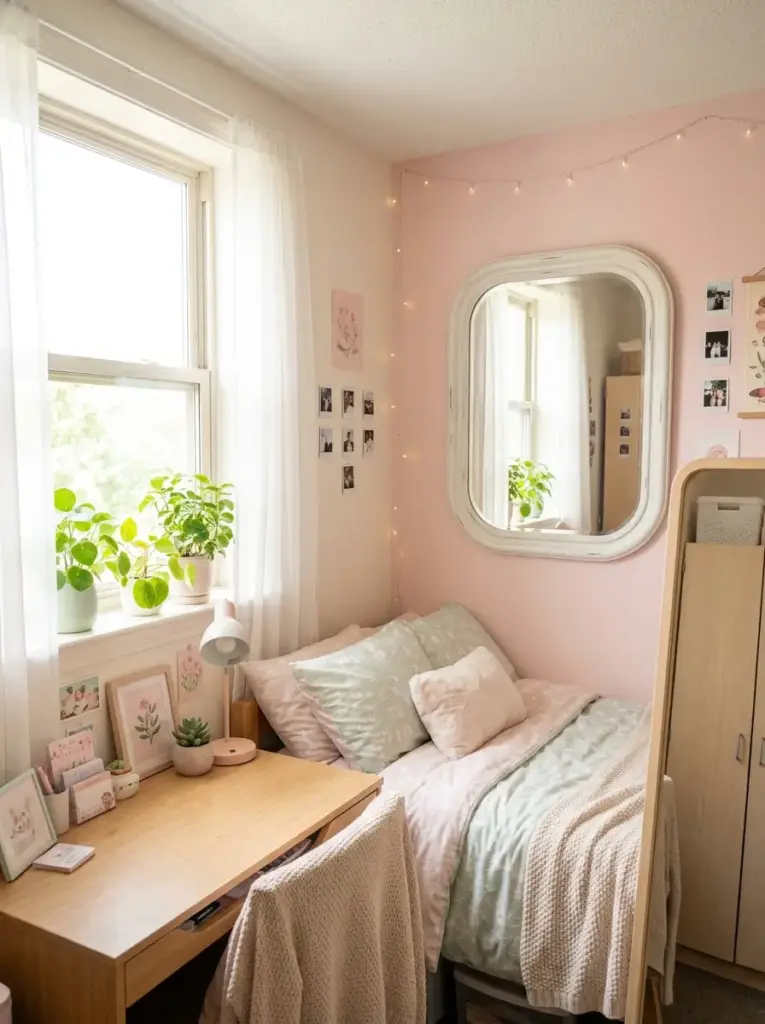
Mirrors are useful for both decoration and function. They reflect light and can make a small bedroom appear more open.
A rounded mirror, vintage-style mirror, or simple framed mirror can match cutecore designs. Place it near a window or light source to increase brightness.
For small rooms, full-length mirrors are especially helpful because they create the feeling of extra space. Wall-mounted mirrors are practical when floor space is limited.
Renters can use removable hanging methods instead of drilling large holes. Lightweight mirrors or standing mirrors are also good alternatives.
This idea is best for people decorating small bedrooms, dorm rooms, or apartments.
A common mistake is placing mirrors where they reflect clutter. A mirror should highlight a pleasant area, not increase the visibility of messy storage.
Create a Balanced Furniture Layout
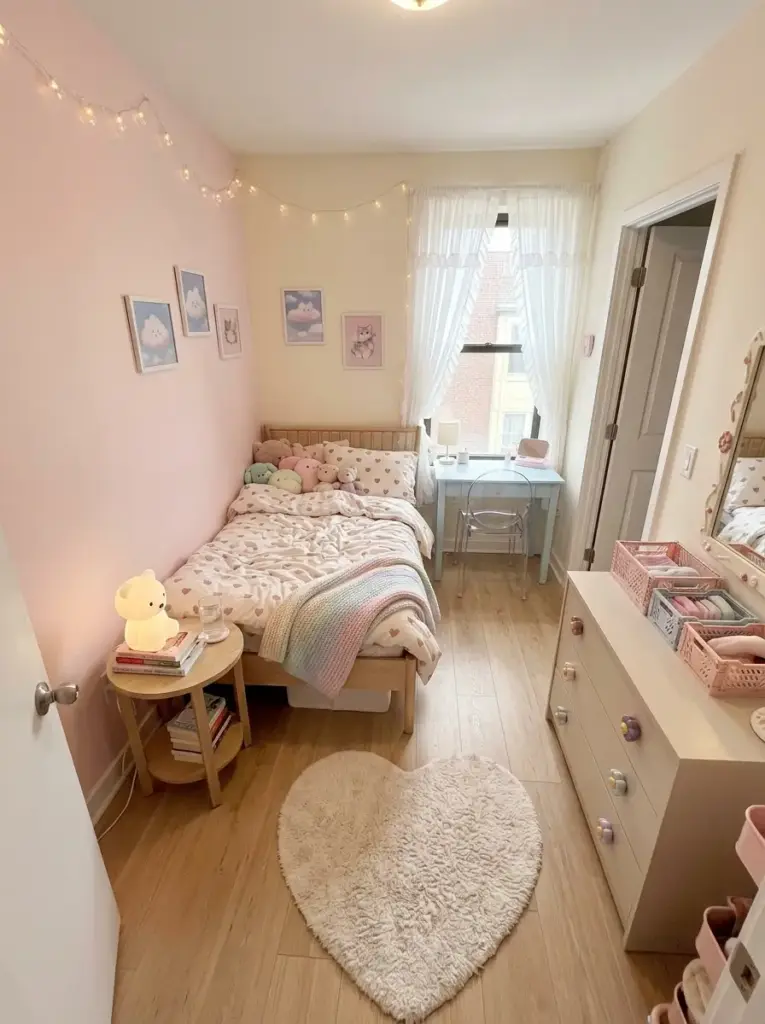
A beautiful bedroom needs a practical layout. Furniture placement affects movement, comfort, and how spacious the room feels.
Start by measuring your room before buying or moving furniture. Leave enough walking space around the bed and avoid blocking windows or doors. In small bedrooms, placing the bed against a wall often creates more open floor space.
Keep frequently used items easy to reach. A bedside table should be close enough for nighttime essentials, and storage should be accessible without moving other furniture.
A cutecore room does not need every piece of furniture pushed against the walls. Sometimes a small desk near a window or a chair in a corner creates better balance.
This tip works best for anyone working with limited space because smart layouts improve daily comfort.
Avoid copying room designs without considering your own dimensions. A layout that works in a large bedroom may not work in a small apartment.
Common Mistakes to Avoid
Using Too Many Themes Together
One common mistake is mixing too many styles. A cutecore bedroom can include cute elements, but combining several unrelated themes may make the room feel disorganized.
Choose one main direction. For example, pastel floral cutecore, soft animal-inspired decor, or minimal cute styling can each work well when planned carefully.
Ignoring Storage Needs
A room filled with decorations but lacking storage becomes difficult to maintain. Always plan where clothes, books, electronics, and daily items will go before adding decorative pieces.
Choosing Style Over Comfort
A bedroom should support rest. Avoid furniture that looks attractive but feels uncomfortable. Select mattresses, chairs, desks, and lighting based on how you use the room.
Buying Everything at Once
Many beginners purchase too many items during a makeover. A better approach is to update the room gradually. Start with the biggest visual changes, such as bedding, lighting, and wall color, then add smaller details.
Budget-Friendly
Creating a cute bedroom does not require a large budget. Smart shopping and creative updates can make a major difference.
Start with affordable changes:
- Change pillow covers instead of buying a new bed set.
- Rearrange furniture before purchasing new pieces.
- Paint or decorate old furniture.
- Use thrifted frames for wall art.
- Create handmade decorations.
- Buy storage items that solve real problems.
Secondhand furniture can work well for cutecore bedrooms. A simple wooden table can be transformed with paint, new handles, or decorative fabric.
DIY projects are another affordable option. Handmade photo boards, painted storage boxes, and customized shelves can add personality without high costs.
For renters, focus on removable upgrades. Curtains, rugs, bedding, lamps, and portable furniture provide style changes without risking your deposit.
Cutecore Room Ideas Tips
When planning Cutecore Room Ideas, focus on creating a room that matches your daily life. A bedroom should not only look attractive in photos; it should feel comfortable when you wake up, work, relax, and organize your belongings.
Use these simple guidelines:
- Pick a clear color palette before shopping.
- Measure your room before buying furniture.
- Choose decorations that represent your personality.
- Keep storage solutions practical.
- Balance cute items with space.
- Use lighting based on different activities.
- Update slowly instead of rushing the makeover.
The best cutecore bedrooms feel personal. A favorite book collection, handmade artwork, meaningful photographs, or a comfortable reading chair often adds more character than expensive decorations.
FAQ
What colors work best for Cutecore Room Ideas?
Soft colors such as pastel pink, lavender, cream, baby blue, mint green, and beige are popular choices. The best combination depends on your furniture, lighting, and personal preference. Using two or three main colors usually creates a more balanced result.
Can I create a cutecore bedroom in a rental home?
Yes. Rental-friendly Cutecore Room Ideas include removable wall decorations, temporary lighting, rugs, bedding changes, portable shelves, and furniture that does not require permanent installation.
How can I make a small bedroom look cutecore?
Focus on space-saving solutions. Use vertical storage, mirrors, multi-purpose furniture, soft lighting, and carefully selected decorations. Avoid filling every corner with accessories.
What lighting is best for a cutecore bedroom?
Warm lighting around 2700K to 3000K works well for relaxing areas. A brighter task light, around 3500K to 4000K, is better for desks and reading spaces.
Do I need expensive furniture for a cutecore room?
No. Small updates like new bedding, organized storage, decorative lighting, and affordable accessories can create a strong change without replacing large furniture.
Conclusion
Cutecore Room Ideas are about creating a bedroom that combines charm, comfort, and practical design. The style works because it allows personal expression while still focusing on organization and everyday usability.
A successful cutecore makeover does not depend on buying many decorations. It depends on thoughtful choices, from selecting a balanced color palette to arranging furniture properly and using lighting effectively.
Whether you have a large bedroom, a small apartment room, or a rental space, you can create a cute and functional environment with simple updates. Start with the areas that affect daily comfort the most, then slowly add details that make the room feel like your own.