
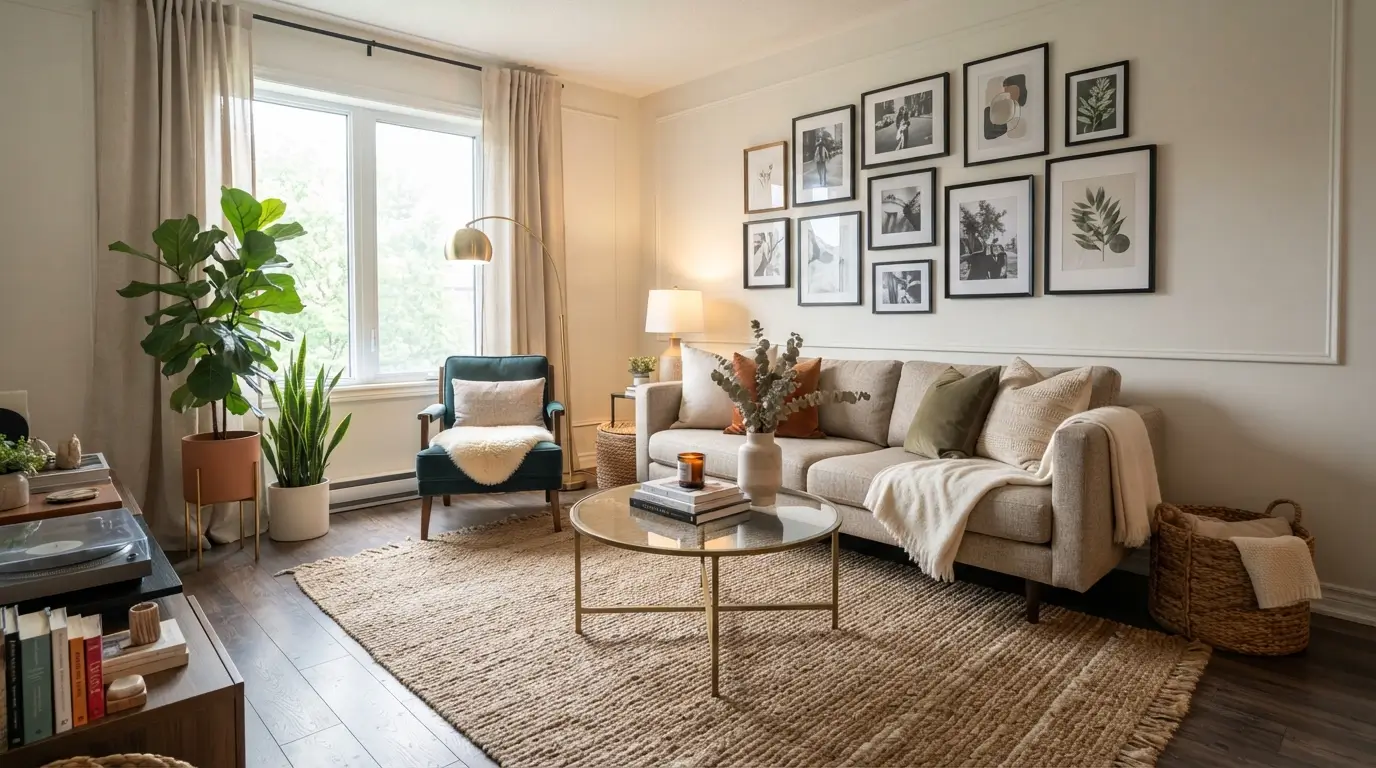

Small spaces can look considered and comfortable without costly furniture, custom joinery, or a complete renovation. Good results usually come from proportion, colour control, lighting, fabric, and careful placement rather than high prices. A thoughtful Budget Apartment Living Room should support daily routines, hide everyday clutter, and still feel welcoming when friends visit—spending less works best when each purchase solves a real problem rather than filling an empty corner.
First-home decorating often feels difficult because everything seems necessary at once. Seating, curtains, storage, lamps, rugs, and wall decor can quickly stretch a move-in budget. Slowing the process down protects your money and helps you understand how the room actually works. Live with the basic layout for several days, notice where bags collect, and watch how daylight changes before buying decorative pieces.
Start With a Practical Room Plan
Measure every wall, doorway, window, radiator, socket, and awkward corner before shopping. Record sofa width, seat depth, cabinet height, and the space needed for doors or drawers to open. Painter’s tape can mark furniture footprints directly on the floor, giving you a realistic sense of scale without spending anything. People decorating narrow rentals benefit most from this step because a few extra centimetres can block the main walking route.
Photograph the room from each doorway and study the pictures rather than relying only on memory. Photos reveal crowded corners, weak focal points, and mismatched heights more clearly. Keep a phone note with measurements, paint references, product links, and spending limits. Organised planning may feel less exciting than shopping, yet it is one of the easiest ways to make inexpensive choices look deliberate.
Can a Cheap Living Room Look Expensive?
Yes. A low-cost room can appear refined when the layout feels balanced, lighting has a warm and consistent temperature, fabrics hang properly, and clutter stays controlled. Expensive-looking interiors rarely depend on one luxury object. They depend on repeated colours, suitable scale, clean surfaces, and a clear visual hierarchy. Concentrating money on a comfortable sofa, a correctly sized rug, and useful lamps usually creates a stronger result than buying many small accessories.
Build the Layout Around One Main Function
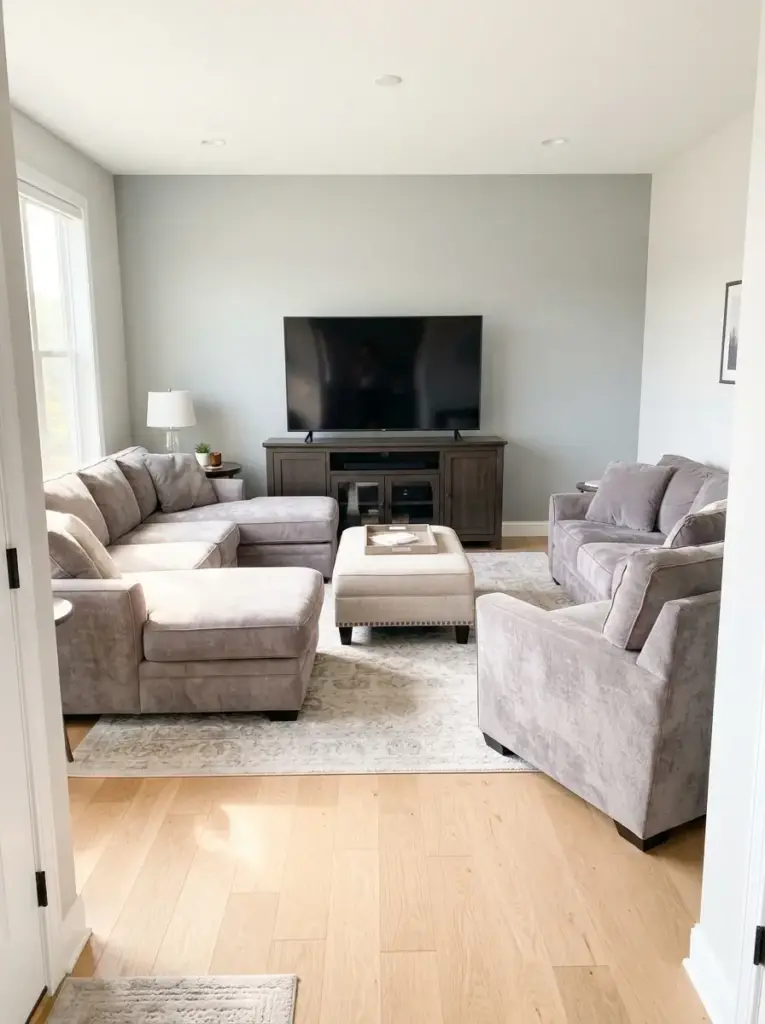
Decide what the room needs to do most often. Television viewing, reading, hosting, children’s play, and home working all require different furniture positions. Place the largest item first, then build around it. Movie lovers may centre the sofa opposite the screen, while frequent hosts might angle two chairs toward the sofa to create easier conversation. Keeping one main purpose in focus prevents the room from becoming crowded with competing zones.
Clear function creates visual confidence because every piece looks intentional. Someone living alone may need a compact loveseat, one side table, and an ottoman rather than a full sofa set. Families may prefer a small sectional with washable covers and closed toy storage. Mark at least 75 centimetres for the main walkway where possible, then avoid placing narrow tables in that route.
Best suited to first-time renters, this approach costs nothing and often improves the room immediately. Rearranging existing furniture can make the space feel larger before any purchases happen. Anyone researching Small Apartment Living Room Ideas should solve movement first because even attractive furniture looks wrong when people must squeeze around it.
Use a Restrained Colour Palette
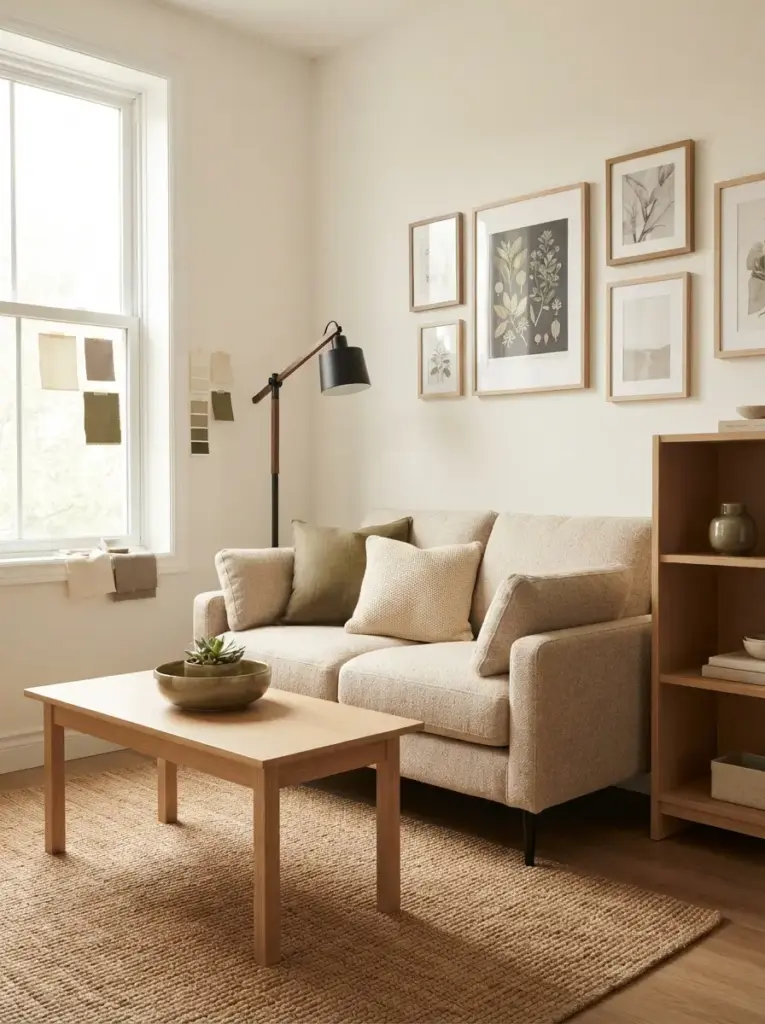
Choose one light base, one supporting neutral, and one controlled accent colour. Warm white walls, an oatmeal sofa, pale oak, and muted olive can feel richer than a room filled with unrelated bargain pieces. Greige, soft taupe, cream, clay, and warm grey work well in apartments because they reflect light while hiding everyday marks better than pure white.
Colour repetition makes affordable furniture appear connected. Repeat the accent in three small places, such as a cushion, artwork detail, and ceramic bowl. Darker touches in black, walnut, or charcoal can provide structure, but keep them limited in tiny rooms. Too many sharp contrasts divide the space and make mismatched items more obvious.
Beginners who feel unsure about decorating will find that a narrow palette reduces buying mistakes. Renters who cannot paint can apply colour through curtains, removable covers, throws, frames, and artwork. Testing fabric and paint samples beside the window at different times of day helps prevent expensive returns.
Make Curtains Look Custom
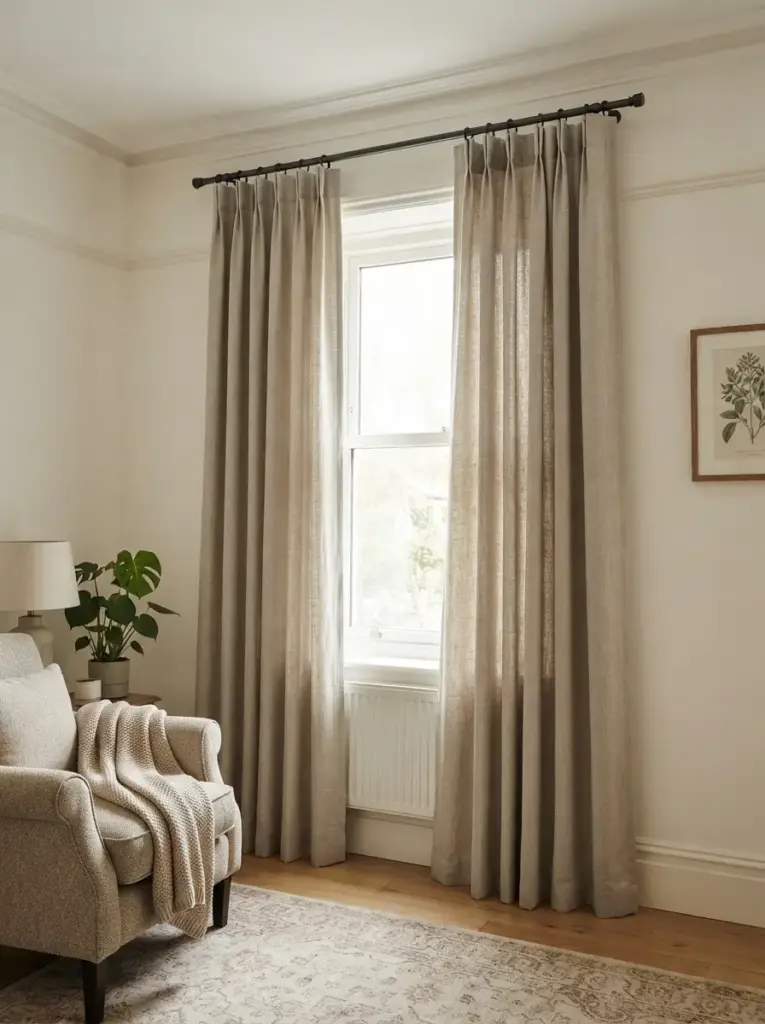
Hang curtains close to the ceiling and extend the rod beyond both sides of the window. Full-length panels create long vertical lines, which make walls look taller, and windows seem wider. Ready-made curtains can look tailored when they reach just above the floor, hang in generous folds, and use simple rings or concealed hooks rather than a flimsy exposed rod.
Proper curtain width matters more than the fabric price. Combined panels should measure roughly one-and-a-half to two times the window width so they still appear full when closed. Linen-look polyester, cotton blends, or second-hand lined curtains can provide a substantial finish without custom costs. Ironing or steaming the panels removes packaging creases that instantly make a room look unfinished.
Rentals with low ceilings or small windows benefit from no-drill brackets and tension systems where wall fixings are restricted. Check the weight limit before hanging heavy fabric. Budget hemming tape can shorten panels neatly, while curtain weights can improve the fall of lightweight material.
Layer Warm Lighting
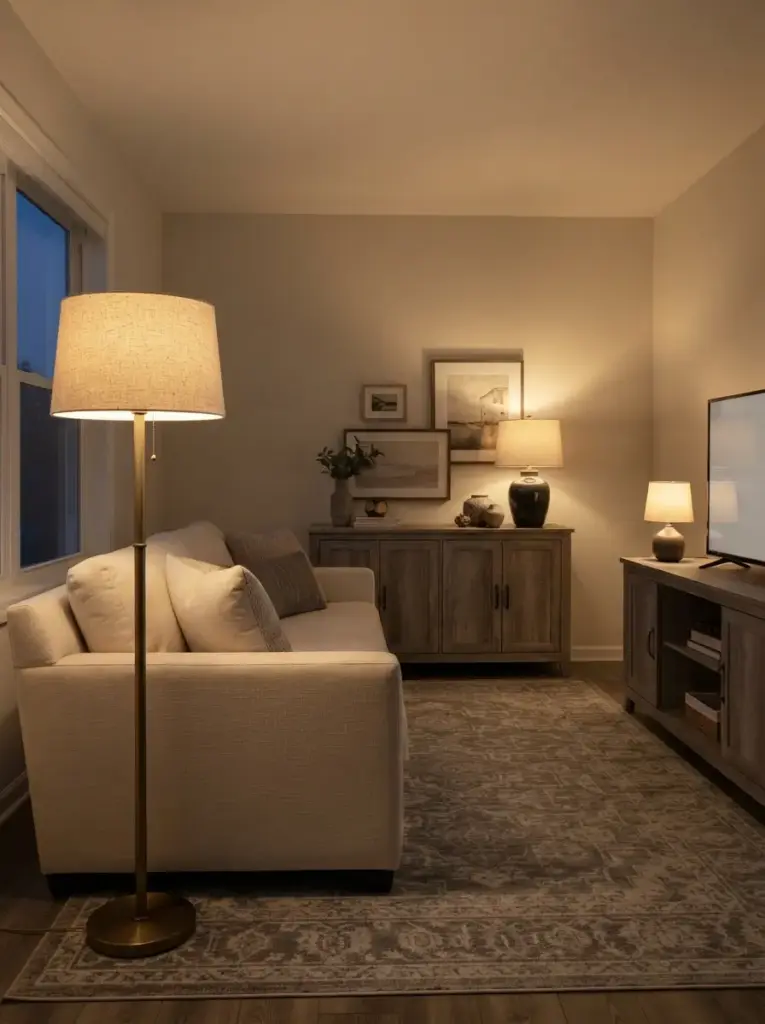
One bright ceiling light rarely creates a comfortable or polished room. Combine ambient lighting with at least one task light and one softer accent source. A floor lamp beside the sofa, a table lamp on a cabinet, and a small shaded lamp near the television can create depth without electrical work. Matching bulb colour temperatures keeps the room from looking patchy.
Warm-white bulbs between 2700K and 3000K suit relaxed evenings, while 3000K can also support reading or casual work. Avoid mixing blue-white 5000K bulbs with warm lamps because the contrast makes affordable furnishings look harsher. Dimmable bulbs or plug-in dimmers add flexibility, especially in a room used for both work and rest.
Rooms with limited natural light can use second-hand lamp bases paired with matching shades for a coordinated result. Check wiring and plug condition before use. Soft lighting creates gentle shadows that flatter basic furniture, textured fabrics, and neutral wall colours.
Choose One Large Rug Instead of Several Small Mats
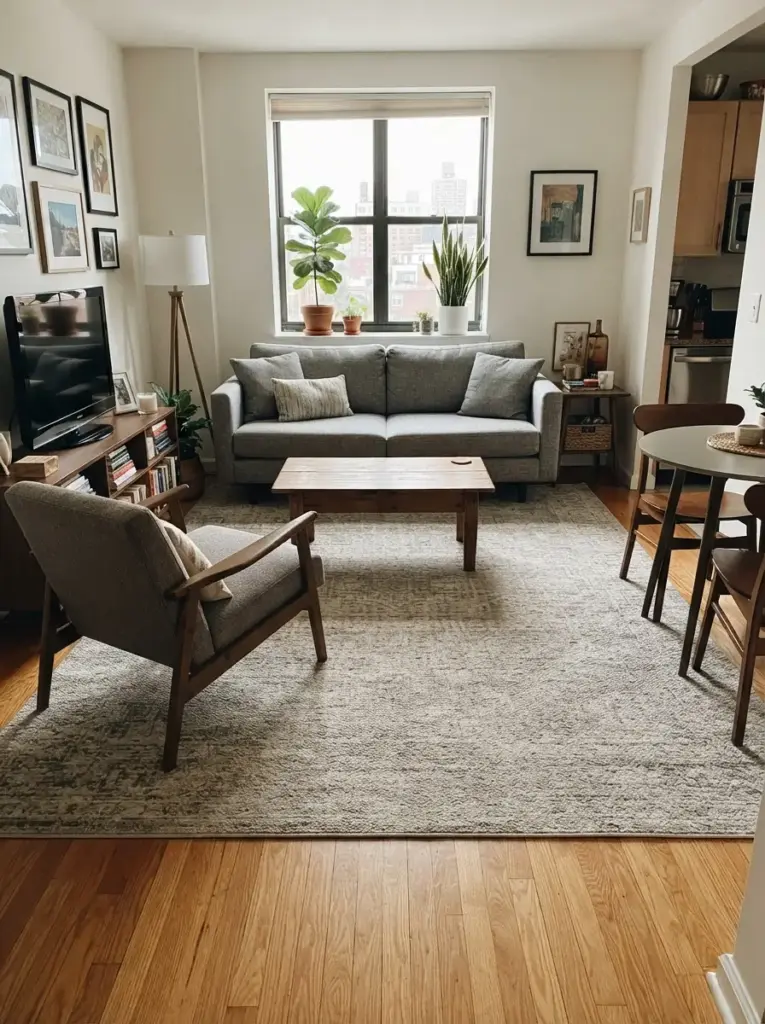
One correctly sized rug makes separate furniture pieces feel like one seating group. Choose a rug large enough for the front legs of the sofa and chairs to rest on it. Tiny rugs floating under a coffee table often make the whole room look smaller and can expose too much flooring around the seating area. Measure with newspaper or masking tape before ordering.
Low-pile rugs with subtle patterns are practical for small apartments because they are easier to vacuum and less likely to catch doors. Faded geometric designs, narrow stripes, mottled neutrals, and simple borders can hide wear while adding structure. Flatweave options also work under dining chairs when a living room shares space with a compact eating area.
Echoing rooms and hard floors benefit from a large rug that improves acoustics, comfort, and appearance. Look for end-of-line sizes, washable options, and second-hand wool blends. Anyone interested in Small Apartment Living Room Decor should treat the rug as a foundation rather than a final accessory.
Give the Sofa a More Tailored Finish
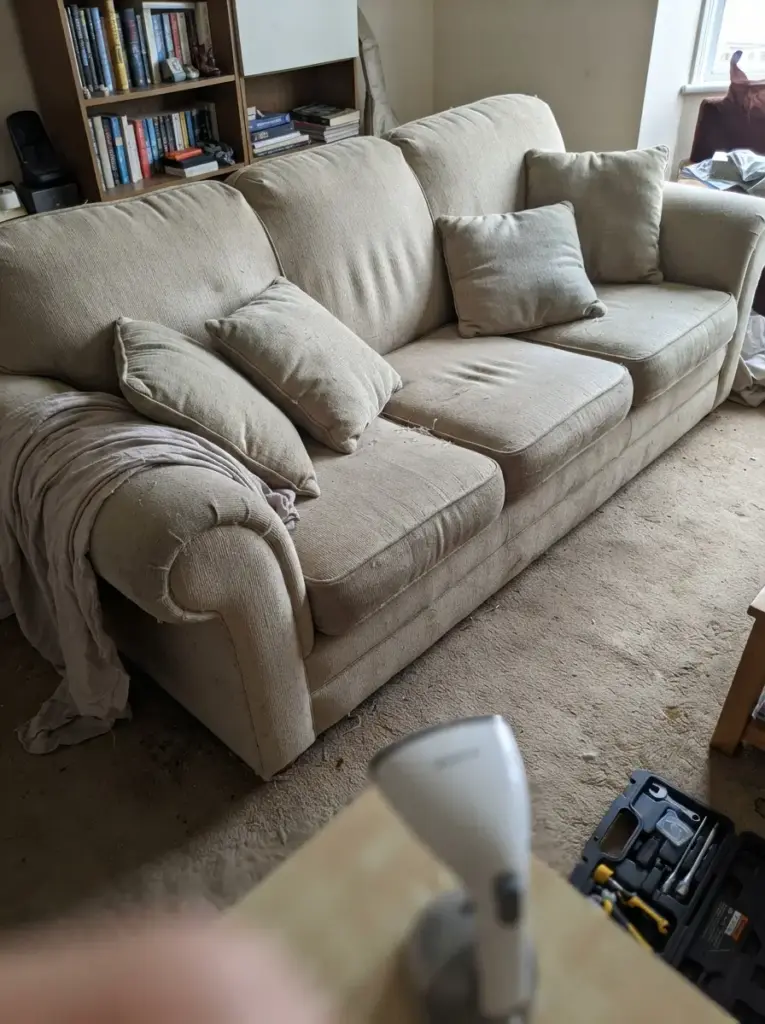
Older or low-cost sofas often improve with simple adjustments. Remove excess cushions, centre the seat pads, tighten loose legs, and steam the upholstery if the fabric allows. A fitted cover in stone, mushroom, navy, or warm grey can create a cleaner shape than a loose throw tucked into every gap. Keep the original care label and test steam on a hidden area.
Cushion choice also affects the result. Use two larger cushions instead of five undersized ones, then add one lumbar cushion if extra back support is needed. Down-alternative inserts slightly larger than the covers create a fuller shape. Cotton, linen blends, brushed fabric, and subtle woven textures usually look calmer than shiny materials.
Renters using inherited or second-hand seating can delay replacement by giving the sofa a more tailored finish. Choose covers that can be washed and avoid very pale shades in homes with children or pets. Practical comfort should remain more important than a rigid showroom arrangement.
Upgrade Basic Furniture With Better Hardware
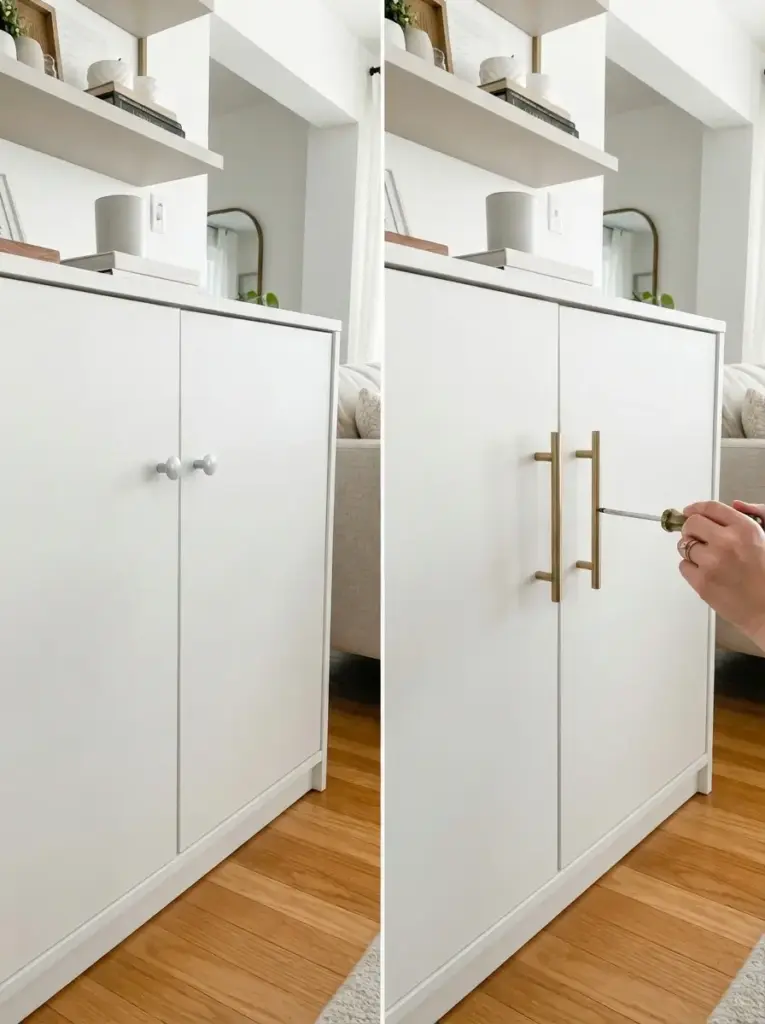
Simple cabinets, media units, and side tables can look more considered after replacing cheap handles or knobs. Brushed brass, matte black, dark bronze, timber, and ceramic hardware are available at many price points. Keep the finish consistent across visible storage, but do not force every metal in the room to match perfectly.
Scale matters when choosing handles. Small knobs suit narrow drawers, while longer pulls can balance wider doors. Measure the existing hole spacing before buying to avoid unnecessary drilling. Renters can store the original hardware in a labelled bag and reinstall it before moving out.
Flat-pack furniture and second-hand finds gain impact from new hardware without requiring replacement. Clean the surface, tighten hinges, and use furniture touch-up markers on small chips before installing new handles. Minor repairs make the upgrade look more convincing because fresh hardware cannot hide loose doors or uneven drawers.
Style the Coffee Table With Fewer Objects
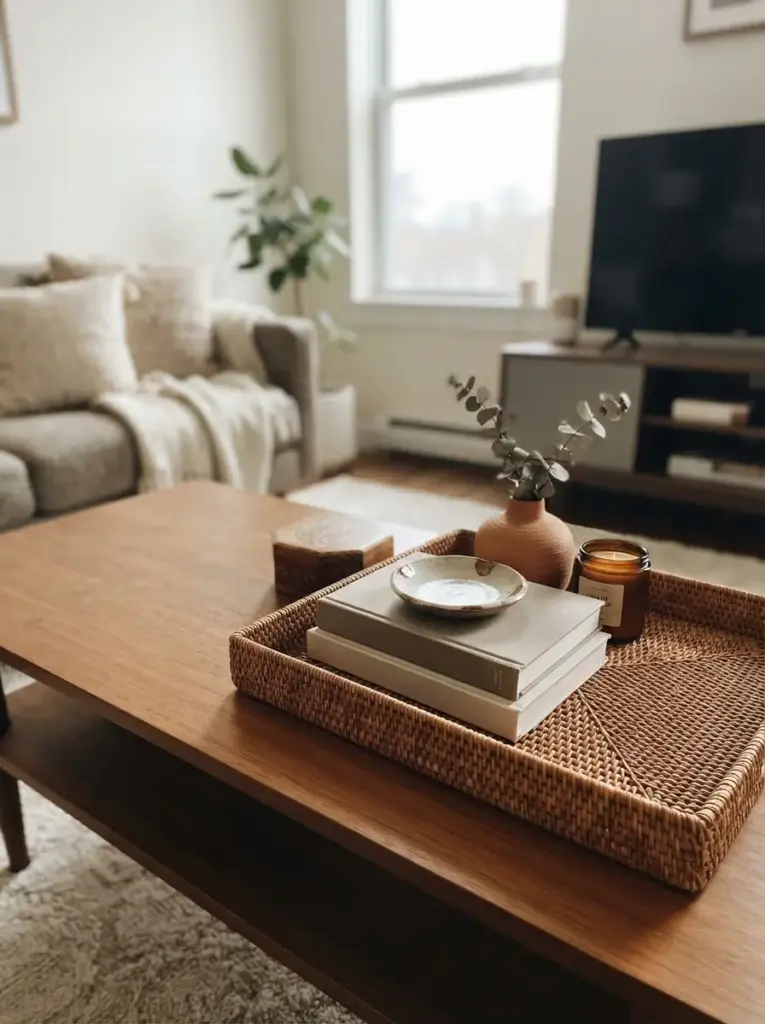
Crowded tabletops usually look cheaper because they suggest objects were placed without editing. Keep one clear area for drinks, then group two or three items on a tray. A small stack of books, a shallow bowl, and one low vase provide enough variation in height and shape. Everyday remotes can sit in a lidded box or drawer.
Grouping creates order because the eye reads several objects as one arrangement. Use items already owned before buying decorative sets. Hardback books, a ceramic dish, a candle, or a small plant can work when their colours connect to the room. Avoid tall arrangements that block conversation or the television.
Busy households can clean faster when a tray allows the whole display to move at once. Homes with young children should avoid fragile glass and heavy stone pieces. Readers comparing Cozy Apartment Living Room Designs Ideas can create warmth through useful objects and texture rather than filling every surface.
Create One Strong Focal Wall
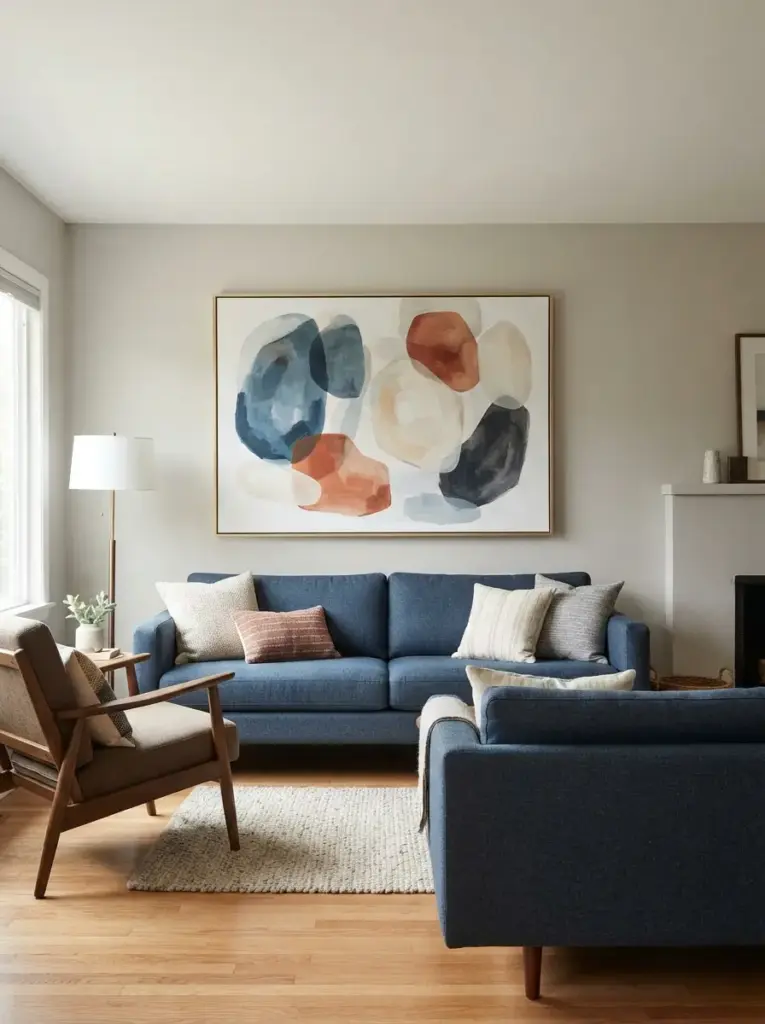
Choose one wall to hold the room’s main visual weight. The television wall, sofa wall, fireplace, or largest uninterrupted surface usually works best. Use one large artwork, a balanced pair of frames, or a neat gallery group instead of scattering tiny pieces across every wall. Leaving surrounding wall space empty makes affordable art feel more important.
Scale gives the arrangement authority. Artwork above a sofa often looks balanced when it spans around half to two-thirds of the sofa width. Hang the centre near eye level and keep the lower edge reasonably close to the furniture. Printable artwork, framed fabric, vintage posters, and second-hand canvases offer affordable options.
Unfinished rooms can use removable picture strips to support lightweight frames where drilling is not allowed. Check wall finish and weight guidance first. Avoid generic motivational signs or too many word-based prints, since they can make the design feel busy.
Use Mirrors to Improve Light, Not Fill Space
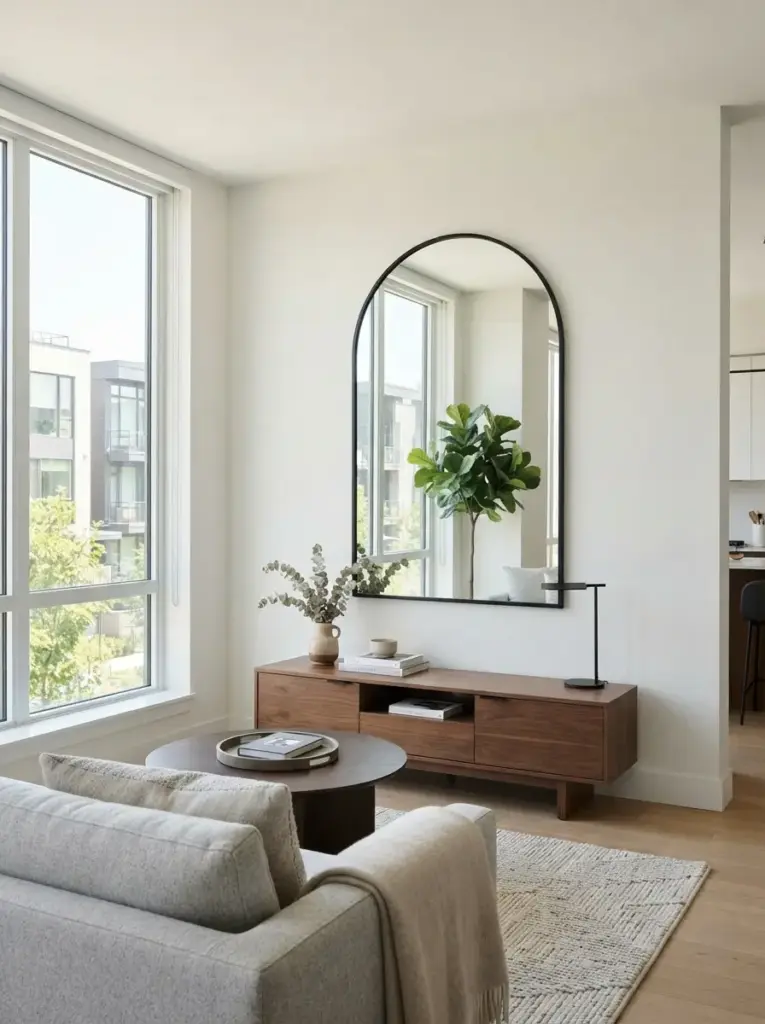
Place a mirror where it can reflect a window, lamp, artwork, or open part of the room. Random mirror placement may reflect clutter, a blank corridor, or the television, adding little value. A medium or large mirror usually looks more refined than several tiny decorative mirrors spread across the walls.
Simple frames in black, warm wood, antique brass, or painted neutral finishes can connect the mirror to existing furniture. Leaning mirrors work in some rentals, but they should be secured safely to prevent tipping. Heavy mirrors require suitable fixings and landlord permission where relevant.
Narrow or north-facing rooms gain brightness and a longer sightline from carefully placed reflection. People using Modern Apartment Living Room Ideas can pair a clean arched mirror with slim metal lighting or a low wood cabinet. Avoid highly ornate frames if the rest of the room has simple lines.
Hide Cables and Everyday Clutter
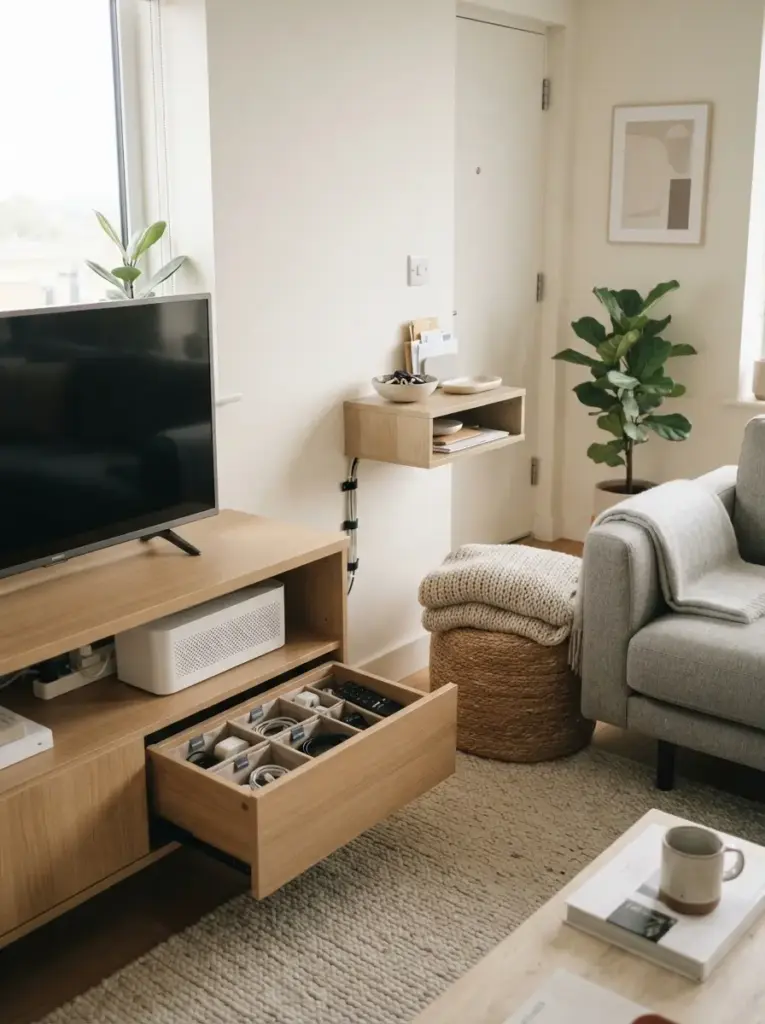
Visible wires, overloaded extension leads, and scattered chargers make even expensive furniture look unfinished. Group cables behind the media unit using reusable ties, adhesive clips, and a ventilated cable box. Leave enough room around plugs and power adapters to prevent heat build-up. Never cover damaged cables or overloaded sockets.
Closed storage should sit near the place where items are used. Keep remote controls in the media unit, chargers in one drawer, and blankets in an ottoman or basket beside the sofa. Entry items such as keys and post need a small landing spot, especially when the apartment opens directly into the living room.
Multipurpose rooms benefit from hidden storage that reduces visual noise without demanding extreme minimalism. Anyone planning a Minimalist Apartment Living Room can keep useful items while limiting what remains visible. Labelled pouches and divided drawers are often more practical than buying another cabinet.
Mix High and Low Pieces Carefully
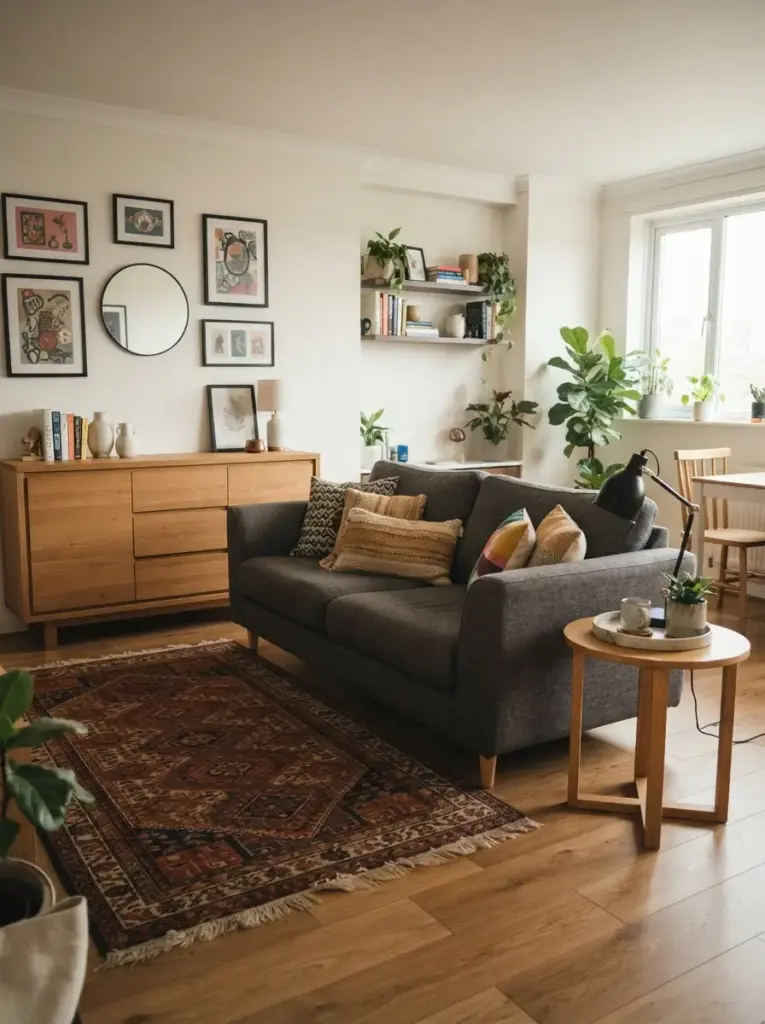
Spend more on items that receive daily wear, then save on decorative or occasional pieces. A supportive sofa, durable rug, and stable storage unit deserve a larger share of the budget. Side tables, lamps, frames, trays, and cushions can come from charity shops, clearance sections, or affordable retailers.
Mixing price levels looks intentional when colour, scale, and materials connect. A second-hand oak table can sit beside a simple flat-pack cabinet if both have warm tones and clean lines. Repeating black metal through a lamp and frame can help unrelated pieces feel coordinated. Avoid buying a complete matching set, which often makes a small room feel rigid.
First-time homeowners furnishing gradually can protect comfort while leaving room for personality through this strategy. Keep a written wish list and wait for suitable pieces rather than buying temporary items that will soon need replacing.
Add Natural Texture With Useful Materials
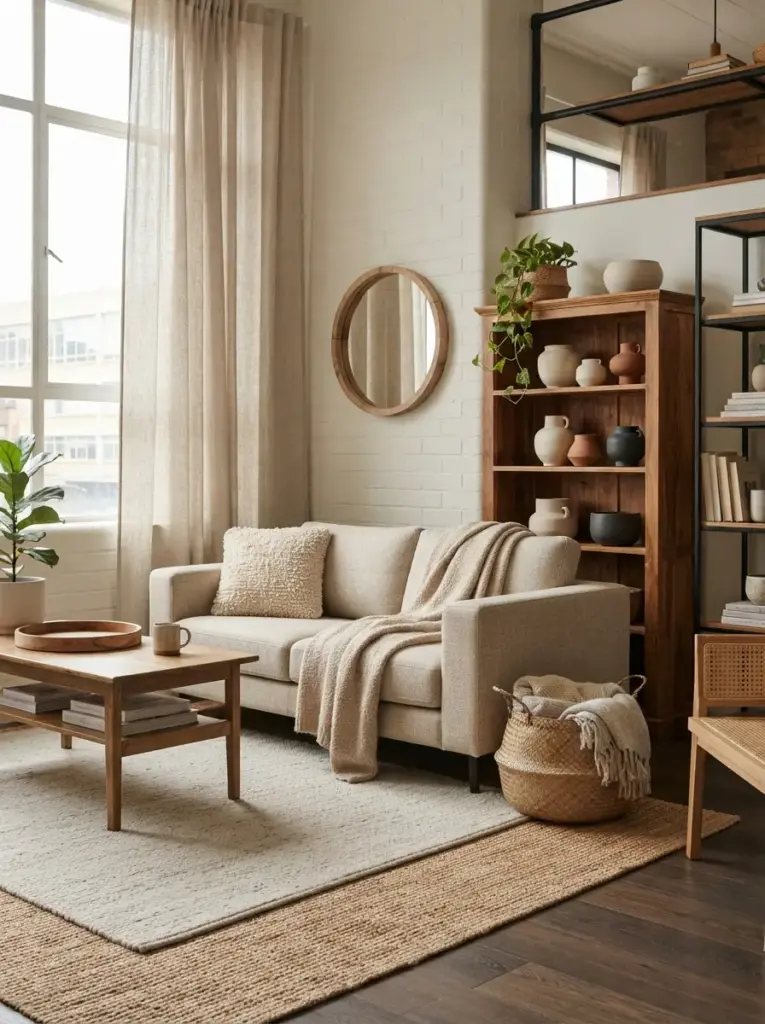
Wood, cane, linen, cotton, wool, jute, and matte ceramics create depth without relying on expensive patterns. One woven basket, linen-look curtains, a wood tray, and a textured cushion may be enough. Keep natural materials in related tones so the room feels calm rather than rustic or overly themed.
Texture works because light falls differently across smooth, woven, and grainy surfaces. Basic neutral furniture looks richer when surrounded by varied finishes. Avoid placing rough jute where children play on the floor, or pets scratch frequently. Washable cotton and low-pile wool blends may be more practical in active homes.
Neutral rooms that feel flat often improve when second-hand wood is cleaned and waxed instead of painted immediately. People collecting Loft Apartment Living Room Makeover Ideas can use wood and black metal to soften industrial features while keeping the space functional.
Create a Small Reading or Coffee Corner
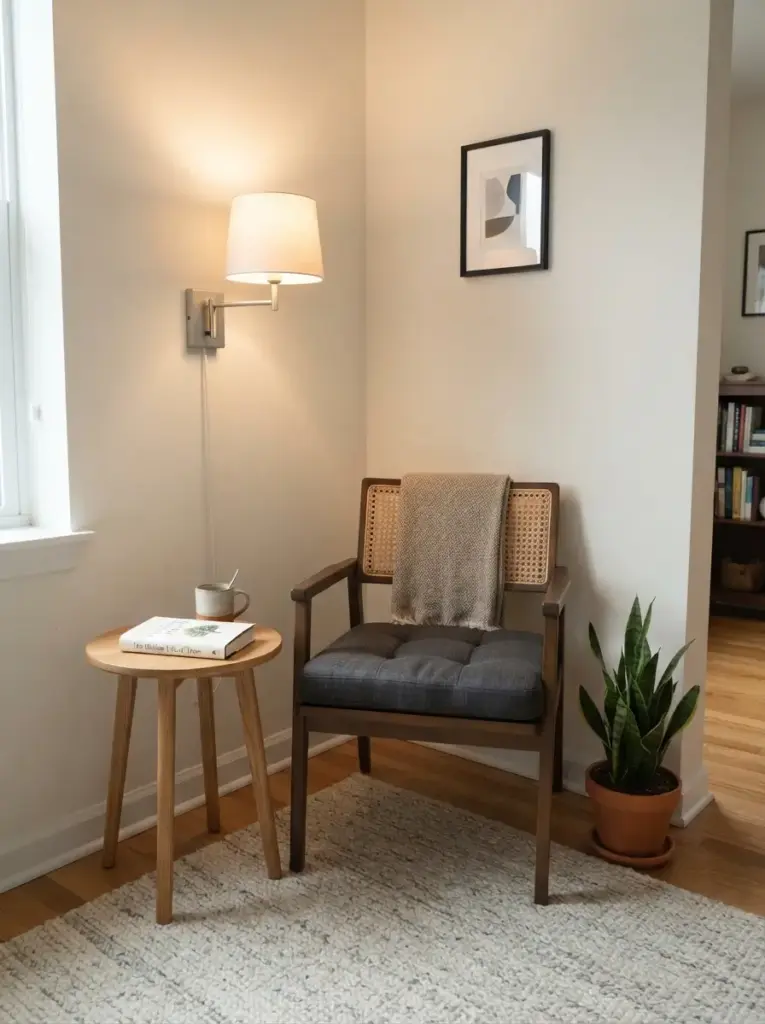
Unused corners often become clutter zones. Turn one into a practical seat with a compact chair, small table, and floor lamp. Choose furniture with visible legs or open arms so the corner does not feel heavy. A dining chair with a supportive cushion can work when there is not enough room for a full accent chair.
Purpose makes the area look designed rather than leftover. Keep the table large enough for a cup and book but narrow enough to preserve movement. A wall-mounted plug-in sconce can replace a floor lamp in extremely tight spaces. Renters should use cable covers and approved fixings.
People living alone, regular readers, and anyone needing a quiet screen-free spot should keep the corner simple. Avoid adding shelves, baskets, plants, and artwork all at once. One or two supporting elements are usually enough.
Leave Visible Breathing Room
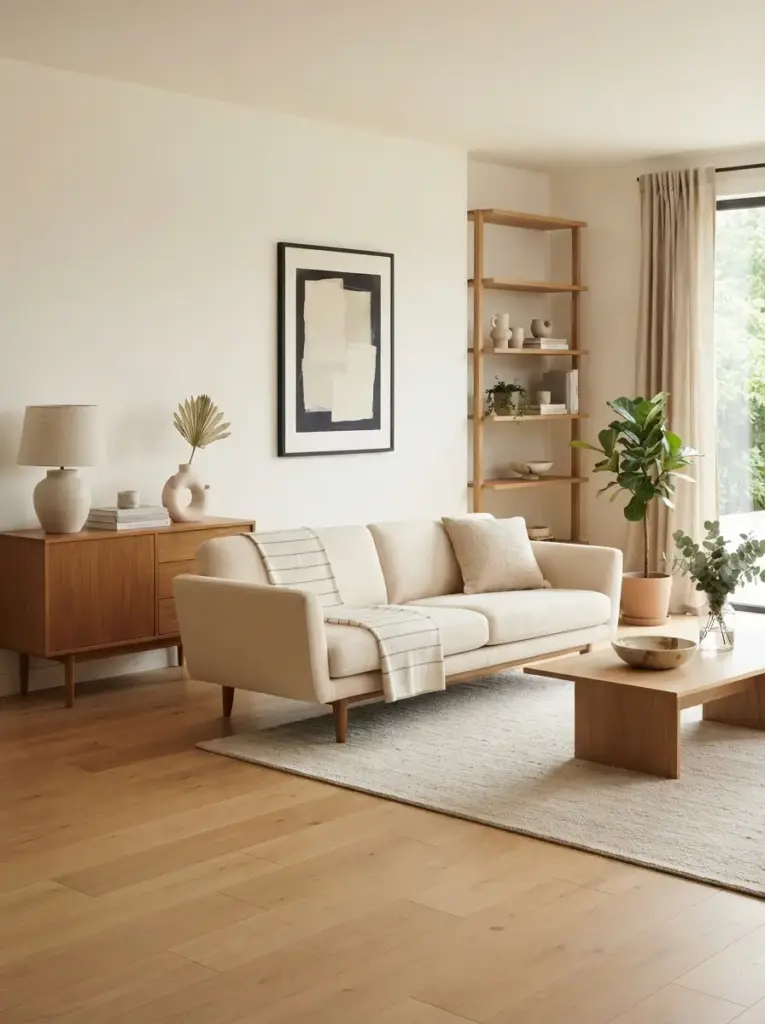
Empty wall sections, partly clear shelves, and open floor around furniture make a room look more spacious and expensive. Remove one object from every crowded surface, then live with the change for a week. People often realise that the room feels more complete after unnecessary pieces disappear.
Breathing room improves the visual hierarchy because important items become easier to notice. Keep at least part of the coffee table and media unit clear. Avoid placing a small cabinet in every gap simply because it fits. Open space also makes vacuuming, mopping, and moving through the room easier.
Small households and busy renters can use this principle to simplify daily maintenance. A polished Budget Apartment Living Room depends as much on what you leave out as what you bring in. Useful furniture should have enough room to function properly.
Move-In Essentials That Improve the Room
Begin with the items that protect comfort and function rather than decorative extras. Curtains or blinds provide privacy, lamps make evenings usable, and a stable seat gives the room a working centre. Add felt pads under furniture, spare warm-white bulbs, cable clips, and a washable doormat if the entrance opens into the living space. These modest essentials prevent scratches, control clutter, and reduce the need for rushed purchases during the first week.
Keep one temporary basket near the sofa while unpacking. Place chargers, instruction booklets, tools, remotes, and small items inside until permanent storage becomes clear. Empty the basket each evening and note which objects return most often. Repeated use shows where a drawer, shelf, or lidded box would be genuinely helpful. Such observation is especially useful in a Budget Apartment Living Room, where every storage purchase needs to earn its floor space.
Measure the delivery route before ordering any large item. Check the building entrance, lift dimensions, stair turns, internal doors, and ceiling height near awkward corners. Delivery fees and failed drop-offs can consume money reserved for decorating, so confirm access with the seller in writing. Flat-pack furniture may solve narrow access problems, but inspect weight limits and construction quality. Best suited to upper-floor flats and older buildings, careful access planning protects both the budget and the property while reducing stress on moving day. Keep blankets ready to protect floors, walls, and doors.
Check how the room feels at three different times: morning, late afternoon, and evening. Natural light may expose faded upholstery, screen glare, or a dark reading corner that seemed fine during a daytime viewing. Move lamps before buying more and test whether a mirror can redirect useful light. Consistent 2700K or 3000K bulbs usually create a calmer result than several mismatched temperatures across one small space.
Prepare a basic cleaning kit suited to the actual finishes. Microfibre cloths, a gentle surface cleaner, upholstery attachments, and felt protectors help inexpensive furniture stay presentable. Follow manufacturer care instructions before using homemade mixtures on wood, stone, or fabric. Regular light cleaning generally produces a better finish than occasional aggressive scrubbing. Renters should also photograph existing marks before moving furniture into place.
Reserve one box for decorating supplies and household records. Store spare screws, original cabinet handles, removable hooks, touch-up materials, receipts, and assembly guides together. Labelled storage prevents small parts from disappearing and makes moving out easier. People who update furniture with renter-friendly changes can restore the original condition without searching through unrelated boxes months later.
Finish the first month with a spending review. Compare the original checklist with what daily life actually required, then delay anything that remains purely decorative. Redirect unused money towards a larger rug, better curtains, or a supportive chair rather than several small impulse buys. A well-planned Budget Apartment Living Room often looks more refined because the owner waited for suitable dimensions, materials, and prices instead of settling for quick substitutes.
Common Mistakes to Avoid
Buying Before Measuring
Impulse purchases cause many small-space problems. A sofa may fit the wall but block a balcony door, radiator, or walkway. Measure delivery routes as well as the final location, including lifts, stairs, and door frames. Keep measurements on your phone and compare them with product diagrams rather than relying on showroom impressions.
Using Too Many Tiny Accessories
Several small frames, ornaments, cushions, and baskets create visual clutter. Choose fewer pieces with stronger scale. One large lamp often looks better than three miniature lamps, while one substantial artwork can replace a scattered collection. Editing accessories also reduces dusting and makes meaningful objects easier to appreciate.
Matching Every Item
Complete matching furniture sets can make an apartment feel flat and temporary. Coordinate through repeated materials and colours instead. Pair a simple sofa with a second-hand wood table, then repeat the wood tone in a frame or tray. Slight variation creates a more collected, lived-in result.
Choosing the Wrong Bulb Temperature
Blue-white bulbs can make warm fabrics look grey and create a harsh evening atmosphere. Use consistent warm-white bulbs around 2700K to 3000K in relaxation areas. Brighter task lighting can reach 3000K, but the room should still feel connected. Replace bulbs gradually if the budget is tight.
Hanging Curtains Too Low
Curtain rods fixed directly above the window can make the wall appear shorter. Raise the rod and extend it beyond the window where the lease allows. Panels should reach close to the floor. Short, narrow curtains often look unfinished even when the fabric itself is attractive.
Choosing Style Over Maintenance
Deep-pile rugs, white boucle, glass tables, and open shelving require regular care. Select finishes that match real routines. Washable covers, low-pile rugs, closed cabinets, and wipeable surfaces are better for children, pets, and busy schedules. An affordable room looks strongest when it stays easy to maintain.
Filling Every Wall and Corner
Space helps a small room breathe. Adding furniture to every gap creates obstacles and weakens the layout. Keep one clear route through the room and let some walls remain undecorated. Space is part of the design, not proof that the room is unfinished.
Budget-Friendly Ways to Stretch Every Pound
Set spending categories before browsing. Place most of the budget into seating, lighting, curtains, storage, and a correctly sized rug. Keep decorative purchases small until the functional pieces are settled. Careful editing also leaves more money available for repairs, moving costs, and future necessities. A £40 lamp that improves every evening may provide more value than £40 spent on several ornaments.
Shop second-hand with a clear list. Solid wood side tables, mirrors, bookcases, lamps, and framed art often appear at lower prices than new flat-pack versions. Check stability, smells, stains, wiring, and signs of pests before buying. Transport costs should also be included in the decision.
Use fabric to refresh rather than replace. Cushion covers, curtains, throws, and washable slipcovers can change the room without removing sound furniture. Choose two or three connected colours and avoid buying complete decorative sets. Mixing textures looks more natural and allows gradual updates.
Repair visible damage early. Tighten handles, touch up small chips, clean upholstery, straighten doors, and replace missing feet. Basic maintenance makes inexpensive furniture look cared for. Keep leftover paint, spare hardware, and product information in one labelled box for future fixes.
Borrow tools instead of buying equipment for one job. A drill, steamer, staple gun, or sander may be available from friends, family, or a local tool library. Follow safety instructions and landlord rules. Careful preparation produces a cleaner result than rushing with the wrong tool.
Practical Budget Apartment Living Room Tips
Plan the room in stages rather than trying to finish it during the first weekend. Start with safe lighting, comfortable seating, privacy, and essential storage. Add a rug and artwork only after you understand the main walkway and daily clutter points. Slower decisions protect the budget and reduce waste.
Create a one-page move-in checklist. Include measurements, socket locations, curtain sizes, furniture priorities, repair needs, and a maximum spend for each category. Tick off practical needs before decorative wants. People furnishing a first home often save money simply by knowing what they already own.
Repeat one material or finish at least three times. Warm wood might appear in a side table, frame, and tray, while black metal can repeat in a lamp, curtain rod, and cabinet handle. Repetition helps inexpensive pieces feel related without requiring a matching collection.
Keep receipts and packaging until every item has been tested in the room. Sit on the chair, open cabinet doors, check the rug under daylight, and confirm curtain length before discarding anything. Return periods can protect a limited budget when online photographs do not match reality.
Review the room every three months. Remove objects that no longer serve a purpose, repair small damage, wash textiles, and reconsider furniture placement. The strongest Budget Apartment Living Room evolves with daily habits instead of staying fixed around an early decorating plan.
Frequently Asked Questions
How Can I Make Cheap Furniture Look Better?
Clean it thoroughly, tighten loose hardware, repair scratches, and improve the styling around it. Replacing handles, adding a fitted cover, or placing a better lamp nearby can change how the piece appears. Keep surrounding surfaces uncluttered so the furniture reads as intentional rather than temporary.
Which Colours Make a Small Living Room Look Expensive?
Warm white, greige, taupe, mushroom, muted green, navy, charcoal, and natural wood often create a calm base. Limit the palette to a few connected tones. Expensive-looking rooms usually control contrast rather than using many colours. Test samples in daylight and lamplight before committing.
What Should I Buy First for a New Apartment?
Prioritise a comfortable seat, essential lighting, curtains or blinds, and storage for daily clutter. Add a table only when you know where drinks, meals, or work equipment need to sit. Rugs, artwork, and accessories can follow after the layout proves functional.
How Can Renters Decorate Without Damaging Walls?
Use removable picture strips, tension rods, no-drill curtain brackets, freestanding shelves, and leaning artwork where safe. Test adhesive products on a hidden area because paint quality varies. Keep original hardware and photograph the condition of walls before making changes.
What Rug Size Works in a Small Living Room?
Choose a rug that allows at least the front legs of the sofa and main chairs to rest on it. Measure the seating zone rather than the whole room. Small floating rugs can make furniture look disconnected. Tape the rug dimensions on the floor before ordering.
How Do I Keep a Low-Cost Room From Looking Cluttered?
Limit visible colours, group small objects, use closed storage, and leave part of each surface empty. Keep cables controlled and return daily items to specific homes. Fewer, larger pieces usually create more order than many tiny storage containers and accessories.
Conclusion
Careful planning gives inexpensive rooms their strongest advantage. Measure before buying, define the main function, use a controlled palette, and place lighting where daily activities happen. Curtains, rugs, storage, and repaired furniture often improve the result more than decorative trends.
Comfort should guide every choice. Keep walkways clear, choose materials that suit the household, and allow the room to develop gradually. A successful Budget Apartment Living Room feels organised, warm, and easy to maintain because each item supports real life. Thoughtful scale, repeated finishes, and patient shopping can create a polished home without placing unnecessary pressure on the move-in budget.