
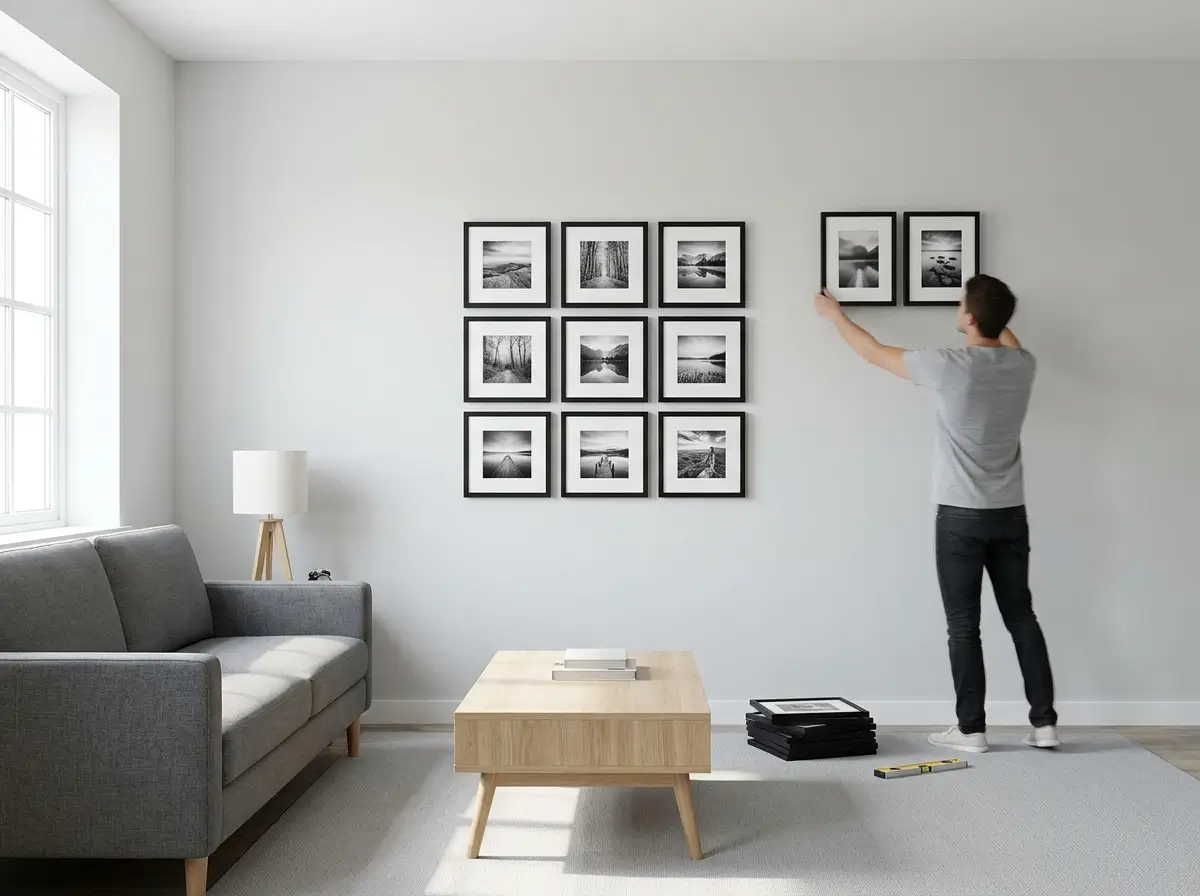

A blank wall can make a room feel unfinished, even when the furniture is nice and the space is clean. The good news is that you do not need a full renovation, expensive artwork, or a professional designer to fix it. With the right Empty Wall Decor choices, a plain wall can become useful, balanced, warm, and more connected to the rest of the room. The goal is not to cover every inch. The goal is to give the wall a reason to be there, whether that means adding storage, texture, color, light, personal meaning, or a stronger focal point.
This guide is written for home decor lovers, renters, beginners, and anyone staring at a blank wall, wondering where to start. You will find practical ideas that work in living rooms, bedrooms, entryways, dining corners, hallways, home offices, and small apartments. Each idea includes simple styling advice, layout tips, budget options, and common details people often miss, such as hanging height, lighting temperature, furniture scale, and rental-friendly installation. You can use one idea on its own or combine two or three for a more layered look.
What is the best way to decorate an empty wall?
The best way to decorate an empty wall is to choose decor that matches the purpose of the room, the size of the wall, and the furniture placed near it. A large wall behind a sofa may need one oversized artwork, a gallery wall, or a pair of tall shelves. A narrow hallway may only need slim frames, picture ledges, or wall sconces. A bedroom wall may look better with soft textiles, calming colors, or a simple mirror instead of busy artwork. Good Empty Wall Decor should feel connected to the room instead of looking like a random item placed on a blank surface.
Before buying anything, stand back and study the wall. Notice the wall width, ceiling height, nearby furniture, natural light, and the colors already in the room. A beige sofa, warm wood coffee table, and cream rug may work well with black frames, woven texture, and soft olive or terracotta art. A white room with gray furniture may need warmer materials like oak, brass, linen, or rattan so the space does not feel cold. This small planning step helps you avoid wasting money on decor that looks nice online but feels wrong at home.
Create a balanced gallery wall
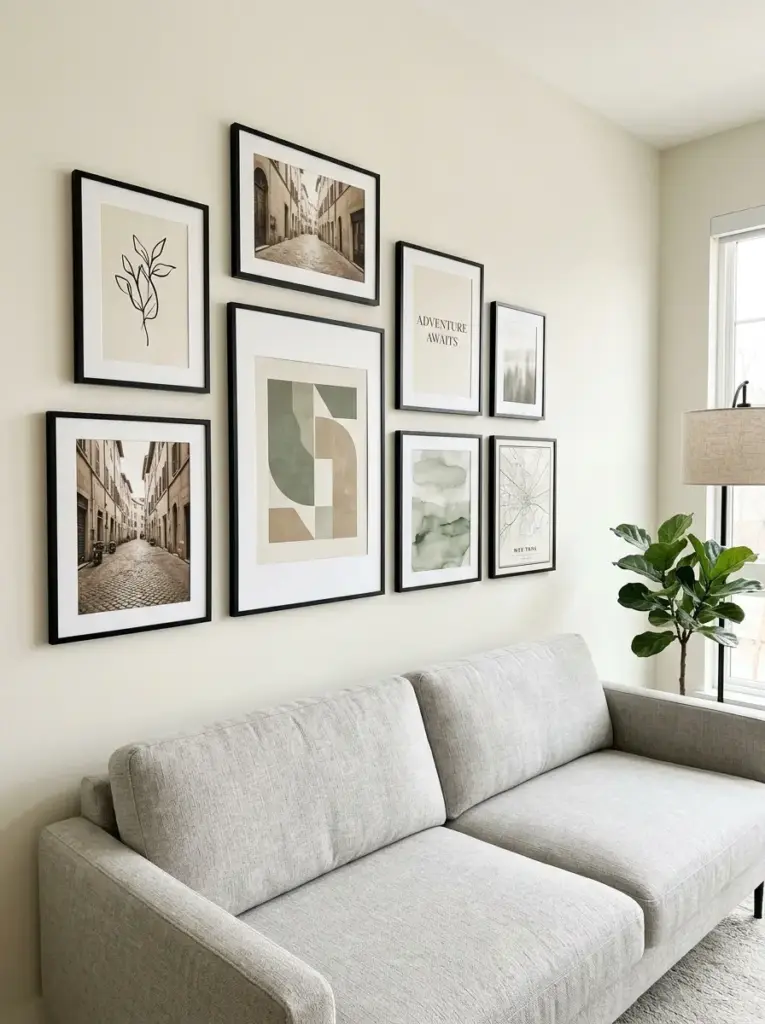
A gallery wall is one of the most flexible Empty Wall Decor ideas because it can work with almost any room style. It is especially useful above a sofa, console table, bed, staircase, or long hallway wall. The trick is to avoid making it look like a cluttered collection of random frames. Start with a color story. For example, you could use black, cream, tan, and muted green for a calm modern look, or oak frames with soft blue, white, and sandy beige prints for a coastal feeling. You do not need every print to match, but they should share something in common, such as frame color, image style, or background tone.
This idea works well because it gives a large blank wall structure and personality without needing one expensive piece of art. It is best for people who want to display family photos, travel prints, sketches, quotes, vintage finds, or downloadable art. For a beginner-friendly layout, place the largest frame slightly off center, then build around it with medium and smaller pieces. Keep spacing between frames consistent, usually around 2 to 3 inches for a tight layout or 4 to 5 inches for a more relaxed look. If you rent, use removable picture hanging strips for lighter frames, but check the weight limit and wall texture first. A common mistake is hanging the entire gallery too high. If it sits above a sofa, leave about 6 to 10 inches between the sofa back and the lowest frame so the grouping feels connected to the furniture.
Use one oversized artwork
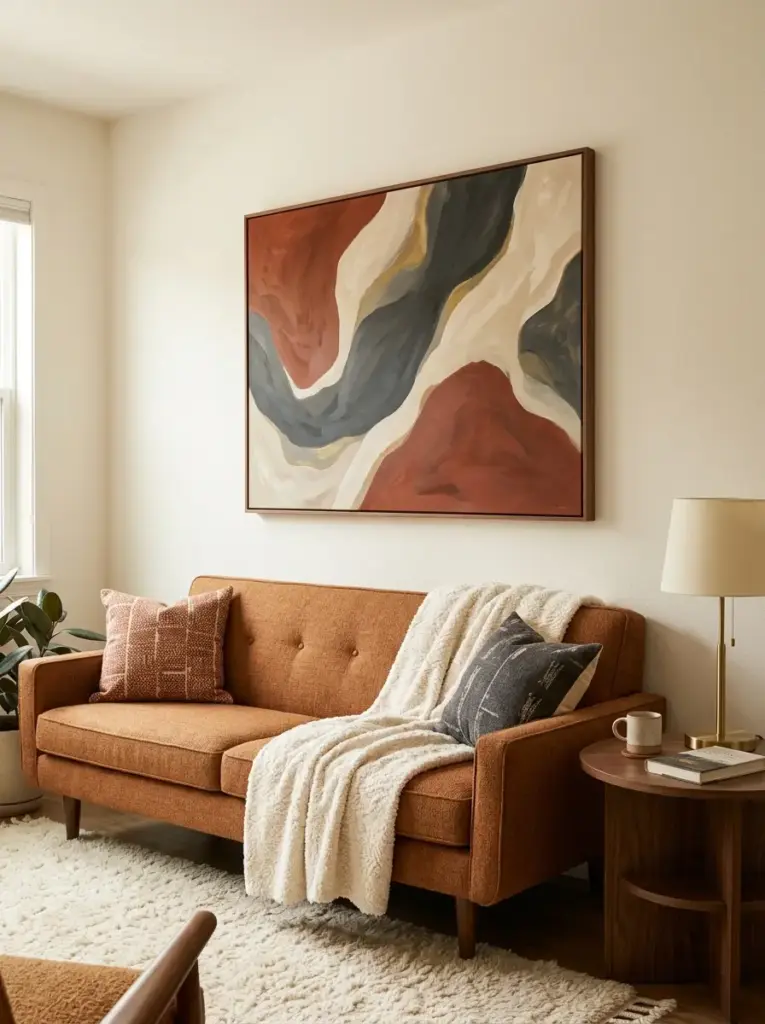
One large piece of artwork can make a blank wall look finished faster than several small pieces. This works especially well in living rooms, dining rooms, and bedrooms where you want a clear focal point. A large canvas, framed print, textile artwork, or even a simple abstract painting can give the room direction. For example, a 40-inch wide artwork above a 72-inch sofa often looks better than three small 12-inch frames floating in the middle of the wall. The artwork should usually be about two-thirds the width of the furniture below it, though this can be adjusted depending on ceiling height and surrounding decor.
The strength of oversized art is that it reduces visual clutter while still making a strong design statement. It is best for beginners who want a simple solution and do not want to measure a full gallery wall. Choose colors that repeat something already in the room. If your room has a rust pillow, a walnut side table, and a cream rug, choose artwork with warm brown, rust, ivory, or charcoal. If your room feels dark, artwork with a lighter background can brighten the wall. For budget-friendly styling, look for printable art, thrifted canvas pieces, or large poster frames. Renters can lean a big framed piece on a console table or dresser instead of hanging it. Avoid artwork that is too small for the wall. A small picture on a large blank wall often makes the space feel even more obvious.
Install floating shelves with styled objects
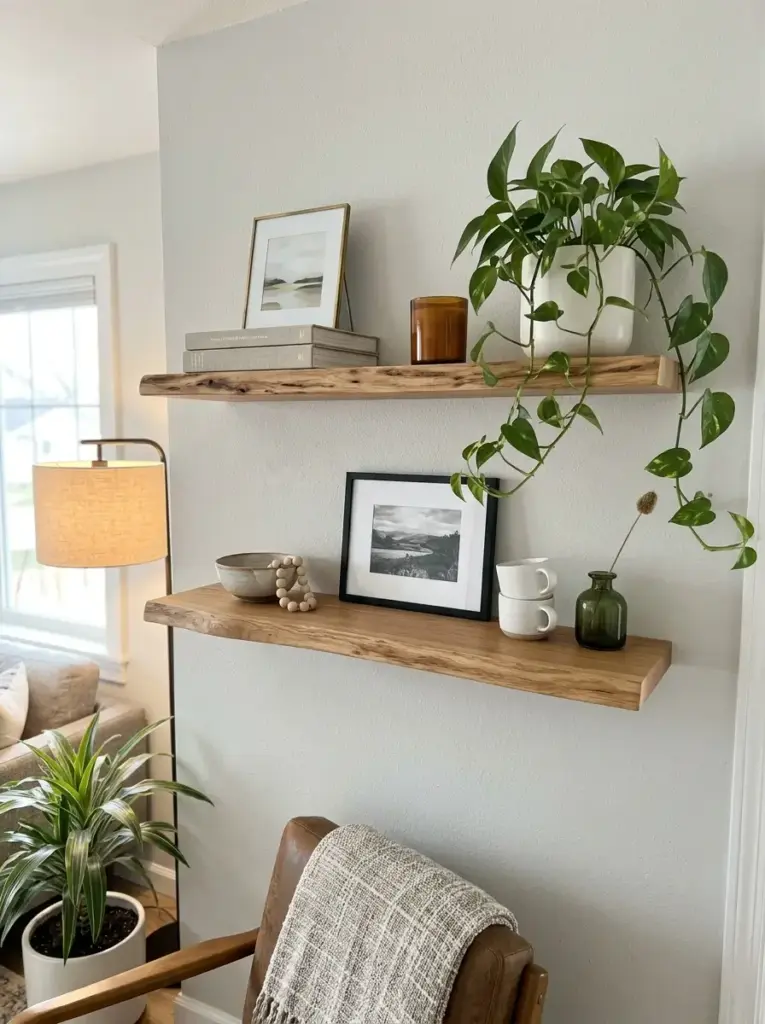
Floating shelves turn an empty wall into a useful display area. They work beautifully in living rooms, kitchens, bathrooms, bedrooms, and home offices. The key is to style them with restraint. A shelf filled edge to edge with small objects can look messy, while a shelf with a few thoughtful pieces feels intentional. Try mixing books, framed art, a small plant, a ceramic bowl, a candle, and one personal object. Use different heights so the arrangement does not look flat. For example, place two stacked books on one side, a small framed print in the back, and a trailing pothos or faux plant on the other side.
This approach is practical because it adds depth to a flat wall and allows you to change the display seasonally without redecorating the whole room. It is best for people who like flexible decor or need small-space storage. In a kitchen, floating shelves can hold mugs, wood cutting boards, small jars, or white dishes. In a bathroom, they can hold rolled towels, amber bottles, and a small framed print. For a rental-friendly option, use lightweight picture ledges instead of deep shelves, or choose freestanding ladder shelves that lean against the wall. A useful layout tip is to install shelves at a comfortable viewing height, not too close to the ceiling. Warm white lighting around 2700K to 3000K nearby will make wood, books, and ceramics look softer in the evening. Avoid placing heavy objects on poorly installed shelves, and never rely on drywall alone for serious weight.
Add a large mirror to reflect light
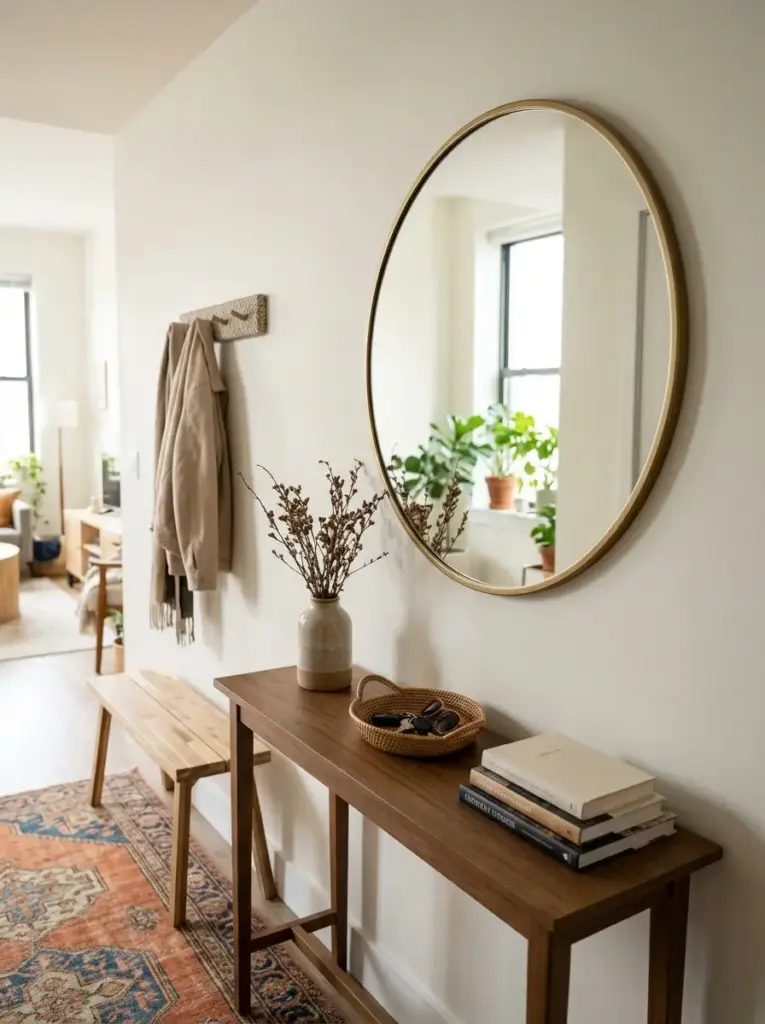
A mirror is one of the most useful Empty Wall Decor choices, especially in small rooms, dark corners, narrow hallways, and apartments with limited windows. A large mirror can reflect natural light, make a room feel more open, and add shape without adding strong color. Round mirrors soften rooms with many straight lines, while rectangular mirrors work well above consoles, dressers, fireplaces, and sofas. In an entryway, a mirror also gives you a practical place to check your appearance before leaving the house.
Mirrors solve both style and lighting problems, especially in small or dark rooms. Place one near a window to reflect daylight, but avoid reflecting clutter. Choose black metal for contrast, wood for warmth, or brass for warm, rich palettes. Renters can lean a secured floor mirror against the wall. Avoid mirrors that are too small; above an entry console, 24–36 inches wide often works well.
Hang woven baskets or natural wall decor
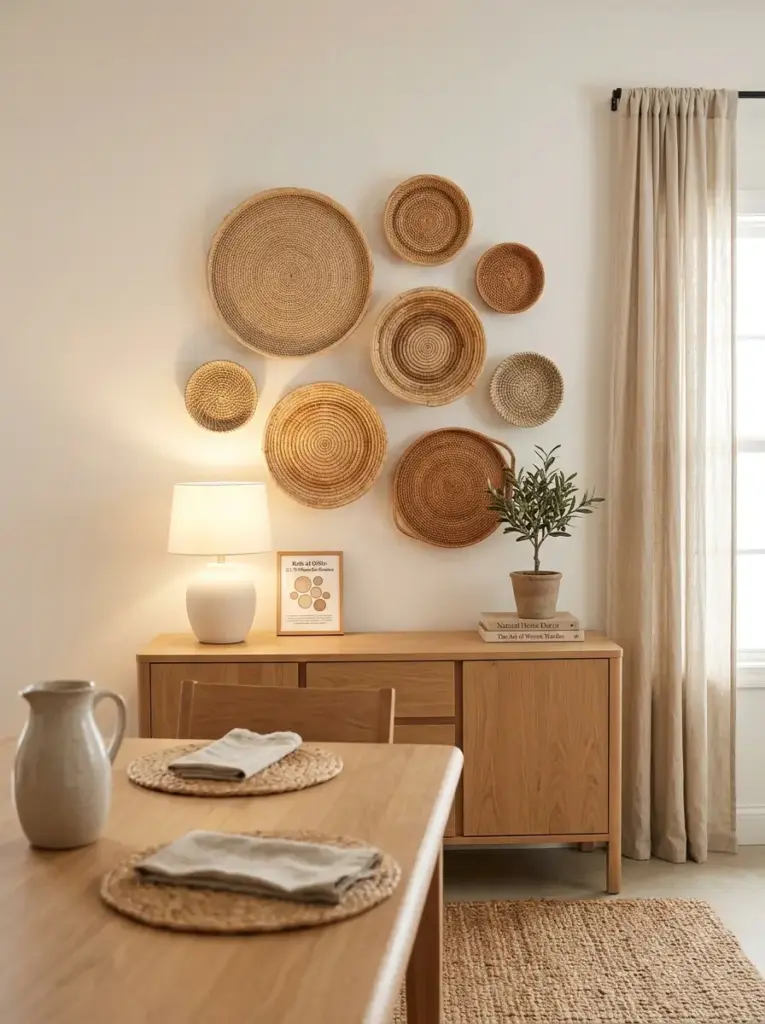
Woven baskets, rattan trays, grasscloth pieces, macrame, and other natural wall decor add texture without making the room feel busy. This is helpful when a space already has a lot of color or pattern in rugs, pillows, or curtains. A group of shallow baskets can fill a blank dining wall, bedroom corner, or hallway with warmth. Choose baskets in different sizes but similar tones, such as natural beige, honey, tan, and soft brown. Arrange them in an organic shape rather than a perfect grid if you want a relaxed look.
This works because texture creates interest even when the color palette stays simple. It is best for boho, coastal, farmhouse, organic modern, and neutral interiors. It is also a good choice for renters because many baskets are lightweight and can be hung with small nails or removable hooks. If you want a more polished result, limit the group to 5, 7, or 9 pieces and leave breathing room between them. Pair woven wall decor with linen curtains, wood furniture, jute rugs, or warm white lamps around 2700K for a soft evening mood. Budget-friendly sources include thrift stores, flea markets, clearance home sections, and even unused serving trays. A common mistake is using baskets that are all the same size, which can make the arrangement look flat. Mix one large basket, two medium baskets, and several smaller pieces to create movement.
Try removable wallpaper or peel-and-stick panels
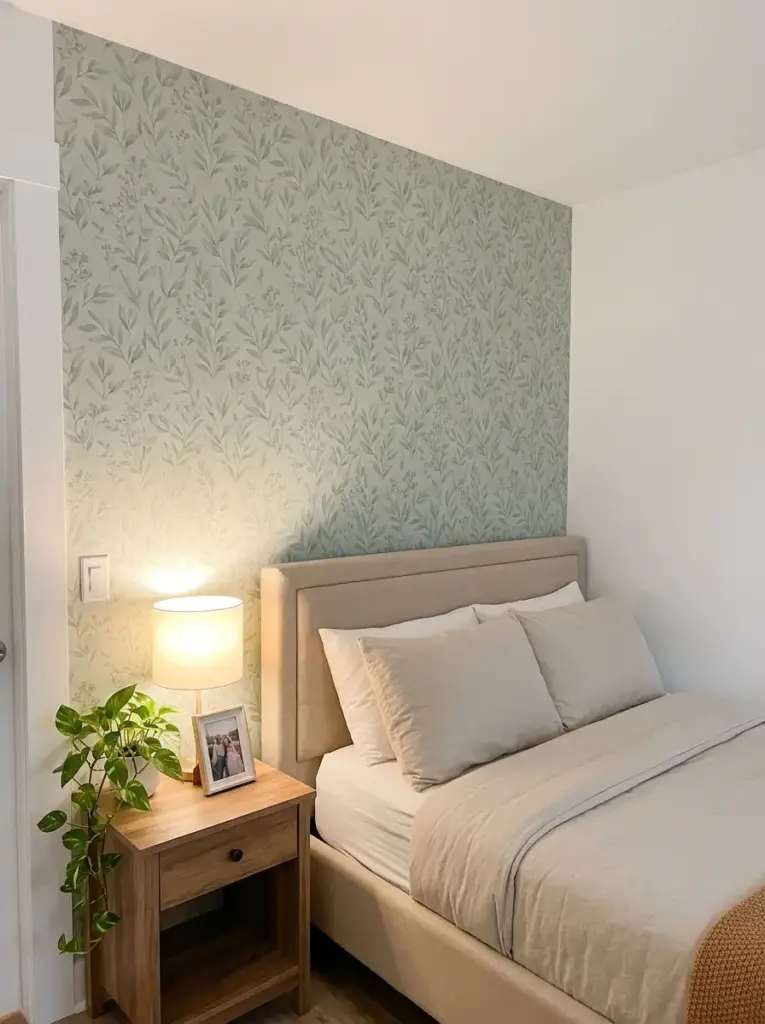
Removable wallpaper can completely change a blank wall without permanent paint or construction. It is a smart choice for renters, dorm rooms, small bedrooms, powder rooms, and entryways. You can use it on a full wall, behind a bed, inside a bookcase, or only on the lower half of a wall with a chair rail effect. For beginners, simple patterns are easier to live with than very bold designs. Soft stripes, linen textures, small florals, muted botanical prints, or subtle geometric patterns can add interest without overwhelming the room.
The value of removable wallpaper is that it gives a wall color, pattern, and character in one step. It is best for people who want impact but cannot paint or drill. A soft sage green print can warm up a white bedroom, while a beige grasscloth-style peel-and-stick wallpaper can make a home office feel more finished. For a small hallway, vertical stripes can make the ceiling feel taller. Always order a sample first because colors often look different under your home’s lighting. Warm bulbs can make beige look yellow, while cool bulbs can make gray patterns feel harsh. Clean the wall before applying, and check whether your wall has heavy texture because peel-and-stick products often struggle on rough surfaces. Avoid covering every wall in a small room with a busy print unless you want a strong, enclosed feeling. One feature wall is usually easier to style.
Build a picture ledge display
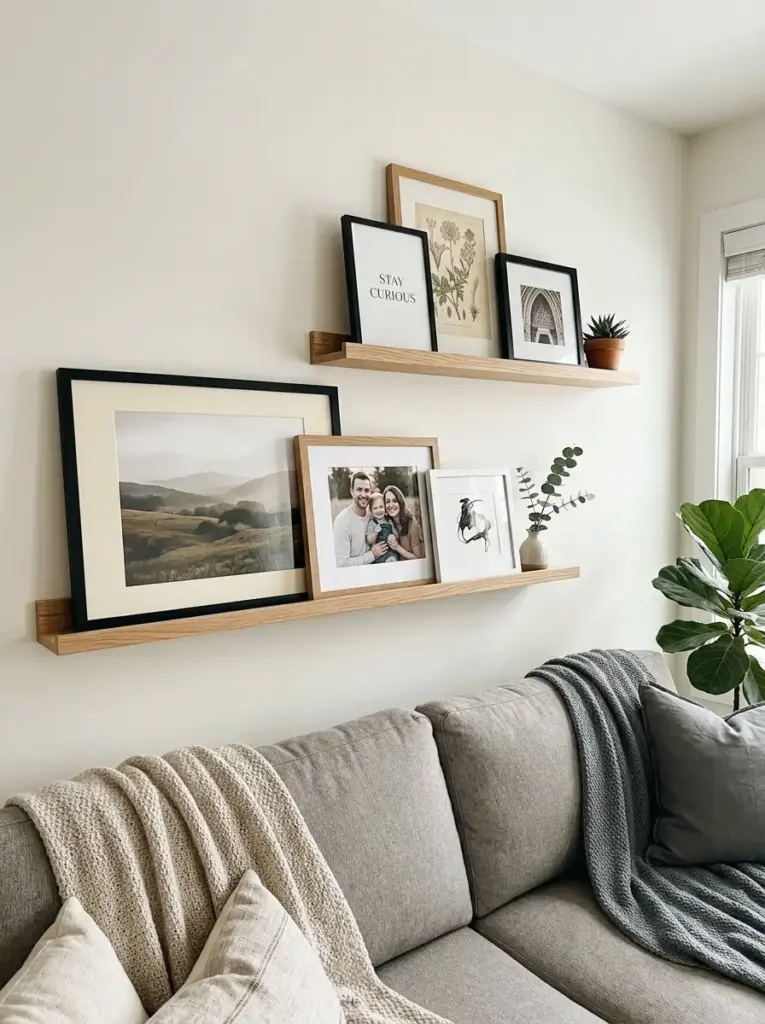
Picture ledges are easier to style than a traditional gallery wall because you can layer frames without committing to exact nail holes for every piece. A ledge works well above a sofa, bed, desk, dining bench, or hallway console. Use two or three ledges stacked vertically for a fuller look, or use one long ledge for a clean modern line. Mix frame sizes and let some pieces overlap slightly. A good combination might include one large landscape print, one medium family photo, one small quote print, and a tiny object like a ceramic bud vase or mini plant.
This idea suits people who change their decor often, including renters and beginners who do not want to measure a complex layout. It also works well in small spaces because the ledge is narrow and does not take up floor space. To make the display look styled rather than crowded, use a limited palette. Black frames with cream mats feel crisp, oak frames feel warm, and white frames disappear softly against light walls. A ledge above a desk can include art plus a small clock or inspirational card, while a ledge in a child’s room can hold storybook covers. Use removable strips only for very lightweight ledges and items, or choose screw installation when possible for safety. A common mistake is placing too many tiny frames in a row. Use at least one larger piece to anchor the arrangement and keep the eye from bouncing around.
Add wall sconces or plug-in lighting
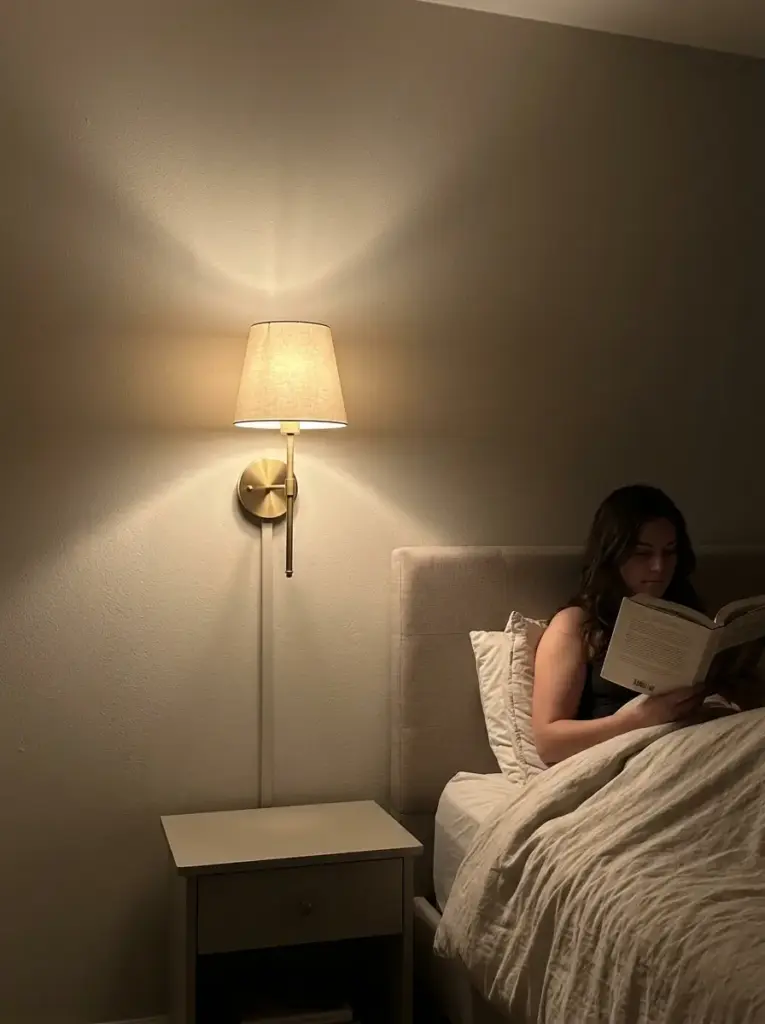
Lighting can act as decor, especially when a wall feels flat at night. Plug-in wall sconces are a renter-friendly way to add style and function without hardwiring. They work beside beds, above reading chairs, near sofas, around mirrors, and in dark corners. Choose a sconce style that matches your room: black metal for modern contrast, brass for warmth, white fabric shades for softness, or wood details for a natural look. If cords bother you, use cord covers painted the same color as the wall.
This choice is useful because it changes how the wall feels after sunset, not just how it looks in daylight. It is best for bedrooms, reading nooks, small apartments, and rooms without enough table space for lamps. Use bulbs around 2700K for a cozy, warm glow in living rooms and bedrooms. For a home office or task area, 3000K can feel clean without becoming too cold. Place bedside sconces so the light falls comfortably over the shoulder when reading, usually around 55 to 65 inches from the floor, depending on bed height. Above a sofa, sconces should not shine directly into someone’s eyes. Budget-friendly options include plug-in sconces, battery-operated picture lights, and clamp lights mounted near shelves. Avoid using very cool 5000K bulbs in relaxing spaces, because they can make even beautiful Empty Wall Decor feel harsh and unfinished.
Make a simple accent paint shape
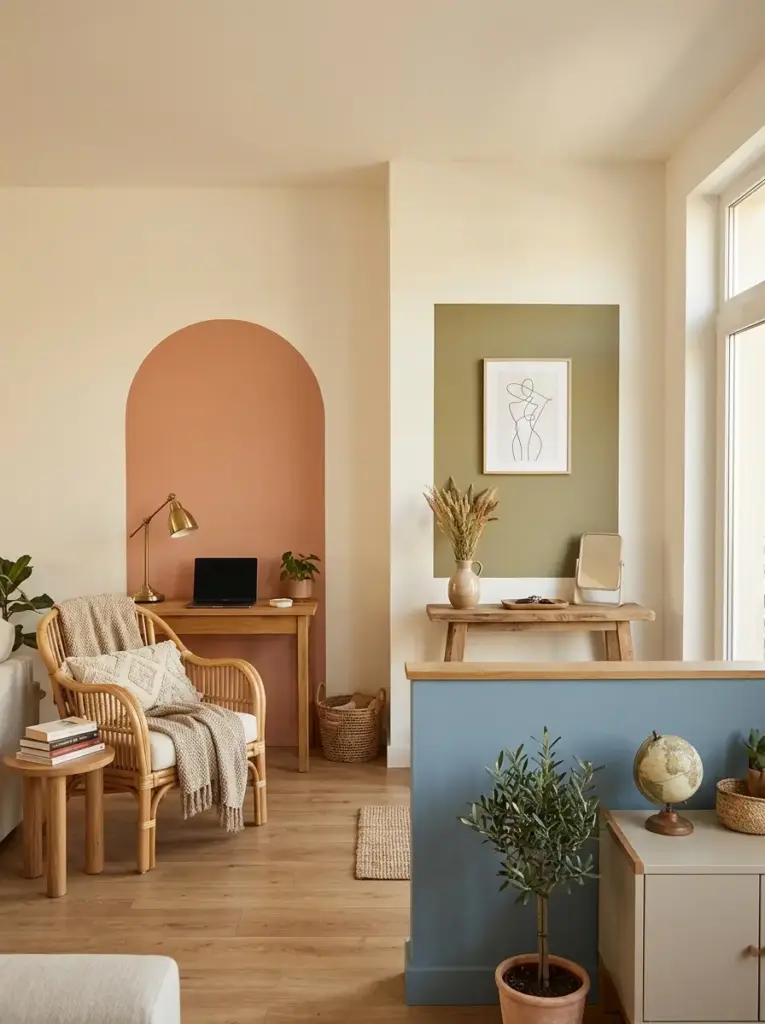
Paint is one of the most affordable ways to decorate a blank wall, and you do not always need to paint the whole room. A painted arch behind a desk, a color block behind a bed, or a half-wall treatment behind a dining bench can create a focal point with very little money. For example, a soft terracotta arch behind a rattan chair can warm up a reading corner, while a muted olive rectangle behind a console table can make an entryway feel more grounded. Beige, clay, dusty blue, sage green, warm taupe, and charcoal are easier to style than extremely bright colors.
This approach works because it adds architecture where none exists. It is best for budget decorators, renters who are allowed to paint, and people who want a quick weekend project. Use painter’s tape carefully, measure twice, and choose a matte or eggshell finish for most walls because shiny paint can highlight imperfections. If you rent, ask permission first or use peel-and-stick color panels instead. A painted shape should relate to the furniture below it. An arch behind a queen bed should be wide enough to frame the headboard, not a thin stripe floating above it. A half-painted wall should line up with nearby furniture or trim so it looks planned. Avoid choosing a color only because it is trendy. Test a sample on the wall and look at it in the morning, afternoon, and evening before painting.
Style a console table with wall decor above it
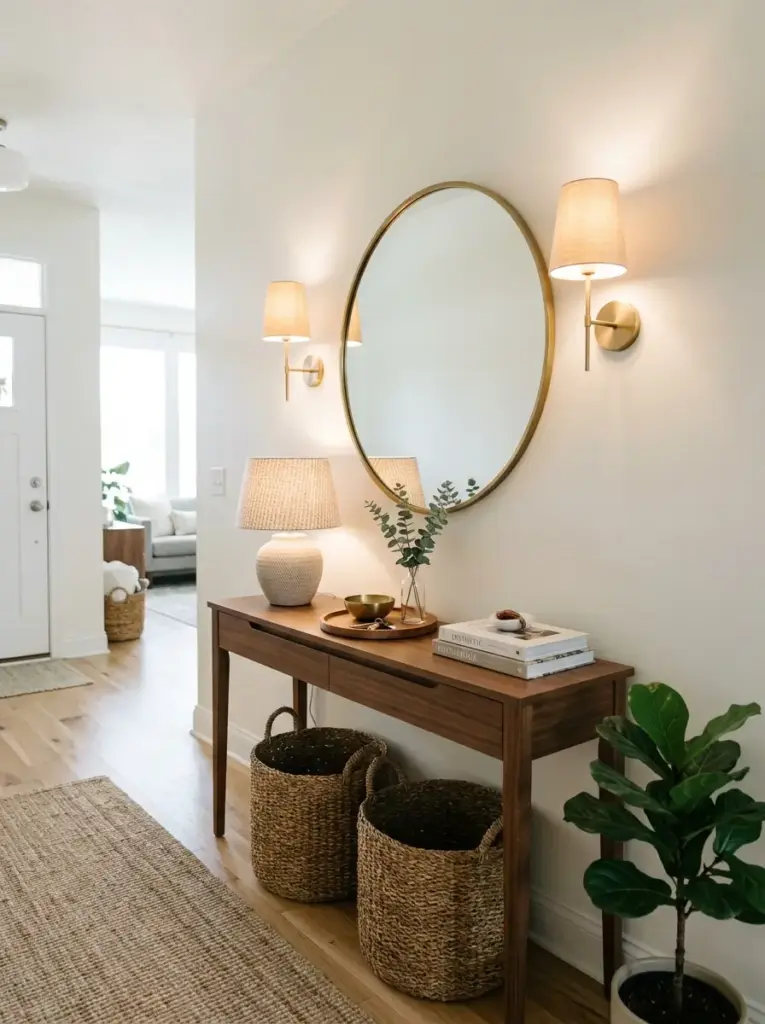
Sometimes an empty wall feels bare because the floor area beneath it is also empty. A console table, slim cabinet, bench, or dresser can give the wall a base, making the decor above it feel anchored. This is especially useful in entryways, long hallways, dining rooms, and open living spaces. Once the furniture is in place, add a mirror, artwork, sconces, or a small gallery above it. Then style the surface with a lamp, tray, vase, books, or bowl for keys.
This arrangement creates a balanced floor-to-wall look and works well on large blank walls. Use a slim 10–14-inch console in small entryways, a sideboard in dining rooms, or a low dresser in bedrooms. Hang decor 6–10 inches above the furniture, add a warm lamp, and choose furniture wide enough to suit the wall. Fill extra space with stools, baskets, or plants.
Use textiles for softness and texture
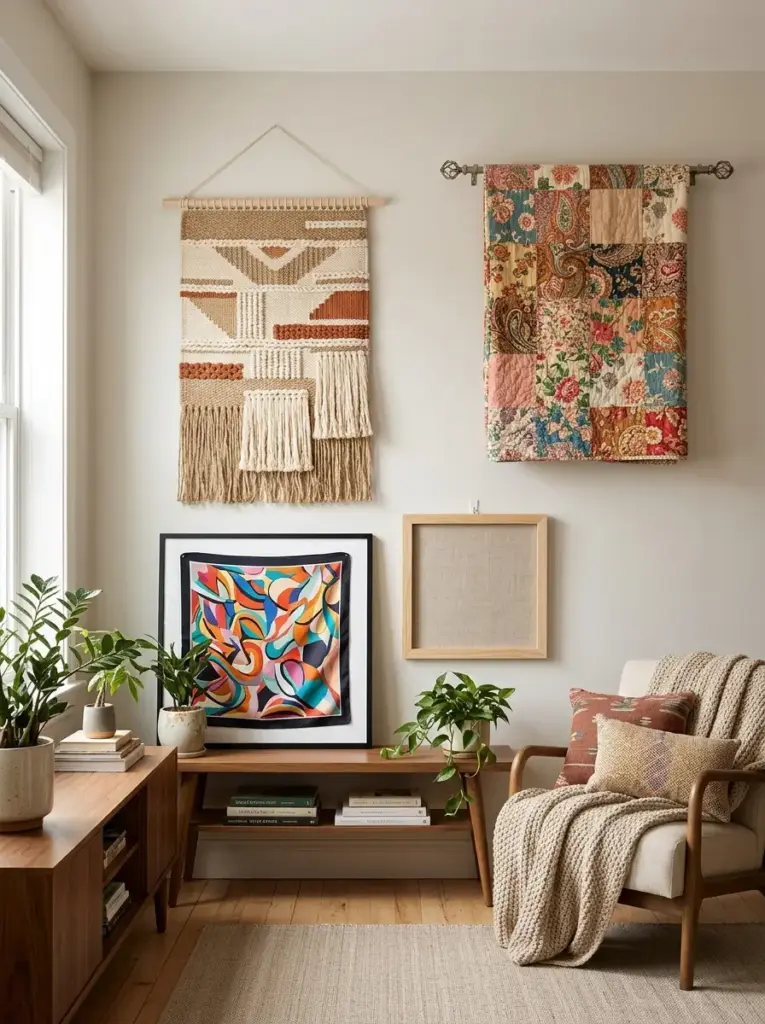
Textile wall decor can make a room feel softer, warmer, and less echoey. This includes fabric panels, quilts, rugs, tapestries, woven hangings, framed scarves, or even a beautiful piece of linen stretched over a frame. Textiles are especially helpful in bedrooms, nurseries, dorm rooms, and apartments with hard floors and plain white walls. Choose fabric that suits the room’s mood. A neutral woven hanging works in a calm bedroom, a vintage quilt adds character to a cottage-style room, and a framed silk scarf can bring color to a dressing area.
This idea is effective because fabric adds movement and absorbs some sound, which framed prints cannot do. It is best for renters, small-space dwellers, and anyone who wants decor that feels relaxed rather than formal. Lightweight textiles can often be hung with removable hooks, a wooden dowel, or a curtain rod. For a budget option, look for secondhand scarves, tablecloths, fabric remnants, or small flat-weave rugs. Place textile art where it will not collect grease or moisture, so avoid hanging delicate fabric too close to a stove or shower. If the room already has patterned bedding or curtains, choose a simpler wall textile so the space does not feel overloaded. A common mistake is hanging fabric too loosely. Steam or iron it first, then hang it neatly so it looks intentional instead of temporary.
Add plants with wall-mounted or tall floor displays
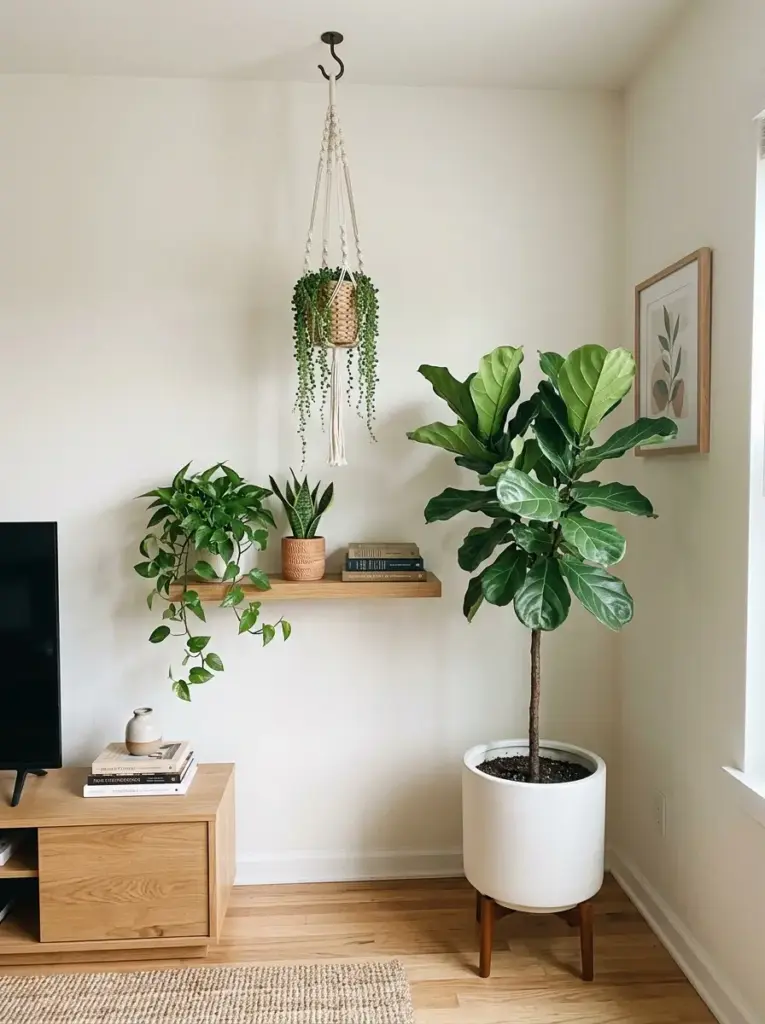
Plants can fill a blank wall with color, shape, and life, even when you do not hang anything directly on the wall. A tall plant like a fiddle leaf fig, rubber plant, olive tree, or bird of paradise can soften an empty corner. Wall-mounted planters, hanging pots, or a plant shelf can turn a plain wall into a living display. For low-light rooms, use hardy options like snake plants, pothos, ZZ plants, or high-quality faux greenery if real plants are not practical.
This idea works well because plants break up hard lines and add natural height. It is best for people who want a fresh look without adding more frames or artwork. A tall plant beside the media console can balance the TV wall and bring the living room to life. For the bathroom, let a trailing pothos spill gently from a shelf to soften the hard look of tiles and mirrors. In the bedroom, a single tall plant near the dresser can add just the right touch of calm and freshness.
Use planters that match your decor, such as matte white ceramic for modern rooms, terracotta for warm, earthy spaces, or woven baskets for casual texture. Renters can use freestanding plant stands instead of wall-mounted planters. Make sure the plant receives the right light, and that water cannot damage floors or walls. Avoid scattering many tiny plants across a wall area, because too many small pots can feel cluttered and become hard to maintain.
Create a functional command center
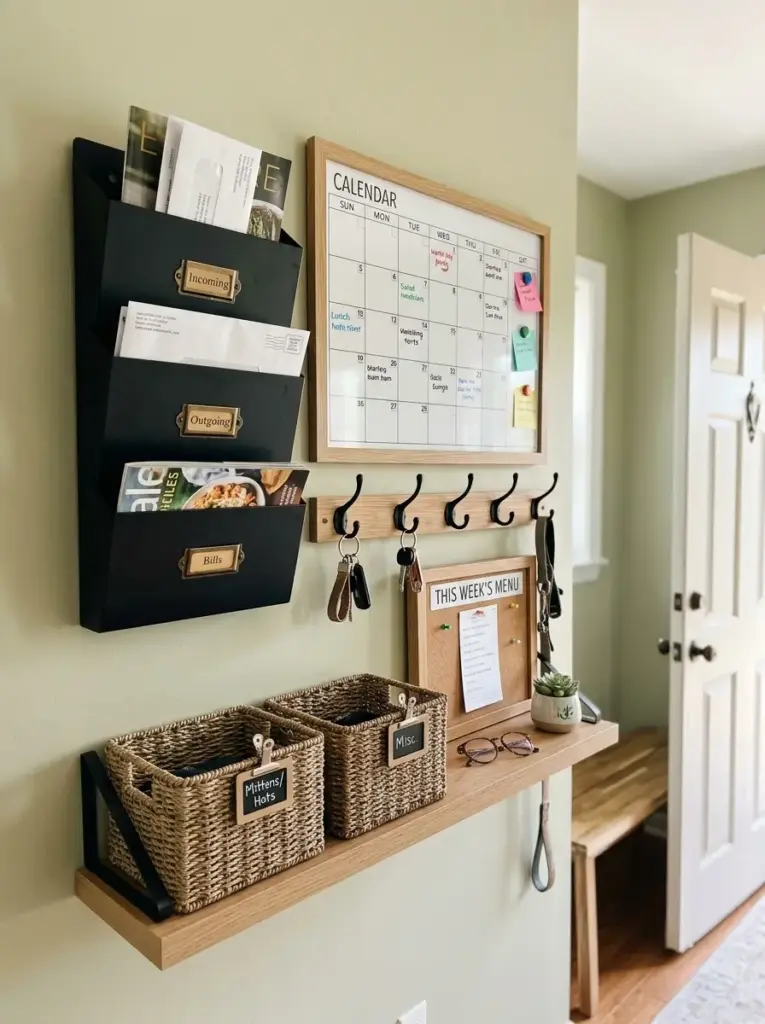
A blank wall near an entry, kitchen, laundry area, or home office can become a practical command center. This may include a calendar, corkboard, mail holder, key hooks, small shelf, menu board, or family schedule. The goal is to make daily routines easier while still keeping the wall attractive. Use matching materials so the area does not look chaotic. For example, choose a black metal mail holder, wood key rail, whiteboard calendar, and two small baskets in the same warm neutral palette.
This Empty Wall Decor idea is helpful because it gives a neglected wall a job. It is best for families, busy renters, students, and anyone who loses keys, mail, or reminders. In a small apartment, a command center can replace a bulky entry table. Place key hooks at a comfortable height, usually around shoulder height, and keep the calendar where everyone can see it. Use labels for baskets if several people share the space. For a cleaner look, choose closed wall pockets instead of open piles of paper. Budget-friendly versions can be made with thrifted frames, clipboards, adhesive hooks, and simple baskets. A common mistake is turning the wall into a dumping area. Edit it often. If old papers, expired coupons, and random receipts stay there for months, the wall will feel messy instead of useful.
Display books, records, or personal collections
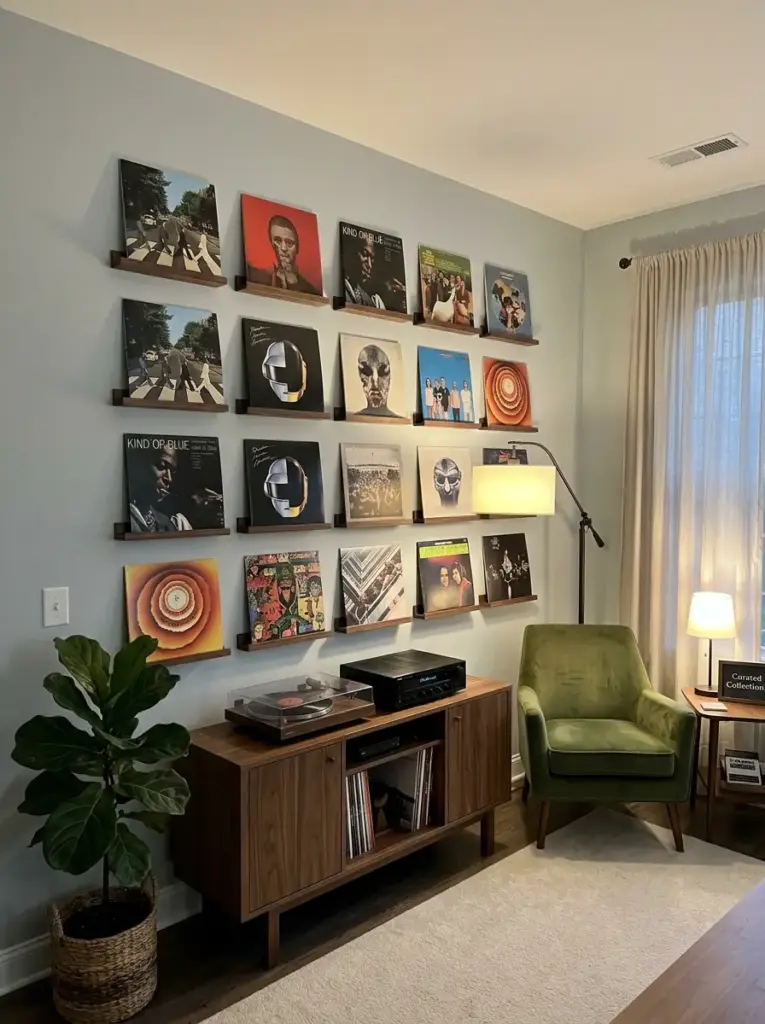
Personal collections can make Empty Wall Decor feel more meaningful than generic store-bought pieces. Books, vinyl records, hats, cameras, plates, small instruments, or travel objects can become wall decor when displayed with care. The secret is to group similar items and give them enough space. A row of record ledges above a media cabinet can look sharp in a music lover’s home. A plate wall in soft blue and white can brighten a dining room. A few favorite hats on hooks can add texture to a bedroom or entry.
This idea has character because it reflects real interests instead of only following trends. It is best for people who want their home to feel personal but still organized. Choose one collection per wall so the display does not become visually noisy. Design the space around the way you plan to enjoy it. For slow mornings with coffee, create a cozy sense of privacy while keeping harsh glare at bay. For quiet evening reading, add side screening and bathe the area in warm, gentle light. And for thriving plants, choose a screen that softens the space without stealing too much sunshine. Renters can use adhesive hooks for lightweight hats or leaning shelves for books and records. Avoid displaying valuable items in direct sunlight, because paper, fabric, and album covers can fade. Also, avoid placing fragile collections in tight hallways where people may bump into them.
Add moulding, trim, or renter-friendly wall panels
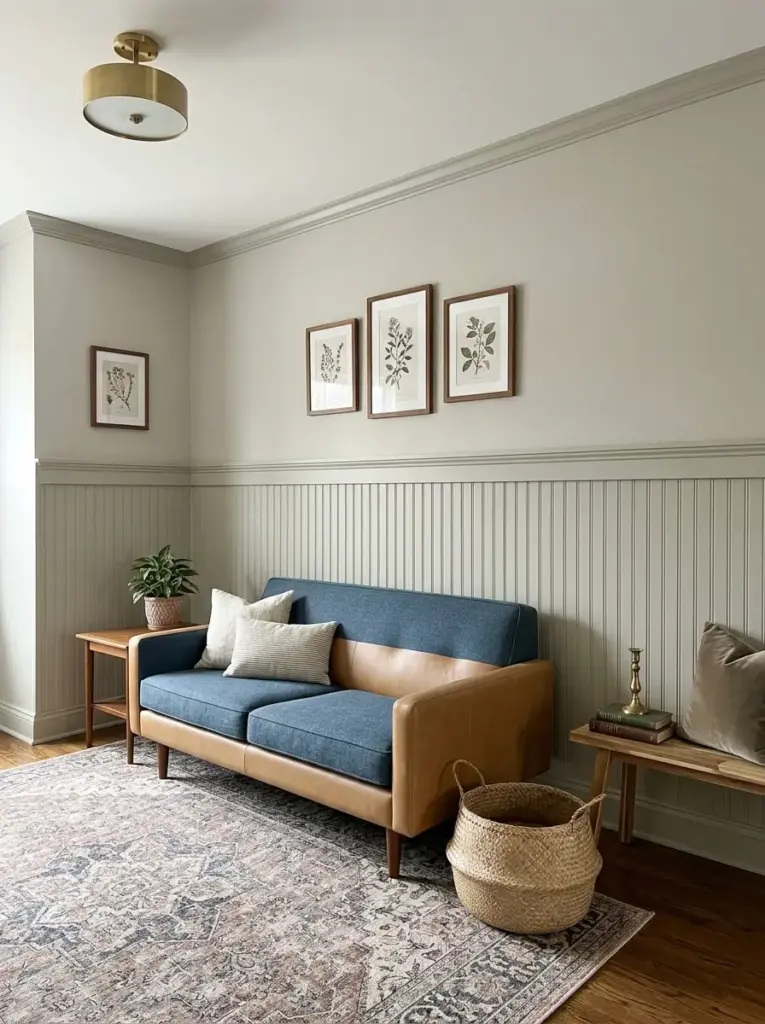
Wall molding, picture frame trim, beadboard, board and batten, or peel-and-stick wall panels can make a plain wall look more architectural. This works especially well in bedrooms, dining rooms, entryways, and living rooms, where the wall needs structure but not necessarily more objects. Traditional picture frame molding painted the same color as the wall feels subtle and classic. Board and batten can make a bedroom wall behind the bed feel more finished. Vertical slat panels can add warmth behind a TV or desk.
This idea stands out because it changes the wall itself rather than simply covering it. It is best for homeowners, DIY decorators, and renters who can use removable panel products. If you are renting, look for lightweight peel-and-stick trim, temporary wall panels, or foam molding that can be removed carefully. Keep scale in mind. Tall ceilings can handle larger molding boxes, while short walls need simpler proportions. Paint color matters too. Warm white, mushroom beige, dusty green, or deep navy can give trim detail more presence without making the room feel busy. In small rooms, vertical lines can help the ceiling feel taller. A common mistake is installing trim without planning around outlets, switches, headboards, or furniture. Sketch the wall first and measure every obstacle so the finished design looks balanced.
Common mistakes to avoid
One of the most common mistakes is choosing decor that is too small for the wall. A tiny frame above a large sofa, bed, or dining table can look lost, even if the art itself is beautiful. When in doubt, go larger or group several pieces together so the total arrangement fits the furniture below. Another mistake is hanging pieces too high. Wall decor should usually connect visually to the furniture, not float near the ceiling. For most artwork, the center should be around eye level, but when hanging above furniture, the bottom edge matters more. Keep it close enough to feel related to the sofa, bed, console, or dresser.
Another issue is ignoring the room’s existing colors and materials. A blank wall may need contrast, but it still needs connection. If your room has warm wood, cream upholstery, and brass lighting, a cold gray print in a silver frame may feel disconnected. Repeat at least one color or material from the room so the wall belongs to the space. People also forget lighting. Even beautiful Empty Wall Decor can look flat in a dark room, so consider a lamp, sconce, or picture light. Finally, avoid filling every blank wall just because it is empty. Negative space gives the eye a place to rest. Decorate the walls that support the room’s layout, and let a few smaller areas stay simple.
Budget-friendly Empty Wall Decor tips
You can decorate a blank wall without spending a lot of money if you focus on scale, placement, and creativity. Large printable art in a simple poster frame often looks better than several small, expensive pieces. Thrift stores are excellent for frames, mirrors, baskets, trays, and unusual artwork. Even if the art inside an old frame is not your style, the frame may be worth keeping. You can paint mismatched frames black, white, brass, or warm beige so they feel like a set. For a gallery wall, use a mix of family photos, postcards, calendar pages, fabric scraps, and affordable prints instead of buying every piece new.
Another budget tip is to decorate with items you already own. A woven tray, a straw hat, a scarf, a record cover, or a stack of favorite books can become wall decor with the right display. Rearranging furniture can also make a wall feel less empty. Moving a console, bench, plant, or floor lamp beneath the wall may reduce the amount of hanging decor you need. Paint is another low-cost option when allowed. A small sample pot can create an arch, stripe, or color block. For renters, removable hooks, peel-and-stick wallpaper samples, lightweight ledges, and leaning frames are safer than permanent changes. Spend money where it matters most: one large frame, one good mirror, or one strong shelf can do more than a cart full of tiny decor pieces.
Empty Wall Decor tips for small spaces and rentals
Small spaces need Empty Wall Decor that adds style without stealing floor space or making the room feel crowded. Choose vertical solutions when possible, such as tall mirrors, narrow shelves, picture ledges, wall hooks, or slim sconces. In a studio apartment, a decorated wall can help define zones. For example, a gallery wall above the sofa can mark the living area, while a painted arch behind a desk can create a mini office corner. Keep color palettes tight in small rooms. Too many frame finishes, art styles, and bright colors can make a small wall feel busy. Use repeating tones like black, white, oak, beige, sage, or terracotta to create order.
Renters should think about weight, wall texture, and removal before installing anything. Removable strips work best on smooth painted walls and lighter items. Adhesive hooks can hold baskets, hats, and small textiles, but they may fail in humid bathrooms or on rough plaster. Leaning mirrors, floor shelves, ladder shelves, and furniture-based displays are safer when you cannot drill. For rental kitchens and bathrooms, choose decor that handles moisture and cleaning, such as framed prints behind glass, washable peel-and-stick tile, or metal hooks. Keep original paint colors and lease rules in mind. The best renter-friendly decorating does not feel temporary. It uses smart placement, good scale, and warm lighting to make the room feel cared for without risking damage.
FAQ
How do I choose the right decor for a large blank wall?
Start with the furniture below or near the wall. A large wall behind a sofa, bed, or dining table usually needs decor that feels wide enough to match the furniture. You can use one oversized artwork, a set of two or three frames, a gallery wall, shelves, or molding. Try to cover about two-thirds of the furniture width with your wall decor arrangement. Also consider ceiling height. Tall ceilings can handle vertical art, stacked ledges, or taller mirrors, while low ceilings often look better with horizontal pieces that stretch the eye across the room.
What is the easiest Empty Wall Decor idea for beginners?
The easiest idea is one large framed print or canvas placed above a main piece of furniture. It requires less measuring than a gallery wall and creates a clear focal point quickly. Choose artwork with colors that already appear in your room, such as beige from the rug, green from the pillows, or black from the curtain rods. Hang it low enough to connect with the furniture. If you rent or do not want holes, lean the frame on a console, dresser, or mantel.
How can I decorate an empty wall without nails?
Use leaning mirrors, freestanding shelves, ladder shelves, adhesive hooks, removable strips, peel-and-stick wallpaper, or furniture-based styling. A console table with a lamp and leaning artwork can fill a wall without nails. Lightweight baskets, fabric hangings, and small frames may work with removable hooks if the wall surface is smooth. Always check product weight limits and test carefully, especially in humid spaces or on textured walls.
What colors work best for blank wall decor?
The best colors depend on your room, but warm neutrals are easy for beginners. Cream, beige, tan, warm white, olive, soft blue, muted terracotta, charcoal, and natural wood tones work in many homes. If your room feels cold, add warm colors and materials like oak, brass, rust, clay, or woven textures. If your room already has many warm tones, balance them with black frames, white mats, or cooler greens and blues.
Should every empty wall be decorated?
No, every wall does not need decor. Some blank space makes a room feel calmer and more balanced. Focus on walls that support the layout, such as the wall behind a sofa, bed, dining table, desk, or entry console. Leave smaller transition areas simple if the room already has strong furniture, curtains, rugs, or shelving. A well-placed mirror or artwork often looks better than decor on every surface.
How do I make cheap wall decor look more expensive?
Use larger scale, clean framing, consistent spacing, and a limited color palette. A budget print can look polished in a simple frame with a wide mat. Thrifted frames look more intentional when painted the same color. Baskets, textiles, and shelves look better when grouped with breathing room instead of crowded together. Lighting also helps. A warm lamp, plug-in sconce, or picture light can make affordable decor feel more considered.
Conclusion
Empty walls are not design problems. They are opportunities to add comfort, function, and personality to your home. The best Empty Wall Decor idea depends on what the room needs most. A dark corner may need a mirror or sconce. A large living room wall may need oversized art, shelves, or a gallery wall. A small rental may need removable wallpaper, leaning frames, picture ledges, or lightweight baskets. A busy family entry may need a command center instead of decorative art. When you match the wall decor to your real life, the result feels natural and useful.
Start with one wall, one purpose, and one simple plan. Measure the space, repeat colors from the room, choose the right scale, and think about lighting before you buy. You do not need to finish everything in one day. Sometimes the best wall displays grow slowly with collected frames, meaningful photos, thrifted finds, and pieces that fit your home better than anything bought in a rush. With thoughtful choices and practical styling, any blank wall can become a part of the room that feels finished, personal, and easy to live with.