
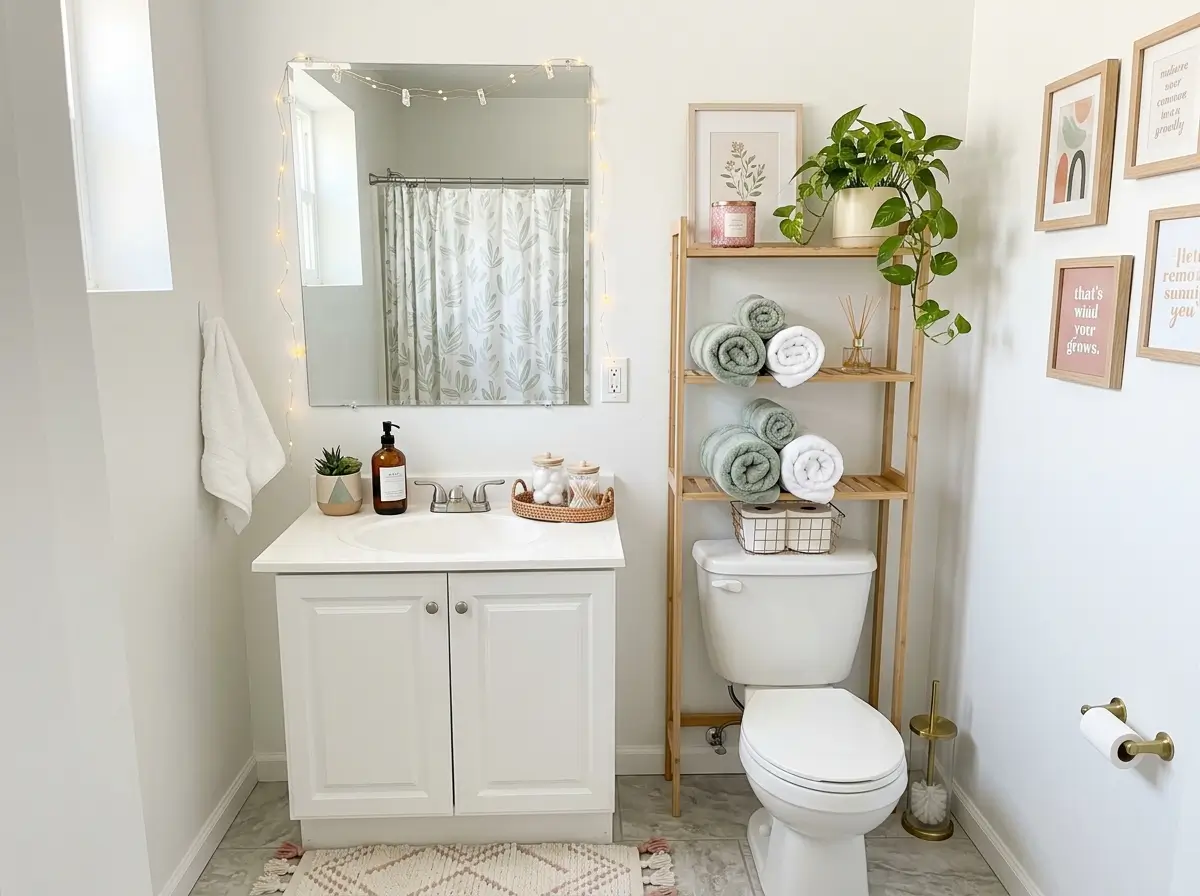

Small rental bathrooms often begin with plain tiles, builder-grade mirrors, harsh lighting, and very little storage. Those limits can feel frustrating, but they also make thoughtful decorating more useful. Instead of planning a costly renovation, you can improve the room through colour, lighting, textiles, removable finishes, and better organisation. Cute Bathroom Decor works best when every decorative choice also solves a practical problem, such as hiding clutter, improving light, or making a narrow layout feel calmer.
Renters need ideas that look intentional but remain easy to reverse. Peel-and-stick materials, tension rods, adhesive hooks, freestanding storage, washable fabrics, and lightweight wall art can create a polished result without drilling unnecessary holes. Beginners should focus on one clear colour palette, repeat a few finishes, and leave enough open space for daily routines. Attractive bathrooms are not created by adding many objects. They come from choosing useful pieces that relate to one another.
What Is the Easiest Way to Decorate a Rental Bathroom?
Question: How can you add personality to an apartment bathroom without making permanent changes?
Short answer: Start with a coordinated shower curtain, soft towels, flattering bulbs, removable wall details, and one compact storage solution. These five changes affect the largest visual areas first and usually require no renovation. Cute Bathroom Decor feels more convincing when colours repeat across the room, counters stay mostly clear, and every item has a purpose. Choose two main colours, one metal finish, and one small accent pattern before buying anything.
Build a Small Colour Palette Before Shopping
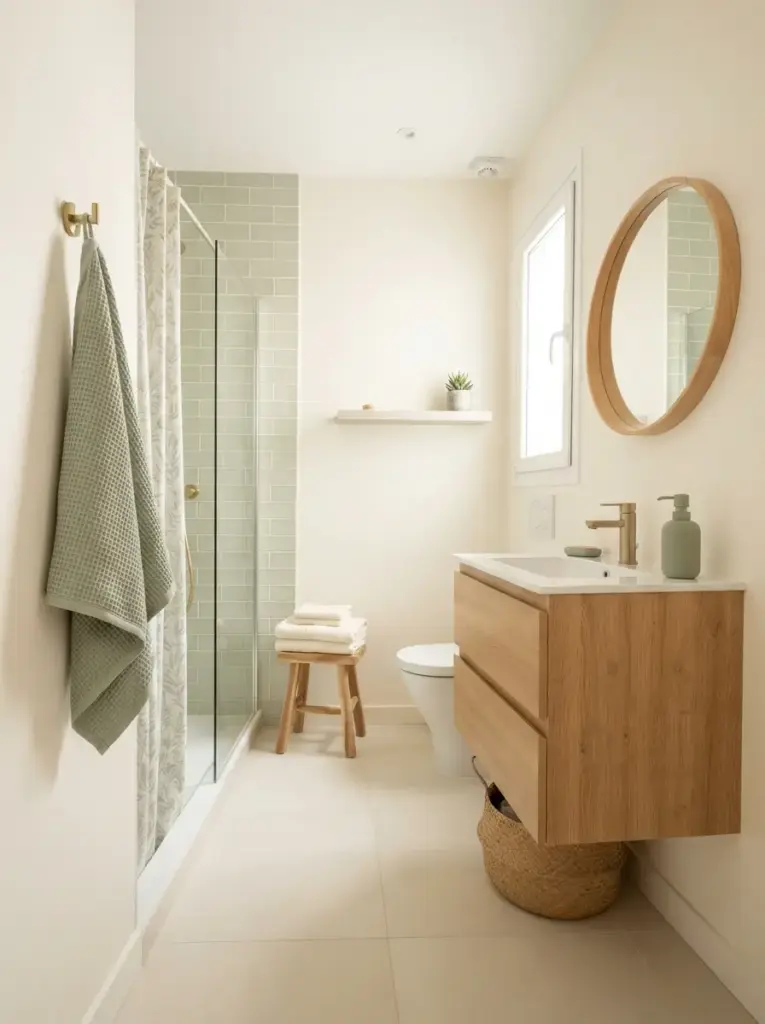
Colour gives a small bathroom direction, but too many shades can make limited space feel busy. Pick one light base, one supporting colour, and one accent. Warm white with dusty pink and brushed brass creates a soft feminine scheme. Pale sage with cream and natural wood feels relaxed, while white, black, and muted blue look clean without becoming cold. Repeat the accent colour in three places, such as the shower curtain, hand towel, and soap dispenser.
Planning first prevents mismatched purchases and helps inexpensive items look more considered. Renters with beige tile can work with warm colours rather than fighting the undertone. Cool grey bathrooms usually suit soft blue, lavender, charcoal, or crisp white. Anyone creating an Apartment Bathroom Makeover should photograph the room in daylight before shopping, because phone images make existing undertones easier to compare beside fabric and paint samples.
Use a Shower Curtain as the Main Feature
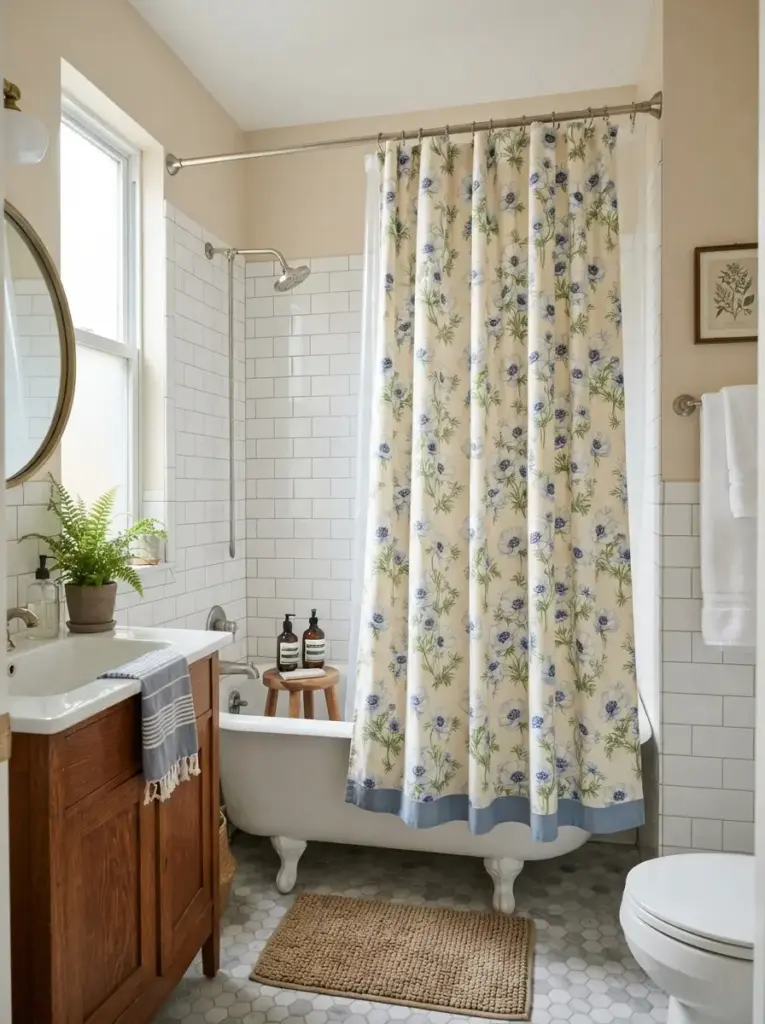
Shower curtains cover a large section of the room, so they can act like artwork. Choose a washable fabric curtain rather than thin plastic when possible, then place a waterproof liner behind it. Small floral prints, scalloped edges, gingham, narrow stripes, or a simple border can add charm without overwhelming the layout. Hang the rod several inches higher than the top of the shower opening to make the ceiling appear taller.
Scale matters in a compact room. Oversized flowers can dominate a narrow bathroom, while tiny high-contrast patterns may look restless. Medium patterns with plenty of background space usually photograph well and feel balanced in person. This approach suits renters who cannot change tile or wall colour because the curtain redirects attention. It also supports Apartment Bathroom Decor Ideas that need a strong visual update for a modest cost.
Improve the Lighting With Better Bulbs
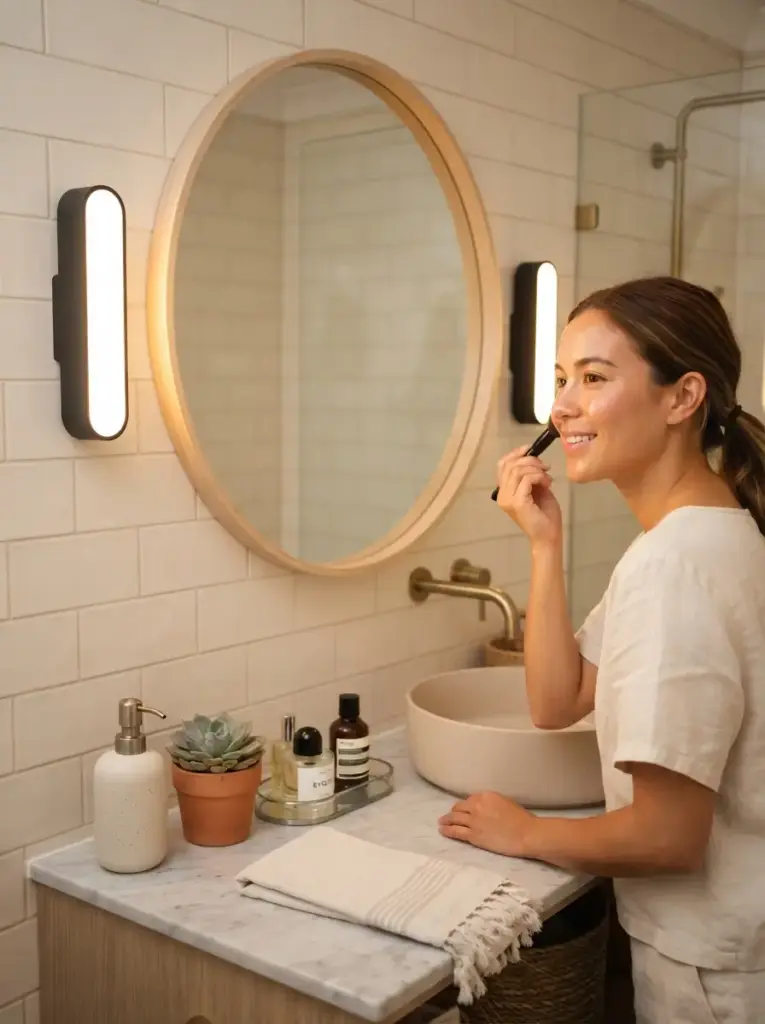
Harsh blue-white bulbs can make skin tones look grey and turn warm finishes dull. For a comfortable vanity area, use LED bulbs around 3000K with a high colour rendering index, ideally CRI 90 or above. That temperature gives a warm, clear light suitable for makeup, shaving, and skincare. Avoid very dim decorative bulbs near the mirror, because attractive lighting still needs to support safe daily use.
Bathrooms with one ceiling fixture may benefit from a rechargeable wall sconce or plug-in lamp designed for damp locations, provided it stays away from water. Adhesive-mounted rechargeable sconces can add softer evening light without electrical work. Lighting changes are especially useful for first homes with dated fixtures that cannot be replaced. Better light makes colours more accurate, reduces shadows, and gives Cute Bathroom Decor a cleaner, more finished appearance.
Frame or Upgrade a Builder-Grade Mirror
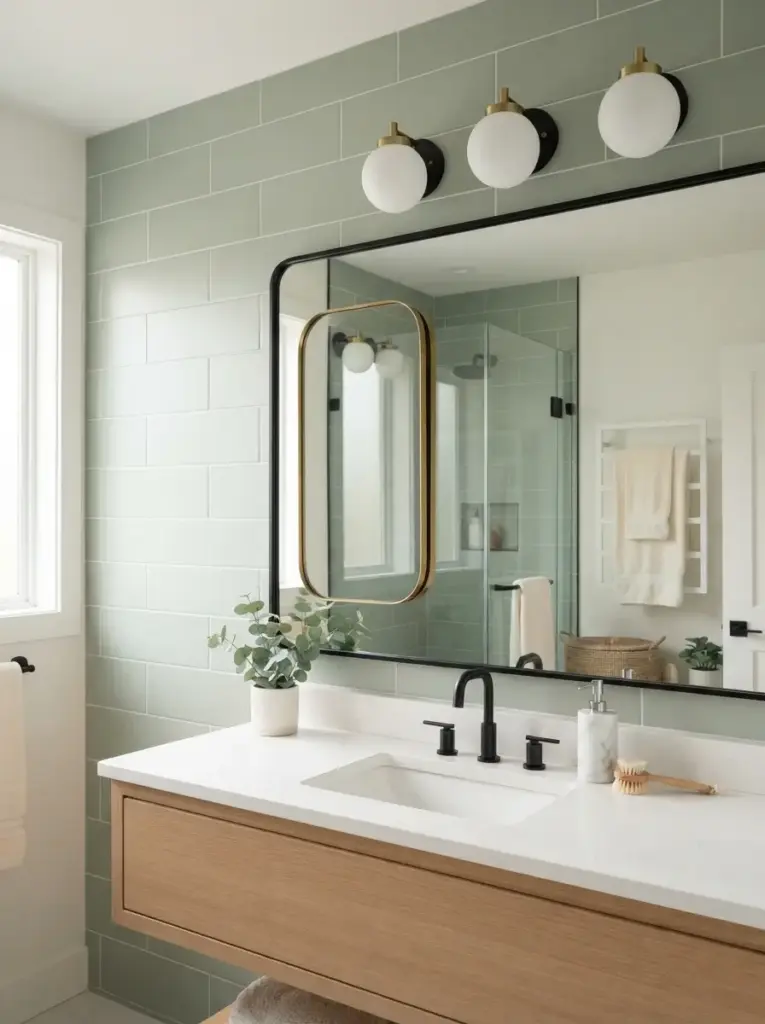
Large frameless mirrors often make bathrooms feel unfinished, even when they provide useful reflection. Removable mirror frames, lightweight moulding attached with suitable removable strips, or a slim decorative border can give the vanity more structure. Black frames add contrast, light oak warms white bathrooms, and brushed gold works well with soft pink, cream, or green. Keep the frame narrow when the mirror nearly fills the wall.
Another option is placing a smaller decorative mirror over the existing one only when mounting instructions and weight limits allow it. Rounded rectangles and arches soften sharp tile lines, while circular mirrors suit narrow vanities. Measure the distance between the tap, light fixture, and wall edges before purchasing. This update is best for renters whose bathroom feels plain but already has enough storage, since the mirror changes character without adding clutter.
Add Removable Wallpaper to One Dry Wall
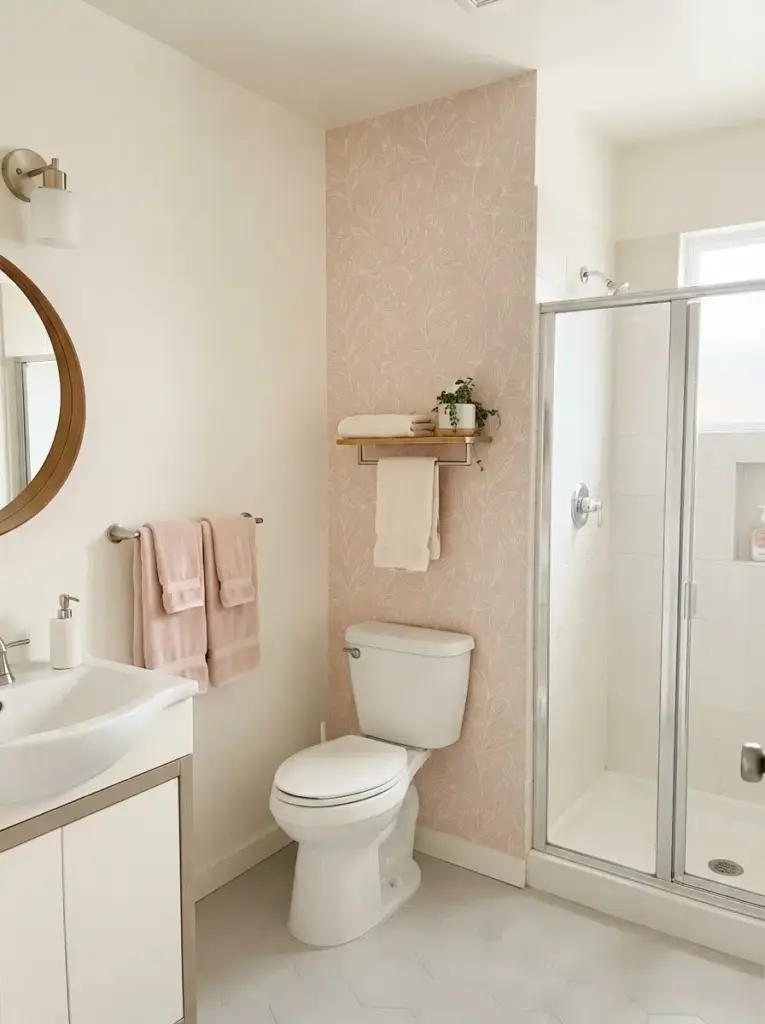
Peel-and-stick wallpaper can bring pattern into a rental bathroom, but placement matters. Use it on a dry wall away from direct shower spray and heavy condensation. Botanical lines, small vintage flowers, soft geometric shapes, or subtle stripes can work in compact spaces. Test a sample for at least one week to check adhesion, colour, and removal before covering the entire wall.
Humidity can weaken low-quality adhesive, so clean the surface thoroughly and follow the manufacturer’s bathroom guidance. Avoid applying removable wallpaper over peeling paint, textured walls, or damp patches. One feature wall behind the toilet or opposite the vanity usually adds enough interest. Renters drawn to Pink Bathroom Decor Ideas can use blush wallpaper with cream details, then repeat the pink in towels rather than filling every surface with the same shade.
Create Storage With a Slim Rolling Cart
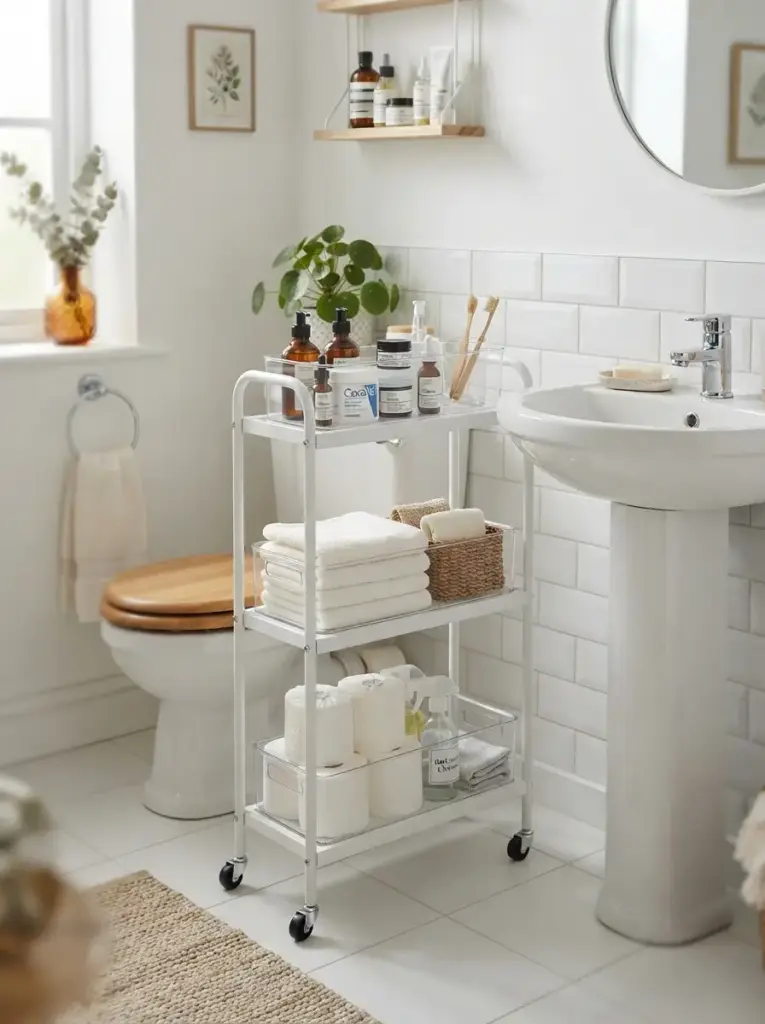
Narrow rolling carts fit beside toilets, vanities, or unused wall sections where standard cabinets feel bulky. Use the top shelf for daily skincare, the middle for folded hand towels, and the bottom for spare toilet paper or cleaning supplies. Choose a cart in white, black, pale pink, or natural wood according to the room’s palette. Clear bins inside each level stop small items from falling through open shelves.
Mobility makes this storage renter-friendly because the cart can move during cleaning and travel to a future home. Avoid filling every shelf to the edge. Leave visible breathing room and transfer unattractive packaging into labelled containers only when doing so remains safe. This idea suits bathrooms with limited under-sink space, pedestal sinks, or shared routines. Good storage makes decorative pieces noticeable because everyday clutter no longer competes for attention.
Install No-Drill Shelves Above the Toilet
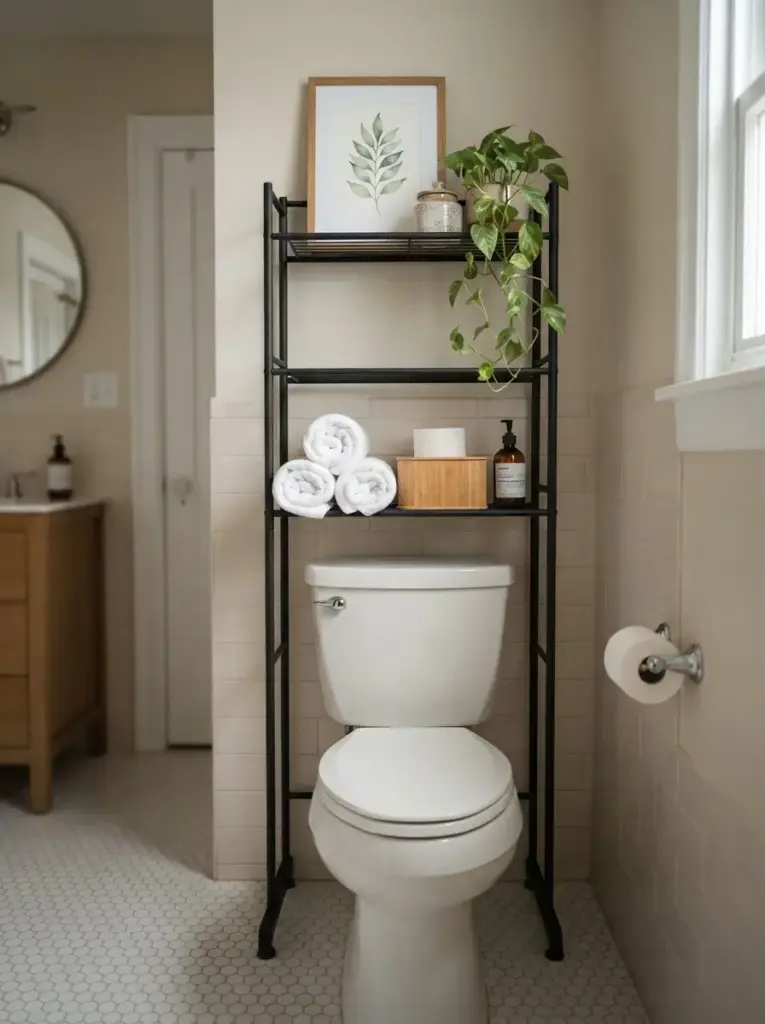
Space above the toilet often goes unused, yet it can hold lightweight essentials and decoration. Adhesive shelves, tension-pole units, or freestanding over-toilet frames create vertical storage without permanent carpentry. Keep frequently used items on the lower level and decorative pieces higher up. Rolled towels, a small lidded basket, framed art, and one plant can fill the area without making it feel crowded.
Weight limits deserve careful attention. Adhesive shelves should never hold heavy glass containers, large candles, or anything that could fall near a person. Tension systems need stable floors and ceilings, while freestanding units should not block the toilet lid or water controls. These practical checks matter more than styling. The idea works best for narrow bathrooms where floor space is limited, but the wall height remains open.
Style Towels Like Part of the Decor
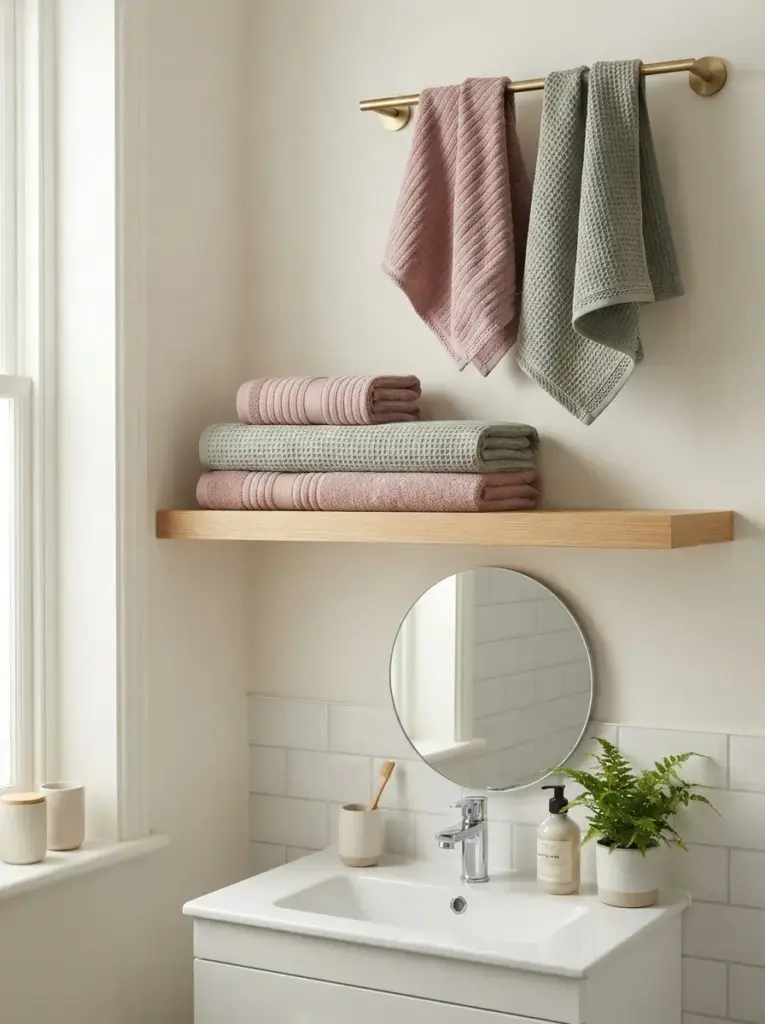
Towels introduce colour and texture while serving an everyday purpose. Choose two coordinated sets rather than many unrelated designs. Ribbed cotton, waffle weave, subtle borders, or small embroidered details add interest without feeling childish. Fold bath towels evenly on a shelf, hang hand towels with the finished edge facing forward, and keep the most decorative set visible while storing worn extras elsewhere.
Quality matters more than quantity. Medium-weight towels dry faster in humid apartments than very thick hotel-style options, which can stay damp and develop odour. Pale colours show stains quickly, while very dark shades may fade. Dusty rose, sage, warm white, muted blue, and soft grey offer a balanced middle ground. Beginners exploring Small Bathroom Decor Ideas can use towels to test a new colour before committing to wallpaper or larger accessories.
Choose a Washable Rug With the Right Shape
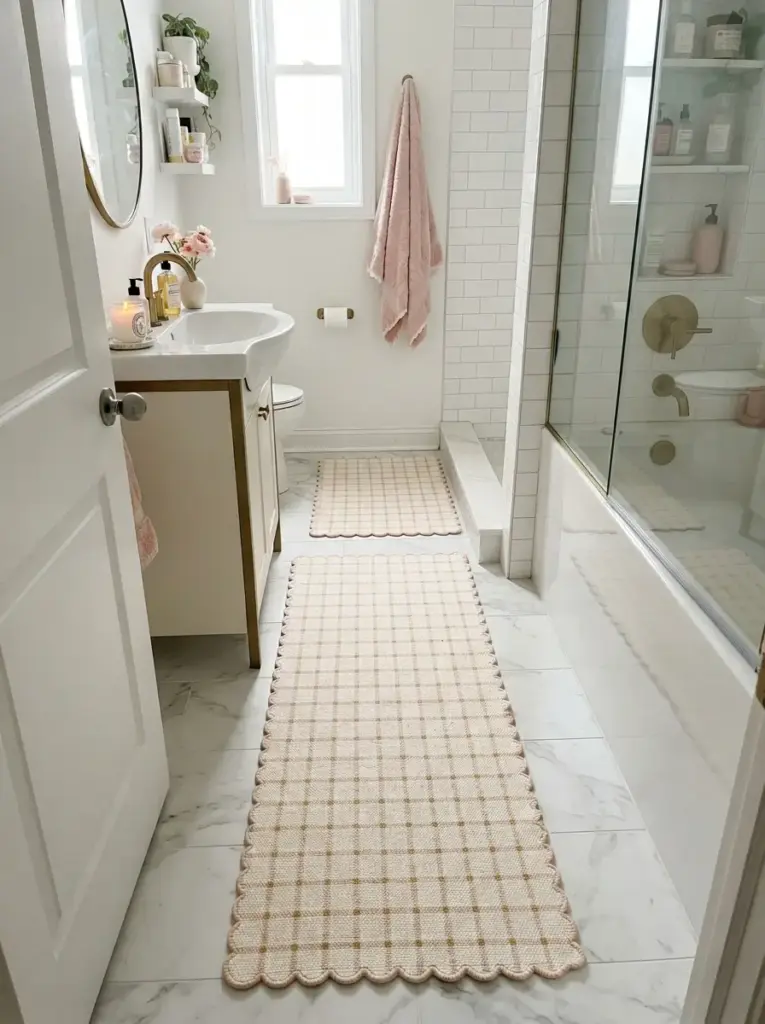
Bathroom rugs should fit the walking path rather than cover every visible section of floor. A narrow runner works well in a long galley layout, while one rectangular mat suits a vanity and tub positioned close together. Round rugs can soften square rooms but may leave awkward gaps near doors. Measure door clearance first so the rug does not catch or fold when the door opens.
Washability and grip are essential. Look for a low-pile rug with a non-slip backing or add a separate bathroom-safe underlay. Cotton rugs feel soft and wash easily, while synthetic blends often dry faster. Avoid thick shag styles near toilets because they trap moisture and are harder to clean. A rug with a small border, checker pattern, or gentle scalloped edge can support Girly Apartment Bathroom Decor Ideas without sacrificing practicality.
Decorate Walls With Lightweight Art
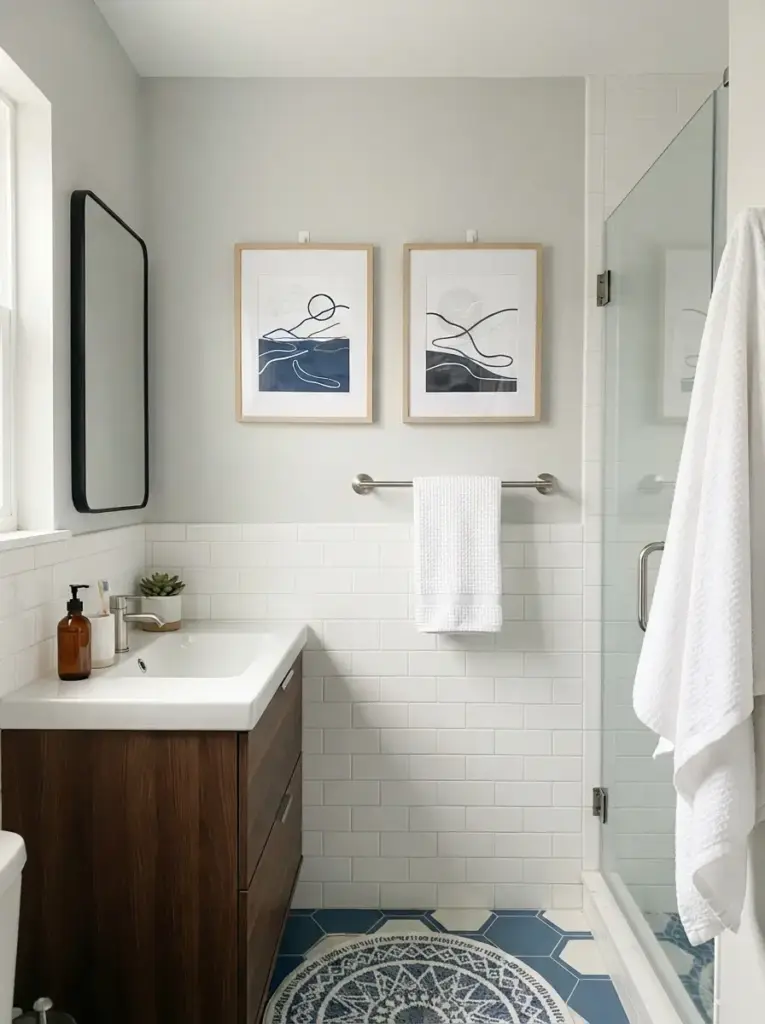
Moisture-resistant prints, sealed frames, acrylic signs, and lightweight canvas pieces can personalise blank walls. Choose images that relate to the colour scheme rather than generic bathroom slogans. Small botanicals, abstract line drawings, vintage perfume illustrations, coastal sketches, or simple typography can work well. Two coordinated pieces usually look calmer than several unrelated frames in a tight room.
Command-style strips or removable hooks help protect rental walls, but the surface should be clean, dry, and suitable for adhesive products. Do not hang paper artwork directly beside a shower unless it is protected from moisture. Apartment Bathroom Wall Decor Ideas work best when the centre of the arrangement sits near eye level, and the frames align with nearby features, such as the mirror or towel bar. Measured placement makes inexpensive prints feel deliberate.
Make the Vanity Look Styled but Usable
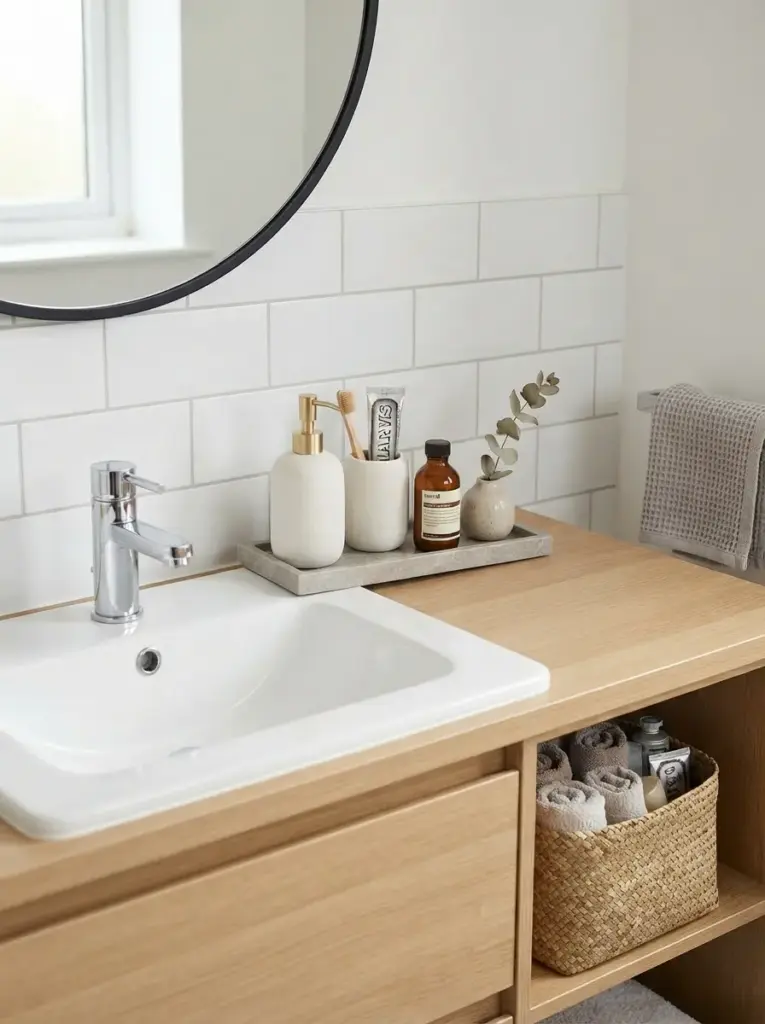
Crowded counters make small bathrooms feel untidy even when every product is attractive. Keep only daily essentials visible, then group them on one small tray. A soap dispenser, toothbrush cup, hand cream, and tiny vase usually provide enough function and decoration. Match containers through colour or material rather than buying an identical set, which can look overly staged.
Choose a tray that fits behind the sink without blocking the tap or collecting standing water. Stone-look resin, sealed wood, ceramic, or metal can work, depending on moisture exposure. Store backup products inside drawers, baskets, or the rolling cart. This method suits busy renters because cleaning becomes easier: lift one tray, wipe the surface, and replace it. Clear counters also make a basic vanity appear wider.
Bring in One Bathroom-Friendly Plant
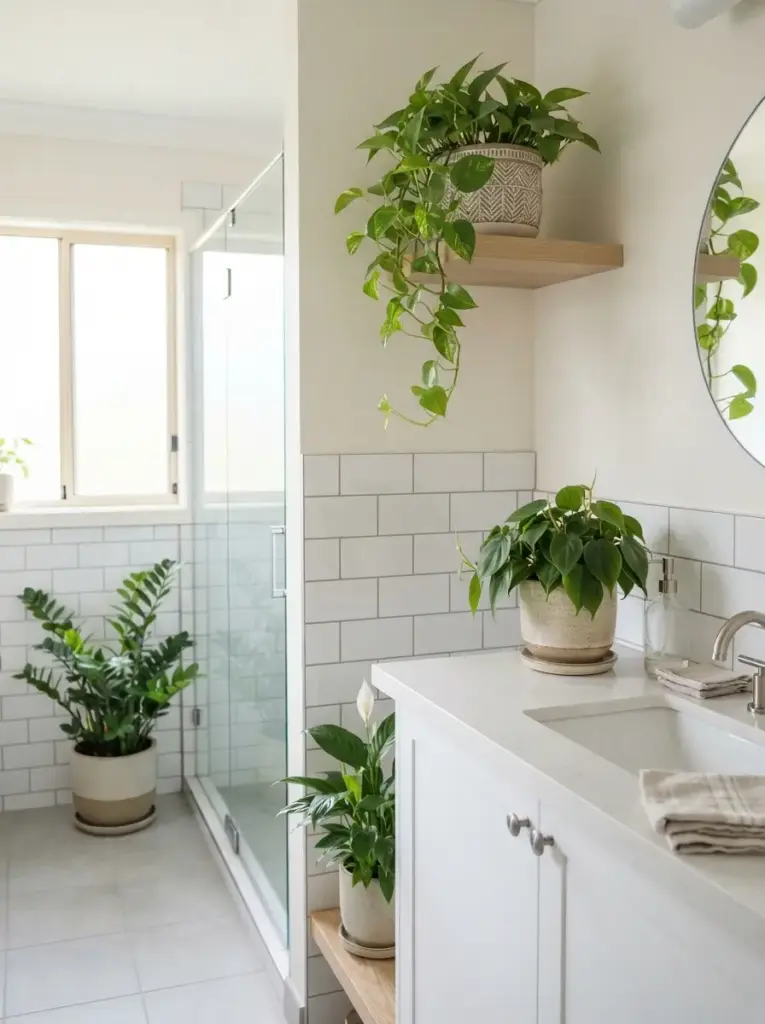
Greenery adds life to hard surfaces such as tile, glass, and metal. Pothos, heartleaf philodendron, ferns, and peace lilies may suit bathrooms with adequate indirect light, though each plant still needs proper care and drainage. Bathrooms without windows should use realistic artificial greenery rather than forcing a live plant to survive in darkness. A small trailing plant can sit on a high shelf, while an upright plant suits a corner near a window.
Scale and hygiene both matter. Oversized leaves can block storage or brush against damp surfaces, while soil should stay contained in a saucer or cachepot. Artificial plants need occasional dusting and washing. One healthy plant usually looks better than several struggling ones. The tip is ideal for renters who want warmth but prefer neutral textiles and walls.
Cover Unattractive Flooring With Removable Tiles
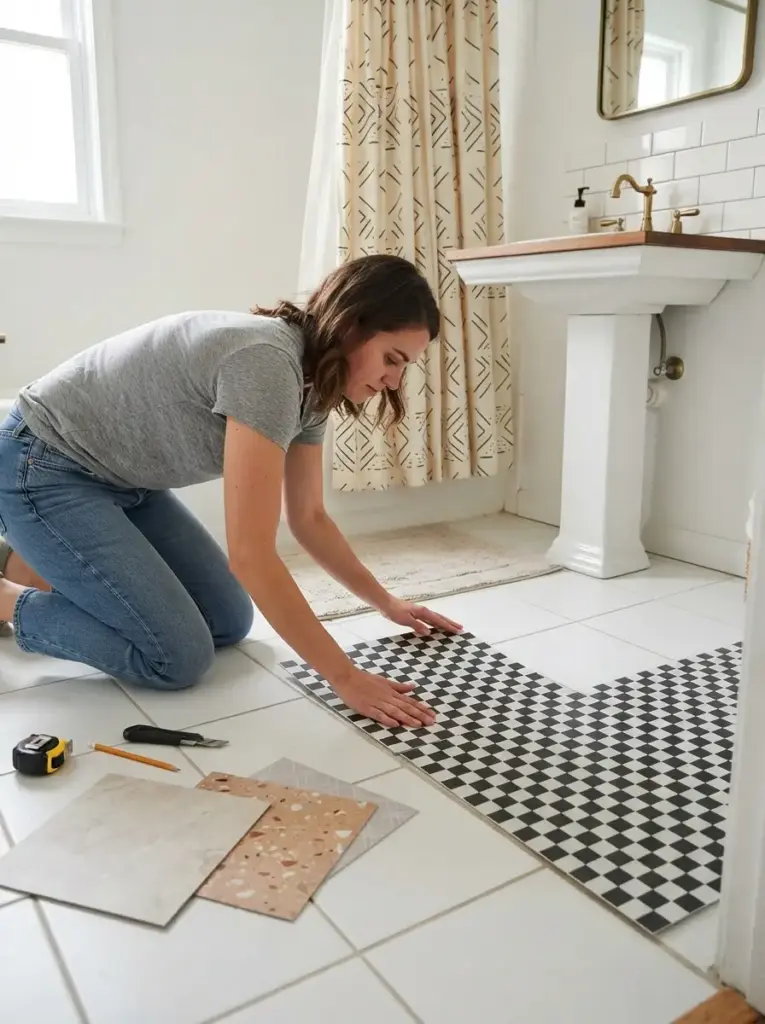
Peel-and-stick vinyl tiles can disguise dated floors when the lease allows temporary coverings. Small checker patterns, pale stone effects, warm terrazzo, or simple black-and-white designs add structure without permanent installation. Order samples first and view them beside the vanity, wall tile, and shower curtain. Patterns that look subtle online may appear much busier across an entire floor.
Preparation determines the result. Floors must be clean, smooth, and fully dry, and grout lines may show through thin products. Renters should confirm whether adhesive residue could affect the original surface and keep installation records. Loose-lay vinyl mats offer a safer alternative when adhesives are not permitted. Flooring changes suit people who have already improved lighting and textiles but still feel that one dated surface controls the room.
Replace Small Accessories With One Metal Finish
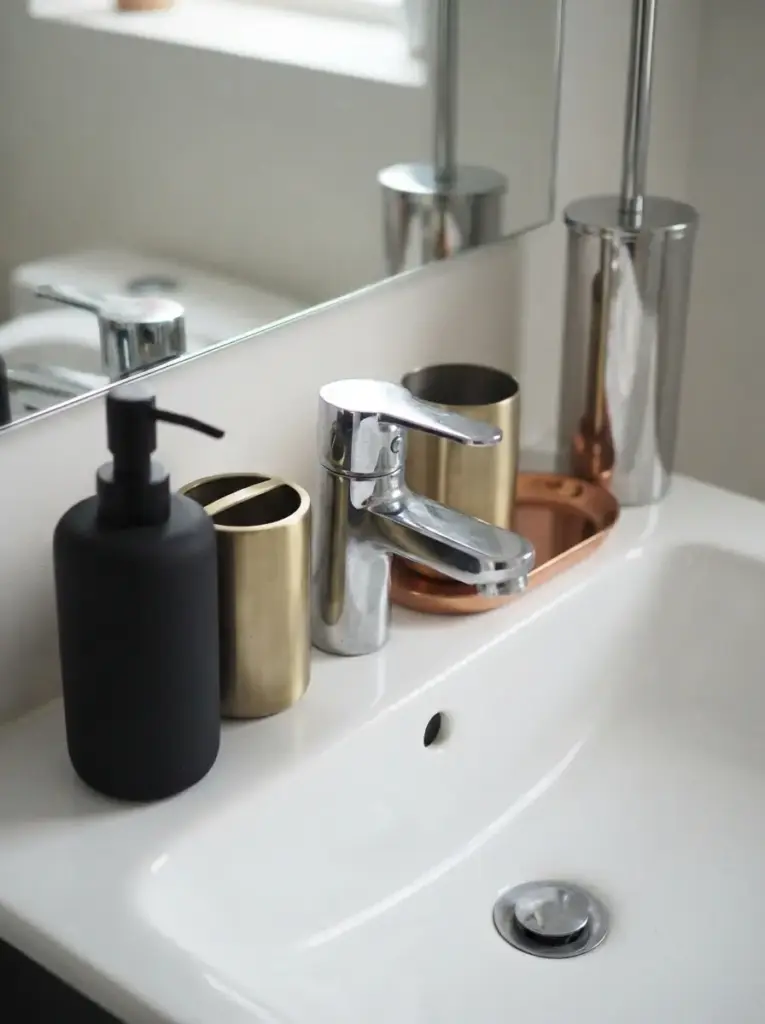
Mixed finishes can look collected, but too many unrelated metals make a tiny bathroom feel visually noisy. Choose one main finish for removable accessories such as the bin, toilet brush holder, soap pump, tray, hooks, and shelf brackets. Brushed brass feels warm, matte black adds definition, chrome looks crisp, and brushed nickel blends easily with common rental fixtures.
Permanent taps and shower fittings do not need to match perfectly. Connect them by repeating their finish once or twice in smaller items. For example, keep the existing chrome tap, then use a chrome-framed mirror and chrome hooks while adding colour through textiles. Renters interested in Luxury Bathroom Decor should focus on consistency, good proportions, and clean surfaces rather than shiny objects. Restraint creates a more convincing high-end impression.
Add Soft Feminine Details Without Overcrowding
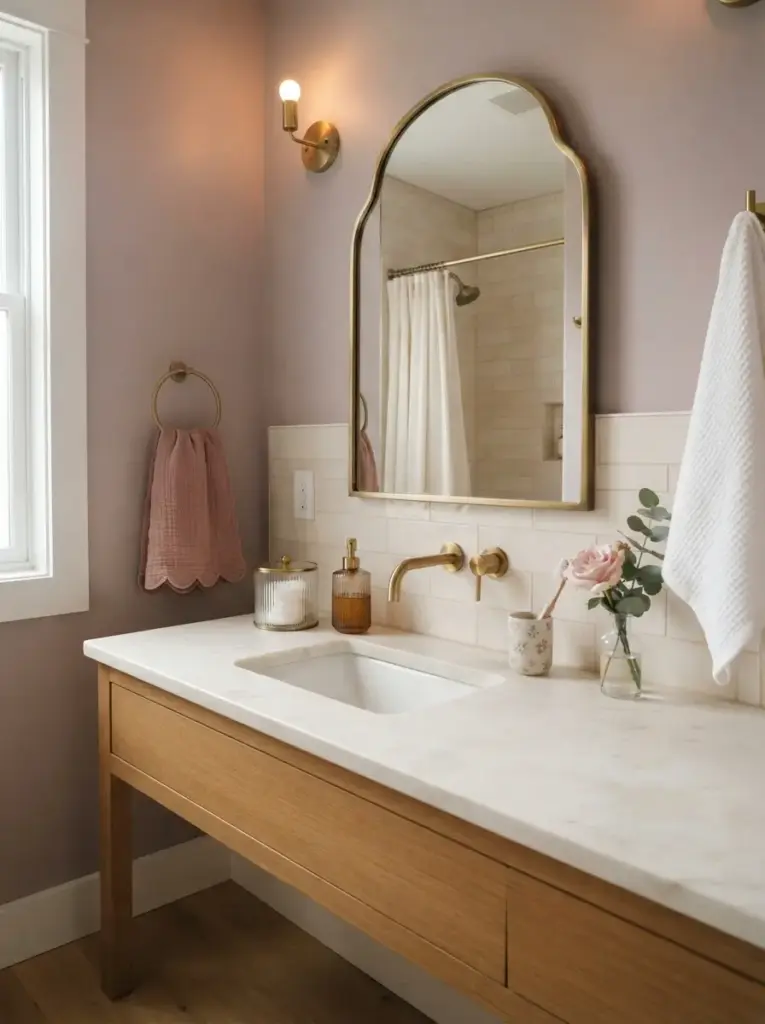
Feminine styling can feel polished when it relies on shape, texture, and controlled colour rather than an excess of decorative objects. Curved mirrors, scalloped towels, ribbed glass, blush accents, fluted containers, and small floral patterns create softness while remaining practical. Pair them with plain surfaces so each detail has room to register. Cream, dusty rose, muted mauve, warm white, and brass make an easy starting palette.
Balance prevents the scheme from feeling overly themed. Use one floral element, one curved shape, and one metallic accent, then keep storage simple. Luxury Feminine Bathroom Decor Ideas often succeed because the materials look coordinated and the room stays orderly, not because every object appears expensive. This approach is best for renters who enjoy a romantic style but still need quick cleaning and functional storage.
Common Bathroom Decorating Mistakes to Avoid
Buying accessories before measuring is one of the most common problems. Baskets may block cabinet doors, rugs may catch beneath the entrance, and shelves may interfere with the toilet lid. Record the width, depth, and height of every usable area before shopping. Include door swings, socket positions, towel-bar clearance, and the space needed to stand comfortably at the sink. Measurements protect both the budget and the layout.
Using too many small decorations creates another issue. Tiny jars, signs, plants, candles, trays, and ornaments may each look appealing, but together they consume cleaning space and make the room feel smaller. Group useful items, leave some surfaces empty, and remove anything that does not support the chosen palette or routine. Open space functions as part of the design because it gives the eye somewhere to rest.
Ignoring humidity can quickly damage attractive purchases. Unsealed wood may warp, untreated paper can curl, metal can rust, and heavy fabrics may stay damp. Choose bathroom-suitable materials, use the extractor fan, open the door after showers, and wash textiles regularly. Moisture marks should never be hidden behind wallpaper or art. They need proper investigation before decorating begins.
Poor lighting choices can undermine every colour decision. Very cool bulbs may make blush, cream, and brass look dull, while very warm bulbs can reduce clarity near the mirror. Aim for around 3000K at the vanity and check the bulb’s brightness as well as its colour temperature. Layered lighting is helpful, but decorative lights should not replace the main functional source.
Following trends without considering the existing room often leads to mismatched results. A black-and-white scheme may clash with warm beige tile, while bright white accessories can emphasise an aged cream vanity. Work with fixed finishes by identifying their undertone, then repeat a related shade. The room will look calmer when new pieces acknowledge what cannot be changed.
Overlooking maintenance also creates frustration. Open shelves collect dust, clear containers show residue, white grout needs regular care, and fabric shower curtains require washing. Choose a level of detail that fits your schedule. Renters with busy routines usually benefit from lidded baskets, wipeable trays, quick-drying mats, and fewer objects on the counter.
Budget-Friendly Ways to Decorate a Rental Bathroom
Start with the highest-impact items rather than buying a complete matching set. A shower curtain, two towels, a rug, and better bulbs can change the room more noticeably than ten small ornaments. Set a simple budget before shopping and divide it by function. Spend more on washable textiles and storage that will move with you, then save on prints, trays, and small containers.
Second-hand shops can provide mirrors, baskets, small stools, trays, and framed art at low prices. Check each piece for moisture damage, rust, unstable joints, and difficult-to-clean surfaces. Sealed wood, metal, glass, and washable fabrics generally work better than delicate materials. A found mirror may need only a careful cleaning or a removable painted frame to suit the room.
Repurposing items from other rooms also reduces cost. A small kitchen cart can store towels, a desk organiser can hold skincare, and a narrow bedside table may fit beside a pedestal sink. Test the item in the space before buying a bathroom-specific replacement. Furniture should tolerate occasional humidity and must not obstruct ventilation, plumbing access, or safe movement.
Printable artwork provides an inexpensive way to coordinate colours. Choose one or two designs, print them at a standard size, and use frames you already own. Protect prints behind acrylic or glass and keep them away from direct spray. Repeating a colour from the shower curtain inside the artwork helps separate purchases feel connected.
Discount shops often sell useful basics, but quantity can become the hidden expense. Buying five inexpensive items that do not fit costs more than purchasing one well-sized piece. Carry room measurements and a photo of the fixed finishes while shopping. Compare dimensions, materials, and care instructions before checking out.
Seasonal changes do not require replacing the whole scheme. Swap hand towels, one print, or a small vase while keeping the main curtain, rug, and storage. Warm rust or olive can work in autumn, while pale blue or soft green suits spring. Limited changes protect the budget and reduce unnecessary storage.
How to Plan a Rental Bathroom Makeover Step by Step
Begin by clearing movable items from the room and cleaning every surface. Dust, soap residue, and crowded counters can make the bathroom look worse than it is, which may lead to unnecessary purchases. Once the room is empty, note what still feels wrong. Common problems include weak lighting, exposed products, an undersized rug, bare walls, or colours that do not connect. Prioritising the real issue gives the decorating budget a clear purpose.
Next, measure the room with the door open and closed. Record wall widths, vanity depth, toilet clearance, shower height, and the gaps beside fixed fixtures. Measure shelves inside cabinets as well, since storage bins need accurate dimensions. Keep these numbers in your phone while shopping. Small bathrooms offer little room for guesswork, and even a difference of a few centimetres can stop a cart, basket, or mat from fitting safely.
Create a simple mood board using photographs of the existing bathroom, not only inspirational rooms. Place possible curtain fabrics, rug patterns, metal finishes, and paint undertones beside the photograph. Existing beige tile, for example, may look better with warm white and muted green than bright white and cool grey. Working from the real room prevents purchases that look attractive online but disconnected after installation.
Choose improvements in order of visual impact. Lighting and the shower curtain usually come first because they affect how the entire room looks. Storage follows when clutter remains visible. Rugs, towels, art, and small accessories should come later, once the larger colours and proportions are settled. Buying in this sequence reduces duplication and makes it easier to return anything that does not support the finished direction.
Test temporary products before covering large areas. Apply a wallpaper sample behind the door, place one removable tile in a low-visibility corner, and test an adhesive hook with a light object. Check each product after several hot showers to see how it responds to moisture. Testing may feel slow, but it can prevent damaged paint, loose shelves, and wasted material. Rental-friendly products still depend on the surface beneath them.
Plan the daily routine before styling open storage. Morning products should sit close to the sink, while occasional treatments and refills can stay inside a basket or drawer. Towels need enough space to dry without touching the floor or overlapping heavily. Cleaning products should remain accessible but separated from cosmetics. Storage that matches real habits is easier to maintain than an arrangement copied from a photograph.
Finish by reviewing the room from the doorway, the mirror, and the shower area. Each viewpoint reveals different problems. The doorway shows visual balance, the mirror exposes counter clutter, and the shower area reveals whether hooks and towels are convenient. Remove one or two items if the scheme feels crowded. Small-space decorating often improves through editing, because fewer well-placed pieces allow colour, texture, and useful storage to stand out.
Photograph the finished setup after living with it for several days. Daily use may reveal that a basket blocks the cabinet, the hand towel hangs too far from the sink, or a decorative tray collects water. Adjusting these details is part of good design, not a sign that the plan failed. Rooms become more comfortable when styling responds to real movement, cleaning, and storage habits.
Keep receipts and packaging until every item has passed a practical test. Sit, stand, open doors, reach for towels, and clean around the new pieces. Check whether fabrics dry properly and whether adhesive products remain secure after steam. Items that create inconvenience should be returned or reassigned to another room. Thoughtful editing protects the budget and helps the bathroom stay organised long after the initial makeover excitement fades. Small improvements should earn their place by making the room easier to use, easier to clean, or more pleasing to see. Pieces that achieve none of those goals usually become clutter within a few weeks.
Practical Cute Bathroom Decor Tips
Cute Bathroom Decor should support the way the bathroom is used each morning and evening. Place daily products within easy reach, store backups out of sight, and keep wet items where air can circulate. Decorative choices become more successful when they shorten routines rather than adding extra steps. A beautiful soap bottle that is difficult to refill will soon feel less useful than a simple pump that works smoothly.
Repeat shapes as well as colours. A round mirror can relate to a curved rug edge, circular hooks, or a small rounded tray. Straight shelves and rectangular frames can balance those curves. Shape repetition creates quiet consistency, which helps a small room feel planned without requiring identical furniture or accessories.
Choose one visual feature and let the rest support it. Patterned wallpaper may be the main feature, so the shower curtain and towels should stay simpler. A bold curtain can lead the design while walls and flooring remain calm. Competing focal points make compact bathrooms feel crowded, especially when several patterns use strong contrast.
Keep rental reversibility in mind from the beginning. Save original hardware, follow adhesive instructions, label removed parts, and photograph surfaces before installation. Test removability in a hidden area. A stylish update is not successful if it damages paint, leaves residue, or creates unnecessary repair work at move-out.
Cleaning tools deserve planned storage. A slim lidded bin, small toilet brush holder, and compact cleaning caddy should fit the layout without becoming visual distractions. Matching their finish to the room helps them blend in. Attractive bathrooms remain appealing because maintenance feels manageable, not because practical objects have disappeared.
Frequently Asked Questions
How can I make a small rental bathroom look cute?
Choose a limited palette, improve the lighting, hang a coordinated shower curtain, use one washable rug, and keep the counter clear. Add personality through removable art or wallpaper rather than many small ornaments. Vertical storage above the toilet can free floor space, while matching towels and containers make basic fixtures feel more intentional.
What colours work best in a tiny apartment bathroom?
Warm white, cream, pale sage, dusty pink, muted blue, and soft grey usually work well because they reflect light without feeling stark. Dark colours can still appear in small amounts through frames, hooks, or borders. Existing tile undertones should guide the final choice. Warm beige tile pairs better with cream and brass than with icy white.
How do I decorate without losing my security deposit?
Use tension rods, freestanding furniture, removable strips, adhesive hooks rated for the surface, and peel-and-stick products that have been tested in a hidden area. Avoid drilling into tile, covering damp walls, or changing plumbing fixtures without written permission. Keep original parts and document the room before making temporary changes.
What should I buy first for an apartment bathroom?
Begin with a shower liner, shower curtain, bath mat, towels, bin, toilet brush, soap dispenser, storage basket, and suitable light bulbs. Those items support daily use and establish the colour scheme. Decorative art, plants, trays, and wallpaper can follow after the room functions well and storage problems are clear.
Can a rental bathroom look luxurious on a small budget?
Yes, but luxury comes from consistency and care rather than expensive labels. Use one metal finish, coordinated textiles, flattering light, clean grout, and a mostly clear vanity. A framed mirror, structured shower curtain, and well-sized rug often create more impact than decorative accessories scattered across every surface.
How many decorative items should a small bathroom have?
No fixed number suits every room, but each visible surface should retain some space. One tray on the vanity, one plant or vase, two wall pieces, and a few styled towels may be enough. Remove items that make cleaning difficult, duplicate a function, or introduce an unrelated colour.
Conclusion
Small apartment bathrooms respond well to focused changes because every surface is visible at once. Better bulbs, a well-chosen curtain, coordinated towels, practical storage, removable wall details, and one clear palette can reshape the room without permanent renovation. Cute Bathroom Decor becomes more effective when it respects moisture, movement, cleaning, and rental rules.
Begin with the problem that affects daily life most, whether it is poor light, clutter, dated flooring, or a lack of personality. Solve that issue first, then add a few related details. Thoughtful choices will make the room easier to use, simpler to maintain, and more personal, while allowing every item to move with you to the next home.