
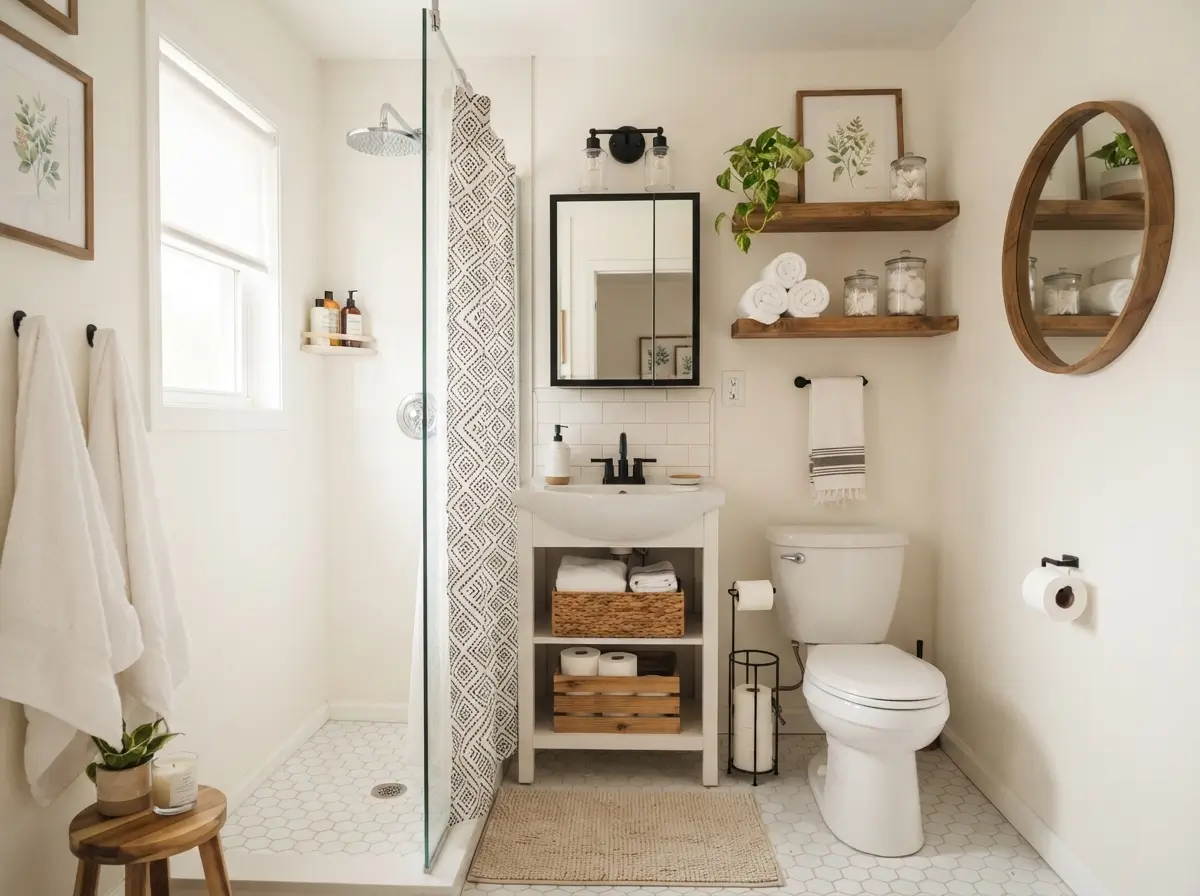

Compact bathrooms rarely need a full renovation to feel calmer, brighter, and easier to use. Careful choices can improve storage, reduce visual clutter, and make everyday routines more comfortable without replacing tiles or moving plumbing. Small Bathroom Decor works best when every item earns its place, whether it stores toiletries, reflects light, adds colour, or makes cleaning easier. Beginners should start with the room’s biggest problem, such as poor lighting, limited counter space, or blank walls, then choose two or three changes that solve it instead of buying unrelated accessories.
Budget decorating also becomes easier when you work with the bathroom rather than against it. Existing tile colour, natural light, door swing, wall space, and storage needs should guide the plan. Renters can rely on removable hooks, tension rods, freestanding shelves, washable textiles, and peel-and-stick products designed for humid rooms. Homeowners can use the same ideas before committing to larger changes. Clear measurements, a short shopping list, and one consistent colour direction will usually create a more polished result than filling the room with small decorative objects.
What is the easiest way to decorate a small bathroom cheaply?
The easiest approach is to improve one practical layer at a time. Begin with lighting and clutter control, then add textiles, wall details, and a few coordinated accessories. Small Bathroom Decor does not require expensive furniture when slim storage, warm white bulbs, matching containers, and a restrained palette can change how the room looks and functions. Focus on items you touch every day, such as towels, mirrors, soap dispensers, and shelves. Those pieces have more impact than ornaments placed only for display.
Build the room around two main colours
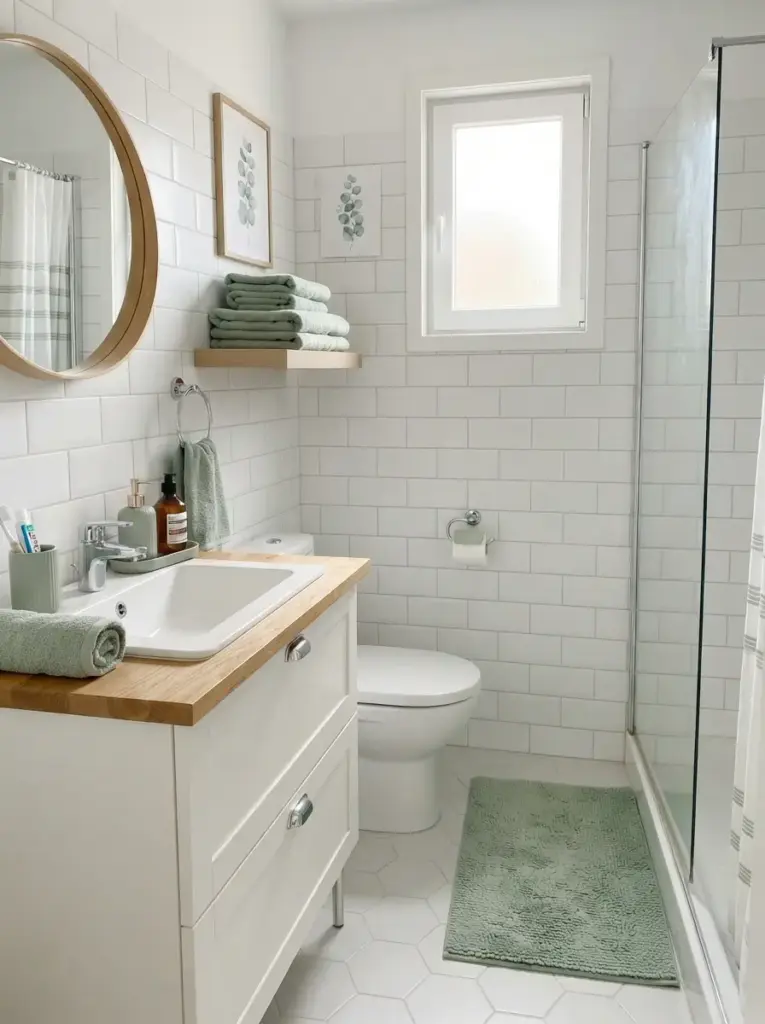
Limited colour keeps a compact bathroom from feeling busy. Choose one base colour from the existing room, then add one supporting shade through towels, artwork, a bath mat, and small containers. White tile might pair with sage green, soft blue, warm beige, charcoal, or dusty rose. Cream tile often looks better with olive, terracotta, walnut, or muted brass than with icy grey. Repeating the same two colours helps unrelated budget pieces look intentional, especially when they come from different shops or were bought at different times.
Colour control works because the eye reads repetition as order. Too many bright shades break the room into small visual sections, which can make tight dimensions more noticeable. First-time decorators and renters benefit most from this method because it creates direction without permanent changes. Keep expensive or fixed surfaces neutral, then place colour on washable and replaceable items. Anyone browsing Apartment Bathroom Decor Ideas can use the tile, vanity, or shower curtain as the starting point and match new purchases to what is already present.
Replace a bulky shower curtain with a lighter one
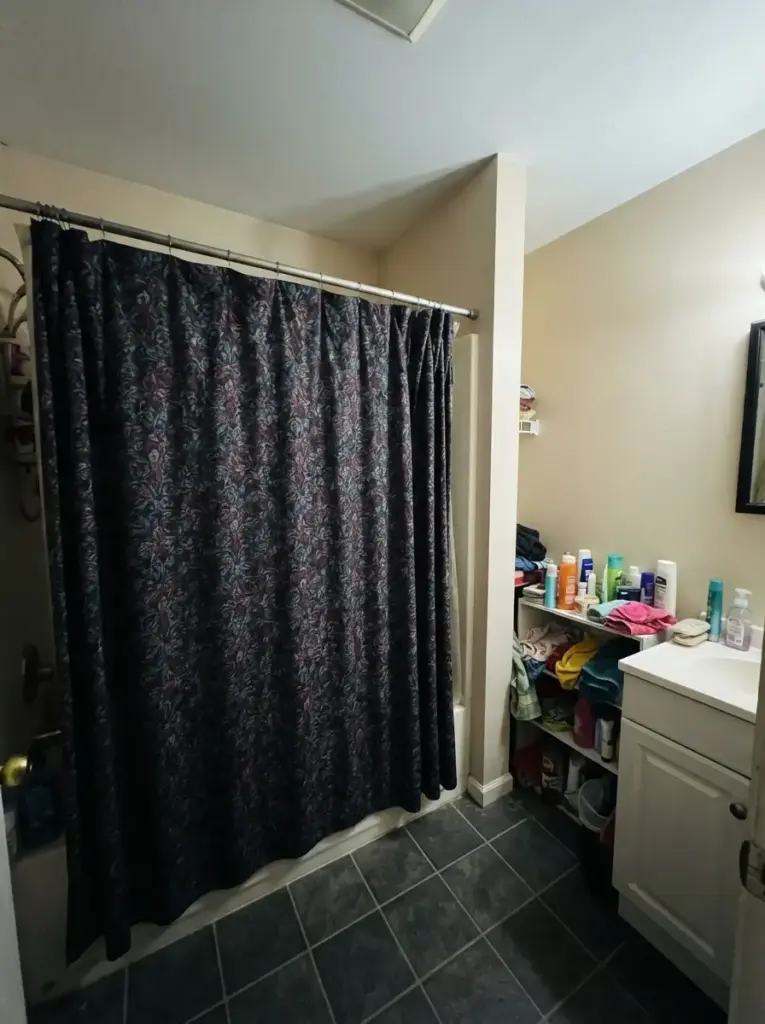
Heavy patterns and dark fabric can visually close off half the room. Swap them for a white, cream, pale striped, or lightly textured curtain that allows the bathroom to feel more open. Hang it close to the ceiling when the rod position allows, letting the fabric fall almost to the floor. Longer vertical lines draw attention upward and make low ceilings feel less compressed. Choose a machine-washable curtain with a separate liner so mildew does not force you to replace the decorative layer too often.
Lighter curtains help because they create a broad, calm surface instead of a loud visual barrier. Small bathrooms with no windows or dark floor tiles gain the most from this change. Renters can use a tension shower rod if drilling is not permitted, while homeowners can mount the rod slightly higher for a cleaner line. Avoid curtains covered in tiny text, novelty graphics, or many contrasting colours. Those designs may look fun online but often feel crowded once placed beside toiletries, towels, and visible storage.
Use one large mirror instead of several tiny pieces
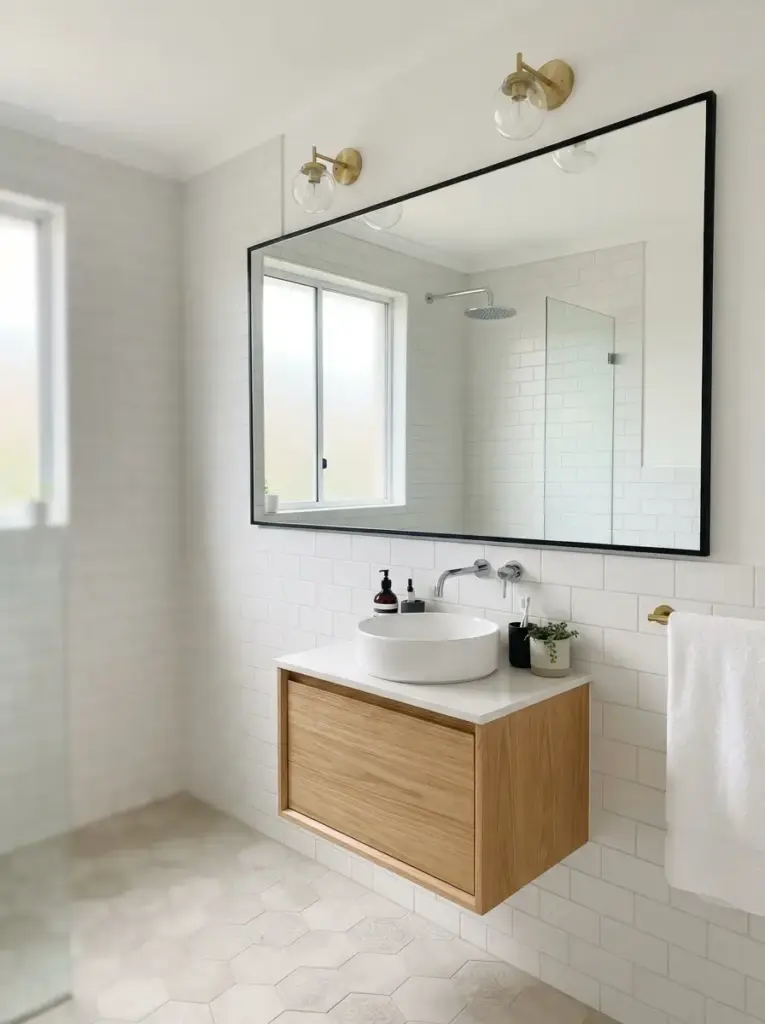
One generous mirror makes a stronger statement than a group of small mirrored tiles. Wider reflection spreads light across the room and reduces the number of edges competing for attention. Look for a simple frameless mirror, a thin black frame, pale wood, or brushed metal that matches existing fixtures. Second-hand mirrors can be excellent value, but check for black marks, warped backing, chipped corners, and damage from moisture before buying. Measure the wall and leave comfortable clearance above taps and below lighting.
Large mirrors suit bathrooms with narrow vanities, limited daylight, or visually heavy walls. Their scale works because one clear shape creates a calmer focal point while reflecting more of the room. For a rental-friendly upgrade, place a lightweight mirror on a secure over-door system or use the existing mounting points rather than adding new holes. During an Apartment Bathroom Makeover, keeping the frame simple usually gives better long-term value than choosing a highly decorative style that limits future colour changes.
Add warm neutral lighting at the right temperature
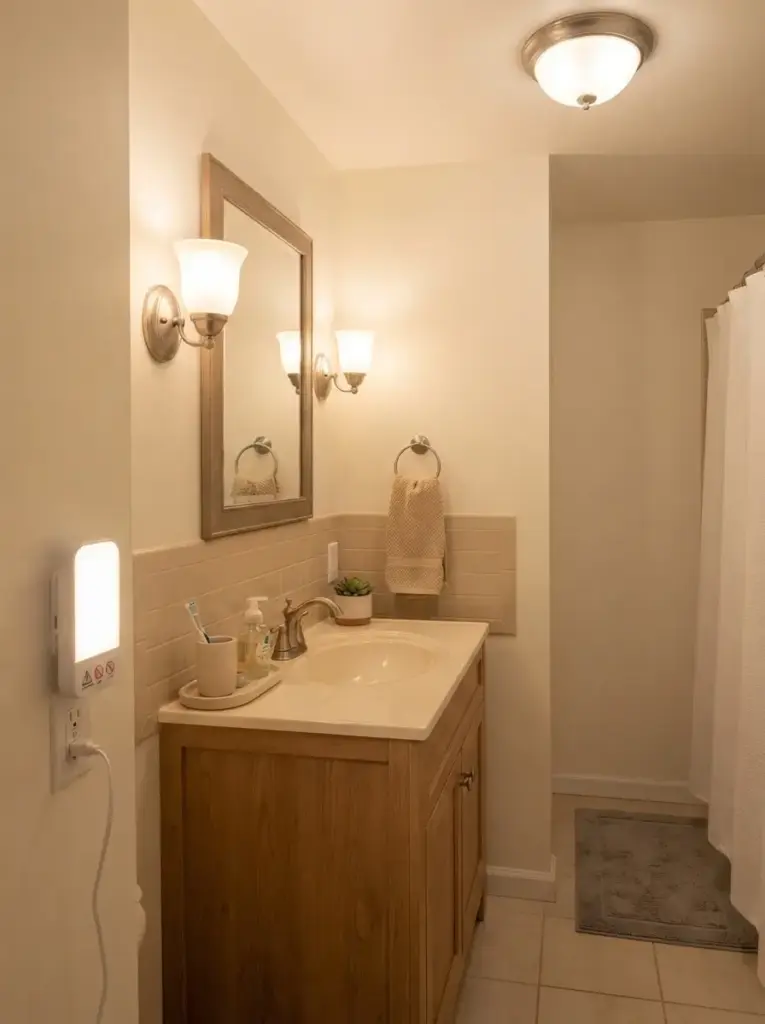
Bulb colour can make a low-cost bathroom feel uncomfortable or welcoming. Aim for warm white to soft neutral lighting between 2700K and 3500K. Around 3000K often suits beige, cream, wood, brass, and warmer skin tones, while 3500K can work well with white, grey, and chrome. Avoid very blue 5000K bulbs in a relaxing bathroom because they can make pale surfaces look harsh. Match bulb temperatures across the room so the ceiling light and vanity light do not produce conflicting colour casts.
Better lighting improves both appearance and daily use. Makeup, shaving, skincare, and cleaning become easier when faces are lit evenly rather than from one dim ceiling source. Bathrooms with no window benefit most, along with first homes that still have old low-lumen bulbs. Use LED bulbs marked for enclosed fittings when necessary, and check the fixture’s maximum wattage. A plug-in rechargeable wall light can help renters, but it should stay away from water and must be used according to the manufacturer’s bathroom safety guidance.
Turn the wall above the toilet into storage
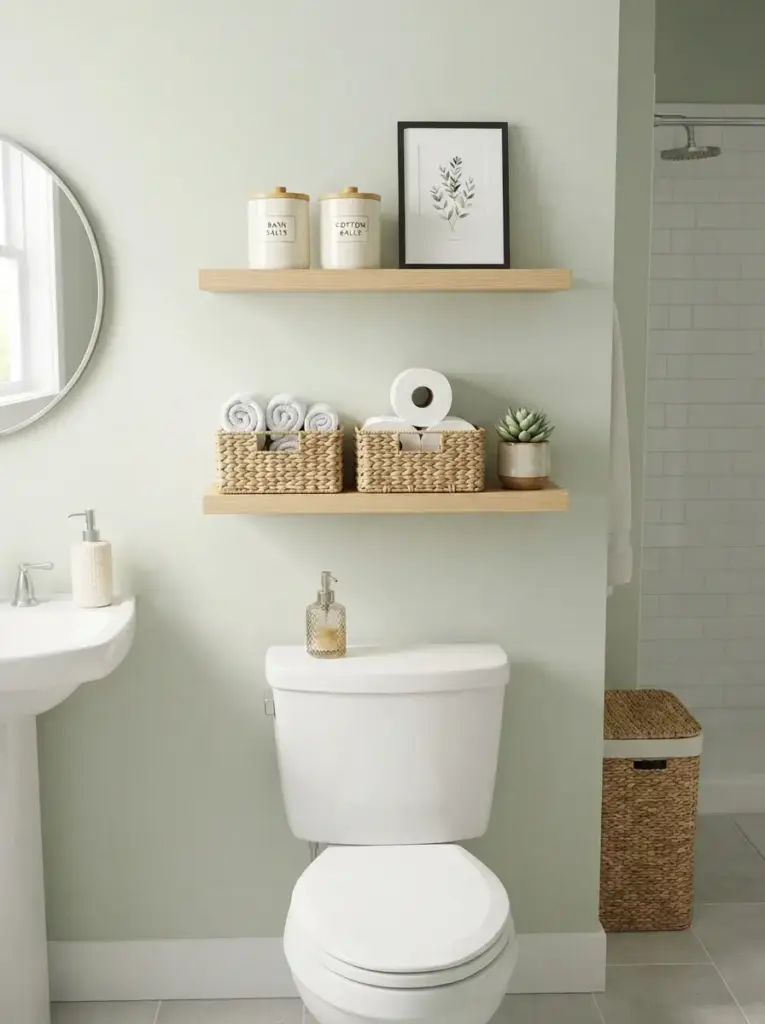
Unused vertical space above the toilet can hold towels, spare rolls, and attractive containers. Choose one or two slim shelves rather than a deep cabinet that feels heavy over the seat. Floating shelves, ladder shelves, and narrow freestanding units all work, depending on whether drilling is allowed. Keep the lowest shelf high enough to avoid bumping your head, and confirm that stored items cannot fall easily. Baskets with flat bases are safer than unstable stacks of loose products.
Vertical storage succeeds because it moves everyday supplies away from the floor and vanity. Busy households, shared bathrooms, and rooms without built-in cupboards benefit most. Keep the arrangement practical by placing rarely used items higher and daily supplies within easy reach. Mix closed baskets with one decorative item, such as a small framed print or a moisture-tolerant faux plant. Too many open bottles create visual noise, so group similar products inside matching bins instead of treating every shelf as a display area.
Choose a slim rolling cart for flexible storage
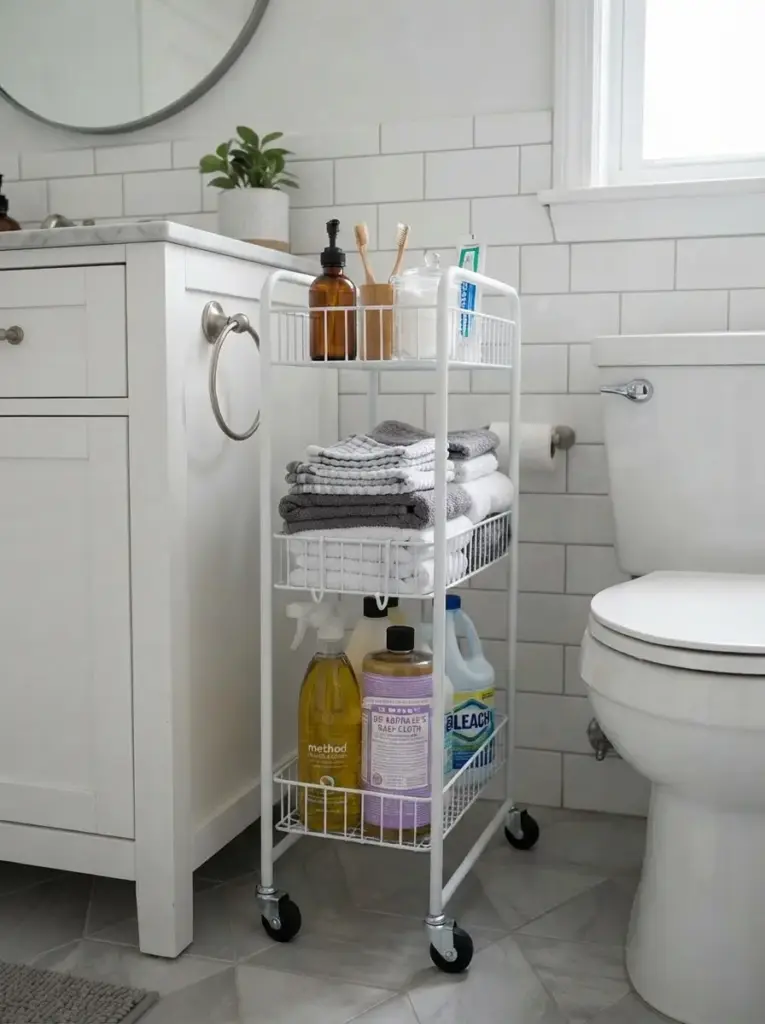
Narrow rolling carts fit beside a vanity, toilet, or bath and can move when the room needs cleaning. Look for a unit around 12 to 20 centimetres wide when space is extremely tight, then measure skirting boards, pipes, and door clearance before buying. Store taller bottles on the bottom, folded cloths in the middle, and daily items on top. Waterproof plastic or powder-coated metal handles humidity better than unfinished fibreboard, which may swell if it stays near splashes.
Flexible storage works well for renters, students, and anyone who expects their needs to change. A cart can hold skincare today and cleaning supplies later, so the purchase remains useful after moving. The decorating plan becomes more practical when storage can shift rather than block circulation. Avoid overloading the top tier with heavy glass containers, and keep wheels locked if the model includes brakes. Matching labels can help, but clear categories matter more than decorative wording.
Install hooks where towels naturally land
Hooks often use wall space more efficiently than wide towel bars. Place them behind the door, beside the shower, near the sink, or on the side of a freestanding cabinet. Strong adhesive hooks can be rental-friendly, but clean the surface carefully and check the weight rating before hanging damp bath towels. Over-door hooks work without adhesive, although they may prevent the door from closing smoothly if the metal is too thick. Choose rounded designs that will not snag clothing or scratch skin.
Convenient placement makes the idea effective. Towels are more likely to stay off the floor when the hook sits exactly where someone reaches after washing. Families and shared flats gain the most because each person can have a separate hook. Use small name tags or different towel colours if needed. Hooks also support Cute Bathroom Decor Ideas without wasting space; simple shapes in black, white, brass, or wood can add character while still performing an everyday job.
Upgrade the vanity with matching refillable containers
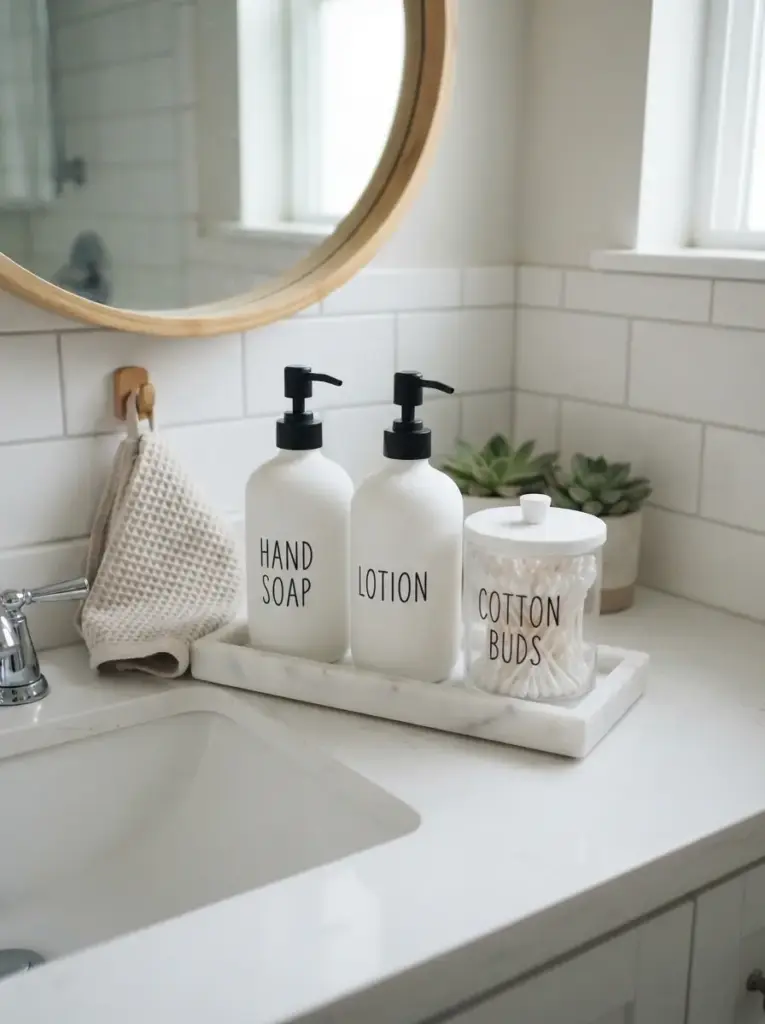
Mismatched packaging makes a small counter feel crowded even when only a few products are present. Transfer hand soap, lotion, cotton buds, and frequently used items into a coordinated set of easy-clean containers. Choose two or three pieces rather than a large collection. Opaque dispensers hide label colours, while clear containers help you see when supplies are low. Place the set on a narrow tray so spills stay contained, and the entire group can move during cleaning.
Visual grouping works because several small objects read as one organised unit when they share colour, shape, and location. Beginners and people with tiny vanities benefit most. Keep labels clear enough to prevent confusion, especially when products look similar. Waterproof printed labels or simple tags are more useful than decorative script that is difficult to read. Glass can look refined but may be unsafe near children or slippery surfaces, so durable plastic, resin, or stainless steel often makes a better budget choice.
Frame one piece of moisture-safe wall art
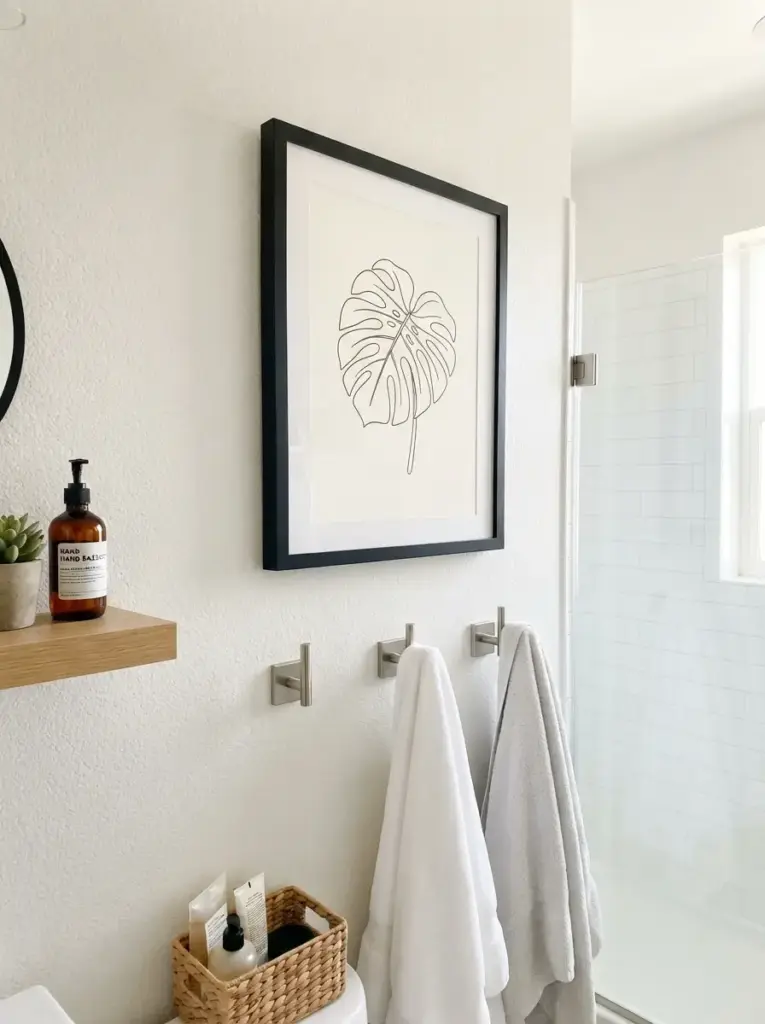
One well-sized print can add more personality than several tiny frames. Choose simple line art, botanical shapes, typography with meaning, or a soft abstract design that connects with the room’s colour palette. Place it away from direct spray and use a frame with an acrylic front rather than fragile glass in a busy bathroom. Printable art can keep costs low, while second-hand frames can be repainted with moisture-resistant paint. Leave enough blank wall around the artwork so it does not feel squeezed.
Single-artwork styling is best for narrow walls, blank areas above towel hooks, and renters who want personality without clutter. Scale creates the impact: a medium frame often looks more confident than five postcard-sized pieces. Removable picture-hanging strips may work on smooth painted surfaces, but users should check wall compatibility and removal instructions. People collecting Apartment Bathroom Wall Decor Ideas should prioritise moisture resistance, safe placement, and legible scale before choosing a design based only on colour.
Use removable wallpaper on one dry wall
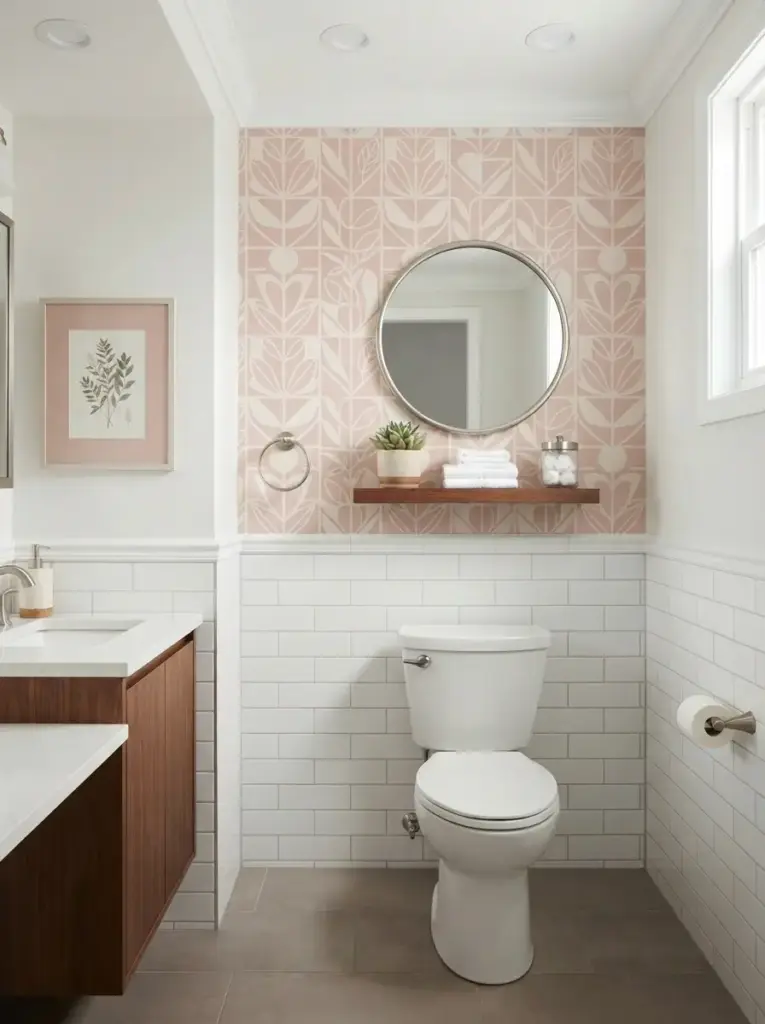
Peel-and-stick wallpaper can introduce pattern without covering the entire bathroom. Select the driest wall, usually behind the toilet, opposite the shower, or above wall panelling. Small prints can suit powder rooms, while medium-scale stripes, soft botanicals, or simple geometric designs often read more clearly in a compact full bathroom. Buy a sample first and observe it under morning and evening light. Humidity, textured walls, and weak adhesive can affect performance, so check product instructions before installation.
Accent walls succeed when they provide one controlled area of interest. Renters and colour-loving beginners may enjoy this option because it can be removed more easily than traditional wallpaper, although no removable product is risk-free on every paint finish. Use a smoothing tool, align the first panel carefully, and avoid stretching the material. Pink Bathroom Decor Ideas can feel grown-up when blush wallpaper is balanced with white, warm grey, walnut, or brushed nickel instead of repeated across every accessory.
Add a washable runner or fitted bath mat
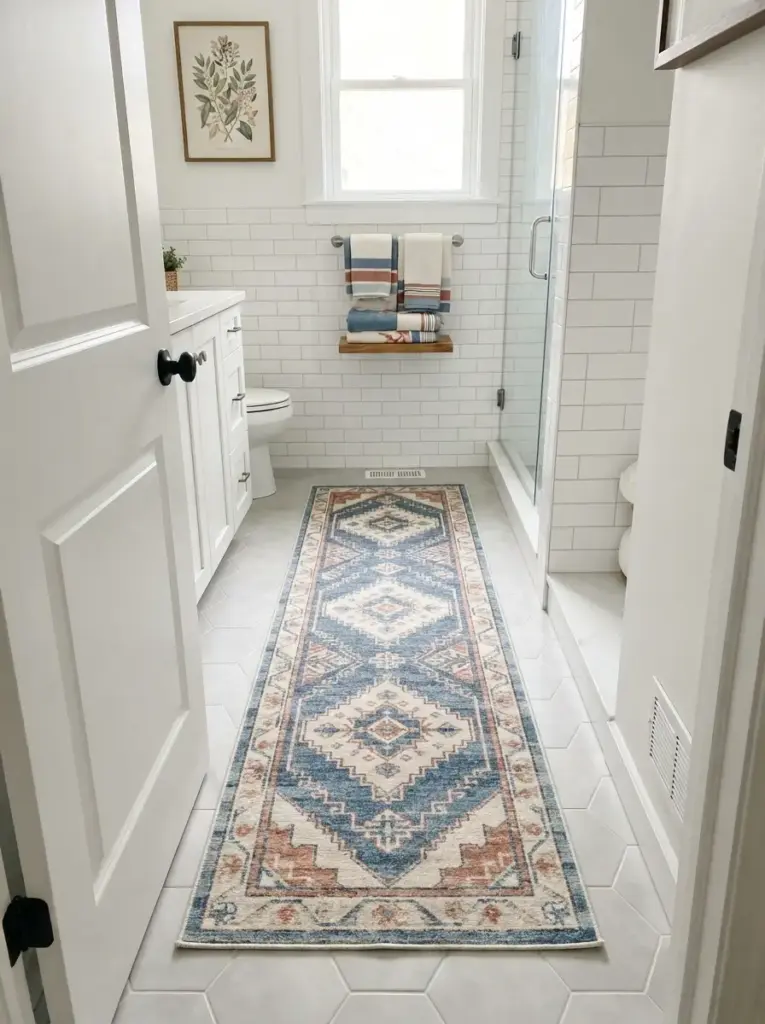
Floor textiles soften hard surfaces and introduce colour without changing tile. Choose a washable low-pile runner for a long narrow bathroom or a compact absorbent mat near the bath or shower. Measure door clearance because thick mats may stop the door from opening. Non-slip backing matters on smooth tile, and the mat should dry fully between uses. Avoid placing several small mats around the toilet and sink, as the broken shapes can make the floor feel busier and complicate cleaning.
One longer textile creates a stronger visual line and can make a narrow room feel more connected. Cold-tile bathrooms, rental spaces, and first homes with dated flooring benefit most. Pick a pattern that includes one of the room’s main colours, then repeat that shade in a towel or artwork. The finished room feels more cohesive when floor textiles support the overall palette rather than becoming a separate theme. Wash frequently and replace mats that stay damp, curl at the edges, or lose grip.
Style open shelves with baskets and folded towels
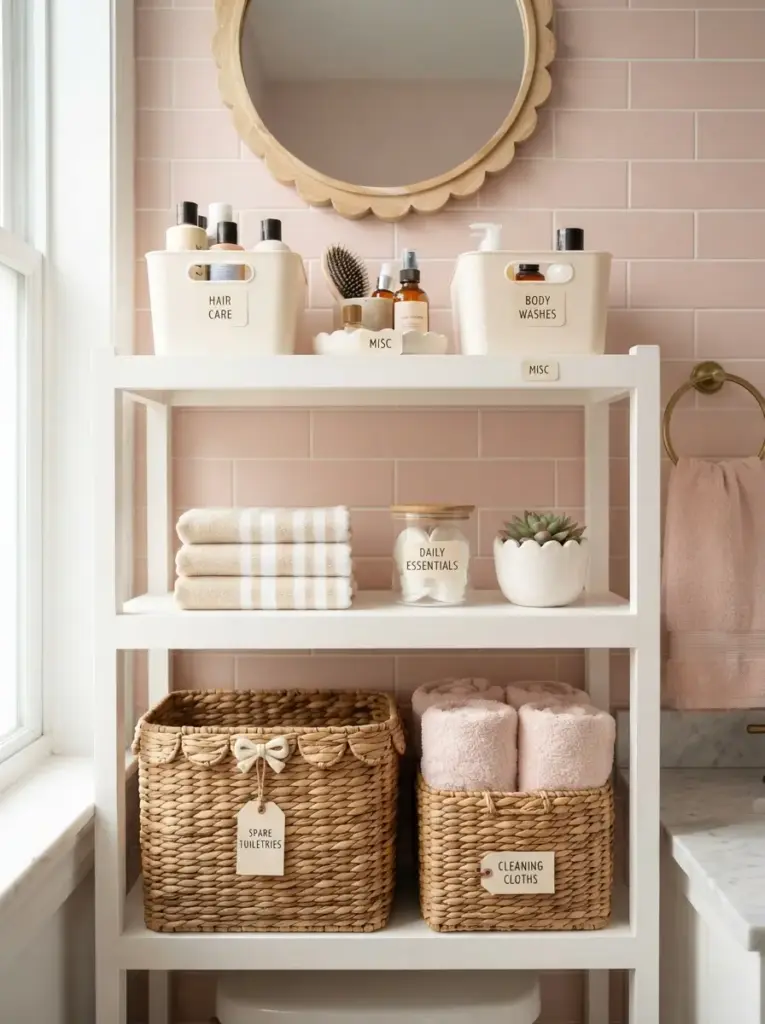
Open shelving looks organised only when stored items follow clear categories. Use one basket for spare toiletries, another for cleaning cloths, and a small stack of towels in matching or related colours. Keep bottles with busy labels inside closed containers. Leave some space between groups so the shelf does not become a solid wall of objects. Woven baskets add warmth, while washable plastic bins suit bathrooms that receive heavy splashing. Labels should be simple, removable, and easy to update.
Orderly shelves work because visible repetition reduces clutter. People who lack a linen cupboard or vanity drawers gain the most from this approach. Fold towels to the depth of the shelf so edges do not hang forward. Place heavier baskets low and lighter items high. Anyone drawn to Girly Apartment Bathroom Decor Ideas can use scalloped baskets, soft pink towels, or a small bow detail, but practical storage should remain the priority. Too many themed accessories can quickly make a small shelf feel crowded.
Refresh hardware without replacing the vanity
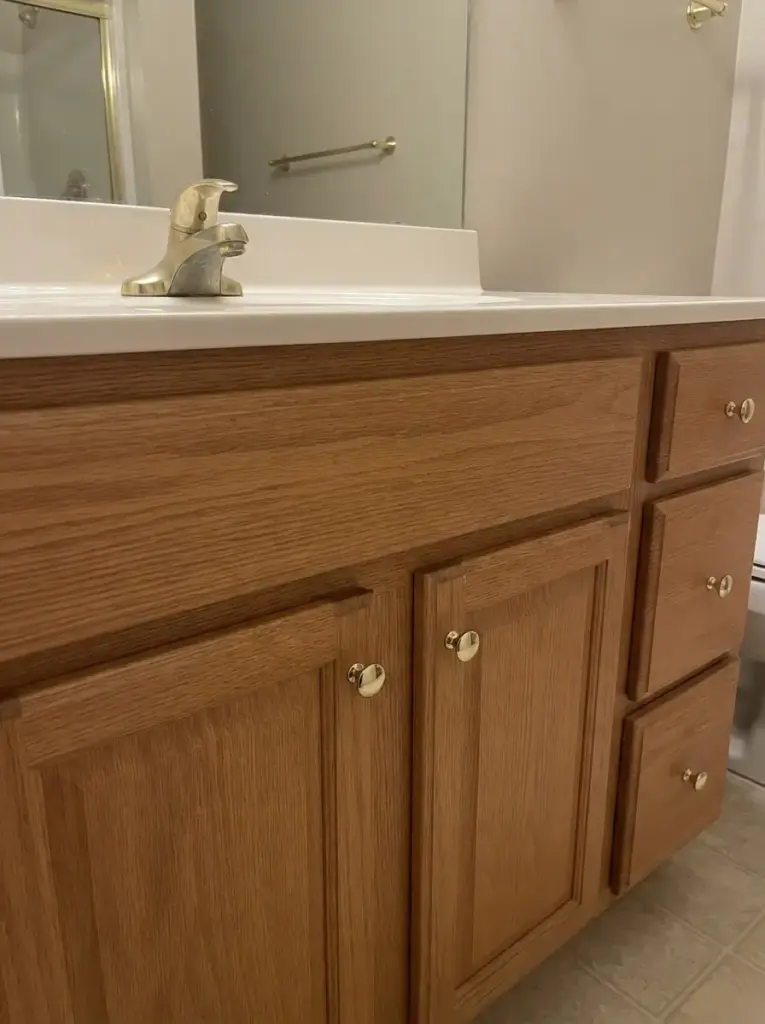
New knobs, pulls, and a toilet-roll holder can update tired fittings for far less than a new vanity. Measure the distance between existing screw holes before shopping so replacements fit without drilling. Matte black, brushed nickel, aged brass, and simple white hardware can all work, but choose one finish that relates to the tap or mirror. Save original rental hardware in a labelled bag and reinstall it before moving. Tighten new fittings gently to avoid damaging thin cabinet doors.
Hardware changes succeed because hands and eyes notice these small pieces every day. Dated vanities, plain flat-pack cupboards, and basic rentals benefit most. Cost stays manageable when you replace only the most visible items rather than every metal detail in the room. Mixing two finishes can work when it looks deliberate, but three or four often feels accidental in a compact space. Luxury Bathroom Decor does not depend on high prices; consistent finish, solid alignment, and clean installation usually matter more.
Create a calm vanity zone with a narrow tray
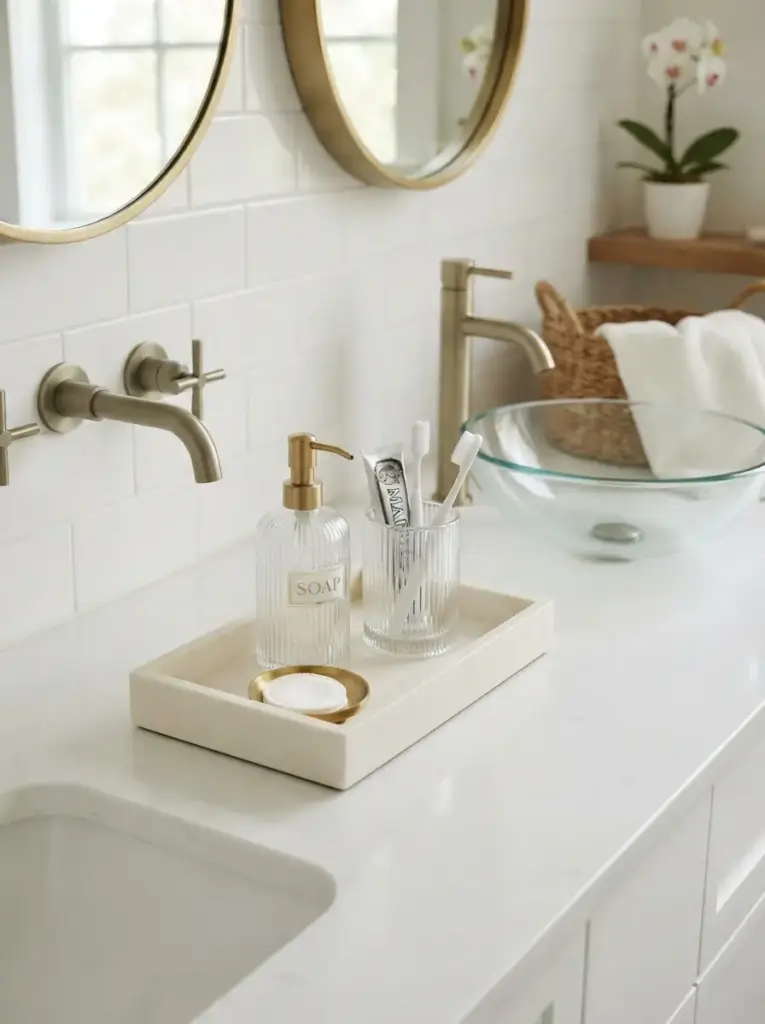
Countertops become easier to manage when daily products sit inside a defined boundary. Choose a tray slightly wider than the soap dispenser and toothbrush holder, leaving enough open surface around the sink. Stone-look resin, enamel, stainless steel, sealed wood, and durable plastic can all work at different budgets. Add only frequently used items. Store backups, medicine, and occasional products elsewhere so the tray does not become another clutter container.
Defined zones help because they turn scattered items into one manageable group. Couples, busy families, and anyone who cleans quickly before guests arrive will appreciate the convenience. Lift the tray, wipe underneath, and return it in seconds. Those interested in Luxury Feminine Bathroom Decor Ideas can choose a soft ivory tray, ribbed glass container, and muted brass detail, then keep the rest of the counter simple. Elegance comes from restraint, clean surfaces, and useful objects rather than a large collection of ornaments.
Add moisture-tolerant greenery in the right place
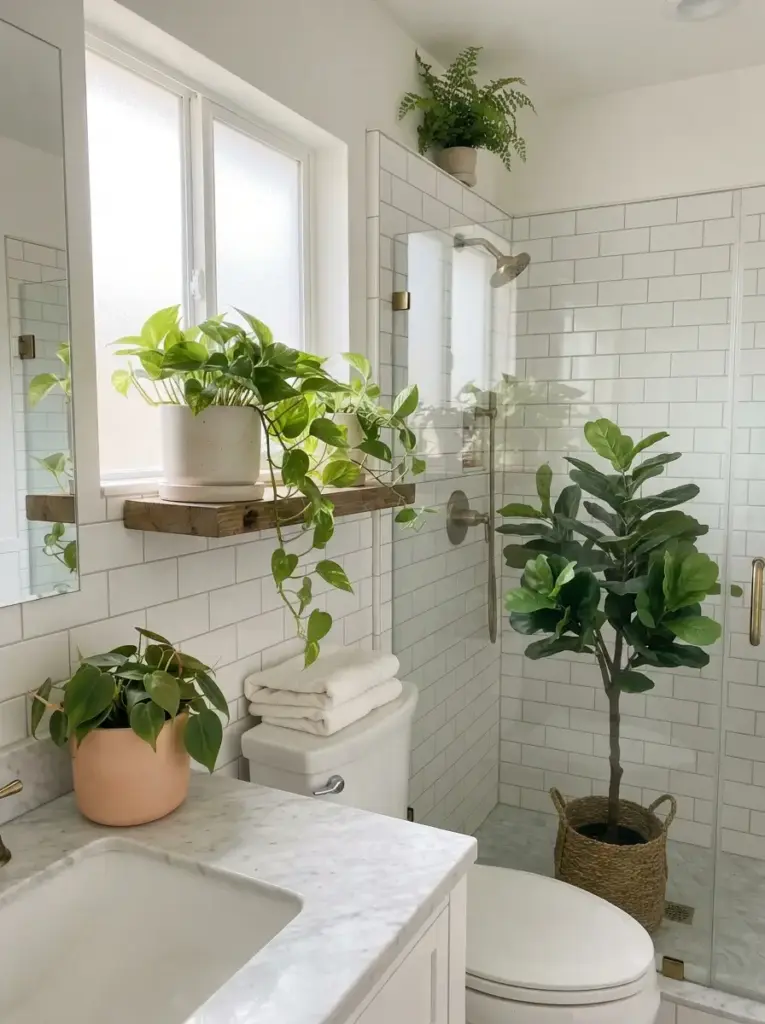
Greenery can soften tile and hard edges, but plant choice must match the actual light. Pothos, heartleaf philodendron, and some ferns may suit humid rooms with indirect daylight, while dark windowless bathrooms usually need a realistic faux plant instead. Set living plants away from direct shower spray and cold draughts. Use a saucer beneath pots to protect shelves, and choose a lightweight container for high ledges. One medium plant normally has more impact than several tiny pots.
Natural shapes help compact bathrooms feel less rigid without adding another strong colour. Windowed bathrooms and neutral schemes benefit most. Beginners should avoid buying plants only because they tolerate humidity; every living plant still needs suitable light, drainage, and care. Dust faux leaves and wipe real foliage so both options stay fresh. Greenery can support Cute Bathroom Decor Ideas, but novelty planters with faces, slogans, and bright colours may compete with other details in a small room.
Common mistakes to avoid in a small bathroom
Overdecorating causes more problems than plain walls. Too many signs, jars, mini shelves, candles, plants, baskets, and framed quotes take up cleaning space and make useful items harder to reach. Select fewer pieces at a larger scale, then leave visible breathing room around them. Decorative objects should not block taps, cover electrical access, sit on the toilet cistern, or create unstable stacks. Every new item should solve a need, support the colour plan, or replace something less suitable.
Ignoring measurements is another frequent mistake. Attractive storage may stop a door from opening, narrow the route to the shower, or prevent a drawer from sliding out. Measure width, depth, height, skirting boards, pipe positions, and clearance around fixtures before ordering. Painter’s tape can mark a shelf or cabinet outline on the wall, helping you judge scale. The decorating plan often fails when people focus on product dimensions but forget how bodies move through the room.
Poor lighting choices can undo careful styling. One cool bulb above the head creates shadows, while an oversized decorative shade may reduce useful light. Aim for even illumination and select fittings approved for the correct bathroom zone. Decorative lamps that are not designed for damp areas should stay out of the bathroom. Mixing warm and cool bulbs can also distort wall colours and make makeup application difficult. Replace bulbs as a set when possible so the room has consistent brightness and temperature.
Choosing materials that dislike moisture leads to swelling, rust, peeling, and unpleasant smells. Unsealed wood, cardboard boxes, untreated wicker, ordinary wallpaper, and low-quality metal may deteriorate quickly. Select washable surfaces, sealed finishes, rust-resistant hardware, and fabrics that dry well. Ventilation still matters even with suitable materials. Run the extractor during bathing and for a period afterwards, or open a window when safe. Decor should never cover vents or restrict airflow.
Copying a theme too literally can make the room age quickly. Coastal style does not require shells on every shelf, and feminine design does not require every surface to be pink. Build the idea through colour, material, and shape instead. Soft pink towels, warm metal, and rounded storage can suggest femininity without becoming overly themed. Pink Bathroom Decor Ideas work best when pink acts as one layer among neutrals rather than the only visual message.
Budget-friendly ways to decorate without wasting money
Start with a fixed spending limit and divide it by function. For a £100 refresh, you might allocate £25 to lighting, £25 to textiles, £20 to storage, £15 to wall decor, and £15 to small accessories. Prices vary, so the exact split matters less than protecting money for practical improvements. Buying five decorative jars before replacing a poor bulb rarely improves the room. Spend first on comfort, safety, storage, and cleaning, then use the remaining amount for personality.
Shop your home before visiting a store. Small trays, framed prints, baskets, jars, hooks, and stools may already exist in another room. Move one item at a time and check whether it handles moisture and fits the scale. A kitchen tray can organise soap, while a bedroom basket may hold spare towels if it stays dry. Repurposing saves money and reduces random purchases, but avoid bringing paper, delicate fabrics, or valuable wood into a damp area.
Second-hand shopping works especially well for mirrors, frames, solid stools, metal shelves, and decorative containers. Inspect each item for rust, mould, loose joints, sharp edges, and water damage. Clean thoroughly, repaint when appropriate, and avoid used soft furnishings that cannot be washed properly. Compare the final cost of paint and repairs with the price of a new budget piece. Bargains only help when the item remains safe, durable, and suitable for the room.
Buy matching items gradually rather than purchasing a complete themed set. One towel colour can appear in a bath mat now and a print later. Keep a note on your phone with the chosen colours, measurements, and finish names. Photos taken in natural light can help you compare shades while shopping. Keep receipts until every item has been tested in place, because colours, scale, door clearance, and storage capacity often feel different at home than they did in the shop or showroom. Small Bathroom Decor becomes more affordable when each new piece fits the existing plan and does not force you to replace other items.
Prioritise removable improvements in rentals. Adhesive hooks, tension shelves, over-door organisers, washable curtains, freestanding carts, and peel-and-stick products can add function without major alteration. Read weight limits and surface instructions, then test removable adhesive in a hidden area. Store original fittings carefully if you replace knobs or showerheads with permission. Rental-friendly does not mean damage-free in every situation, so document existing marks and follow the tenancy agreement.
Small Bathroom Decor tips for a balanced finish
Repeat each main colour at least twice. A sage towel can connect with a green print, while a black mirror can relate to black hooks or a slim shelf bracket. Repetition makes a room feel deliberate without requiring identical sets. Keep the strongest colour on items that are easy to replace, especially in a rental or first home. Fixed surfaces should guide the palette rather than compete with it.
Vary shapes to prevent the room from feeling rigid. Rounded mirrors, curved hooks, oval trays, and soft towels can balance square tiles, straight shelving, and boxy vanities. Shape contrast matters more than collecting many objects. One round mirror above a rectangular sink may provide enough softness. Too many circles or scalloped edges can become another theme, so use them selectively.
Protect space as carefully as storage space. Clear floor area makes cleaning easier and helps the bathroom feel more open. Wall-mounted or narrow furniture often works better than wide freestanding units. Leave part of each shelf empty and avoid filling every corner simply because it exists. Visual rest gives useful objects more impact and allows the room to function comfortably.
Keep everyday routines in mind. Store toilet paper near the toilet, towels near the shower, skincare near the mirror, and cleaning products where adults can reach them safely. Good styling supports movement rather than creating obstacles. Apartment Bathroom Decor Ideas become genuinely useful when they solve repeated annoyances such as wet towels, crowded counters, weak lighting, or nowhere to place spare supplies.
Frequently asked questions
How can I make a small bathroom look bigger on a low budget?
Use a lighter shower curtain, one large mirror, consistent lighting, and fewer visible objects. Keep the floor as clear as possible and place storage vertically rather than adding wide furniture. Matching towels and containers can reduce visual clutter. Pale colours may help, but strong colour can still work when it stays controlled and repeated. Clean grout, polished mirrors, and uncluttered counters also improve brightness without requiring new fixtures.
Which colours work best in a tiny bathroom?
Warm white, cream, pale blue, sage, soft grey, beige, and muted blush are easy starting points. Dark navy, forest green, or charcoal can also work on one wall or vanity when lighting is good. Match the undertone to existing tile and fixtures. Cream tile usually prefers warm colours, while bright white tile can handle cooler shades. Limit the palette to two main colours plus one small metal finish.
How do I use Small Bathroom Decor in a rental?
Choose removable hooks, tension rods, over-door storage, freestanding carts, washable textiles, and artwork hung with landlord-approved methods. Keep original hardware when changing knobs or shower fittings with permission. Avoid drilling into tile, covering ventilation, or using adhesive on unstable paint. Test removable products carefully and photograph the room before changes. Practical pieces that can move to the next home usually offer the best value.
What should I buy first for a first-home bathroom?
Start with essentials that support daily routines: a shower curtain and liner if needed, non-slip bath mat, towels, toilet brush, bin, soap dispenser, storage basket, cleaning supplies, and suitable bulbs. Add decor after those basics have clear places. A mirror, shelf, or rolling cart may be worth buying early when storage is limited. Decorative objects should come last because they rarely solve the room’s biggest problems.
Can a small bathroom include luxury-style details cheaply?
Yes, but focus on finish and consistency rather than imitation marble on every surface. Matching hardware, warm lighting, thick towels, a clean tray, one large mirror, and neatly stored products can create a more refined room. Avoid too many metallic accessories or highly reflective finishes. Luxury Feminine Bathroom Decor Ideas feel more convincing when soft colour, curved shapes, and practical organisation appear in a restrained way.
How many decorative items should a small bathroom have?
No fixed number suits every room, but each surface should keep enough clear space for use and cleaning. One artwork, one plant, one tray, and coordinated textiles may be enough. Count visible groups rather than individual objects. Five bottles inside one basket read as one group, while five bottles spread across a counter read as clutter. Remove one item whenever a shelf or vanity starts feeling difficult to clean.
Conclusion
Thoughtful bathroom decorating depends more on editing than spending. Start with the room’s real problems, choose a simple palette, measure before buying, and add storage where it supports daily habits. Lighting, mirrors, textiles, hooks, shelves, and organised containers usually provide more value than purely decorative objects. Rental-friendly options can still feel personal when colour and materials repeat in a controlled way.
Small Bathroom Decor should make the room easier to use, not only nicer to photograph. Begin with one or two affordable changes, observe how they affect the space, then continue gradually. A lighter curtain, better bulb, useful hook, or narrow tray may be enough to improve the routine immediately. Careful choices will help a compact bathroom feel organised, comfortable, and suited to the people who use it every day.