
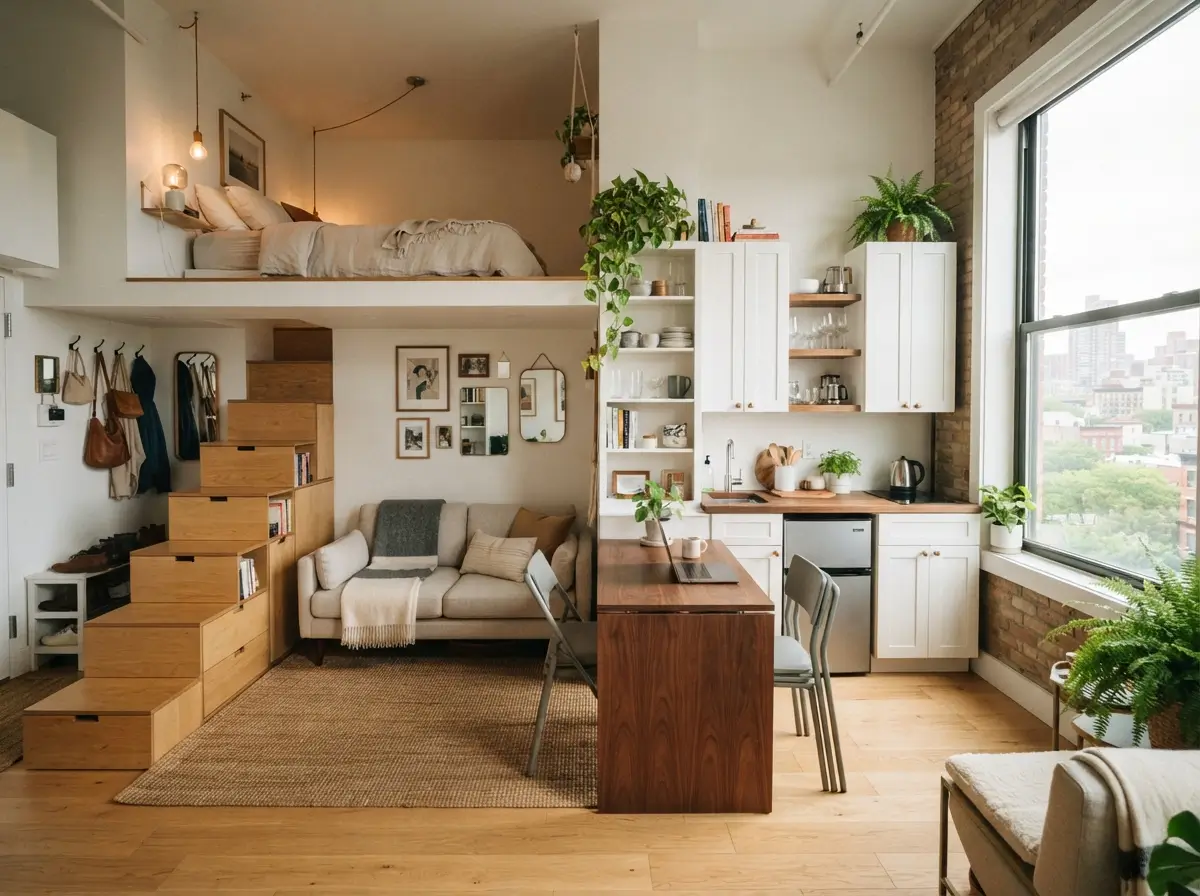

Living in a Tiny Apartment can be challenging when every piece of furniture, storage item, and decoration competes for limited space. However, small homes often become the most comfortable when they are designed with intention. The size of a room does not decide how enjoyable it feels. Thoughtful layouts, practical furniture choices, and smart organisation can completely change the way you experience your home.
Many beginners make the mistake of treating small spaces like smaller versions of large houses. They buy oversized sofas, wide dining tables, and decorative pieces without considering movement or daily habits. A compact home needs a different approach where every item should provide value. Furniture should support your routine, storage should reduce stress, and decoration should add personality without creating clutter.
A well-planned Tiny Apartment can include everything you need, from a comfortable sleeping area to a productive workspace and a welcoming place for guests. The key is understanding how your space works and making decisions based on your lifestyle rather than following trends that do not suit your home.
Small-space decorating is especially important for renters, students, couples, and first-time homeowners who want their homes to feel personal without spending excessive money. With the right strategies, limited square footage can become an advantage because it encourages better organisation and more thoughtful choices.
How can you make a Tiny Apartment feel bigger and more functional?
A small home feels more spacious when furniture placement, storage solutions, lighting, and colours work together. The goal is not to make the apartment look empty but to create enough breathing room for comfortable movement and everyday activities.
People living in compact homes should begin by understanding how they use each area. Someone who works remotely may need a dedicated desk space, while someone who enjoys cooking may need better kitchen organisation. Personal habits should guide the design decisions.
Simple improvements such as replacing bulky furniture with compact alternatives, using vertical storage, and introducing layered lighting can create noticeable changes. These ideas help your home feel organised while keeping it practical for daily life.
Choose Multi-functional Furniture That Saves Space
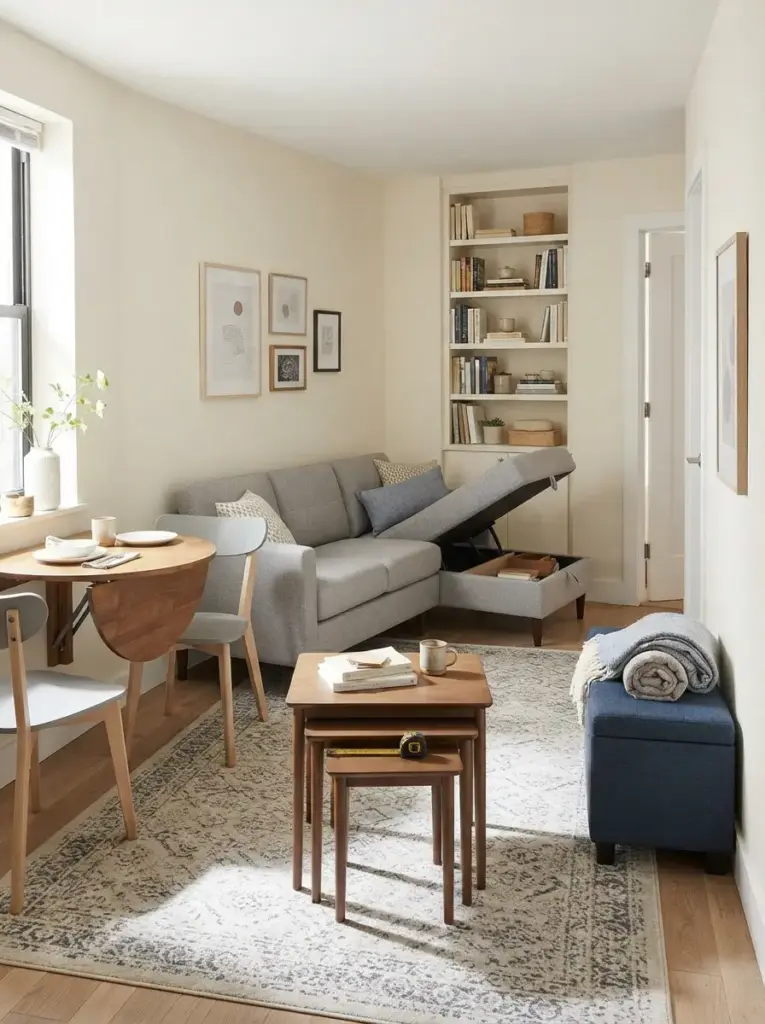
Furniture selection plays one of the biggest roles in making a small home comfortable. Large furniture pieces may appear luxurious in showrooms, but they often create problems when placed inside compact rooms. They reduce walking space and make the apartment feel crowded.
Multifunctional furniture solves this problem by allowing one item to serve several purposes. A sofa bed can work as a relaxing seating area during the day and become a guest sleeping space at night. A storage ottoman can provide extra seating while hiding blankets, books, or seasonal items.
This approach works especially well for people moving into their first apartment because it reduces the number of items they need to purchase. Instead of buying separate furniture pieces for every purpose, they can select flexible options that adapt as their needs change.
For example, a small living room may benefit from a narrow sofa with hidden storage instead of a large sectional. A foldable dining table can provide eating space without permanently occupying the centre of the room. Nesting tables can replace a large coffee table because they can be separated when guests arrive and stacked away when extra floor space is needed.
Many Small Apartment Ideas focus on choosing fewer but more useful furniture pieces. A carefully selected chair, table, or cabinet often provides more value than several decorative items that take up unnecessary space.
Furniture proportions also matter. Before buying anything, measure your room, doorways, and available walking paths. A comfortable layout should allow people to move naturally without squeezing between furniture. Leaving open pathways creates a sense of space even when the actual room size is limited.
Use Vertical Storage to Keep Floors Clear
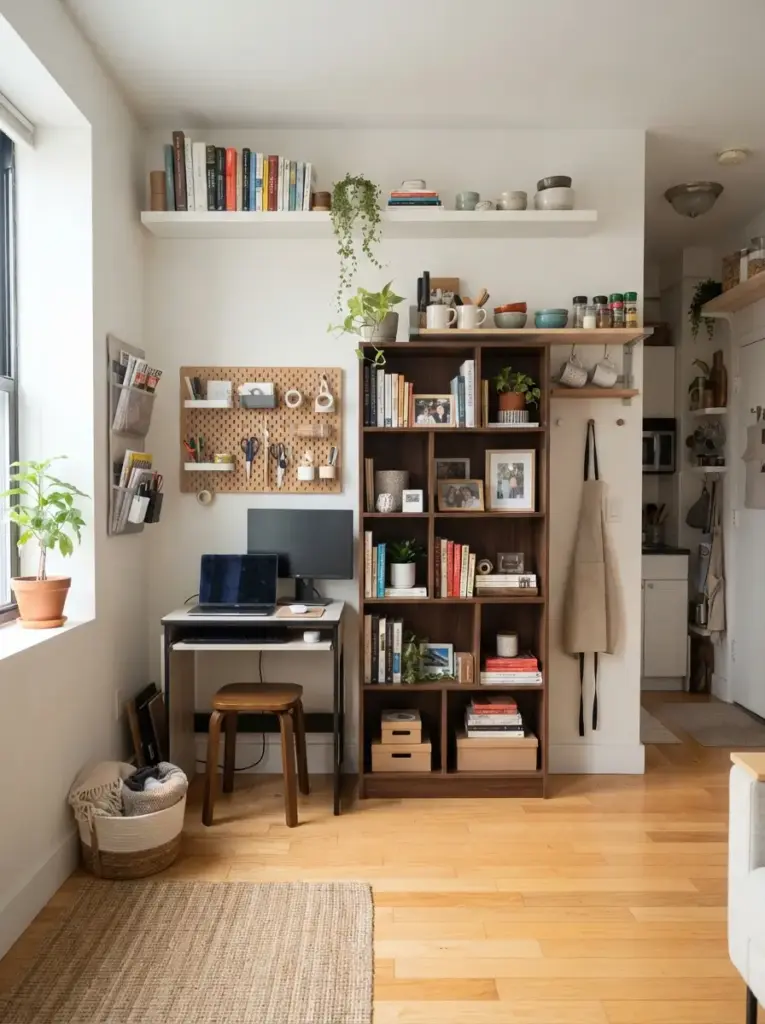
One of the biggest mistakes people make in small homes is ignoring wall space. Floors become crowded quickly when everything is stored at ground level. Vertical storage allows you to organise belongings while keeping important walking areas open.
Floating shelves, tall bookcases, wall-mounted cabinets, and pegboards can transform unused walls into practical storage areas. These solutions work well in kitchens, bedrooms, bathrooms, and workspaces.
A small kitchen with limited cabinets can benefit from open shelving for everyday dishes and cooking supplies. A bedroom wall can hold books, plants, and personal items without needing another bedside cabinet. A workspace can use vertical organisers to keep stationery and documents within reach.
Rental homes can also benefit from temporary storage solutions. Removable hooks, freestanding shelves, and over-door organisers provide extra storage without permanent changes. These options are useful for tenants who want better organisation without damaging walls.
The key is maintaining balance. Filling every wall with shelves and objects can make the room feel busy. Choose specific areas for storage and keep some empty wall space to create visual calm.
People searching for Micro Apartment Ideas often find vertical organisation especially useful because very small homes have limited floor space. Moving storage upward allows the apartment to remain functional without feeling overloaded.
Create Separate Areas Without Adding Walls
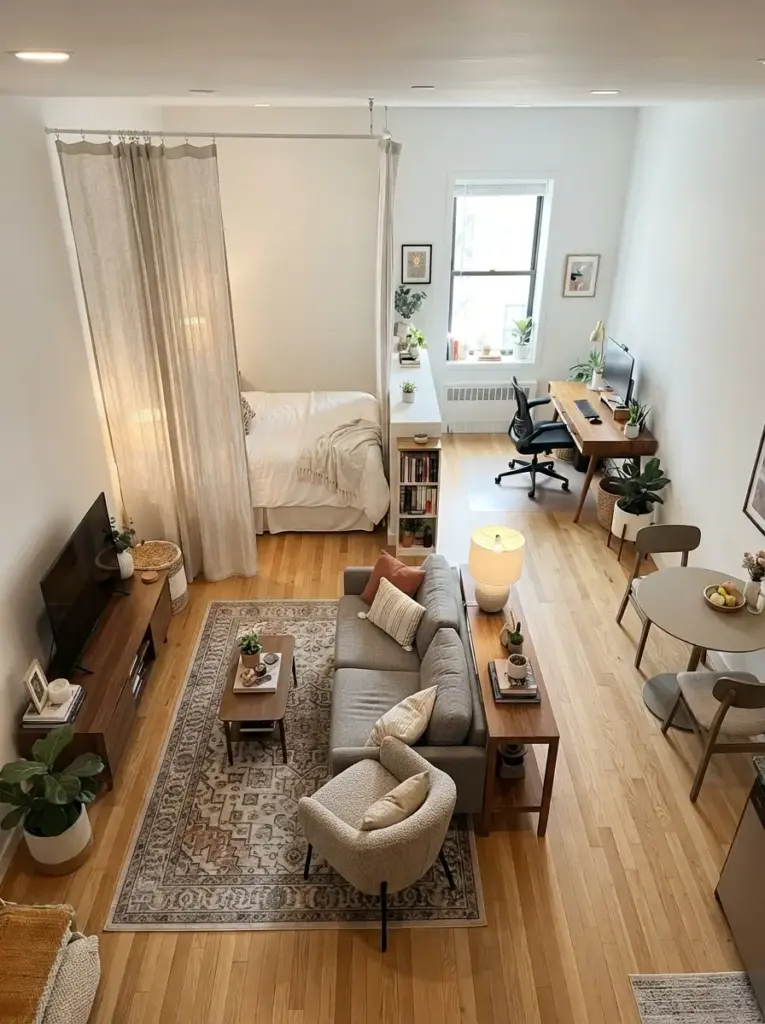
Many compact apartments combine sleeping, working, dining, and relaxing areas into one open space. Without proper organisation, these rooms can feel confusing because every activity happens in the same place.
Creating separate zones helps define the purpose of each area. You do not need expensive renovations or permanent walls. Simple design techniques can create clear boundaries while keeping the apartment open.
A rug under a sofa can define the living area. A small bookshelf can separate a sleeping corner from the rest of the room. A desk near a window can create a dedicated workspace. Even different lighting choices can help your brain recognise that each area has a specific function.
People interested in One Room Apartment Decor should focus on zoning because a single room often needs to perform several jobs. A sleeping area should feel peaceful, a workspace should encourage concentration, and a dining corner should feel separate from relaxation areas.
For example, a studio apartment may use a curtain divider between the bed and living area. A tall plant stand can create a softer separation without blocking light. A narrow console table behind a sofa can act as a subtle boundary between different zones.
This method works because it improves the flow of the home. When each area has a clear purpose, the apartment feels more organised and easier to maintain.
Use Light Colours and Layered Lighting to Open the Space
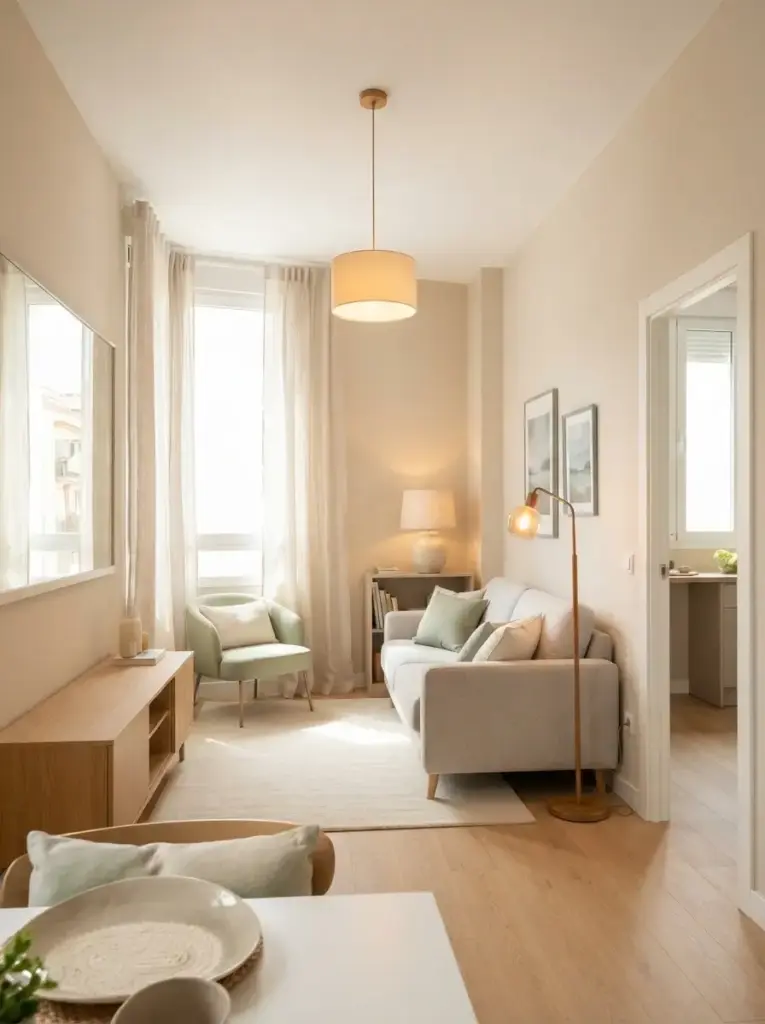
Colour and lighting have a strong influence on how a small home feels. While paint cannot physically increase the size of a room, the right choices can make walls feel lighter and create a more open atmosphere.
Many small homes benefit from soft neutral colours such as warm white, beige, light grey, pale green, and muted blue. These shades reflect natural light and create a calmer background for furniture and decoration. Pure white can work well, but warmer tones often make compact spaces feel less cold and more comfortable.
Using one consistent colour palette throughout the apartment also improves visual flow. When every room connects through similar shades, the eye moves smoothly from one area to another instead of stopping at strong colour changes.
Lighting is equally important. A single ceiling light often creates flat shadows and makes corners feel darker. Layered lighting creates more depth by combining different sources for different purposes.
For example, a living room may use a ceiling light with a warm 2700K bulb, a floor lamp beside the sofa, and a small table lamp near a reading area. A workspace may require a brighter 3500K–4000K task light to reduce eye strain during focused activities.
Natural light should also be used carefully. Avoid blocking windows with tall furniture or heavy curtains. Lightweight curtains allow sunlight to enter while maintaining privacy.
This approach is especially useful for renters because paint and lighting upgrades can dramatically improve a home without expensive renovations.
Create a Comfortable Dining Area in Limited Space
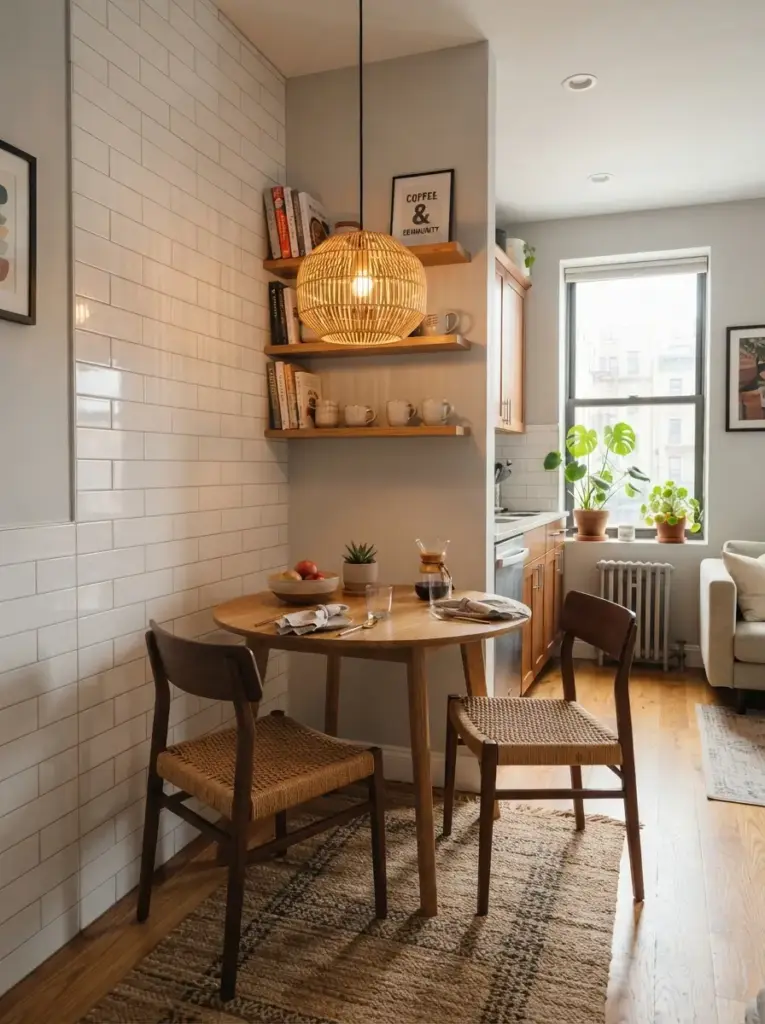
Many people believe a proper dining area is impossible in a small home, but thoughtful planning can create a practical eating space even in compact layouts. The key is choosing furniture that matches the available area rather than trying to recreate a large dining room.
Tiny Apartment Dining Nook Ideas often focus on unused corners, narrow walls, or areas near windows. A small round table with two chairs can provide a comfortable place for meals without making the room feel crowded.
Wall-mounted tables are another useful option. They can remain folded when not needed and open during meal times. Drop-leaf tables provide similar flexibility because they can expand when guests arrive.
A built-in bench or storage seat can also improve efficiency. The seating area can hold kitchen supplies, blankets, or rarely used items underneath.
For example, a narrow kitchen corner could include a wooden wall-mounted table, two slim chairs, and a warm pendant light above the eating area. This creates a defined dining space without taking away valuable movement space.
This idea works best for couples, individuals who enjoy eating away from the sofa, and remote workers who want separation between meals and work. Even a small dining corner can make an apartment feel more complete when it is designed around real daily habits.
Make the Bedroom Work Harder With Smart Storage
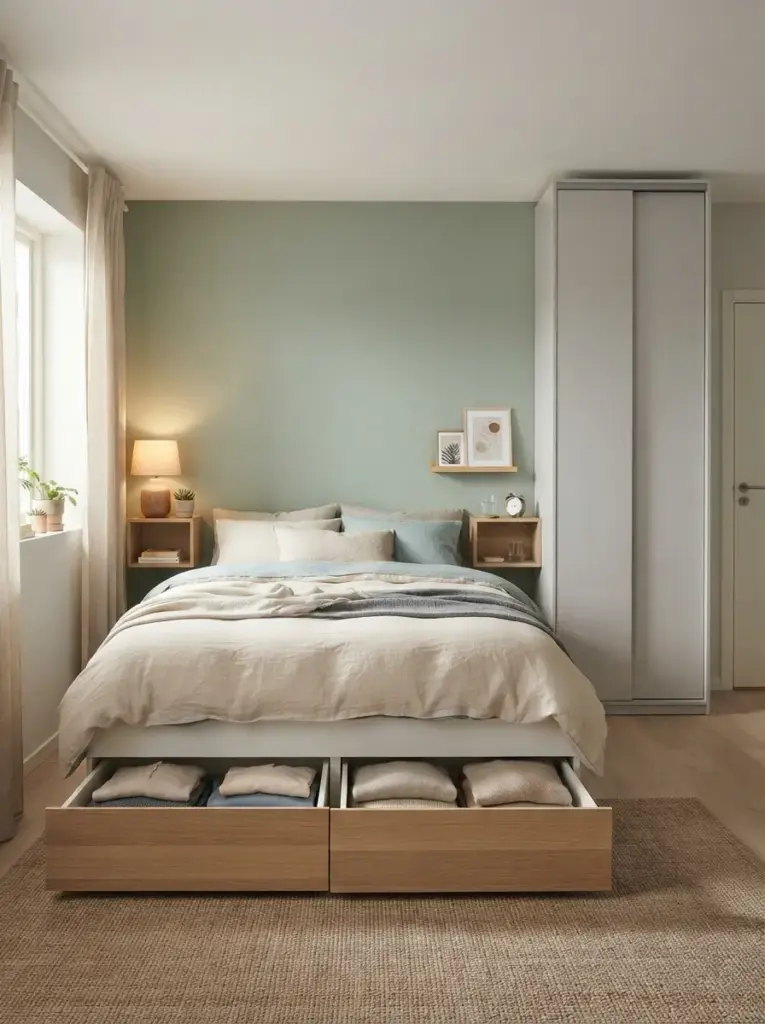
Bedrooms in small homes often struggle with limited storage because the bed occupies a large percentage of the available floor area. The solution is not always buying a larger wardrobe. Better organisation can help the room feel more comfortable.
Storage beds are one of the most practical options for compact bedrooms. Drawers underneath can store clothing, shoes, bedding, or seasonal items. This removes the need for additional storage furniture that takes up walking space.
Bedside areas can also be improved. Instead of large bedside tables, consider floating shelves or narrow wall-mounted units. These provide space for books, lamps, and personal items without creating unnecessary bulk.
Wardrobe selection matters too. Sliding doors usually work better than traditional doors because they require less clearance when opened. Tall wardrobes also make better use of vertical space.
People who live in smaller homes often benefit from keeping the bedroom simple. Too many decorative items, large chairs, or unnecessary furniture can reduce comfort.
The best bedroom layout usually includes only essential pieces that support relaxation and organisation. A comfortable bed, useful storage, suitable lighting, and enough walking space create a better environment than a crowded room filled with furniture.
Build a Small but Effective Home Workspace
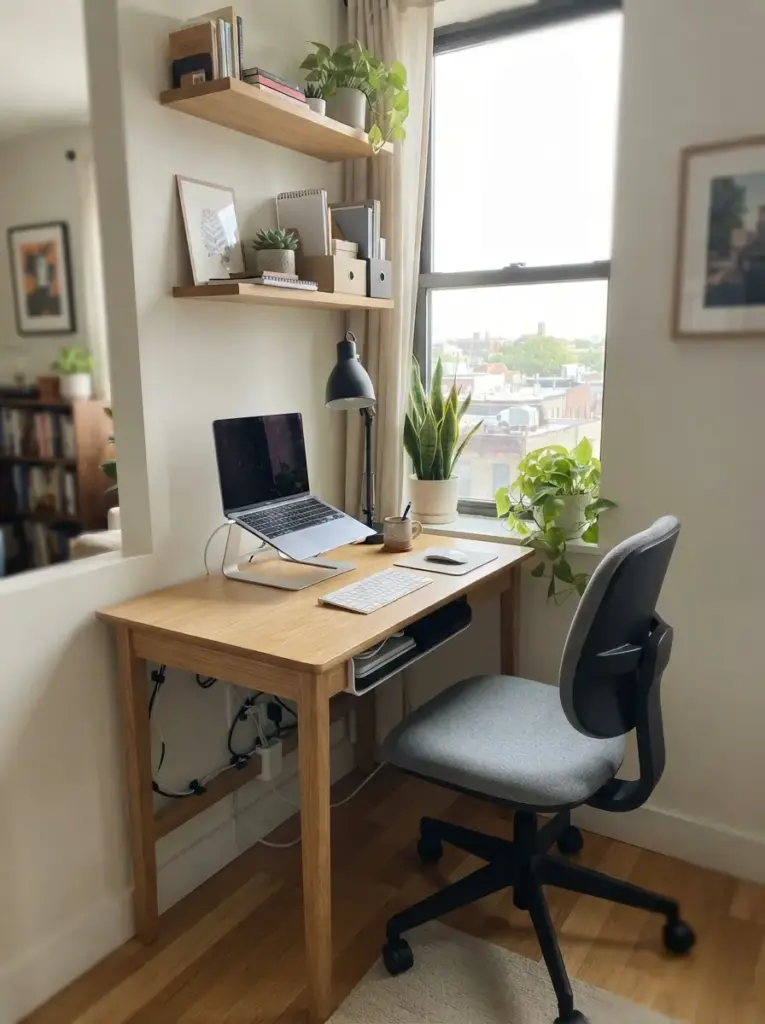
Working from home requires a dedicated area where possible, but many compact apartments do not have enough room for a traditional office. A smart workspace design can solve this problem without sacrificing living space.
Small Apartment Desk Setup Ideas focus on creating productive corners using compact furniture and organised storage. A narrow desk near a window can provide natural light while taking up minimal space.
Wall-mounted desks are excellent for very small homes because they can fold away after work hours. A slim console table can also work as a temporary workspace when paired with a comfortable chair.
The chair choice is important. Many people focus on the desk but ignore posture and comfort. A compact ergonomic chair can improve productivity without requiring a large office setup.
Cable management also matters in small spaces. Visible wires can quickly make an apartment look messy. Cable clips, under-desk organisers, and wireless accessories can create a cleaner appearance.
A simple workspace may include a small wooden desk, adjustable lamp, laptop stand, and one or two shelves above the desk for storage.
This idea is best for students, freelancers, remote employees, and anyone who needs a reliable place for focused work.
Use Mirrors to Add Depth and Reflect Light
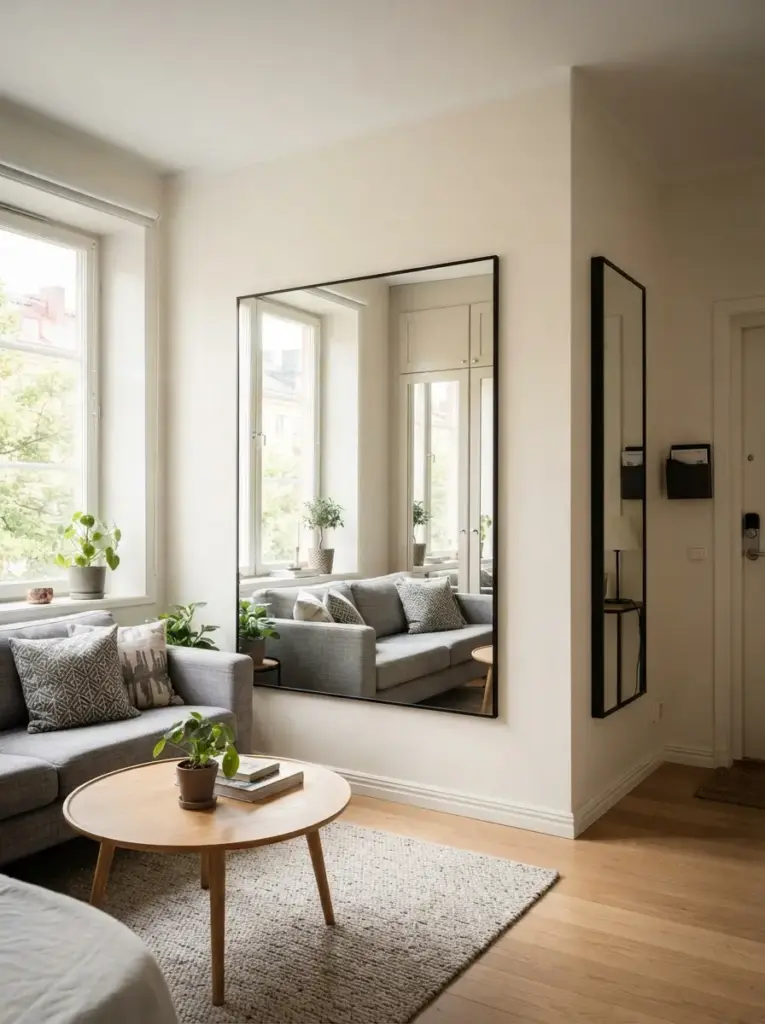
Mirrors are one of the easiest ways to improve the feeling of space in a compact home. They do not add actual square footage, but they can create the impression of a brighter and more open room.
Placement is more important than quantity. A large mirror opposite a window can reflect natural light and make a room appear brighter. A tall mirror near an entrance can create the feeling of extra height.
Many beginners make the mistake of adding multiple small mirrors without considering the overall design. One carefully positioned mirror often creates a stronger effect than several random pieces.
Mirrors can also be practical. Wardrobe doors with mirror panels combine storage and decoration. A bathroom mirror with built-in shelves can provide extra function in limited areas.
People living in darker apartments especially benefit from mirrors because they help distribute available light throughout the room.
The best results come from using mirrors as part of the overall layout rather than treating them as simple decorations.
Create a Baby Corner Without Needing a Full Nursery
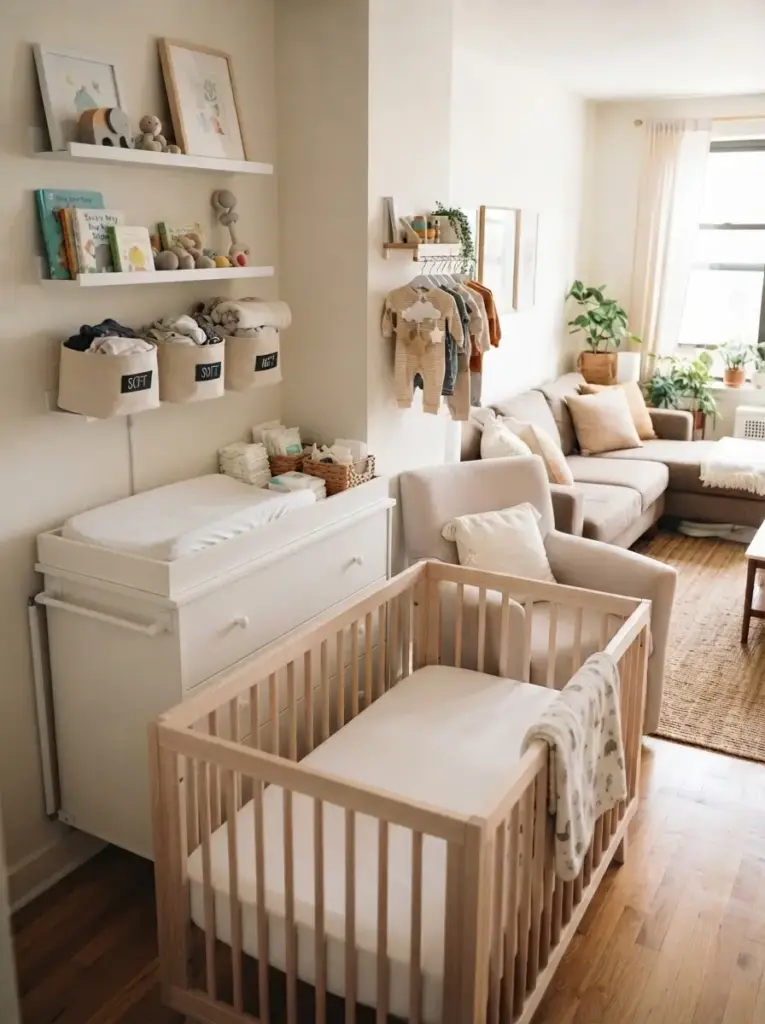
Small homes can still provide a comfortable and safe space for a baby. A separate nursery room is helpful, but it is not necessary for creating an organised baby area.
Tiny Apartment Baby Nursery Decor focuses on flexibility, safety, and smart storage. A compact crib, changing station, and organised storage baskets can create a practical baby corner within a bedroom or living area.
Multi-purpose furniture is especially valuable for growing families. A changing table that later becomes a regular storage cabinet can continue being useful after the child grows.
Wall shelves can store baby essentials such as books, blankets, and small toys while keeping the floor clear. Soft storage baskets allow parents to quickly organise items during busy days.
Safety should always be the priority. Furniture should be secured properly, electrical cords should remain out of reach, and sleeping areas should not become overcrowded.
This approach works well for new parents living in city apartments or smaller homes where every area needs to serve multiple purposes.
Turn Unused Corners Into Functional Spaces
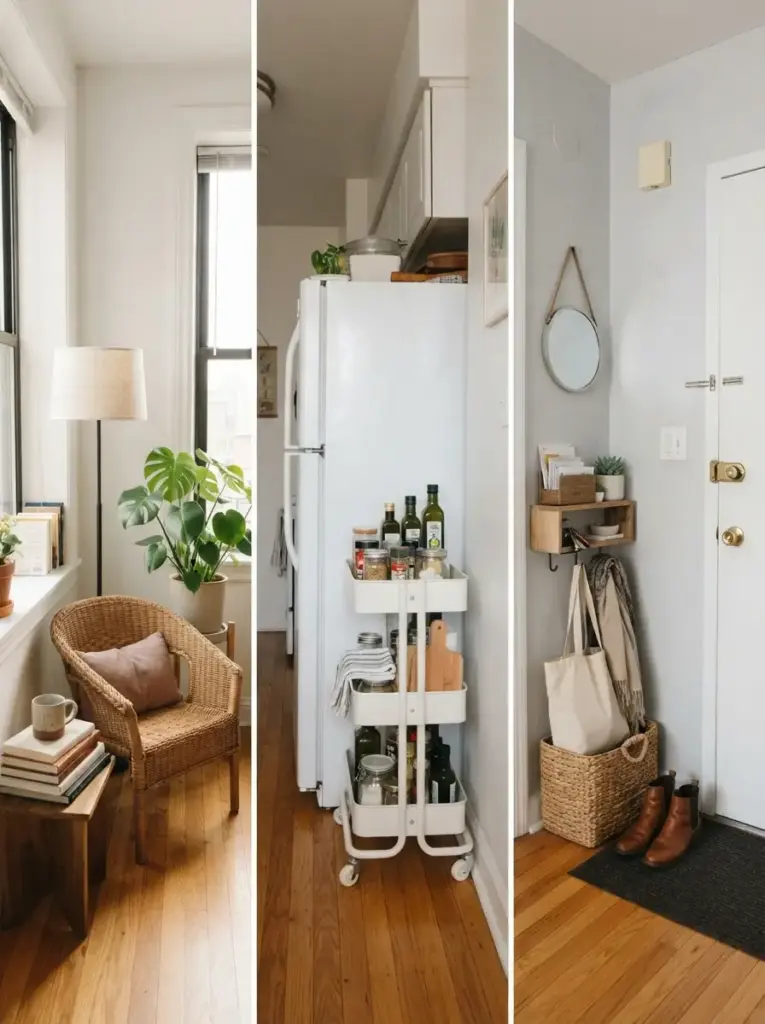
Small apartments often contain forgotten corners that become storage piles or empty areas with no clear purpose. Instead of ignoring these spaces, consider how they can support your daily routine.
A narrow corner beside a window can become a reading area with a small chair and floor lamp. The space beside a refrigerator can hold a slim rolling cart for kitchen supplies. A corner near the entrance can become a useful drop zone for keys, bags, and shoes.
The best corner solutions are usually simple. A tall shelf can provide storage without taking much floor space. A small cabinet can hide household items that would otherwise create clutter. A plant stand can add greenery without taking over the room.
People living in compact homes benefit from viewing corners as opportunities rather than limitations. Every area does not need to become a decorative display, but useful spaces should not be wasted.
The important part is keeping the solution proportional. Large corner furniture can make the area feel heavier, while slim pieces maintain openness.
Create a Compact Home Workout Area
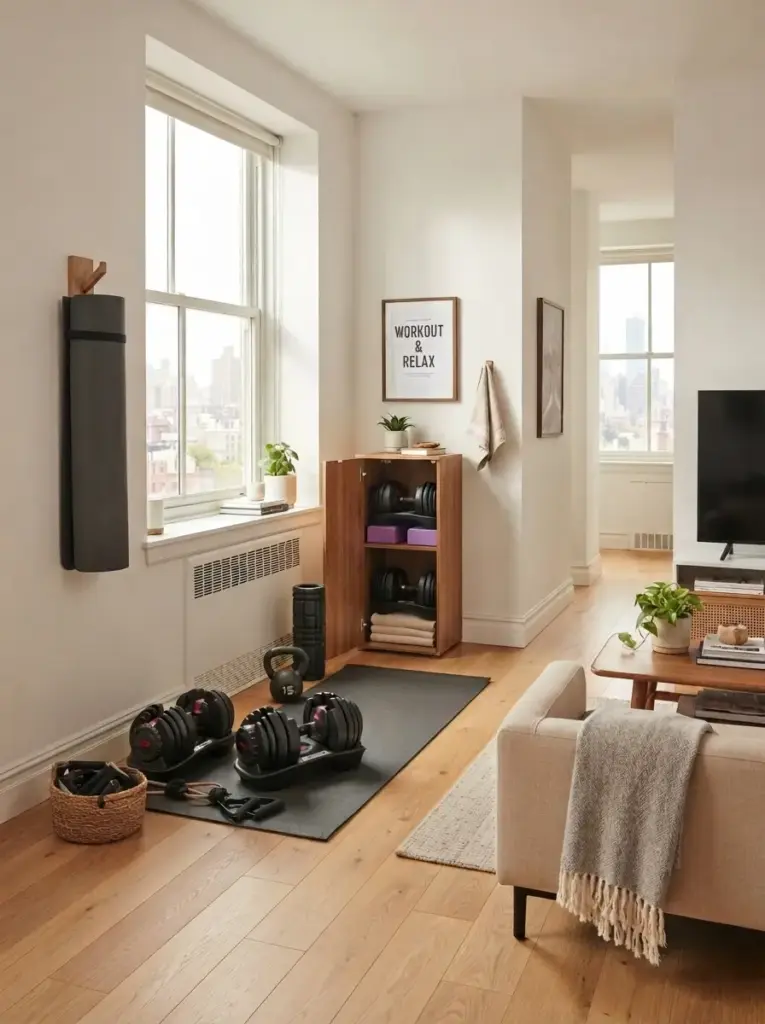
Having a small home does not mean you need to give up your fitness routine. A dedicated workout room may not be realistic, but a carefully organised corner can provide enough space for regular exercise.
An Apartment Gym Setup works best when it focuses on equipment that matches your actual routine. Buying too many fitness products can quickly create storage problems.
Simple equipment choices often work well in compact homes. Resistance bands, yoga mats, adjustable dumbbells, and foldable exercise benches can support many workouts without requiring much space.
Storage planning makes the biggest difference. Equipment left around the apartment can make the home feel messy, so create a specific storage location.
For example, a small basket can hold resistance bands and workout accessories. Wall hooks can store mats vertically. Adjustable weights can fit inside a cabinet when not being used.
This idea is ideal for people who prefer exercising at home, have busy schedules, or want to avoid gym memberships. The focus should be creating a convenient system that encourages regular use.
A good workout area should disappear when needed. Your living room should still feel like a relaxing place after exercise, not a permanent fitness studio.
Organise a Small Laundry Area Efficiently
Laundry spaces are often overlooked when decorating small homes, but poor organisation can quickly create unnecessary clutter. Even without a separate laundry room, you can create a practical system.
Small Apartment Laundry Corner Ideas focus on using compact storage and keeping supplies organised. A slim rolling cart beside the washing machine can hold detergent, fabric softener, cleaning products, and small laundry accessories.
Apartments without dedicated laundry areas can benefit from hidden storage solutions. Laundry baskets can fit inside cabinets, behind doors, or beneath counters. Foldable drying racks are also useful because they can be stored away when not needed.
Wall-mounted shelves provide additional storage without reducing floor space. Matching containers can make everyday items look more organised and easier to access.
People living in rented apartments especially benefit from these ideas because they improve functionality without requiring permanent changes.
A well-organised laundry corner saves time and reduces visual clutter. Small improvements can make regular household tasks feel easier.
Add Greenery Without Overcrowding the Home
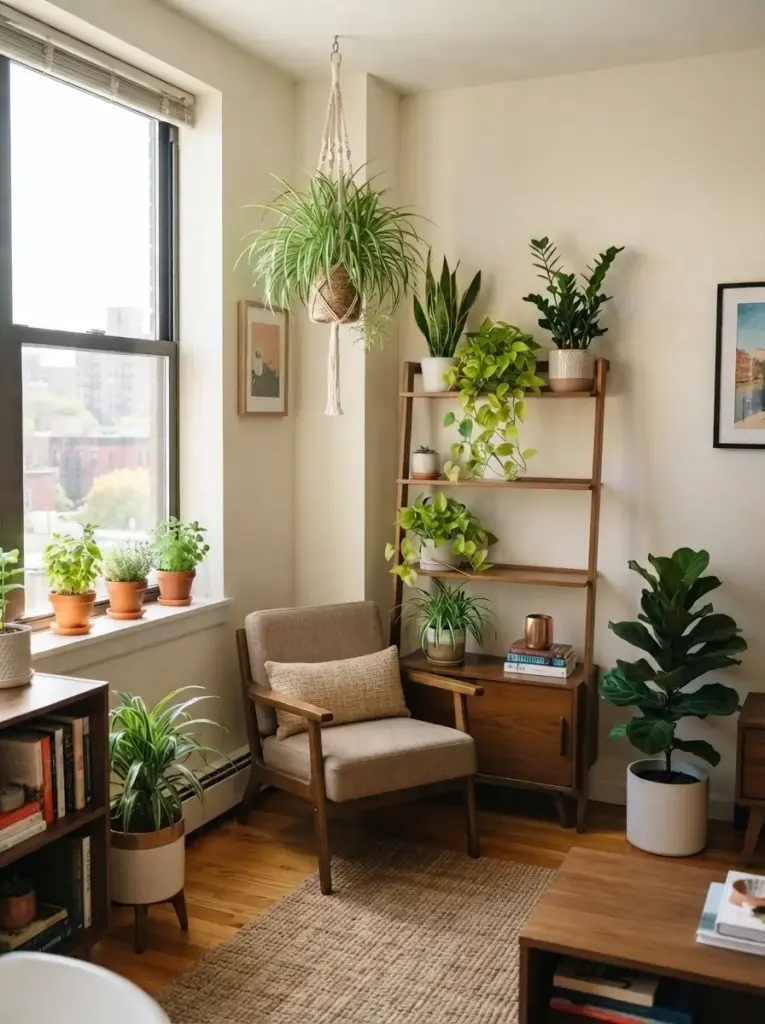
Plants can bring freshness and personality into a small apartment, but choosing the right amount matters. Too many large plants can reduce available space and increase maintenance.
Small homes usually benefit from compact plants placed strategically. A hanging plant can add greenery without using floor space. A small plant on a shelf can create interest without overwhelming the room.
Consider the lighting conditions before choosing plants. Some areas receive direct sunlight while others need low-light varieties.
Good options for many indoor spaces include:
- Snake plants
- Pothos
- Spider plants
- Small herbs near kitchen windows
People with busy routines should choose plants that match their lifestyle. A few healthy plants create more impact than many neglected ones.
Plants also work well as natural decoration because they add colour without creating clutter. They can soften shelves, brighten corners, and make the apartment feel more connected to nature.
Improve the Entryway With Simple Organisation
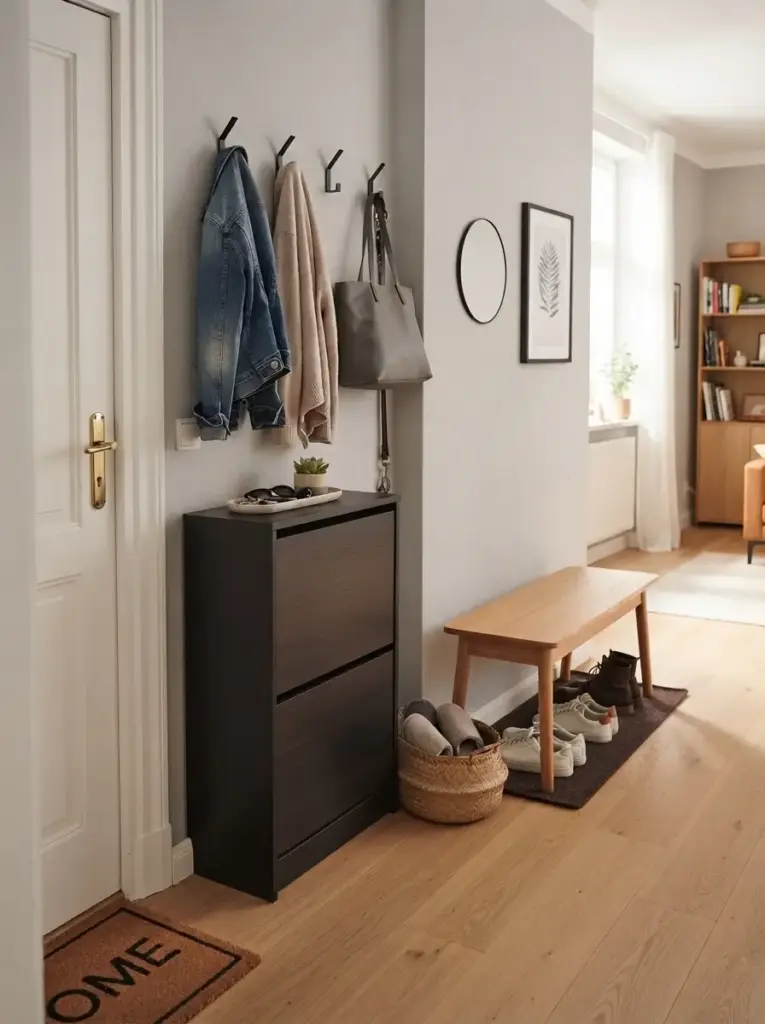
The entrance area is often the first part of a home people see, yet small apartments frequently have limited entry space. Without organisation, shoes, bags, and jackets can quickly create a messy appearance.
Creating a simple entry system helps maintain order. A slim shoe cabinet can replace piles of footwear near the door. Wall hooks can hold coats and bags without taking floor space.
A small tray near the entrance can provide a place for keys and everyday items. A narrow bench can provide seating while storing shoes underneath.
These improvements are especially helpful for busy households because they create a clear location for frequently used items.
People often ignore entryways because they focus on living rooms and bedrooms. However, a well-organised entrance can make the entire apartment feel cleaner.
The best entryway designs are practical rather than decorative. Every item should have a purpose and support daily routines.
Add Personal Style Through Meaningful Decoration
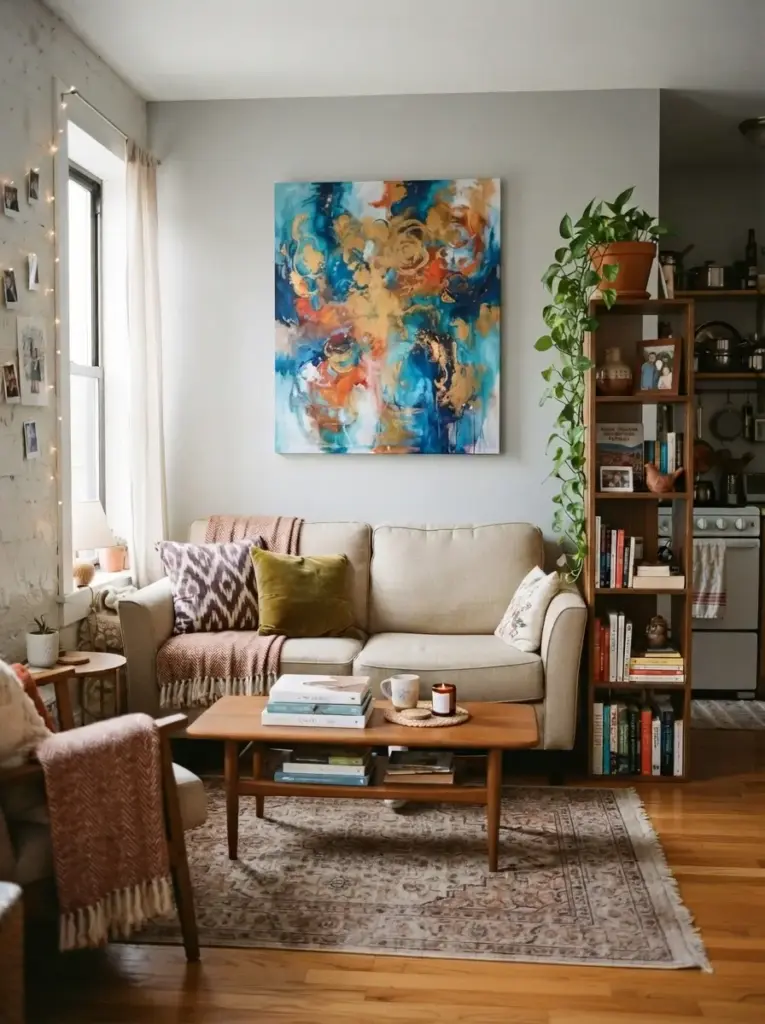
A small home should still reflect your personality. Limited space does not mean you need to avoid decoration completely. It simply means every decorative item should be chosen carefully.
Instead of covering every surface with accessories, select pieces that have meaning. Favourite artwork, travel memories, books, handmade objects, and family photographs can make a home feel personal.
Large statement pieces often work better than many small decorations. One large artwork above a sofa may create stronger impact than several small frames covering the same wall.
Textiles are another effective way to add character. Cushions, rugs, curtains, and blankets can introduce colour and texture without taking up additional floor space.
A balanced Tiny Apartment design includes items that improve comfort while reflecting the person who lives there.
Avoid buying decoration simply because an empty corner exists. Allow your home to develop naturally. The most comfortable spaces usually grow over time rather than being completed immediately.
Common Mistakes to Avoid When Decorating a Tiny Apartment
Decorating small spaces requires careful decisions because mistakes become more noticeable when there is limited room. A large house may hide poor furniture choices, but a compact apartment quickly shows when something does not fit.
One common mistake is buying furniture before measuring the space. Many people purchase sofas, tables, or storage units based only on appearance. Later, they discover the furniture blocks movement or makes the room feel smaller.
Always measure the room, doorways, and available pathways before purchasing large items. Consider how people will move through the space every day.
Another problem is choosing too much storage furniture. Storage is important, but adding several large cabinets can reduce valuable floor space. Instead, focus on multifunctional furniture and vertical organisation.
Lighting mistakes are also common. Using only one ceiling light can create dark corners and make the apartment feel flat. Combining ceiling lights, lamps, and task lighting creates a more comfortable environment.
Many beginners also try to copy large-home designs without adapting them. Oversized sofas, wide dining tables, and excessive decorations may look attractive online but often do not suit compact apartments.
Another mistake is decorating too quickly. Buying everything at once can lead to unnecessary clutter. Live in the space first, understand your needs, and add items gradually.
Budget-Friendly Tips for Decorating a Tiny Apartment
Creating a beautiful home does not require expensive furniture or major renovations. Small improvements can create noticeable changes when money is limited.
Start by improving what you already own. Painting an old table, changing cabinet handles, adding new cushion covers, or reorganising storage can refresh your apartment without large expenses.
Second-hand furniture can also provide excellent value. Look for solid pieces that can be cleaned, repaired, or updated. Wooden furniture often lasts longer and can be refreshed with simple changes.
Prioritise spending on items that affect daily comfort. A good mattress, comfortable chair, useful storage, and proper lighting usually provide more value than decorative accessories.
Affordable upgrades include:
- Removable wallpaper
- New curtains
- Area rugs
- Storage baskets
- Artwork prints
- Decorative cushions
Shopping slowly helps avoid unnecessary purchases. A home should develop according to your needs rather than being filled immediately.
Tiny Apartment Decor Tips for a Comfortable Small Home
Tiny Apartment Decor is not about making a small space look crowded with decorations. The best approach is creating a home where colours, furniture, storage, and personal items work together. Every choice should support comfort and daily living while adding personality.
Many beginners believe small homes require minimal decoration, but that is not always true. A compact apartment can still include artwork, plants, textiles, and personal items. The difference is that each piece needs a purpose.
A useful starting point is choosing a simple design direction. For example, natural wood with warm whites can create a calm Scandinavian-inspired feel, while darker accents with clean furniture lines can create a modern appearance. Having a consistent style prevents the home from feeling disconnected.
Use Textures Instead of Adding Too Many Objects
Small homes can quickly feel cluttered when every shelf and surface contains decorative items. Instead of adding more objects, introduce texture through fabrics and materials.
A soft rug can make a living area more comfortable. Linen curtains can add softness around windows. Wooden furniture can bring warmth without requiring additional decoration.
Textures create visual interest because they add depth while keeping the space organised. This approach works especially well for renters because changing textiles is simple and affordable.
For example, a neutral sofa can feel completely different when paired with textured cushions, a woven basket, and a natural fibre rug.
Keep Surfaces Organised
Clear surfaces make small homes feel more spacious. Kitchen counters, coffee tables, desks, and bedside areas often become storage zones without proper planning.
Instead of leaving everyday items scattered, create small organisation systems. A tray on a coffee table can hold remotes and candles. A container near the entrance can store keys and small accessories.
The goal is not to remove everything but to create a home where items have designated places.
People living in compact apartments benefit greatly from this habit because visual clutter can make rooms feel smaller than they actually are.
Choose Furniture With Visible Space Underneath
Furniture design affects how open a room appears. Pieces that sit directly on the floor often create a heavier appearance, while furniture with raised legs allows more floor area to remain visible.
A sofa with visible legs, a raised bed frame, or a cabinet lifted slightly from the ground can create a lighter feeling.
This does not mean every piece needs to follow the same style. The main idea is allowing some visual space around furniture.
This technique works well in living rooms and bedrooms where large furniture pieces dominate the room.
Add Personal Items Slowly
A home becomes meaningful through personal details, but adding too many items at once can create unnecessary clutter.
Start with essential pieces and gradually introduce decorations that have personal value. A favourite painting, family photograph, travel memory, or handmade item can make the apartment feel unique.
People often feel pressure to complete their home immediately after moving. However, the best spaces usually develop naturally as the owner understands how they use the apartment.
Frequently Asked Questions
How can I make my Tiny Apartment feel bigger?
A Tiny Apartment can feel larger by improving organisation, reducing unnecessary furniture, using vertical storage, and choosing suitable lighting. Light colours, mirrors, and multifunctional furniture can also improve how open the space feels.
The goal is not to make the apartment empty. The focus should be creating enough room for comfortable movement while keeping essential items accessible.
What furniture works best for a small apartment?
Furniture with multiple purposes usually works best in compact homes. Sofa beds, storage ottomans, folding tables, and extendable furniture provide flexibility without taking up unnecessary space.
The right choice depends on your lifestyle. Someone who hosts guests may need a sofa bed, while someone who works from home may benefit more from a compact desk.
How do I decorate a one-room apartment?
One Room Apartment Decor works best when the room is divided into clear zones. Use rugs, furniture placement, lighting, and shelves to separate sleeping, working, dining, and relaxing areas.
A studio apartment should feel like several connected spaces rather than one crowded room.
How can I create a baby space in a small apartment?
Tiny Apartment Baby Nurseries Decor focuses on safe and flexible solutions. A compact crib, organised storage baskets, and multi-purpose furniture can create a comfortable baby area without needing a separate nursery.
Safety should always come before decoration. Keep the area organised and avoid overcrowding the sleeping space.
How can I create a workspace in limited space?
Small Apartment Desk Setup Ideas include wall-mounted desks, narrow workstations, and furniture that can serve multiple purposes. Positioning the desk near natural light and adding proper task lighting can improve comfort.
Keeping work equipment organised also helps the apartment feel relaxing after working hours.
Can I create a workout area in a small apartment?
Yes, an Apartment Gym Setup can work in compact homes. Choose equipment that matches your routine and store it properly when not in use.
Resistance bands, yoga mats, and adjustable weights are practical options because they require limited storage space.
Conclusion
Designing a small home requires creativity, planning, and realistic decisions. A limited floor area does not prevent you from creating a comfortable and attractive living environment. The most successful small homes are not filled with expensive furniture or unnecessary decoration. They are carefully organised spaces where every item supports daily life.
A Tiny Apartment can become highly functional when you choose furniture that saves space, use storage intelligently, and create clear areas for different activities. Small changes such as better lighting, thoughtful colours, and improved organisation can make a noticeable difference.
Whether you are moving into your first home, living in a city apartment, or trying to improve your current space, focus on solutions that match your lifestyle. Use your walls, choose flexible furniture, and avoid filling the home with items that do not provide value.
The best Tiny Apartment designs are personal, practical, and comfortable. They show that a smaller home can still provide everything you need when every corner is planned with care.
A well-designed small apartment is not defined by its size. It is defined by how effectively it supports the people living inside it.