
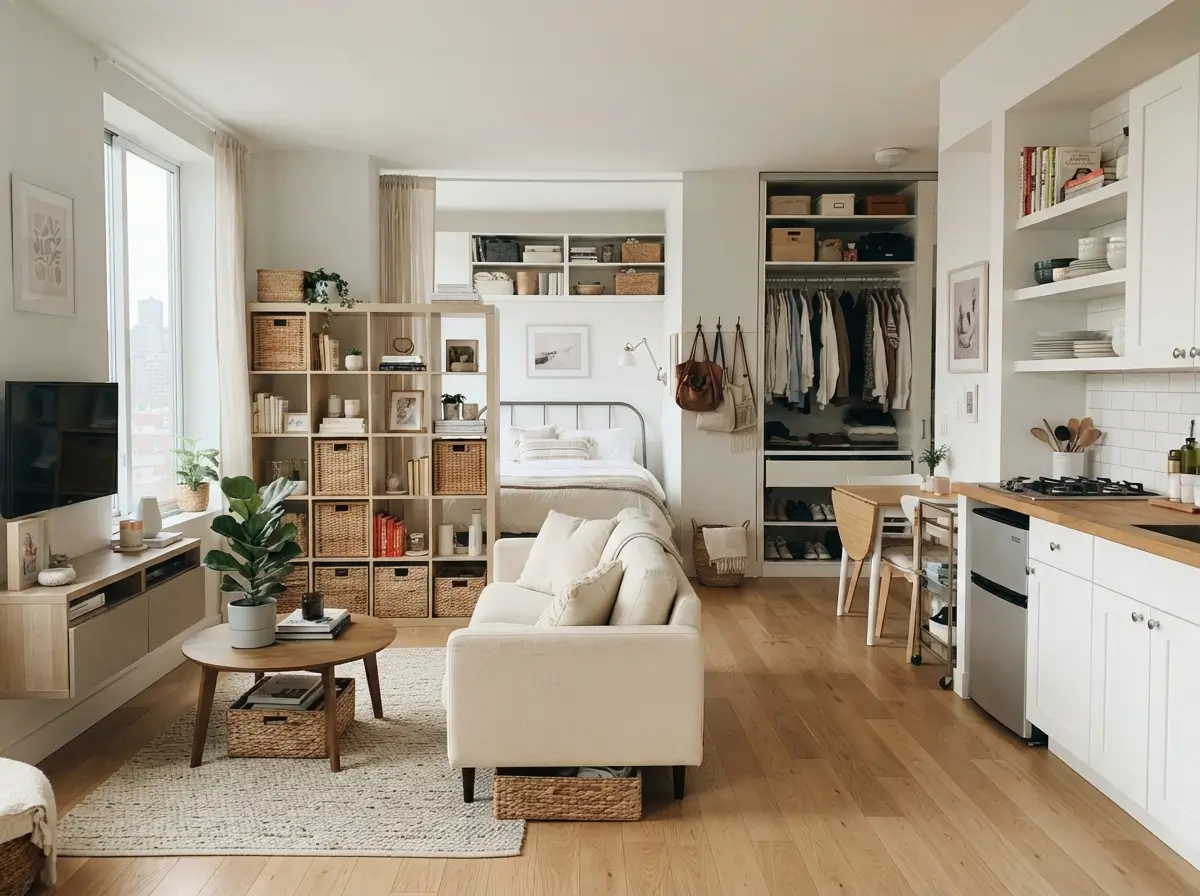

Living in one open room can feel freeing until shoes gather by the door, bedding has nowhere to go, and every surface starts carrying something. Good Studio Apartment Decor solves those problems before adding decorative extras. Small homes work best when each piece earns its place through storage, flexibility, or visual calm. Beginners do not need custom cabinetry or expensive furniture to create that balance. Careful measurements, a clear walking path, layered lighting, and a few dual-purpose pieces can make daily routines easier. The goal is not to make a studio look like a large house. The goal is to help one compact room support sleeping, relaxing, eating, working, and storing belongings without feeling chaotic.
How can you decorate a studio apartment with more storage?
Practical Studio Apartment Decor starts with zones, vertical storage, furniture that hides clutter, and a limited palette that connects the whole room. Begin by measuring every wall, doorway, window, and walkway. Then decide where daily activities naturally belong. Place sleeping furniture in the quietest corner, keep dining near the kitchen, and move work storage toward the brightest window when possible. Closed cabinets should hold visually busy items while open shelves can display only a small number of useful objects. Rental-safe hooks, tension rods, slim carts, storage beds, and curtain dividers help add function without permanent construction.
Start with a measured floor plan
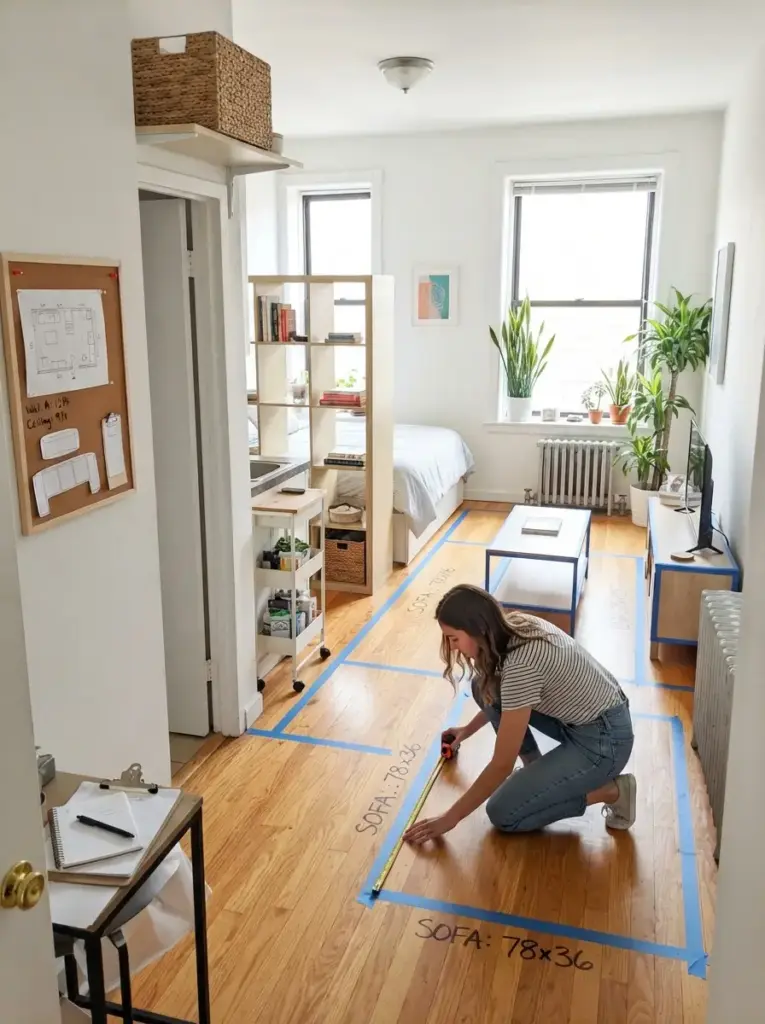
Measurements prevent the most common small-space mistake: buying furniture that technically fits but blocks movement. Record wall lengths, ceiling height, radiator locations, window swings, outlet positions, and the full width of every doorway. Add a walking lane of at least 30 inches between major pieces when the room allows it. Foldable paper templates or painter’s tape can show the footprint of a sofa, bed, table, and cabinet before money is spent. This step suits first-time renters, online shoppers, and anyone furnishing a Tiny Studio Apartment where two extra inches can affect whether a drawer opens fully.
Room planning also reveals hidden storage opportunities. A 12-inch gap beside a wardrobe may fit a rolling pantry cart. Space behind a sofa might hold a narrow console with baskets underneath. Clearance above a door can support a lightweight shelf for luggage or seasonal boxes if the lease permits drilling. Keep tall pieces near solid walls rather than in front of windows. Natural light makes a compact room feel less boxed in, so preserving the window area usually improves the entire layout. Avoid placing every item against the perimeter because one well-positioned shelf or open-backed unit can create a useful zone without closing the room.
Choose one storage bed as the main anchor
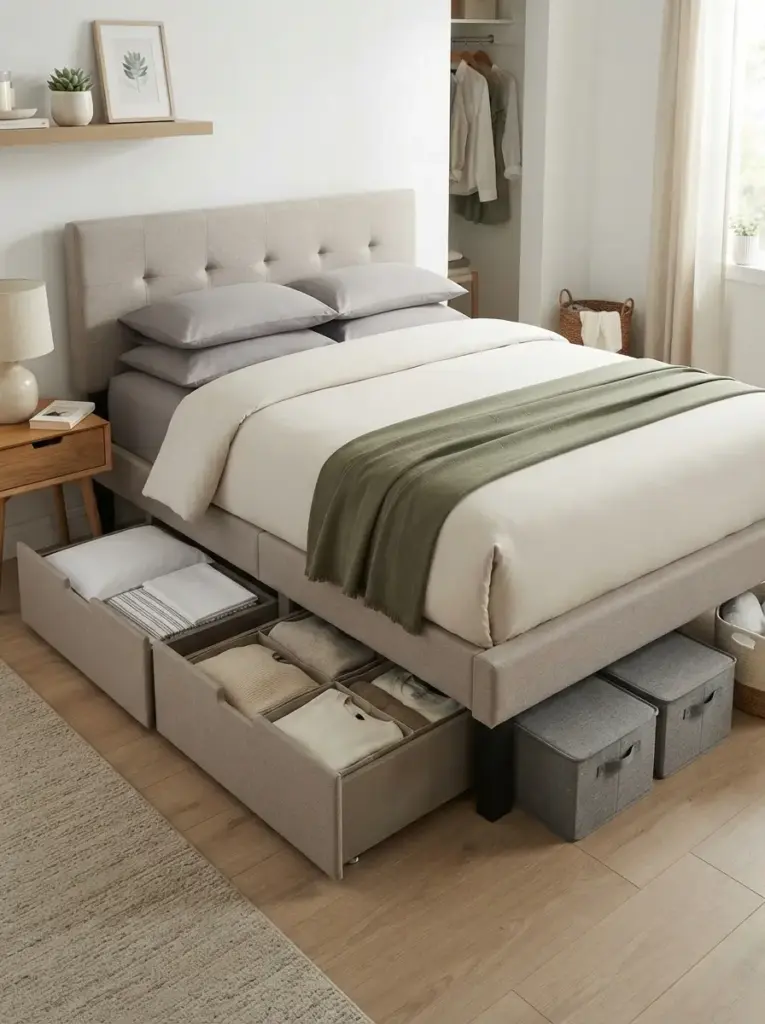
Beds occupy more floor area than almost any other studio item, which makes the space underneath extremely valuable. Platform beds with deep drawers work well for folded clothes, spare bedding, towels, and off-season shoes. Ottoman beds offer larger hidden capacity, although they require enough clearance to lift the mattress safely. People who move often may prefer a simple metal frame with matching lidded bins because it is lighter and easier to dismantle. Look for a bed height between 14 and 18 inches if you plan to slide containers below it. Higher frames can add capacity but may feel visually heavy in a very low-ceilinged room.
Storage works better when categories stay consistent. Use one drawer for linens, one for clothing, and one for rarely used household items rather than mixing everything. Vacuum bags can reduce the volume of duvets and winter coats, but avoid compressing delicate natural fillings for long periods. Neutral bedding in warm white, oatmeal, soft gray, or muted olive helps the bed blend with the rest of the room. Layer one washable throw and two supportive pillows instead of stacking many decorative cushions that need to be moved every night. Tiny Studio Apartment Bedroom Ideas become more practical when the bed looks calm and stores items you actually use.
Build a clear sleeping zone with curtains
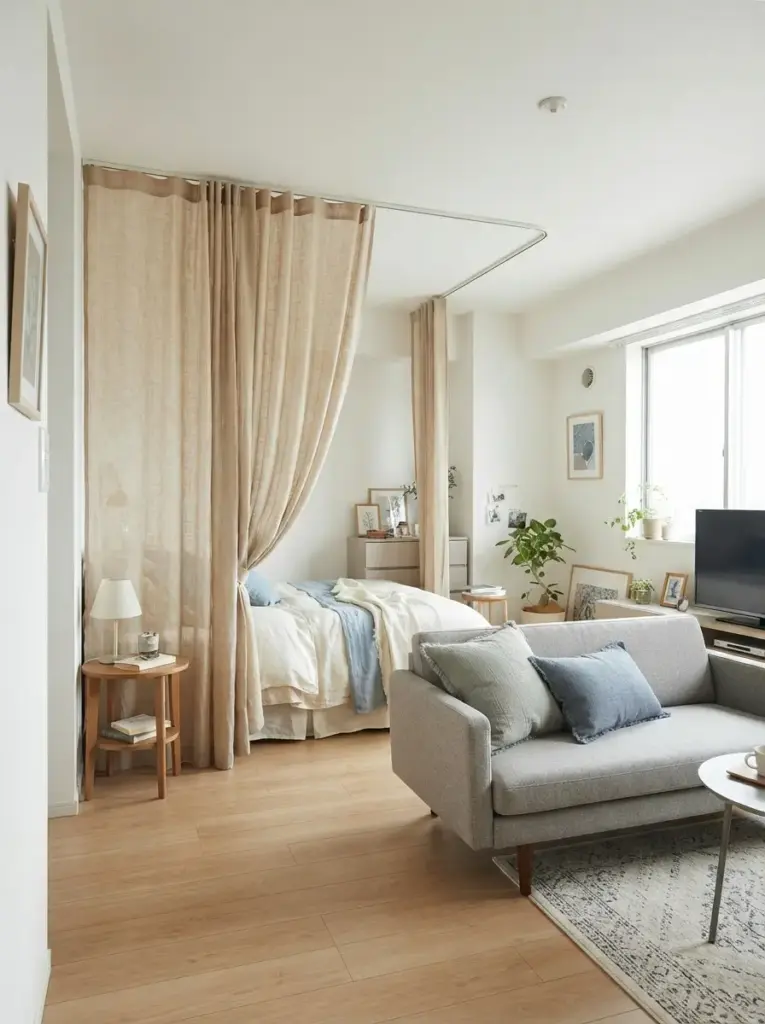
Curtains provide privacy without the bulk of a solid wall. Ceiling-mounted tracks create the cleanest effect, while tension systems suit rentals where drilling is restricted. Choose fabric based on the problem you need to solve. Sheer linen-look panels filter the view but keep light moving through the room. Medium-weight cotton blends offer more privacy and soften sound. Blackout curtains can help shift workers or light sleepers, although dark fabric may make a small room feel enclosed. A warm beige, dusty blue, muted sage, or pale taupe panel usually separates the bed without creating a harsh visual break.
Placement matters as much as fabric. Leave enough space around the bed to change sheets and access storage drawers. Run the curtain only as far as needed to screen the mattress from the entrance or main seating area. Partial coverage often feels lighter than wrapping the entire bed. Renters can combine adhesive ceiling hooks with a lightweight cable only when the product is rated for the weight. Heavier tracks need secure hardware. Among practical Studio Apartment Divider Ideas, curtains remain useful because they can be opened in seconds, washed, replaced, and taken to the next home.
Use an open bookcase as a room divider
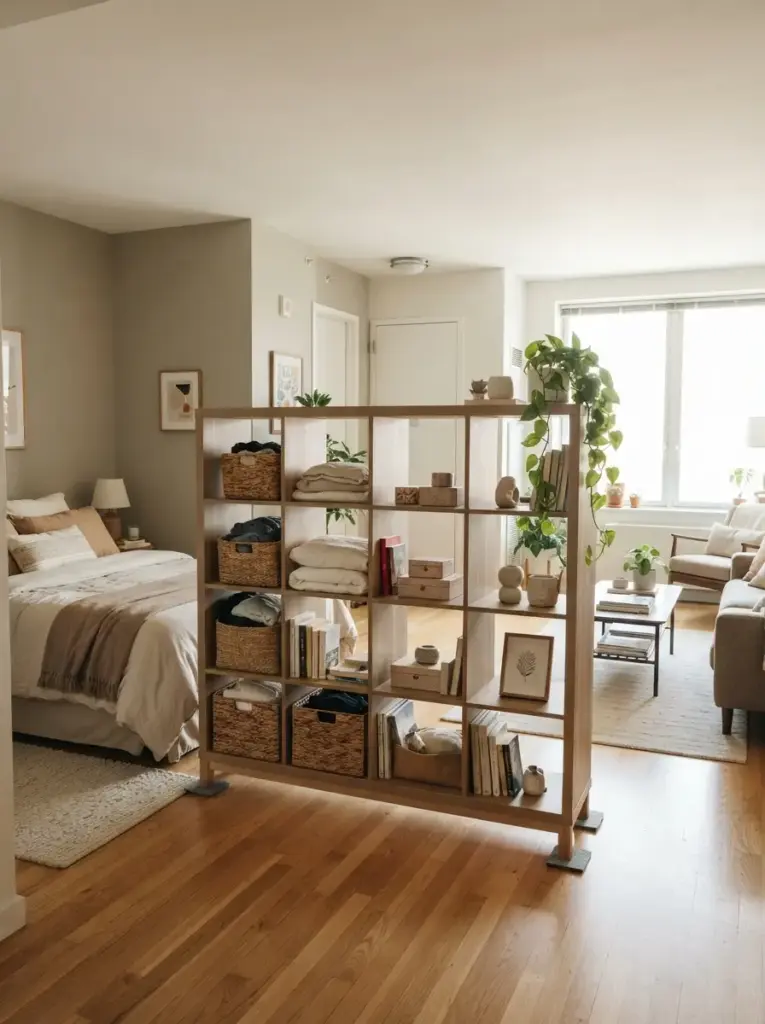
Open-backed shelving can divide a sleeping corner from a living area while allowing light to pass through. A unit between 48 and 72 inches high usually creates separation without reaching the ceiling. Anchor tall furniture whenever the lease and wall type allow it. Lower shelves can hold baskets, files, or folded linens, while upper shelves should stay lighter and less crowded. Alternate books with small boxes, a lamp, or one trailing plant rather than filling every opening. Leaving roughly one-third of the cubbies open keeps the divider from looking like a storage wall.
Function improves when both sides serve a purpose. Face baskets toward the bed for clothes and turn books or decorative objects toward the living zone. Add felt pads underneath to protect rental flooring and make small adjustments easier. Couples can assign one vertical section to each person. People working from home may use the living side for office supplies while keeping personal items on the sleeping side. A bookcase often gives more value than a decorative screen because it creates privacy and usable capacity at the same time. For renters seeking a Studio Apartment Bedroom Divider Idea, an open shelf is especially effective in long rectangular rooms.
Select a sofa with hidden storage
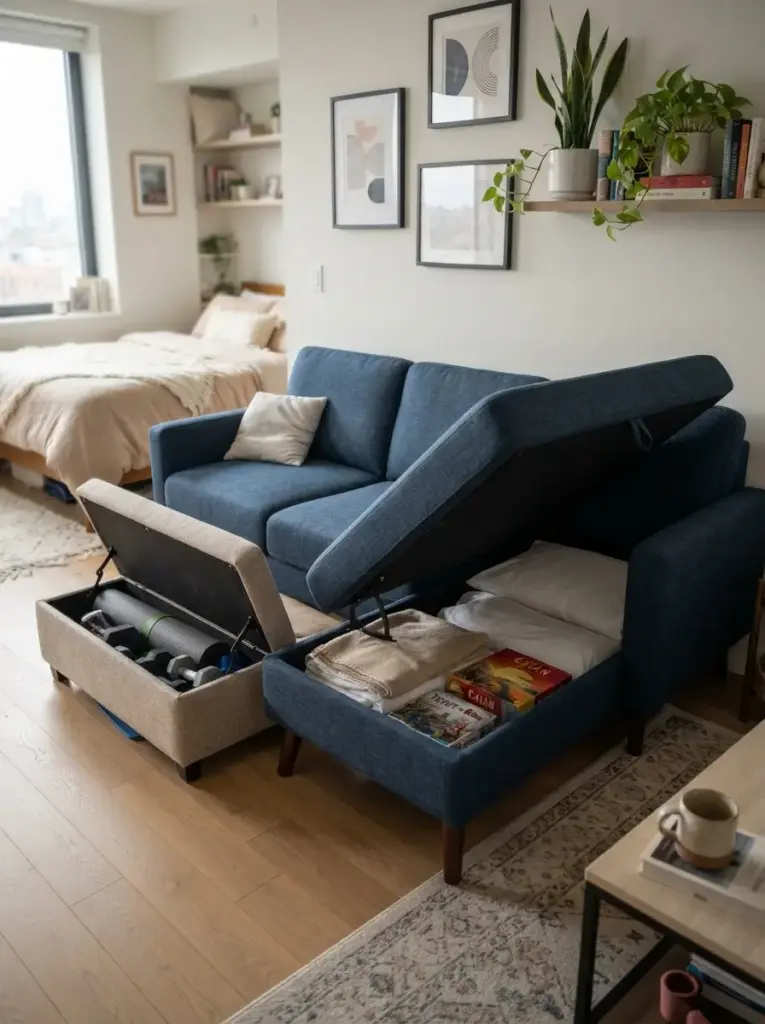
Storage sofas, compact sectionals with lift-up chaises, and benches with hinged seats can hide items that do not belong in the sleeping zone. Use that space for board games, spare throws, exercise equipment, or guest bedding. Measure the sofa depth carefully. Deep lounge models may feel comfortable in a showroom but consume too much walking space in a studio. A seat depth around 20 to 23 inches works for many adults without projecting excessively into the room. Raised legs create visible floor area underneath, helping the sofa look lighter even when storage is built into the frame.
Fabric and color should support everyday use. Mid-tone gray, camel, tobacco, navy, and textured beige conceal minor marks better than very pale upholstery. Removable covers offer a practical advantage for pet owners and renters. Avoid oversized arms that add width without seating. Slim track arms or armless modules provide more usable room. People who host overnight guests can consider a sleeper sofa, but test the opening mechanism and mattress comfort before buying. Studio Apartment Furniture Ideas should solve real needs, and a sofa that stores clutter while supporting guests can justify its larger footprint. Studio Apartment Decor
Replace a large coffee table with nesting tables
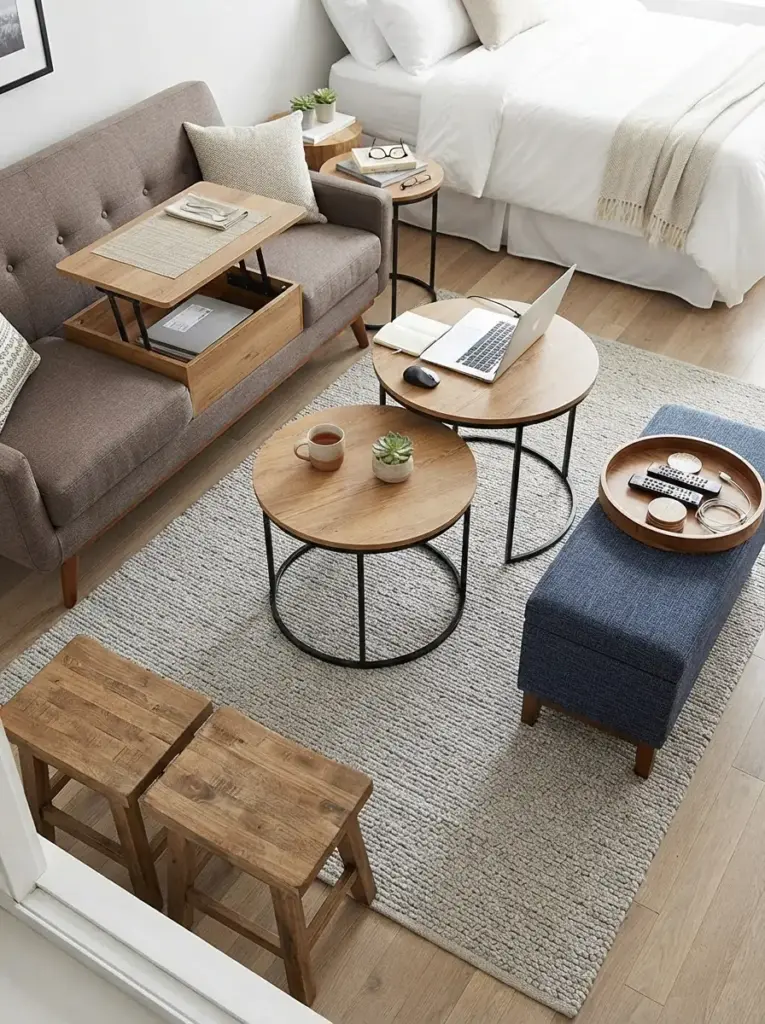
Large coffee tables often sit empty while restricting movement. Nesting tables provide the same landing space only when needed. One table can hold drinks beside the sofa, another can work as a laptop surface, and the smaller piece can move near the bed. Round shapes reduce sharp corners in tight routes. Lightweight metal frames and thin wood tops feel less bulky than solid block designs. Look for stable legs, scratch-resistant surfaces, and enough height to suit your seating. Tables between 18 and 22 inches wide are often easier to arrange than one oversized centerpiece.
Storage can also come from a compact lift-top table or a narrow upholstered ottoman with a removable tray. People who eat at the sofa may appreciate a lift-top design, while households with children may prefer a soft-edged ottoman. Keep the top mostly clear so the room remains easy to reset. A tray can collect remotes, coasters, and chargers, then move when extra space is needed. Budget shoppers can pair two sturdy stools in matching finishes instead of buying a formal coffee table. Flexible surfaces help a studio adapt throughout the day without making one function permanent. Studio Apartment Decor
Turn blank walls into vertical storage
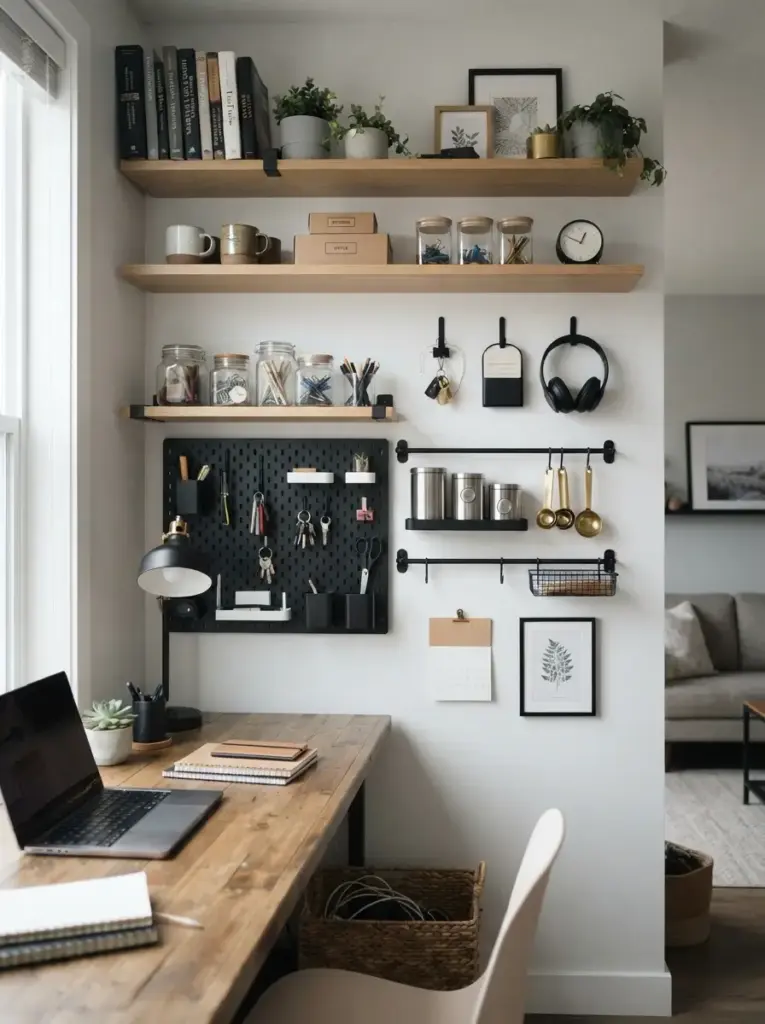
Walls can hold items that would otherwise occupy valuable floor space. Install floating shelves above a desk, beside the kitchen, or over a low dresser. Keep the lowest shelf high enough to avoid head bumps and leave comfortable reach for everyday items. Heavy books require studs, anchors, or a freestanding alternative. Renters should check lease rules before drilling and avoid trusting adhesive strips with ceramics or glass. Pegboards, rail systems, and magnetic organizers can store tools, kitchen utensils, headphones, keys, and small accessories in a compact footprint.
Visual order matters because wall storage remains in view. Group similar materials and repeat two or three colors across containers. White shelves against white walls nearly disappear, while light oak adds warmth without too much contrast. Matte black rails can suit industrial Studio Loft Apartment Themes, but use the finish sparingly in a very small room. Place attractive daily items at eye level and less appealing supplies in labeled boxes. Vertical storage works best for cooks, crafters, and remote workers who need frequent access but cannot dedicate a cabinet to every category. Studio Apartment Decor
Add closed storage near the entrance
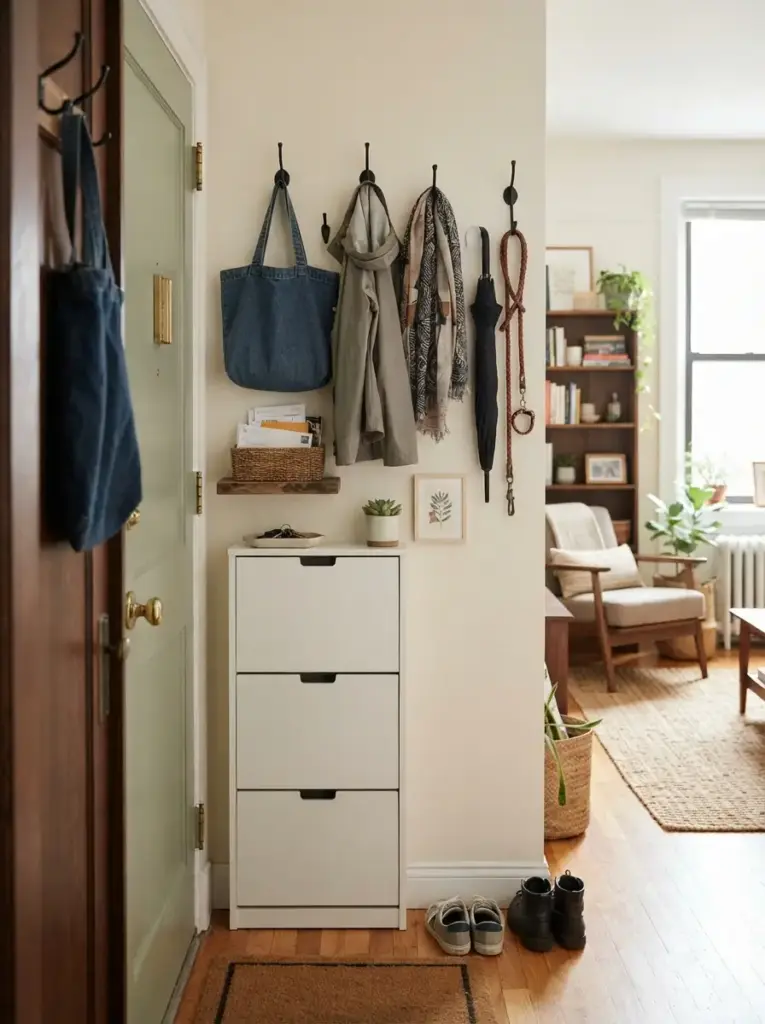
Entry clutter spreads quickly when shoes, bags, receipts, and coats have no landing place. A narrow cabinet between 7 and 12 inches deep can hold shoes without blocking the doorway. Wall hooks placed at different heights support coats, tote bags, umbrellas, and pet leashes. Add a small tray for keys and a basket for mail that needs attention. People with almost no entry zone can use the side of a wardrobe or a slim rolling unit. Closed fronts reduce visual noise, which is especially useful when the entrance opens directly into the main room.
Daily habits determine whether the setup succeeds. Store only the current season’s shoes near the door and move the rest under the bed. Empty bags before hanging them so hooks do not become overloaded. Keep cleaning wipes, a lint roller, or reusable shopping bags in the lower cabinet. Strong Studio Apartment Decor depends on these practical drop zones because they stop clutter before it reaches the bed or kitchen counter. Beginners often focus on decorative objects first, but an organized entrance improves the whole room every day and makes move-in routines easier from the start.
Create a compact dining and work corner
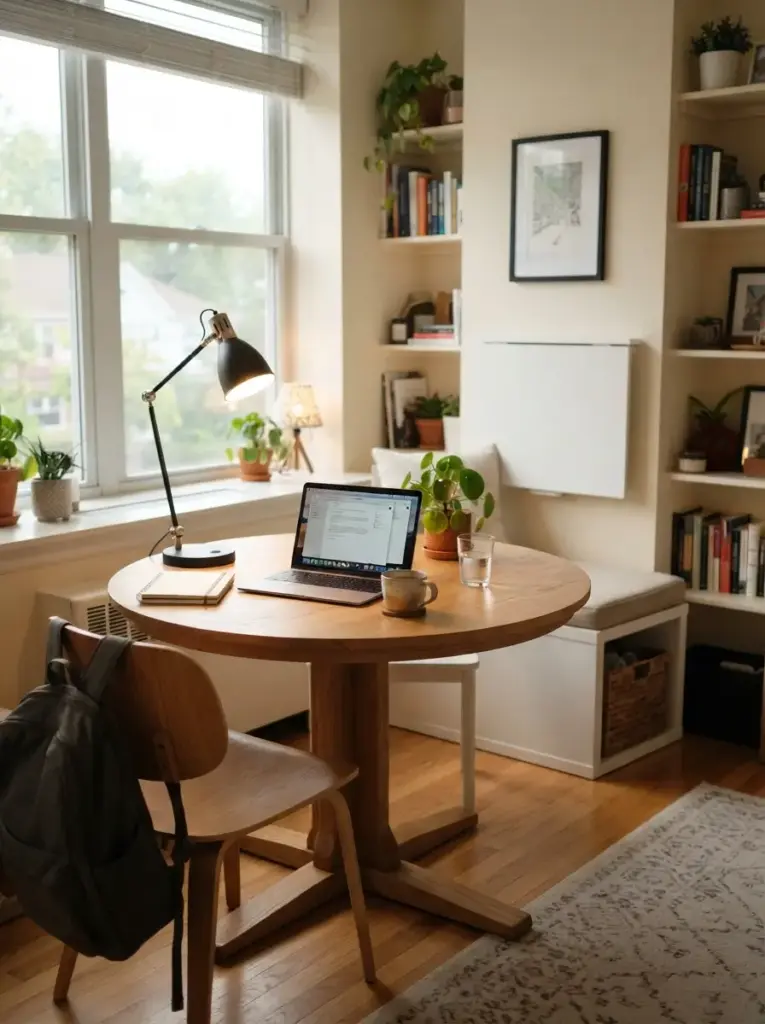
One small table can support meals, work, hobbies, and occasional guests when its shape and placement match the room. Drop-leaf tables fold close to the wall and expand when needed. Round pedestal tables make chair movement easier because there are no corner legs. Wall-mounted folding desks save even more floor area, but they need secure installation. Choose chairs that stack, fold, or slide completely under the top. A bench can provide seating plus hidden storage if the table sits against a wall.
Lighting separates work time from evening relaxation. Use a task lamp with a focused beam for reading and a warmer ambient lamp after work. Bulbs around 3000K create a comfortable general glow, while 3500K to 4000K can improve alertness at a desk. Avoid mixing several very blue bulbs with warm lamps because the room may look inconsistent. Remote workers should place the table near natural light without facing direct glare. A compact setup suits beginners building a move-in checklist because it reduces the need to buy a separate desk and dining set. Studio Apartment Decor
Use the kitchen walls and cabinet doors
Small studio kitchens often have enough cabinet volume but poor internal organization. Shelf risers create a second level for plates, mugs, or pantry goods. Tension rods under the sink can hang spray bottles, while stackable clear bins group snacks and baking supplies. Adhesive hooks inside cabinet doors can hold measuring spoons, oven mitts, or lightweight cleaning tools. Magnetic spice tins work on a refrigerator side panel, although labels should face forward so ingredients are easy to identify. Keep counters reserved for appliances used several times a week.
Safety should guide every choice. Do not hang fabric or plastic near burners. Heavy pans need properly anchored rails rather than adhesive hooks. Leave ventilation openings clear and avoid stacking items above their recommended height. People who cook frequently should prioritize accessible storage over decorative displays. One tray can group cooking oil, salt, and pepper near the stove, while a shallow basket can hold tea or coffee supplies. Micro Studio Apartment Ideas often succeed through small adjustments like these because they improve capacity without adding another freestanding cabinet.
Hide utility items behind a fabric panel
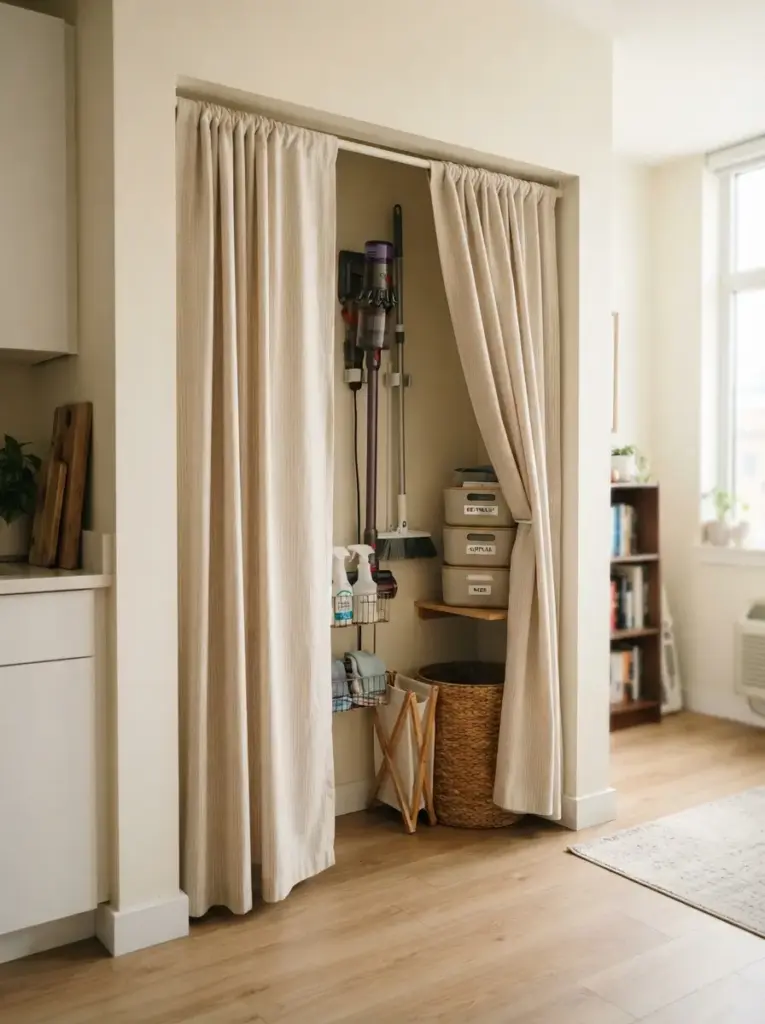
Vacuum cleaners, laundry baskets, cleaning supplies, and folding racks can make a studio look unfinished when they remain visible. A short curtain mounted inside an open closet, beneath a counter, or across a shallow alcove hides those items while keeping them easy to reach. Choose washable fabric and avoid panels that drag on the floor. Matching the wall color creates a quiet effect, while a subtle stripe can add pattern without overwhelming the room. Tension rods are useful for lightweight applications and leave fewer marks than permanent tracks.
Organization behind the curtain still matters. Use a vertical holder for mops, a narrow basket for cleaning products, and labeled bins for laundry supplies. Place frequently used items at waist height and rarely used tools higher or lower. Ventilation is important for damp cloths, so let them dry before closing the panel. Renters with awkward utility corners benefit most from this approach because custom doors may be impossible. Fabric also costs less than cabinetry and can move to a new apartment later. Studio Apartment Decor
Install mirrors where they support light
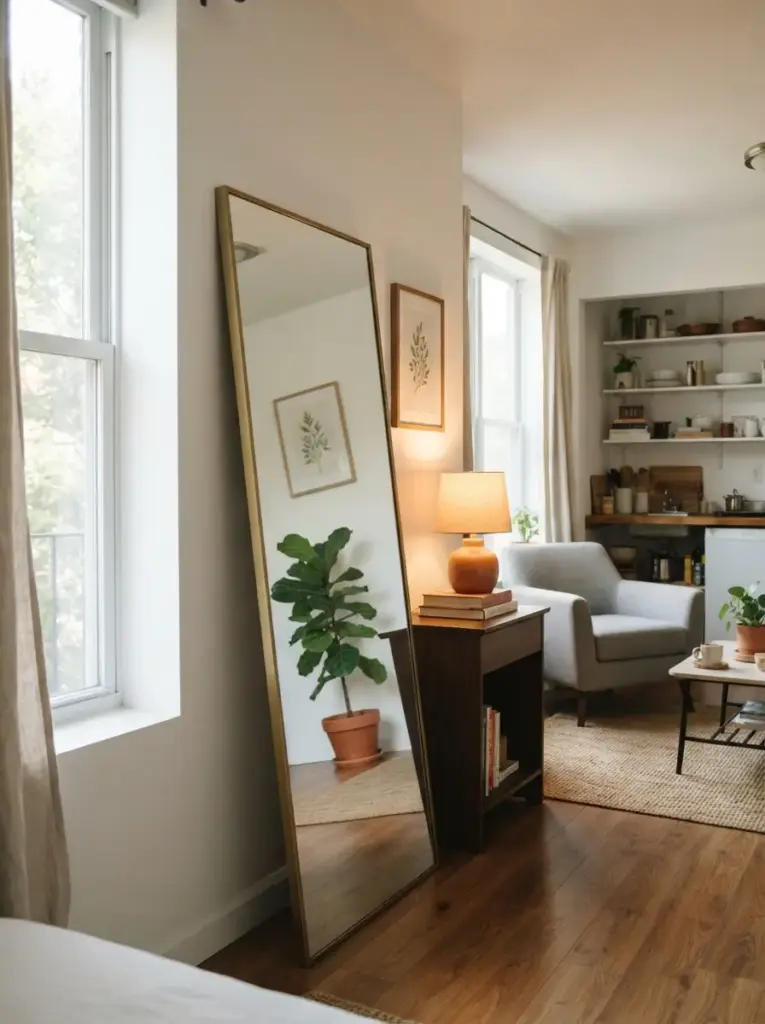
Mirrors can brighten a studio when they reflect a window, lamp, or open part of the room. Place a large mirror on a wall perpendicular to the main window rather than directly opposite clutter. Full-length leaning mirrors suit rentals, although they must be secured to prevent tipping. Mirrored cabinet doors add storage and reflection in one piece. Smaller mirrors can form a useful group above a console, but too many different frames may create visual busyness. Simple wood, black, brass, or white frames usually connect more easily with existing furniture.
Reflection quality depends on what the mirror faces. Pointing it toward open shelving packed with items will double the clutter. Angling it toward a clean wall, plant, artwork, or daylight creates a calmer effect. Warm bulbs around 2700K to 3000K reflected in a mirror can improve evening comfort. People with dark ground-floor apartments often gain the most from careful mirror placement. Avoid relying on mirrors as a substitute for storage because brightness helps only when surfaces remain reasonably clear. Studio Apartment Decor
Keep the color palette limited but not flat
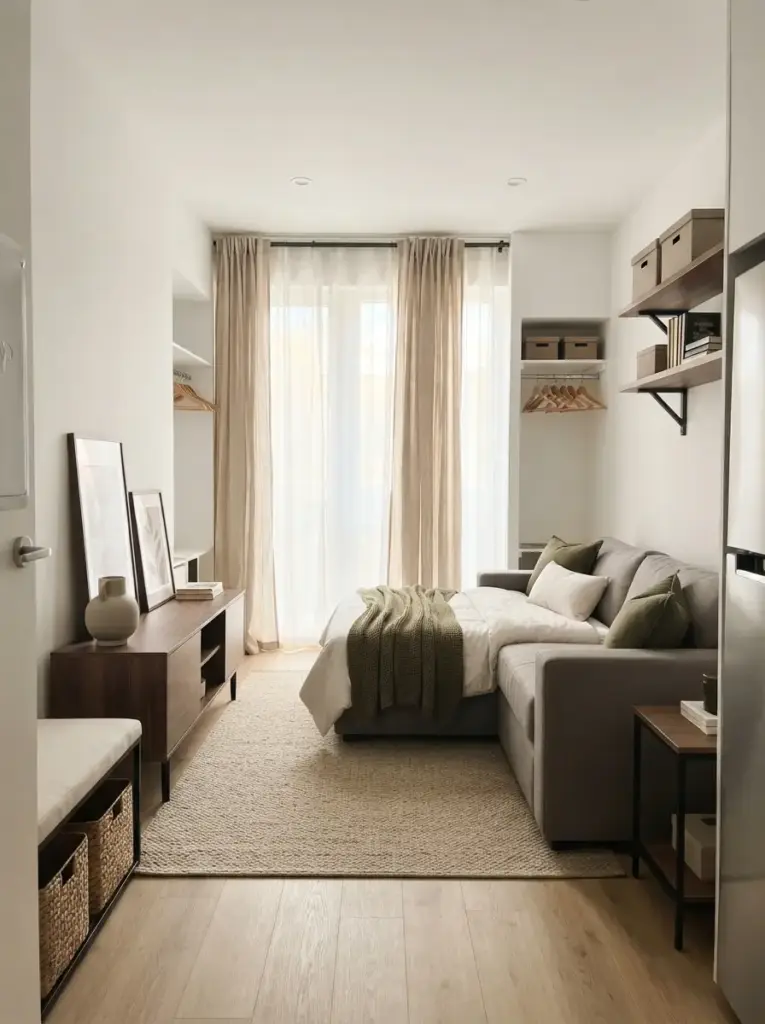
Small rooms feel more connected when walls, large furniture, curtains, and bedding share a restrained palette. Start with one light base, one mid-tone, and one darker accent. Warm white, sand, olive, and charcoal create a grounded scheme. Soft gray, pale blue, walnut, and navy feel cooler and more tailored. Renters with fixed white walls can bring color through bedding, rugs, art, and storage boxes. Repeating the same wood tone across a table, shelf, and frames also reduces visual fragmentation.
Texture prevents a limited palette from feeling dull. Pair smooth cotton bedding with a woven throw, matte ceramics, a low-pile rug, and natural wood. Keep large patterns simple and use smaller prints in one or two places. Couples can combine preferences by choosing a neutral base, then giving each person one accent color within the same value range. Studio apartments for Couples often need more visual discipline because twice the belongings can create twice the contrast. Shared baskets, matching hangers, and repeated finishes help the room feel intentional rather than divided into competing halves.
Use rugs to define zones without blocking flow
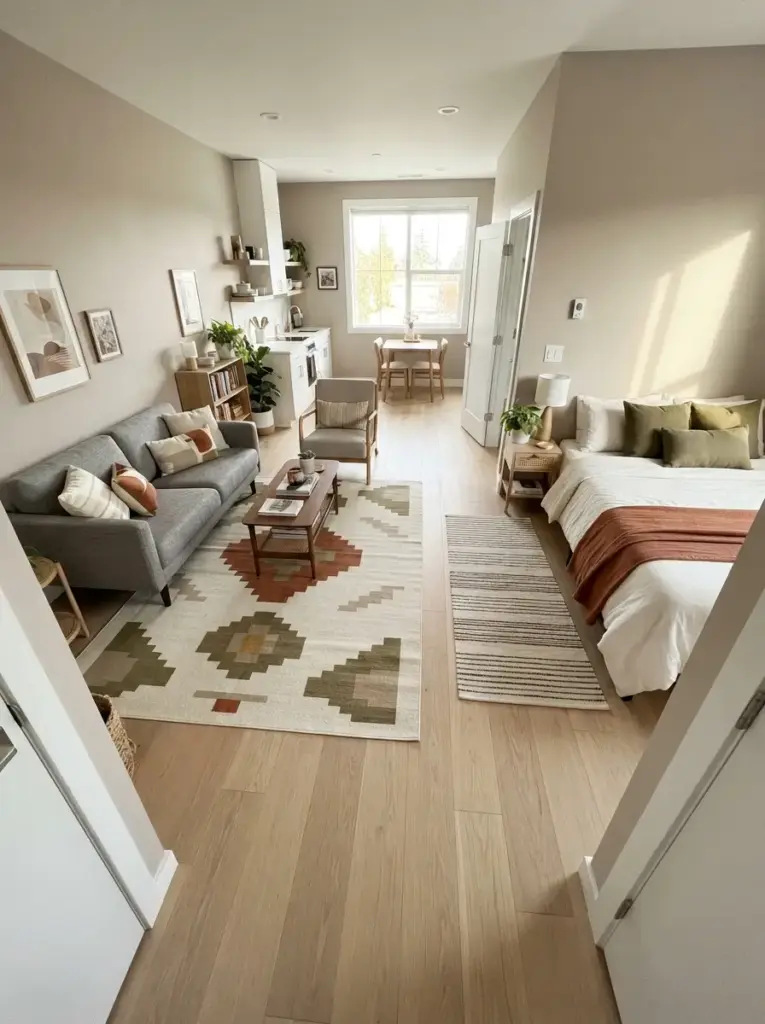
Rugs visually separate activities while keeping the floor open. Place a rug under the front legs of the sofa to mark the living zone, then leave the sleeping area simpler or use a narrow runner beside the bed. In very small studios, one larger rug may look calmer than several small mats. Low-pile options are easier to clean and less likely to catch on folding furniture. Washable rugs suit renters, pet owners, and people who eat near the sofa.
Size mistakes can make the room feel smaller. A rug floating far from the furniture looks disconnected, while a rug that covers nearly every visible inch may erase useful boundaries. Choose patterns based on existing elements. Subtle stripes can widen a narrow room, and small geometric designs hide minor marks. Cream, taupe, faded blue, rust, and olive work well with common rental finishes. Add a non-slip pad that is safe for the floor material. Clear pathways should remain visible from the entrance to the kitchen, bathroom, and bed.
Edit decor so storage stays usable
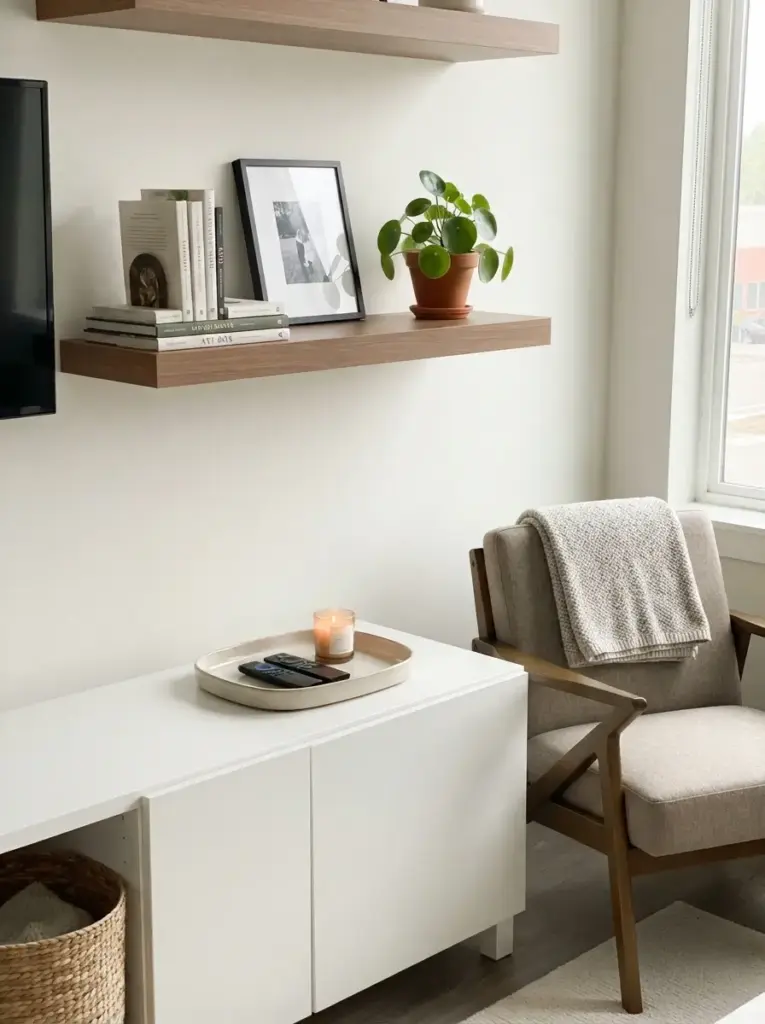
Decorative objects should not prevent drawers from opening, shelves from functioning, or surfaces from being cleaned. Limit each open shelf to a few categories such as books, one framed photo, and one small plant. Use trays to contain candles, remotes, and daily accessories. Rotate seasonal items instead of displaying everything at once. People who collect art or ceramics can choose a single feature shelf and store the rest safely. Fewer visible pieces give meaningful objects more attention and leave room for daily life.
Editing also reduces maintenance. Open baskets collect dust, crowded nightstands complicate cleaning, and too many cushions create a nightly chore. Keep one clear surface near the entrance, one beside the bed, and part of the kitchen counter available at all times. Studio Apartment Makeover Ideas often focus on adding new purchases, but removing unnecessary items can improve the room faster. Before buying decor, decide where it will live and what it will replace. Storage remains useful only when it is not filled with objects kept out of guilt or habit. Studio Apartment Decor
Common studio decorating mistakes to avoid
Oversized furniture causes more problems than almost any color choice. Deep sofas, wide armchairs, and long media units can narrow walking paths and make doors difficult to open. Measure the full depth of furniture, including handles, recliner movement, and pulled-out drawers. Skipping those details leads to frustrating layouts. Buying every piece from a compact collection can also create a showroom effect without meeting real needs. Choose the bed, sofa, table, and storage based on how you live rather than matching labels.
Poor zoning creates another common issue. Pushing every item against the walls may leave an empty center but fail to separate sleeping, working, and relaxing. Use a rug, bookcase, curtain, or lighting change to mark each function. Do not over-divide the room with tall solid pieces because they can reduce light and airflow. Loft Apartment Bedroom Ideas for Small Lofts often benefit from partial dividers that preserve height and openness while still giving the bed a defined edge.
Open storage can become visual clutter when every shelf holds unrelated items. Match containers, limit colors, and hide packaging where possible. Leave some breathing room around books and objects. Clear containers work well inside cabinets but may look busy on open shelves. Closed boxes in the same finish create a cleaner view. Avoid filling the tops of wardrobes and kitchen cabinets with loose bags. Use labeled lidded bins or keep the area empty when dust and access make upper storage impractical.
Lighting mistakes can make even a well-planned studio uncomfortable. One bright ceiling fixture creates harsh shadows and does not support reading, cooking, or winding down. Combine ambient lighting with task and accent sources. Choose bulbs with similar color temperatures and check their brightness in lumens rather than relying only on wattage. Dimmer plugs or smart bulbs can adjust evening light without electrical work. Keep cords secured along walls and avoid running them across pathways. Studio Apartment Decor
Budget-friendly ways to improve a studio
Budget-friendly studio apartment decor works best when money goes toward pieces that solve several problems. Spend first on a comfortable mattress, reliable lighting, window privacy, and storage for daily essentials. Delay decorative purchases until the layout is functioning. Secondhand solid-wood tables, metal shelves, mirrors, and dressers often offer better value than very cheap new furniture. Check dimensions before collecting anything and inspect drawers, joints, odors, and signs of pests. Soft goods such as pillows or mattresses are usually safer to buy new unless their condition is fully known.
Paint is not always available to renters, so use removable methods to add color. Washable slipcovers, curtains, peel-and-stick panels rated for the surface, and framed fabric can change the room without repainting. Test adhesive products in a hidden spot because some finishes lift paint. Removable wallpaper works best on smooth, clean walls and may fail in humid areas. One large textile or artwork often creates more impact than many small items.
Lighting upgrades can stay inexpensive. Replace mismatched bulbs with a consistent temperature, add a plug-in wall lamp beside the bed, and use a floor lamp near the sofa. Battery puck lights can improve dark cabinets, although rechargeable versions reduce ongoing costs. Warm white light around 2700K to 3000K suits relaxation, while a 3500K task lamp can support work. Choose fixtures with common bulb sizes, so replacements remain easy to find. Studio Apartment Decor
Studio Apartment Decor tips for first-time renters
Move-in day becomes easier when essentials arrive in the right order. Bring cleaning supplies, basic tools, a shower curtain, bedding, towels, trash bags, a phone charger, and simple kitchen equipment before decorative accessories. Measure the apartment again after getting the keys because online floor plans may not show trim, pipes, or uneven walls. Build the room in stages: sleep first, store daily items second, create seating third, then add art and textiles. That order prevents rushed purchases.
Rental rules deserve attention before shelves, curtain tracks, or wall-mounted desks are installed. Photograph existing damage, read the lease, and ask about anchors or adhesive products when policies are unclear. Keep original hardware in labeled bags so it can be restored later. Furniture straps, felt pads, and removable cord clips protect both people and property. Avoid blocking heaters, vents, sprinklers, or emergency exits with storage.
Cleaning access should influence the layout. Leave enough room to vacuum beside the bed, wipe behind the sofa, and reach window coverings. Furniture on legs is easier to clean underneath, while very low pieces may trap dust. Washable fabrics and removable covers help beginners maintain the room without special products. A weekly ten-minute reset can include returning items to baskets, clearing the table, wiping the kitchen counter, and putting shoes away. Studio Apartment Decor
Personal style still matters in a practical studio. Use one or two meaningful themes rather than decorating every zone differently. Studio Apartment Decor Ideas can include family photos, travel prints, handmade textiles, or a favorite color while keeping storage consistent. People drawn to Studio Loft Apartment Themes may use black metal, aged wood, and oversized art, while softer schemes can rely on linen, pale oak, and muted greens. Repeating materials across zones ties the room together without making it feel overly matched.
Frequently asked questions
What furniture should I buy first for a studio apartment?
Start with a supportive bed, one practical storage piece, reliable lighting, and a table that can serve more than one function. Add seating after confirming the remaining floor space. People who host guests may prioritize a sleeper sofa, while remote workers may need a proper desk chair first. Measure every item and compare it with door widths before ordering. Good Studio Apartment Furniture Ideas focus on daily routines rather than filling a standard furniture checklist.
How can I separate my bed without making the room dark?
Use sheer curtains, an open bookcase, a slatted screen, or a low cabinet. These options define the sleeping zone while preserving light. Place the divider perpendicular to the window when possible so daylight can travel through the room. Avoid tall solid wardrobes directly in front of the main light source. People needing more privacy can layer a sheer panel with a medium-weight curtain and open both during the day.
Which colors make a small studio feel more comfortable?
Warm white, light taupe, soft gray, pale blue, and muted sage create flexible backgrounds. Darker colors can still work on smaller items such as cushions, art, lamps, or one cabinet. Repeating one accent color in three places creates continuity. Avoid mixing many unrelated bright colors unless the rest of the room stays very simple. Natural wood tones help warm up plain rental walls.
How much storage is enough in a studio apartment?
Enough storage means everyday items have assigned places and those places remain easy to access. Count clothing, shoes, kitchen tools, paperwork, cleaning supplies, and seasonal belongings before buying cabinets. Leave a small amount of empty capacity for future needs. Filling every drawer completely on move-in day usually signals that more editing is needed. Studio Apartment Decor works better when storage contains belongings without becoming difficult to open or maintain.
Can two people live comfortably in one studio?
Two people can manage a studio when the layout supports privacy, shared routines, and equal storage. Assign separate drawers, wardrobe sections, charging spots, and bedside storage. Use curtains or an open shelf around the bed if schedules differ. Folding tables and movable seating help the room change between work and relaxation. Honest decisions about clothing, hobbies, and guest expectations matter more than decorative style.
How do I decorate a studio without losing my deposit?
Use tension rods, freestanding shelves, removable hooks rated for the surface, plug-in lighting, rugs, curtains, and leaning art where safe. Test adhesives in hidden areas and follow removal instructions. Keep all original fixtures and document the apartment’s condition with dated photos. Ask the landlord before installing heavy shelves, tracks, or wall-mounted furniture. Rental-friendly decorating should be reversible and secure.
Conclusion
Thoughtful Studio Apartment Decor begins with function, not shopping. Measure the room, preserve walking paths, create simple zones, and use furniture that stores more than it shows. Curtains, open shelving, storage beds, slim entry cabinets, folding tables, and wall-mounted organizers can make one room support many routines without feeling crowded. Keep colors connected, lighting layered, and decorative objects edited so the storage remains usable. Beginners will get better results by furnishing in stages and watching how the apartment works over several weeks. Small-space decorating becomes easier when every decision supports comfort, access, and daily maintenance rather than trying to imitate a much larger home.