
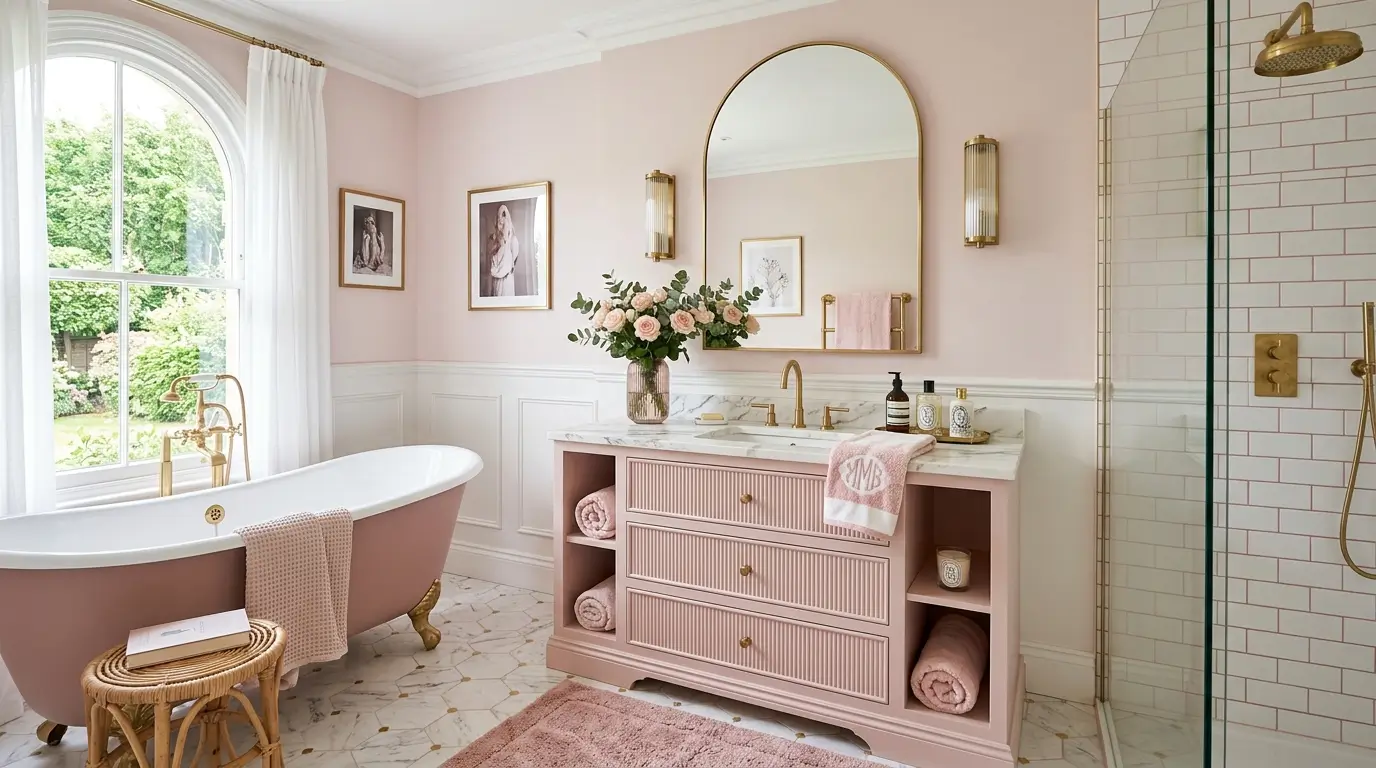

Pink can make a bathroom feel warm, fresh, and personal without turning the room into something overly sweet. Many people like the idea of pink bathroom decor, but they worry it may look childish, too bold, or hard to match with the rest of the home. Good styling solves that problem. When pink appears in the right shade, the right amount, and the right materials, it can look soft, modern, vintage, or polished depending on the choices around it.
Small bathrooms, rental bathrooms, powder rooms, and plain builder-grade spaces can all work well with pink. The key is not to fill every corner with the same color. Instead, use pink as a design direction and balance it with white, cream, warm wood, stone, brass, chrome, black, or soft gray. Even simple upgrades like towels, a washable rug, peel-and-stick wallpaper, or warm lighting can shift the whole room.
Pink Bathroom Decor Ideas work best when they solve real decorating problems. Pink can warm up cold tile, soften a white room, add personality to a rental, or make a small bathroom feel more considered. The following ideas focus on real choices you can make, including color pairings, lighting temperature, storage, layout, and common mistakes beginners often make.
Question
How can you decorate a bathroom with pink and still make it feel polished?
Short Answer
Use pink in controlled layers instead of covering every surface. Start with one main pink feature, such as towels, wallpaper, a vanity, tile, or painted walls, then balance it with clean neutrals, simple storage, flattering lighting, and finishes that match the mood you want. Pale blush works well for calm bathrooms, dusty rose feels mature, coral pink adds energy, and mauve pink gives the room a more elegant tone.
Choose the Right Shade of Pink First
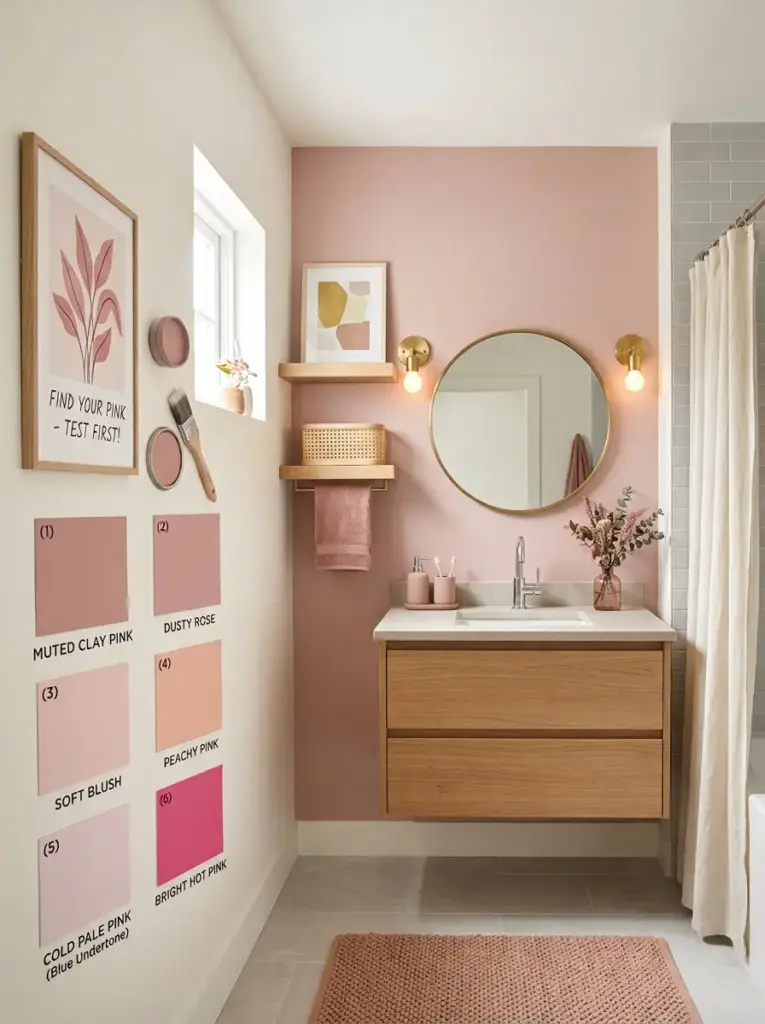
Picking the right pink matters more than buying pink accessories. Color changes with lighting, tile undertones, and the size of the room, so a shade that looks pretty online may look too bright or muddy in your own bathroom. Soft blush, powder pink, dusty rose, clay pink, and muted mauve usually look more polished than hot pink in everyday bathrooms. Bright pink can still work, but it needs a clear purpose, such as a small powder room, a playful guest bath, or one accent piece.
Muted pink works because it behaves almost like a warm neutral. It brings color into the room without fighting with white fixtures, chrome faucets, beige flooring, or gray tile. For a beginner, dusty rose towels with warm white walls feel safer than painting every wall bubblegum pink. Pale blush also pairs nicely with natural materials like oak shelves, cane baskets, linen shower curtains, and cream stone counters.
The best choice for small bathrooms is a pink with a little beige or gray in it. Pale pink with too much blue can feel cold under LED bulbs, while peachy pink can look cozy beside brass and warm wood. Test paint swatches near the sink, shower, and mirror before choosing. Bathroom lighting can be harsh, and glossy tile can bounce color in unexpected ways. For renters, test pink through removable items first, such as a bath mat, towel set, art print, soap dispenser, or shower curtain, before investing in bigger decor.
Use Pink Towels for a Low-Risk Refresh
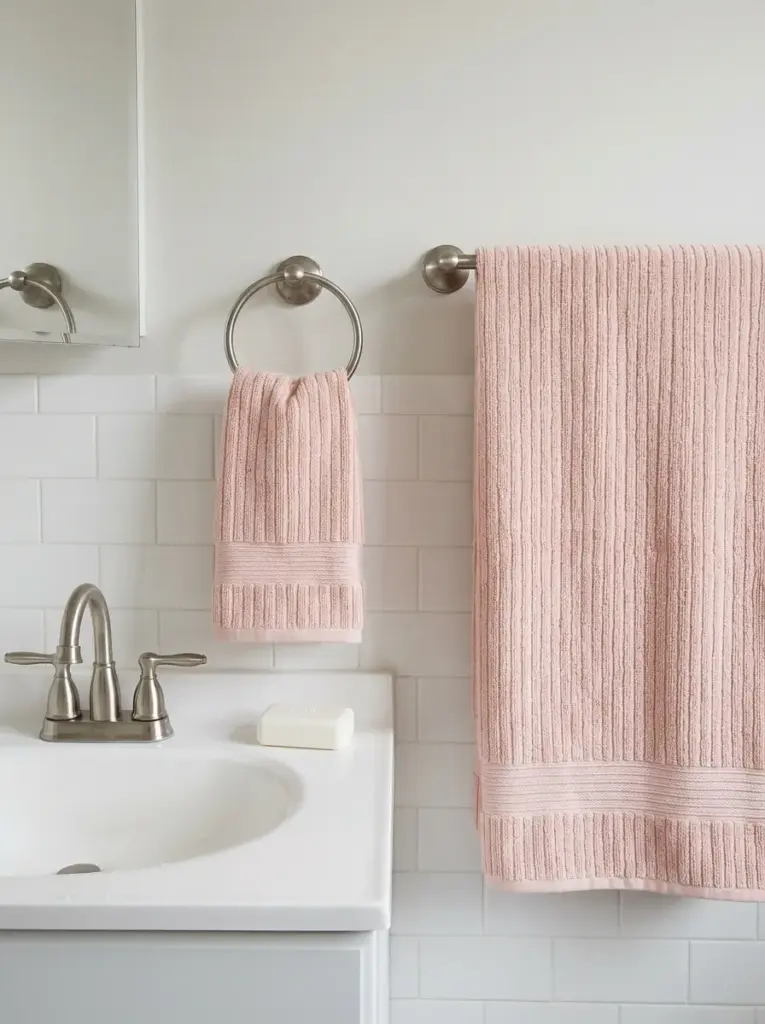
Pink towels give you one of the easiest ways to try the color without changing walls, tile, or fixtures. Towels also cover enough visual space to make a real difference, especially in bathrooms where hooks, towel bars, or open shelves sit in plain view. Soft blush towels feel calm and clean, while dusty rose towels add more depth. Mauve towels work well with white, cream, charcoal, black, and brushed nickel.
Towels help because they repeat color naturally around the room. Place a hand towel near the sink, a bath towel on a hook, and a folded extra towel on an open shelf. Repetition makes the pink feel intentional instead of random. Choose towels with a simple texture, such as ribbed cotton, waffle weave, or Turkish cotton, rather than overly decorative patterns. Texture gives interest without making the bathroom feel busy.
A great fit for renters and beginners is a matching towel set in one pink shade, paired with a neutral bath mat and simple countertop pieces. Budget shoppers can start with two hand towels and one bath towel instead of replacing every towel at once. Avoid mixing too many pink shades in a towel form unless the room already has a clear palette. One blush towel, one salmon towel, one rose towel, and one magenta towel can look accidental. Pick one shade family and repeat it.
Add a Pink Shower Curtain as the Main Feature
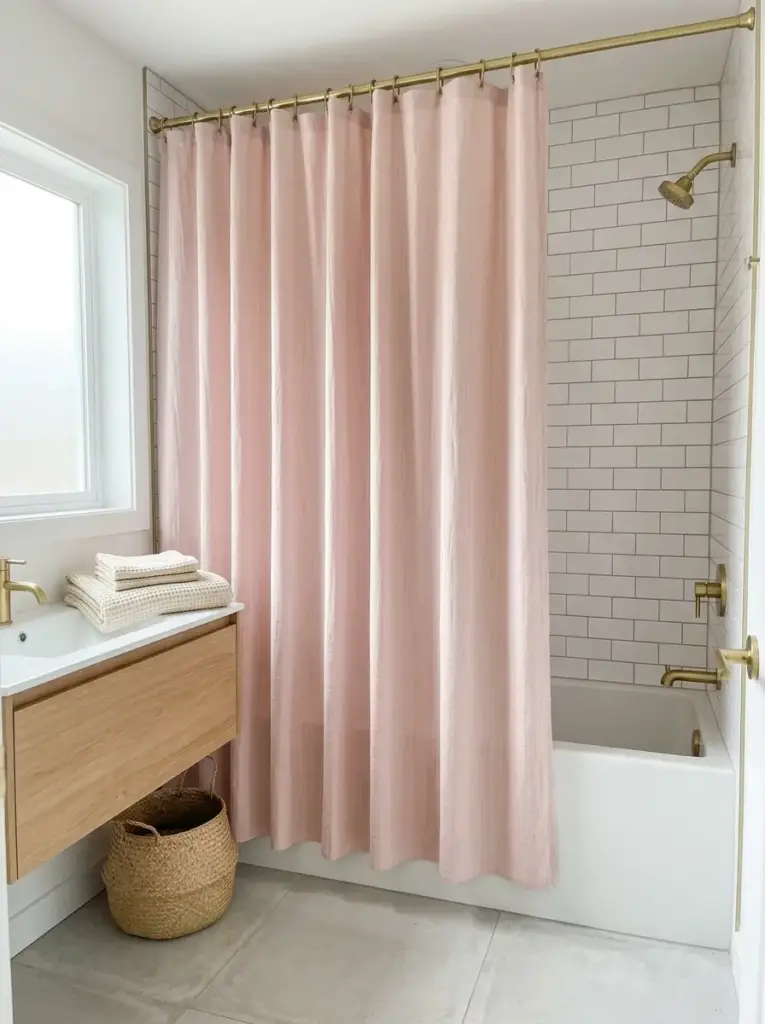
Shower curtains take up a large vertical area, so they can act like a soft feature wall. In bathrooms with a tub-and-shower combo, the curtain may be the largest decorative surface in the room. Pink works especially well here because fabric softens hard materials like tile, porcelain, mirror glass, and metal fixtures. A blush linen-look curtain, a dusty rose waffle curtain, or a pink-and-cream stripe can make the room feel styled without permanent changes.
Design strength comes from scale. A plain pink curtain creates a clean backdrop, while a patterned curtain can guide the rest of the palette. For example, a pink curtain with thin beige stripes pairs well with tan baskets, cream towels, and brass hooks. A pink floral curtain can work in a cottage-style bathroom, but keep the rest of the room simple so it does not feel crowded. Small bathrooms often look better with a curtain that has vertical lines or a gentle pattern instead of a large, dark print.
Best for rental bathrooms is a fabric shower curtain placed outside a waterproof liner. Hang the curtain as high as possible, close to the ceiling if your rod allows it, because height makes the room feel taller. Choose matte metal rings in brass, black, or chrome based on your faucet finish. A common mistake here is using a thin plastic pink curtain as the only layer. It may function, but it rarely looks polished. A fabric outer curtain instantly feels more finished.
Pair Pink With Warm White for a Clean Look
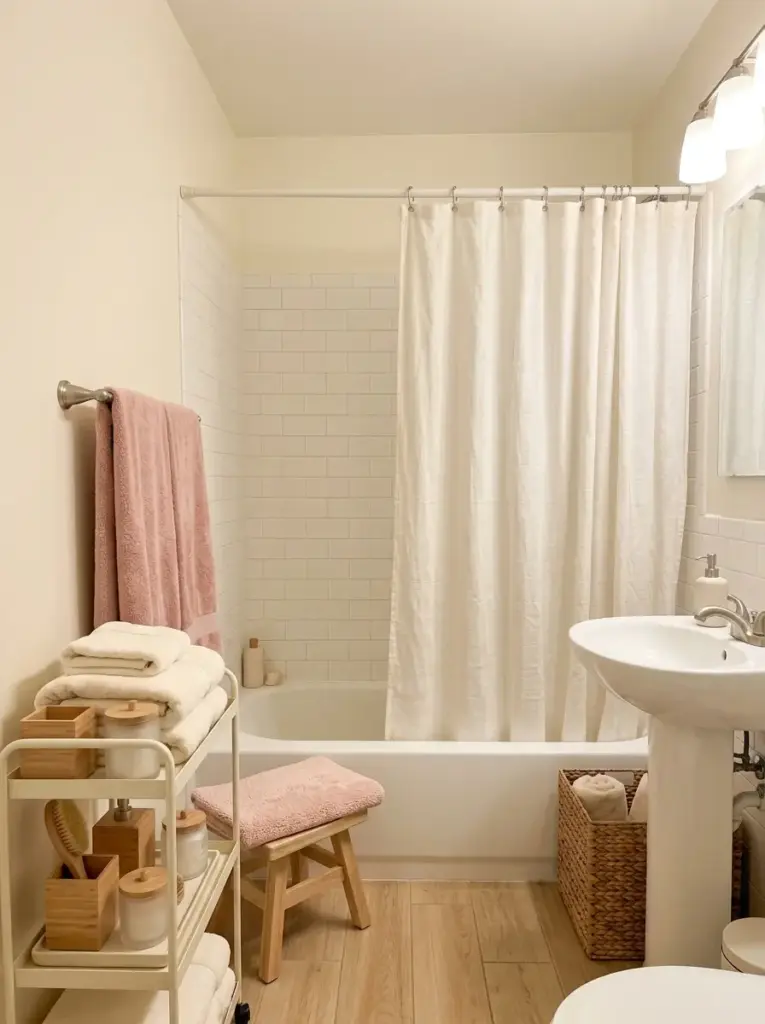
Pink and warm white create one of the most beginner-friendly bathroom palettes. Warm white keeps the bathroom bright, while pink prevents it from feeling sterile. This pairing works well in bathrooms with white tile, white tubs, white sinks, and basic white walls because you do not need to fight the existing fixtures. Instead, you build softness around them.
Warm white matters because stark blue-white can make pink look colder or cheaper. Choose creamy white towels, ivory storage bins, off-white shower curtains, and warm white paint if you are allowed to paint. For lighting, use bulbs around 2700K to 3000K. That temperature range usually flatters skin tones and makes blush or dusty rose decor look warmer. Bulbs around 4000K or higher can make pink look sharp, especially in small bathrooms with glossy tile.
Best for homeowners who want a quiet, polished bathroom is blush pink walls with warm white trim, or white walls with pink textiles. Beginners can use a simple formula: white main surfaces, pink soft goods, and one natural texture like wood or woven storage. Avoid using bright white plastic organizers beside soft pink decor. The contrast can feel harsh. Cream ceramic trays, frosted glass jars, or light wood containers usually blend better.
Try Peel-and-Stick Pink Wallpaper in a Powder Room
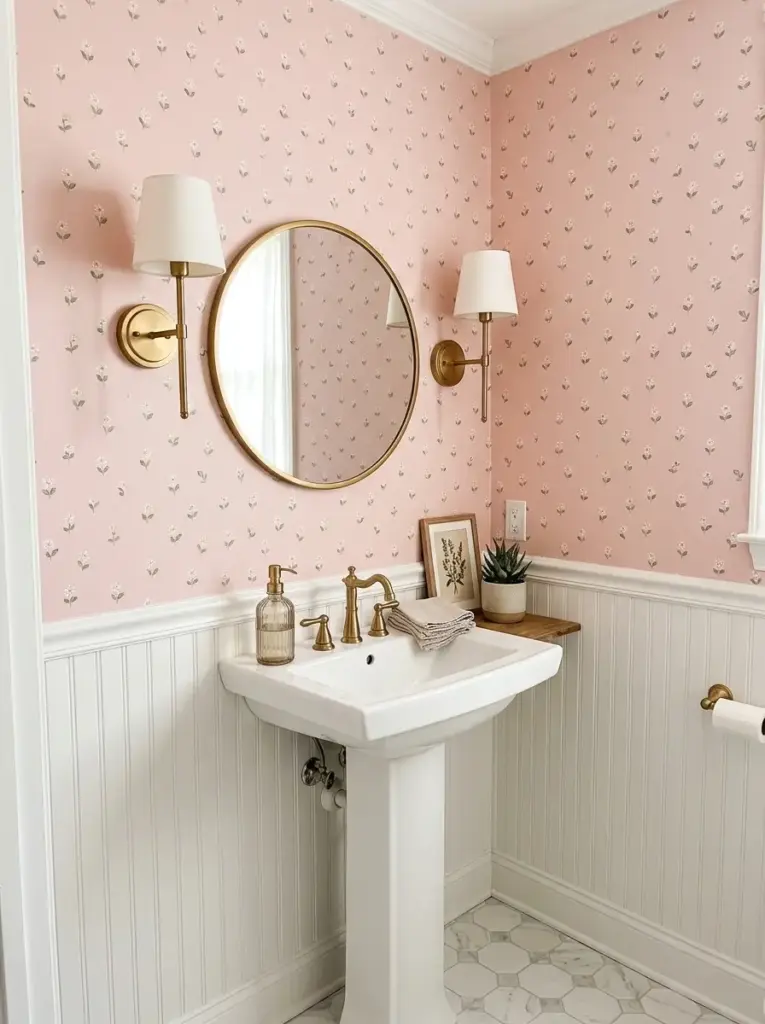
Peel-and-stick wallpaper can give a powder room instant character without a full renovation. Pink wallpaper works especially well in small half baths because there is no shower steam to loosen the adhesive as quickly. Choose patterns that feel controlled, such as tiny florals, thin stripes, block print motifs, soft geometric shapes, or a plaster-style pink texture. Big patterns can work, but they need simple mirrors, lighting, and accessories to balance them.
Visual payoff comes from wrapping the room with one idea. A tiny powder room can handle more patterns than a full bathroom because guests use it briefly, and the space does not need as many towels, bottles, or storage pieces. Pink wallpaper behind a pedestal sink, paired with a slim brass mirror and warm white bulb, can look thoughtful without expensive materials. For a more modern style, try dusty pink wallpaper with a subtle linen texture and a black-framed mirror.
Best for renters is removable wallpaper on one wall only, especially behind the vanity or opposite the doorway. Check the wall texture first. Peel-and-stick products usually work better on smooth, clean, painted walls than on rough or damp surfaces. A budget-friendly option is to frame wallpaper samples as art instead of covering the wall. A common mistake is applying wallpaper directly beside a shower without considering moisture. In a humid full bath, use strong ventilation and keep wallpaper away from heavy splash zones.
Paint the Vanity Pink for a Custom Feel
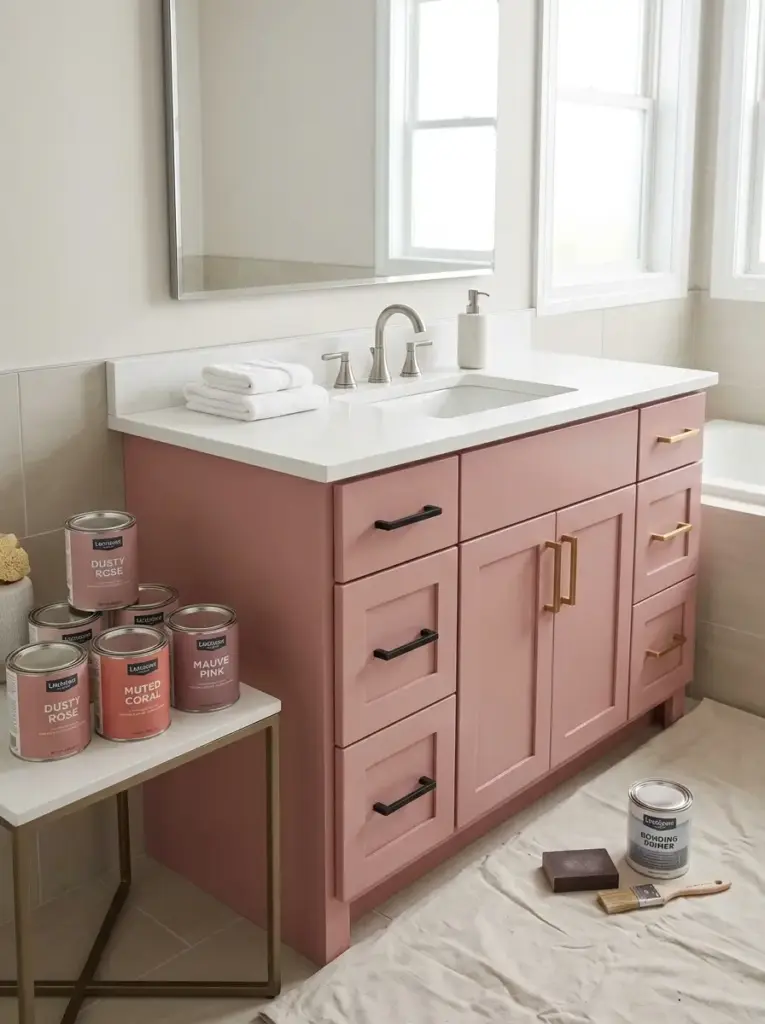
Painting the vanity pink can make a basic bathroom feel more custom. A vanity is smaller than a wall but more permanent-looking than towels, which makes it a strong middle-ground update. Dusty rose, muted coral, mauve pink, and clay pink work well on vanities because they have enough depth to anchor the room. Pale blush can also work, but it may show scuffs more easily on lower cabinets.
Painted vanities succeed because they concentrate color in one solid feature. The sink, mirror, hardware, and countertop frame the color, so the pink looks deliberate. Brass pulls can make rose tones feel warmer, matte black pulls can make pink feel modern, and chrome pulls can keep the room light and simple. If the countertop is busy, choose a calmer pink. If the counter is plain white, you can use a slightly richer shade.
Best for homeowners or renters with permission is a properly prepped vanity. Clean it well, sand lightly, use bonding primer, and choose a durable cabinet paint with a satin or semi-gloss finish. A beginner mistake is skipping prep because the vanity is small. Bathroom cabinets face moisture, toothpaste, makeup, and daily touching, so paint needs a strong base. A budget-friendly version is replacing old knobs with pink ceramic, brass, or clear acrylic pulls if painting is not allowed.
Bring in Pink Through Art and Framed Prints
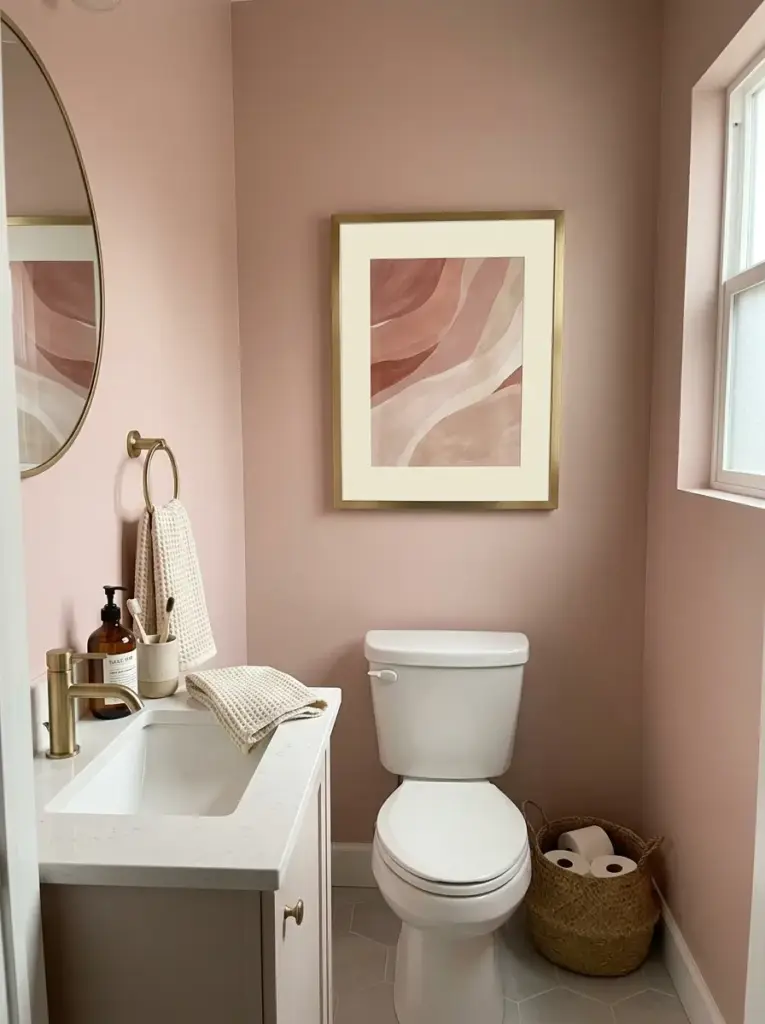
Wall art gives pink a more grown-up role in the bathroom. Instead of using pink only as a cute color, art can connect it to style, shape, and mood. Botanical prints with blush flowers, abstract art with rose and beige shapes, vintage bath illustrations, line drawings on pink backgrounds, or framed textile pieces can all work. Art is especially useful in bathrooms that have no room for furniture or large accessories.
Wall decor helps because it draws the eye upward. Small bathrooms often feel cluttered at counter height because bottles, toothbrushes, and towels collect there. Framed art adds color without taking up storage space. Use moisture-resistant frames, acrylic instead of glass if safety matters, and mats in cream or white for a cleaner finish. Place art where it will not receive direct water spray, such as above the toilet, beside the vanity, or opposite the shower.
Best for beginners is one medium-sized framed print rather than several tiny pieces. Too many small frames can make a compact bathroom feel busy. Match the frame finish to something already in the room. A brass frame with a brass faucet, a black frame with a black mirror, or a light wood frame with woven baskets helps the art feel connected. A budget-friendly approach is printing affordable digital art at home or using a pretty greeting card in a frame.
Mix Pink With Brass for Warm Polish
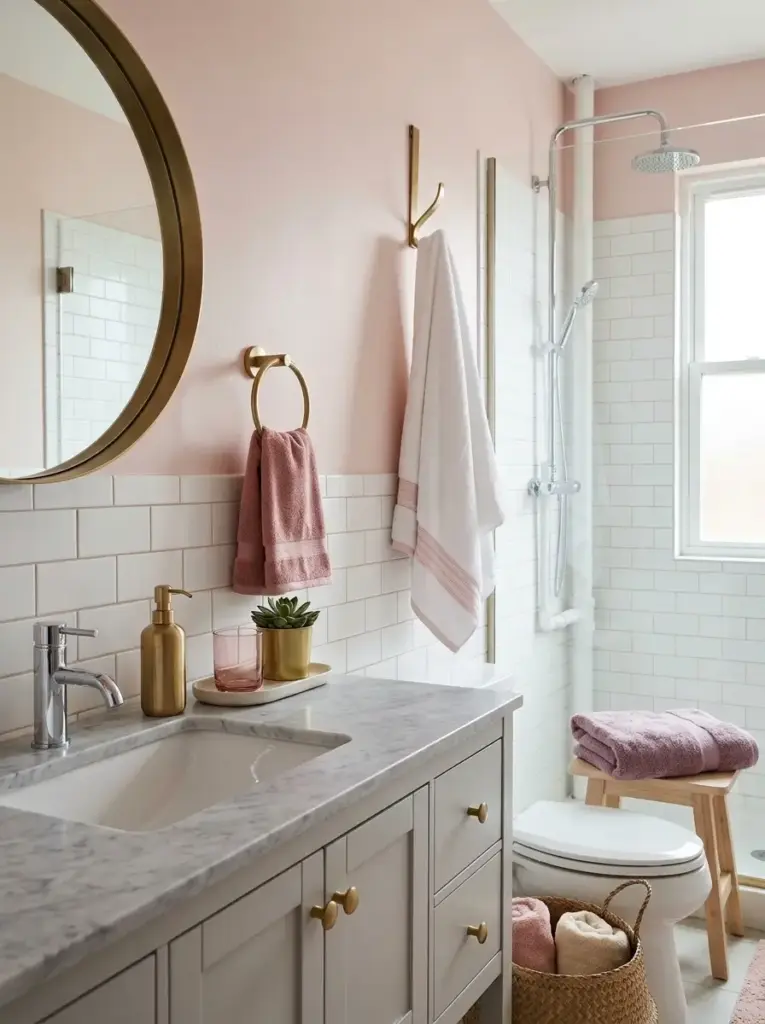
Pink and brass create a warm pairing that feels polished without being stiff. Brass brings a golden tone that flatters blush, rose, peach, pink, and mauve. Bathroom finishes do not need to be expensive to create this effect. A brass mirror, towel ring, cabinet knobs, small tray, or soap pump can introduce enough warmth.
The combination works because brass adds structure while pink adds softness. Bathrooms often have many hard white surfaces, so a warmer metal stops the room from feeling flat. Brushed brass usually looks more current and forgiving than shiny yellow gold. It hides fingerprints better and feels softer beside muted pink. Use brass in two or three spots rather than everywhere. For example, choose a brass mirror, brass towel hook, and brass cabinet pulls, then keep the faucet chrome if replacing plumbing is not in the budget.
Best for people with white, cream, beige, or marble-look bathrooms is pink decor with brushed brass accents. Renters can use adhesive brass hooks, a brass-look tray, or a removable over-the-door towel hook. A common mistake is mixing too many metal finishes without a plan. Chrome faucet, black mirror, brass hooks, rose gold tray, and silver light fixture can feel scattered. Two finishes can work, but repeat each one intentionally.
Use Pink Tile as a Feature, Not a Rule
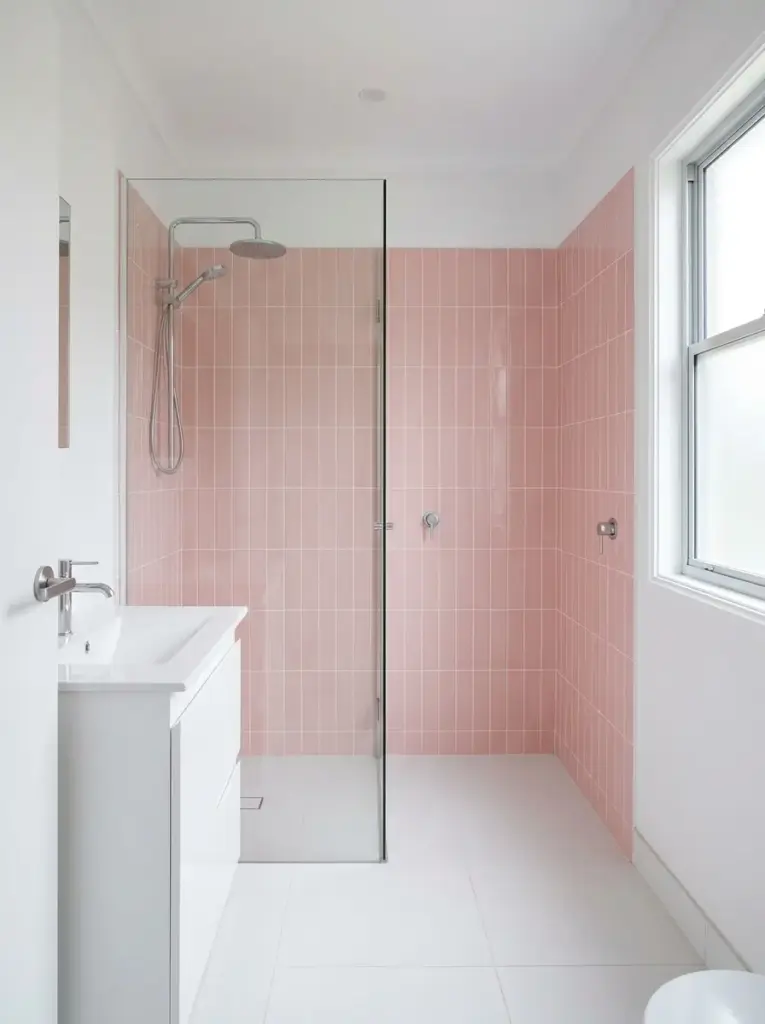
Pink tile can look beautiful when used in balance. It does not need to cover every wall. A pink tiled backsplash, shower niche, half wall, vanity wall, or floor border can make the bathroom feel special while still staying easy to live with. Zellige-style pink tiles, square blush tiles, dusty rose subway tiles, terrazzo with pink chips, and soft pink penny tiles all bring different styles.
Tile feels successful when the shape and grout support the design. Small square tiles can feel retro, vertical subway tiles can make a wall feel taller, and pink terrazzo can look playful but still practical. For grout, off-white keeps the surface soft, while darker grout makes the pattern more visible. In a very small bathroom, using pink tile on the lower half of the wall and painting the upper half warm white can create color without closing in the space.
Best for homeowners planning a renovation is choosing pink tile for one clear area. Pink shower tile with a plain white floor, or pink backsplash with a wood vanity, usually feels more polished than using pink on every surface. A budget-friendly alternative is peel-and-stick tile for a backsplash outside wet zones. Avoid installing trendy tile without considering long-term taste. Pink tile can age well, but extremely bright shades or unusual shapes may feel harder to style later.
Layer Pink With Natural Wood
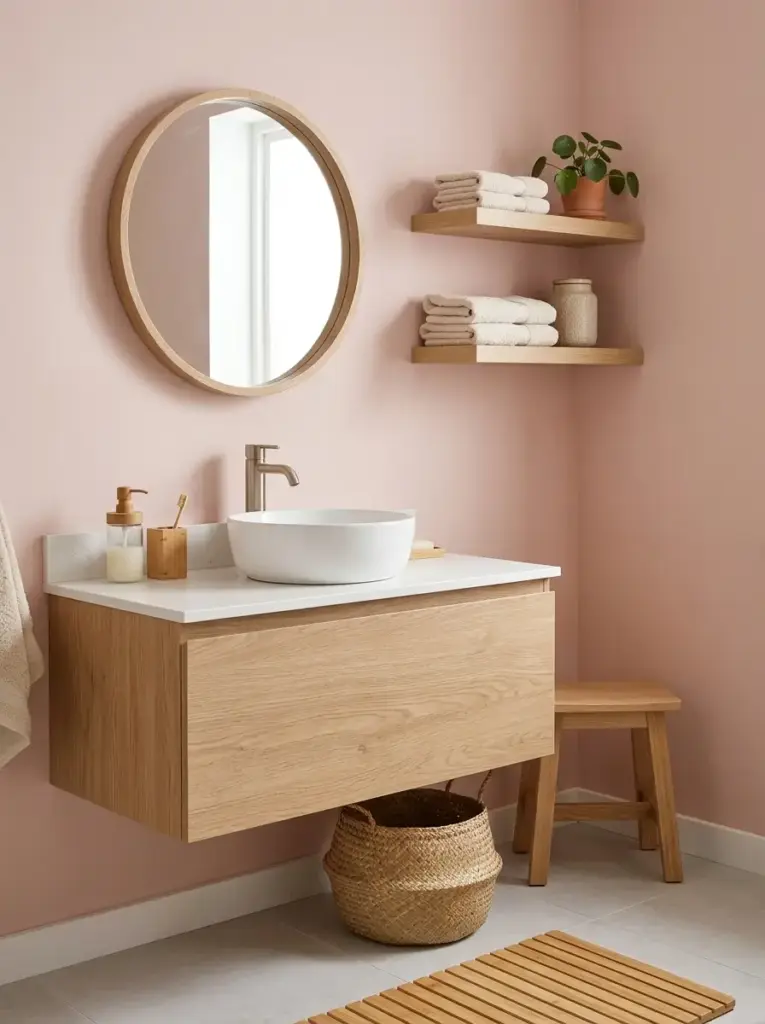
Natural wood keeps pink bathroom decor from feeling too sugary. Wood adds warmth, grain, and a grounded texture that balances soft color. Light oak, bamboo, pale ash, and natural pine pair well with blush pink. Walnut and darker woods work better with mauve, dusty rose, or clay pink because they bring more depth.
Texture balance makes this idea useful in small bathrooms. Pink can sometimes look flat when everything is smooth and glossy. A wood stool, floating shelf, bath tray, vanity, mirror frame, or small cabinet adds a natural break. Even a wooden soap dish or bamboo drawer organizer can help. Bathrooms need moisture-aware choices, so use sealed wood, bamboo, or pieces designed for damp rooms. Keep raw untreated wood away from direct splashes.
Best for home decor lovers who want a calm but practical bathroom is a blush-and-wood palette with cream towels and simple storage. A small oak shelf above the toilet can hold folded pink hand towels, a ceramic jar, and one plant. A budget-friendly option is adding a bamboo bath mat or a wood-framed mirror instead of replacing the vanity. A common mistake is using too many wood tones at once. Try to keep the shelves, frame, and stool in the same wood family.
Style the Countertop With Pink in Small Doses
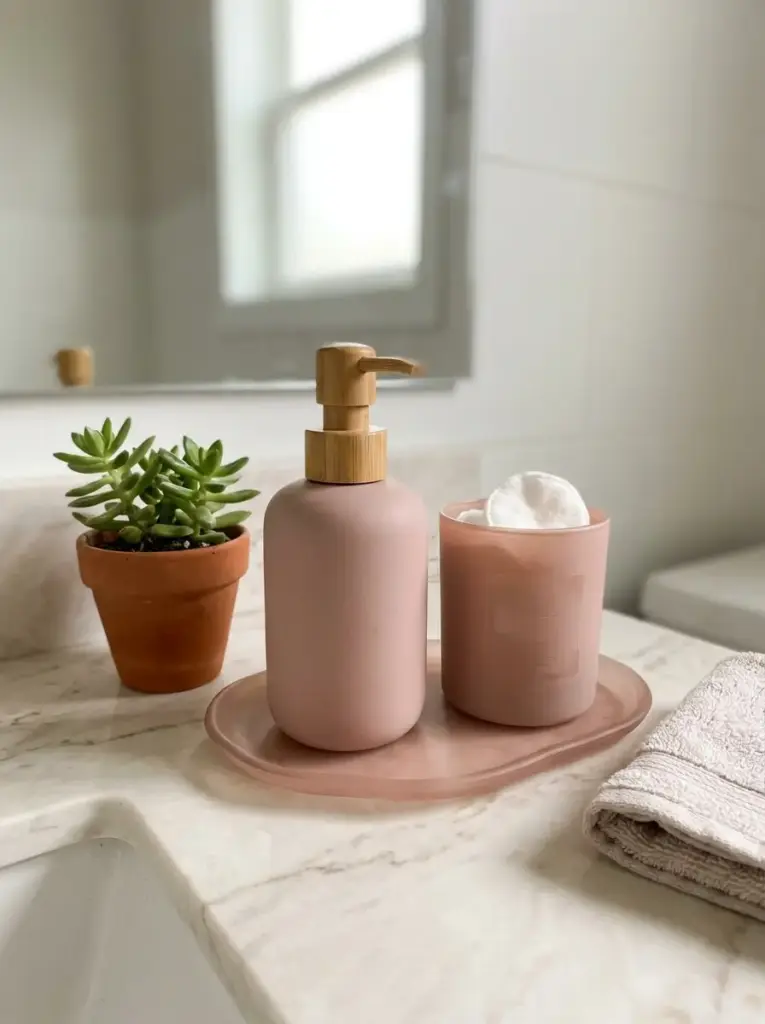
Bathroom countertops can quickly become messy, especially in small homes. Pink decor helps most when it organizes the counter rather than adding more clutter. Choose one or two useful pink items, such as a soap dispenser, toothbrush cup, tray, small vase, or lidded jar. Keep daily products grouped instead of scattered.
Small styling works because bathrooms need function first. A pink ceramic tray can hold hand soap and lotion. A blush glass jar can store cotton rounds. A dusty rose cup can hold makeup brushes. These pieces add color while creating order. Leave some space around the sink so the bathroom still feels clean. Crowded counters make even expensive decor look messy.
Best for beginners is a three-piece countertop setup: soap dispenser, small tray, and one useful container. Choose matte ceramic or glass rather than shiny plastic for a more polished finish. If your countertop is dark, try mauve or rose pink. If it is white or marble-look, blush or dusty pink works well. A budget-friendly tip is to reuse a small pink dish, candle jar, or ceramic bowl you already own. A common mistake is buying a full matching bathroom accessory set with too many pieces. Matching sets can look stiff when every item is the same color and material.
Choose a Pink Bath Mat That Fits the Layout
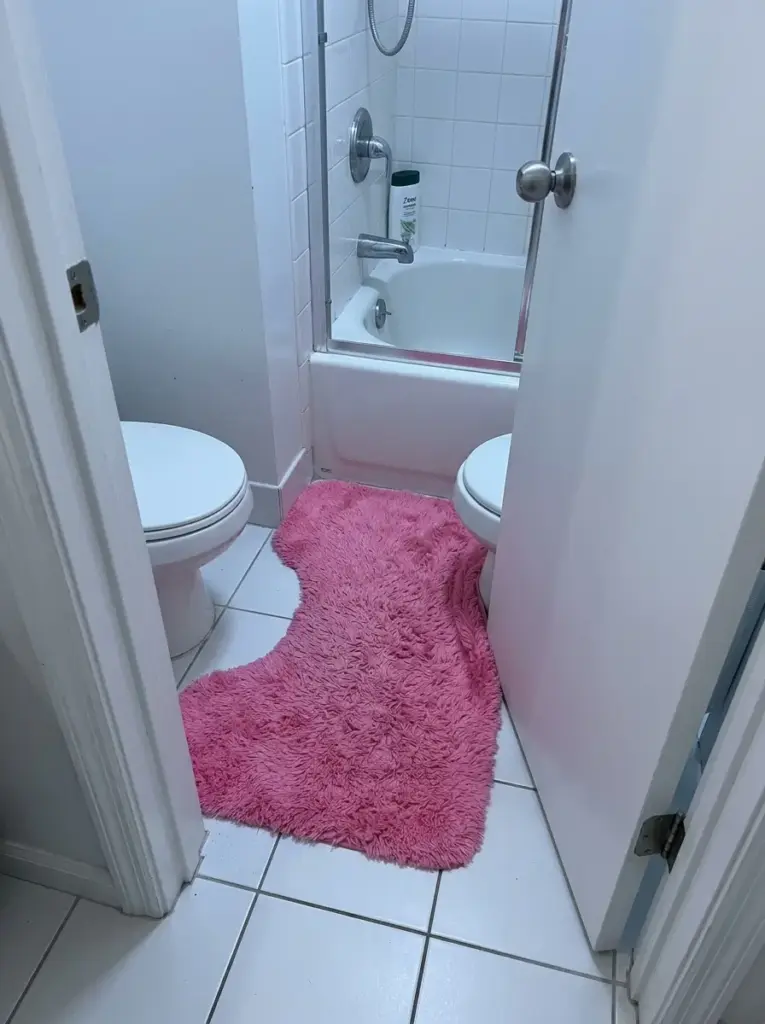
Bath mats affect both style and safety. A pink bath mat can add warmth at floor level, but size and placement matter. Too small, and it looks like an afterthought. Too large, and it bunches around the toilet or blocks the door. Measure the floor before buying. In narrow bathrooms, a runner-style washable rug may look better than two small mats. In compact bathrooms, one simple mat outside the shower often works best.
Floor color changes the way pink reads. Blush mats soften white or gray tile. Dusty rose mats warm up beige floors. Mauve mats add contrast to light stone. For polished style, choose a bath mat with texture, such as ribbed cotton, tufted cotton, or low-pile washable fabric. Avoid overly fuzzy mats in tiny bathrooms because they can trap moisture and visually crowd the floor.
Best for renters is a washable pink rug with a non-slip pad underneath. Use a low-profile rug if the door swings over the area. For a long galley bathroom, place a narrow runner from the vanity toward the tub if it does not create a tripping risk. Budget-friendly choice is one quality mat in the main wet area instead of several cheap matching mats. A common mistake is using toilet contour rugs. They often make the room look dated and can be harder to keep fresh.
Improve Lighting Before Judging the Pink
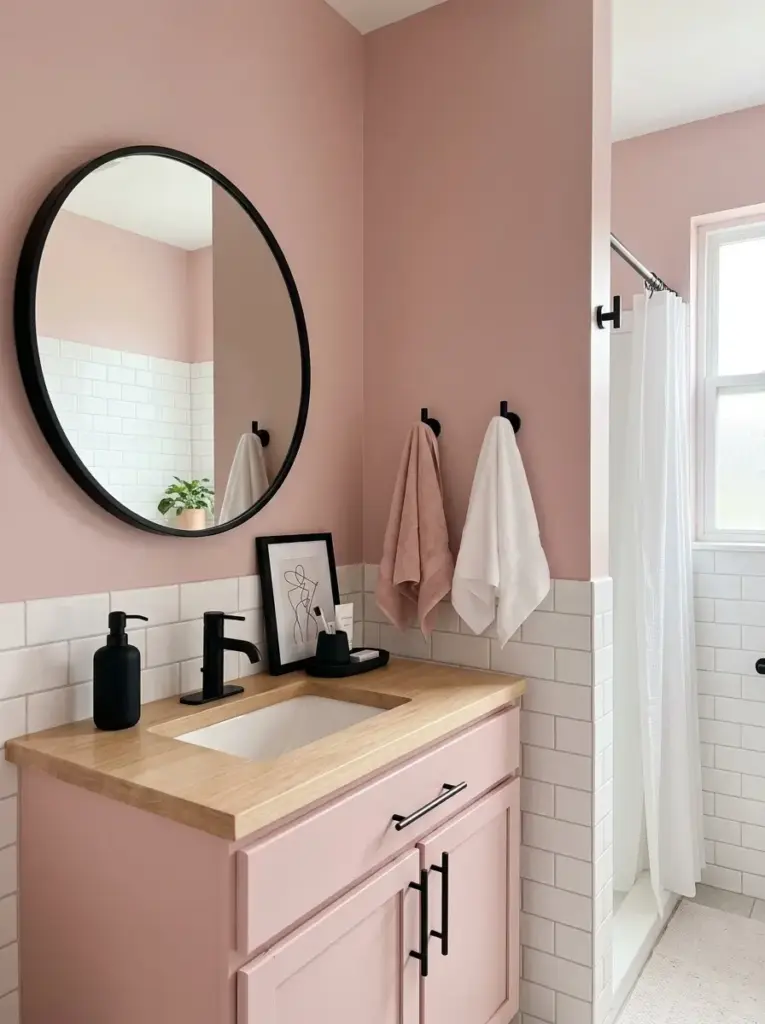
Lighting can make or break pink bathroom decor. Many bathrooms have overhead lights that cast shadows and make colors look harsh. Pink needs flattering light to show its warmth. Choose bulbs around 2700K to 3000K for a warm, clean glow. If you apply makeup in the bathroom, use balanced lighting near the mirror with bulbs that do not look too yellow or too blue.
Better lighting changes the whole room because it affects skin tones, paint, tile, and decor. A blush wall may look dull under cool white bulbs, but warm and soft under 3000K lighting. Vanity lights placed at face level or on both sides of the mirror reduce shadows better than a single overhead fixture. If replacing fixtures is not possible, changing bulbs can still help.
The best for beginners is starting with bulbs before buying more decor. Match bulb color across the bathroom so one side does not look warm and the other cold. Renters can use plug-in sconces where safe, battery-operated accent lights on shelves, or stick-on lights inside dark cabinets. Budget-friendly improvement is replacing old bulbs and cleaning the light cover, which often holds dust that dulls the room. A common mistake is decorating first and blaming the pink when the real issue is cold, unflattering lighting.
Balance Pink With Black for a Modern Edge
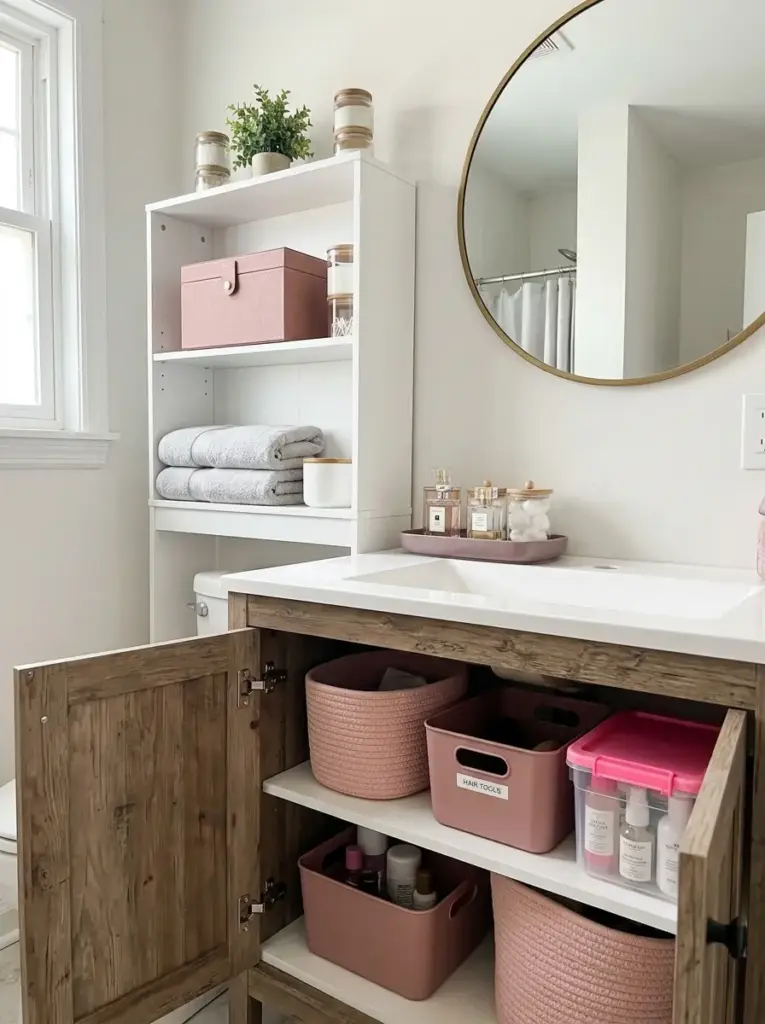
Black accents can make pink feel cleaner and more modern. Pink brings warmth, while black gives definition. This pairing works best when black appears in slim lines instead of heavy blocks, especially in small bathrooms. Think black mirror frame, black towel hooks, black cabinet pulls, black picture frames, or a black shower curtain rod.
Strong contrast helps because pink can look too soft when everything around it is pale. Black outlines the space and keeps the decor from feeling overly delicate. Dusty rose with matte black feels modern. Blush with black and white feels crisp. Mauve with black and warm wood feels more mature. Keep the black pieces consistent and simple.
Best for apartments and builder-grade bathrooms is using black hardware to update older finishes without changing tile. A black-framed mirror over a pink vanity, or blush towels beside black hooks, can feel intentional. Renters can use adhesive black hooks, a black countertop tray, or a black framed print. Budget-friendly upgrade is replacing cabinet knobs with matte black pulls. A common mistake is adding too much black to a tiny bathroom with little natural light. If the room already feels dark, use black only in small details and keep the rest light.
Create a Pink Storage Moment
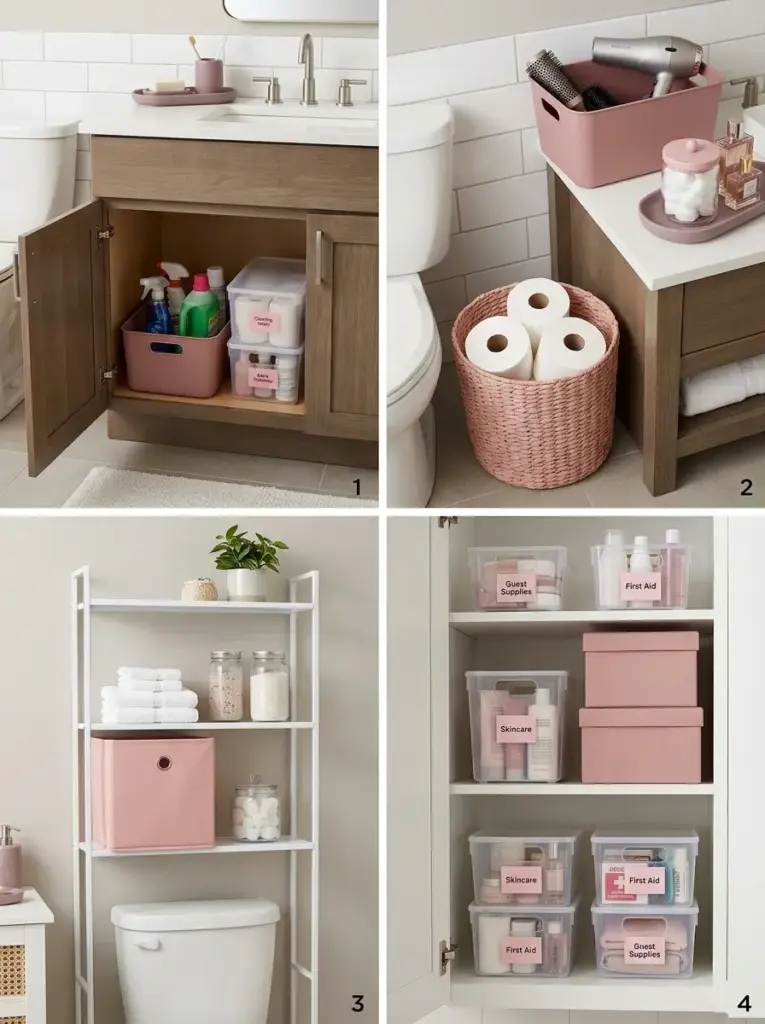
Storage can become decor when you choose attractive pieces. Pink baskets, bins, trays, shelves, or cabinets can organize the bathroom while supporting the color palette. Use storage where clutter naturally collects: under the sink, above the toilet, beside the vanity, or inside open shelving. A bathroom that looks pretty but has nowhere to store extra products will not stay polished for long.
Functional color works because it gives pink a job. Instead of adding a pink object only for decoration, use a blush basket for extra toilet paper, a dusty rose bin for hair tools, a pink-lidded box for skincare, or a mauve tray for perfumes. Closed storage looks cleaner for busy items, while open storage works for folded towels, simple jars, and items used daily.
Best for small bathrooms is vertical storage. A slim over-the-toilet shelf, floating shelves, or a narrow cabinet can add function without taking up much floor space. Choose one pink storage piece and keep the rest neutral if the bathroom is small. A budget-friendly idea is covering plain boxes with pink contact paper or using pink labels on clear bins inside the cabinet. A common mistake is buying cute storage before sorting products. Remove expired skincare, empty bottles, and duplicate items first, then buy only the storage you need.
Common Mistakes to Avoid With Pink Bathroom Decor
Overusing one shade of pink can make the bathroom feel flat. Even a pretty color becomes tiring when it appears on every towel, mat, bottle, wall, and accessory. Better results come from using one main pink and supporting it with warm white, cream, wood, brass, gray, or black. If you want more than one pink, choose shades from the same family, such as blush, dusty rose, and mauve, instead of mixing neon pink with peach and lavender pink.
Ignoring undertones causes many decorating problems. Pink with blue undertones may clash with beige tile. Peachy pink may fight with cool gray floors. Dusty rose usually bridges warm and cool colors more easily. Bring home samples before committing to paint, tile, or wallpaper. Place them beside the floor, vanity, countertop, and shower tile. Color should work with fixed surfaces first.
Clutter weakens the polished effect faster than color choice. Too many bottles around the tub, crowded countertops, and mismatched organizers make the room feel unfinished. Pink decor looks best when the bathroom has breathing room. Use trays, baskets, cabinet organizers, and hooks to give everything a place. Keep only daily items visible, and store backups out of sight.
Poor lighting can make pink look wrong even when the decor is good. Cool bulbs can turn blush gray and make rose tones look harsh. Replace mismatched bulbs with warm white bulbs around 2700K to 3000K. Clean light covers and mirrors because cloudy surfaces reduce brightness. For mirror areas, use even lighting that does not cast heavy shadows.
Choosing style over moisture resistance can create maintenance issues. Bathrooms need washable textiles, sealed wood, rust-resistant metal, and wallpaper suited to the level of humidity. Pretty pieces still need to handle damp air. Keep delicate art, unsealed wood, and paper items away from splash zones. Use a fan after showers and wash bath mats often.
Budget-Friendly Pink Bathroom Decor Tips
Starting small usually gives the best value. Replace hand towels, add a pink bath mat, choose a pretty soap dispenser, and hang one framed print before buying larger pieces. These changes cost less than tile or paint but can still shift the palette. Focus on the areas people see first: vanity, mirror wall, shower curtain, and floor.
Paint offers a strong impact for a lower price if you own your home or have permission. Painting a vanity, one wall, or a small powder room can cost far less than replacing fixtures. Choose durable bathroom-friendly paint and spend time on prep. A carefully painted vanity in dusty rose can make an old cabinet look more intentional.
Secondhand pieces can work well in pink bathrooms. Look for small wood stools, brass mirrors, ceramic trays, framed art, and storage baskets at thrift stores or online marketplaces. Many bathrooms only need one character piece to feel less basic. Clean items well before placing them in a damp room, and avoid anything that already shows rust, swelling, or mildew.
Rental-friendly updates can still feel finished. Use removable wallpaper away from heavy moisture, adhesive hooks, tension shower rods, peel-and-stick backsplash tile outside wet zones, washable rugs, and countertop accessories. Save original hardware in a labeled bag if you swap knobs or pulls, so you can reinstall them before moving out.
Spending more on one useful item often beats buying many cheap accessories. A good fabric shower curtain, quality towel set, or sturdy storage cabinet can improve the room more than several small decorative objects. Choose pieces that serve a purpose and repeat the palette. Pink Bathroom Decor Ideas should make the bathroom easier to use, not harder to clean.
Pink Bathroom Decor Ideas Tips for Beginners
Pick a clear palette before shopping. Choose one pink shade, one neutral, one metal finish, and one texture. For example, blush pink, warm white, brushed brass, and light oak create a soft, polished palette. Dusty rose, cream, matte black, and woven texture create a more modern but warm palette. Mauve, white, chrome, and gray stone feel cooler and more refined.
Use the 60-30-10 idea in a simple way. Let about 60 percent of the room stay neutral, 30 percent carry supporting texture or secondary color, and 10 percent show stronger pink accents. Small bathrooms rarely need exact math, but the idea helps prevent overdecorating. White tile and walls can be the 60 percent, wood and cream textiles can be the 30 percent, and pink towels or art can be the 10 percent.
Repeat pink at least twice. One pink object can look random, but two or three pink moments make the color feel planned. Pair a pink shower curtain with a pink hand towel, or pink art with a pink rug. Keep repetition balanced across the room. If all the pink sits on one side, the bathroom may feel visually lopsided.
Keep daily routines in mind. Place hooks where towels can dry. Choose washable rugs near wet areas. Use trays that can be wiped clean. Leave counter space around the sink. Pretty decor should not block outlets, drawers, cabinet doors, or the shower entrance. Small-space decorating works best when movement feels easy.
Edit before adding more. Remove old products, faded towels, rusty caddies, and decor that no longer match. Many bathrooms look better after subtraction. Once the room is cleaner, pink accents stand out more, and you may need fewer new items than expected.
FAQ
Can pink bathroom decor look grown-up?
Pink bathroom decor can look grown-up when you choose muted shades and pair them with structured finishes. Dusty rose, blush, clay pink, and mauve often feel more mature than bright candy pink. Add simple materials such as marble-look counters, warm wood, brushed brass, matte black, ribbed glass, or plain white tile. Keep patterns controlled and avoid filling the room with novelty accessories.
Which colors go best with pink in a bathroom?
Warm white, cream, beige, light oak, brass, soft gray, charcoal, and matte black all work well with pink. Blush pink looks clean with warm white and oak. Dusty rose pairs nicely with cream and brass. Mauve works with white, gray, chrome, or black. Coral pink can look fresh with white and natural wood, but it needs restraint because it carries more energy.
How can renters use Pink Bathroom Decor Ideas without damage?
Renters can use pink towels, shower curtains, washable rugs, framed art, peel-and-stick wallpaper in dry areas, adhesive hooks, countertop trays, and removable storage. Cabinet knobs can often be swapped if the original hardware is saved. Avoid drilling into tile or applying wallpaper in wet shower zones unless the product and landlord rules allow it.
What pink shade works best for a small bathroom?
Soft blush, dusty rose, and muted mauve usually work best in small bathrooms. These shades add warmth without overwhelming the room. Very bright pink can work in a powder room, but it may feel intense in a bathroom used every day. If the room has little natural light, test pink samples under the actual bulbs before committing.
How do I make a pink bathroom feel less childish?
Use simple shapes, quality textures, and balanced colors. Replace overly cute prints with framed art, textured towels, a fabric shower curtain, and clean storage. Pair pink with warm white, wood, brass, black, or stone. Avoid too many bows, novelty signs, glitter finishes, or matching plastic accessories. Pink itself is not childish; the styling around it decides the final mood.
Should bathroom lighting be warm or cool with pink decor?
Warm white lighting around 2700K to 3000K usually works best with pink bathroom decor. It helps blush, rose, and mauve shades look softer and more flattering. Cool bulbs can make pink look gray, harsh, or too sharp. For makeup areas, choose bulbs that give clear, even light without turning the room yellow.
Conclusion
Pink Bathroom Decor Ideas can feel pretty and polished when color, function, and balance work together. Start with one main pink feature, then support it with practical choices like better lighting, simple storage, washable textiles, and finishes that match your bathroom’s existing tile and fixtures. Small updates can make a plain bathroom feel more personal, while larger changes like a painted vanity or pink tile can create a stronger design statement.
Good decorating does not require a huge budget or a full remodel. The most successful pink bathrooms use restraint, repeat color with purpose, and leave room for daily routines. Choose shades that suit your lighting, keep clutter under control, and use pink in ways that make the bathroom easier and nicer to use. With the right mix, even a small or rental bathroom can feel warm, organized, and thoughtfully styled.