
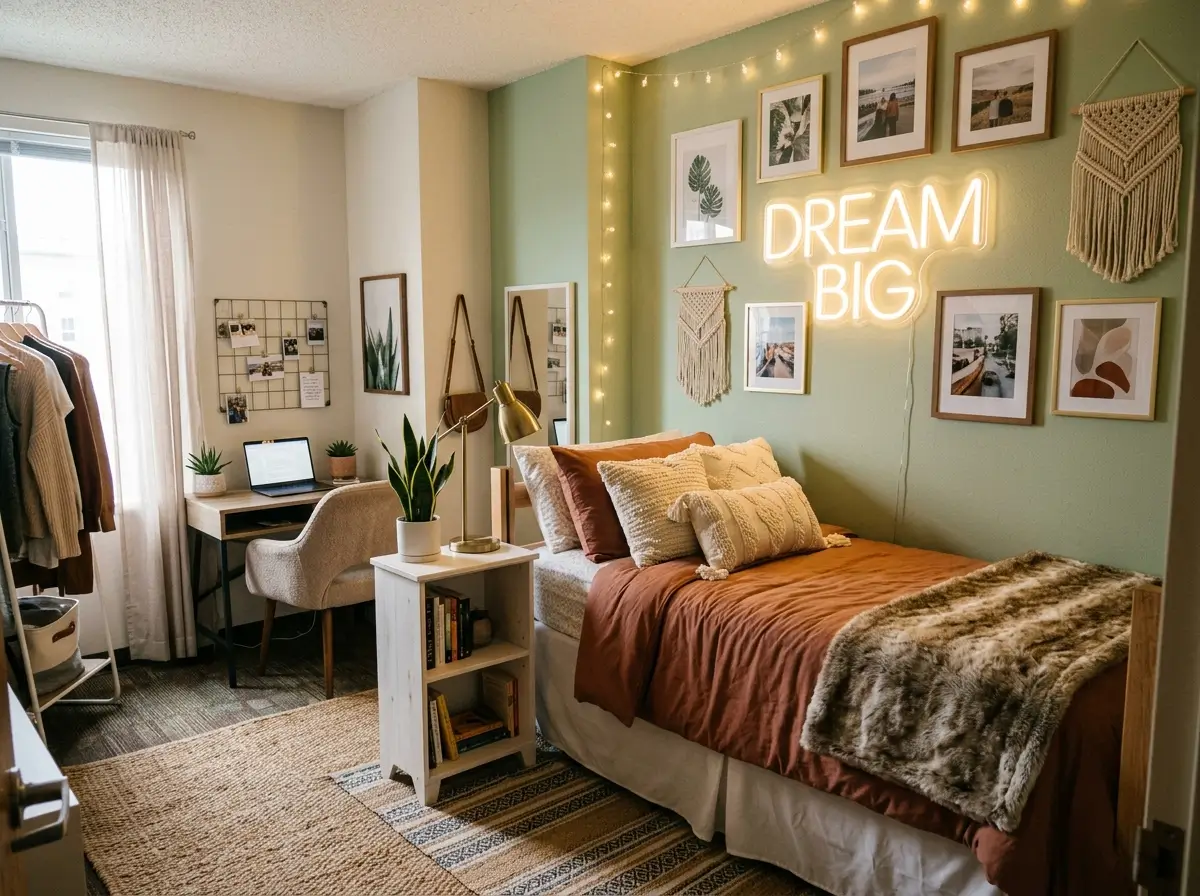

Small dorm apartments can feel tricky at first because one room often needs to work as a bedroom, study zone, closet, lounge, dining corner, and storage area. Good Dorm Apartment Decor is not only about making the room pretty. Better decorating choices help you move around easily, keep clutter under control, sleep better, and feel more settled in a small space. When every inch matters, the best ideas are practical first and stylish second. Color, lighting, furniture size, wall decor, bedding, and storage all need to work together instead of fighting for attention. Dorm Apartment Decor
College rooms and small apartments also come with rules. Many renters cannot paint walls, drill holes, replace fixtures, or bring large furniture. That does not mean the space has to feel plain. Rental-friendly decor can still add color, warmth, personality, and comfort without risking damage fees. Removable hooks, plug-in lighting, washable rugs, peel-and-stick accents, lightweight curtains, folding furniture, and smart storage pieces can change the feel of a room without permanent changes. Budget matters too, so many of the ideas below use affordable pieces you can reuse after move-out.
Question
How can beginners use Dorm Apartment Decor to make a small room feel stylish, organized, and comfortable without spending too much?
Quick answer
Small rooms look better when decor solves real problems. Choose a simple color palette, lift storage off the floor, use warm layered lighting, pick furniture with more than one purpose, and leave clear walking paths. Dorm Apartment Decor works best when bedding, rugs, shelves, lamps, and wall pieces make the room easier to use every day. Start with the bed, desk, lighting, and storage before buying small accessories. Those four areas have the biggest impact in a dorm apartment or compact college room.
Start With a Clear Color Palette
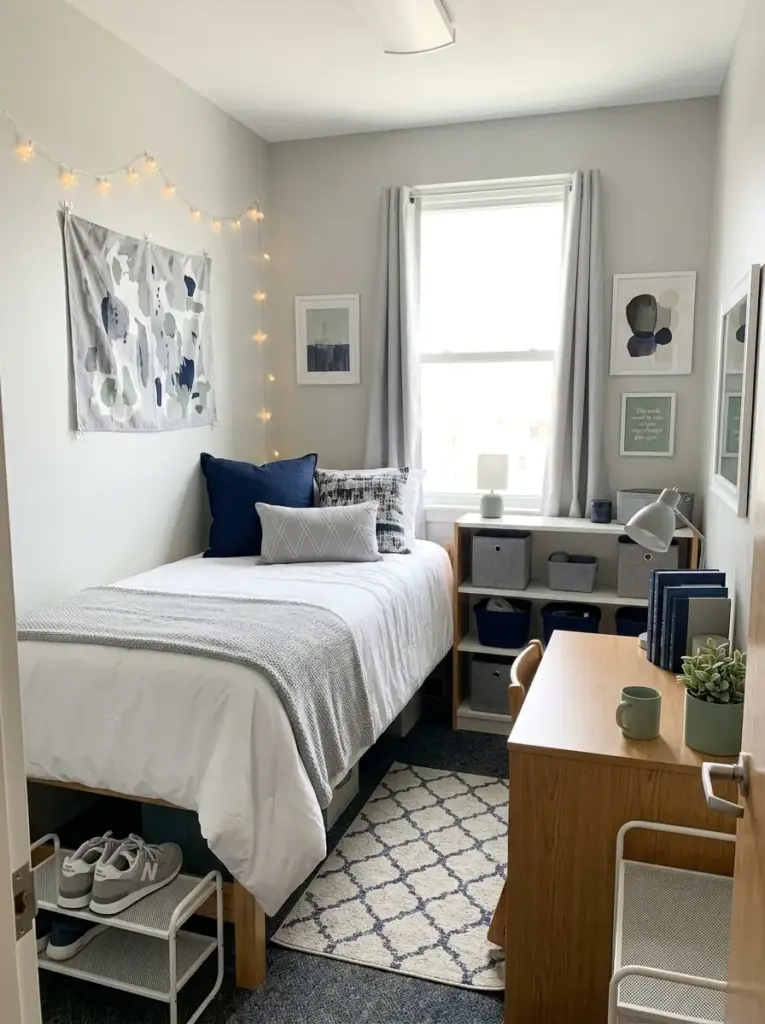
Color can make a small dorm apartment feel calmer, cleaner, and more pulled together, even when the furniture is basic. Pick two main colors and one small accent color before buying bedding, rugs, curtains, baskets, or wall decor. For example, warm white, soft beige, and sage green create a relaxed look that works well with wood furniture and black metal frames. Charcoal, cream, and rust feel warmer and more mature. Light gray, navy, and white give a clean college apartment style without looking too busy. Keeping the palette limited helps every piece look intentional, which matters in small rooms because too many colors can make clutter feel louder.
Small-space color planning works because the eye reads repeated colors as order. When bedding matches storage bins, a desk lamp repeats the same metal finish as the mirror, and wall art pulls from the same tones, the room feels less crowded. Beginners often buy cute items one at a time, then wonder why the room feels messy even after cleaning. The issue is usually not the amount of decor. The issue is visual conflict. Best for students who feel overwhelmed by choices, a three-color palette makes shopping easier and prevents impulse buys that do not fit the room. Rental-friendly options include removable pillow covers, affordable throws, peel-and-stick decals, fabric wall hangings, and rugs that bring in color without touching the walls.
Make the Bed the Main Design Feature
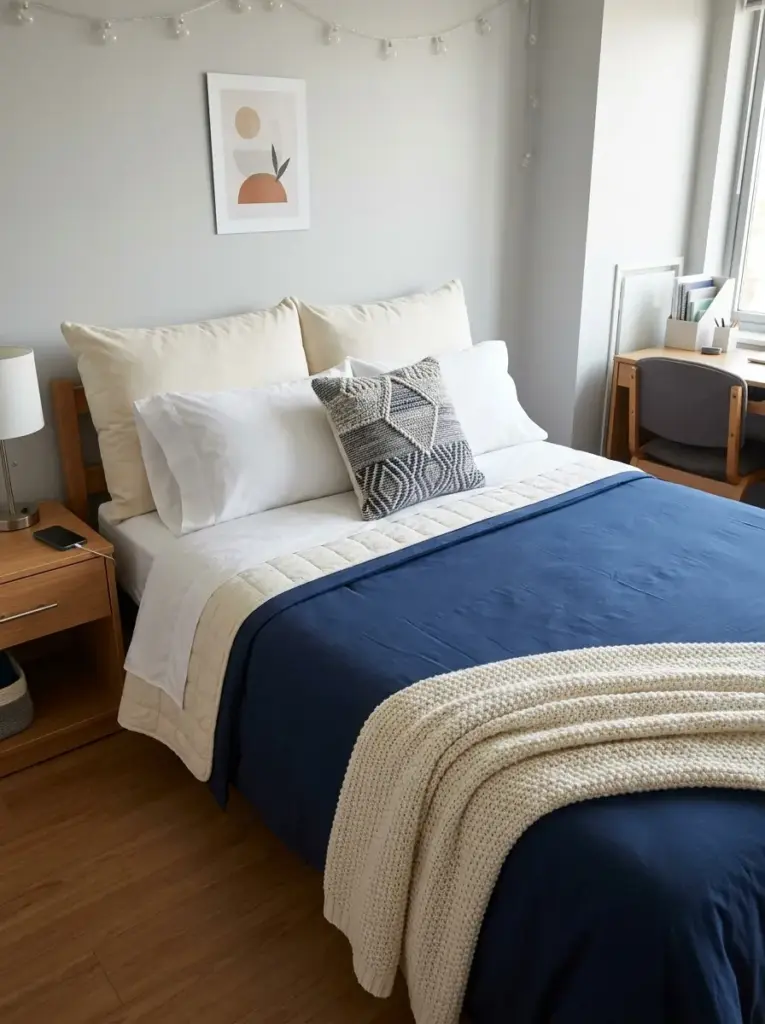
Dorm rooms usually place the bed in a visible spot, so bedding becomes the biggest part of the decor. Treat the bed like a small sofa during the day and a sleep zone at night. Choose a comforter or duvet in a solid color, then add two sleeping pillows, two larger back pillows, and one textured throw. For a small room, avoid five or six decorative pillows because they often end up on the floor or a desk chair. Practical bedding might include a washable duvet cover, cotton sheets, a lightweight quilt, and a throw blanket that adds texture without creating laundry stress.
Strong bedding choices matter because the bed takes up the most visual space. When the bed looks neat, the whole room looks more organized. When the bed is covered with clashing blankets, unfolded laundry, and too many pillows, even a clean room can feel chaotic. Dorm Apartment Decor beginners can start with a white, cream, gray, navy, olive, or soft blush base, then add pattern through one throw pillow or blanket. Best for students who want a fast upgrade, bedding gives the biggest visual change for the least effort. Look for machine-washable fabrics and avoid delicate materials that need special care. College life is easier when decor can survive snacks, late-night studying, and frequent laundry.
Use Under-Bed Storage Without Making It Look Messy
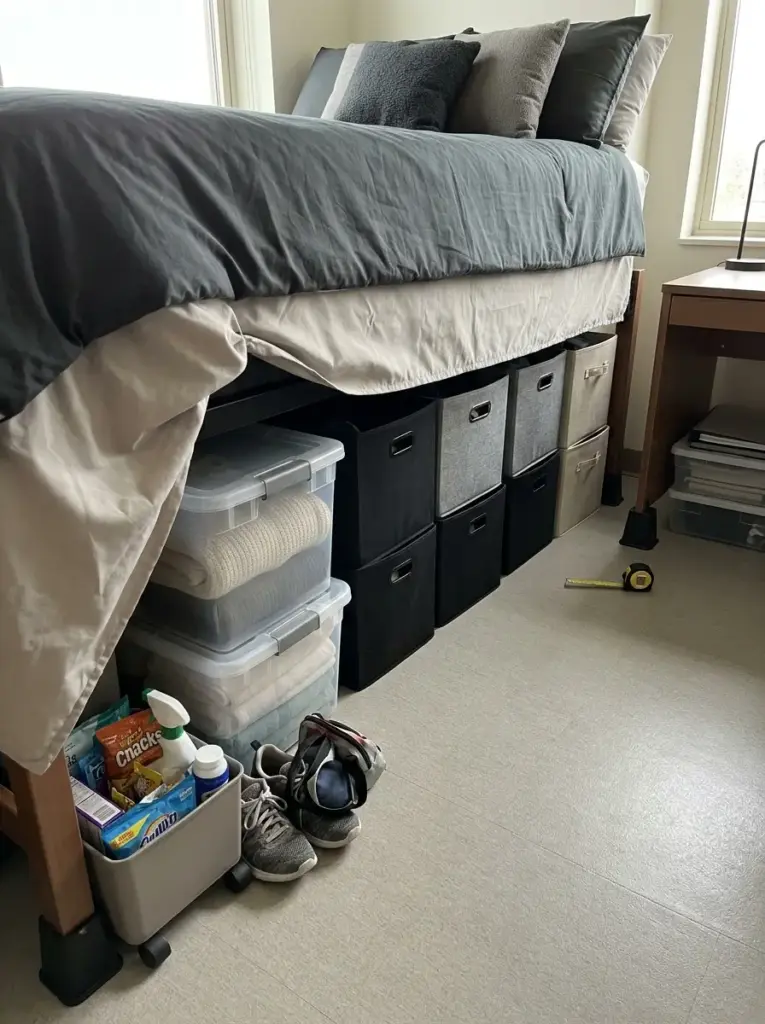
Under-bed storage is one of the most useful small-room tricks, but it can also make a dorm apartment look cluttered if everything is visible. Bed risers, rolling bins, fabric drawers, and low storage boxes can hold shoes, seasonal clothes, extra towels, snacks, cleaning supplies, and school materials. Choose matching containers if the area is exposed. Black fabric bins look neat with darker bedding, while beige or gray bins work well in lighter rooms. Clear plastic boxes are practical because you can see what is inside, but they look better when hidden behind a bed skirt or placed toward the back.
Smart under-bed storage helps because it uses a zone that often goes wasted. Small rooms do not have enough closet space, and piling items around the bed makes the room harder to clean. Best for students with lots of clothes or supplies, under-bed storage keeps daily surfaces open. Rental-friendly bed risers can add several inches of height without damaging floors, but check dorm rules before using tall risers. Measure the bed height before buying bins. A common mistake here is buying containers that are too tall, then forcing them under the bed until the lids bend. Another mistake is storing daily-use items too far back. Keep shoes, gym bags, and laundry supplies near the front. Store off-season sweaters, extra bedding, or backup toiletries deeper underneath.
Create a Real Study Zone at the Desk
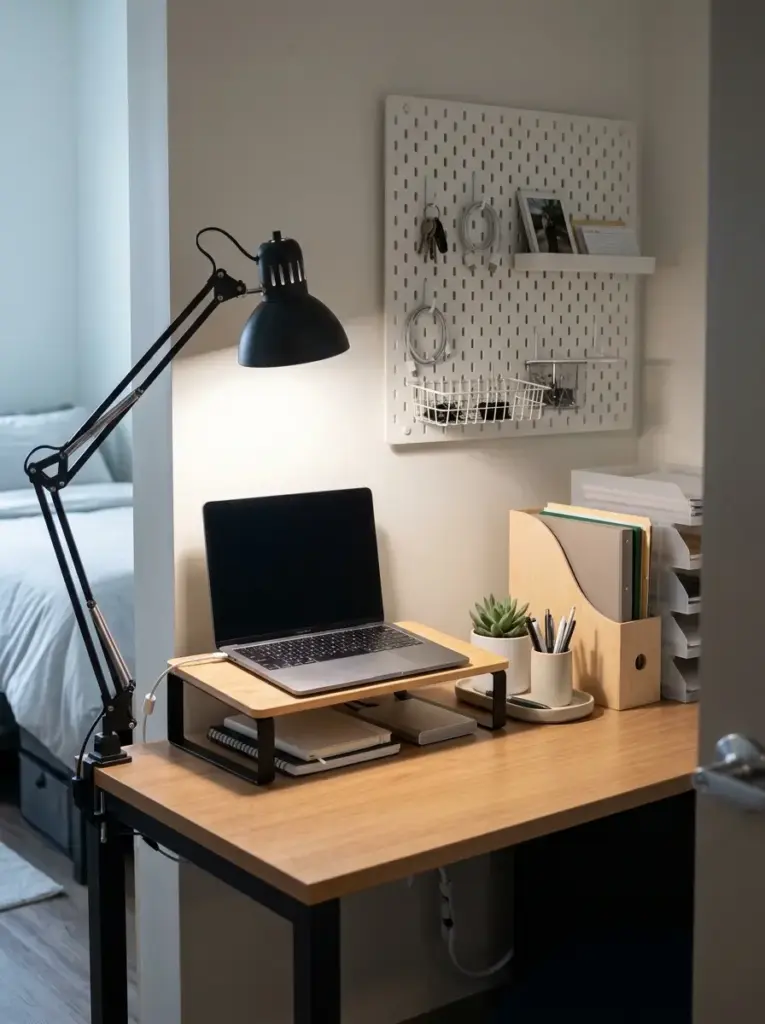
Dorm desks often become dumping grounds because they sit near the bed and door. Better Dorm Apartment Decor gives the desk a clear purpose. Keep the main surface mostly empty, then add a task lamp, a small tray for pens, a vertical file holder, and one personal item such as a framed photo or small plant. Use a monitor stand or laptop riser if you work long hours, because raising the screen can improve comfort and create space underneath for notebooks. Choose desk organizers that go upward instead of outward, such as stacked trays, wall grids, pegboards, or slim shelves.
Good desk styling supports focus because a clean work area reduces friction. When your laptop, charger, notebooks, and pens have assigned homes, starting homework feels easier. Best for beginners who struggle with clutter, a simple desk setup is more useful than a crowded one. Lighting matters here, too. A desk lamp around 4000K gives a crisp, neutral light for reading and studying, while warmer lighting around 2700K to 3000K feels better for relaxing later. Place the lamp on the opposite side of your writing hand to reduce shadows. Renters can use clamp lamps, plug-in lamps, adhesive cord clips, and removable cable channels instead of drilling or changing outlets. Keep snacks, makeup, and random laundry off the desk if you want the study zone to stay functional.
Layer Lighting Instead of Relying on One Ceiling Light
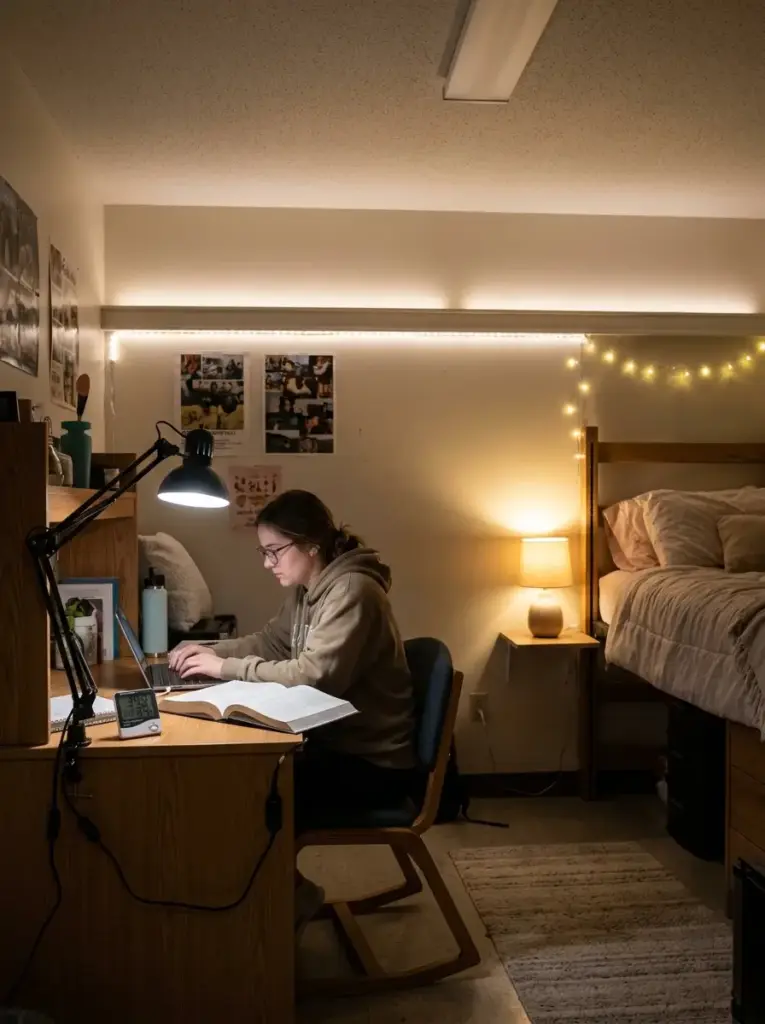
Overhead dorm lighting is often harsh, flat, or too bright for relaxing. Layered lighting changes the mood and makes the room easier to use at different times of day. Use one task light for the desk, one warm lamp near the bed, and one soft ambient source such as LED strip lights, fairy lights, a floor lamp, or a plug-in wall sconce. Warm white bulbs around 2700K to 3000K make evening lighting feel comfortable. Neutral bulbs around 3500K to 4000K work better for studying, makeup, or detailed tasks. Avoid cool blue-white bulbs over 5000K in the main room because they can make the space feel like a clinic.
Layered lighting improves a small room because it creates zones without adding walls. The desk becomes the work area, the bed becomes the rest area, and a corner chair or floor cushion becomes a lounge spot. Best for students who share a room or keep late hours, separate lights let you brighten one area without lighting the whole space. Rental-friendly lighting includes plug-in sconces, battery puck lights, clip-on lamps, rechargeable table lamps, and adhesive LED strips designed to remove cleanly. Use cord clips to run cords along furniture legs or baseboards so the room does not look tangled. A common lighting mistake is hanging string lights everywhere without planning. Too many visible wires make even pretty lighting look messy.
Add One Rug to Define the Room
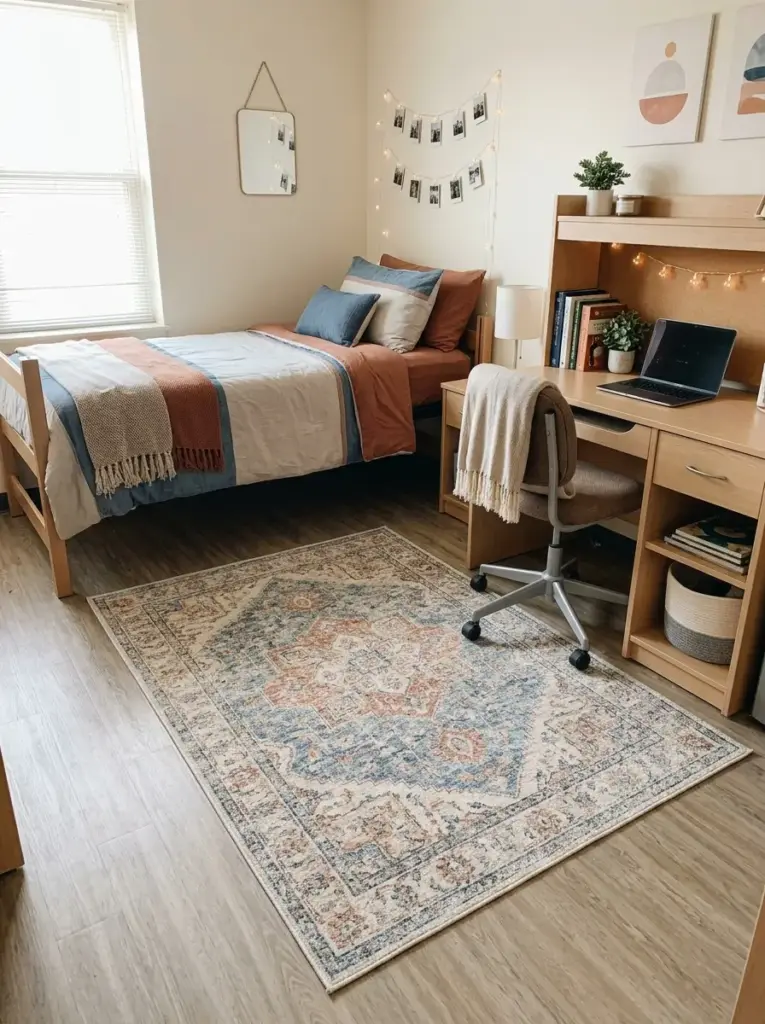
Rugs help small dorm apartments feel warmer, quieter, and more finished. Choose one rug that fits the main open floor area rather than several tiny rugs that break up the room. In a dorm room, a 4-by-6-foot rug often works beside a twin bed, while a 5-by-7-foot rug may fit a larger studio-style room. For narrow spaces, a washable runner can soften the path between the bed and desk. Low-pile rugs are easier to vacuum and better for rolling desk chairs. Patterns like thin stripes, small checks, faded vintage designs, or tone-on-tone texture hide dirt better than solid white.
Floor decor helps because it visually connects furniture. Without a rug, the bed, desk, and storage pieces can look like separate items pushed into a room. With one rug, the layout feels planned. Best for students dealing with cold floors, old carpet, or echoey rooms, rugs add comfort without permanent changes. Budget-friendly options include washable cotton rugs, indoor-outdoor rugs, flatweave rugs, and secondhand rugs that can be cleaned before move-in. Avoid thick shag rugs if you eat in the room, have limited cleaning tools, or use a rolling chair. They collect crumbs and dust quickly. Pick a rug color that repeats your bedding or wall decor so it looks connected instead of random.
Use Vertical Storage on Walls and Doors
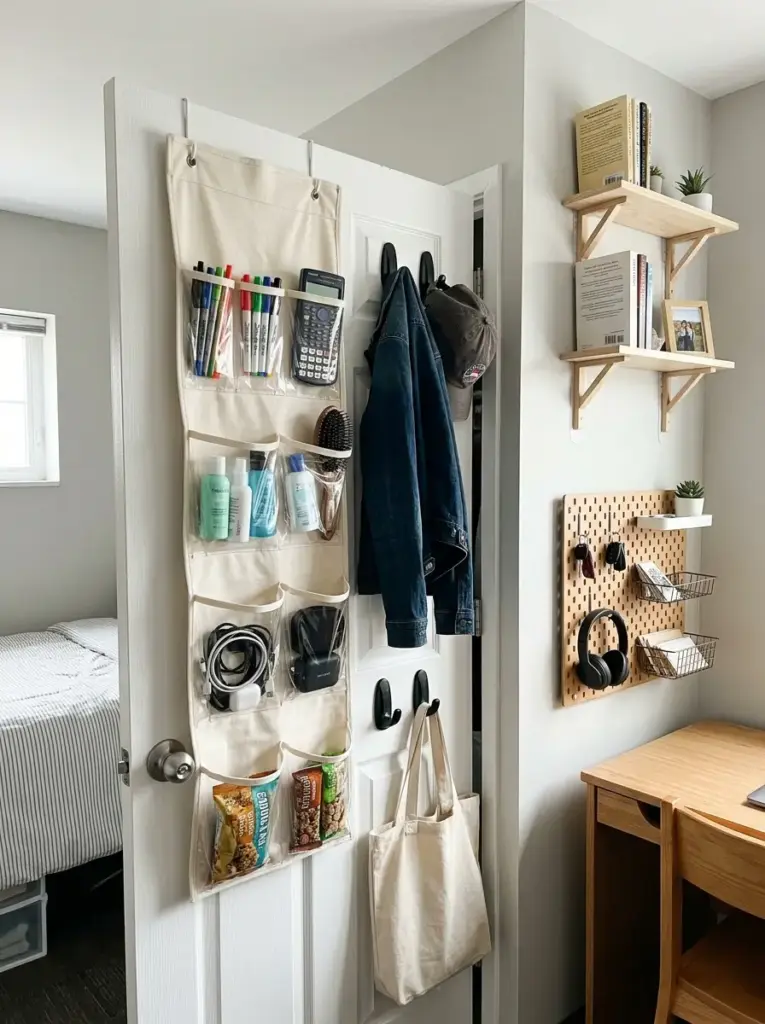
Small rooms need vertical thinking. Walls, closet doors, and the back of the main door can hold storage without taking floor space. Use over-the-door hooks for jackets, towels, bags, or hats. Try hanging pocket organizers for toiletries, snacks, cords, hair tools, or school supplies. Lightweight floating-style shelves with removable mounting strips can hold small items if the product is rated for the weight. Pegboards, grid panels, and command hooks can create a flexible wall system for keys, headphones, calendars, and small baskets.
Vertical storage is effective because it clears the floor and desk. Dorm Apartment Decor should not force you to choose between style and storage. Best for students who have limited closet space, wall, and door storage, keep everyday items visible and reachable. Rental rules matter here. Heavy shelves, nails, and screws may not be allowed, so choose removable hooks rated for the object’s weight and follow the removal instructions. Do not hang heavy glass frames or large shelves above the bed unless they are safely installed. Good examples include a fabric over-door organizer for shoes, a hook rail for tote bags, and a small pegboard near the desk for headphones and charging cords. Keep vertical storage edited. When every wall is packed, the room can feel smaller.
Choose Furniture That Does Double Duty
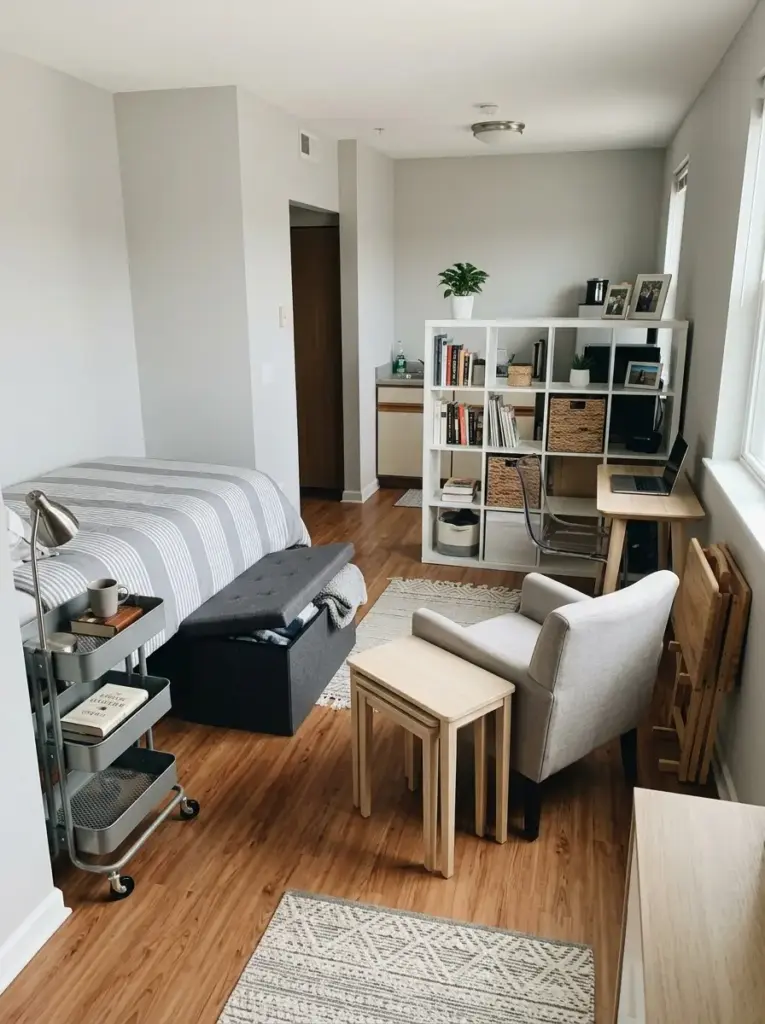
Small dorm apartments need furniture that earns its place. Look for pieces that offer storage, fold away, or serve more than one use. Storage ottomans can hold blankets and act as seating. A rolling cart can work as a nightstand, snack station, bathroom caddy, or study supply holder. A folding tray table can become a coffee table when friends visit and slide away later. A cube shelf can store books, baskets, shoes, and decor while also acting as a room divider in a studio layout. Slim nesting tables are useful because they expand when needed and tuck together when not in use.
Multi-use furniture works because it reduces the number of pieces needed in the room. Best for students furnishing a first apartment, these items save money and space over time. Choose furniture with simple lines and light visual weight. Open-leg pieces usually feel less bulky than solid block furniture. Clear acrylic chairs, slim metal side tables, and light wood shelves keep a small room from feeling heavy. Avoid oversized beanbags, wide recliners, large coffee tables, and bulky dressers unless the room has enough floor space. Measure before buying. Leave at least 24 inches for main walking paths where possible, especially between the bed and desk or bed and door. Furniture that blocks movement will annoy you every day, no matter how cute it looks.
Style Walls With Removable Decor
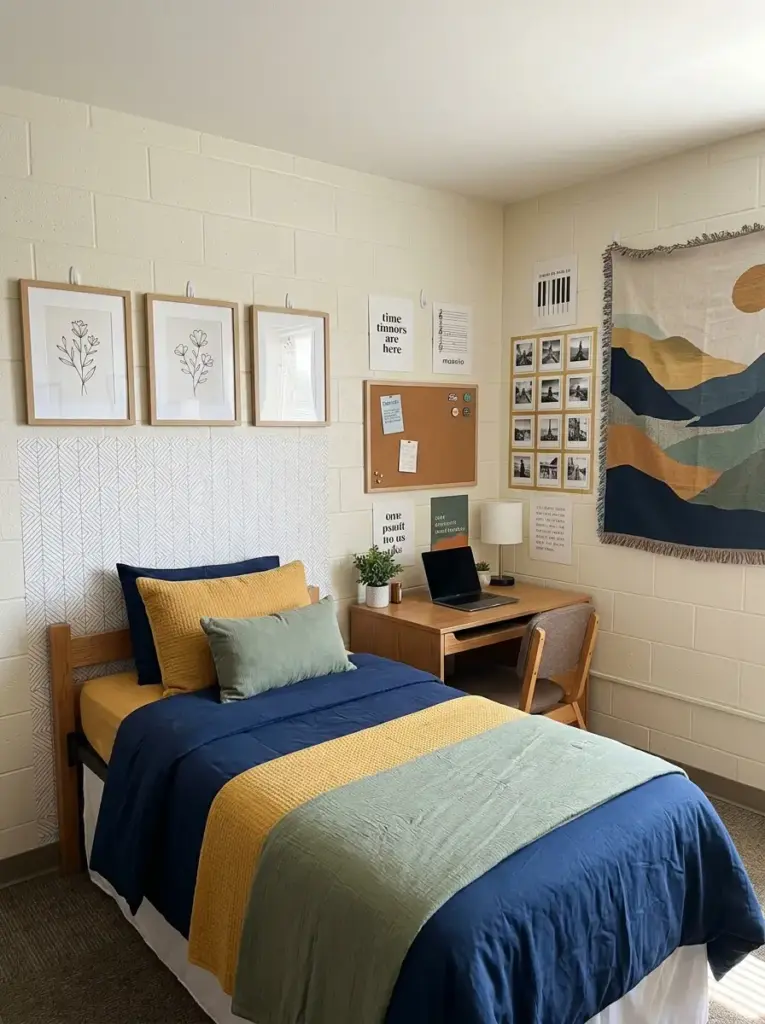
Blank dorm walls can feel cold, but permanent changes are usually not allowed. Removable decor gives personality without damage. Use peel-and-stick wallpaper on one small section, such as behind the bed, inside a bookshelf, or above the desk. Removable decals, washi tape frames, fabric tapestries, lightweight posters, and photo grids can add interest. Keep wall decor grouped instead of scattered. For example, hang three matching frames above the bed, place a corkboard above the desk, or create one photo grid in a neat rectangle. Spacing matters. Leave a few inches between pieces and align edges so the display looks clean.
Removable wall decor helps because it adds height and personality without using floor space. Best for renters and students who cannot paint, these pieces can make a room feel less temporary. Peel-and-stick products vary in quality, so test a small hidden area first and avoid applying them to peeling paint or textured walls. Use poster putty carefully because some types leave marks. Fabric wall hangings work well because they cover large blank areas and soften sound. For a mature look, avoid covering every inch with random posters. Choose a theme like travel photos, black-and-white prints, botanical drawings, music posters, or minimalist typography. Dorm Apartment Decor feels more polished when wall pieces relate to your color palette.
Add Curtains Without Drilling Holes
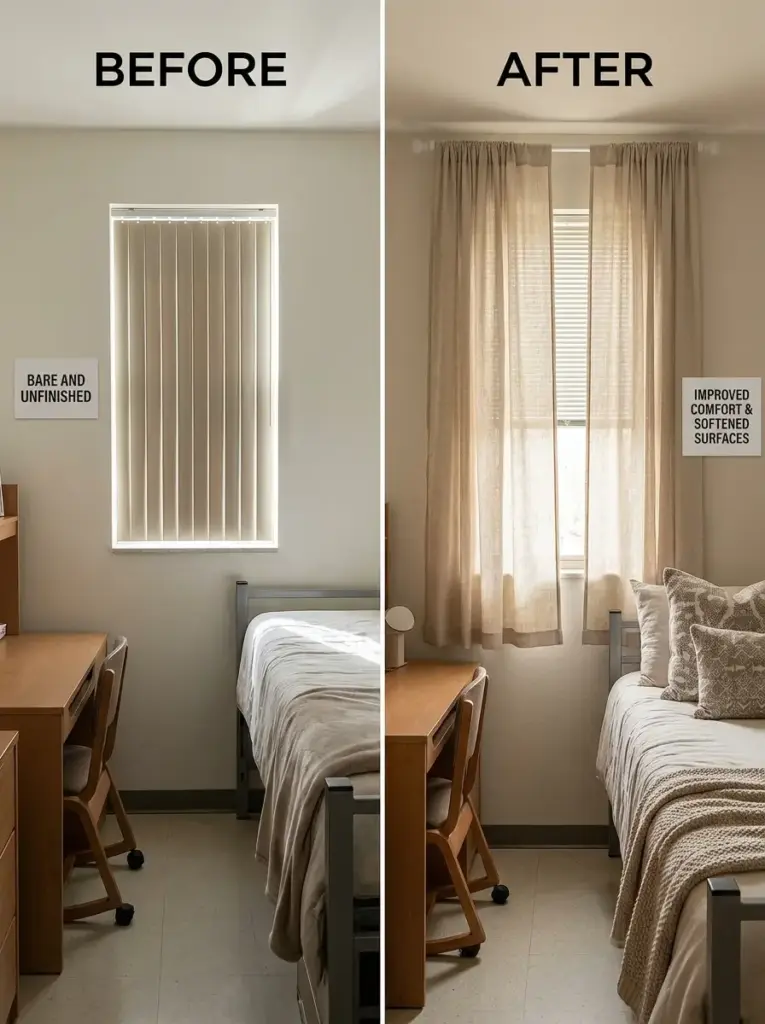
Curtains can make a dorm apartment feel less bare, even when the window is small or the blinds are unattractive. Tension rods, adhesive curtain rod brackets, or no-drill curtain rods can work in many rentals. Choose light-filtering curtains if you want privacy while keeping daylight. Blackout curtains help if streetlights, early sun, or campus lighting disturb sleep. Linen-look polyester curtains are budget-friendly and easier to wash than real linen. Hang curtains high and wide when possible, because it makes windows look larger and lets in more light when the panels are open.
Curtains improve the room because they soften hard surfaces and control light. Best for students who struggle with sleep or want the room to feel more finished, window treatments add comfort without major spending. Color choice matters. White, cream, oatmeal, sage, and light gray curtains are easy to reuse in future apartments. Dark navy, charcoal, or forest green curtains can look rich but may make a tiny room feel heavier if the walls are already dark. Avoid curtains that puddle on the floor in a dorm because they collect dust and can get caught under furniture. Measure from the rod position to just above the floor or window ledge. Keep rental safety in mind and avoid blocking heaters, vents, or fire exits.
Use Mirrors to Bounce Light and Check Outfits
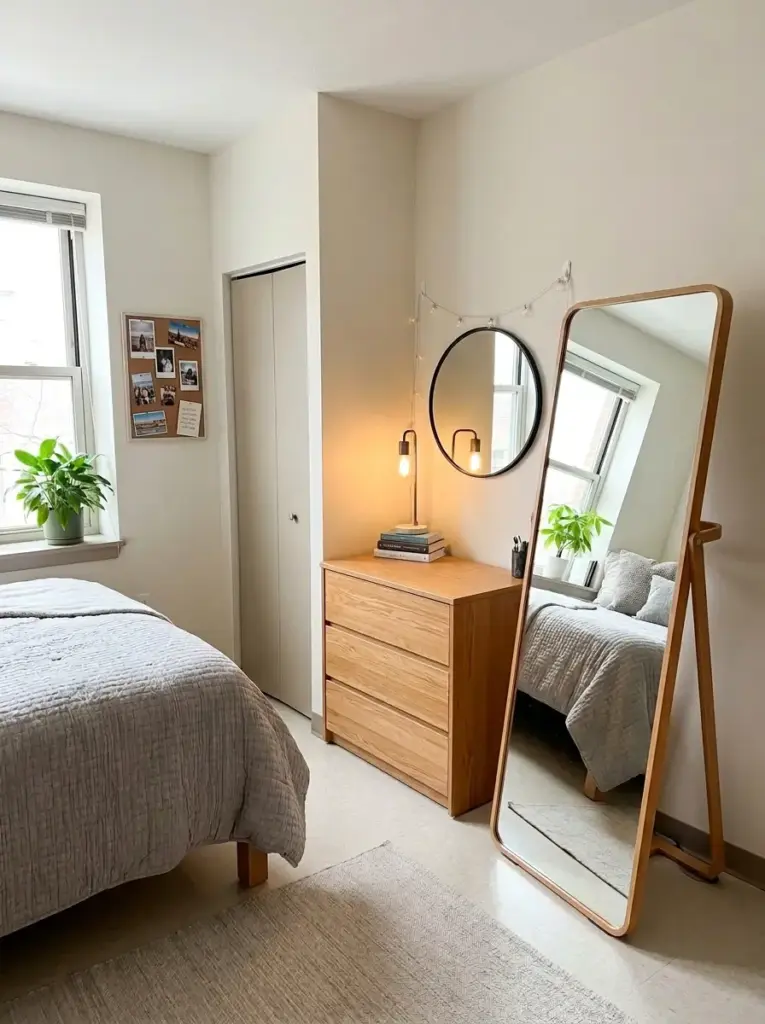
Mirrors are one of the easiest Dorm Apartment Decor upgrades for small rooms. A full-length mirror on the back of a door or leaning safely against a wall helps with outfits and makes the room feel brighter. Smaller mirrors above a desk or dresser can reflect light from a window or lamp. Choose a simple frame that matches your room finishes. Black frames work well with modern or industrial decor. Light wood frames feel warmer. Frameless mirrors keep the look clean and simple. For a narrow dorm, place the mirror where it reflects the window or open floor area instead of reflecting clutter.
Mirrors are useful because they increase light and function without taking up much space. Best for students getting ready in a shared bathroom situation, a full-length mirror saves time in the morning. Rental-friendly mirror options include over-the-door mirrors, adhesive mirror tiles, and lightweight mirrors hung with removable strips rated for the weight. Safety matters. Heavy mirrors need secure mounting, and leaning mirrors should not sit where they can slide or be bumped. Avoid placing a mirror directly across from a messy closet or overflowing laundry basket, because it doubles the visual clutter. Keep the reflected view intentional. A mirror facing a lamp, window, plant, or neat bedding will help the room feel brighter and more open.
Bring in Plants or Low-Maintenance Greenery
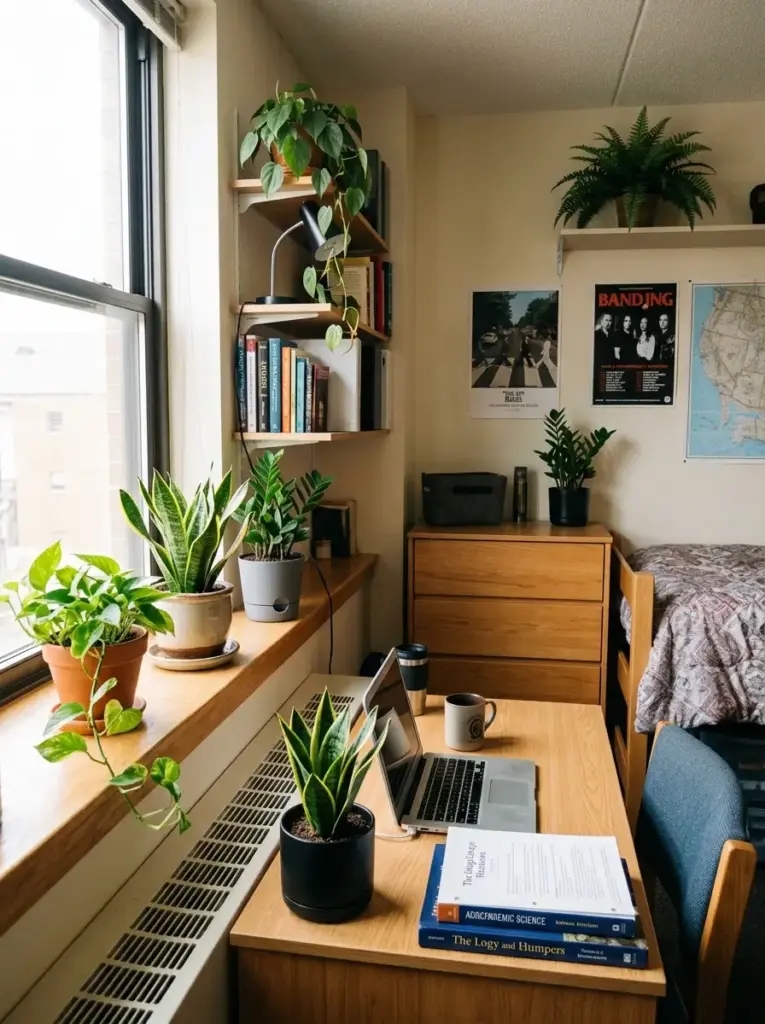
Plants make small rooms feel fresher, but dorm life does not always support delicate plant care. Choose hardy plants such as pothos, snake plant, ZZ plant, or heartleaf philodendron if the room has natural light. For low-light rooms, snake plants and ZZ plants usually tolerate neglect better than most options. Use small pots on a windowsill, desk, or shelf rather than large floor plants that steal walking space. Self-watering pots can help beginners. Faux plants are also fine when light is poor or schedules are busy, especially if you choose realistic leaves and dust them occasionally.
Greenery helps because it breaks up hard furniture lines and adds natural color. Best for beginners who want softness without more fabric, plants add shape and texture in a small footprint. Practical care should guide the choice. A plant that needs bright direct sun will struggle in a dark dorm corner. A thirsty plant may suffer during exam weeks or travel. Place a pothos on a shelf and let the vines trail slightly, or put a snake plant beside a dresser for height. Use saucers under real plants to prevent water damage. Avoid overwatering, which is the most common beginner plant mistake. Check dorm rules too, because some buildings restrict soil, hanging planters, or items on windowsills.
Set Up a Small Entry Drop Zone
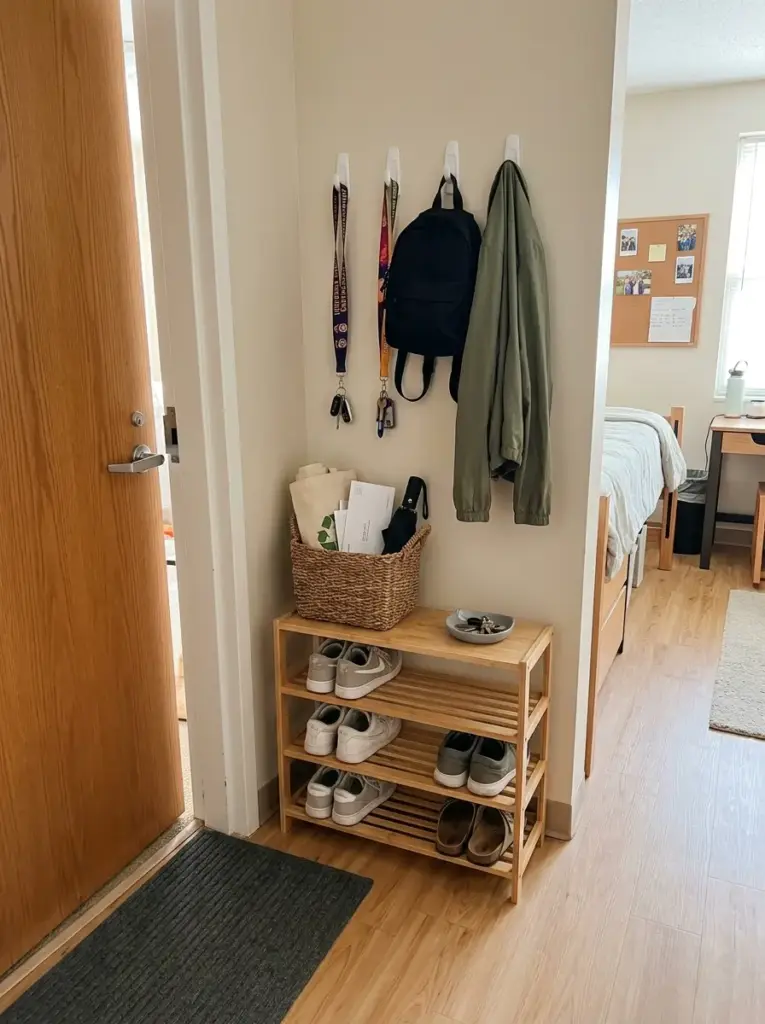
Dorm apartments often lack a real entryway, so keys, ID cards, shoes, umbrellas, and bags end up scattered around the room. Create a tiny drop zone near the door using a narrow shoe rack, wall hooks, a small tray, and a basket. A three-tier shoe rack can hold everyday shoes and keep the floor clear. A hook for keys and lanyards reduces the morning search. A small basket can hold reusable bags, umbrellas, gloves, or mail. Keep the drop zone compact so it does not block the door swing or walking path.
Entry storage works because it catches clutter before it spreads. Best for students who rush in and out, a drop zone keeps daily items in one predictable place. Dorm Apartment Decor should support routines, not just photos. Use removable hooks on the wall or door, a slim bench if space allows, or a vertical shoe cabinet for apartment-style dorms. Choose closed storage if shoes make the room look messy, but open racks are easier for daily use. Place a washable mat near the door if your building allows it. Avoid piling backpacks, coats, and laundry bags behind the door until it no longer opens fully. Safety and access matter more than squeezing in extra storage.
Keep Surfaces Styled but Useful
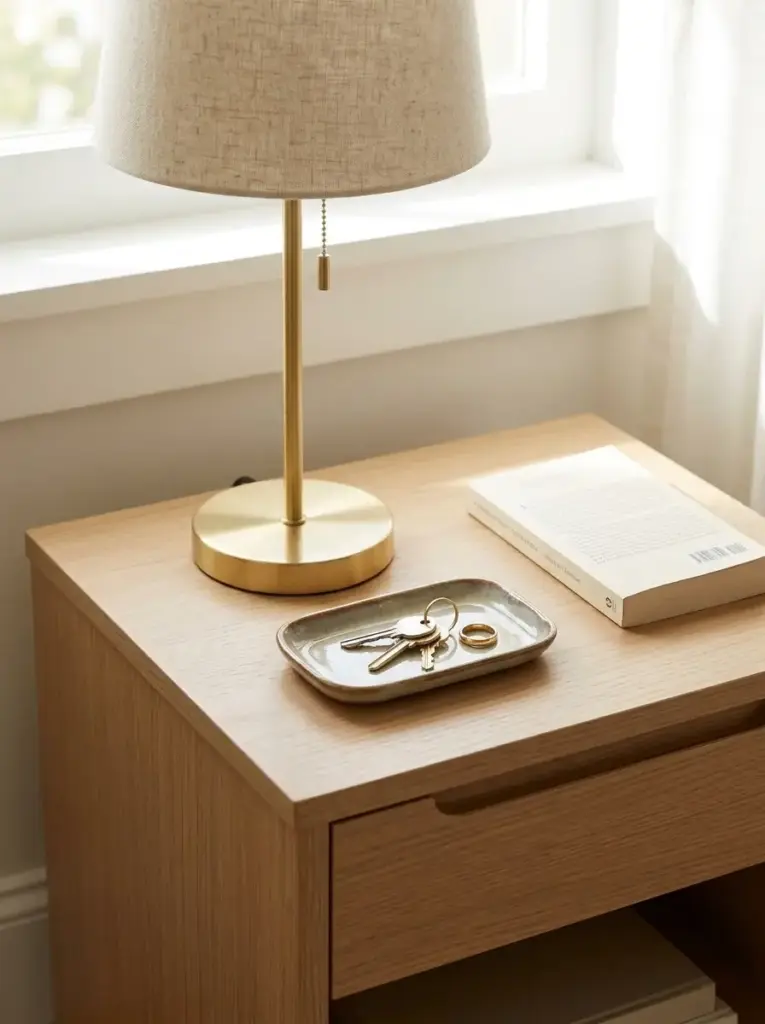
Small rooms can look messy when every surface is full. A better approach is to style surfaces with a simple formula. On a nightstand. Use one lamp, one small tray, and one personal item. On a dresser, use a mirror, one basket, and one decorative object. On a desk, use a lamp, an organizer, and a calendar. Trays are especially helpful because they make small items look grouped instead of scattered. A tray can hold perfume, jewelry, lip balm, keys, or chargers. Baskets can hide cords, medicine, snacks, and toiletries.
Surface styling works because it creates breathing room. Best for beginners who like decor but hate cleaning, fewer objects make dusting easier and help the room stay neat. The goal is not empty surfaces. The goal is useful surfaces. For example, a bedside rolling cart might hold a lamp on top, books on the middle shelf, and a basket of chargers below. A dresser might hold a mirror, hair tools in a heat-safe holder, and a small plant. A common mistake is buying many tiny decor pieces because they are cheap. Small items multiply quickly and make the room feel cluttered. Spend the same budget on one better lamp, one good tray, or one larger piece of wall art instead.
Plan the Layout Before Decorating
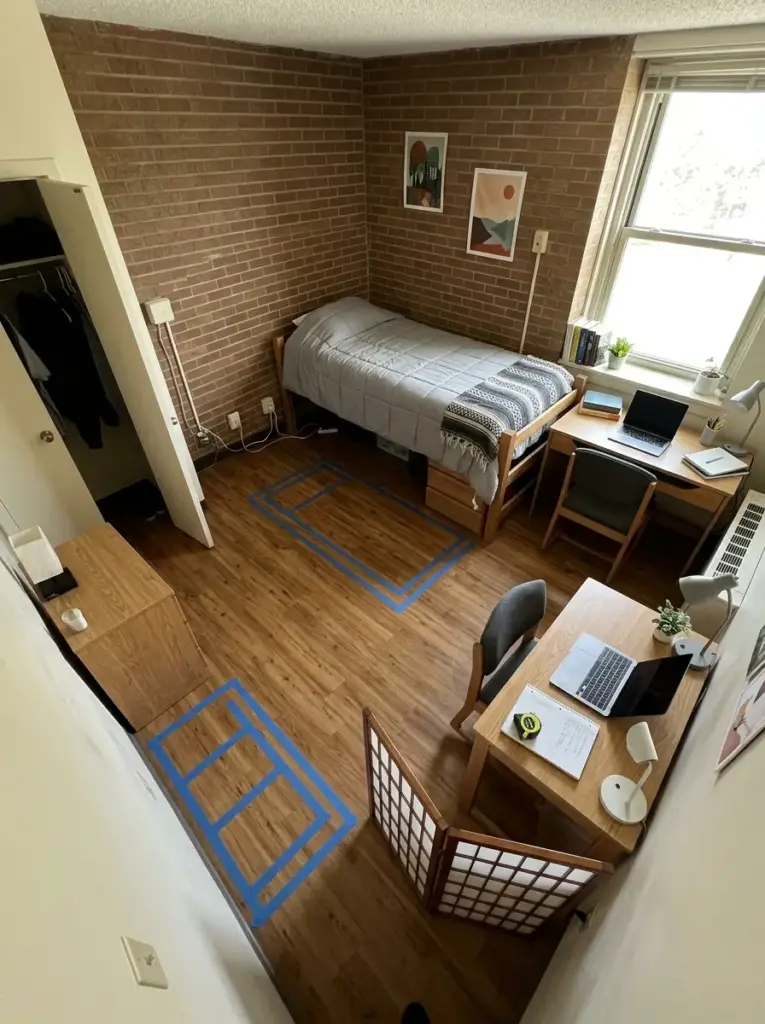
Layout is the quiet foundation of every good small room. Before buying decor, decide where the bed, desk, dresser, storage, and seating should go. In many dorm rooms. Placing the bed against the longest wall opens the center floor area. In a narrow room, push the desk near. The window can improve daylight for studying. In a studio-style dorm apartment. Use a rug, shelf, or folding screen to separate the sleeping area from the study area. Keep the heaviest furniture against walls when possible, and leave clear paths to the door, closet, bathroom, and window.
Strong layout choices matter because even beautiful decor fails when the room is hard to use. Best for students moving into a new dorm or apartment, planning first prevents wasted money. Measure the room, furniture, under-bed height, closet width, and wall space. Use painter’s tape on the floor to test furniture footprints before moving heavy items.
Keep outlets in mind so lamps, chargers, and desk equipment do not require cords across walkways. Avoid placing the bed where it blocks closet doors or drawers. Avoid putting the desk in a dark corner unless you have good task lighting. Dorm Apartment Decor looks better when the layout supports daily habits first.
Common Mistakes to Avoid
Small-room decorating mistakes usually happen when style decisions come before practical planning. Buying too many small accessories is one of the most common problems. Tiny candles, random signs, mini frames, and extra pillows seem harmless, but they quickly fill shelves and make cleaning harder. Choose fewer pieces with more purpose.
A large framed print, a useful lamp, a textured throw, or a clean-lined rug will usually improve the room more than ten small objects. Another mistake is ignoring scale. Oversized furniture blocks movement, while pieces that are too tiny can look awkward and fail to provide enough storage.
Poor lighting also hurts small rooms. Relying only on harsh overhead lighting makes the room feel flat and uncomfortable at night. Add task lighting for study time and warm lighting for relaxing. Mixed color temperatures can also create a strange feeling, so keep most lamps in the same warm range unless the light is specifically for studying.
Another common issue is using open storage for everything. Open shelves can look stylish when edited, but they look messy when packed with toiletries, snacks, laundry supplies, and random cords. Use a mix of open and closed storage. Display books, plants, and a few decor items, then hide less attractive items in bins or drawers.
Ignoring rental rules can create problems later. Peel-and-stick wallpaper, adhesive hooks, and removable strips are helpful, but they still need careful use. Always check weight limits, test products, and remove them slowly according to directions. Do not hang heavy items above the bed with weak adhesive.
Another mistake is choosing light fabrics that are hard to clean. White rugs, delicate bedding, and dry-clean-only curtains may look nice at first, but can become frustrating in a busy dorm. Pick washable materials whenever possible. Finally, many beginners forget airflow and safety. Do not block vents, heaters, outlets, smoke detectors, sprinklers, or exits with decor. A room should look good, but it also needs to function safely.
Budget-Friendly Dorm Apartment Decor Tips
Budget decorating works best when you spend first on items that affect comfort and daily use. Bedding, lighting, storage, and a rug usually matter more than small decorations. Start with what you already own, then buy only what solves a clear problem. For example, if the room feels cold, a rug or curtains may help more than wall art. If the room feels messy, storage bins and hooks may help more than another throw pillow. If the room feels harsh at night, a warm lamp may change the space more than new bedding.
Secondhand shopping can stretch a dorm decor budget, especially for lamps, mirrors, small shelves, side tables, baskets, and frames. Clean everything well before bringing it into the room, and avoid upholstered secondhand pieces unless you can inspect and sanitize them properly.
Discount stores, campus move-out sales, online marketplaces, and family hand-me-downs can be useful. Look for solid materials and simple shapes rather than trendy pieces that may feel dated quickly. Spray paint may not be allowed, or practical in a dorm, but removable contact paper can refresh a desk drawer front, storage cube, or tray if used carefully.
DIY decor should be simple and removable. Print personal photos in the same size and place them in matching frames for a clean wall display. Use washi tape to create a border around a corkboard. Cover plain storage boxes with fabric or peel-and-stick paper.
Use a tension rod inside a closet to hang scarves, bags, or lightweight curtains that hide clutter. Repurpose a rolling cart as a nightstand instead of buying a separate table. Swap pillow covers instead of buying whole new pillows. Small choices like these save money and reduce waste.
Seasonal updates do not need a full room makeover. Change a throw blanket, pillow cover, desk print, or small plant pot when you want a fresh feel. Keep the base pieces neutral so they work through the year.
A cream comforter, light wood storage, and black or white lamps can support different accents, from sage in spring to rust in fall. Avoid buying complete themed decor sets because they can look forced and may not match future apartments. Flexible basics are better for students who move often.
Dorm Apartment Decor Tips for Beginners
Dorm Apartment Decor should begin with function. Before styling, list the main problems in the room. Maybe the closet is too small, the desk feels dark, the bed has no storage, or the floor looks bare. Solve those problems first. Decor becomes easier when the room works. For example, a student who studies late needs good task lighting and cable control.
A student who has many clothes needs under-bed bins, slim hangers, and over-door hooks. A student who hosts friends needs floor cushions, a storage ottoman, or folding seating that does not crowd the room every day.
Beginner-friendly decorating also means choosing pieces that are easy to maintain. Washable bedding, low-pile rugs, wipeable desk organizers, and sturdy baskets can handle daily college life. Avoid fragile decor that breaks during move-out or items that require constant cleaning.
Keep a small cleaning kit in the room with microfiber cloths, a lint roller, disinfecting wipes, and a compact vacuum or broom if allowed. Rooms look better when they are easy to reset. Good design is not only what you buy. It is also how quickly you can put things back where they belong.
Personal style still matters. Dorm rooms should not feel like furniture showrooms. Add pieces that connect to your real life, such as framed photos, a favorite team color, books you actually read, artwork from local markets, travel postcards, or a blanket from home.
Keep personal items edited so they feel meaningful instead of crowded. A small gallery above the desk, a photo strip near the bed, or a shelf with favorite books can make the room feel yours without overwhelming the space.
Shared rooms need extra planning. Talk with roommates before buying large rugs, curtains, lights, or shared storage. Agree on basics like color direction, floor space, cleaning routines, and quiet hours.
Matching everything is not necessary, but a little coordination helps the room feel calmer. For example, both roommates can use neutral bedding with different accent colors, or both can choose black desk lamps for a more connected look. Respect each side of the room. Good Dorm Apartment Decor should make daily life easier for everyone using the space.
FAQ
What colors work best for Dorm Apartment Decor in small rooms?
Light neutrals, soft earth tones, and muted colors usually work well because they make a small room feel calmer and easier to style. Cream, warm white, beige, soft gray, sage, dusty blue, navy, olive, rust, and charcoal are practical choices. Use brighter colors in smaller doses through pillows, posters, desk accessories, or throws. Too many bold colors can make a compact room feel busy, especially when school supplies, clothes, and tech are already visible.
How can I decorate a dorm apartment without damaging the walls?
Removable hooks, tension rods, over-door organizers, peel-and-stick accents, lightweight posters, fabric wall hangings, and freestanding shelves are the safest starting points. Check the rules in your housing agreement before using adhesive products. Test removable products in a hidden spot, respect weight limits, and remove them slowly. Heavy mirrors, shelves, and frames should not depend on weak adhesive, especially above a bed or desk.
What should I buy first for a small dorm room?
Bedding, lighting, storage, and a rug should usually come before decorative extras. Those pieces affect comfort, organization, and the overall room style. Start with a washable comforter or duvet cover, a warm bedside lamp, under-bed storage, desk organization, and one rug that fits the room. After those basics are in place, add wall decor, plants, mirrors, and smaller accessories.
How do I make a small dorm apartment look less cluttered?
Use closed storage for unattractive items, repeat a simple color palette, keep surfaces lightly styled, and remove items that do not serve a purpose. Store seasonal clothes under the bed, use over-door hooks for bags and towels, and place small loose items in trays or baskets. Clutter often looks worse when colors and containers do not match, so choose bins and organizers in similar tones.
Are peel-and-stick products safe for dorm rooms?
Peel-and-stick products can be safe when used carefully, but results depend on wall texture, paint quality, humidity, product strength, and removal method. Smooth walls usually work better than textured walls. Always test a small area first and avoid placing peel-and-stick wallpaper on damaged or peeling paint. Remove slowly and follow the product directions. When unsure, use fabric hangings, posters, or freestanding decor instead.
How can I make a dorm apartment feel cozy on a budget?
Warm lighting, soft bedding, a low-pile rug, curtains, and a few personal pieces can make a room feel more comfortable without a large budget. Use bulbs around 2700K to 3000K for relaxing, add a washable throw blanket, and bring in texture through baskets or pillow covers. Shop secondhand for lamps, mirrors, and frames, then keep the color palette consistent so affordable pieces look intentional.
Conclusion
Dorm Apartment Decor works best when every choice supports the way you live in the room. Small spaces do not need more stuff. They need smarter pieces, better lighting, clear storage, comfortable bedding, and a layout that respects daily routines. A simple color palette can make mixed furniture feel connected. Warm lamps can soften harsh overhead lighting. Under-bed bins, wall hooks, and rolling carts can keep clutter from taking over. Curtains, rugs, mirrors, and removable wall decor can make a rental feel more personal without permanent changes.
College rooms and small apartments also change often, so flexible decor is more useful than expensive, fixed choices. Choose items you can clean, move, reuse, and adapt to future spaces. Measure before buying furniture, keep walkways open, and avoid filling every surface. Start with the bed, desk, lighting, and storage, then add personality through art, plants, textiles, and meaningful details. With practical planning and a few thoughtful upgrades, a small dorm apartment can feel organized, comfortable, and stylish without stretching your budget.