
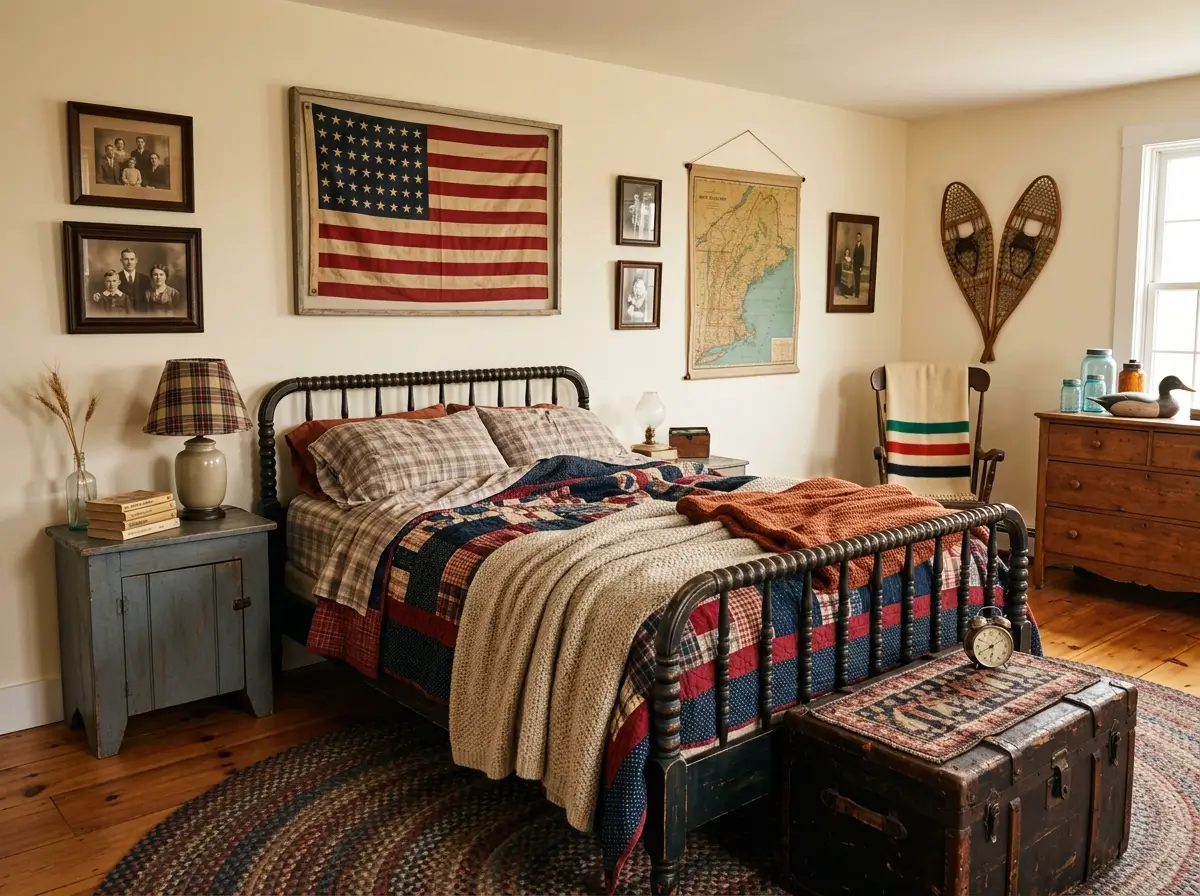

Vintage Americana Bedroom style blends rural comfort, early American character, and familiar pieces that look collected rather than purchased all at once. Warm wood, faded red, soft navy, creamy white, ticking stripes, quilts, iron beds, and useful antiques all belong in the mix. Every item should serve a purpose, tell a believable story, or add texture that makes the bedroom feel settled and comfortable.
Small rooms can carry this style especially well because a few strong details create character without requiring major construction. Renters can use removable wallpaper, plug-in sconces, leaning artwork, and secondhand furniture instead of permanent updates. Beginners should start with the largest surfaces first, then add smaller historic references only after the room feels balanced.
What Makes the Style Feel Warm?
Warmth comes from muted heritage colors, natural materials, layered bedding, and lighting that softens hard edges. A successful Vintage Americana Bedroom does not need flags on every wall or matching rustic furniture. It works best when the room combines practical comfort with a few recognizable American references, such as a patchwork quilt, a spindle bed, a schoolhouse lamp, an old landscape print, or a weathered trunk.
Choose two or three repeating materials and one restrained color story before shopping. Add brick red, faded denim blue, and warm ivory in small amounts. Keeping the palette controlled allows old and new pieces to sit together naturally, which matters in bedrooms where visual calm supports rest.
Build the Room Around a Warm Heritage Palette
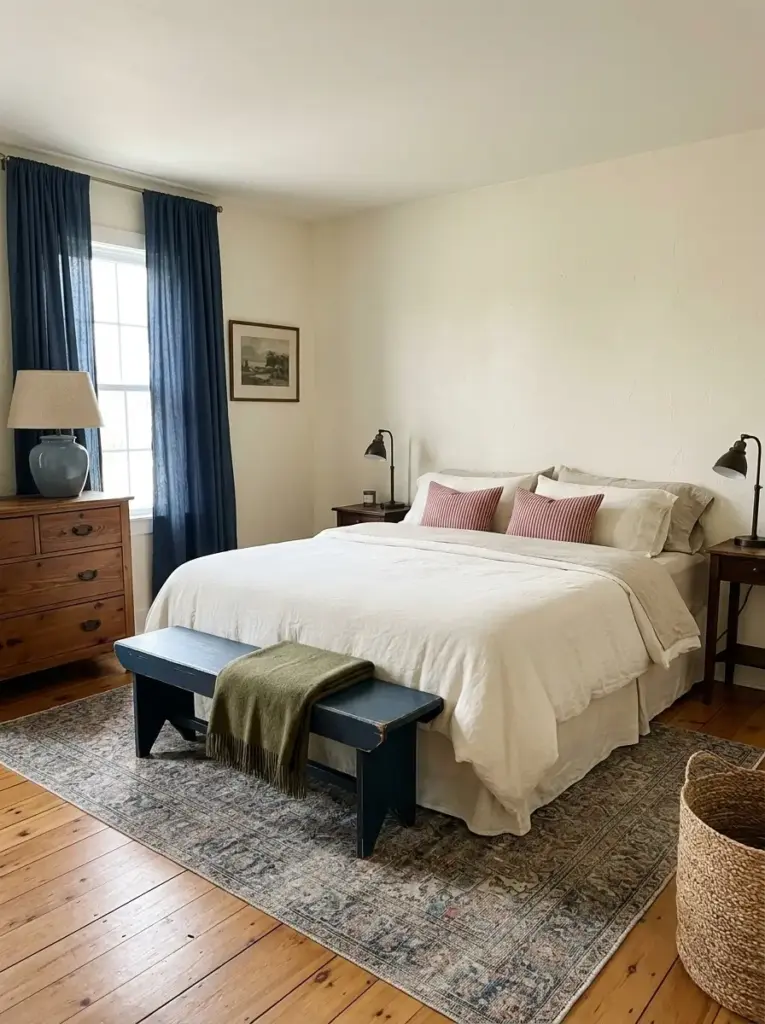
Start with colors that look softened by time rather than bright, freshly printed shades. Warm ivory, oatmeal, tobacco brown, muted navy, barn red, dusty blue, and olive green create an American heritage feeling without making the room resemble a holiday display. Use ivory or light beige across roughly 60 percent of the room, one muted color across 30 percent, and a broader accent across the remaining 10 percent.
Color placement matters as much as the colors themselves. Put the lightest shade on walls and large bedding, then introduce navy or olive through curtains, a bench, or a painted dresser. Renters can repeat the palette through removable fabric panels, peel-and-stick trim, and washable bedding. People decorating north-facing rooms should favor creamy whites with yellow or beige undertones because cool gray-white paint can make aged wood appear dull.
Muted pigments feel warm because they reduce harsh contrast and allow wood grain, woven fibers, and metal finishes to remain visible. Beginners often choose equal amounts of red, white, and blue, which can make the room feel literal and busy. Better results come from treating those colors as weathered references rather than the main event.
Choose a Bed With Simple Historic Character
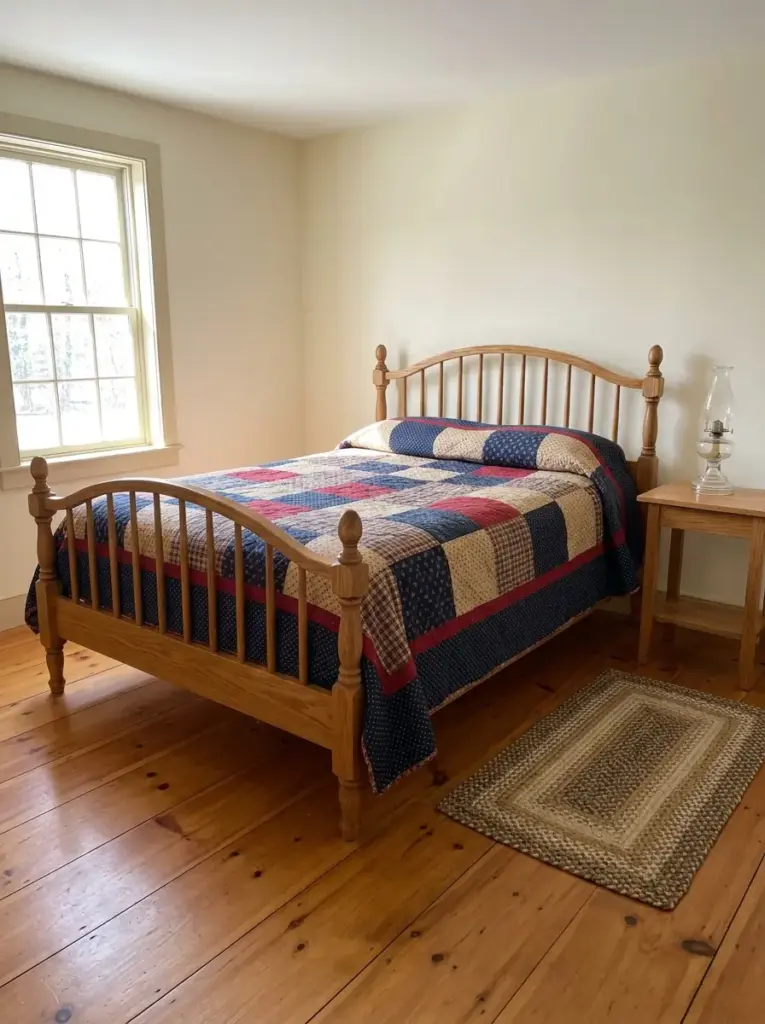
Bed choice establishes the visual period faster than most accessories. Spindle wood beds, black iron frames, cannonball posts, and simple panel headboards all suit the style. Medium oak, dark walnut, soft black, and painted cream work well. In a small room, choose a frame with open space beneath or an airy metal headboard so the bed does not block sightlines.
Secondhand frames can offer better character than inexpensive faux-distressed furniture, but inspect joints, slats, and hardware before buying. Tighten loose bolts, replace weak center supports, and confirm that a modern mattress fits safely. Renters who cannot replace the bed can create a removable headboard from plywood wrapped in striped upholstery, or place two tall vintage shutters behind the mattress without attaching them to the wall.
Simple historic forms feel convincing because they resemble practical furniture made for daily use. Oversized tufted headboards, glittering nailheads, and bulky platform beds often fight the humble materials associated with Americana interiors. People who like a cleaner room should let the bed provide the only obvious period reference, then use plain nightstands and modern lamps. Such restraint makes the design feel collected and livable rather than staged.
Layer Quilts Without Making the Bed Look Heavy
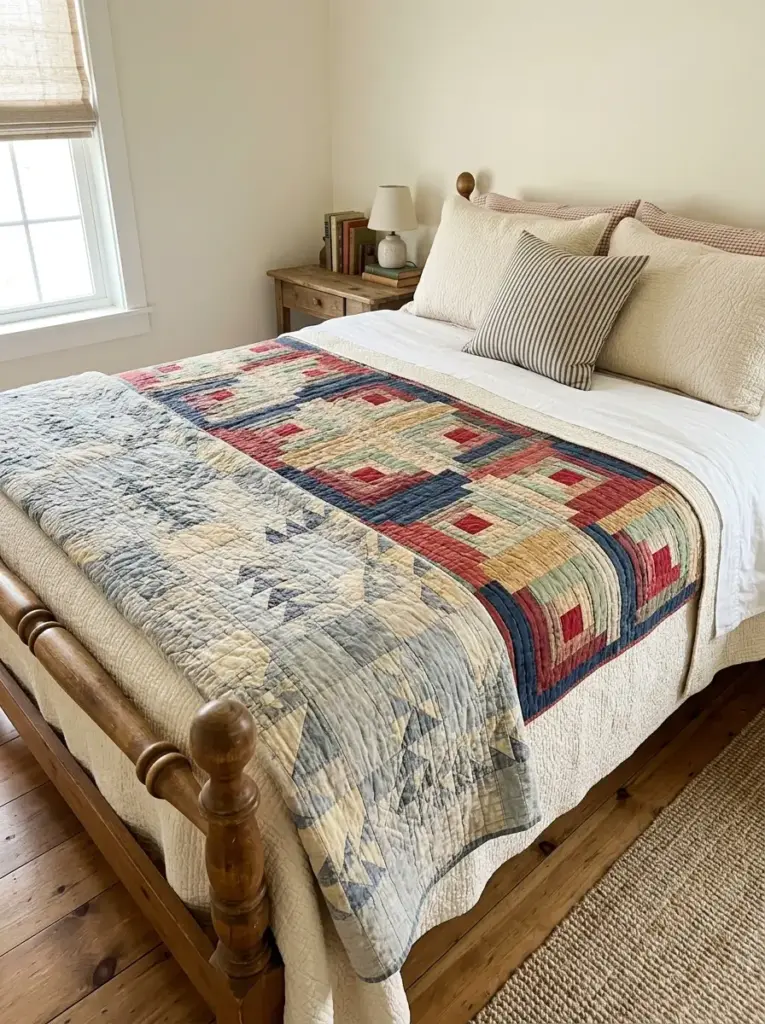
Quilts bring pattern, history, and handmade texture to the room. Choose one dominant quilt and support it with quieter layers. A cream matelassé coverlet, white cotton sheets, and a faded patchwork quilt folded across the lower third of the bed create warmth without hiding the bed frame. Patterns such as log cabin, star, flying geese, nine-patch, and simple checks suit the style, especially when colors appear slightly washed.
Bedding should match the room’s temperature and size. Lightweight cotton quilts work well in warm climates, while wool blankets or down inserts add winter comfort. Smaller bedrooms look calmer when the main quilt includes no more than four visible colors. People with pets or children should choose machine-washable cotton and avoid delicate antique quilts for everyday use.
Layering works because varied fabric weights create softness and visual depth near the room’s largest surface. Problems appear when every pillow, sham, and blanket uses a different historic pattern. Limit decorative pillows to two or three, and leave enough uncovered mattress space for the bed to look usable. Pair a busy quilt with solid sheets and a narrow ticking stripe.
Mix Ticking Stripes With Small Checks
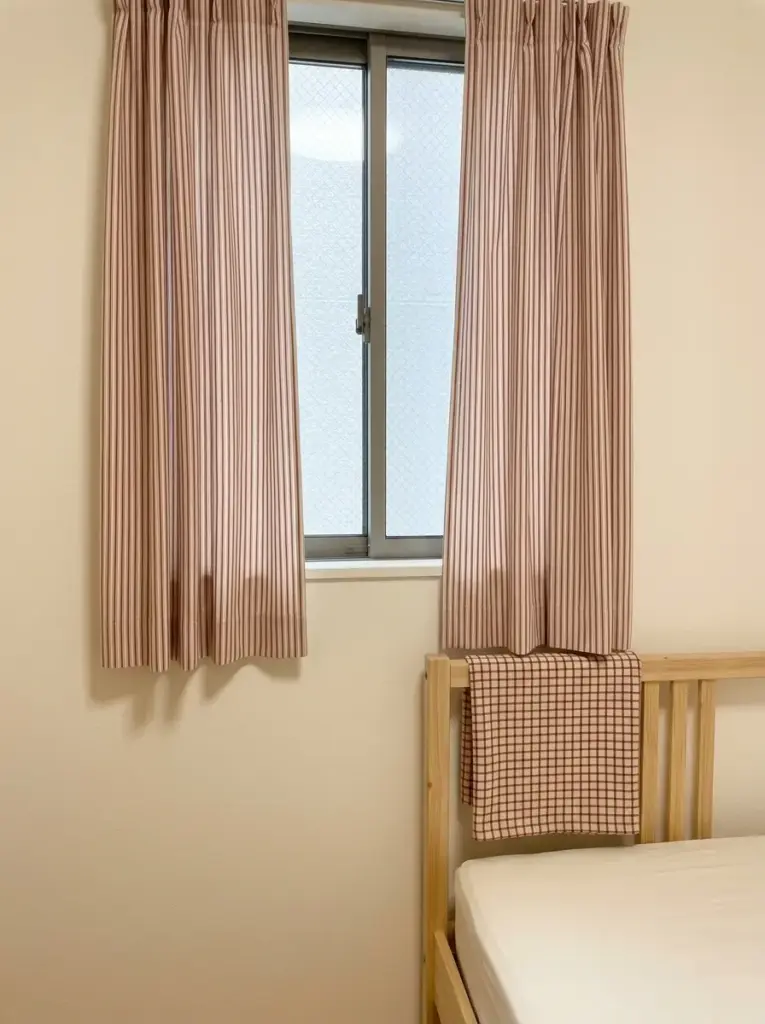
Ticking stripes add structure while gingham, windowpane, or buffalo checks introduce relaxed country character. Keep stripe widths narrow and check scales modest so patterns do not overpower a small bedroom. Use ticking on pillow covers, a bench cushion, or simple curtains. Place checks on one secondary item, such as a throw, lampshade, or upholstered stool. Matching colors across both patterns helps them feel related rather than competitive.
Vertical stripes make low ceilings feel taller, while horizontal stripes can make a narrow headboard appear wider. Floor-length striped curtains hung close to the ceiling create height without permanent architectural work. Renters can use tension rods inside window frames or no-drill brackets above trim.
Small geometric patterns work well because they echo humble workwear, mattress ticking, kitchen linens, and hand-sewn household textiles. Common mistakes include using large buffalo checks on curtains, bedding, and rugs at the same time. Choose one lead pattern, one supporting pattern, and several solids. Repeating the same cream background across fabrics will unify inexpensive pieces bought from different stores.
Add One Solid Wood Dresser With Visible Grain
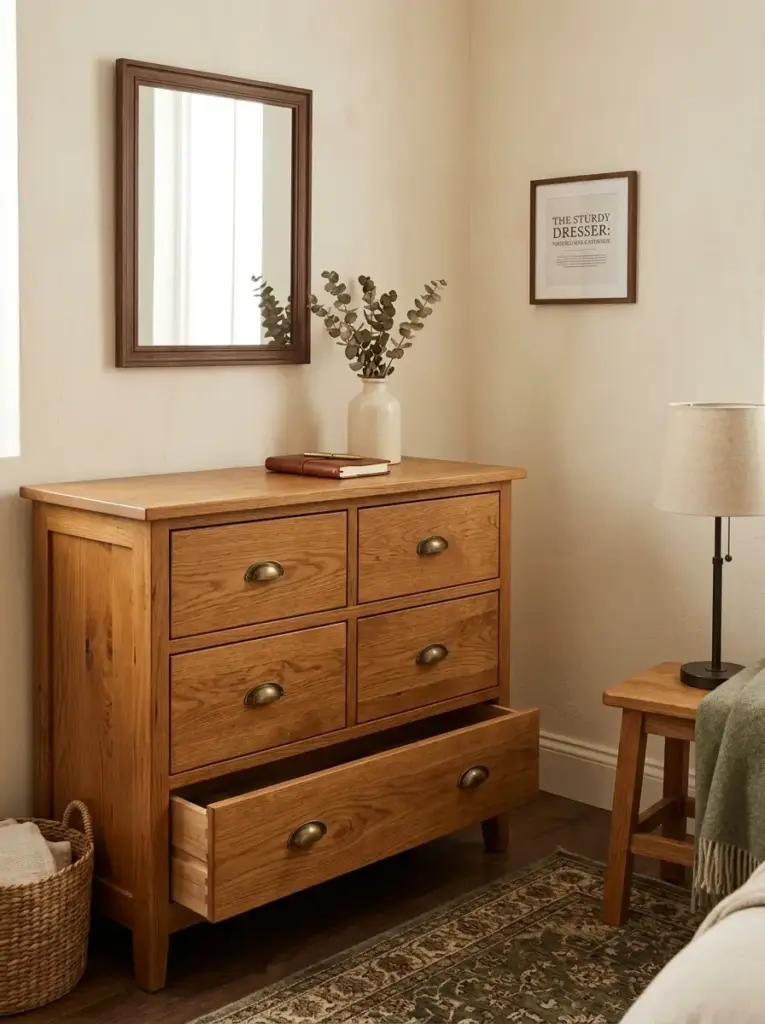
One sturdy dresser gives the room weight and useful storage. Look for oak, pine, maple, or walnut with visible grain, simple drawer fronts, and solid proportions. Honey oak adds warmth, while dark walnut creates a more formal colonial feeling. Painted dressers also work when finished in muted black, deep green, putty, or warm cream. Avoid covering every wood surface with décor because open space allows the furniture’s construction to stand out.
Used dressers often need only cleaning, fresh wax, or replacement hardware. Test drawers, smell interiors for mildew, and check the back for insect damage before bringing a piece home. Light scratches can blend into the style, but unstable legs and warped drawers require repair. Budget decorators can update a plain modern dresser with aged-brass knobs, wood bun feet, or a painted two-tone finish.
Natural wood supports the style because it introduces color variation that printed rustic finishes cannot copy. Small-space decorators should choose a tall chest instead of a wide dresser to save floor area. Rooms with several wood pieces look more intentional when the undertones relate. Warm orange oak can sit beside walnut when both share medium depth, but pale gray-washed wood may look disconnected. Repeat the dresser tone in a frame, lamp base, or small stool.
Use Warm White Walls as a Quiet Backdrop
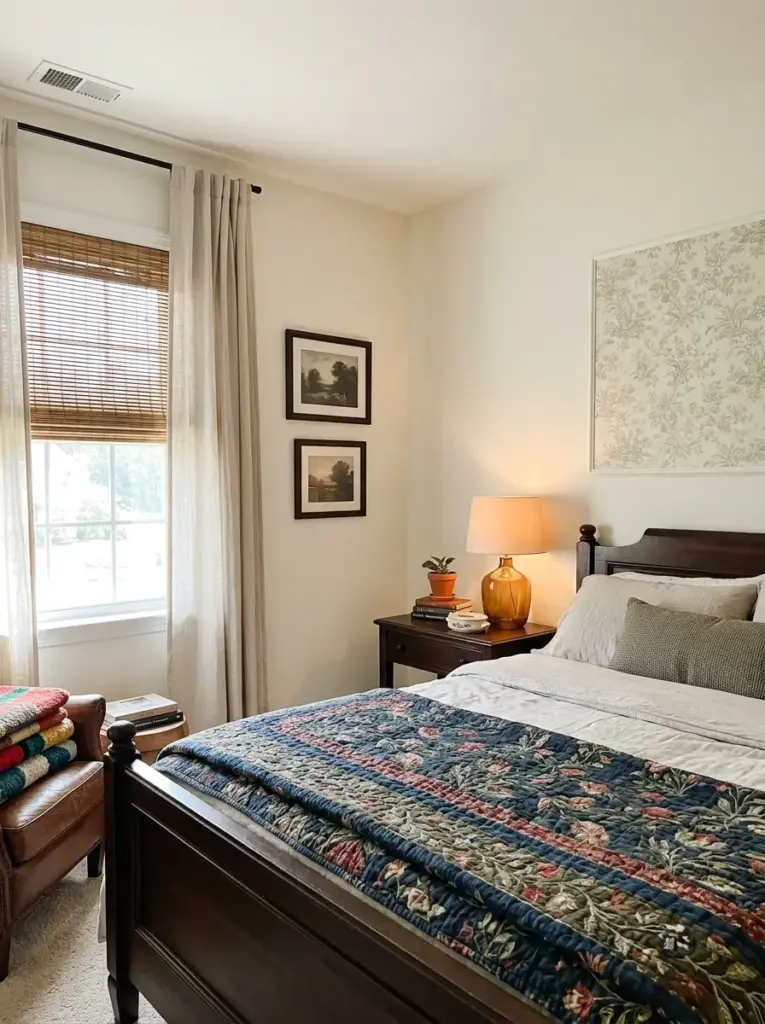
Warm white walls allow darker furniture, quilts, and artwork to breathe. Look for paint described as cream, linen, parchment, or soft ivory rather than icy white. Light reflectance values around 70 to 85 generally keep bedrooms bright without feeling stark, though samples should always be tested in the actual room. Matte or eggshell finishes hide minor wall flaws better than satin and create a softer background for aged materials.
White walls also make rental decorating easier because many apartments already have them. Instead of repainting, add warmth through large fabric surfaces, wood frames, woven shades, and amber lighting. Removable wallpaper can create an accent area behind the bed. Choose faded botanical, tiny floral, toile, or narrow stripe patterns in low-contrast colors.
Quiet walls help the room feel restful because they prevent historic details from competing across every surface. Deep navy or barn-red walls can work in large, well-lit rooms, but they may shrink a tight layout and alter color perception at night. People who rent or move often should treat walls as negative space and concentrate their personality in portable pieces.
Introduce Aged Brass and Blackened Iron
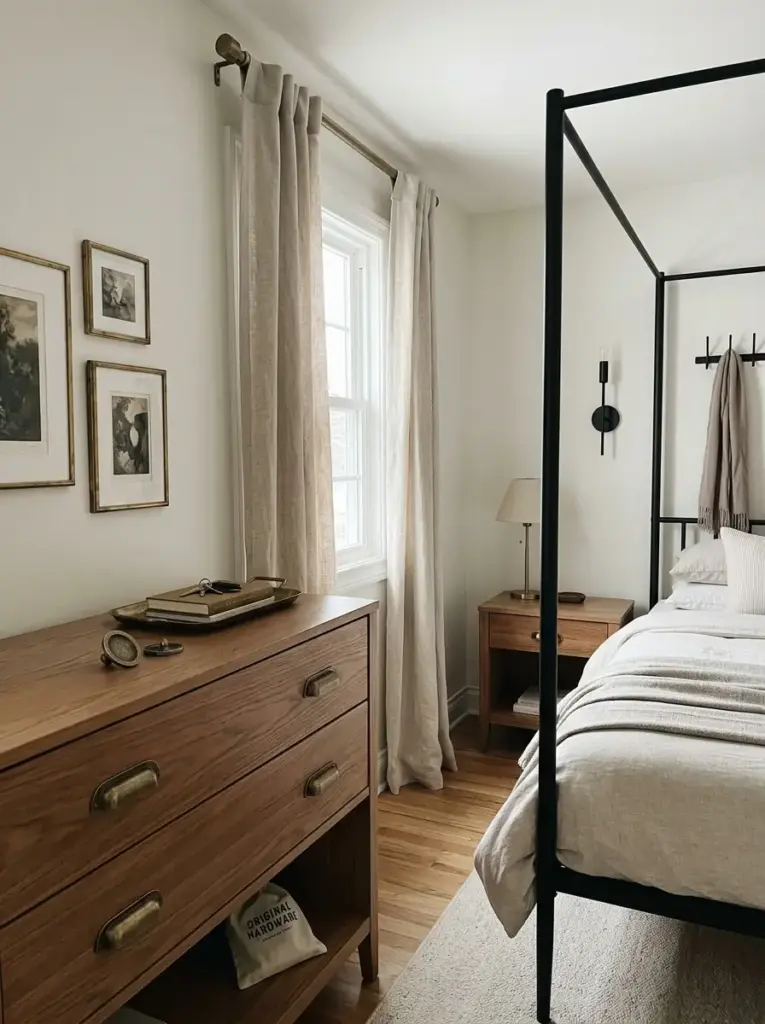
Metal finishes provide contrast against soft textiles and warm wood. Aged brass suits lamp bases, drawer pulls, picture frames, curtain rods, and small trays. Blackened iron works on bed frames, hooks, sconces, and simple candleholders. Use one dominant metal and one minor supporting finish. Too many shiny surfaces can make the room feel new and formal, so choose brushed, rubbed, or softly patinated pieces.
Replace bright chrome dresser knobs with antique-brass pulls, or spray removable curtain rings in a muted metal finish outside the home. Save original hardware in a labeled bag when renting or updating valuable furniture. People with small rooms should use slim metal lamps and wall-mounted hooks because they add function without occupying much visual space.
Patinated metals work because they bring depth without introducing more pattern. Avoid fake rust that flakes onto bedding or floors, and skip sharp unfinished iron near walking paths. Real age is not required; a consistent low-sheen finish can create the same calm effect. Repeat metal at least twice so each choice looks deliberate, but keep repetition subtle.
Frame Old Maps, Landscapes, and Folk Prints
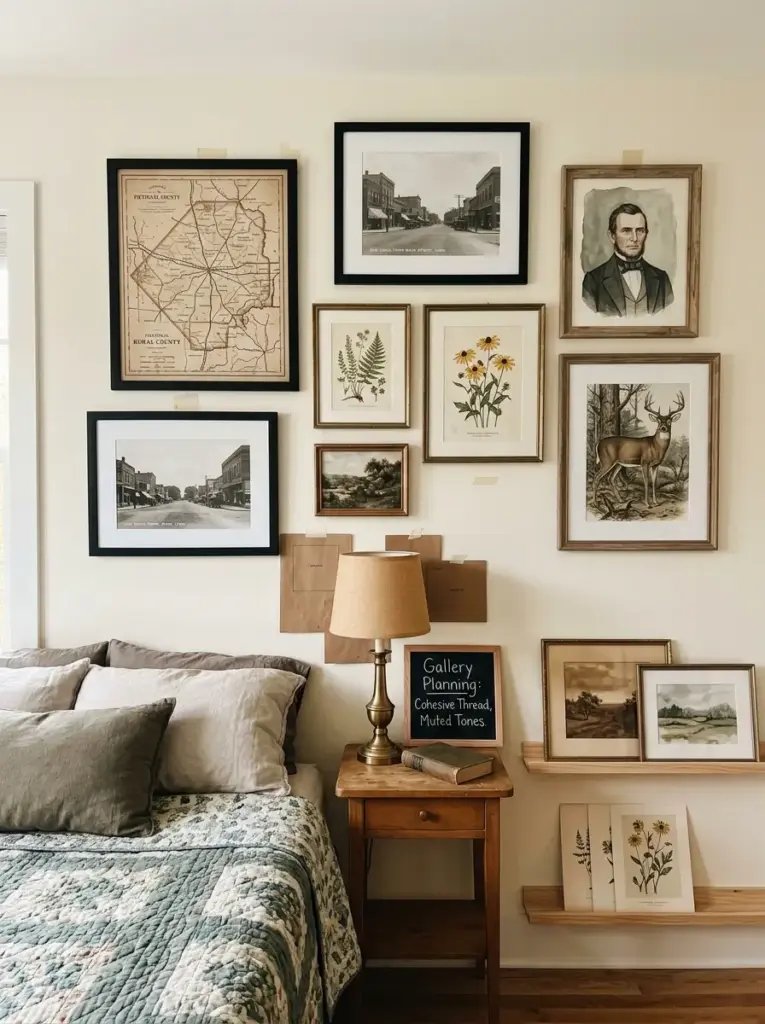
Wall art can suggest history without relying on obvious patriotic symbols. County maps, railroad maps, farm landscapes, wildlife studies, folk portraits, botanical plates, and small-town photographs all support the theme. Choose subjects connected to places, family stories, or regions you genuinely enjoy. Muted prints in wood, black, or aged-brass frames blend easily with quilts and furniture.
Gallery walls need planning in small bedrooms. Create a paper template for each frame, tape the shapes to the wall, and check the arrangement from the doorway and bed. Keep outer edges aligned and leave two to three inches between frames. One large landscape above the bed often looks calmer than nine small pieces. Renters can use picture ledges, removable hooks rated for the frame weight, or framed art leaned on a dresser.
Meaningful imagery gives the room identity because it connects decoration to a real landscape or memory. Beginners should avoid mixing too many frame finishes, art periods, and saturated colors. Pick one visual thread, such as rural landscapes in brown and green, then vary the sizes.
Add a Trunk or Blanket Chest at the Bed
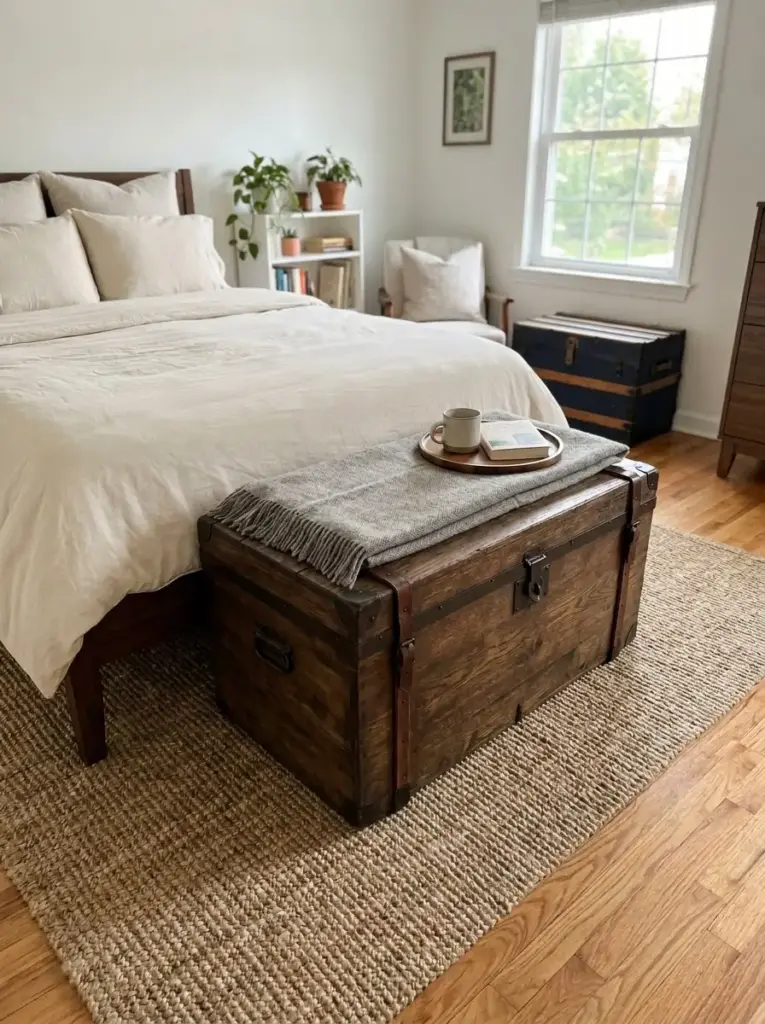
One trunk or blanket chest provides storage, a surface for folded bedding, and a strong historical shape. Place it at the foot of the bed only when at least 30 inches of walking space remains. In a narrow room, position a smaller chest beneath a window or use it as a nightstand. Wood, leather, canvas, and metal-bound styles all work, but the piece should open safely and sit level.
Heavy lids need functioning supports, and airtight trunks should not be used where children could climb inside. Clean interiors thoroughly, seal musty wood when necessary, and line rough surfaces before storing linens. Budget-friendly substitutes include a modern storage bench covered in grain-sack-inspired fabric or a simple pine chest stained medium brown.
Storage chests strengthen the room because they combine decoration with daily usefulness. Pieces that only imitate age while offering weak hinges or shallow interiors quickly become clutter. People living in studios can store off-season bedding, extra towels, or luggage inside. One folded throw and a small tray are enough; stacks of books and accessories make access frustrating.
Choose Bedside Lighting at 2200K to 2700K
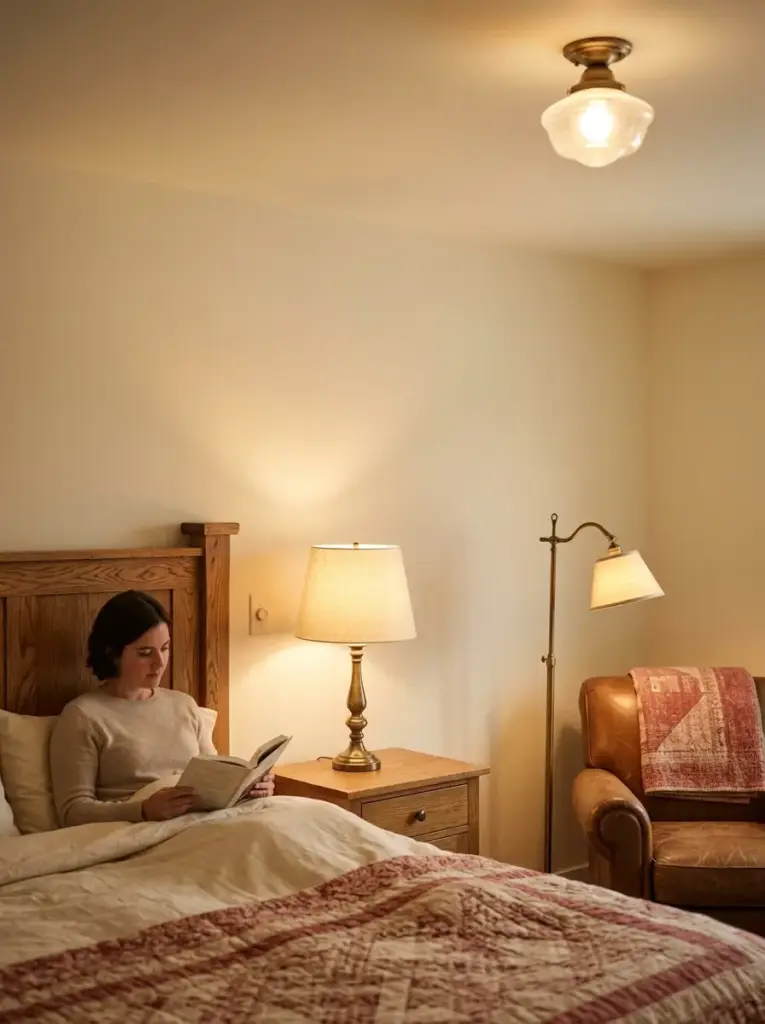
Bulbs between 2200K and 2700K create a warm glow that flatters oak, cream fabric, aged brass, and faded red. Use bulbs with a color rendering index of 90 or higher when possible so textiles and wood look accurate. Bedside lamps should be placed with the lower edge of the shade near shoulder height when you sit in bed, which reduces glare during reading.
Layer at least two light sources instead of relying on one ceiling fixture. Pair bedside lamps with a small overhead schoolhouse light, plug-in sconce, or floor lamp near a chair. Dimmers help adjust brightness before sleep, though bulb and dimmer compatibility must be checked. Renters can use plug-in wall lights with cord covers painted to match the wall. People sharing a bed may benefit from directional sconces that keep light on one side.
Warm lighting creates comfort because it softens contrast and resembles firelight or older incandescent lamps. Edison bulbs can suit the style, but exposed filaments often cause glare and provide poor task lighting. Choose shaded fixtures for reading and reserve decorative bulbs for enclosed or indirect locations. Avoid cool 4000K bulbs near cream walls because they can turn warm whites gray and make wood look flat.
Bring in Woven Shades or Simple Cotton Curtains
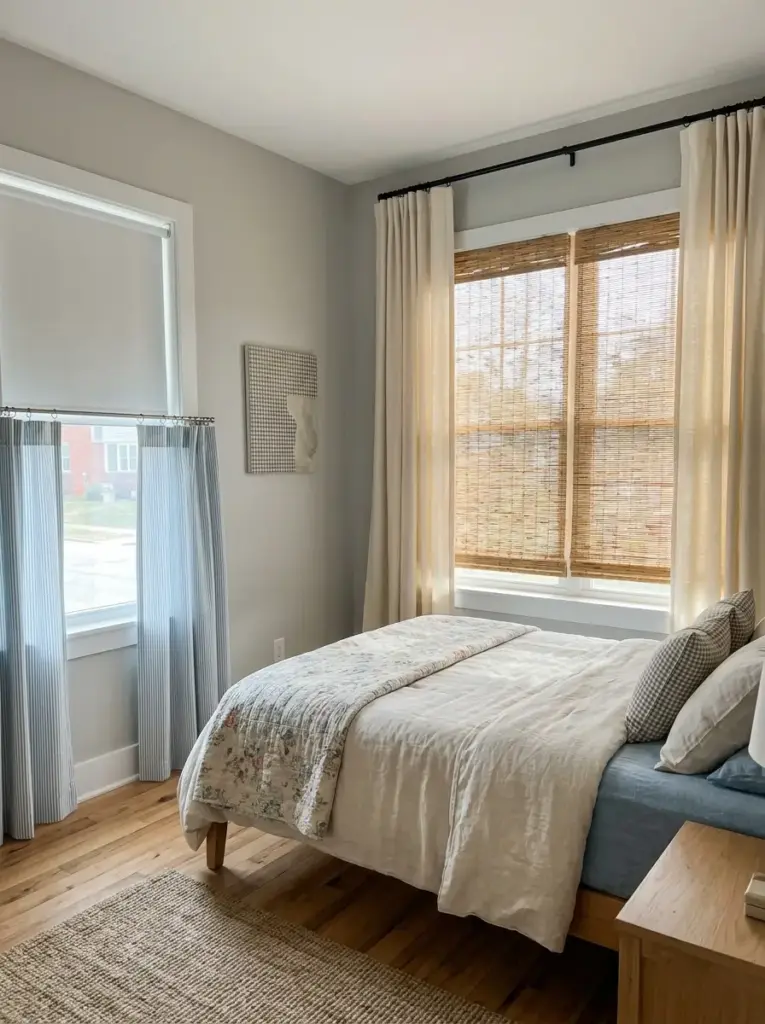
Window treatments should filter light, soften hard trim, and support privacy without looking elaborate. Woven wood shades add natural texture and pair well with plain cotton curtains. Cream canvas, ticking stripe, faded floral, and small check fabrics suit the room. Hang curtains high and wide enough to expose most of the glass when open, which makes small windows appear larger and allows more daylight to enter.
Privacy needs differ by room. Street-facing bedrooms may require lined curtains or a blackout roller shade behind decorative panels. Choose neutral blackout liners so the exterior view remains consistent. Renters can use removable rods, tension-mounted shades, or existing blinds layered with lightweight panels. People with allergies should select washable curtains and avoid thick, dusty swags. Hem panels so they just touch the floor rather than puddling around baseboards.
Simple treatments work because they echo practical household textiles instead of formal drapery. Heavy valances, multiple tassels, and deep ruffles can overwhelm low ceilings and collect dust. One textured shade plus two straight panels usually provides enough interest. Repeat a certain color in bedding or art so the windows feel integrated. Natural woven materials may shift color in strong sun, so rotate or line them when fading would be noticeable.
Create a Small Reading Corner With a Windsor Chair
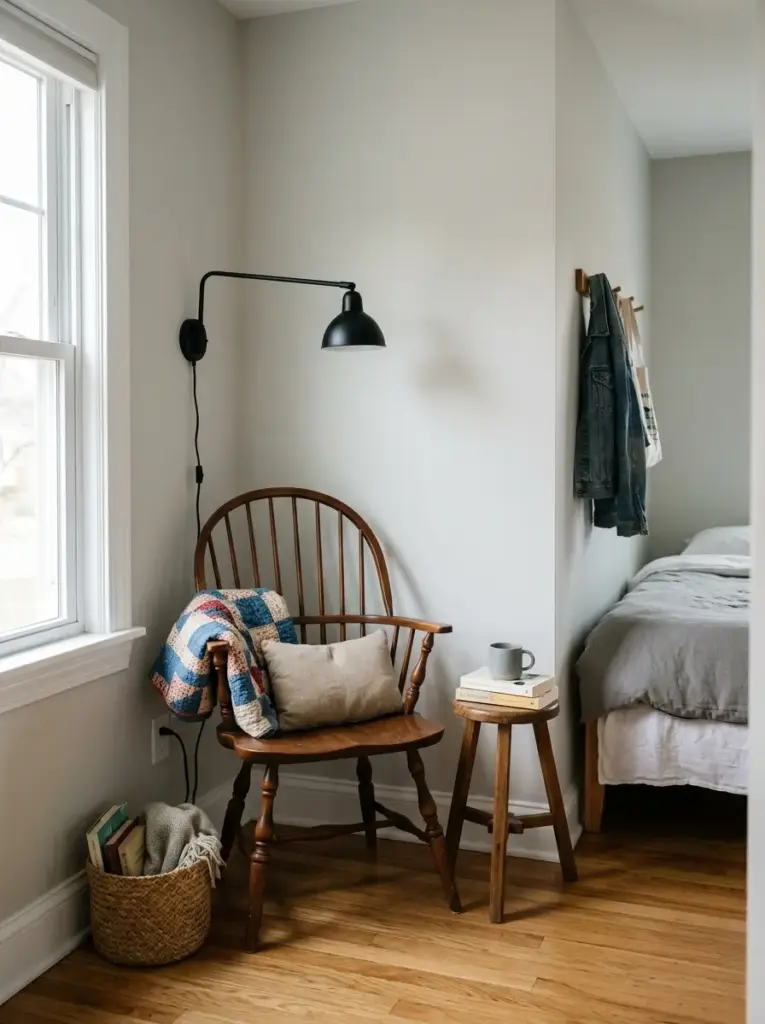
Even a compact bedroom can hold a useful reading spot when furniture stays slim. A Windsor chair, ladder-back chair, spindle rocker, or simple upholstered slipper chair adds classic American form. Place it near natural light, then add a small stool or narrow drink table. Use a folded quilt or lumbar cushion instead of several decorative pillows. Leave at least 24 inches of clear passage around the chair when possible.
The chair scale should match the room rather than the style fantasy. Large recliners and deep club chairs often block drawers or pathways in apartments. Measure the floor footprint with painter’s tape before buying. Renters can repurpose a dining chair and hang a plug-in reading light above it. Budget shoppers should check chair joints by gently rocking the frame; loose spindles can be repaired, but widespread cracking may not be worth the effort.
Reading corners make a bedroom feel inhabited because they support a real routine beyond sleeping. The arrangement works especially well for people who journal, read, or put on shoes in the bedroom. Avoid turning the chair into a permanent clothing pile by adding hooks, a valet stand, or a basket nearby. A functional chair earns its floor space and prevents the room from becoming a display of unused furniture.
Style Nightstands With Useful Vintage Pieces
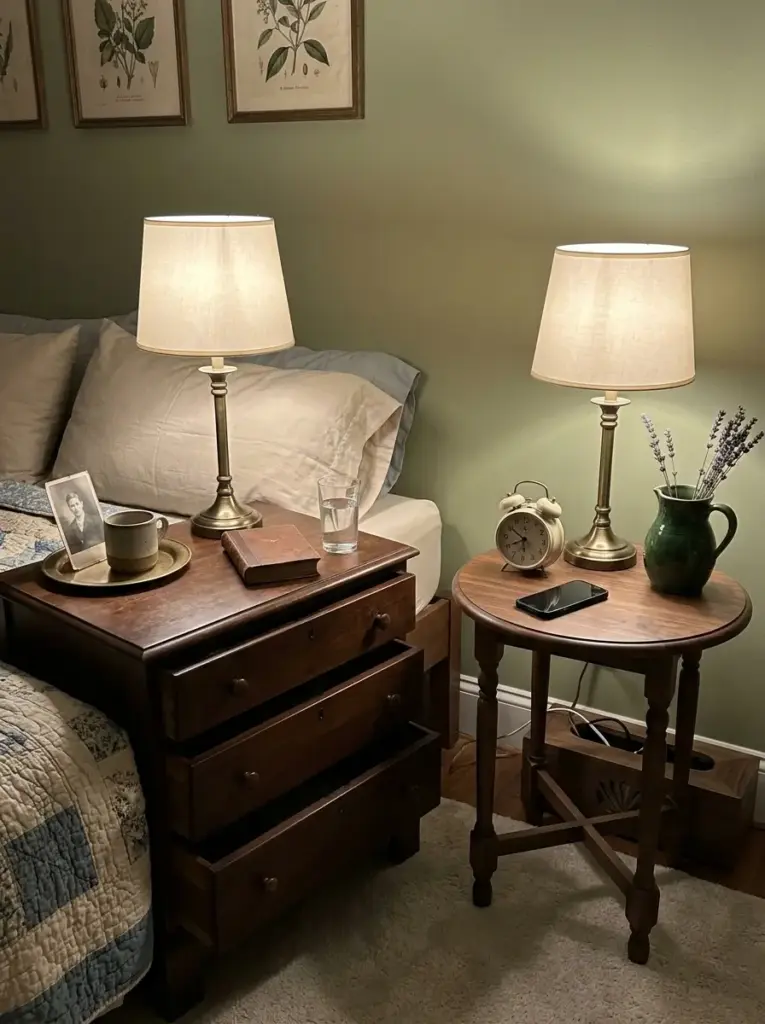
Nightstands should hold what you need at bedtime while contributing small historic details. A ceramic pitcher used as a vase, a brass tray, a stoneware cup, a wind-up-style clock, or a small framed photograph can add character. Keep the surface at roughly mattress height and leave room for a glass, phone, and book. One decorative object is usually enough beside the lamp.
Matching nightstands are not required. A small chest on one side and a round wood table on the other can work when their heights, colors, or lamps relate. Small rooms benefit from wall-mounted shelves, narrow stools, or three-drawer chests that provide storage. Renters should avoid unstable stacks of vintage suitcases unless they are secured and easy to clean. People who charge several devices can hide a power strip in a cable box behind the furniture.
Useful styling feels authentic because older bedrooms relied on practical objects rather than large accessory collections. Clutter weakens the effect and makes cleaning difficult. Group tiny items on one tray, hide medications and cables in drawers, and keep lampshades proportional to the tables. Repeating one metal finish across both sides creates unity even when the furniture differs. Such a balance suits couples who want individual storage without buying a matching set.
Ground the Room With a Faded Traditional Rug
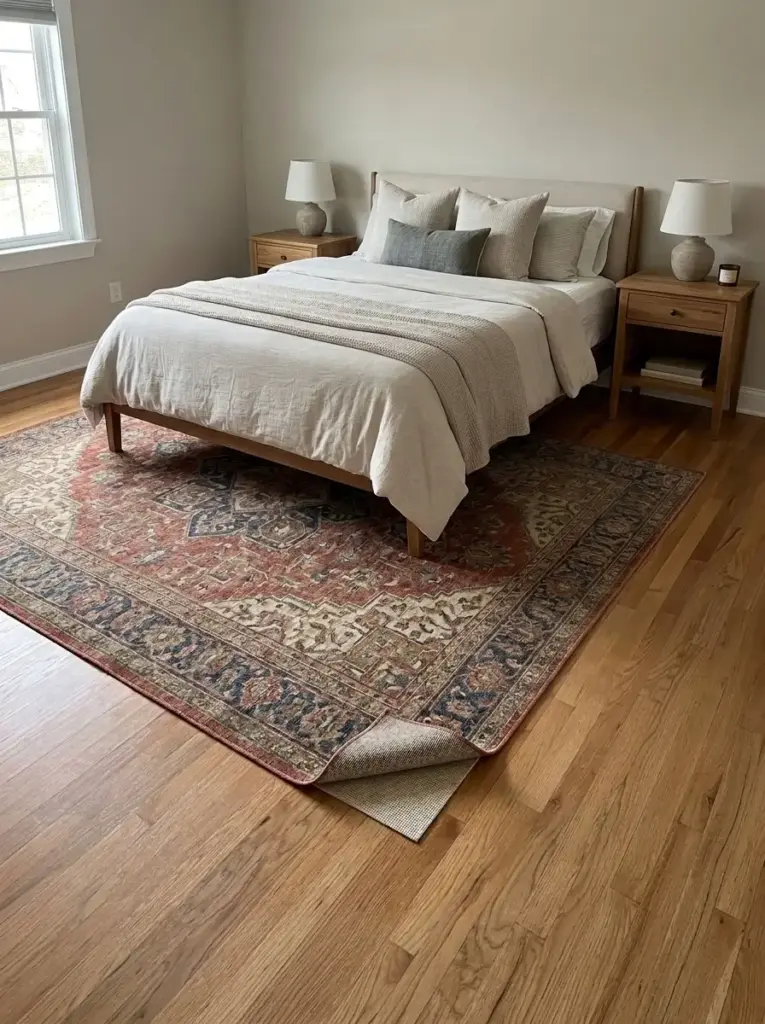
Low-pile rugs introduce color and softness while reducing echo. Look for faded medallions, small geometrics, hooked patterns, braided textures, or simple stripes in brick, navy, tan, olive, and cream. Under a queen bed, an 8-by-10-foot rug usually allows visible coverage on both sides and at the foot. Smaller budgets can use two runners along the bed or one 5-by-7-foot rug placed across the lower half.
Rug placement should support movement. Keep front nightstand legs on or off the rug consistently, and use a non-slip pad on hard flooring. Low-pile washable rugs suit pets, allergies, and rental apartments. Vintage wool rugs can last well, but may require professional cleaning and careful inspection for moth damage. People with small bedrooms should avoid high-contrast borders that visually tighten the floor area.
Faded patterns work because they connect multiple colors without demanding attention. Brand-new rugs with aggressive distress printing may look artificial when every worn mark repeats. Choose designs where pattern variation feels natural, or select a simple flatweave that will age honestly. Keep wall-to-wall carpet mostly visible if adding a rug; a thin, properly anchored layer can define the bed area without creating a tripping hazard.
Finish With Collected Objects in Small Doses
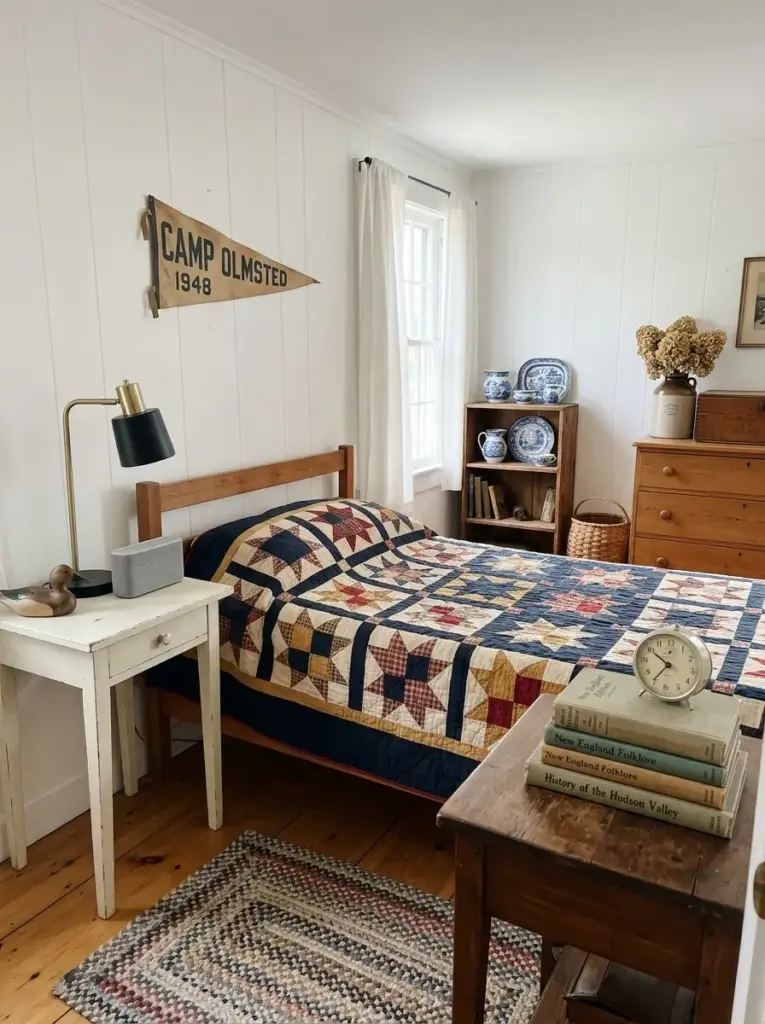
Final accessories should look personal, not like a themed retail display. Consider a small stack of regional history books, a stoneware crock, an old wooden box, a handmade basket, a vintage pennant, or a single carved bird. Spread objects across the room instead of grouping every historic reference on one shelf. Space lets each piece register and keeps dusting manageable.
Collections benefit from limits. Display three to five related objects and store the rest for seasonal rotation. One shelf of blue-and-white pottery can look thoughtful, while pottery on every surface may feel crowded. Renters can use freestanding bookcases, narrow picture ledges, or removable wall shelves rated for the load. People who travel can collect small regional items over time, giving the room a story that cannot be copied from a single shopping trip.
Restraint completes a Vintage Americana Bedroom because the style depends on a believable accumulation. Too many flags, stars, signs, lanterns, and faux antiques turn the room into a set. Choose objects for material quality, usefulness, or personal meaning. Modern necessities can remain visible when their colors are quiet. A plain alarm clock, simple speaker, or contemporary reading lamp will not ruin the design when surrounded by consistent textures.
Common Mistakes to Avoid
Overusing patriotic symbols ranks among the most common problems. One folded flag, vintage pennant, or framed historical textile may feel meaningful, but repeating stars and stripes across bedding, curtains, walls, and accessories becomes visually loud. Focus on materials, craft traditions, and regional references instead. Warm wood, quilts, simple furniture, maps, and practical lighting can communicate American heritage without relying on literal decoration.
Buying every piece with the same distressed finish creates another issue. Real rooms develop variation over time, so furniture should not share identical chipped paint, gray wash, and dark glaze. Mix one visibly aged piece with cleaner wood and painted furniture. Artificial distressing looks more convincing when wear appears near handles, corners, feet, and edges rather than randomly across flat surfaces.
Ignoring scale can make a small room uncomfortable. Oversized beds, deep benches, broad nightstands, and large trunks quickly reduce walking space. Measure door swings, drawer clearance, and paths before bringing furniture home. Painter’s tape helps test footprints on the floor. Leave at least 24 inches beside the bed where possible and aim for 30 inches in frequently used routes.
Poor lighting can flatten the entire palette. One bright ceiling bulb creates hard shadows and makes evening routines less relaxing. Use warm bulbs, shaded bedside lamps, and at least one secondary light source. Matching bulb temperatures across the room prevents one corner from appearing blue while another looks orange. Decorative fixtures still need enough brightness for reading, dressing, and cleaning.
Budget-Friendly Ways to Get the Look
Secondhand shopping works best with a written list and measurements. Search for solid dressers, wood frames, simple chairs, lamps, baskets, and quilts rather than vague “rustic décor.” Furniture often costs less when sellers use broad descriptions such as old dresser, wood chest, or spindle chair. Inspect items in daylight, check smells and stability, and calculate transport costs before agreeing to a purchase.
Textiles can change the room without replacing furniture. Start with solid cotton sheets, one striped pillow, and a washable quilt or coverlet. Sew envelope pillow covers from remnant fabric, vintage tablecloths, or unused curtains. Avoid cutting collectible textiles with historic or sentimental value. People who do not sew can use iron-on hemming tape for simple curtain panels and bench covers.
Paint and hardware offer strong results for modest cost. Refinish one mismatched nightstand in muted black, olive, or warm cream, then add simple brass knobs. Clean and lightly sand surfaces before painting, and use a stain-blocking primer on knotty pine or dark finishes. Renters can update furniture they own while leaving built-ins untouched. Saving original hardware allows future restoration or resale.
Free changes also matter. Remove excess accessories, relocate furniture to improve paths, lower artwork to eye level, and swap cool bulbs for warm ones already used elsewhere. Fold the quilt across the bed rather than covering every layer. Gather similar objects together instead of scattering them. Editing often makes an Americana room feel more intentional before any new purchase occurs.
Practical Vintage Americana Bedroom Tips
Begin with one anchor piece that carries genuine visual weight. A quilt, wood bed, dresser, rug, or large landscape print can guide every later decision. Pull two colors and one material from that item, then repeat them around the room. Starting with several unrelated accessories makes coordination harder and often leads to unnecessary spending.
Keep the sleeping zone calmer than the rest of the room. Strong patterns belong near the foot of the bed, on a chair, or within framed art rather than directly beside your face. Store visible collections away from the headboard when possible. People who wake easily may prefer solid curtains, simple pillowcases, and low-contrast wall art around the bed.
Balance old pieces with current comfort. Vintage chairs may need new webbing, antique lamps should be rewired when safety is uncertain, and old beds may require reinforced slats. Modern mattresses, blackout shades, charging access, and washable textiles improve daily use without weakening the style. Comfort and safety should guide every restoration decision.
Let the Vintage Americana Bedroom evolve slowly. Collected rooms gain credibility from variation, personal stories, and useful objects chosen over time. Finish the functional layer first, then add decorative pieces only where space feels unresolved. Taking photographs from the doorway can reveal clutter, unbalanced color, and blocked pathways more clearly than standing inside the room.
Frequently Asked Questions
What colors work best in an Americana-style bedroom?
Warm ivory, oatmeal, muted navy, dusty blue, olive, tobacco brown, and brick red work especially well. Use one light neutral as the base, one calm mid-tone, and one broader accent. Bright primary red and royal blue can feel harsh in a restful room, so choose faded or grayed versions. Wood tones also count as color and should be considered when balancing the palette.
Can renters create the look without painting?
Renters can rely on portable layers such as quilts, curtains, rugs, framed maps, lamps, baskets, and secondhand furniture. Removable wallpaper can define the wall behind the bed, while plug-in sconces add period character without electrical work. Save original hardware and use removable hanging products within their weight limits. Warm bulbs often make the biggest immediate difference.
Does every furniture piece need to be vintage?
No. Mixing old and new furniture usually produces a more comfortable and believable room. Use one or two pieces with visible history, then support them with simple modern furniture in compatible colors and materials. A new mattress, plain nightstand, or contemporary storage bed can sit beside a vintage dresser when finishes and proportions relate.
How can I keep the style from looking too patriotic?
Emphasize craft, landscape, and material history rather than repeated flag imagery. Quilts, spindle furniture, iron, brass, woven shades, maps, folk art, and rural landscapes carry the theme quietly. Limit literal stars and stripes to one or two meaningful pieces. Faded colors and natural textures create a stronger everyday design than novelty signs.
What is the best lighting for a Vintage Americana Bedroom?
Warm white bulbs between 2200K and 2700K suit the palette, while a color rendering index of 90 or higher helps wood and fabrics appear accurate. Use bedside lamps for reading, a gentle overhead fixture for general light, and optional accent lighting near art or a chair. Shaded bulbs reduce glare and create a calmer evening atmosphere.
How do I decorate a very small bedroom in this style?
Choose furniture with narrow footprints, open legs, and useful storage. A tall dresser, an iron bed, a wall-mounted light, one large artwork, and two bedside shelves may be enough. Keep walls light, limit patterns to two scales, and leave visible floor around major pieces. Select one strong historic reference instead of filling the room with small accessories.
Conclusion
Warmth in a heritage-inspired bedroom comes from thoughtful materials, useful furniture, and colors that feel softened rather than bright. Start with a calm base, add one strong anchor, and build layers slowly. Quilts, warm wood, blackened iron, aged brass, faded artwork, and soft lighting can create character without requiring a complete renovation or a large budget.
Successful rooms also respect movement, storage, sleep, and maintenance. Measure before buying, keep pathways open, choose washable textiles, and repair older pieces before daily use. Renters can achieve the same grounded feeling through portable furniture and removable updates. A well-edited Vintage Americana Bedroom should feel comfortable first, personal second, and historical only in the quiet details that support everyday life.